How Laser Tattoo Removal Works
27 guides · updated 26 Aug 2026The most useful thing to understand about laser tattoo removal is that the laser does not remove anything. It shatters the ink particles sitting in your dermis into fragments small enough for your immune system to carry away, and then your body does the actual removing over the following weeks. Almost every confusing part of the process follows from that one fact: why sessions are spaced six to eight weeks apart, why a session can look like nothing happened, why smoking and general health show up in clearance rates, and why nobody can promise you a date.
The second thing worth knowing is that colour is physics, not effort. Each ink colour absorbs a specific band of light, so the wavelength a clinic owns decides which of your colours it can actually treat: 1064 nm for black and dark inks (and the safer choice on darker skin), 532 nm for reds and oranges, 694 nm and 755 nm for the greens and blues that defeat the others. A clinic with one machine is not necessarily a bad clinic, but it is a clinic that can only treat some tattoos well — which is a question to ask before you pay, not after session four. Picosecond and Q-switched lasers are both effective and both FDA-cleared; the difference is pulse duration, and the marketing around it runs well ahead of the evidence.
Start with “How Laser Tattoo Removal Actually Works” for the mechanism, then “How Your Immune System Removes Tattoo Ink”, which is the part that explains the waiting. For an honest session count, “How Many Sessions to Remove a Tattoo?” and the Kirby-Desai scale guide give you a range and are explicit that it is a range — the scale explains roughly half the variation between people, so anyone quoting you an exact number is guessing. If your progress seems to have stopped, “Why Some Removal Sessions Show Almost No Change” is probably the guide you want.

Can You Remove a Tattoo Completely? The Honest Answer (2026)
Can you remove a tattoo completely? Often yes, but some leave faint 'ghosting'. What predicts full clearance vs residual shadow — and why 100% isn't a promise.
By TRG Editorial Team · Reviewed by Alex Pizarro · Updated 5 Jul 2026
Do Older Tattoos Come Off Faster? How Age Affects Removal (2026)
Do older tattoos come off faster? Often somewhat, because ink fades and disperses over years — but the tattoo's ink, depth, and colour matter more than its age.
By TRG Editorial Team · Reviewed by Alex Pizarro · Updated 6 Jul 2026
Does Smoking Affect Tattoo Removal? What the Research Actually Shows
Does smoking affect tattoo removal? Yes — smokers cleared tattoos less readily in one 352-patient study. Here's why, plus the lifestyle factors that help.
By TRG Editorial Team · Reviewed by Alex Pizarro · Updated 5 Jul 2026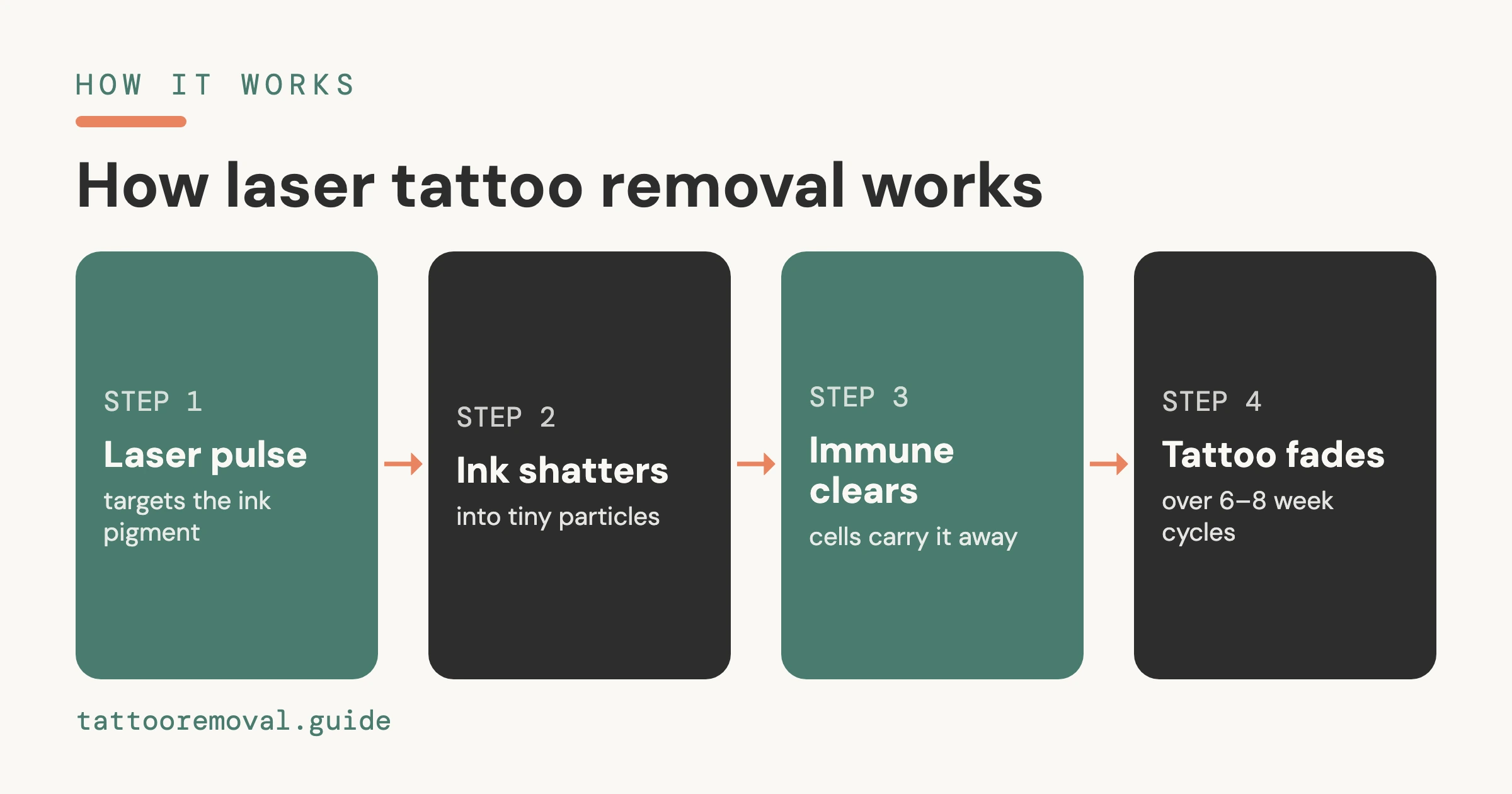
How Laser Tattoo Removal Actually Works (and How Long It Takes)
How does laser tattoo removal work? The laser only shatters the ink — your immune system removes it. Sessions, timelines and the science, explained.
By TRG Editorial Team · Reviewed by Alex Pizarro · Updated 5 Jul 2026
How Long Between Tattoo Removal Sessions? The 6–8 Week Clearing Window
How long between tattoo removal sessions? Most clinics wait 6–8 weeks. Why the clearing window exists, why sooner won't help, and when a longer gap is better.
By TRG Editorial Team · Reviewed by Alex Pizarro · Updated 6 Jul 2026
How Long Does Tattoo Removal Take? The Honest Timeline (2026)
How long does tattoo removal take? Typically 6 months to 2 years — because sessions sit 6–8 weeks apart. A month-by-month timeline and the factors that change it.
By TRG Editorial Team · Reviewed by Alex Pizarro · Updated 26 Aug 2026
How Many Sessions to Remove a Tattoo? The Honest Range (2026)
How many sessions to remove a tattoo? Most take ~5–12, spaced 6–8 weeks apart. The Kirby-Desai scale explained, plus a per-tattoo-type estimate table.
By TRG Editorial Team · Reviewed by Alex Pizarro · Updated 5 Jul 2026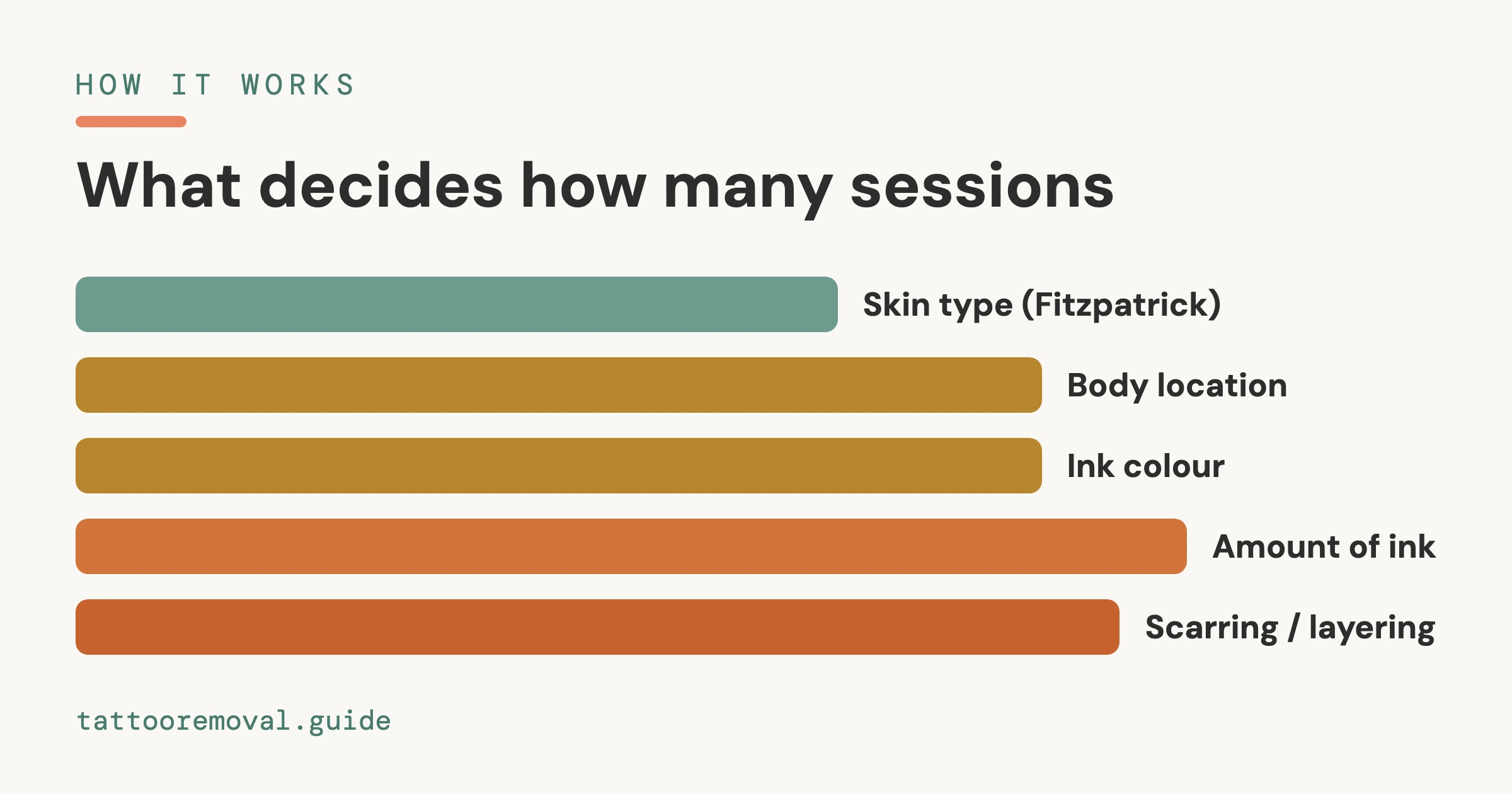
How Many Sessions Will Tattoo Removal Take? The Kirby-Desai Scale
The Kirby-Desai scale scores six factors to estimate laser tattoo removal sessions. Here's how each factor moves your number — and why it's a range, not a promise.
By TRG Editorial Team · Reviewed by Alex Pizarro · Updated 6 Jul 2026
How to Speed Up Tattoo Removal Safely: What Actually Helps (2026)
How to speed up tattoo removal safely: you can't shortcut the biology, but you can support the immune clearance that does the work.
By TRG Editorial Team · Reviewed by Alex Pizarro · Updated 6 Jul 2026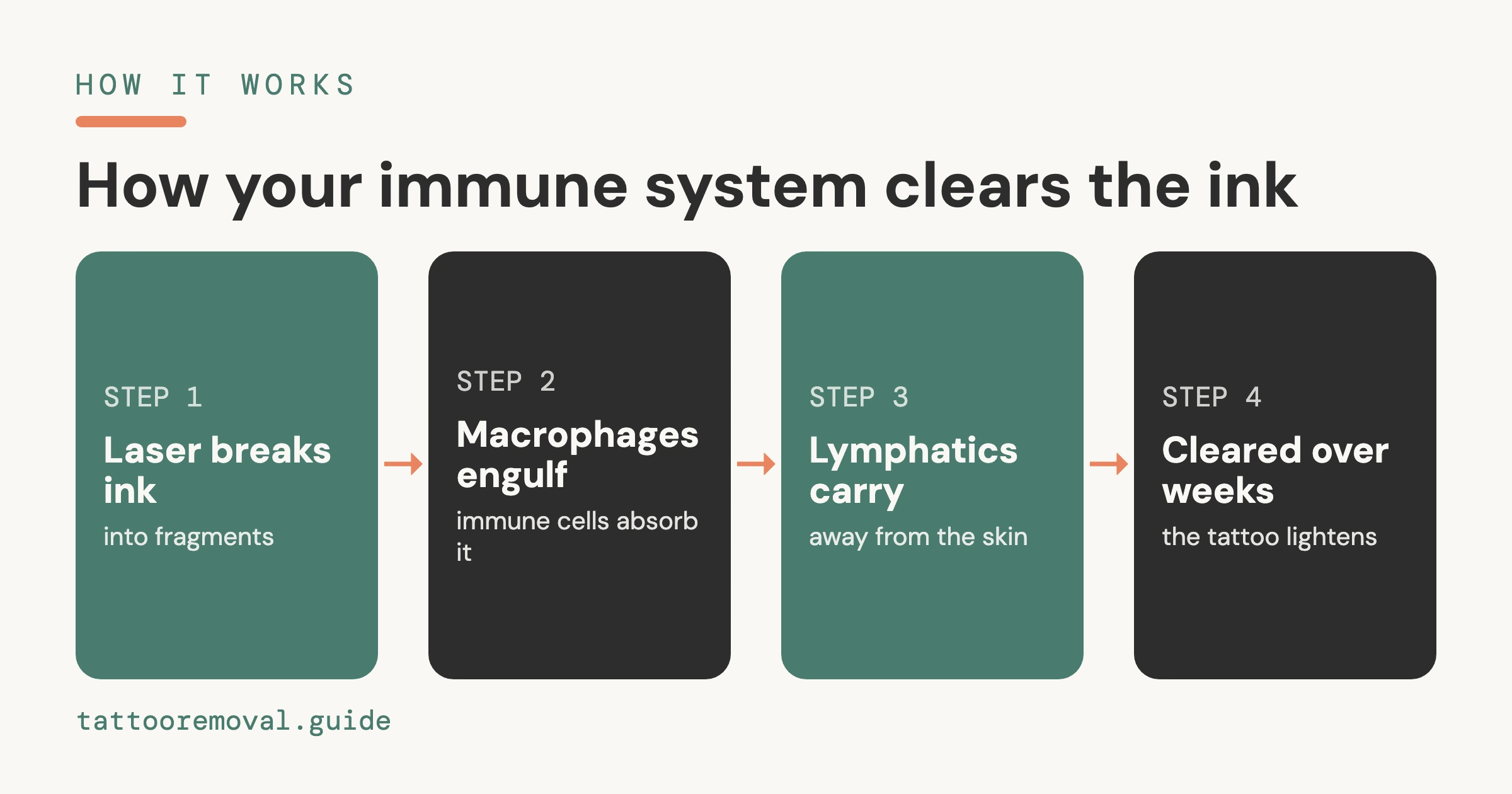
How Your Immune System Removes Tattoo Ink (2026)
The laser only shatters tattoo ink — your immune system does the removing. How macrophages and your lymphatic system clear shattered ink, and why it takes months.
By TRG Editorial Team · Reviewed by Alex Pizarro · Updated 6 Jul 2026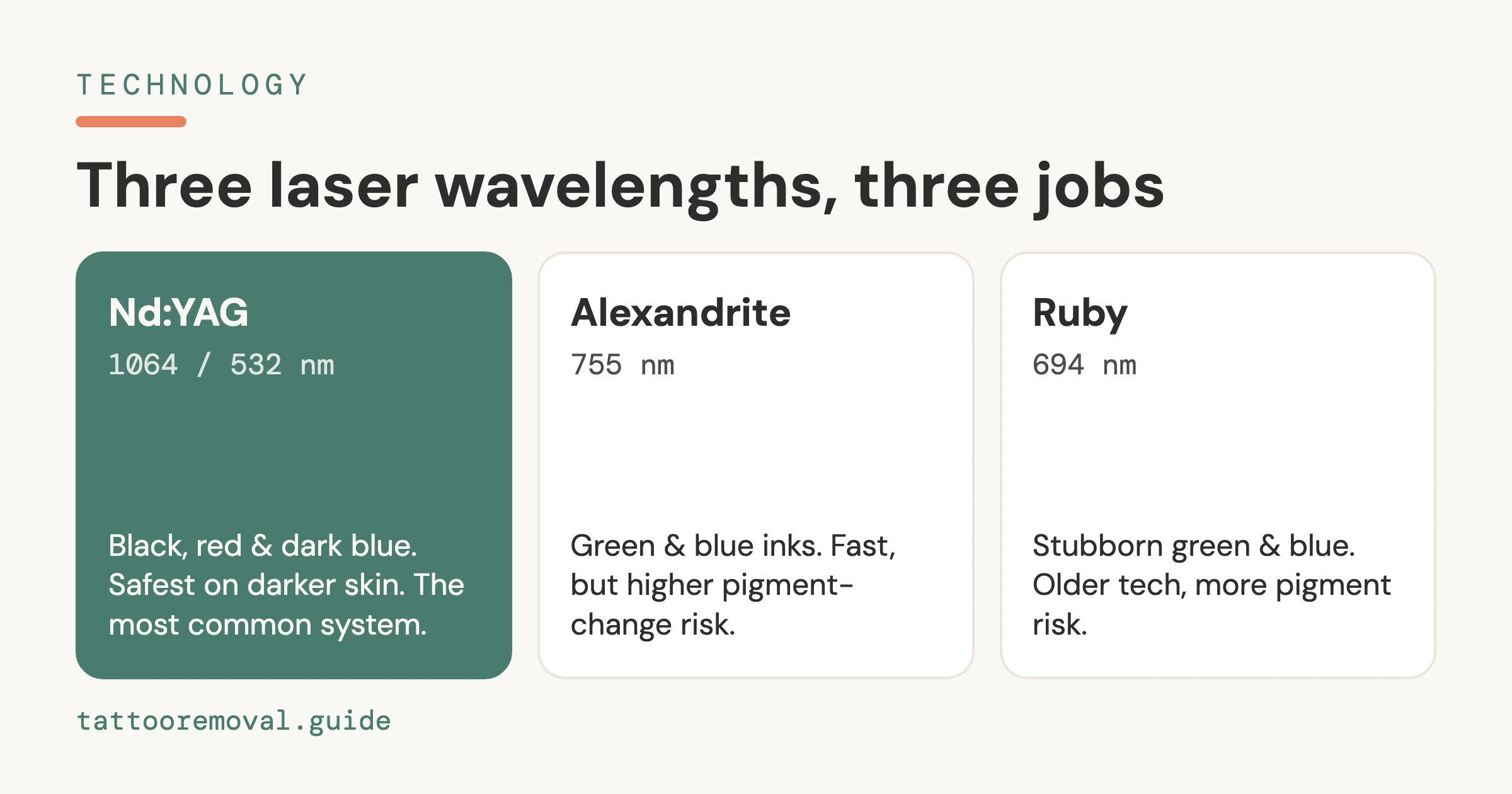
Laser Wavelengths Explained: Nd:YAG, Alexandrite and Ruby
Green tattoo ink resists some lasers completely under a different wavelength. Here's what Nd:YAG, alexandrite and ruby each do, so you know before booking.
By TRG Editorial Team · Reviewed by Alex Pizarro · Updated 4 Jul 2026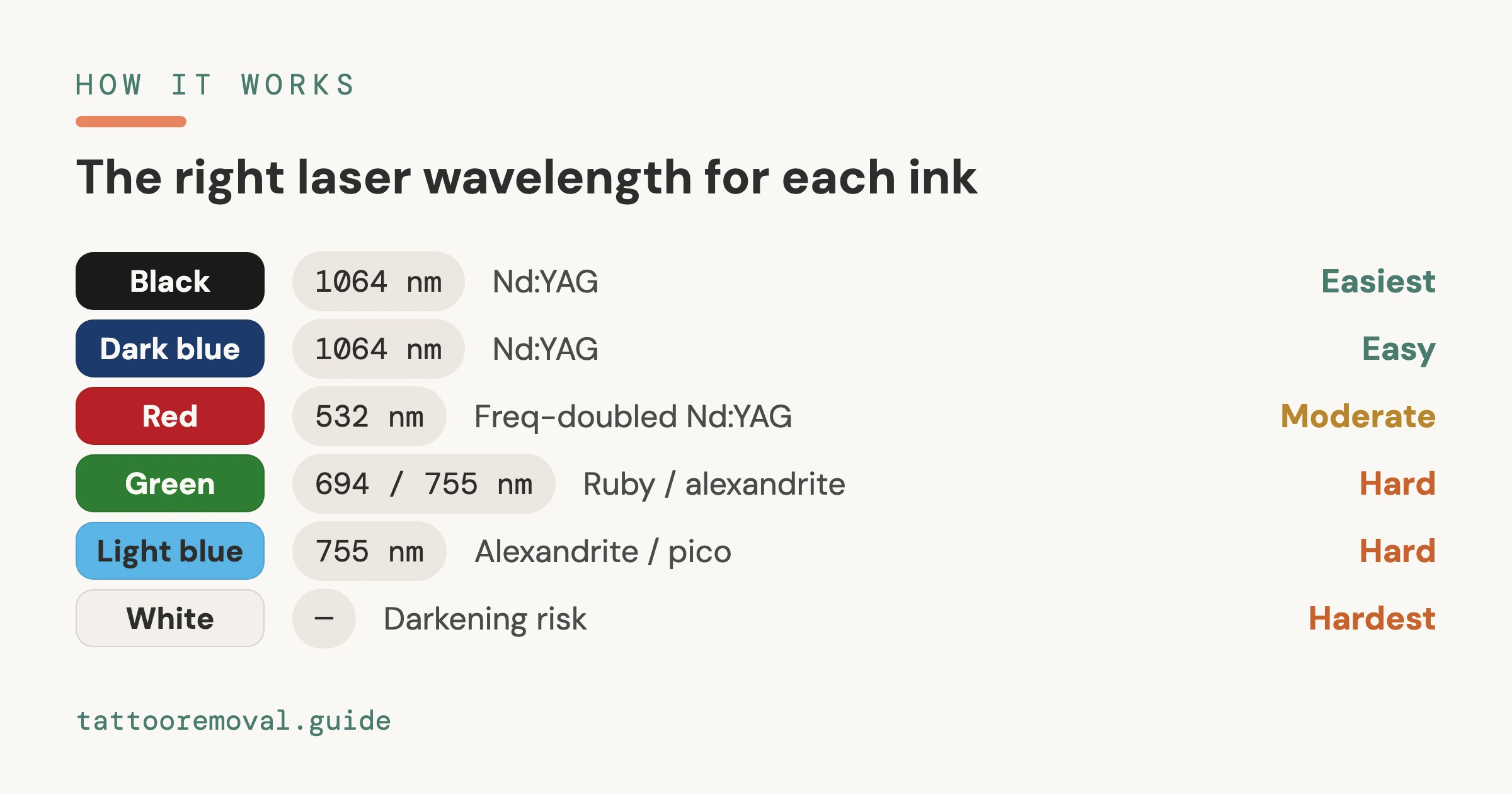
Laser Wavelengths for Tattoo Removal
1064nm clears black and dark inks (and is safest for darker skin); 532nm targets red and orange; 694nm and 755nm handle green and blue. A wavelength-to-colour map.
By TRG Editorial Team · Reviewed by Alex Pizarro · Updated 6 Jul 2026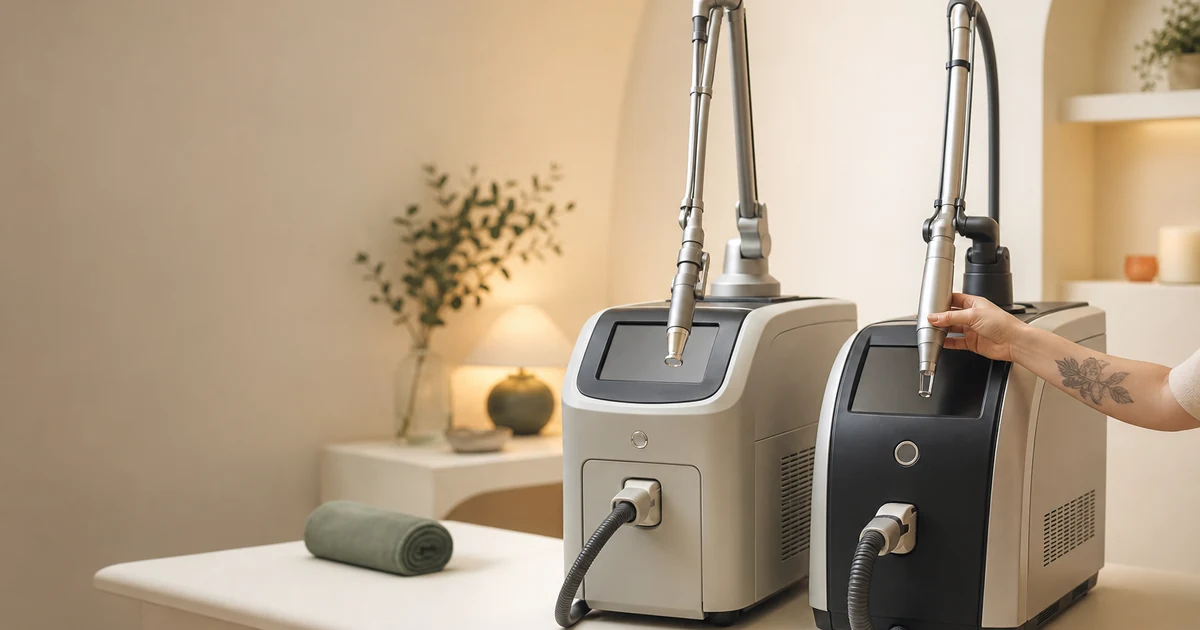
Picosecond vs Q-Switched Laser Tattoo Removal: Which Is Better?
Picosecond vs Q-switched laser tattoo removal, compared honestly. Both are FDA-cleared and effective — the real difference is pulse duration, not marketing.
By TRG Editorial Team · Reviewed by Alex Pizarro · Updated 5 Jul 2026
Picosecond vs Q-Switched Laser: Which Is Right for Your Tattoo?
Compare picosecond and Q-switched lasers for tattoo removal. What actually differs between them, which colours each clears, and how to pick a clinic.
By TRG Editorial Team · Reviewed by Alex Pizarro · Updated 31 Jul 2026
Tattoo Removal Aftercare: The Day-by-Day Healing Guide (2026)
Tattoo removal aftercare, explained as risk control: a day-by-day healing timeline, the do's and don'ts, and what's normal versus when to call your clinic.
By TRG Editorial Team · Reviewed by Alex Pizarro · Updated 6 Jul 2026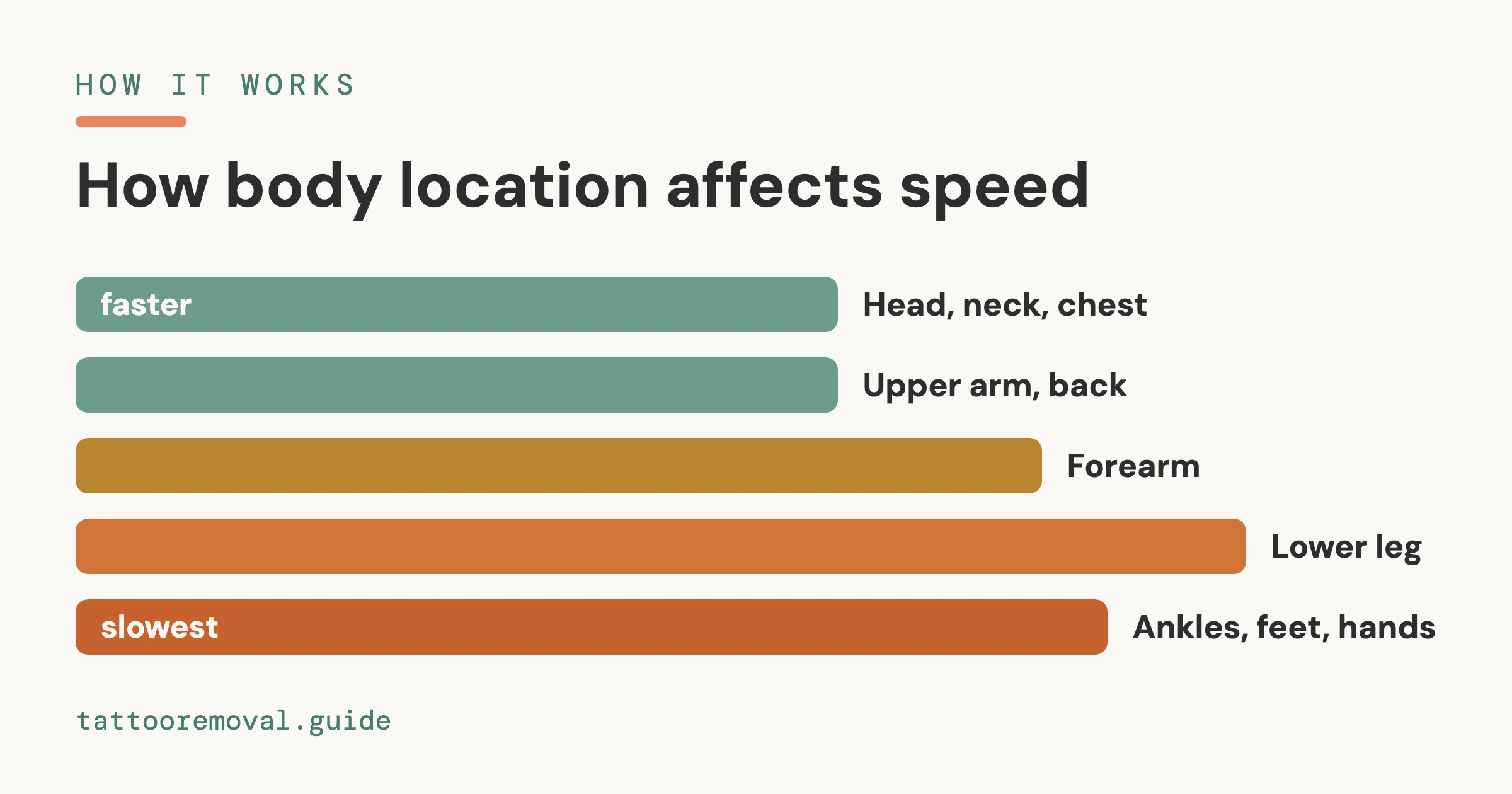
Tattoo Removal by Body Location: Which Areas Fade Fastest (2026)
Where a tattoo sits changes how fast it clears. Chest, back and upper arms fade fastest; hands, feet and ankles are slowest.
By TRG Editorial Team · Reviewed by Alex Pizarro · Updated 6 Jul 2026
Tattoo Removal on the Face, Neck and Visible Areas
Facial and neck skin is thinner, more sensitive and harder to hide while healing. Here's how that changes pacing, comfort and clinic choice.
By TRG Editorial Team · Reviewed by Alex Pizarro · Updated 4 Jul 2026
Tattoo Removal Sessions: The Complete Guide to Your Number
Most tattoos need 8-12 sessions over 12-24 months. The six factors that set your number (incl. Kirby-Desai), real per-session prices, and the full timeline.
By TRG Editorial Team · Reviewed by Alex Pizarro · Updated 11 Jul 2026
The Middle of a Removal Course — Why Progress Stalls, Then Jumps
Why tattoo removal progress seems to stall mid-course, why it jumps back later, and how to tell a normal plateau from a session that isn't working.
By TRG Editorial Team · Reviewed by Alex Pizarro · Updated 4 Jul 2026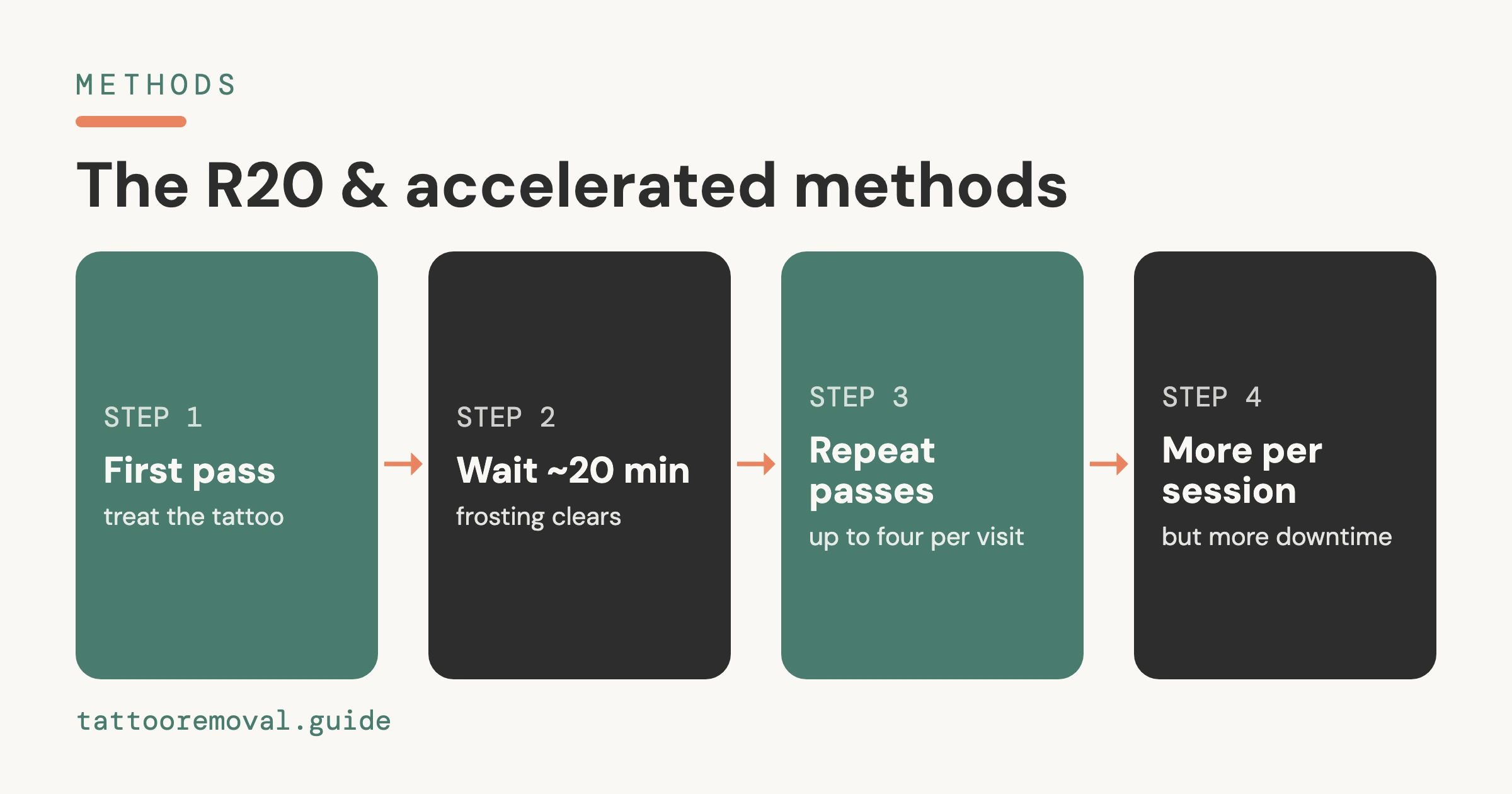
The R20 Method & Accelerated Tattoo Removal
What is the R20 method? Multiple laser passes in one visit, ~20 minutes apart. The theory, the honest evidence, PFD-assisted passes, and why the 6–8 week window…
By TRG Editorial Team · Reviewed by Alex Pizarro · Updated 6 Jul 2026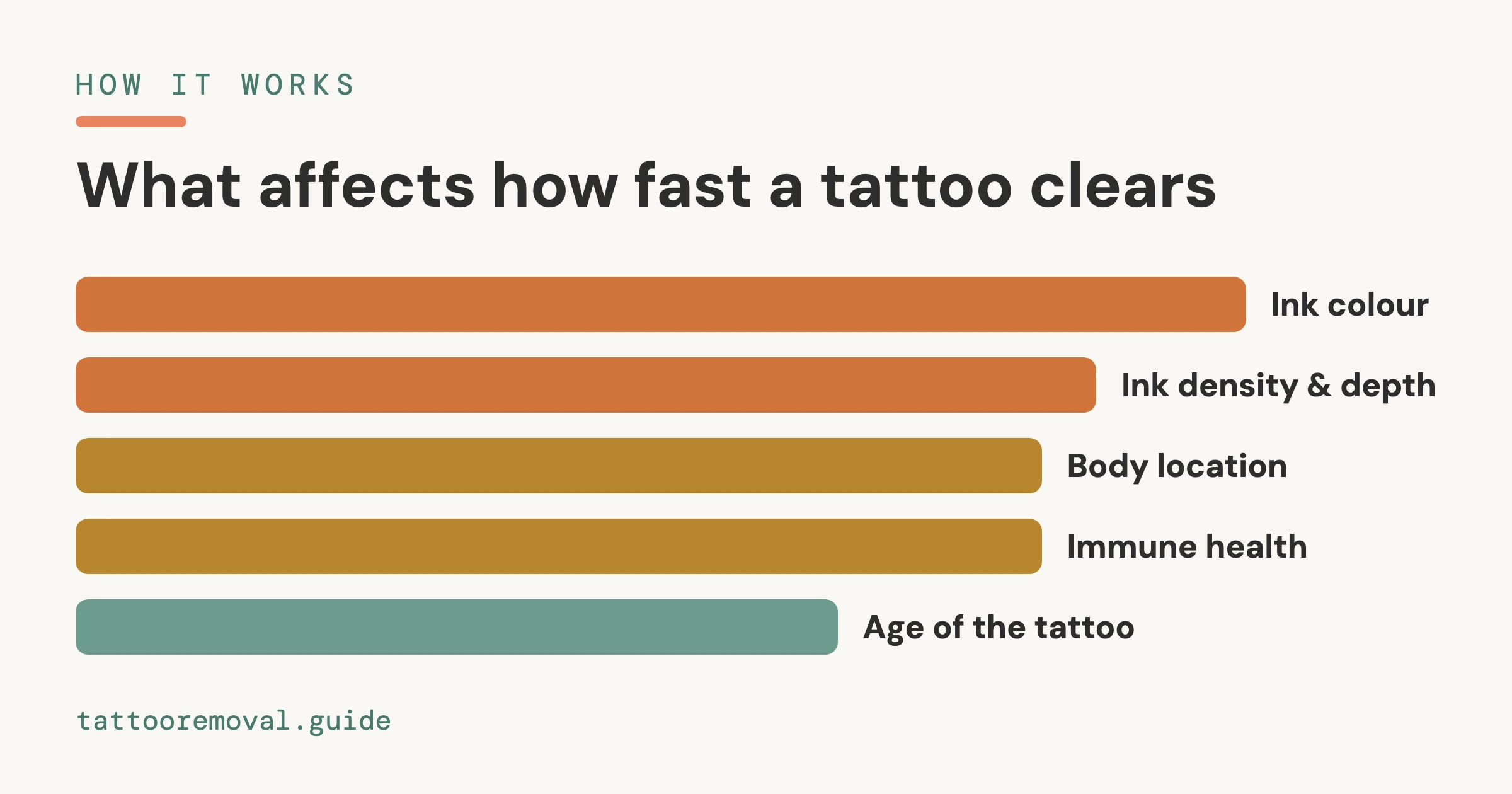
What Affects How Fast a Tattoo Fades? 8 Factors in Removal Speed
What affects tattoo removal speed? Ink colour, depth, age, body location, skin type, your health, smoking, and cover-ups all matter.
By TRG Editorial Team · Reviewed by Alex Pizarro · Updated 6 Jul 2026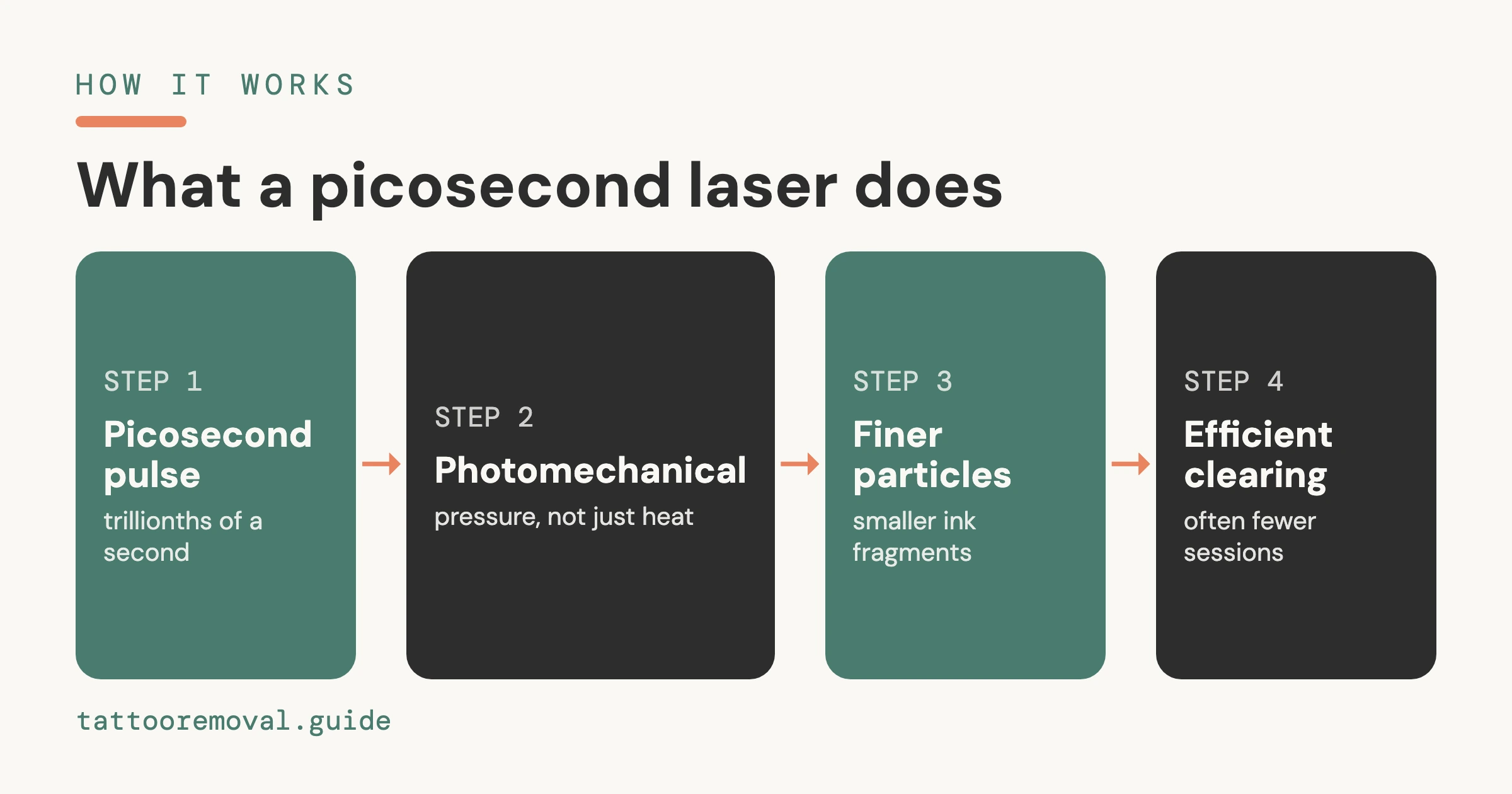
What Is a Picosecond Laser for Tattoo Removal? (2026)
What is a picosecond laser? It fires in trillionths of a second to shatter tattoo ink. How it works, the colours it helps, and why it's not always better.
By TRG Editorial Team · Reviewed by Alex Pizarro · Updated 6 Jul 2026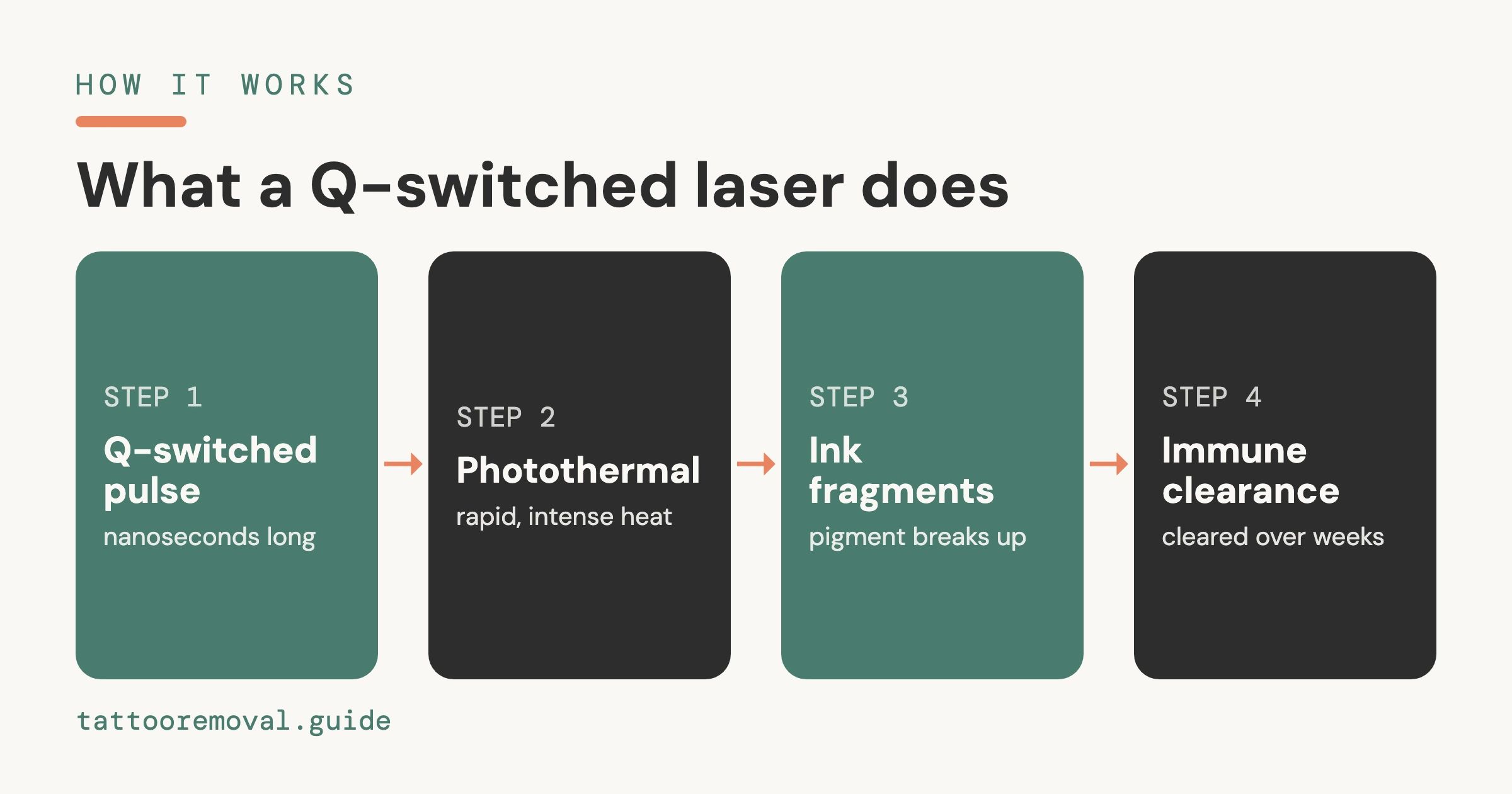
What Is a Q-Switched Laser for Tattoo Removal? (2026)
A Q-switched laser fires nanosecond pulses to shatter tattoo ink. Here's how Q-switched Nd:YAG, ruby and alexandrite lasers work, and why they're still a gold…
By TRG Editorial Team · Reviewed by Alex Pizarro · Updated 6 Jul 2026
What Realistic Tattoo Removal Progress Looks Like, Month by Month
A realistic, phase-by-phase look at tattoo removal progress — what changes in months 1–4, 4–12, and 12–18+, and why the timeline isn't a straight line.
By TRG Editorial Team · Reviewed by Alex Pizarro · Updated 4 Jul 2026
What to Expect at Your First Tattoo Removal Session (Step by Step)
Nervous about your first laser tattoo removal session? A step-by-step of the consultation, patch test, the zaps, frosting and aftercare — what to expect.
By TRG Editorial Team · Reviewed by Alex Pizarro · Updated 5 Jul 2026
Why Isn't My Tattoo Fading? 6 Reasons Removal Slows Down
Why isn't my tattoo fading? Progress often looks stalled while clearance continues beneath the surface. The 6 real reasons removal slows — and when to worry.
By TRG Editorial Team · Reviewed by Alex Pizarro · Updated 5 Jul 2026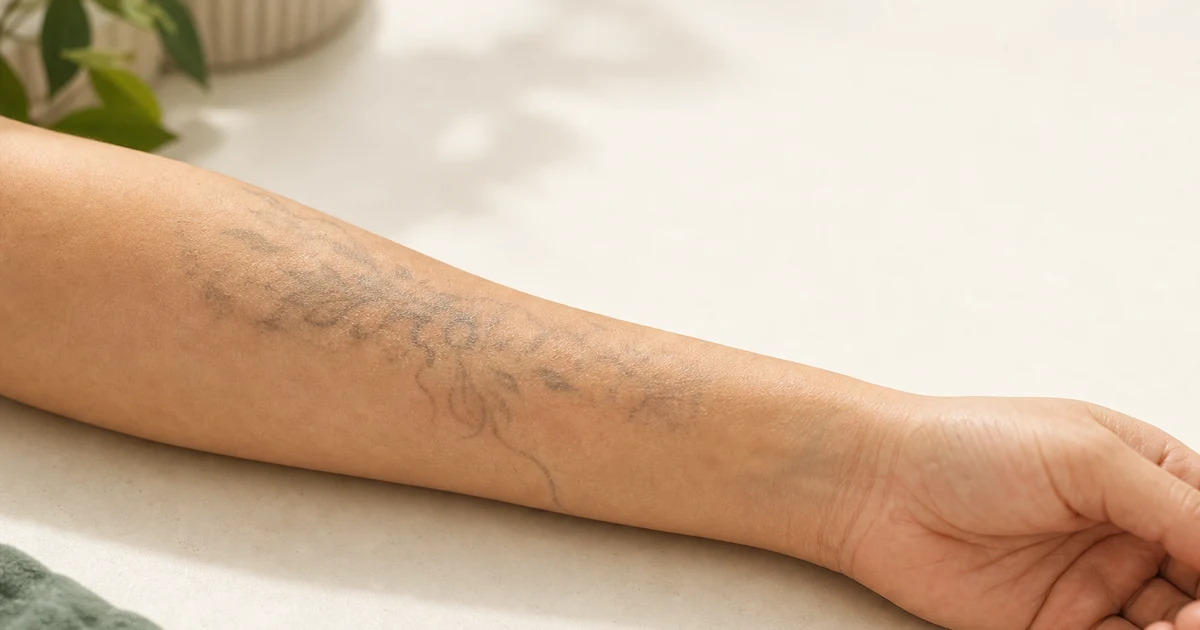
Why Some Removal Sessions Show Almost No Change (It's Normal)
Why a single tattoo removal session can look like nothing happened, the 6–8 week clearing window biology, and when a session genuinely underperformed.
By TRG Editorial Team · Reviewed by Alex Pizarro · Updated 4 Jul 2026