How Many Sessions to Remove a Tattoo? The Honest Range (2026)
Part of the complete guide to how many sessions tattoo removal takes — the full session count, timeline and what drives your number.
Most tattoos take roughly 5–12 laser sessions to remove, spaced 6–8 weeks apart, though the honest range is wide: amateur or stick-and-poke tattoos often clear in about 3–7 sessions, while dense professional or multicolour work can take 8–15 or more. No responsible clinic promises an exact count before assessing your tattoo — the number depends on ink colour, density, location and your skin.
That uncertainty isn't clinics being cagey. Removal is a staged biological process, and the number of passes it takes is genuinely variable. This guide gives you the honest ranges, explains the validated tool clinicians use to estimate them — the Kirby-Desai scale — and shows what pushes your session count up or down, using medical sources and figures from the Tattoo Removal Guide directory, stamped (as of July 2026).
Key Takeaways
- Most tattoos take ~5–12 sessions; amateur/stick-and-poke often ~3–7, dense professional ~8–15+.
- Sessions are spaced 6–8 weeks apart minimum — so a full course usually runs 6 months to 2 years.
- The Kirby-Desai scale predicts session count from six factors (validated at r=0.757 in 2009).
- No honest clinic guarantees a session count before assessing your tattoo — the count is a range, not a promise.
- Newer picosecond lasers can mean fewer sessions for some tattoos, but both laser types work. Of the 5,700 clinics we track, about 18% note picosecond and 15% note Q-switched lasers (as of July 2026).
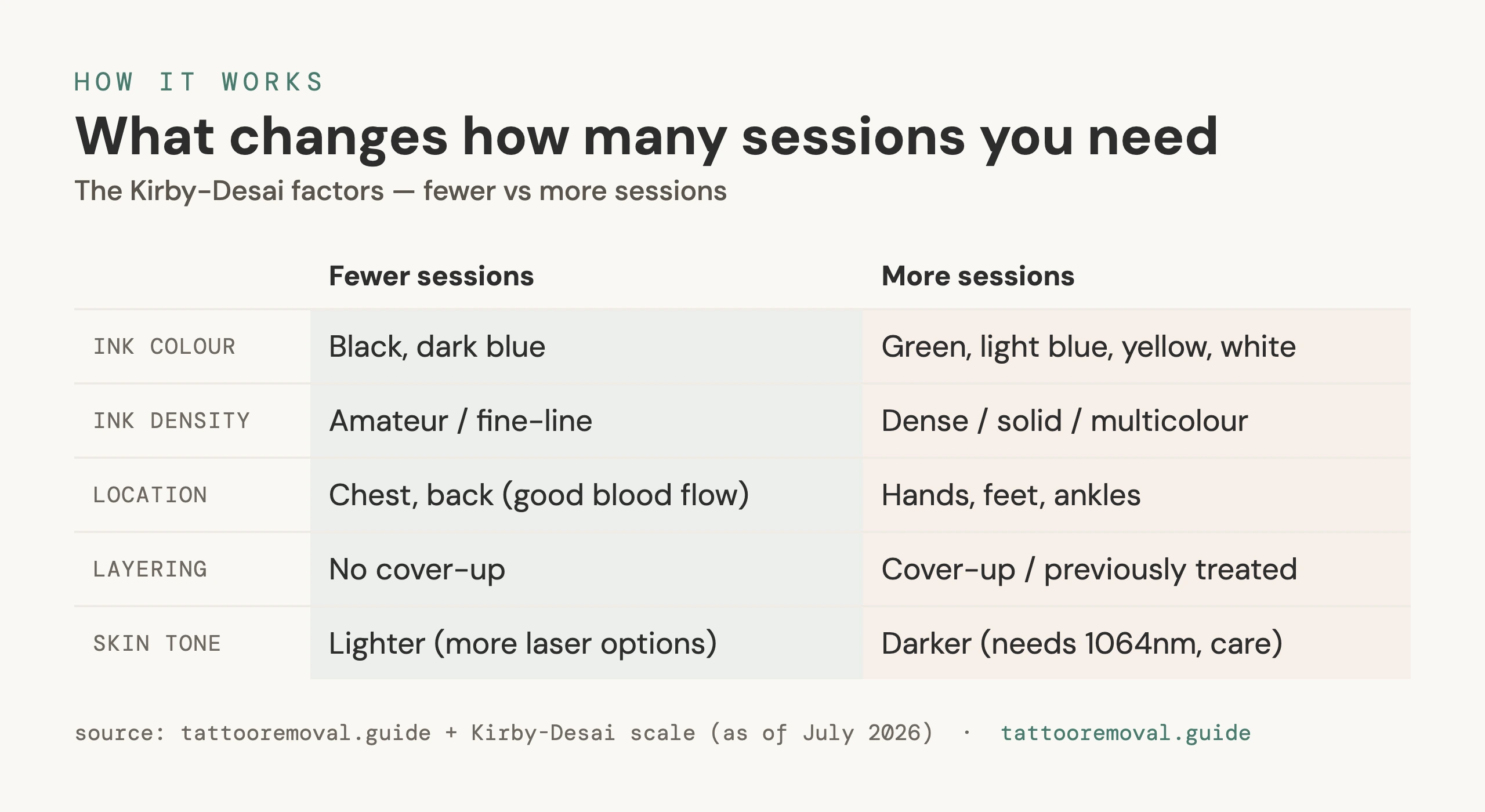 The Kirby-Desai factors that decide how many sessions you'll need.
How many sessions to remove a tattoo?
The single most-searched question about removal has no single answer — only a range that depends on your specific tattoo. As a starting frame, here are the typical figures the medical literature and the American Academy of Dermatology describe:
| Tattoo type | Typical sessions | Why |
|---|---|---|
| Amateur / stick-and-poke | ~3–7 | Less ink, shallower and unevenly deposited — easier to clear |
| Small black script / fine-line | ~5–8 | Black absorbs laser light well; thin lines hold little pigment |
| Dense tribal / solid blackwork | ~8–15+ | Heavily saturated black ink means more pigment to shatter and clear |
| Multicolour (with green/blue) | ~10–15+ | Stubborn colours resist and need specific wavelengths; often incomplete |
Two honest caveats sit under this table. First, these are typical ranges, not guarantees — your body's clearance rate, the exact inks used, and how the tattoo was applied all move the number. Second, the total timeline is long — six months to two years — but that is almost entirely the waiting between sessions. The laser work itself, for a small-to-medium tattoo, is usually over in under five minutes.
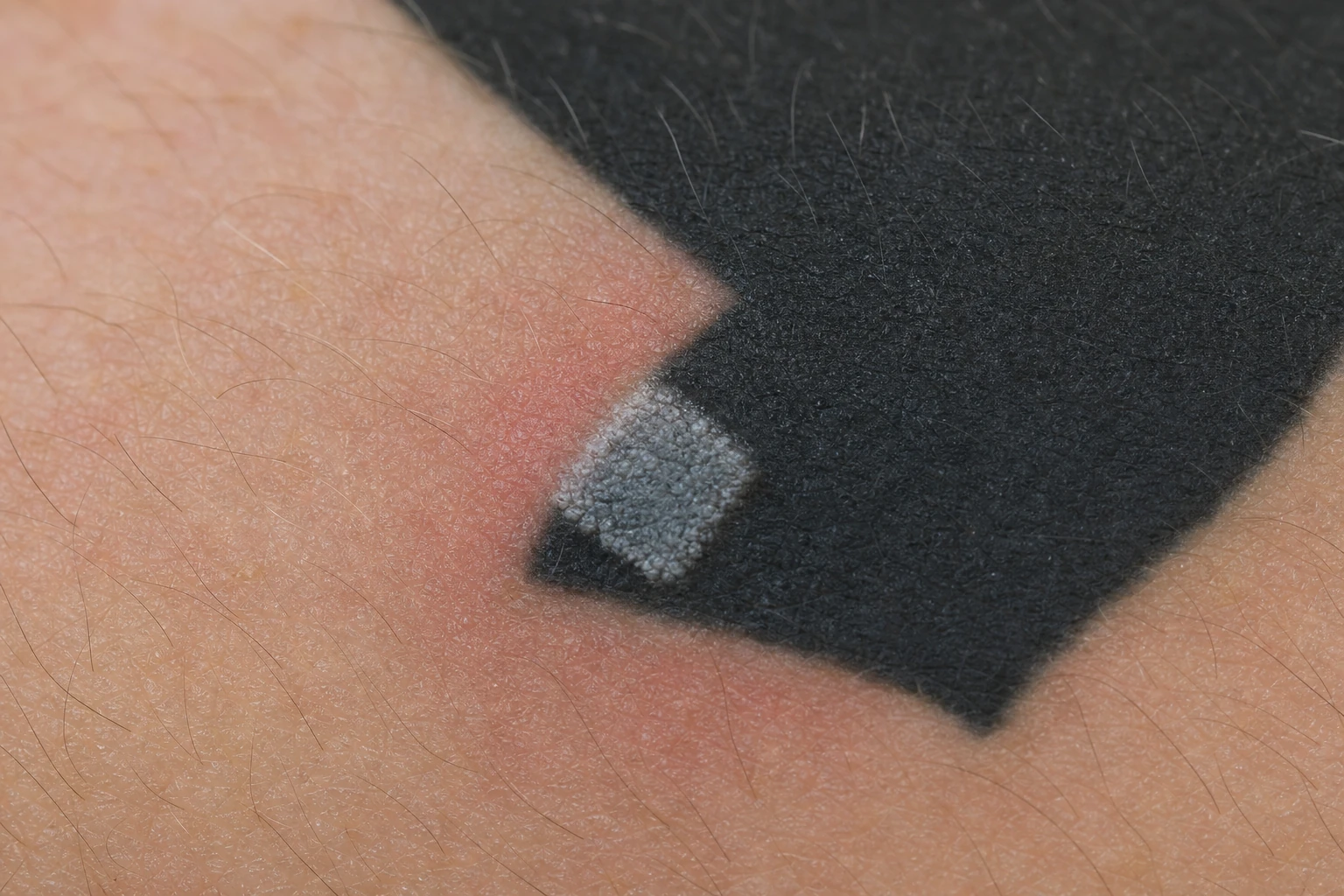 A forearm tattoo during removal.
Why sessions are spaced 6–8 weeks apart
You can't stack sessions to finish faster, and understanding why explains the whole timeline. A laser doesn't remove ink — it shatters it into fragments small enough for your immune system to carry away, a sequence the StatPearls clinical reference describes as selective absorption, fragmentation, then immune-mediated clearance.
The clearance is the bottleneck. After each pass, macrophage cells need weeks to ferry the shattered fragments into the lymphatic system and out of the body. Fire the laser again before that has happened and you're treating congested skin — more risk, no faster result. The skin also needs to heal between passes to avoid blistering and scarring. That roughly 6–8 week interval — sometimes called the clearing window — is a real, mechanism-driven wait, not a scheduling convenience. It's why even a tattoo that "only" needs eight sessions takes well over a year to finish.
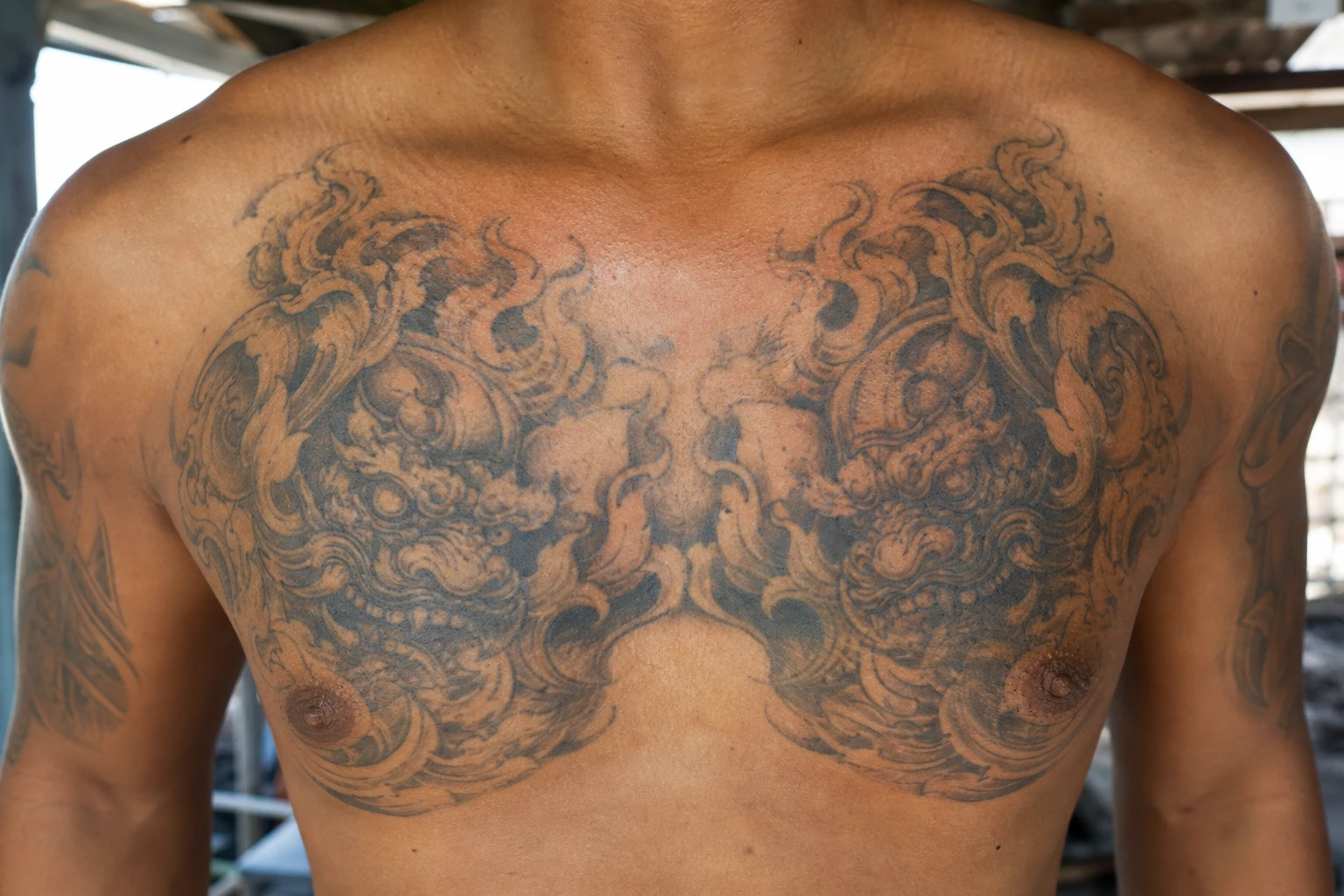 A tattoo being assessed before laser removal.
The Kirby-Desai scale: how clinicians estimate your count
The reason a good clinic can give you any estimate is a validated scoring tool. In 2009, dermatologists Kirby and Desai published the Kirby-Desai scale in the Journal of Clinical and Aesthetic Dermatology — a system that scores a tattoo across six factors and sums them into a predicted number of sessions.
The Kirby-Desai scale is a clinical scoring system that estimates how many laser treatments a tattoo will need by rating six characteristics and adding up the points. In the authors' retrospective analysis, that summed score correlated strongly with the number of treatments patients actually required — a Pearson correlation of r=0.757 (p<0.001). For a biological process with this much natural variation, that's a genuinely useful predictor, which is why the scale is still taught and used today.
Here is what each factor scores, and — critically — which direction raises your session count:
| Factor | What raises the session count |
|---|---|
| Fitzpatrick skin type | Darker skin (higher type) competes with ink for laser energy, requiring gentler, often more numerous passes |
| Ink colour | Green, blue and some fluorescent inks resist; black clears fastest — so colour adds sessions |
| Amount of ink | Denser, more saturated tattoos hold more pigment to shatter and clear |
| Location | Tattoos on the extremities (ankles, fingers) clear slower than those near the heart, where circulation is better |
| Scarring | Pre-existing scarring impairs both laser delivery and immune clearance |
| Layering | Cover-ups and reworked tattoos stack ink, multiplying the passes needed |
Notice that almost every factor traces back to the same biology: how much ink there is to shatter, how well the laser reaches it, and how efficiently your body carries the fragments away. The scale isn't arbitrary — it's the mechanism, scored. A small black anklet on fair skin might score at the low end; a large, layered, multicolour piece on darker skin sits far higher.
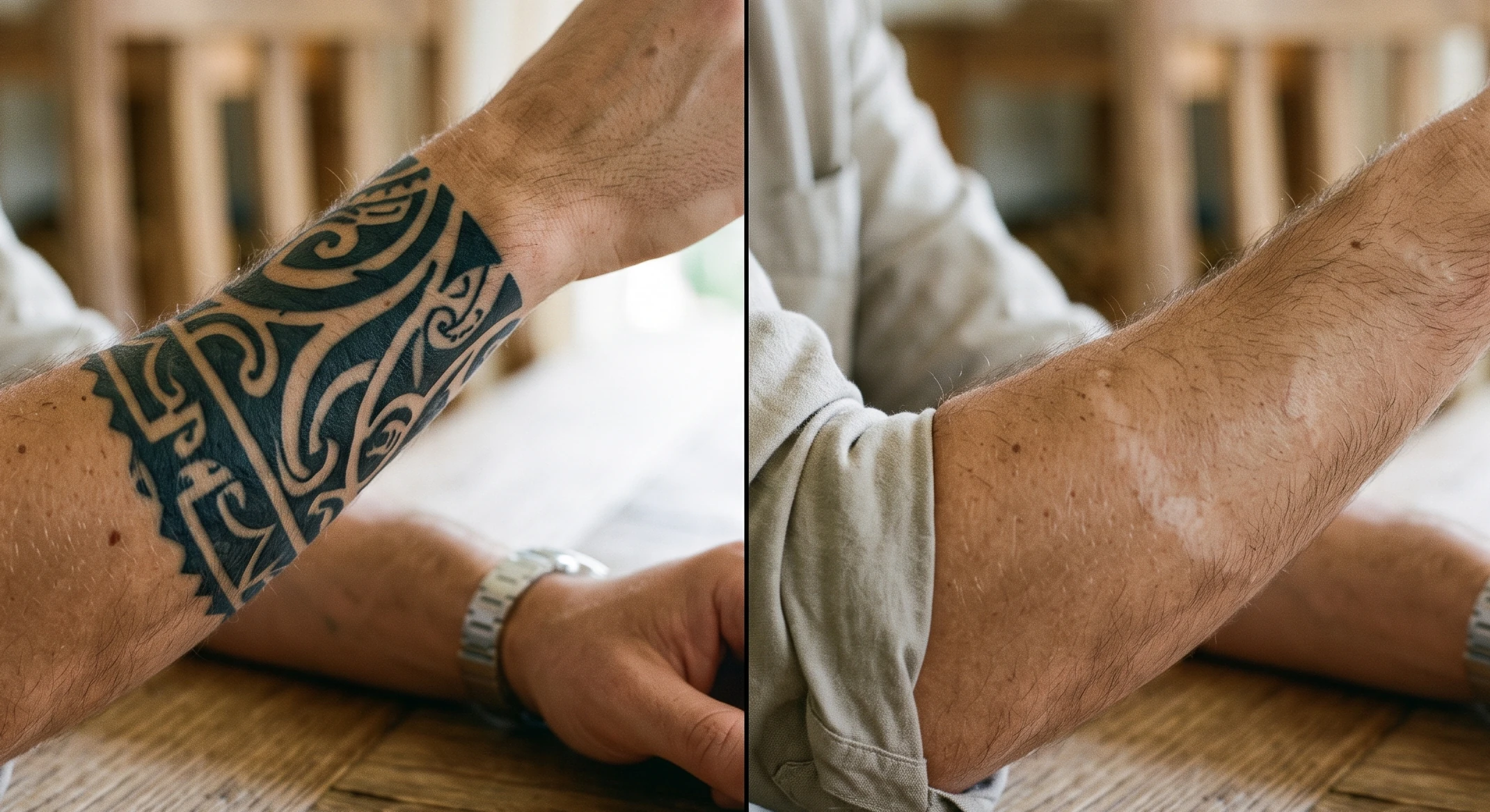 After a full course, only a faint 'ghost' — a barely-visible pale mark — may remain. Illustrative; results vary.
Why no honest clinic promises an exact number
Because removal depends on how your immune system clears fragments — something no scan can measure in advance — even a careful Kirby-Desai estimate is a range, not a promise. Two people with visually similar tattoos can need different session counts. Colours can respond unpredictably. Layered cover-ups can hide old ink that only surfaces after several passes.
So the honest posture is a range that gets refined as you go. A reputable clinic quotes something like "expect roughly 8–12, and we'll reassess after the first few," then adjusts based on how your tattoo actually fades. Anyone advertising "gone in 5 sessions, guaranteed" sight-unseen is selling certainty that the biology doesn't support. Treat a guaranteed session count — or a guaranteed complete removal — as a red flag, not a feature.
Can picosecond lasers cut the number of sessions?
Sometimes — but the honest framing matters. Picosecond lasers fire pulses measured in trillionths of a second, even shorter than the nanosecond pulses of older Q-switched lasers. That shorter pulse can fragment some inks more efficiently, and for certain tattoos it may mean fewer sessions or better clearance of stubborn colours, as the Cleveland Clinic notes in its overview of the technology.
But "fewer sessions" is not universal — results depend on the specific ink, its depth and your skin, and Q-switched lasers remain effective and widely used. Across the directory, about 18% of the 5,700 clinics we track note picosecond lasers and 15% note Q-switched (as of July 2026) — and neither number tells you which is right for your tattoo. The laser type is a consultation question, weighed alongside the operator's experience and the wavelengths their device actually delivers, which matters most for coloured ink. For more on why some colours resist regardless of laser, see our guide to the hardest tattoo colours to remove.
This is general information, not medical advice. Laser tattoo removal is a medical procedure with real risks (blistering, scarring, pigment change). Session counts, timelines and outcomes vary by person and tattoo — consult a licensed provider for advice about your specific situation.
Compare clinics before you commit
Since the number of sessions, the wavelengths on offer, and the price per session all vary from clinic to clinic, the most useful thing you can do before booking is compare the options where you live. A clinic with the right lasers for your ink colours — and an honest, Kirby-Desai-based estimate rather than a guarantee — can genuinely change both your session count and your total cost.
Start with the fundamentals in our pillar guide, how laser tattoo removal actually works, then compare tattoo-removal clinics in your city to see what's available near you. Dense markets show the spread clearly — see, for example, tattoo removal in Melbourne, where you can compare listed lasers and pricing side by side.
Frequently asked questions
How many sessions does it take to remove a tattoo?
Most tattoos take roughly 5–12 laser sessions to remove, spaced 6–8 weeks apart. Amateur or stick-and-poke tattoos often clear in about 3–7 sessions, while dense professional or multicolour work can take 8–15 or more. The exact count depends on ink colour, density, location and skin type — no clinic can promise a number before assessing your tattoo.
How long between tattoo removal sessions?
Laser tattoo removal sessions are spaced at least 6–8 weeks apart. That gap — often called the clearing window — lets the skin heal and gives your immune system time to carry away the shattered ink fragments before the next pass. Treating sooner does not speed clearance and raises the risk of blistering, scarring and pigment change.
What is the Kirby-Desai scale?
The Kirby-Desai scale is a clinical scoring system that predicts how many laser sessions a tattoo may need. It scores six factors — Fitzpatrick skin type, ink colour, amount of ink, location, scarring and layering — and sums them into an estimated session count. In the original 2009 study it correlated strongly with the treatments patients actually needed (r=0.757).
How many sessions to remove a small black tattoo?
A small, single-colour black tattoo — such as fine-line script — often clears in roughly 5–8 laser sessions, because black ink absorbs laser light most readily and thin lines hold less pigment. This is only a typical range, not a guarantee; density, skin type and location can move the number up or down. A consultation gives a realistic estimate.
Why can't a clinic tell me exactly how many sessions I'll need?
Removal is a biological clearance process, so the count depends on variables no one can fully predict — how your immune system clears fragments, how layered the ink is, and how colours respond. The Kirby-Desai scale gives an evidence-based estimate, but any clinic promising an exact number sight-unseen is guessing. Honest clinics quote a range and reassess as you progress.
Does picosecond laser remove tattoos in fewer sessions?
Picosecond lasers can clear some tattoos in fewer sessions than older Q-switched (nanosecond) lasers, but results vary by ink and skin, and both technologies are effective. Across the 5,700 clinics in the Tattoo Removal Guide directory, about 18% note picosecond and 15% note Q-switched lasers (as of July 2026). The right laser depends on your specific tattoo, not the marketing label.
Do coloured tattoos take more sessions to remove than black ones?
Yes, usually. Black ink absorbs laser light most efficiently and clears fastest, while green and blue inks resist and often need more sessions and specific wavelengths (694nm or 755nm). A multicolour tattoo therefore typically takes more sessions than an all-black one of the same size, and some stubborn colours may never fully disappear.
Related guides
Related Guides
- How It Works
What Is a Q-Switched Laser for Tattoo Removal? (2026)
A Q-switched laser fires nanosecond pulses to shatter tattoo ink. Here's how Q-switched Nd:YAG, ruby and alexandrite lasers work, and why they're still a gold…
- How It Works
What Is a Picosecond Laser for Tattoo Removal? (2026)
What is a picosecond laser? It fires in trillionths of a second to shatter tattoo ink. How it works, the colours it helps, and why it's not always better.
- How It Works
What Affects How Fast a Tattoo Fades? 8 Factors in Removal Speed
What affects tattoo removal speed? Ink colour, depth, age, body location, skin type, your health, smoking, and cover-ups all matter.