Tattoo Removal by Body Location: Which Areas Fade Fastest (2026)
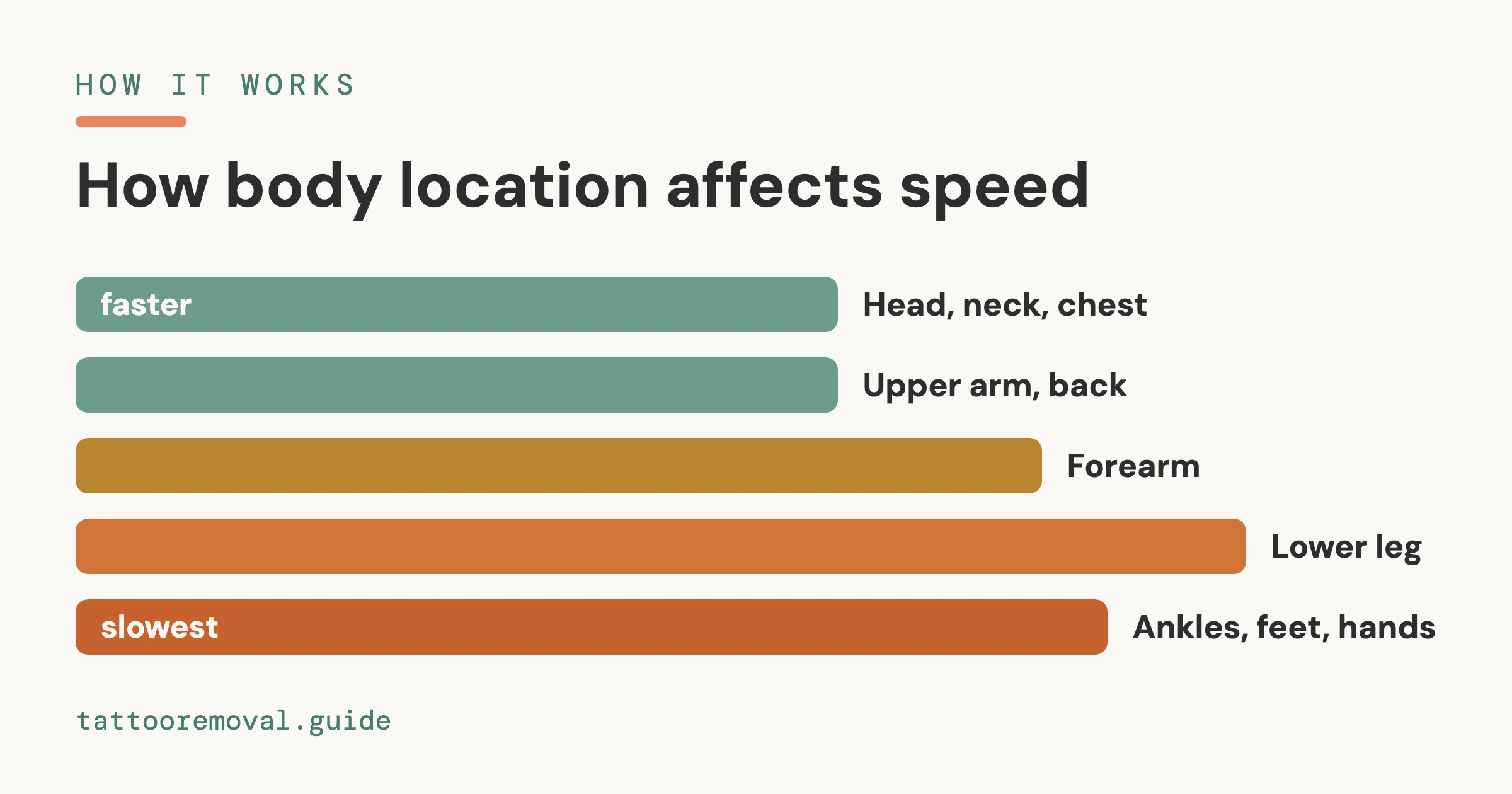
Tattoo location changes removal speed because clearance depends on blood supply: tattoos closer to the heart with strong circulation — the chest, back, and upper arms — tend to fade fastest, while extremities with slower circulation — hands, fingers, feet, ankles, and lower legs — are typically the slowest. Location is one factor among several; ink colour, depth, and age still matter alongside it. Every timeline here is an estimate, not a promise.
That's the honest answer to a question people ask before booking: will my ankle piece take longer than my friend's shoulder tattoo? Usually, yes — and the reason is plumbing, not luck. This guide explains why position matters, gives a head-to-toe rundown, ranks common locations fast to slow, and flags what still applies on top of location. Directory figures are stamped (as of July 2026).
Key Takeaways
- Blood supply sets the pace. Areas closer to the heart clear laser-shattered ink faster; extremities clear it slowest.
- Fastest: chest, back, shoulders, and upper arms. Slowest: hands, fingers, feet, ankles, and lower legs.
- Thin skin over bone hurts more — ribs, ankles, feet, and collarbone tend to feel sharper than padded areas.
- Location isn't the whole story — ink colour, depth, age, and your health still shape the total session count.
- No responsible clinic promises a session number for any location before assessing your specific tattoo.
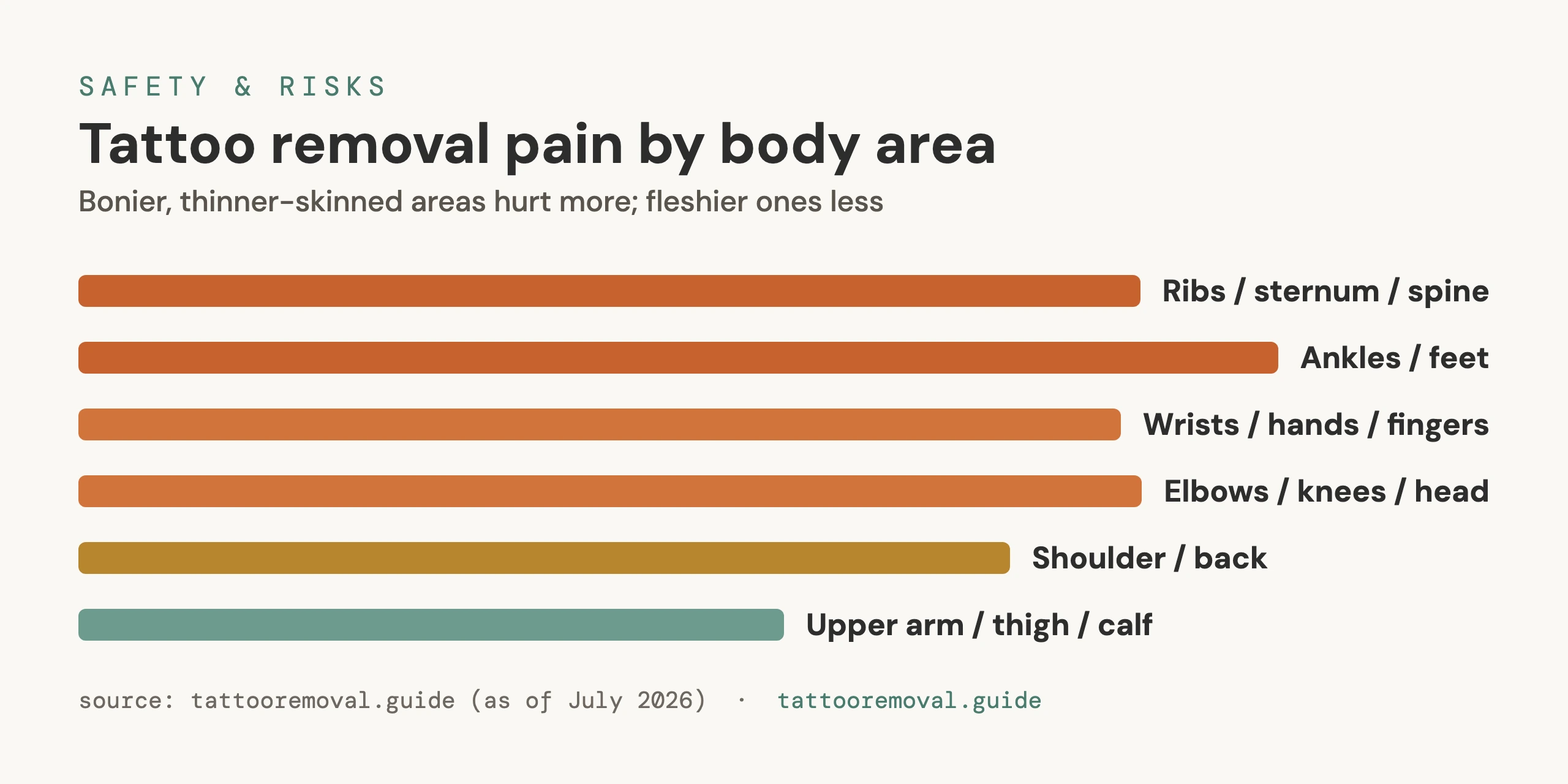 Circulation drives clearance — extremities are the slow end.
Why does body location change removal speed at all?
Location matters because the laser doesn't remove ink — your body does. A laser pulse shatters trapped pigment into fragments, and, as the Cleveland Clinic explains, those fragments are then cleared gradually through the lymphatic system over the following weeks. That clearance runs on circulation, so where the tattoo sits determines how efficiently the debris gets carried away.
Body location affects removal speed because areas with stronger blood supply and lymphatic drainage clear shattered ink faster than areas with weaker circulation. Skin closer to the torso and heart — chest, back, upper arms — is richly supplied, so the immune system flushes pigment more efficiently between sessions. Skin at the far end of your circulation — ankles, feet, hands, fingers — receives less blood flow, so the same ink clears more slowly and often less predictably. Thin skin stretched over bone in those extremities also tends to heal more slowly and can be more prone to poor healing after treatment.
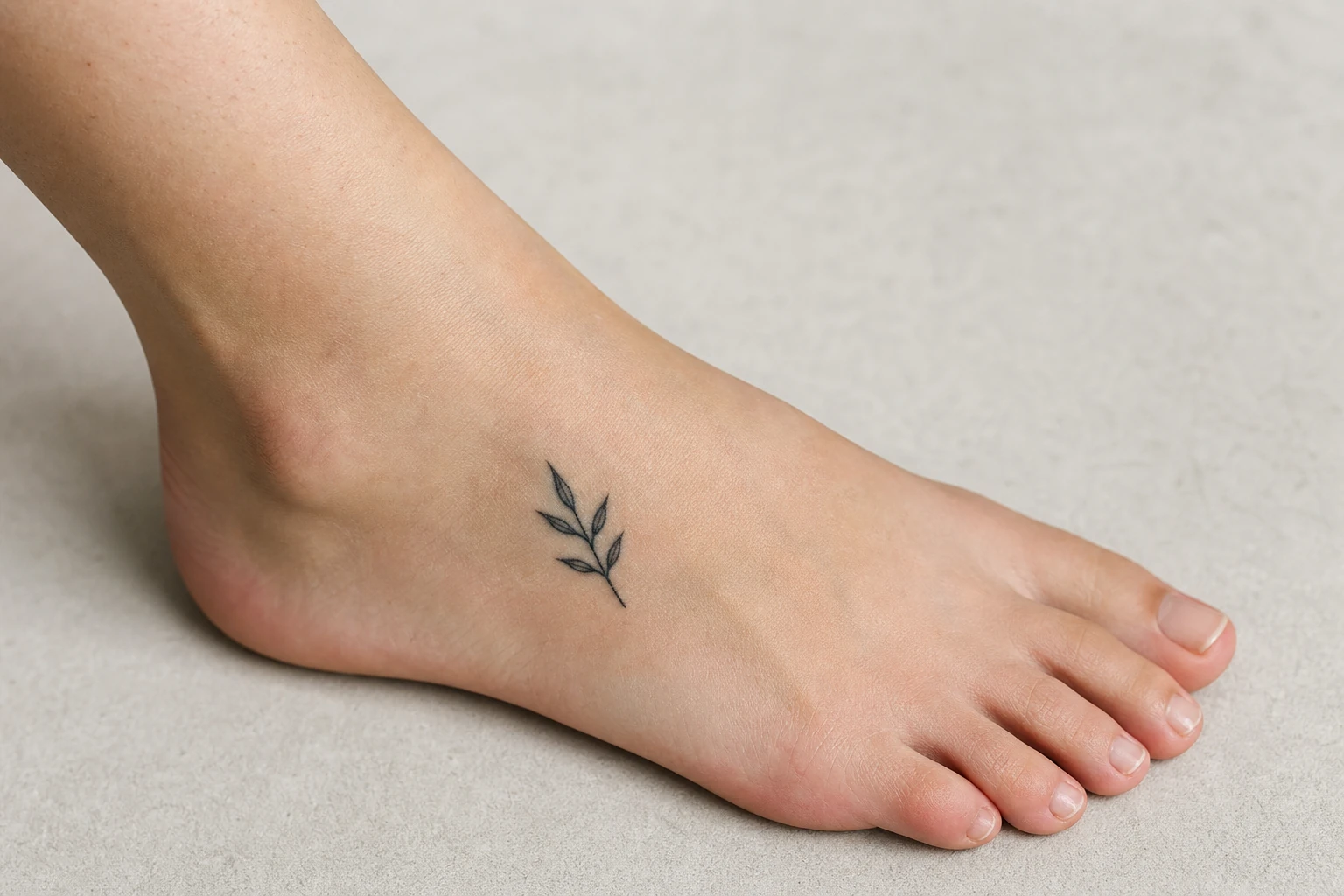 A tattoo being assessed before laser removal.
A head-to-toe rundown
Here's how position plays out across the body, from the fastest-clearing areas near your core to the slowest at your extremities.
Chest, upper back, and shoulders — fastest
The torso and shoulders sit close to the heart with strong, dense circulation, so shattered ink is cleared efficiently. These are generally the fastest-responding areas. The trade-off is comfort: skin directly over the sternum, ribs, or collarbone is thin and can feel sharper during treatment.
Upper arms — fast
The fleshy outer upper arm combines good blood supply with padding over the bone, so it tends to clear well and is one of the more tolerable areas. It's a common "first tattoo to remove" precisely because it's forgiving on both speed and comfort.
Neck, chest wall, and mid-torso — moderate to fast
Still well-circulated, these areas usually progress at a healthy pace. Nerve-dense or thin-skinned patches (the front of the neck, over the ribs) can be more uncomfortable, and providers may adjust technique accordingly.
Forearms, thighs, and calves — moderate
As you move down the limbs, circulation gradually weakens. The outer thigh is well-padded and fairly comfortable; the shin, where skin is thin over bone, can sting more and may clear a little slower than the thigh above it.
Lower legs and ankles — slow
Now you're near the end of the line for blood flow. Ankles are notorious among removal patients: they clear slowly, the skin is thin over bone, and they can be more prone to sluggish or uneven healing. Expect patience here.
Hands, fingers, and feet — slowest
The extremities are the slowest and least predictable of all. They have the weakest circulation, the thinnest skin over the most bone, constant use, and high sun exposure — a combination that makes clearance slow and finishing to completion genuinely difficult. StatPearls notes that outcomes vary widely, and hands and feet are a classic example of why. Experienced clinics treat these areas conservatively.
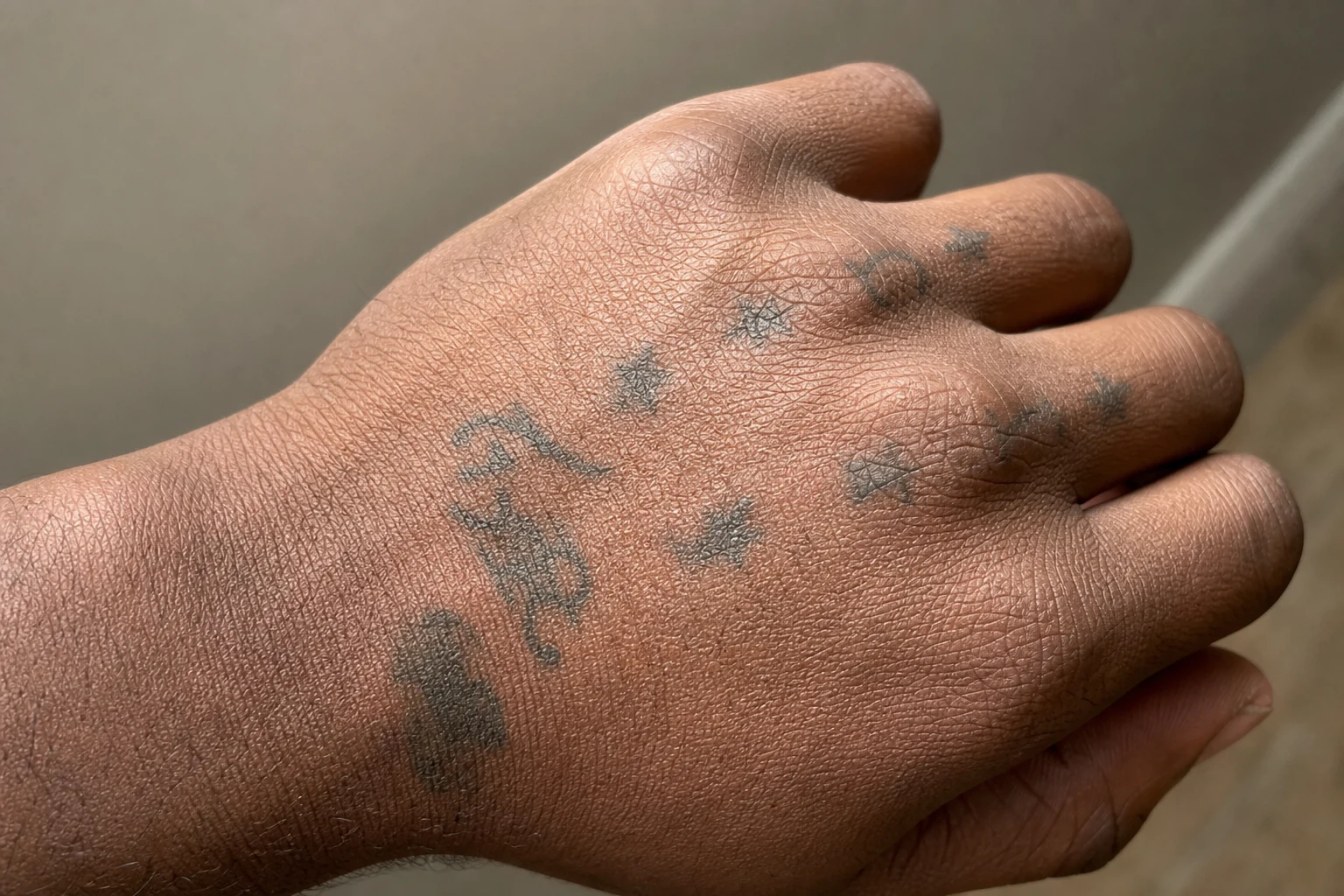 Hands and fingers clear slowly.
Locations ranked fastest to slowest
This table ranks common tattoo locations by typical clearance speed, with the underlying reason and a rough comfort note. Treat the session ranges as estimates, not promises — colour, depth, and your biology can move any of them.
| Location | Typical speed | Why | Pain note | Rough session range* |
|---|---|---|---|---|
| Chest / upper back / shoulders | Fastest | Strong circulation near the heart | Sharper over bone (sternum, ribs) | Fewer |
| Upper arm | Fast | Good blood flow, padded | Generally tolerable | Fewer |
| Neck / mid-torso | Moderate–fast | Well-circulated | Nerve-dense spots sting | Middle |
| Thigh | Moderate | Decent flow, well-padded | One of the more comfortable | Middle |
| Forearm | Moderate | Moderate circulation | Bonier near the wrist | Middle |
| Calf / shin | Moderate–slow | Circulation weakening | Thin over the shin bone | More |
| Lower leg / ankle | Slow | Poor circulation, thin skin | Sharp; slow healing | More |
| Hand / fingers / foot | Slowest | Weakest circulation, thin over bone | Sharp; least predictable | Most |
Session ranges are relative estimates for the same ink, not guaranteed counts. A black upper-arm tattoo and a green ankle tattoo are two different jobs.
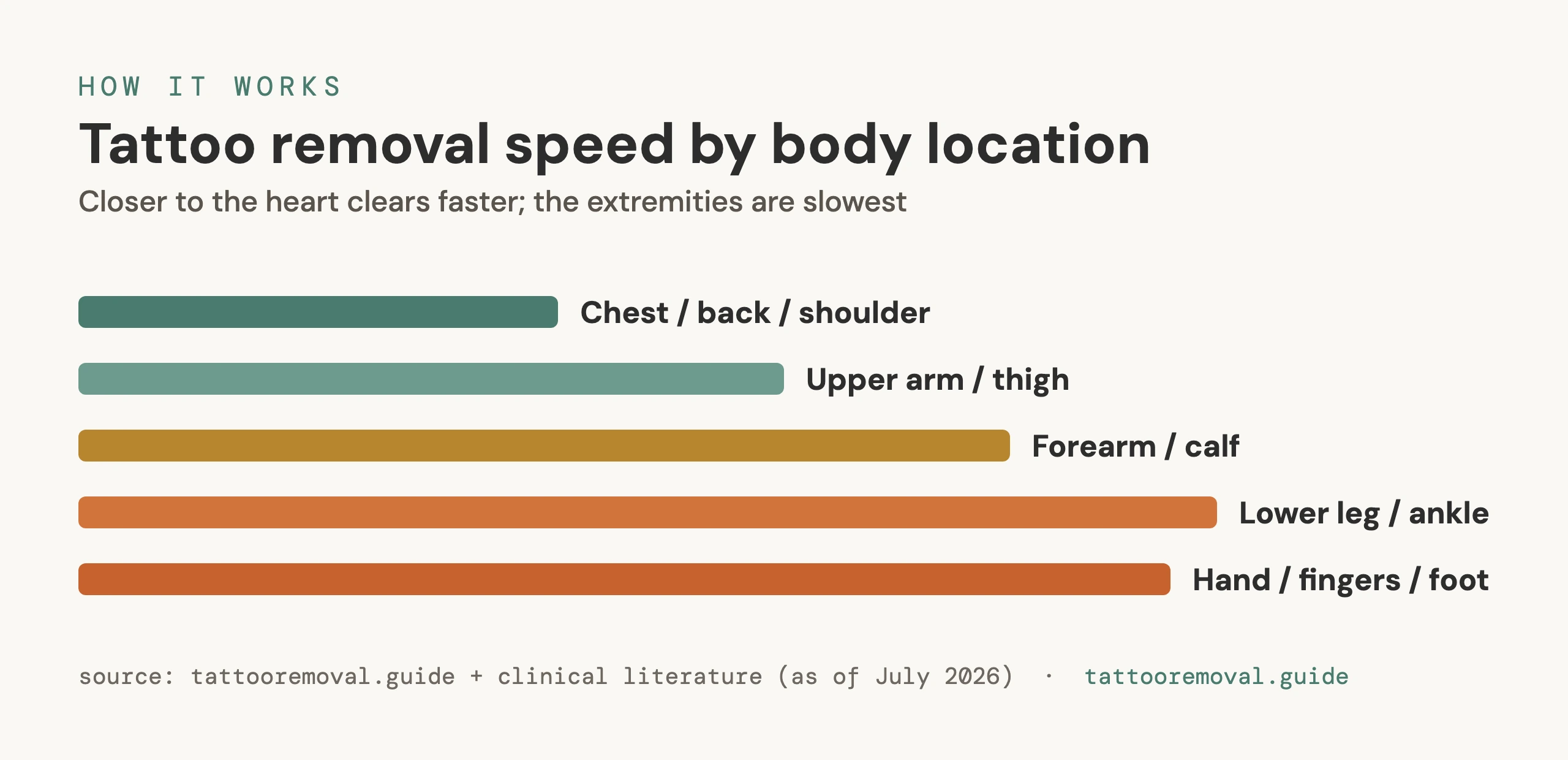 Closer to the heart clears faster; the extremities are slowest.
Location is only part of the picture
It's tempting to treat location as destiny, but it's one lever among several — and rarely the biggest. As we cover in what affects tattoo removal speed, ink colour is usually the single largest driver: black clears fastest, while green, blue, yellow, and white are the hardest regardless of where they sit. Ink depth and density (professional versus amateur), the tattoo's age, your skin type, and your overall health all stack on top of position.
So a faded, older, black tattoo on a slow location like the ankle can still outpace a fresh, densely saturated, multicoloured piece on a fast location like the shoulder. The honest way to read the table above is: location shifts the odds, but it doesn't override colour and depth. The American Academy of Dermatology also stresses that skin care and sun protection matter throughout — especially relevant for sun-exposed extremities.
This is general information, not medical advice. Tattoo removal is a medical procedure with real risks (infection, scarring, pigment change), and speed and healing vary by person, ink, skin, and location. Session counts and timelines are estimates only — consult a licensed provider about your specific tattoo.
What this means for planning your removal
If your tattoo is on a slow location, the right expectation isn't "it's hopeless" — it's "budget more patience and pick your provider carefully." Extremities benefit most from an experienced clinic, because the cautious settings that protect thin, poorly-circulated skin are exactly where inexperience shows. The FDA cautions that removal can cause lasting skin discoloration, and that risk is why a good provider trades some speed for safety on hands, feet, and ankles.
Before you commit, ask a provider to assess your tattoo — its colour, depth, age, and location together — rather than quoting an average off a chart. No honest clinic will promise an exact session count or completion date up front; what a good consultation can do is tell you which factors are working for you and which are against you, and roughly how many sessions to plan for your area.
Compare clinics before you start
Because location is largely fixed, the variable you do control is who treats you — and that matters most for slow, delicate areas like hands, feet, and ankles. The most useful next step is to see which providers near you have experience with your tattoo's location, colour, and your skin type, then ask each how many sessions they realistically expect for your piece.
Compare tattoo-removal clinics in your city to see what's available near you, or start with a dense market like tattoo removal in Melbourne to compare services side by side. For the bigger picture on timelines, read our pillar on how long tattoo removal takes, or dig into the full set of variables in what affects tattoo removal speed.
Across the 5,700 clinics we track in 1,043 cities (as of July 2026), about 18% publicly list a picosecond laser and roughly 15% list a Q-switched laser — a floor, not a full picture, since most listings don't specify their equipment at all. Neither device category is categorically superior; the right laser depends on your ink, skin, and tattoo location, which is exactly the conversation to have at a consultation.
Frequently asked questions
Does the location of a tattoo affect how fast it can be removed?
Yes. Location changes the pace because clearance depends on blood supply and lymphatic drainage. Tattoos closer to the heart with richer circulation — chest, back, and upper arms — tend to clear faster, while extremities with slower circulation — hands, fingers, feet, ankles, and lower legs — typically respond more slowly. Location is one driver among several: ink colour, depth, and age still matter alongside it.
Which body locations are the hardest to remove tattoos from?
Hands, fingers, feet, ankles, and lower legs are generally the slowest and most stubborn areas. They sit furthest from strong central circulation, so shattered ink is cleared more slowly, and the thin skin over bone there can also heal less predictably. No provider can promise a session count for any location before assessing your specific tattoo.
Which tattoos fade fastest by location?
Tattoos on the torso and upper limbs — the chest, back, shoulders, and upper arms — tend to fade fastest because they have strong blood supply and efficient lymphatic drainage close to the heart. That helps the immune system carry away laser-shattered ink between sessions. Colour, depth, and age of the ink still influence the final pace.
Why do hand and foot tattoos take longer to remove?
Hands and feet are at the far end of your circulation, so the immune system clears shattered ink more slowly there. The skin is also thin and sits close to bone, healing is often slower, and constant use and sun exposure add stress. Together these make hands, fingers, and feet among the slowest and least predictable areas to finish.
Does tattoo removal hurt more in certain places?
Discomfort varies by person, but thin skin over bone or nerve-dense areas — ribs, ankles, feet, hands, fingers, and the collarbone — tend to feel sharper than fleshier, well-padded areas like the outer thigh or upper arm. Clinics commonly use cooling and, where appropriate, topical numbing. Pain tolerance is individual, so ask your provider what to expect for your area.
How many sessions does removal take based on location?
There's no fixed number for any location — it's an estimate that depends on ink colour, depth, age, and your biology as much as position. As a rough guide, well-circulated areas like the chest or upper arm may need fewer sessions than an ankle or foot of the same ink. A consultation that assesses your specific tattoo is the only reliable way to plan a range.
Is it safe to remove tattoos on the hands, feet, and ankles?
These areas can be treated, but they are more prone to slower, less predictable healing because of thinner skin and weaker circulation, so experienced providers often treat them conservatively. The FDA notes laser removal can cause lasting skin discoloration, and cautious settings in these areas trade some speed for safety. Choose a provider experienced with extremity tattoos.
Related guides
Related Guides
- How It Works
What Is a Q-Switched Laser for Tattoo Removal? (2026)
A Q-switched laser fires nanosecond pulses to shatter tattoo ink. Here's how Q-switched Nd:YAG, ruby and alexandrite lasers work, and why they're still a gold…
- How It Works
What Is a Picosecond Laser for Tattoo Removal? (2026)
What is a picosecond laser? It fires in trillionths of a second to shatter tattoo ink. How it works, the colours it helps, and why it's not always better.
- How It Works
What Affects How Fast a Tattoo Fades? 8 Factors in Removal Speed
What affects tattoo removal speed? Ink colour, depth, age, body location, skin type, your health, smoking, and cover-ups all matter.