Do Older Tattoos Come Off Faster? How Age Affects Removal (2026)
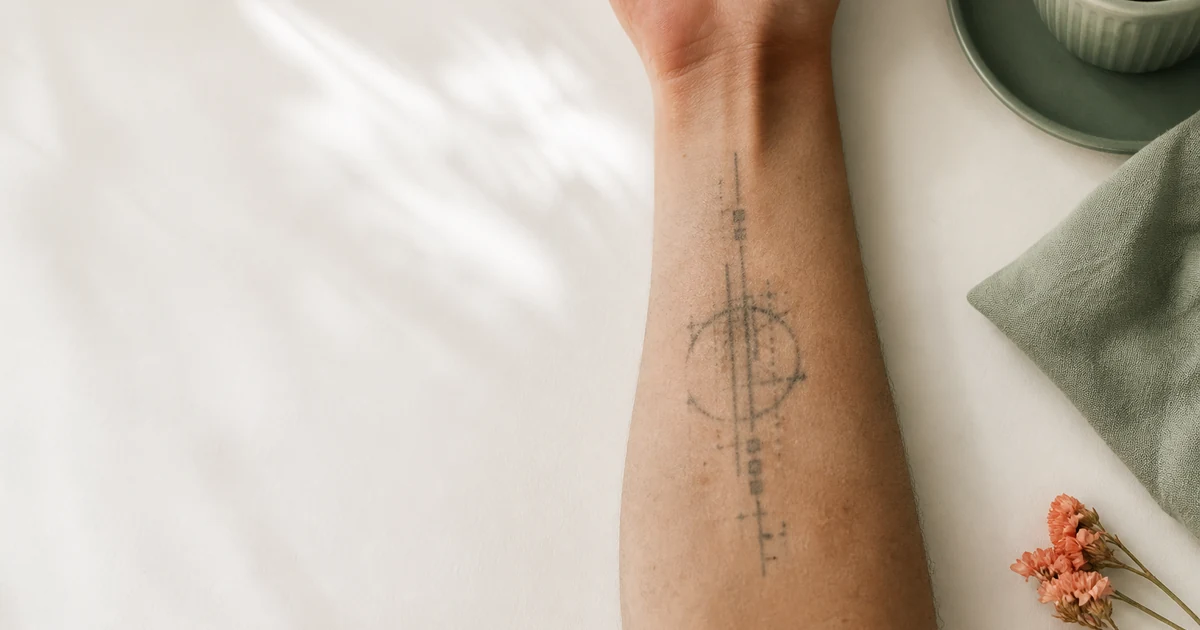
Older tattoos often come off somewhat faster than fresh ones, but not always — over years your immune system already breaks down and disperses some of the ink, and the tattoo fades and sits less densely, so it can need fewer laser sessions. The honest catch is that the tattoo's characteristics — professional vs amateur ink, how deep and saturated it was, and its colours — matter more than its age alone. Figures from the Tattoo Removal Guide directory are stamped (as of July 2026).
So "my tattoo is 15 years old, it should be easy" is a reasonable hunch, not a guarantee. This guide explains exactly why age tends to help, why the confounders can outweigh it, and how to read your own tattoo before you assume anything about a session count. All session talk here is an estimate — only a clinician who examines your tattoo can give you a realistic range.
Key Takeaways
- Age often helps, modestly. Your immune system slowly clears and disperses ink over years, and the tattoo fades and spreads, so an older tattoo usually holds less dense pigment — which can mean fewer laser sessions than a fresh one.
- Characteristics beat birthday. Ink depth, saturation, professional vs amateur application, and colour affect removal more than age alone.
- A faded old tattoo is not automatically easy. If it was heavily layered or deeply saturated, aging may only take the edge off.
- Colour still rules the laser. Age reduces density, but green and light-blue inks stay harder to clear at any age.
- Session counts are estimates, never promises — a clinician's in-person assessment (and often a test patch) is the only way to gauge yours.
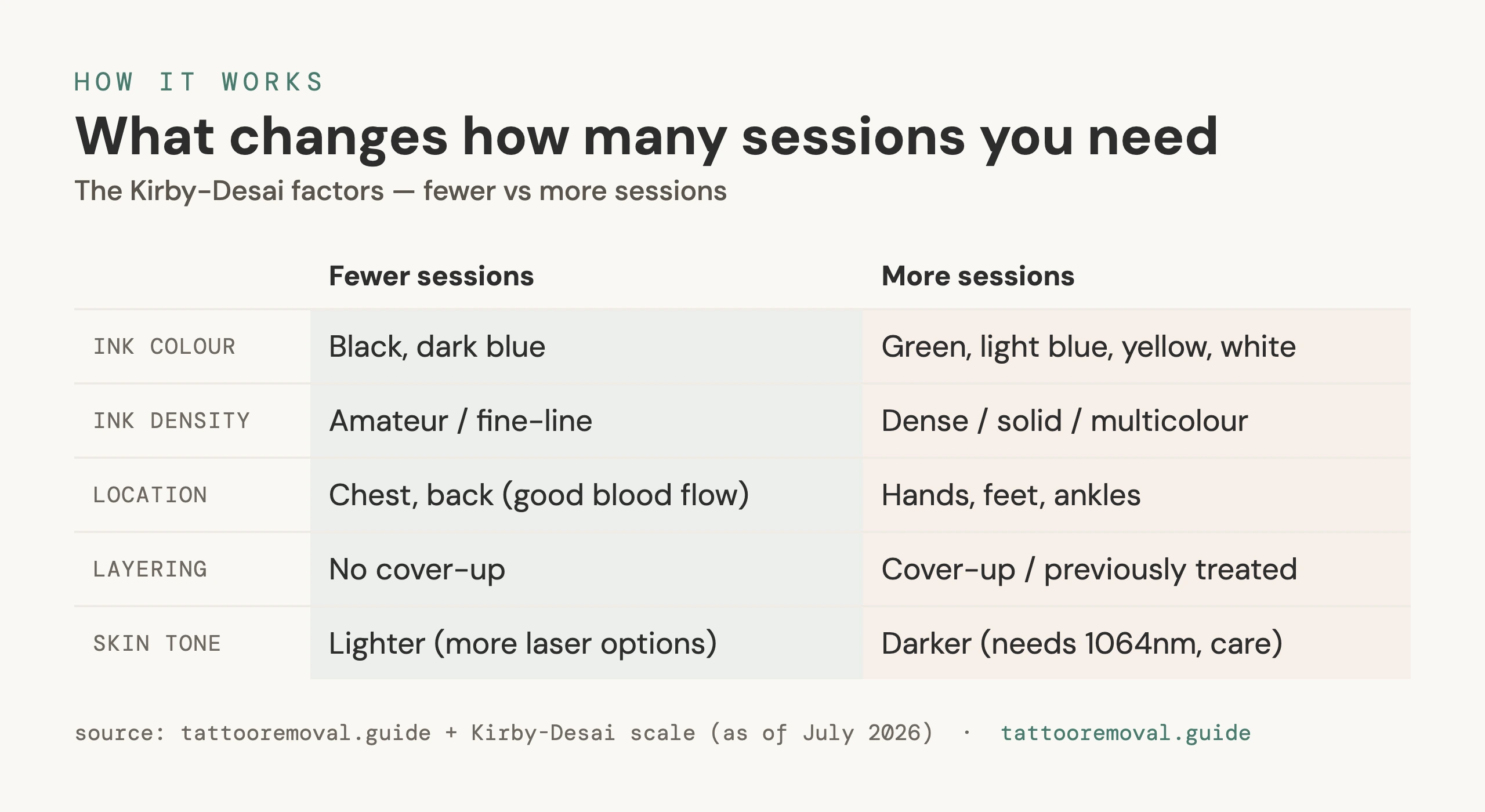 Age helps — but ink depth, colour and quality usually matter more.
Do older tattoos come off faster — and why?
Older tattoos frequently respond to laser removal in fewer sessions than brand-new ones, and there is a real mechanism behind it. Tattoo aging is the gradual fading, dispersal, and migration of ink that happens naturally over years. From the day you're tattooed, your immune system treats the ink particles as foreign material and slowly engulfs and carries a fraction of them away — the same immune clearance the Cleveland Clinic describes as the engine of laser removal, just happening far more slowly on its own. Layer on years of sun exposure breaking down pigment, and the ink spreading and settling slightly in the skin, and an old tattoo ends up lighter and less densely packed than the day it was done.
Laser removal works by shattering ink into fragments small enough for that immune system to clear, as StatPearls explains in its overview of laser tattoo removal. If time has already done some of that dispersal for you — less ink, spread thinner — there is simply less pigment left for the laser to break up. That's the honest reason aged tattoos often need fewer rounds. It is a tendency, not a rule.
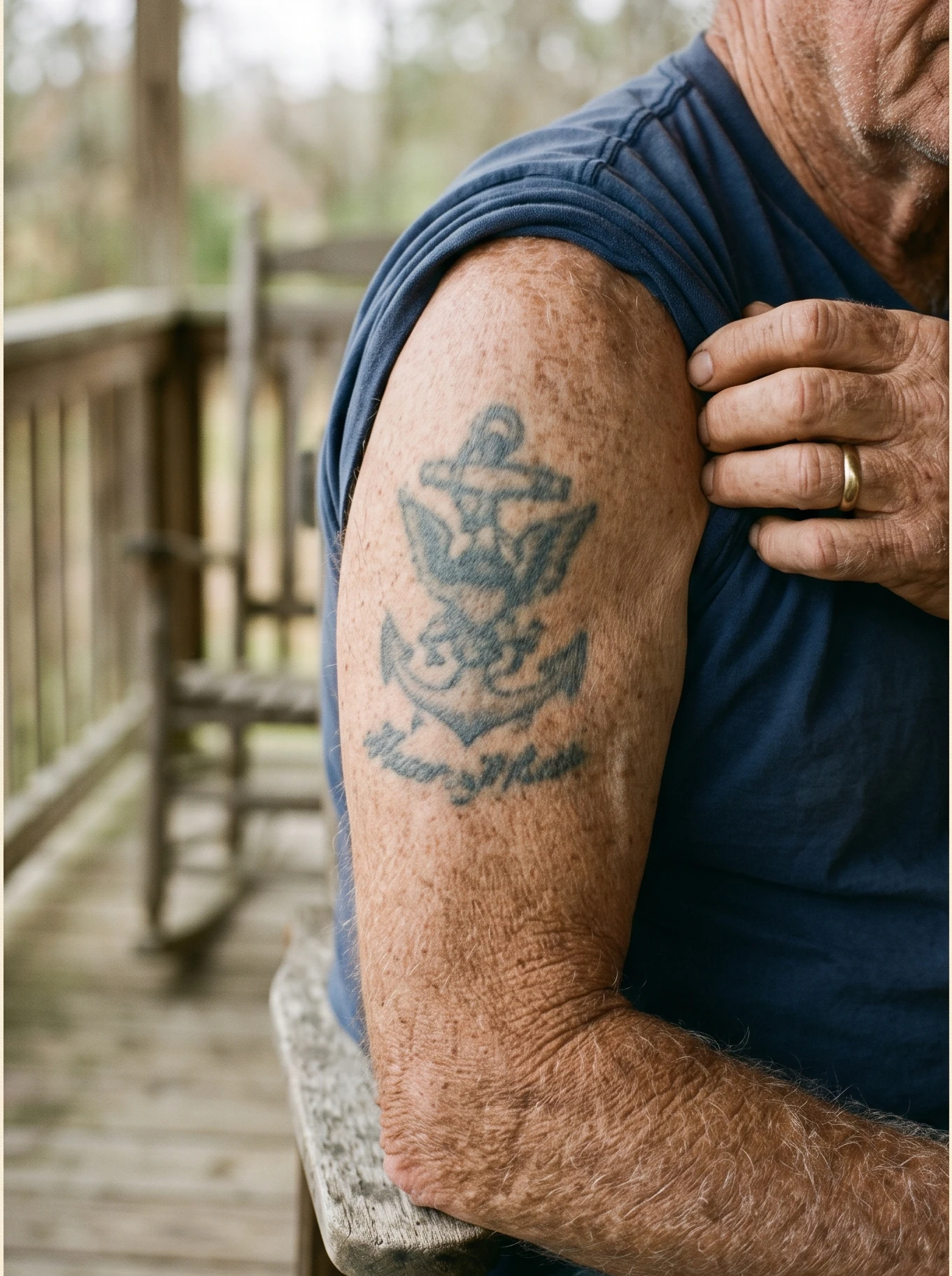 A decades-old, faded tattoo.
Why the tattoo's characteristics matter more than its age
Here's where the simple "older = easier" story breaks down. Age is one variable among several, and it is usually not the strongest one. The factors that most shape how a tattoo removes are:
- Professional vs amateur ink. Professional tattoos tend to use denser, more consistent ink placed deeper and more evenly — harder to clear. Amateur and stick-and-poke work often uses less ink at a shallower, more irregular depth, which can clear faster, though home-made inks are unpredictable.
- Saturation and layering. A tattoo that was packed solid with ink, or reworked and layered over the years, holds far more pigment than a fine single-pass line — even after decades of fading.
- Colour. Black and dark inks absorb laser light well and usually clear most readily; greens, light blues, and some warm tones stay stubborn regardless of age.
- Depth and location. Deeper ink and areas with slower circulation (hands, feet, lower legs) tend to clear more slowly.
- Sun exposure and skin. Sun history and your own skin and immune response feed into the result too.
The American Academy of Dermatology notes that tattoo ink is designed to be permanent and that removal is genuinely difficult — a useful reality check against assuming any tattoo, old or new, will lift easily.
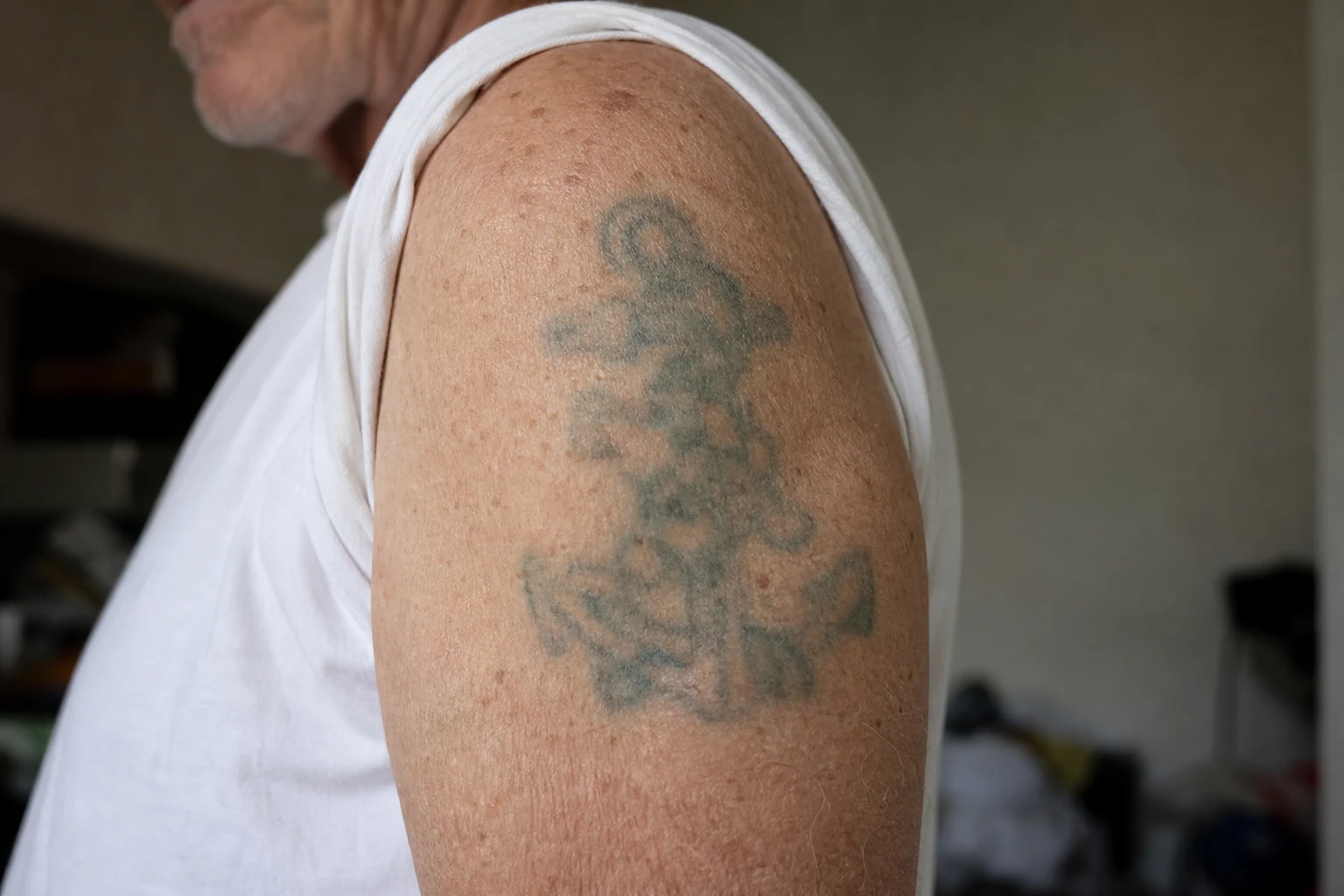 A decades-old, faded tattoo.
Old vs new: how age interacts with the tattoo's traits
The clearest way to see it is to hold the tattoo type constant and vary the age, then compare types. The table below shows relative difficulty — a directional guide, not a session count for your specific tattoo.
| Tattoo profile | Relative removal difficulty | Why |
|---|---|---|
| Old professional (well-faded, moderate ink) | Lower–moderate | Years of immune clearance and fading have thinned the pigment; less ink left to shatter |
| New professional (fresh, saturated) | Higher | Dense, deep, fully intact ink at maximum saturation — the most pigment to clear |
| Old amateur / stick-and-poke | Often lower, but unpredictable | Usually shallower, lighter ink that has faded further; but home-made pigments and uneven depth make results vary |
| Old professional, heavily layered/saturated | Moderate–higher | Age helps at the margins, but the sheer volume of layered ink keeps it stubborn |
| Old coloured (green / light blue) | Moderate–higher | Age lowers density, but these pigments resist the laser at any age |
The pattern to take away: within the same tattoo type, older usually removes a bit more easily. But a new amateur tattoo can be easier than an old, heavily saturated professional one — which is exactly why age can't be read in isolation.
The honest answer, and what it means for you
So, do older tattoos come off faster? Often somewhat — but the tattoo's characteristics matter more than its birthday. Two 20-year-old tattoos can behave completely differently: a faded amateur name might lift in relatively few sessions, while a densely packed, colour-layered sleeve of the same age is a long project. Age is a helpful signal that some ink has already dispersed, not a shortcut past the real variables.
One practical note on brand-new tattoos: you generally shouldn't start removal until the tattoo is fully healed, typically around 6–8 weeks, because treating skin that is still recovering raises the risk of irritation and scarring. Beyond that minimum, there's no benefit to waiting years just to let it fade — you can begin once it's healed, and a much older, already-faded piece may simply need fewer rounds.
Every removal procedure carries real risk, and results vary. The FDA cautions that tattoo removal can cause scarring, skin discolouration, and infection, and that complete removal isn't guaranteed by any method — another reason to treat online "how many sessions" numbers as ballpark, not fact.
This is general information, not medical advice. Laser tattoo removal is a medical procedure with real risks (scarring, infection, pigment change). Session counts, timelines, and outcomes vary by person, ink, colour, depth, and skin — consult a licensed provider about your specific tattoo.
How to find out what your old tattoo will actually take
Because age is only one input, the only reliable way to estimate your removal is an in-person assessment — ideally with a test patch, where a clinician treats a small area and watches how your specific ink responds over a few weeks. That tells you far more than the tattoo's age ever could.
Compare tattoo-removal clinics in your city to find providers who offer a consultation, or start with a dense market like tattoo removal in Melbourne to see how services and pricing stack up side by side. Across our directory of 5,700 clinics in 1,043 cities (as of July 2026), about 18% publicly list a picosecond laser and roughly 15% a Q-switched laser — a floor, since most listings don't specify their equipment at all, so don't read the rest as having none. To understand what any of them is actually doing to your ink, read our pillar on how laser tattoo removal works, and if your tattoo is stubborn despite its age, see why isn't my tattoo fading.
Frequently asked questions
Do older tattoos come off faster?
Often somewhat, but not always. Over years the immune system already breaks down and disperses some ink, so an older tattoo sits less densely and can need fewer laser sessions than a fresh one. But its characteristics — professional vs amateur ink, depth, colour, and how saturated it was — matter more than its age alone. A heavily layered old tattoo can still be stubborn. No clinic can promise a session count before assessing your tattoo.
Are old tattoos easier to remove than new ones?
Old tattoos are frequently a little easier because time and your immune system have already faded and dispersed some pigment, leaving less ink to clear. Clinics also usually wait until a new tattoo is fully healed — around 6 to 8 weeks — before starting removal. But an aged tattoo that was deeply and densely applied is not guaranteed to be easy, so "old" is a helpful sign, not a promise.
How long should I wait after getting a tattoo before removing it?
Wait until the tattoo is fully healed — typically around 6 to 8 weeks — before beginning laser removal. Treating skin that is still healing raises the risk of scarring and irritation. Beyond that minimum, there is no need to wait years; you can start once the skin has recovered, though a much older, already-faded tattoo may simply need fewer sessions.
Why does an old tattoo fade over time?
Tattoos fade because your immune system slowly engulfs and carries away ink particles, sun exposure breaks down pigment, and the ink migrates and spreads slightly in the skin over years. The result is a lighter, less sharply defined tattoo that sits less densely — which is part of why aged tattoos can respond to laser removal in fewer sessions.
Are amateur or stick-and-poke tattoos easier to remove?
Sometimes, but it depends on the ink and depth, not the label. Amateur and stick-and-poke tattoos often use less ink placed more shallowly and unevenly, which can clear faster. But home-made inks can also be inconsistent, contain unknown pigments, or sit at irregular depths, which makes results unpredictable. A consultation and a small test patch are the honest way to gauge it.
Does the colour of an old tattoo still affect removal?
Yes. Age helps by reducing ink density, but colour still drives how each pigment responds to the laser. Black and dark inks absorb laser light well and typically clear most readily, while greens, light blues, and some warm tones remain harder to target regardless of the tattoo's age. An old green tattoo can still take more sessions than an old black one.
Can I know for sure how many sessions my old tattoo will take?
No — session counts are estimates until a clinician assesses your tattoo in person. Age, ink type, colour, depth, saturation, location on the body, your skin, and sun history all feed into it. A reputable clinic gives a range after a consultation and often a test patch, and will not guarantee complete removal or an exact number of sessions in advance.
Related guides
Related Guides
- How It Works
What Is a Q-Switched Laser for Tattoo Removal? (2026)
A Q-switched laser fires nanosecond pulses to shatter tattoo ink. Here's how Q-switched Nd:YAG, ruby and alexandrite lasers work, and why they're still a gold…
- How It Works
What Is a Picosecond Laser for Tattoo Removal? (2026)
What is a picosecond laser? It fires in trillionths of a second to shatter tattoo ink. How it works, the colours it helps, and why it's not always better.
- How It Works
What Affects How Fast a Tattoo Fades? 8 Factors in Removal Speed
What affects tattoo removal speed? Ink colour, depth, age, body location, skin type, your health, smoking, and cover-ups all matter.