The Tattoo Removal Process in Detail
3 guides · updated 31 Jul 2026Most readers don’t need to know how the laser works to make a good decision about removal. But if you’re the kind of person who wants to understand the mechanism — what’s actually happening to the ink, why specific wavelengths target specific colours, and why some lasers cost more than others — this section is for you.
Two main laser types dominate the market: picosecond and Q-switched. Among Australian specialist clinics in our directory, approximately 32% offer picosecond technology and approximately 32% offer Q-switched, with another 10% offering both. Despite what some marketing implies, both technologies work — the difference is in how quickly they shatter ink and how cleanly they treat certain colours. The picosecond-vs-Q-switched guide walks through which is right for your specific tattoo.
The removal process itself is straightforward in principle: the laser delivers ultra-short pulses of light energy that target the ink particles in the deeper layers of skin without damaging the surrounding tissue. The shattered fragments are then cleared by your immune system over the following 6–8 weeks. The “Understanding the Removal Process” guide explains the biology in plain language.
If you’re considering a cover-up rather than full removal, the cover-up-vs-full-removal guide covers the increasingly popular “fade first, then cover up” approach — usually 3–6 fading sessions vs 10–14 for full removal. It can cut both cost and timeline significantly when a redesign is the actual goal.
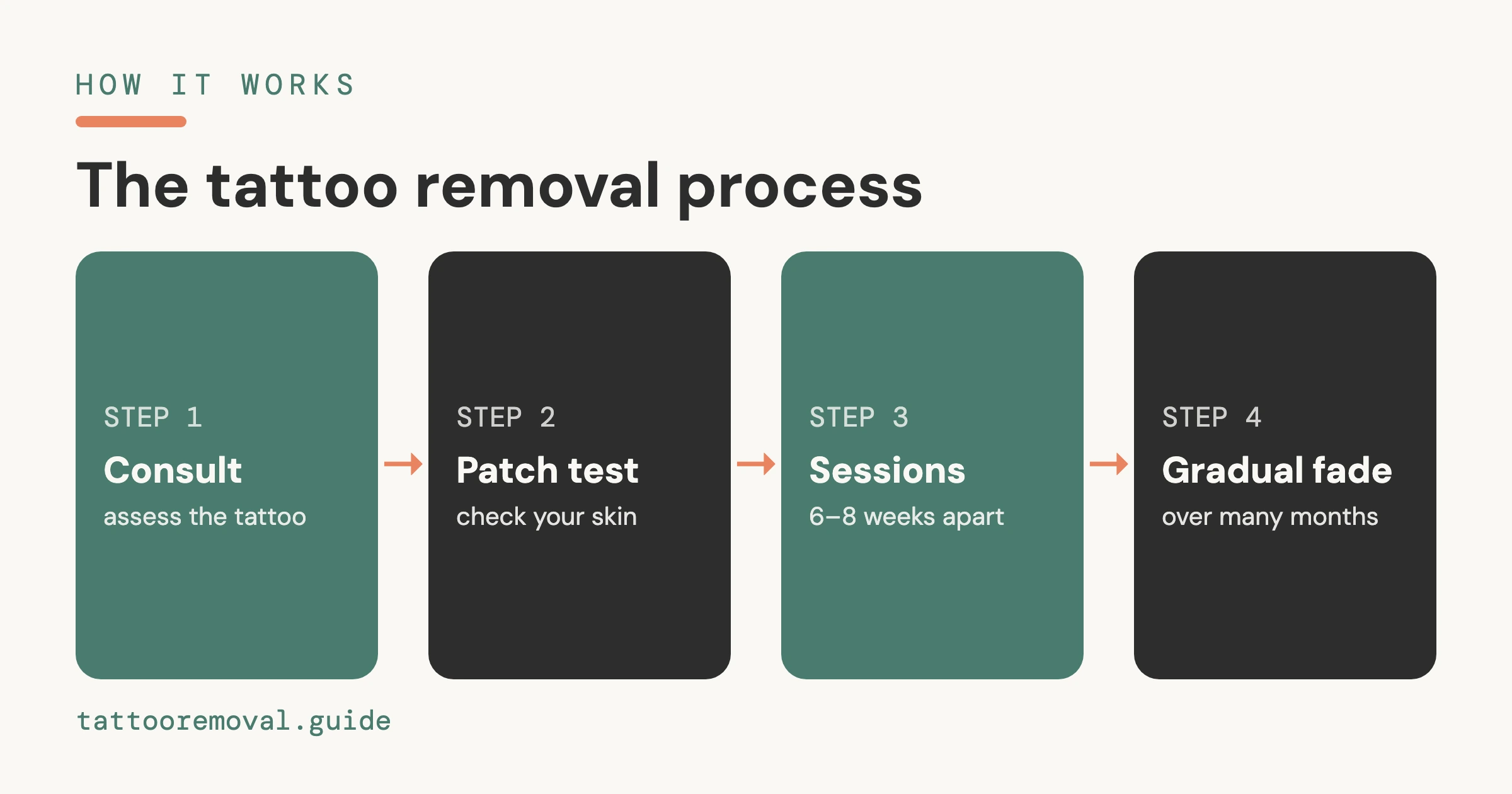
Understanding the laser tattoo removal process
How laser tattoo removal actually works: why it takes several sessions, what your body does between visits, and what influences your final results.
By TRG Editorial Team · Reviewed by Alex Pizarro · Updated 14 Apr 2026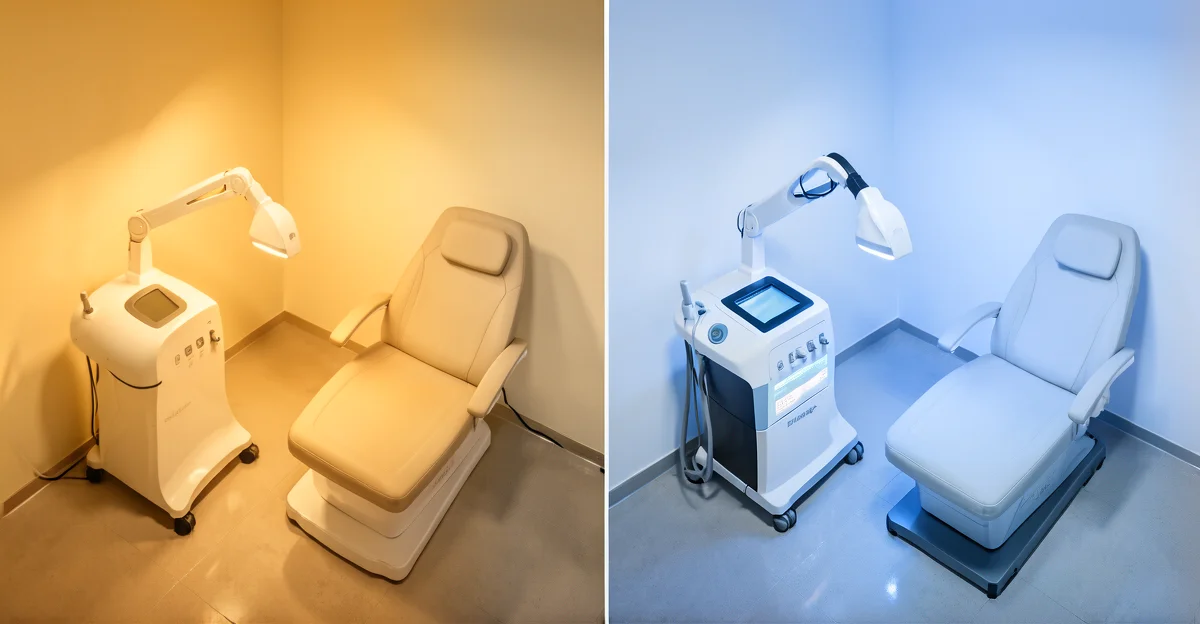
Picosecond vs Q-Switched Laser: Which Is Right for Your Tattoo?
Compare picosecond and Q-switched lasers for tattoo removal. What actually differs between them, which colours each clears, and how to pick a clinic.
By TRG Editorial Team · Reviewed by Alex Pizarro · Updated 31 Jul 2026
Cover-Up vs Full Removal: How to Decide (And When to Fade First)
Cover-up or full tattoo removal? Compare costs, timelines, and the fade-first option. Data from 1,235 Australian clinics helps you decide the right path.
By TRG Editorial Team · Reviewed by Alex Pizarro · Updated 31 Jul 2026