Understanding the laser tattoo removal process
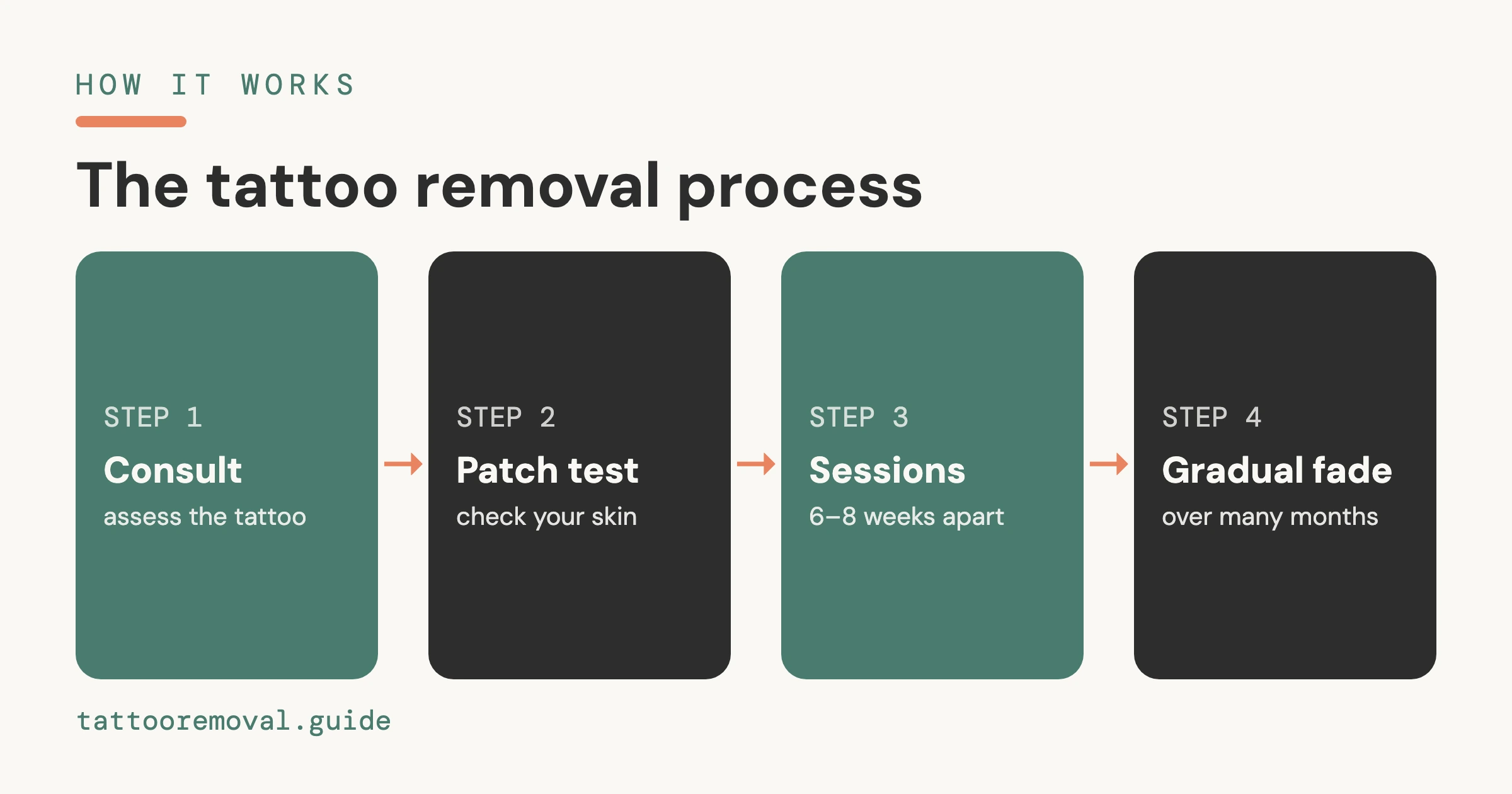
How laser removal actually works
Laser tattoo removal uses high-intensity light pulses to break ink particles in your skin into smaller fragments. Your immune system then gradually flushes these away. This is why results appear gradually over weeks after each session — you're not seeing the laser do the work in real time.
Why it takes multiple sessions
Each session breaks down a portion of the ink. But the laser can only penetrate so deep in a single pass, and your body needs time to clear the fragments before the next treatment. Spacing sessions 6–8 weeks apart gives your immune system time to do its job.
Complete removal isn't always the goal
Some people want full removal. Others want to fade a tattoo enough for a cover-up, which typically takes fewer sessions. Some want to lighten specific areas. Be clear with your clinic about your goal — it will shape the treatment plan.
Factors that affect your results
Tattoo age (older ink fades faster), ink depth, skin tone, immune health, sun exposure, and smoking all influence how your tattoo responds. A good practitioner will walk through these factors in your consultation.
Related Guides
- Treatment Planning
When to Start Tattoo Removal for YOUR Summer (North or South)
Why April is a hard deadline in the north and an ideal start in the south — the session math behind planning tattoo removal around your summer.
- Treatment Planning
What to Expect at Your Tattoo Removal Consultation
A good consultation gives you two numbers: how many sessions, and a per-session price. Here's the walkthrough, and the questions that get you a real quote.
- Treatment Planning
Fading a Tattoo Before a Cover-Up: A Timing Guide
Cover-ups often need only 3–5 fading sessions, not the 8–12 for full removal. Here's how to plan the timeline and keep your artist and clinic aligned.