How to Speed Up Tattoo Removal Safely: What Actually Helps (2026)
You can't dramatically shortcut tattoo removal, because the laser only shatters the ink — your immune system does the slow work of carrying it away, and that biological clearance can't be forced. What you can do is support it: stay hydrated, don't smoke, keep your circulation and general health good, protect the area from the sun, and honour the 6–8 week spacing between sessions. None of this guarantees a faster result or a set number of sessions.
That's the honest version of a question almost every removal patient asks: is there anything I can do to make this go faster? The useful answer separates the handful of habits that genuinely support clearance from the "boosters" and shortcuts that don't work — and points out that the biggest speed levers are actually on the clinic's side, not yours. All timelines here are estimates, not promises. Directory figures are stamped (as of July 2026).
Key Takeaways
- The bottleneck is biology, not the laser — your immune system clears the shattered ink over weeks, and that pace can't be forced.
- A few habits genuinely help at the margins: hydration, not smoking, moderate exercise, sleep, sun protection, and honouring session spacing.
- The biggest levers are clinic-side — the right wavelength for your ink, adequate energy per session, and an experienced operator. Ask about them.
- Skip the "boosters." No supplement, cream, or "removal accelerator" is proven to speed clearance; some just irritate healing skin.
- Never rush the spacing. Sessions too close together raise side-effect risk without finishing faster.
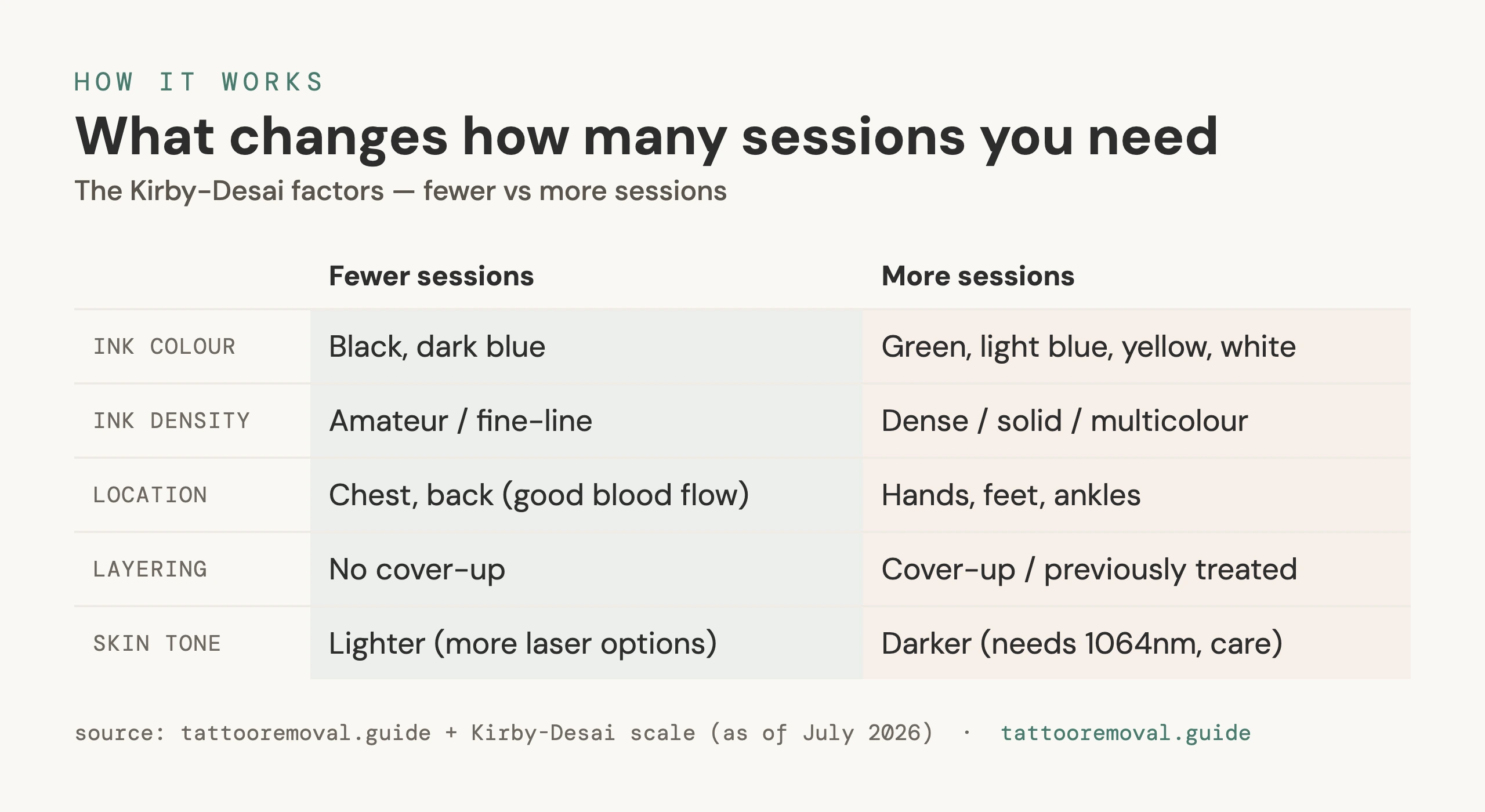 The biggest levers are clinic-side; you support the immune clearance.
Why you can't just force it faster
Tattoo removal is slow for a reason that no habit can override: immune clearance is the rate-limiting step in tattoo removal — the speed at which immune cells engulf shattered ink and drain it through the lymphatic system between sessions. The laser pulse only fragments the trapped pigment; as the Cleveland Clinic explains, your body then carries those fragments away gradually over the following weeks.
That's why sessions are spaced roughly 6–8 weeks apart — the gap lets the skin heal and the body finish clearing the last round. You can support that clearance, but you can't command it to run faster. Anyone selling you a way to "double" the pace is selling you something the biology doesn't allow.
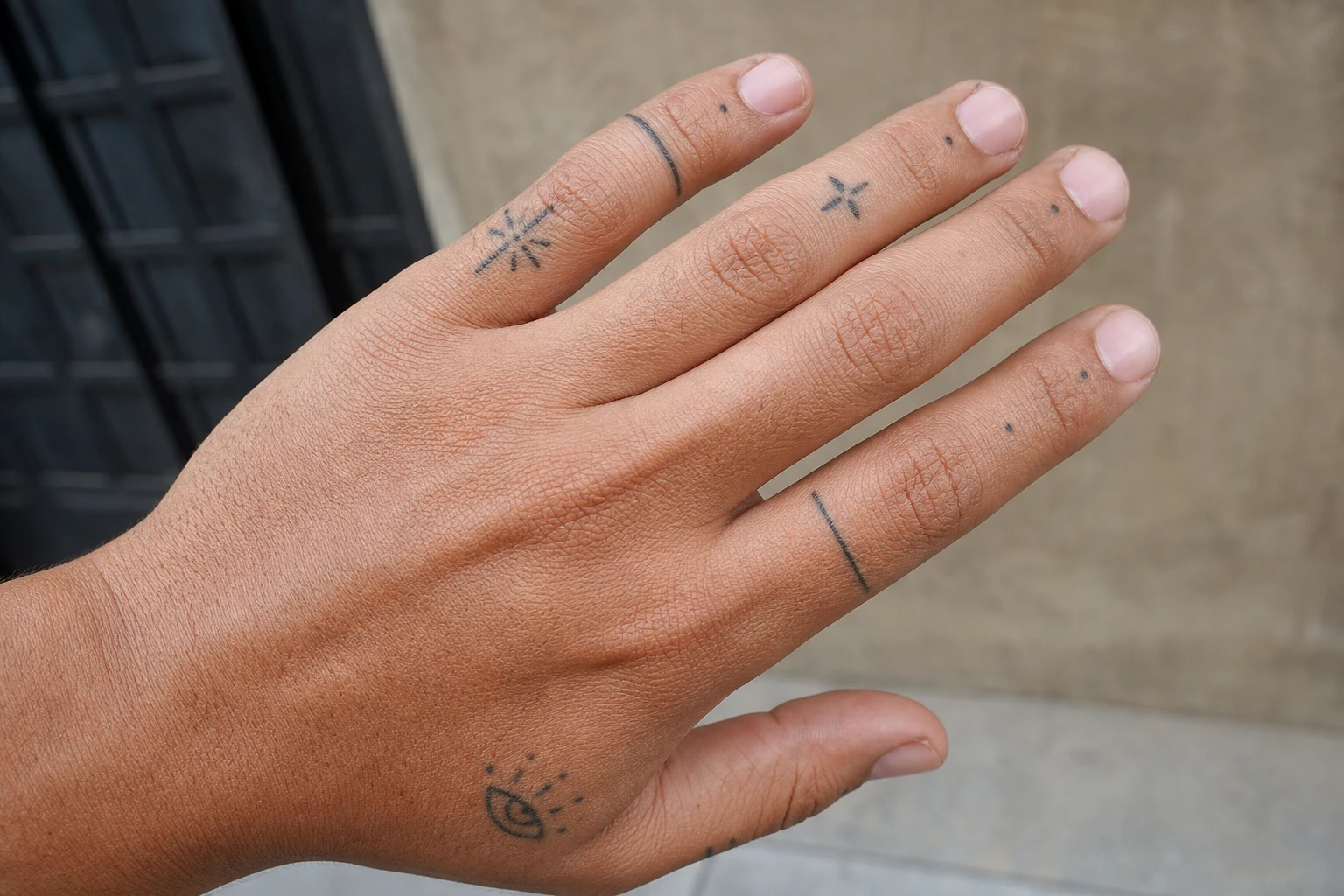 Flesh-toned cover ink can be unpredictable to remove.
What actually helps (and how much)
Everything below shares one theme: it supports the circulation and immune function that do the clearing. Think of these as helping your body work at its own best pace — not exceeding it.
- Stay well hydrated. Normal good hydration supports circulation and lymphatic drainage. Sensible — but drinking extra beyond your needs doesn't speed anything.
- Don't smoke. This is the one with the clearest evidence. Smoking impairs circulation and immune response, and is associated with slower, less complete removal — smokers may need more sessions on average. It's the biggest habit-level lever you control. We cover the detail in does smoking affect tattoo removal.
- Keep moving. Moderate, regular exercise supports circulation and general health, which supports clearance. Nothing extreme — and never work out on freshly treated, blistered skin.
- Sleep and general health. Your immune system does the work; run it well. Adequate sleep, good nutrition, and managing conditions or medications that suppress immunity all matter at the margins.
- Protect the area from the sun. Sun-tanned or burned skin often means a session has to be postponed or run at gentler settings, which slows you down. The American Academy of Dermatology advises sun protection and good skin care throughout — keep the treated area covered or under sunscreen between sessions.
- Honour the 6–8 week spacing. Counter-intuitively, not rushing is a speed strategy: treating before the last round has cleared raises side-effect risk without improving results. For the full picture on pace, see our pillar on how long tattoo removal takes.
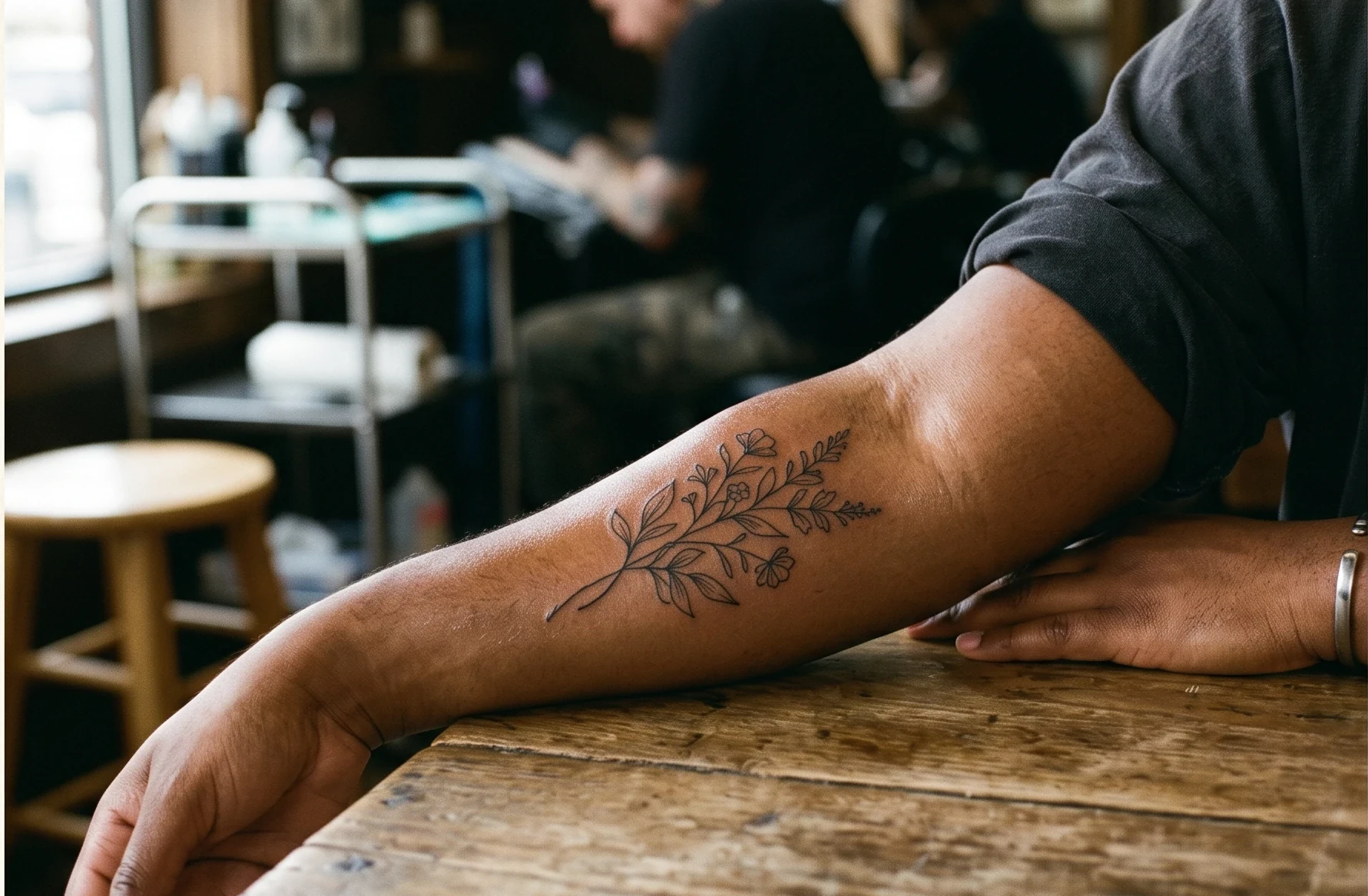 Dense black ink — the easiest colour to clear.
What's low-evidence — treat with skepticism
Some things sit in a grey zone: plausibly harmless, popular in clinics, but not backed by strong proof that they speed removal.
- Lymphatic massage and dry brushing. The theory is that stimulating lymph flow helps drain shattered ink faster. It's low-risk if you avoid the healing treatment site — but there's no solid evidence it meaningfully accelerates clearance. Treat it as optional, not a proven accelerator, and never work on broken, blistered, or scabbing skin. Ask your provider first.
- "Drink loads of water" as a hack. Good hydration helps; mega-dosing water does not turn into faster removal.
What to skip entirely
- Supplements and "removal boosters." No pill or powder is shown to reliably speed laser tattoo removal. Some irritate healing skin.
- Removal creams and DIY acids. The FDA cautions that at-home tattoo-removal products can cause skin reactions and are not proven to work — and they can leave scarring that makes later laser work harder.
- Any product or clinic that guarantees a session count or a completion date before assessing your tattoo. As StatPearls notes, the number of sessions depends on factors like ink colour, depth, and location — it isn't something to promise up front.
The biggest levers are clinic-side
Here's the part patients often miss: the factors that move removal speed the most aren't in your hands at all — they're in the clinic's settings.
- The right wavelength for your ink. Different colours absorb different wavelengths. Black responds to a broad range; green and blue need specific ones. Using the wrong device on stubborn colours wastes sessions.
- Adequate energy (fluence). Too timid and the ink barely fragments; the right, safe energy per session does more real work each visit.
- An experienced operator. Skilled providers match device, settings, and spacing to your specific tattoo and skin — and adjust as they go.
So the highest-value thing you can do isn't a supplement or a massage — it's choosing a clinic that will use the right laser for your ink and skin, and asking them directly how they'll approach it.
What helps vs. what doesn't — at a glance
| Lever | Does it help? | Evidence |
|---|---|---|
| Not smoking | Yes — meaningfully | Associated with faster, more complete clearance; impairs circulation and immunity when you do |
| Staying well hydrated | Modestly (supports clearance) | Sensible for circulation/drainage; no proof extra water speeds it |
| Moderate exercise / good circulation | Modestly | Supports the immune clearance that does the work |
| Sleep & general health | Modestly | Immune function drives clearance; poor health can slow it |
| Sun protection of the area | Yes (prevents delays) | Sunburn/tan can force gentler settings or postponed sessions |
| Honouring 6–8 week spacing | Yes (safety + no slower) | Rushing raises side-effect risk without better results |
| Lymphatic massage / dry brushing | Maybe, low-evidence | Plausible, generally low-risk off the treated area; not proven to accelerate |
| Right wavelength & adequate fluence | Yes — biggest lever | Clinic-side; correct device/energy for your ink does the real work |
| Supplements / "removal boosters" | No | No reliable evidence; some irritate healing skin |
| Removal creams / DIY acids | No — can harm | Not proven; risk of reactions and scarring (FDA) |
| Squeezing sessions closer together | No — backfires | Skin needs to heal and clear before the next round |
This is general information, not medical advice. Tattoo removal is a medical procedure with real risks (infection, scarring, pigment change), and speed varies by person, ink, and skin. Session counts and timelines are estimates only — consult a licensed provider about your specific tattoo before changing anything about your care.
Put safety ahead of speed
The takeaway is a little deflating and a lot freeing: there's no trick to dramatically shorten removal, so you can stop chasing hacks. Support your body — don't smoke, stay hydrated, sleep, move, protect the area, and keep to the spacing — then let the clinic-side factors (right laser, right energy, experienced hands) do the heavy lifting. Trying to force speed, by contrast, is how people end up with blistering, pigment change, or scarring, none of which make removal faster.
Compare clinics before you start
Because the biggest speed lever is who treats you and what device they use, the most useful next step is to see which providers near you handle your ink colour and skin type well — and to ask each one how they'll match the laser to your tattoo.
Compare tattoo-removal clinics in your city to see what's available near you, or start with a dense market like tattoo removal in Melbourne to compare services side by side. For the bigger picture on timelines, read our pillar on how long tattoo removal takes, or dig into the one habit with the clearest evidence in does smoking affect tattoo removal.
Across the 5,700 clinics we track in 1,043 cities (as of July 2026) — averaging 4.79★ — about 18% publicly list a picosecond laser and roughly 15% list a Q-switched laser, a floor rather than a full picture since most listings don't specify their equipment at all. Neither device category is categorically superior; the right laser depends on your ink and skin, which is exactly the conversation to have at a consultation.
Frequently asked questions
Can you actually speed up tattoo removal?
Not dramatically. The laser shatters the ink, but your immune system carries the fragments away, and that biological clearance sets the real pace — it can't be forced. What you can do is support it: stay well hydrated, don't smoke, keep moving for good circulation, sleep well, protect the area from the sun, and honour the 6–8 week spacing between sessions. These help your body do its job; they don't guarantee a faster result or a set number of sessions.
Does the immune system remove tattoo ink?
Yes — that's the core mechanism. Laser energy breaks trapped pigment into fragments small enough for immune cells to engulf and drain through the lymphatic system over the weeks after each session. Because clearance depends on healthy circulation and immune function, general health habits that support those systems can support removal, while things that impair them (like smoking) can slow it.
Do lymphatic massage or dry brushing make tattoo removal faster?
The evidence is thin. Some clinics suggest gentle lymphatic massage or light exercise to support drainage, and it's generally low-risk if you avoid the healing treatment site, but there's no strong proof it meaningfully speeds ink clearance. Treat it as optional comfort, not a proven accelerator — and never massage broken, blistered, or scabbed skin. Ask your provider before trying anything on the treated area.
Do supplements or "tattoo removal boosters" speed up removal?
No product has been shown to reliably speed laser tattoo removal, and creams or pills that promise to "boost" or "accelerate" clearance aren't supported by good evidence. Some can even irritate healing skin. The FDA warns that removal ointments and DIY products can cause reactions. Save your money, follow your clinic's aftercare, and be skeptical of any speed guarantee.
Does drinking more water help tattoo removal?
Staying well hydrated supports healthy circulation and the lymphatic drainage that clears shattered ink, so normal good hydration is sensible. But there's no evidence that drinking extra water beyond your body's needs speeds removal or reduces session count. Hydration is a supporting habit, not a shortcut.
Can I have sessions closer together to finish faster?
No — rushing usually backfires. Sessions are spaced roughly 6–8 weeks apart to let the skin fully heal and the immune system clear the previous round of shattered ink. Treating too soon raises the risk of side effects like blistering and scarring without improving results, because the ink from the last session hasn't cleared yet. Honouring the spacing is safer and no slower overall.
What speeds up tattoo removal the most?
The biggest levers are on the clinic side, not the patient side: the right laser wavelength for your ink colour and skin, adequate energy (fluence) per session, and an experienced operator. Ask a provider how they'll match the device to your tattoo. Your own habits — not smoking, hydration, sleep, sun protection, honouring spacing — help at the margins but won't override the biology or the equipment.
Related guides
Related Guides
- How It Works
What Is a Q-Switched Laser for Tattoo Removal? (2026)
A Q-switched laser fires nanosecond pulses to shatter tattoo ink. Here's how Q-switched Nd:YAG, ruby and alexandrite lasers work, and why they're still a gold…
- How It Works
What Is a Picosecond Laser for Tattoo Removal? (2026)
What is a picosecond laser? It fires in trillionths of a second to shatter tattoo ink. How it works, the colours it helps, and why it's not always better.
- How It Works
What Affects How Fast a Tattoo Fades? 8 Factors in Removal Speed
What affects tattoo removal speed? Ink colour, depth, age, body location, skin type, your health, smoking, and cover-ups all matter.