Does Smoking Affect Tattoo Removal? What the Research Actually Shows
Yes — smoking can slow laser tattoo removal. In a 352-patient study published in Archives of Dermatology in 2012, smokers were substantially less likely to clear their tattoo within ten sessions than non-smokers. The reason is biological: laser removal only shatters the ink, and your immune system clears the fragments — a process that smoking impairs.
That single mechanism explains why lifestyle matters at all. This guide covers what the research shows, why circulation and immune health change your results, and the practical, non-preachy things you can actually do — using medical sources and figures from the Tattoo Removal Guide directory, stamped (as of July 2026).
Key Takeaways
- Removal works by shatter-and-clear: the laser breaks the ink apart, then your immune and lymphatic system carries it away. Smoking impairs that second, clearing step.
- In a 352-patient cohort (Bencini & Naldi, 2012), smoking was linked to a lower likelihood of clearing a tattoo within ten sessions — reported as up to roughly 70% lower odds at that point.
- Smoking is a factor, not a dealbreaker — smokers still clear tattoos, often just more slowly or in more sessions.
- Other lifestyle inputs (hydration, exercise, general health, sun protection, alcohol) nudge results in smaller ways; ink colour, density and age usually matter more.
- Across the 5,700 clinics we track in 1,043 cities (as of July 2026), no laser changes this biology — clearance is your body's job between sessions.
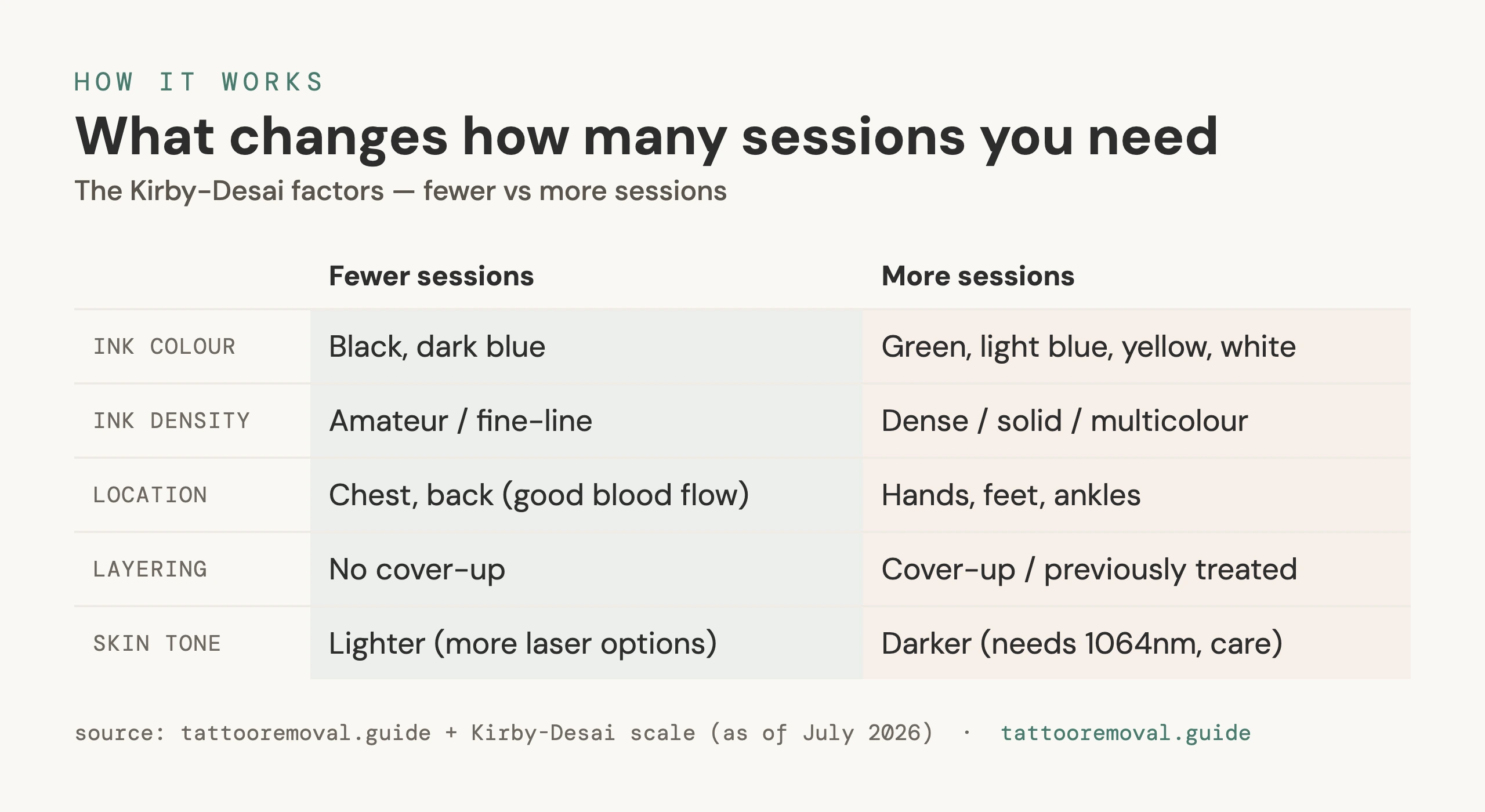 The factors that decide how many sessions you'll need.
The mechanism: why lifestyle can matter at all
To understand why smoking has any effect, you need to know what the laser actually does. The shatter-and-clear mechanism is the two-step process behind all laser tattoo removal: the laser fires ultra-short pulses that fracture the ink into microscopic fragments, and then your immune system's cells carry those fragments into the lymphatic system to be cleared over the following weeks. As the Cleveland Clinic explains, the laser breaks the ink into smaller pieces that the body then absorbs and eliminates.
The StatPearls clinical reference describes the same sequence: selective absorption by the pigment, fragmentation, then immune-mediated clearance between treatments. The pillar guide on how laser tattoo removal works walks through it in full.
Here is the key insight: the laser step is fast and identical for everyone. The clearance step depends on your body — your circulation, your lymphatic drainage, your immune function. Anything that impairs those systems can slow the invisible half of the work. Smoking is one of the clearest examples, because it narrows blood vessels, lowers oxygen delivery to the skin, and dampens immune activity.
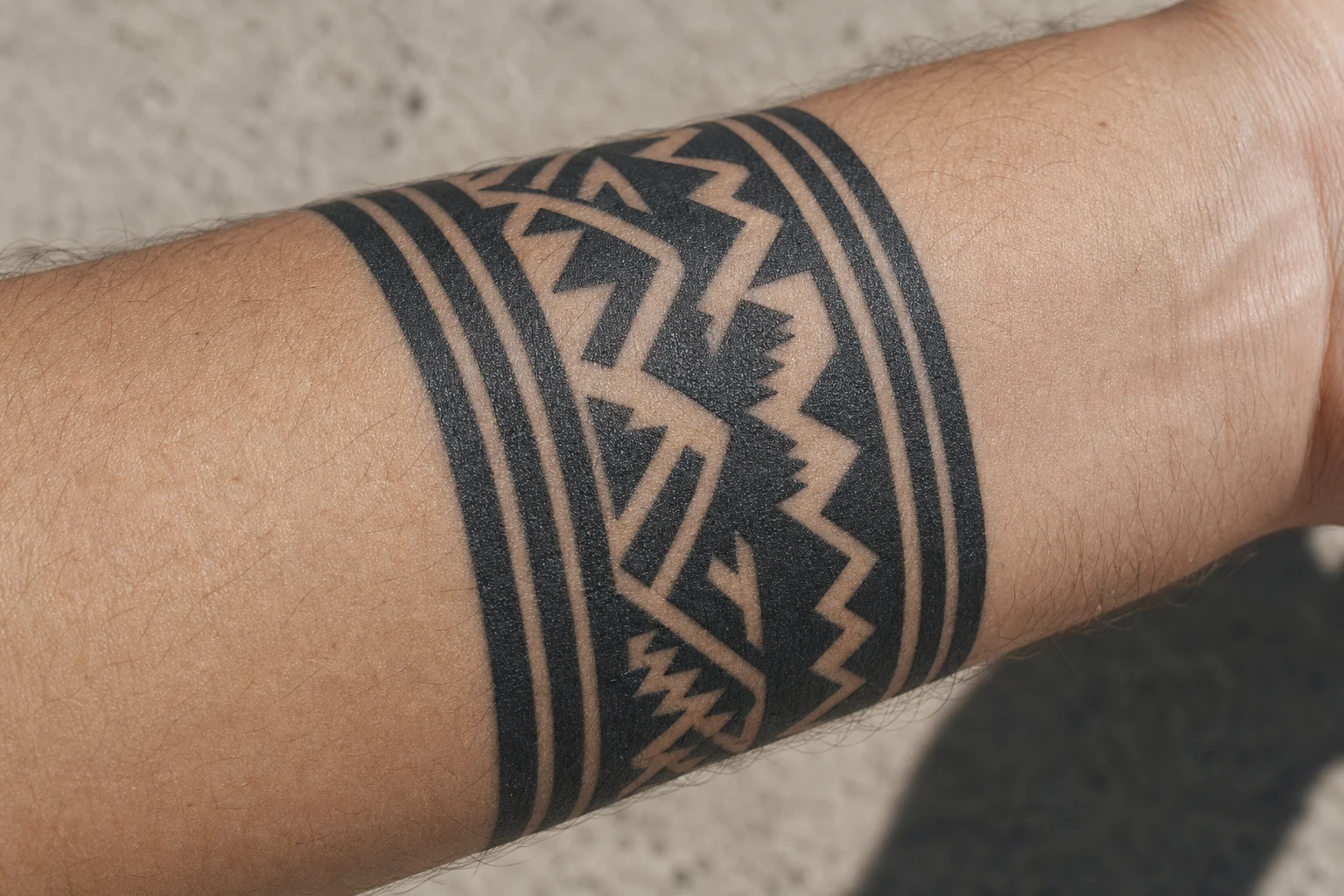 Smoking slows the immune clearance that fades ink between sessions.
What the research actually found
The most-cited evidence comes from a large Italian cohort. Bencini, Cazzaniga, Tourlaki, Galimberti and Naldi followed 352 patients treated with Q-switched laser and published their analysis in Archives of Dermatology in 2012. Overall, about 47% of patients had their tattoo effectively removed after ten sessions, and around three-quarters cleared after fifteen.
Buried in that data was a lifestyle signal: smoking was one of the factors associated with a reduced clinical response. Coverage of the study reported smokers as having up to roughly 70% lower odds of clearing a tattoo at the ten-session mark compared with non-smokers. That is a meaningful gap — but read it honestly. It does not mean smokers can't clear tattoos; it means, in this cohort, clearance tended to take longer or need more passes.
It is also a single observational study, not a guarantee about you. Individual results vary, and the same paper found that tattoo size and location mattered too. Treat it as a real factor to weigh, not a verdict.
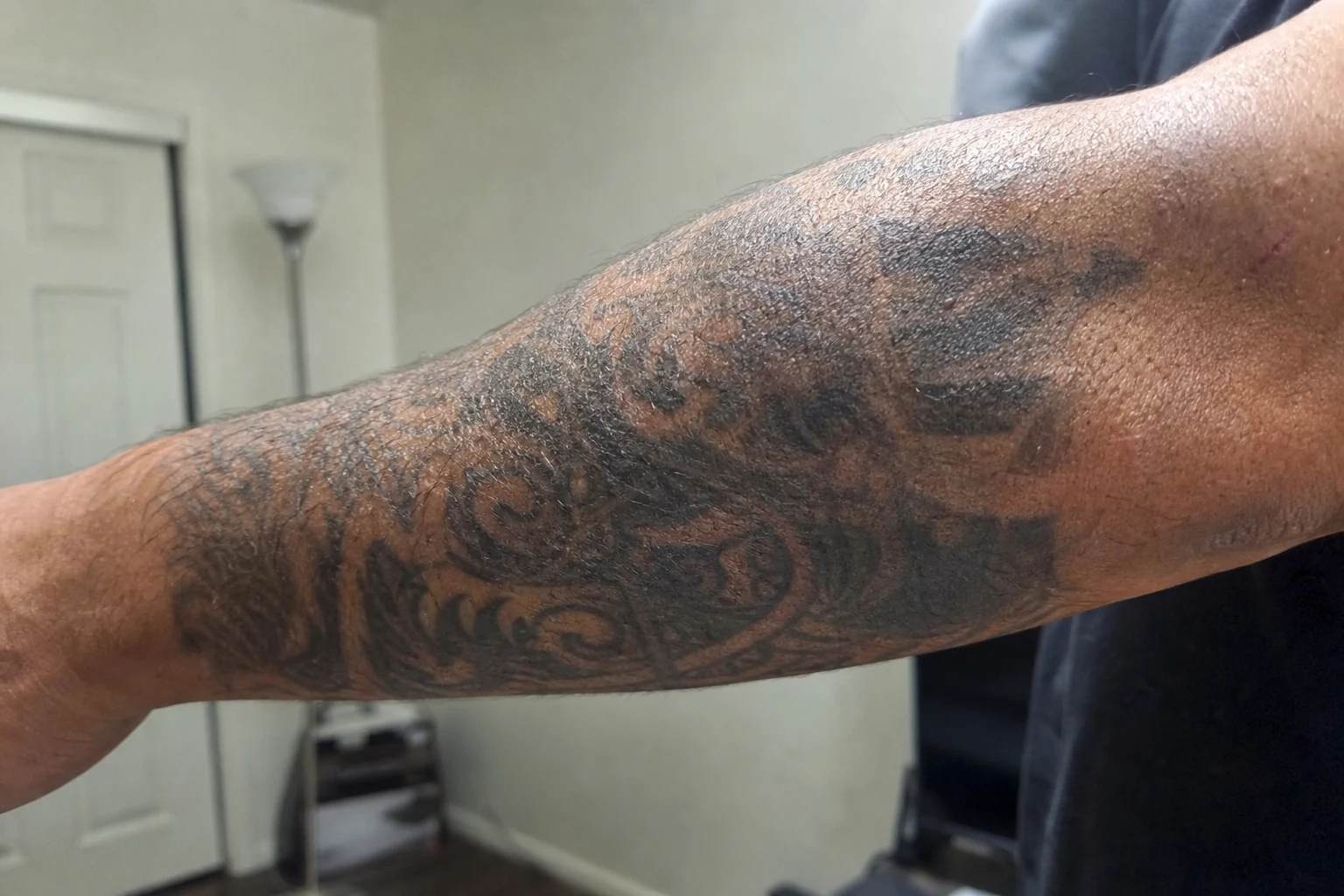 Dense, older tattoos already take longer — smoking adds to it.
The wider lifestyle picture
Smoking is the best-documented lifestyle factor, but it is not the only one people ask about. Because removal leans on circulation and immune clearance, several everyday habits plausibly nudge the process — some helpfully, some not. Here is an honest map of what helps, what hinders, and how strong the effect is:
| Factor | Direction | Why it plausibly matters | Strength of effect |
|---|---|---|---|
| Smoking | Hinders | Narrows vessels, lowers oxygen and immune function — slows fragment clearance | Strongest lifestyle factor; study-supported |
| Hydration | Helps | Supports lymphatic flow that flushes shattered ink | Modest, sensible |
| Exercise / circulation | Helps | Better blood and lymph flow aids clearance | Modest |
| General health & immune function | Helps | Clearance is an immune process; a well-functioning system clears more efficiently | Meaningful |
| Sun exposure | Hinders | Tanned or sun-damaged skin raises the risk of pigment change and can force delays | Affects safety and scheduling |
| Alcohol | Mixed | Heavy use dulls immune function and dehydrates; thins blood around sessions (bruising) | Minor in moderation |
Notice that most of these trace back to the same idea: help your body carry the ink away, and don't do things that force the clinic to slow down for safety. The American Academy of Dermatology similarly stresses sun protection and healthy skin around laser treatment.
If your tattoo is fading slower than you expected, lifestyle is worth a look — but so are ink and technique. Our companion guide on why your tattoo isn't fading covers the other common reasons.
Practical, non-preachy tips
You don't need to overhaul your life. A few reasonable moves stack the odds in your favour:
- If you smoke, cutting down may help — especially across a course of treatment. Quitting entirely is a bigger health win, but even reducing supports circulation. No clinic can promise a specific gain.
- Stay hydrated and keep moving. Ordinary hydration and regular activity support the lymphatic flow that clears the ink. Nothing extreme required.
- Protect the treated skin from the sun. Sunburn or a fresh tan can delay your next session and raise pigment-change risk. Cover it or use sunscreen.
- Go easy on alcohol around a session to reduce bruising, and moderate it generally.
- Be honest at your consultation. Tell the clinician if you smoke or have health conditions — it helps them set realistic expectations and space sessions safely.
The honest framing
Smoking is a factor, not a dealbreaker. Plenty of smokers remove their tattoos successfully; the evidence suggests it may take more patience and, sometimes, more sessions. Framing it as "you must quit or don't bother" overstates a single study. The useful takeaway is simpler: removal is partly a job your body does, so supporting your general health can only help — and it costs nothing to try.
This is general information, not medical advice. Laser tattoo removal is a medical procedure and individual results vary. Session counts, timelines and the influence of any lifestyle factor differ from person to person — consult a licensed provider for advice about your specific situation.
Compare clinics before you commit
Because session counts, available lasers and pricing vary widely, the most useful thing you can do is compare the options where you live and ask each clinic how they assess factors like yours.
Compare tattoo-removal clinics in your city to see what's available near you, or start with a dense market like tattoo removal in Melbourne to see how listings and pricing stack up side by side. To understand the process itself, read how laser tattoo removal works.
Frequently asked questions
Does smoking affect tattoo removal?
Yes, smoking can slow laser tattoo removal. In a 352-patient cohort study published in Archives of Dermatology in 2012, smokers were markedly less likely to have their tattoo cleared within ten sessions than non-smokers. Removal relies on your immune and lymphatic system clearing shattered ink, and smoking impairs circulation and that immune clearance.
Why would smoking slow down laser tattoo removal?
Laser removal only shatters the ink — your immune system carries the fragments away through the lymphatic system over the following weeks. Smoking narrows blood vessels, reduces oxygen delivery and blunts immune function, so the fragment-clearing step works less efficiently. Slower clearance can mean more sessions to reach the same result.
How much does smoking reduce tattoo removal success?
In the 2012 Bencini and Naldi cohort of 352 patients, smoking was one of the factors linked to a reduced likelihood of clearing a tattoo within ten sessions — reported as up to roughly 70% lower odds of success at that point. It is a meaningful factor, not an absolute barrier; smokers still clear tattoos, often just more slowly.
Should I quit smoking before tattoo removal?
Cutting down or quitting may support faster clearance, since removal depends on circulation and immune clearance that smoking impairs. It is not a required condition for treatment, and no clinic can guarantee a specific improvement. Discuss your health and habits honestly at your consultation so expectations are set realistically for your situation.
What lifestyle factors help tattoo removal work faster?
Good general health supports the immune clearance that removal depends on: staying hydrated, exercising for circulation, not smoking, moderating alcohol, sleeping well and protecting the treated skin from sun. None of these speeds removal on its own, but they support the immune clearance your body does between sessions during the fragment-clearing work between sessions.
Does drinking alcohol affect tattoo removal?
Heavy alcohol use can impair immune function and dehydrate you, which may not help the clearance process removal relies on. Alcohol also thins the blood, so many clinics advise avoiding it right around a session to reduce bruising. Moderate, occasional drinking is unlikely to be a major factor on its own.
Can non-smokers still need many tattoo removal sessions?
Yes. Lifestyle is only one input. Ink colour, ink density, tattoo age, body location and skin type usually matter more, and even healthy non-smokers commonly need multiple sessions spaced weeks apart. Smoking can add to the session count, but it is rarely the single deciding factor in how a tattoo clears.
Related guides
Related Guides
- How It Works
What Is a Q-Switched Laser for Tattoo Removal? (2026)
A Q-switched laser fires nanosecond pulses to shatter tattoo ink. Here's how Q-switched Nd:YAG, ruby and alexandrite lasers work, and why they're still a gold…
- How It Works
What Is a Picosecond Laser for Tattoo Removal? (2026)
What is a picosecond laser? It fires in trillionths of a second to shatter tattoo ink. How it works, the colours it helps, and why it's not always better.
- How It Works
What Affects How Fast a Tattoo Fades? 8 Factors in Removal Speed
What affects tattoo removal speed? Ink colour, depth, age, body location, skin type, your health, smoking, and cover-ups all matter.