How Many Sessions Will Tattoo Removal Take? The Kirby-Desai Scale
Part of the complete guide to how many sessions tattoo removal takes — the full session count, timeline and what drives your number.
The Kirby-Desai scale estimates that most tattoos need somewhere between about 7 and 15 laser sessions, depending on six measurable factors — and it predicts that count by scoring your tattoo from 4 to 26, where roughly one point equals about one session. It is the validated tool clinicians use to turn "it depends" into a defensible range, and it correlated strongly with real outcomes (r=0.757) when it was published in 2009.
That single number is the most common question in tattoo removal — and the most commonly over-promised answer. This guide explains what the Kirby-Desai scale is, walks through all six factors and how each pushes your score up or down, works two real examples, and translates a score into a session range and a rough timeline. It also explains why the honest use of the scale is as a planning tool, never a promise. Directory figures are stamped (as of July 2026).
Key Takeaways
- The Kirby-Desai scale scores six factors — skin type, location, colours, ink amount, scarring, and layering — into a total from 4 to 26, read as roughly one session per point.
- It was validated in 2009 at a Pearson correlation of r=0.757 between predicted and actual treatment counts — a genuinely useful predictor for a variable biological process.
- A score of 15 or more flags a difficult case likely to need more sessions and more patience.
- The scale produces an estimate, not a guarantee — how your immune system clears ink can move the real number either way.
- A clinic that promises an exact session count sight-unseen is a red flag. An honest provider gives you a range at consultation and reassesses as you go.
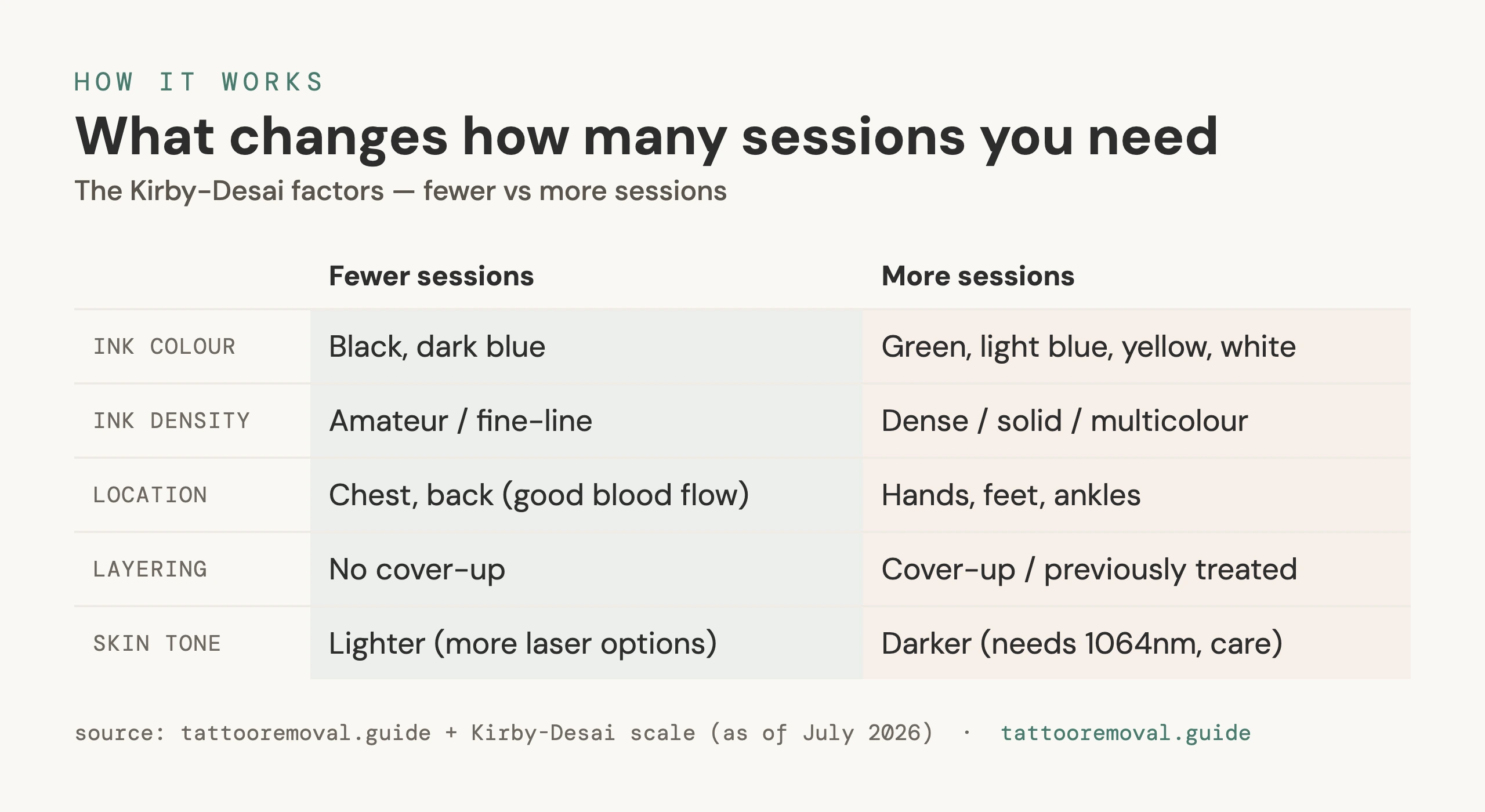 Six factors, scored 4–26 — an estimate, never a promise.
What is the Kirby-Desai scale?
The Kirby-Desai scale is a clinical scoring system that predicts how many laser sessions a tattoo will need by rating six characteristics of the tattoo and the patient, then summing the points into a single score. In 2009, dermatologists Kirby and Desai published the scale in the Journal of Clinical and Aesthetic Dermatology, and in their retrospective analysis the summed score correlated strongly with the number of treatments patients actually required — a Pearson correlation of r=0.757 (p<0.001).
That matters because removal is a staged biological process, not a single procedure. As the Cleveland Clinic explains, the laser shatters ink into fragments and your immune system clears them over the weeks that follow — which is why sessions are spaced out and why the count is inherently variable. The Kirby-Desai scale doesn't remove that variation; it narrows it to an evidence-based range so clinician and patient can plan.
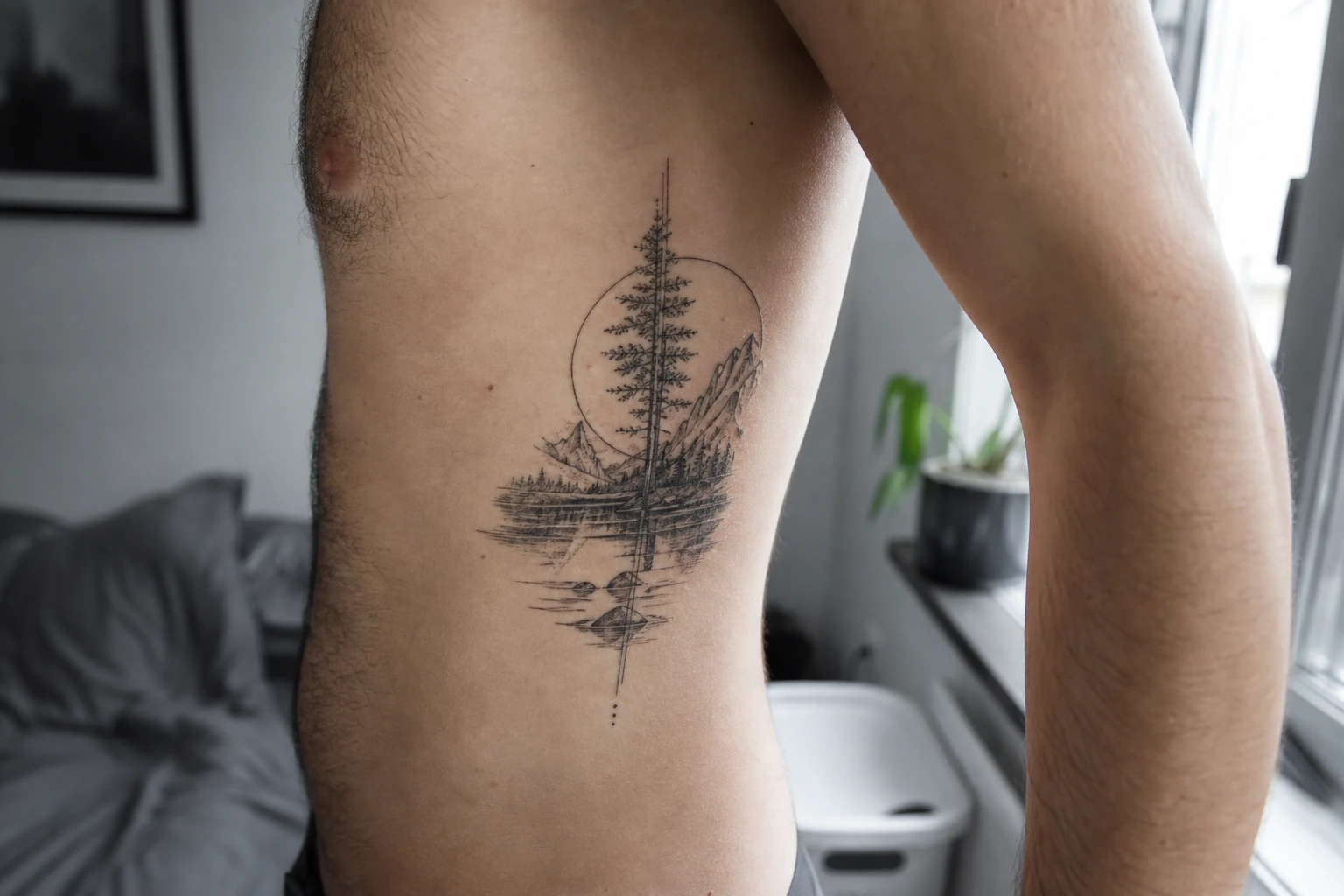 Rib placement is among the most tender to treat.
The six factors, and how each moves your score
Each factor adds points. A low total means fewer predicted sessions; a high total means more. Here's what each one measures and why it matters.
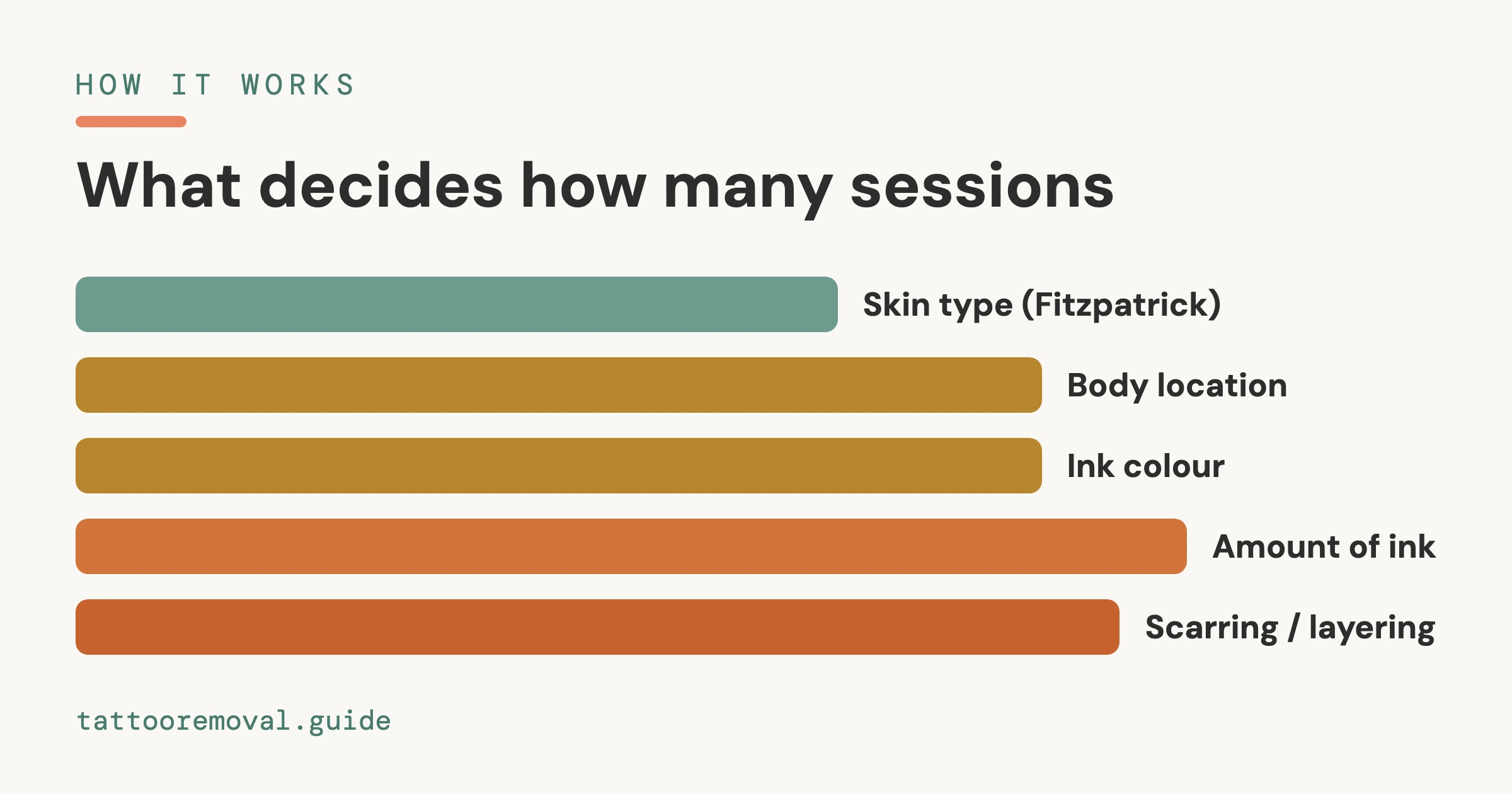
- Fitzpatrick skin type (≈1–6). Your skin tone sets the baseline. Lighter skin (Type I–II) scores lower because there's more contrast between ink and skin and less competing melanin; darker skin (Type IV–VI) scores higher because the laser must be dosed carefully to protect surrounding pigment, which can mean gentler, more numerous passes.
- Location on the body (1–5). This tracks blood supply and lymphatic drainage. Tattoos closer to the heart clear faster: head and neck score around 1, the upper trunk around 2, the lower trunk around 3, and the extremities highest — a distal spot like the wrist, ankle, hand or foot scores about 5 because sluggish circulation clears fragments slowly.
- Colours (≈1–5). Black only is easiest and scores lowest (about 1). Each added colour raises the score, because pigments like green and blue absorb light poorly and need specific wavelengths, per StatPearls' review of laser tattoo removal. A full multi-colour piece can add 4 or more.
- Amount of ink (1–4). Density, not just size. An amateur or stick-and-poke tattoo with sparse ink scores lowest (1); a light professional design scores around 2; a moderate, detailed piece around 3; and a heavily saturated, packed design around 4.
- Scarring or tissue change (0–4). No scarring adds nothing. Minimal textural change adds about 1, and moderate scarring around 3 — scarred tissue holds ink unevenly and clears less predictably.
- Layering (0 or 2). Whether ink sits over old ink. A fresh single tattoo adds nothing; a cover-up or previously treated tattoo adds 2, because hidden layers of old pigment can surface only after several passes.
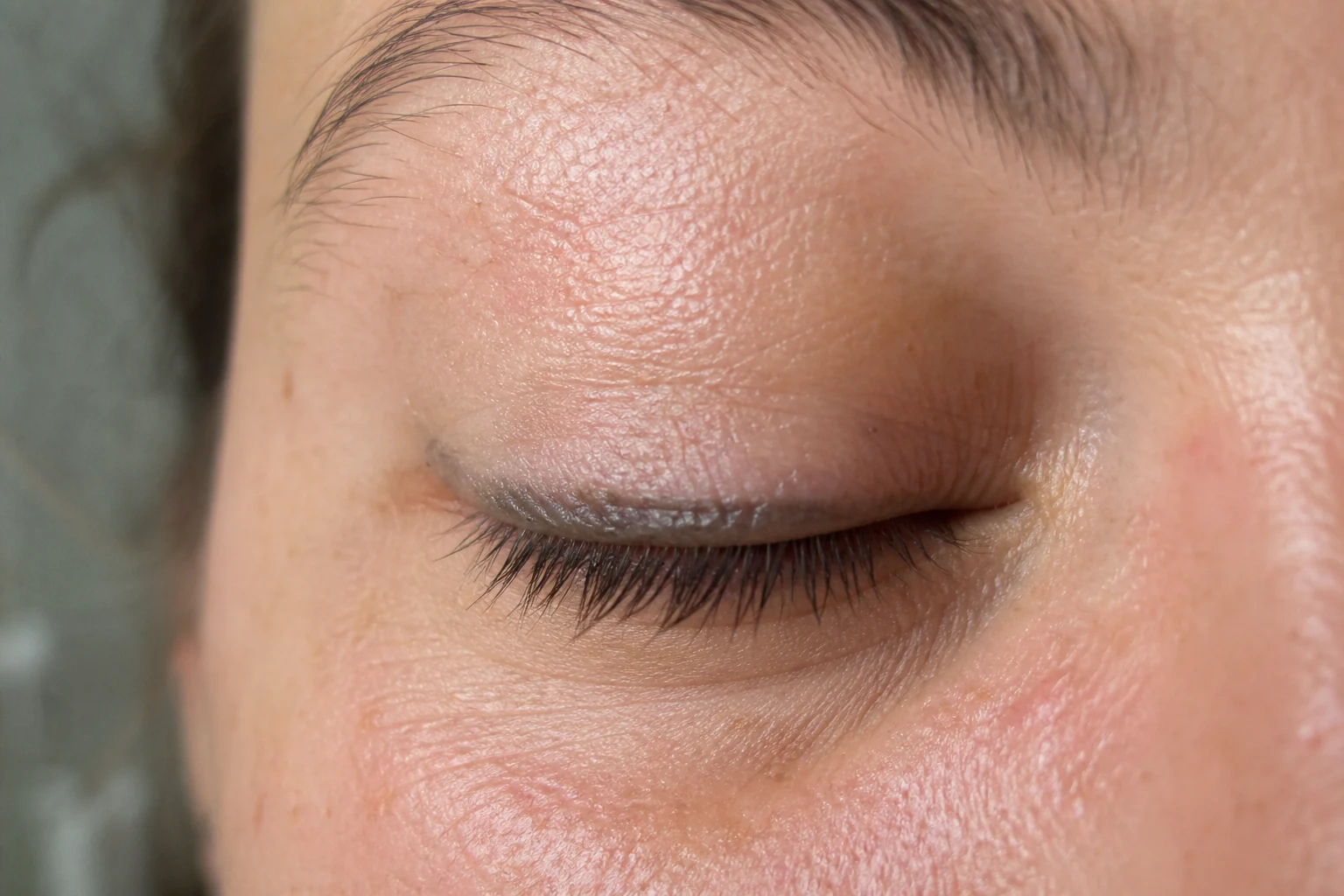 A permanent-eyeliner cosmetic tattoo.
A worked example: scoring an easy vs a hard tattoo
Numbers make it concrete. Below are two tattoos scored across all six factors using the same logic a clinician applies — an easy case and a difficult one.
| Factor | Easy tattoo (small black upper-arm piece, fair skin) | Hard tattoo (large multi-colour cover-up, wrist, darker skin) |
|---|---|---|
| Fitzpatrick skin type | 2 (Type II) | 5 (Type V) |
| Location | 2 (upper trunk) | 5 (distal — wrist) |
| Colours | 1 (black only) | 4 (multiple) |
| Amount of ink | 2 (minimal) | 4 (significant) |
| Scarring | 0 (none) | 3 (moderate) |
| Layering | 0 (no) | 2 (cover-up) |
| Total score | 7 / 26 | 23 / 26 ⚠ difficult |
| Estimated sessions | ~7 total | ~23 total |
The easy tattoo lands at 7, estimating roughly 7 sessions — about 10 months at a 6–8 week spacing to clear. The hard tattoo lands at 23, well past the difficulty threshold, estimating in the low-20s of sessions over roughly two to three years. Same procedure, radically different journeys — which is exactly why one blanket "average" number misleads more than it helps.
A middle-of-the-road example fills the gap: a moderate black-and-red design on the forearm, medium skin, no scarring, no layering scores about 12 — an estimated ~12 sessions, with meaningful fading by around session 8 (roughly 11 months) and full clearance closer to 17 months. Most real tattoos sit somewhere in this 7–15 band.
From score to sessions — and to a timeline
Reading the score is deliberately simple: about one point equals about one session. A score of 12 estimates roughly 12 sessions to clear, with substantial fading well before the final visit. The scale also flags scores of 15 or more as difficult cases — not impossible, but ones that demand more visits and more patience.
The reason a session count becomes months — not weeks — is spacing. Sessions sit roughly 6–8 weeks apart so skin can heal and the immune system can clear the ink shattered last time. That interval turns a 12-session estimate into around 17 months to fully clear, and a low-20s estimate into two to three years. Rushing the interval doesn't speed clearance; it raises the risk of skin damage without helping the ink leave any faster.
Why the score is a planning tool, not a promise
Here is the honest limit of the whole exercise: even a careful Kirby-Desai estimate is a range, not a guarantee. The scale can't measure how efficiently your immune system clears fragments, how a particular colour will respond, or what old ink hides beneath a cover-up until it surfaces. Two people with visually identical tattoos can genuinely need different numbers of sessions.
That's why the way a clinic uses the scale tells you more than the score itself. A good provider scores your tattoo, quotes a range, and reassesses as you progress — because outcomes vary, as both StatPearls and the American Academy of Dermatology note. A clinic that promises an exact session count — or "complete removal in X sessions, guaranteed" — before assessing your tattoo is a red flag. They're either guessing or selling. The scale's whole point is to replace a false promise with a defensible estimate.
This is general information, not medical advice. The Kirby-Desai scale is an estimating tool; it does not predict any individual's result. Session counts, timelines, and outcomes vary by person, skin, and ink — consult a licensed provider about your specific tattoo.
Get a real estimate for your tattoo
The Kirby-Desai scale is only as useful as the clinician applying it — one who has the right lasers for your colours and gives you an honest range rather than a guarantee. Across the 5,700 clinics in 1,043 cities we track (4.79★ average, as of July 2026), that quality varies, so it pays to compare.
Compare tattoo-removal clinics in your city to see who's near you, or start with a dense market like tattoo removal in Melbourne to see how providers and estimates stack up side by side. For the wider picture, read our pillar on how many sessions tattoo removal takes, or understand the mechanism behind the count in how laser tattoo removal actually works.
Frequently asked questions
What is the Kirby-Desai scale?
The Kirby-Desai scale is a clinical scoring system that estimates how many laser sessions a tattoo will need by rating six factors — Fitzpatrick skin type, tattoo location, colours, amount of ink, scarring, and layering — and summing them into a score from 4 to 26. Roughly one point corresponds to about one session. In the original 2009 study, that summed score correlated strongly with the number of treatments patients actually needed (r=0.757).
How many sessions will my tattoo take?
It depends on the tattoo. A small, simple black tattoo on fair skin might score around 7 on the Kirby-Desai scale (roughly 7 sessions), while a large, multi-coloured, scarred cover-up on darker skin can score into the low 20s. The scale gives an evidence-based estimate, but the true count varies person to person — an honest clinic gives you a range at consultation, not a fixed promise.
How is the number of tattoo removal sessions estimated?
Clinicians commonly use the Kirby-Desai scale. They rate six characteristics of your tattoo and skin, add up the points for a score of 4 to 26, and read that score as an approximate session count (about one point per session). The score is then translated into a timeline, because sessions are spaced roughly 6–8 weeks apart to let skin heal and the immune system clear shattered ink between visits.
Is a higher Kirby-Desai score worse?
A higher score means more predicted sessions and a longer timeline, not that removal is impossible. Scores of 15 or above are considered difficult cases that typically need more patience and more visits. A lower score suggests fewer sessions, but every score is an estimate — how your own immune system clears ink can shift the real number in either direction.
Why won't a clinic just tell me an exact number of sessions?
Because no one can measure in advance how your immune system will clear shattered ink, or what old pigment sits under a cover-up. The Kirby-Desai scale narrows the estimate to a sensible range, but it is a planning tool, not a guarantee. A clinic that promises an exact session count sight-unseen is guessing — an honest provider quotes a range and reassesses as you progress.
Does the Kirby-Desai scale work for coloured tattoos?
Yes — colour is one of the six factors. Black-only tattoos score lowest on that factor, and each additional colour raises the score because some pigments (notably green and blue) are harder for lasers to target. A multi-coloured piece therefore lands higher on the scale and is estimated to need more sessions than a comparable black tattoo.
Related guides
Related Guides
- How It Works
What Is a Q-Switched Laser for Tattoo Removal? (2026)
A Q-switched laser fires nanosecond pulses to shatter tattoo ink. Here's how Q-switched Nd:YAG, ruby and alexandrite lasers work, and why they're still a gold…
- How It Works
What Is a Picosecond Laser for Tattoo Removal? (2026)
What is a picosecond laser? It fires in trillionths of a second to shatter tattoo ink. How it works, the colours it helps, and why it's not always better.
- How It Works
What Affects How Fast a Tattoo Fades? 8 Factors in Removal Speed
What affects tattoo removal speed? Ink colour, depth, age, body location, skin type, your health, smoking, and cover-ups all matter.