Tattoo Removal on the Face, Neck and Visible Areas
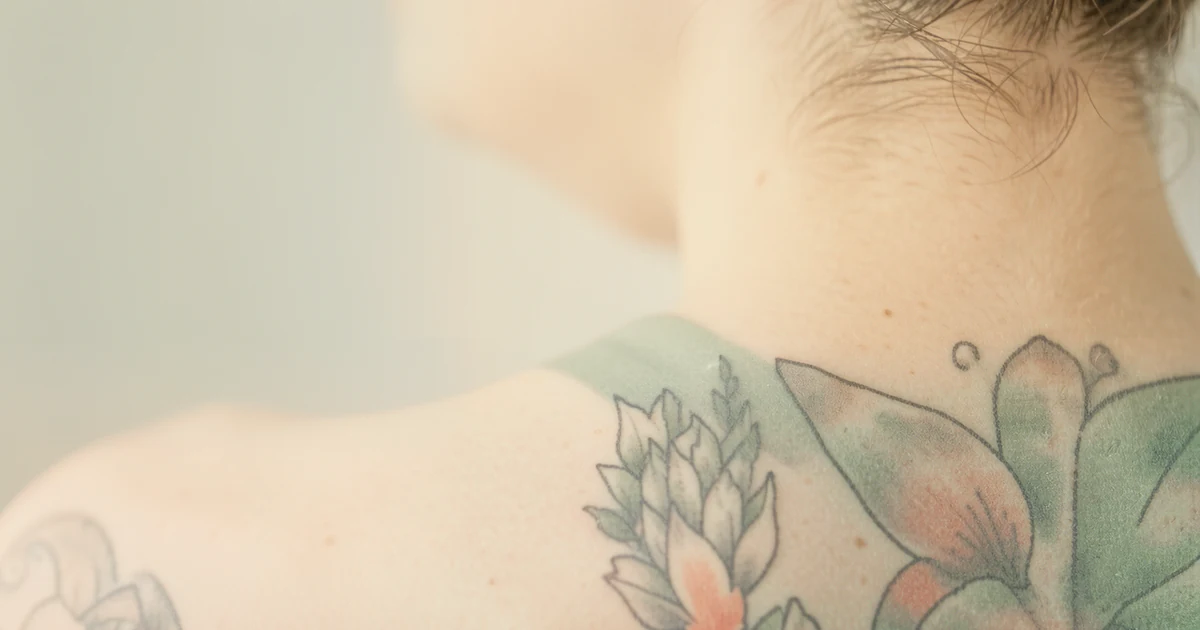
A scab on your shoulder is your business. A scab along your jawline is a week of "what happened to your face?" — from your barista, your manager, your mother. That's the part nobody warns you about before a neck or facial tattoo removal session: the treatment itself isn't wildly different, but the healing happens somewhere you can't hide it. The skin here is also genuinely thinner, busier with blood vessels, and more exposed to sunlight than your back or thigh, which changes how it feels and how a good clinician paces it. Here's what to actually expect when the tattoo you want gone is somewhere everyone can see.
Why visible-area skin is treated differently
Facial and neck skin sits over a dense network of small blood vessels and is closer to bone in places like the brow, jaw and collarbone. Two things follow from that.
First, it tends to be more sensitive. People who describe a forearm session as "a hot rubber band" often rate the same laser on the neck as sharper. Most clinics counter this with numbing cream and, on the face, sometimes a cold-air device during the session.
Second, swelling and bruising here are simply more visible, day to day, than the same reaction on a covered part of your body. None of this makes removal on these areas unsafe — it makes the pacing the thing that matters most, and the honest trade-off is that a face or neck course is rarely the fastest option, even when you want it to be.
Sessions, spacing and the clearing window
Tattoo removal works by breaking ink into fragments small enough for your immune system to carry away. That clearing happens gradually, which is why sessions are spaced roughly 6 to 8 weeks apart rather than back-to-back. On the face and neck, many practitioners lean toward the longer end of that window, giving thin skin more time to settle between sessions.
Most tattoos take 8 to 12 sessions to clear, and visible-area tattoos are not usually faster. Sessions themselves are short — often 15 to 30 minutes — but the calendar is long. A neck tattoo started in spring can realistically be a year-or-more project. That is the honest version: there is no fast track that is also a safe one for this skin.
The right laser depends on your ink and skin, not on a single "best" machine. Both picosecond and Q-switched lasers are effective and widely used; the practical difference is pulse duration, and a good clinician selects the right laser and settings for your tattoo, then often treats more conservatively in a visible, sensitive area.
What recovery looks like where people can see it
Plan for the aftermath, not just the appointment. In the days after a session you may see:
- Redness and swelling, which is usually most noticeable on the first day and can be more pronounced near the eyes.
- Frosting — a temporary white film right after treatment — that fades within hours.
- Scabbing or blistering over the following week, which should be left alone, kept clean, and never picked.
For an event you care about, count backwards. If you have a wedding, a job interview or a holiday, most people prefer to schedule a session well clear of it rather than risk visible healing on the day.
Sun exposure is the other big one. Treated facial skin is vulnerable to pigment changes if it catches sun while healing, so daily SPF and shade are part of the protocol, not optional extras. Read our complete aftercare guide before your first appointment so nothing is a surprise.
Lips, eyebrows and cosmetic tattoos — ask first
Cosmetic and permanent-makeup tattoos near the eyes, on the lips, or on the brows are a special case. Some pigments can darken or shift colour when hit with a laser, and the eye area requires protective eye shields and an experienced operator. This is firmly a "raise it in consultation" topic — describe exactly what the tattoo is and where, and let the clinician assess it in person. Anything involving the eyelids or the area very close to the eye should be discussed with a medical professional before you book.
Choosing a clinic for a visible tattoo
For a face or neck tattoo, experience with that specific area matters more than a low headline price. In consultation, it is reasonable to ask how often the clinic treats facial or neck tattoos, what laser they would use and why, and how they handle pigment changes on thin skin.
Price is worth understanding too. Across the directory, the same tattoo in the same city can sit at very different per-session prices — in Sydney, for example, a typical spread runs about $50 to $200 a session, a 4× swing (as of July 2026). Over a 10-session course, that's the difference between roughly $500 and $2,000 for a piece of work you'll be showing your face at every appointment — so it is worth comparing more than one clinic before you commit to a long, visible project, not just the first one that answered the phone.
Frequently asked questions
Does tattoo removal on the face hurt more than other areas?
For many people, yes — facial and neck skin is thinner and more sensitive, so the same laser can feel sharper. Most clinics use numbing cream and cooling to manage this, and sessions are short, usually 15 to 30 minutes.
How long will redness or swelling on my face last?
Redness and swelling are usually most noticeable on the first day and settle over the following days, though this varies from person to person. Any scabbing typically heals over about a week. If you have an important event, schedule your session well clear of it.
Can eyebrow or lip (cosmetic) tattoos be removed with a laser?
Sometimes, but it needs care. Certain cosmetic pigments can darken or change colour under a laser, and the eye area requires protective shields and an experienced operator. Discuss the exact tattoo with a qualified clinician — and anything near the eyelid with a medical professional — before booking.
Will I be left with a scar on my face?
When treatment is paced correctly and aftercare is followed, scarring is uncommon, but no clinic can guarantee an outcome. Picking and sun exposure during healing raise the risk, which is part of why visible-area removal is treated more conservatively.
How many sessions will a neck tattoo take?
Most tattoos take 8 to 12 sessions spaced 6 to 8 weeks apart, and neck tattoos are not usually faster. Realistically, a visible tattoo can be a year-or-more commitment.
A visible tattoo deserves a clinician who treats this area often, not just one who's willing to. See who in Sydney lists real face-and-neck experience — and what they charge before you book a project everyone will watch you heal from.
Related Guides
- Cosmetic & PMU
Why Permanent Makeup Fades (and Turns Orange or Grey) (2026)
Why permanent makeup fades and shifts colour, explained neutrally: shallow pigment placement, iron-oxide oxidation, sun exposure and skin turnover, why warm browns…
- Safety & Risks
Why a Patch Test Matters Before Tattoo Removal (2026)
Why does a patch test matter before laser tattoo removal? It reveals how your skin and ink react — blistering, pigment change, rare reactions — before a full…
- Safety & Risks
Who Should Not Get Laser Tattoo Removal? The Contraindications
Who should not get laser tattoo removal? Most adults are candidates. The full contraindications checklist — when to wait and when to discuss carefully.