Who Should Not Get Laser Tattoo Removal? The Contraindications

Who should not get laser tattoo removal? Most healthy adults are good candidates, but it should be delayed or approached with extra caution in specific situations — pregnancy or breastfeeding, an active skin infection or open wound at the site, recent isotretinoin use, a history of keloid scarring, freshly tanned skin, or certain photosensitivity and autoimmune conditions. Of the roughly nine situations on the checklist below, almost none is a permanent bar; most simply mean wait or discuss carefully first.
A contraindication is a specific reason a treatment should be avoided or delayed. In laser tattoo removal, very few are absolute — the honest picture is a checklist of "not right now" and "get this assessed first," not a wall of hard nos. This guide lays out that checklist using medical sources and figures from the Tattoo Removal Guide directory, stamped (as of July 2026).
Key Takeaways
- Most healthy adults are candidates. The list below is mostly reasons to wait or discuss carefully, not permanent exclusions.
- The clearest "wait" situations: pregnancy/breastfeeding, an active infection or open wound at the site, freshly tanned skin, and a cold sore near the area.
- Darker skin is a caution, not a contraindication — it needs the right wavelength (usually 1064nm Nd:YAG) and a careful clinic, not avoidance.
- The old flat "6-month wait after isotretinoin" rule is now considered outdated; current guidance is individualised — tell your provider and let them decide.
- The only way to confirm you're a candidate is a consultation plus a patch test. Of the 5,700 clinics we track, about 27% (1,525) advertise a free consultation (as of July 2026).
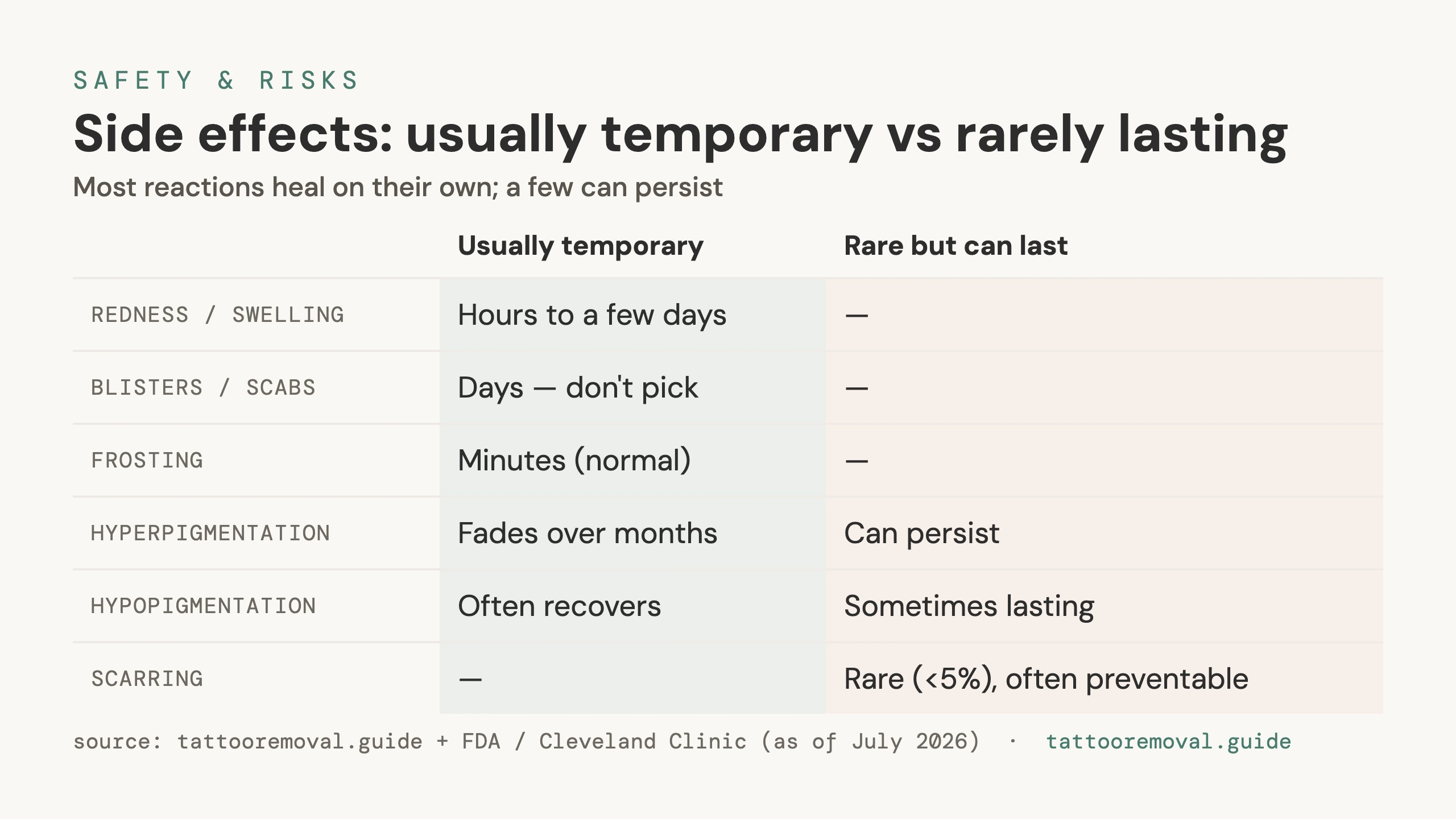 Most side effects heal; a few are rare but can last.
Who should not get laser tattoo removal — the contraindications checklist
Use this as a starting point for the conversation with a provider — not as a self-diagnosis. Every row is a reason to raise the topic, not necessarily a reason to cancel.
| Situation | Why it matters | Wait or discuss carefully? |
|---|---|---|
| Pregnancy or breastfeeding | Removal hasn't been studied in pregnancy, so clinics avoid it out of caution; there's no evidence of benefit to rushing it | Wait — until after pregnancy and nursing |
| Active skin infection, open wound, or cold sore at the site | Lasering broken or infected skin risks spreading infection and worsening scarring; a herpes/cold-sore outbreak can flare | Wait — until the skin is fully healed and clear |
| Recent isotretinoin (Accutane) use | Isotretinoin affects skin healing; the old blanket 6-month rule is now questioned, but recent use still warrants caution | Discuss carefully — timing is case-by-case now |
| History of keloid or hypertrophic scarring | If your skin tends to over-scar, laser treatment carries a higher risk of raised scars | Discuss carefully — test patch and conservative settings |
| Very tanned or recently sun-exposed skin | A tan is extra melanin competing with the ink for laser energy, raising the risk of burns and pigment change | Wait — until the tan fades (typically a few weeks) |
| Photosensitivity conditions or medications | Conditions like lupus, or drugs that increase light sensitivity (some antibiotics, retinoids), can amplify skin reactions | Discuss carefully — bring a full medication list |
| Autoimmune or immune-compromising conditions | Clearance of shattered ink relies on your immune system; impaired immunity or healing changes the risk-benefit balance | Discuss carefully — with your treating doctor's input |
| Moles, undiagnosed lesions, or active rash at the site | Lasers shouldn't fire directly over moles or unassessed lesions; psoriasis/eczema flares complicate healing | Discuss carefully — shield moles, settle skin first |
| Unrealistic expectations | Expecting one-session, guaranteed, scar-free erasure sets you up for disappointment and risky over-treatment | Discuss carefully — realistic goals are part of consent |
A word on each, briefly
Pregnancy and breastfeeding. There's no strong evidence that laser tattoo removal harms a pregnancy — the laser acts only on skin-level ink — but because it hasn't been formally studied in pregnant patients, the standard cautious practice is simply to wait. A few months rarely changes the outcome of a course that already runs over many months.
Active infection, open wounds, cold sores. Skin has to be intact and calm to be treated safely. Firing a laser through an infection, a fresh cut, or an active herpes-simplex (cold sore) outbreak near the area can spread the problem and raise scarring risk. This is the most clear-cut "wait": treat the skin condition, then book.
Recent isotretinoin (Accutane). For years the reflex was a rigid six-month wait after isotretinoin before any laser. More recent dermatology consensus has softened that for many laser procedures, judging the strict rule to be more cautious than the evidence requires — but recent use still calls for individualised judgement, not a green light. The right move is to tell your provider exactly when you finished the course and let them decide on timing.
Keloid / hypertrophic scarring history. If your skin has a track record of forming raised, thickened scars, any procedure that injures skin — including laser removal — carries a higher scarring risk for you specifically. It's not an automatic no, but it's a strong reason for a test patch and conservative settings.
Tanned or sun-exposed skin. A fresh tan is extra melanin in the skin that competes with the ink to absorb laser light. That raises the risk of burns, blistering and pigment change (both lightening and darkening). Most clinics ask you to let a tan fade and to keep the area out of the sun before and between sessions. The FDA notes that removal can itself cause lasting pigment changes — sun exposure stacks that risk.
Photosensitivity and autoimmune conditions. Some conditions (for example lupus) and some medications increase how strongly your skin reacts to light or affect healing and immune clearance. Since removal depends on your immune system carrying away shattered ink, as the clinical literature describes, these are "bring the full picture to the consult" situations, ideally with your treating doctor's input. For a deeper list, see our companion guide on medications and conditions that affect tattoo removal.
Unrealistic expectations. This one isn't medical, but it's real. Expecting complete, guaranteed, single-session, scar-free erasure isn't achievable — removal fades most tattoos over many spaced sessions and can't be guaranteed to reach 100%. Going in with realistic expectations is part of proper informed consent, and a good clinic will set them for you.
 A back-piece tattoo.
Darker skin: a caution, not a contraindication
This deserves its own line because it's so often misunderstood. Having darker skin (Fitzpatrick types IV–VI) does not disqualify you from laser tattoo removal. It's a caution that changes how you're treated, not whether you can be. Darker skin has more melanin, which can absorb laser energy meant for the ink and raise the risk of pigment change. The answer is the right tool and a careful hand: usually a 1064nm Nd:YAG wavelength, lower, more conservative settings, and a clinic experienced with deeper skin tones. The Cleveland Clinic and dermatology guidance both treat skin tone as a factor to manage, not a barrier. Here, choosing the right clinic matters more than for almost any other factor.
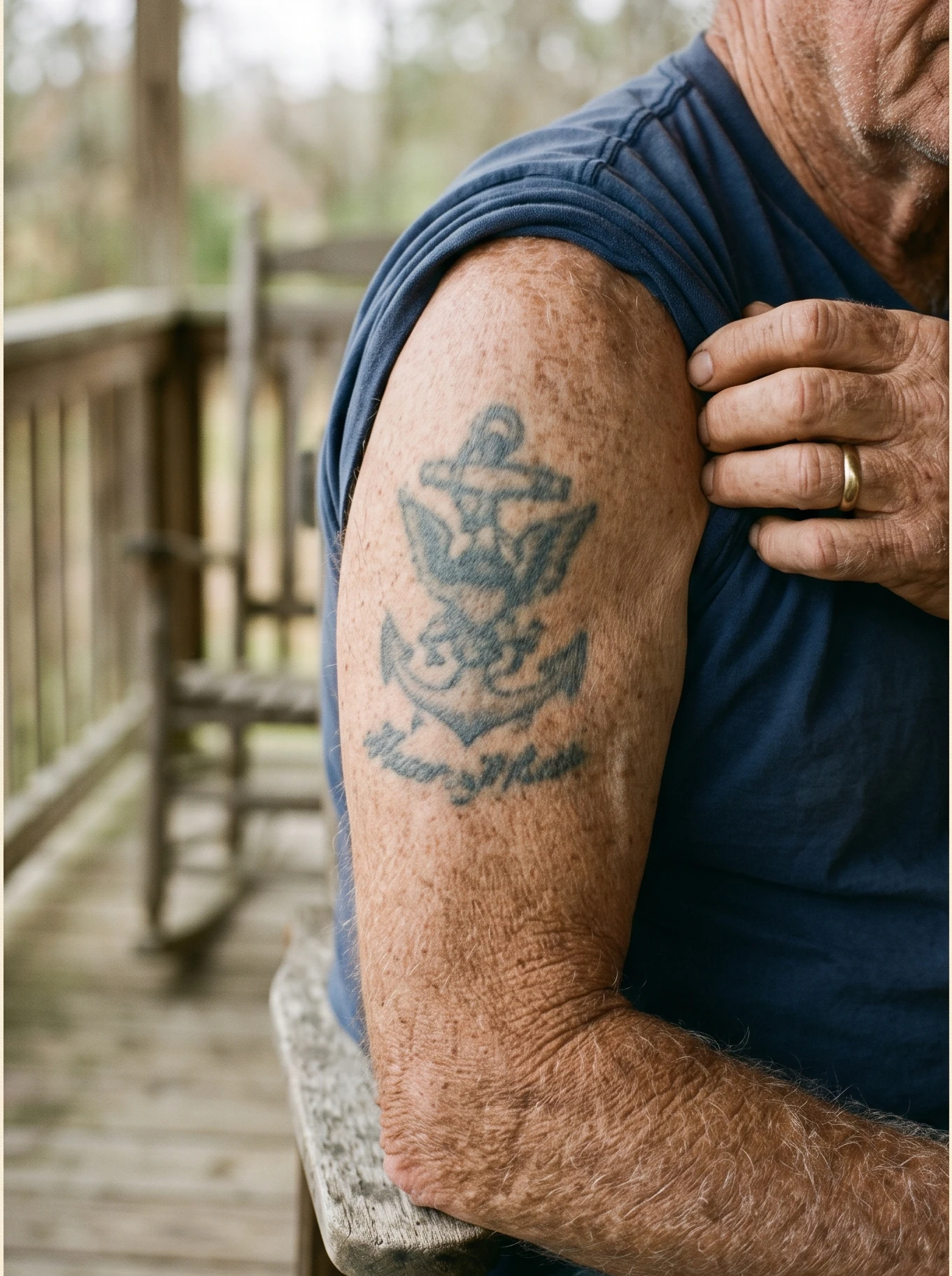 A decades-old, faded tattoo.
How to know if you're a candidate: consultation + patch test
You can't reliably self-clear from this list — the checklist tells you what to raise, not whether you're cleared. Two steps settle it:
- A consultation. A licensed provider reviews your health history, medications, skin type and the tattoo itself, and flags anything on the list above. Many clinics offer this free — of the 5,700 clinics we track, about 27% (1,525) advertise a free consultation (as of July 2026).
- A patch test. A patch test treats a small area of the tattoo first to see how your skin responds before you commit to a full session — revealing excessive blistering, pigment change or, rarely, an ink reaction, and letting the provider tune the settings to your skin. It's a core safety step, not an upsell.
If both go well, you're very likely a candidate. If something on the checklist applies, it usually means not yet rather than never.
This is general information, not medical advice. Whether laser tattoo removal is safe for you depends on your individual health, skin and tattoo. Contraindications and their handling vary by person — consult a licensed provider before starting or ruling out treatment.
Compare clinics — and ask the right questions
Because how these cautions are handled varies from clinic to clinic — the wavelengths they offer, their experience with darker skin, whether they patch-test — the most useful next step is to compare your options and ask directly.
Compare tattoo-removal clinics in your city to see who offers a free consultation near you, or start with a dense market like tattoo removal in Melbourne to see how listings and consultation offers stack up. For the bigger safety picture, read our pillar guide, is laser tattoo removal safe?
Frequently asked questions
Who should not get laser tattoo removal?
Most healthy adults are candidates, but laser tattoo removal should be delayed or approached with extra caution if you are pregnant or breastfeeding, have an active skin infection or open wound at the site, recently took isotretinoin, have a history of keloid scarring, have very tanned or recently sun-exposed skin, or have certain photosensitivity or autoimmune conditions.
Am I a good candidate for tattoo removal?
You are likely a good candidate if you are a healthy adult, your skin at the tattoo site is intact and not freshly tanned, and you have realistic expectations about fading over multiple sessions. The only reliable way to confirm candidacy is an in-person consultation with a licensed provider, ideally including a small test patch.
Can you get laser tattoo removal while pregnant?
Most clinics decline to treat during pregnancy or breastfeeding. There is no strong evidence that laser tattoo removal harms a pregnancy, but because it has not been studied in pregnant patients, the standard, cautious practice is to wait until after pregnancy and nursing. This is a "wait", not a permanent contraindication.
Can you have laser tattoo removal after taking Accutane (isotretinoin)?
The old blanket rule to wait six months after isotretinoin before any laser is now considered outdated by much of dermatology. Current guidance is more individualised, but recent isotretinoin use still warrants caution and case-by-case judgement. Tell your provider exactly when you took it and let them decide on timing.
Does darker skin mean you can't get laser tattoo removal?
No. Darker skin (Fitzpatrick types IV–VI) is a caution, not a contraindication. It requires the right wavelength — usually a 1064nm Nd:YAG laser — and a more conservative approach to reduce the risk of pigment change. Choosing a clinic experienced with darker skin tones matters more here than for any other factor.
Why do clinics do a patch test before tattoo removal?
A patch test treats a small area of the tattoo first to see how your skin reacts before committing to a full session. It helps reveal excessive blistering, pigment change or, rarely, an ink reaction, and lets the provider fine-tune the laser settings for your skin and ink. It is a core safety step, not an upsell.
Related guides
Related Guides
- Safety & Risks
Why a Patch Test Matters Before Tattoo Removal (2026)
Why does a patch test matter before laser tattoo removal? It reveals how your skin and ink react — blistering, pigment change, rare reactions — before a full…
- Safety & Risks
Tattoo Removal While Pregnant or Breastfeeding
Can you get tattoo removal while pregnant? Most providers say wait — not from proven harm, but because the safety isn't studied.
- Safety & Risks
Tattoo Removal Recovery Timeline
A week-by-week tattoo removal recovery timeline: the first 24 hours, scabbing, itching, the 6–8 week gap, and what's normal versus when to call your clinic.