Tattoo Removal Recovery Timeline
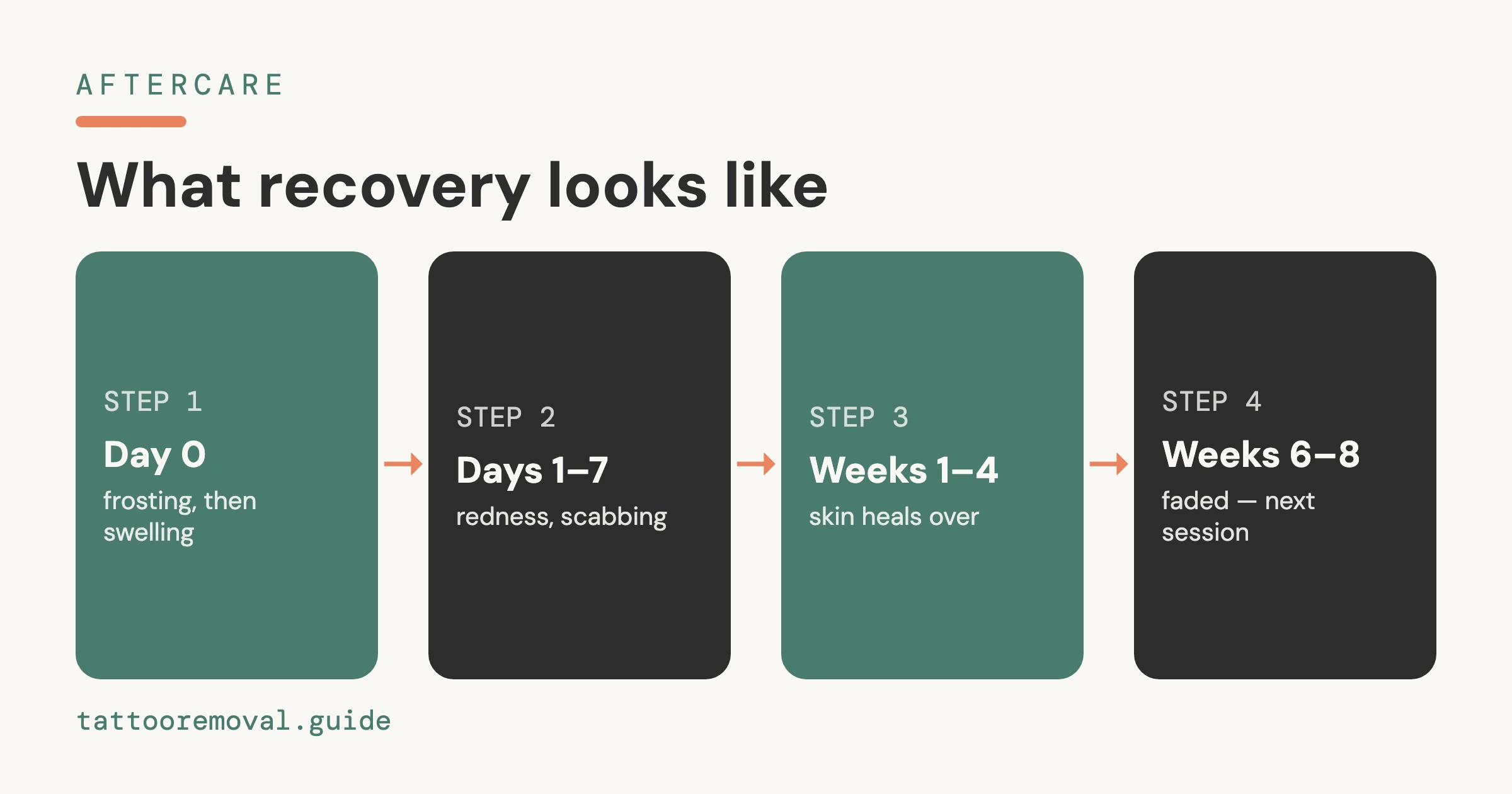
A tattoo removal recovery timeline for a single session runs roughly 2 to 8 weeks for the skin surface, then a 6 to 8 week gap before the next session. Expect frosting and redness in the first hours, blistering and scabbing over days 1 to 14, then itching and fading as new skin forms. Full fading takes many months across the whole course. These are estimates — everyone heals differently, and figures are stamped (as of July 2026).
Recovery after laser tattoo removal is a predictable sequence, not a mystery. Knowing what each phase looks like — and where the milestones fall — makes it far easier to tell ordinary healing from a problem worth a phone call. This guide walks the timeline for one session, day by day and week by week.
Key Takeaways
- A single session's surface heal takes about 2 to 8 weeks, then clinics space the next session 6 to 8 weeks out to let the skin and immune system recover.
- The sequence is consistent: frosting and redness (first hours) → swelling and possible blisters (days 1–3) → scabbing and itching (days 3–14) → skin settling and fading (weeks 2–8).
- The tattoo fades gradually across the whole course — many months, not one session — as your immune system clears the shattered ink.
- Know normal from not-normal. Redness, swelling, blistering, scabbing and itching are expected; spreading redness, pus, red streaks or fever are signs of infection — call your clinic.
- Every timeframe here is an estimate. Your skin, the tattoo, and the laser settings all shift the pace, which is why your treating clinic's guidance beats any generic chart.
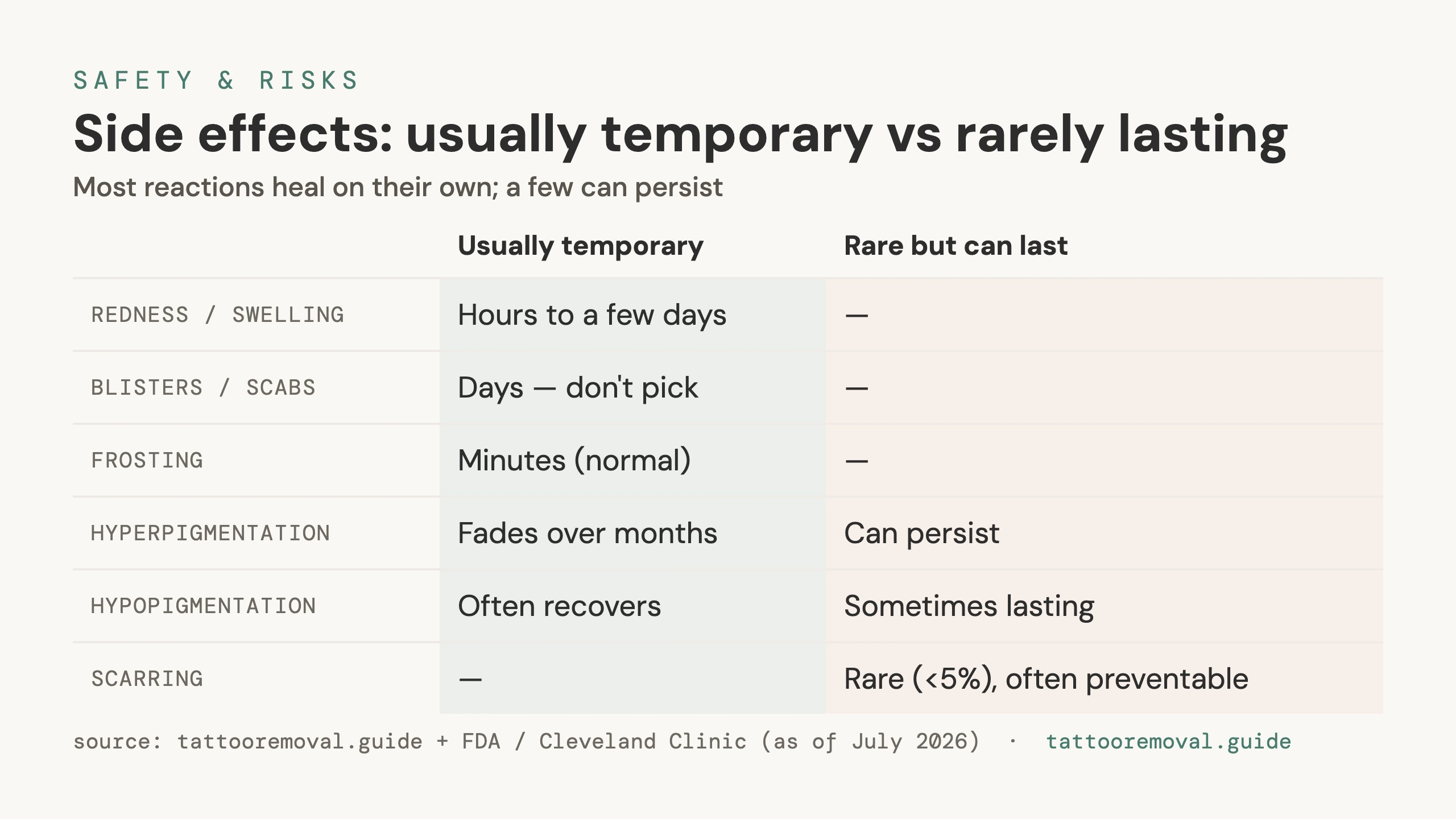 Side effects: which are temporary, and which can last.
What does a tattoo removal recovery timeline look like, phase by phase?
A tattoo removal recovery timeline is the typical sequence of skin changes after one laser session, from the immediate reaction through to the skin settling weeks later. Most people move through the same recognisable stages, even though the exact pace varies. As the Cleveland Clinic explains, the laser shatters tattoo ink into tiny fragments that your immune system then carries away over the following weeks — so much of "recovery" is that slow internal clearing, not just the surface closing.
Use the table below as a map, then read the notes under it for the detail that matters.
| Recovery phase | Typical timing | What's normal | What to watch |
|---|---|---|---|
| Immediate reaction | First 24 hours | White "frosting" that fades within minutes to hours; redness, swelling, warmth; occasional pinpoint bleeding | Heavy or continuous bleeding; a deep burn-like wound |
| Early healing | Days 1–3 | Swelling and tenderness; blisters may form, sometimes within hours | A blister larger than a coin; intense, worsening pain |
| Scabbing & itching | Days 3–14 | Scabs form, dry and crust; itching as skin knits together | Spreading redness, yellow/green pus, red streaks, bad smell, fever |
| Skin settling & fading | Weeks 2–8 | Scabs fall off on their own; new pink skin; the tattoo looks faded | Broken skin that won't close; a raised or thickened scar forming |
First 24 hours: frosting, redness and swelling
Seconds after treatment, the area often turns white — a temporary reaction called frosting, caused by gas released as the laser hits the ink. It fades within minutes to a few hours. Underneath, the skin becomes red, raised, warm and mildly swollen, much like a sunburn, and a little pinpoint bleeding or weeping can occur. Your clinic will usually dress the area; keep it covered and dry, and a cold pack over the dressing can ease the sting if advised. (For more on that first-day reaction, see what frosting after tattoo removal means.)
Days 1–3: swelling, tenderness and possible blisters
Swelling and tenderness often peak in the first couple of days. Blistering is normal here — StatPearls lists blistering and crusting among the expected transient effects of laser removal, and blisters can appear within hours and look dramatic without meaning anything went wrong. The rule is simple: do not pop or drain them. Broken skin invites infection and raises scarring risk. If a blister is very large, spreading or intensely painful, contact your clinic. Our full guide on blisters after tattoo removal covers how to care for them safely.
Days 3–14: scabbing, crusting and the itch you must not scratch
As the blistering and weeping settle, scabs form, dry and crust over, and itching is common as the skin knits back together. This is the highest-risk window for a self-inflicted problem: picking, scratching or peeling scabs is the single most avoidable cause of scarring. Let every scab fall off on its own. The American Academy of Dermatology stresses that following your provider's specific aftercare instructions is central to healing well and lowering the risk of side effects. If you notice spreading redness, pus, red streaks or fever during this stage, treat it as a possible infection — see the signs of infection after tattoo removal and call your clinic.
Weeks 2–8: skin settles, ink fades, and the clearing window
By roughly week two to three, scabs have usually fallen away and fresh pink skin has appeared. Over the following weeks the skin settles and the treated tattoo looks noticeably faded — this is your immune system doing the slow work of clearing the shattered ink fragments. Protect the site from the sun with clothing or SPF 30+ while it recovers, because regenerating skin pigments and burns easily.
Crucially, the outer skin closing is not the same as being ready for the next session. Clinics typically wait 6 to 8 weeks between sessions — the so-called clearing window — to let the skin fully recover and the immune system carry away as much ink as possible before treating again. Going sooner works on skin that hasn't healed and raises the risk of side effects without speeding results. We cover the reasoning in session spacing and the clearing window.
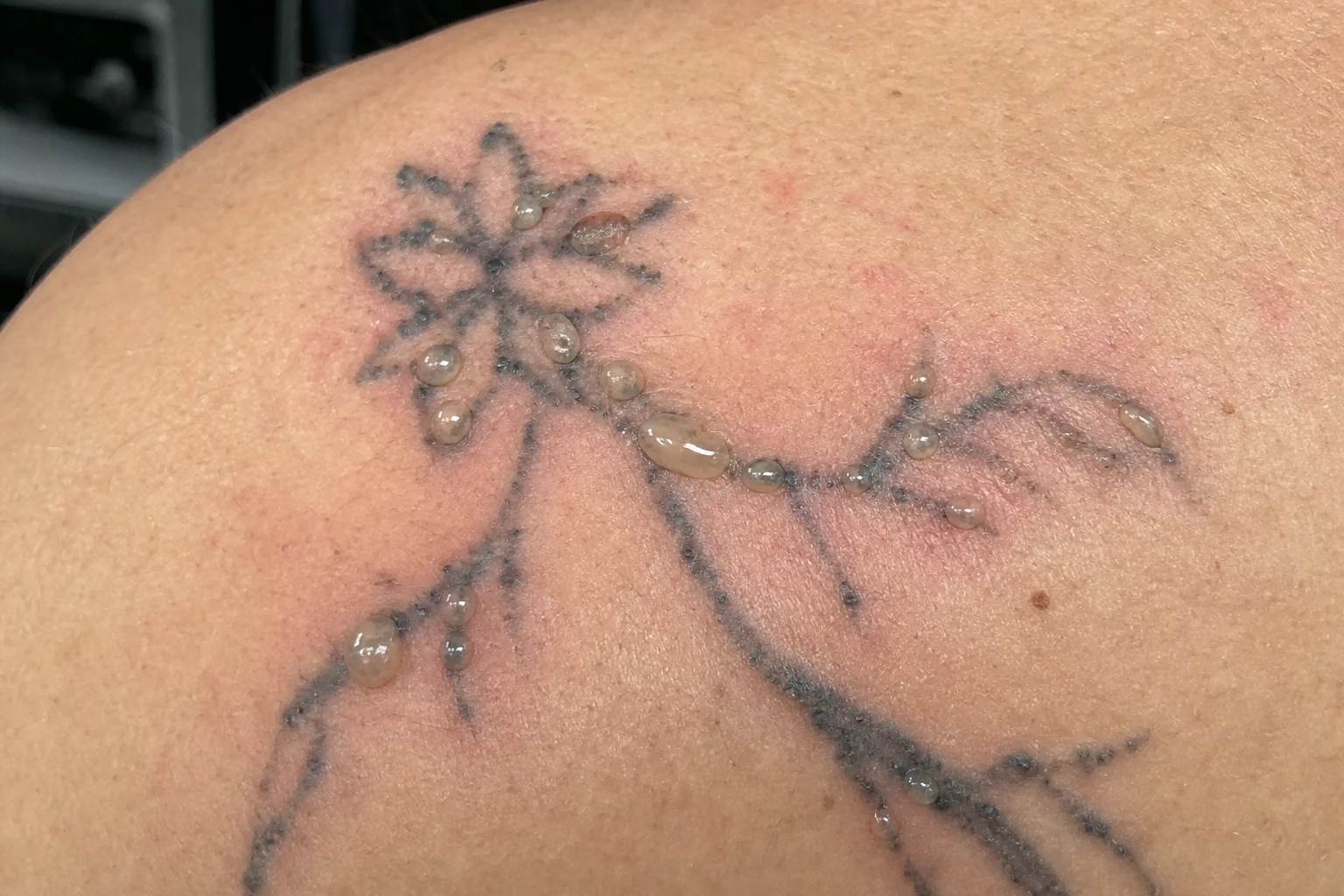 A freshly treated tattoo — small blisters can form over the next day or two.
What's normal versus when to call the clinic
Most of what you see during recovery is expected. The skill is telling ordinary healing apart from a problem that needs attention. The FDA's tattoo and permanent-makeup fact sheet notes that removal is a medical procedure with real risks including infection and scarring, so it's worth knowing the warning signs.
- Usually normal: frosting that fades in hours; redness, swelling and warmth for 1 to 3 days; blisters in the first few days; scabs and crusting that dry and flake off; mild itching; a pink or faded look to the skin for weeks.
- Call your clinic or a doctor: redness that spreads or worsens after day two; increasing pain; yellow or green pus; red streaks; a bad smell; fever or chills; a blister larger than a coin; a burn-like wound; or bleeding that won't stop.
When in doubt, ask — a quick message to your clinic is always better than guessing, and signs of infection warrant same-day medical advice.
This is general information, not medical advice. Laser tattoo removal is a medical procedure with real risks, including blistering, infection, scarring and pigment change. Healing times and reactions vary by person — always follow the aftercare instructions from the clinic that treated you, and consult a licensed provider about your specific situation.
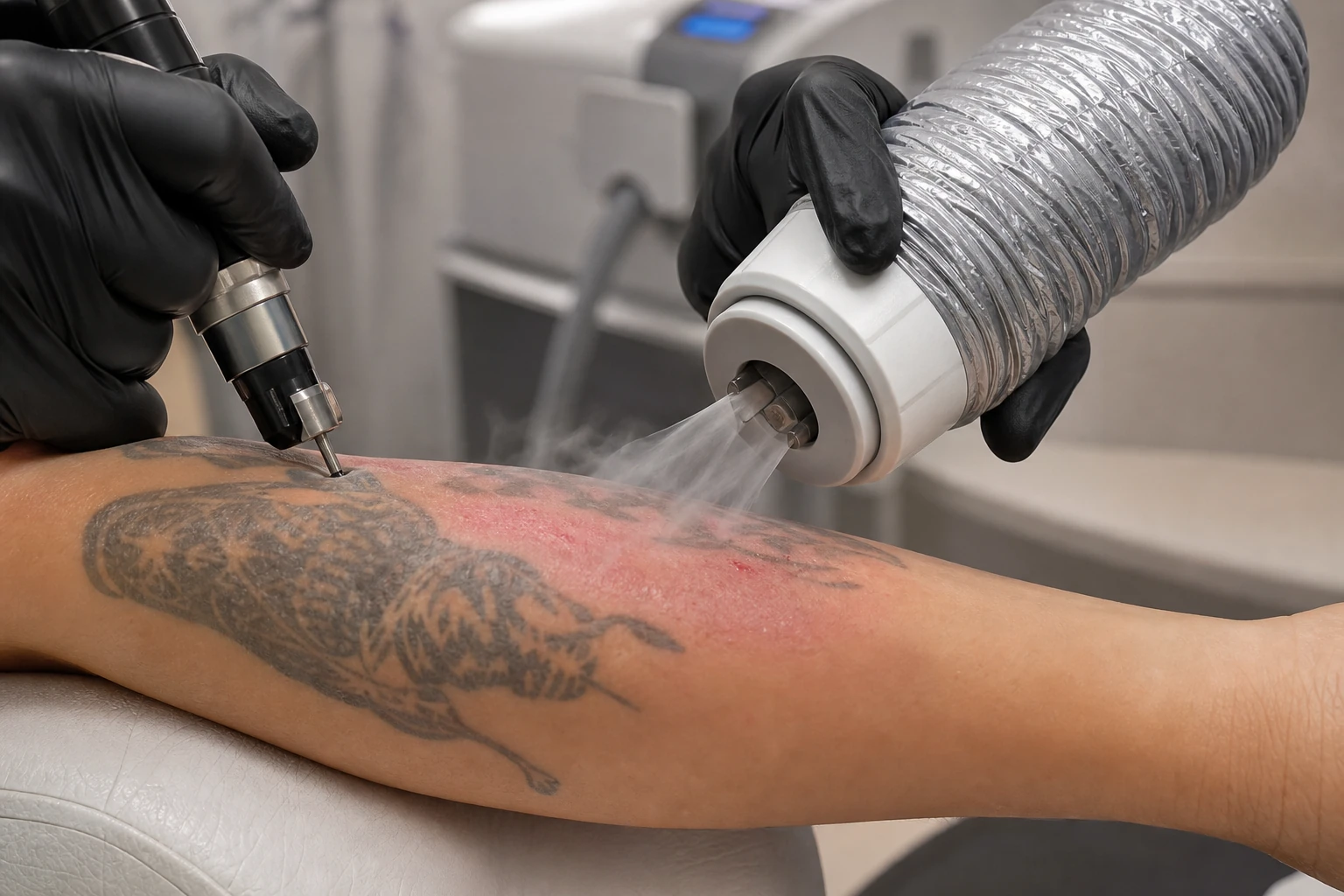 Scabbing and flaking as the treated skin heals.
Full fading takes the whole course, not one session
It's worth setting expectations for the long game. A single session's recovery is measured in weeks, but removing a tattoo takes many months — often multiple sessions spaced 6 to 8 weeks apart, with the ink fading gradually between each one. No clinic can honestly promise complete removal or an exact number of sessions; colour, ink depth, ink type, tattoo age, your skin tone and your immune response all affect how fast it clears. Anyone guaranteeing a fixed session count or a "painless, no-scarring" result is overselling.
Because the clinic performing your treatment sets your aftercare, your spacing and your realistic expectations, the quality of that guidance is part of what you're paying for. Of the 5,700 clinics we track across 1,043 cities (as of July 2026), averaging 4.79★, 1,525 (27%) advertise a free consultation — a low-cost way to ask about their recovery protocol before you commit. Compare tattoo-removal clinics in your city to see who's near you, or start with a dense market like tattoo removal in Melbourne to see how listings stack up side by side. For the day-by-day do's and don'ts that keep this timeline on track, read the full tattoo removal aftercare guide.
Frequently asked questions
What does the tattoo removal recovery timeline look like?
After a single session the skin surface usually heals over about 2 to 8 weeks. Expect redness, swelling and a white "frosting" that fades within the first hours, blistering and scabbing over days 1 to 14, then itching as scabs dry and fall off, and gradual fading over the following weeks. Clinics typically space sessions 6 to 8 weeks apart to let the skin and immune system recover. Timelines are estimates and vary by person.
How long does laser tattoo removal take to heal?
The surface of a treated area usually closes over roughly 2 to 8 weeks after each session. Redness and swelling settle in 1 to 3 days, blisters and scabs form and dry over about 2 to 14 days, and new skin regenerates over the following weeks. Deeper healing before the next session generally takes 6 to 8 weeks. Full fading of the tattoo across the whole course takes many months.
Is scabbing normal after tattoo removal?
Yes. Scabbing, along with blistering, crusting and mild itching, is a common and expected part of healing after laser tattoo removal, usually appearing within the first few days. Let scabs dry and fall off on their own. Picking or scratching them is the most avoidable cause of scarring and can introduce infection. Estimates vary by skin type, tattoo and laser settings.
Why do I have to wait 6 to 8 weeks between tattoo removal sessions?
The 6 to 8 week gap, sometimes called the clearing window, gives your skin time to close and your immune system time to carry away the shattered ink fragments the laser created. Treating again too soon works on skin that hasn't recovered and raises the risk of side effects without speeding up results. Your clinic sets the exact spacing for you.
How long does redness last after tattoo removal?
Redness, swelling and warmth around a freshly treated tattoo usually settle within 1 to 3 days, though a pink or faded look to the skin can linger for weeks as it regenerates. Redness that spreads, worsens after day two, or comes with heat, pus or fever is not part of normal healing and should be checked by your clinic or a doctor.
When should I call the clinic during recovery?
Contact your clinic or a doctor if you see signs of infection: redness that spreads or worsens after day two, increasing pain, yellow or green pus, red streaks, a bad smell, or a fever. Also call for a burn-like wound, a blister larger than a coin, or bleeding that won't stop. When unsure, it is always safer to ask than to wait.
How long until my tattoo is fully gone?
Full fading happens across the whole treatment course, not a single session, and typically takes many months to a couple of years. Most tattoos need multiple sessions spaced 6 to 8 weeks apart, and the ink fades gradually between them as your immune system clears fragments. No clinic can guarantee complete removal or an exact number of sessions — colour, depth, ink type and your skin all affect the outcome.
Related guides
Related Guides
- Safety & Risks
Why a Patch Test Matters Before Tattoo Removal (2026)
Why does a patch test matter before laser tattoo removal? It reveals how your skin and ink react — blistering, pigment change, rare reactions — before a full…
- Safety & Risks
Who Should Not Get Laser Tattoo Removal? The Contraindications
Who should not get laser tattoo removal? Most adults are candidates. The full contraindications checklist — when to wait and when to discuss carefully.
- Safety & Risks
Tattoo Removal While Pregnant or Breastfeeding
Can you get tattoo removal while pregnant? Most providers say wait — not from proven harm, but because the safety isn't studied.