Frosting After Tattoo Removal: What the White Frost Means (2026)
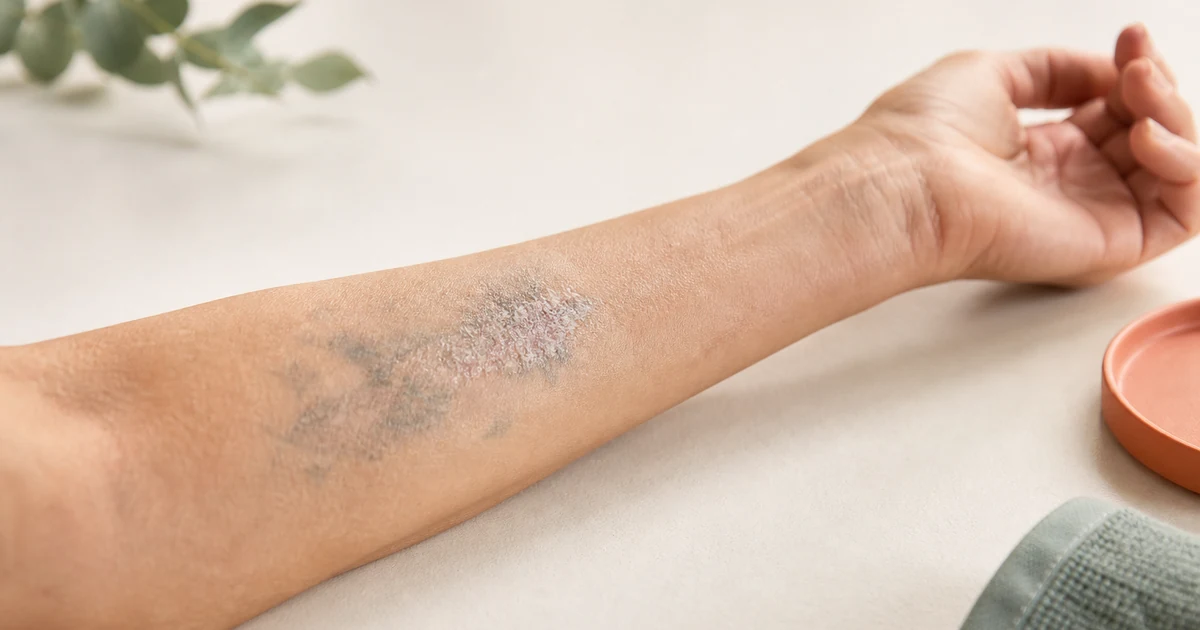
Frosting is the temporary white or grey layer that appears on a tattoo within seconds of a laser pulse, and it is a normal, expected sign the laser is interacting with the ink — not a burn, not bleaching, and not scarring. It is caused by the rapid formation of carbon dioxide gas as the laser shatters the pigment, and it typically fades within about 15 to 30 minutes, after which the skin usually looks red and swollen.
If you watched your tattoo turn white on the treatment table and quietly panicked, this is one of the most misread moments in the whole process. This guide explains what frosting actually is, what happens over the first 24 hours, why it isn't the same as a burn or a scar, and the one variation on frosting that is worth flagging to your clinic — using medical sources and figures from the Tattoo Removal Guide directory, stamped (as of July 2026).
Key Takeaways
- Frosting is a temporary white/grey layer that appears within seconds of the laser pulse — a normal sign the laser is hitting the ink, caused by carbon dioxide gas forming as the pigment shatters.
- It fades in about 15–30 minutes; the area then typically looks red, swollen or slightly raised.
- Frosting is not a burn and not scarring — it's a surface, gas-driven optical effect that resolves in minutes.
- More frosting does not mean better results. The amount of frosting doesn't reliably predict how a tattoo will clear.
- Watch for whitening that spreads into the surrounding untreated skin or lingers — that can signal over-treatment. Raise it with your clinic.
- Frosting is a general reaction to laser removal, not a feature of one device. Of the ~5,700 clinics we track, about 18% publicly note picosecond lasers and 15% note Q-switched (as of July 2026) — a floor, not full adoption, since most don't specify.
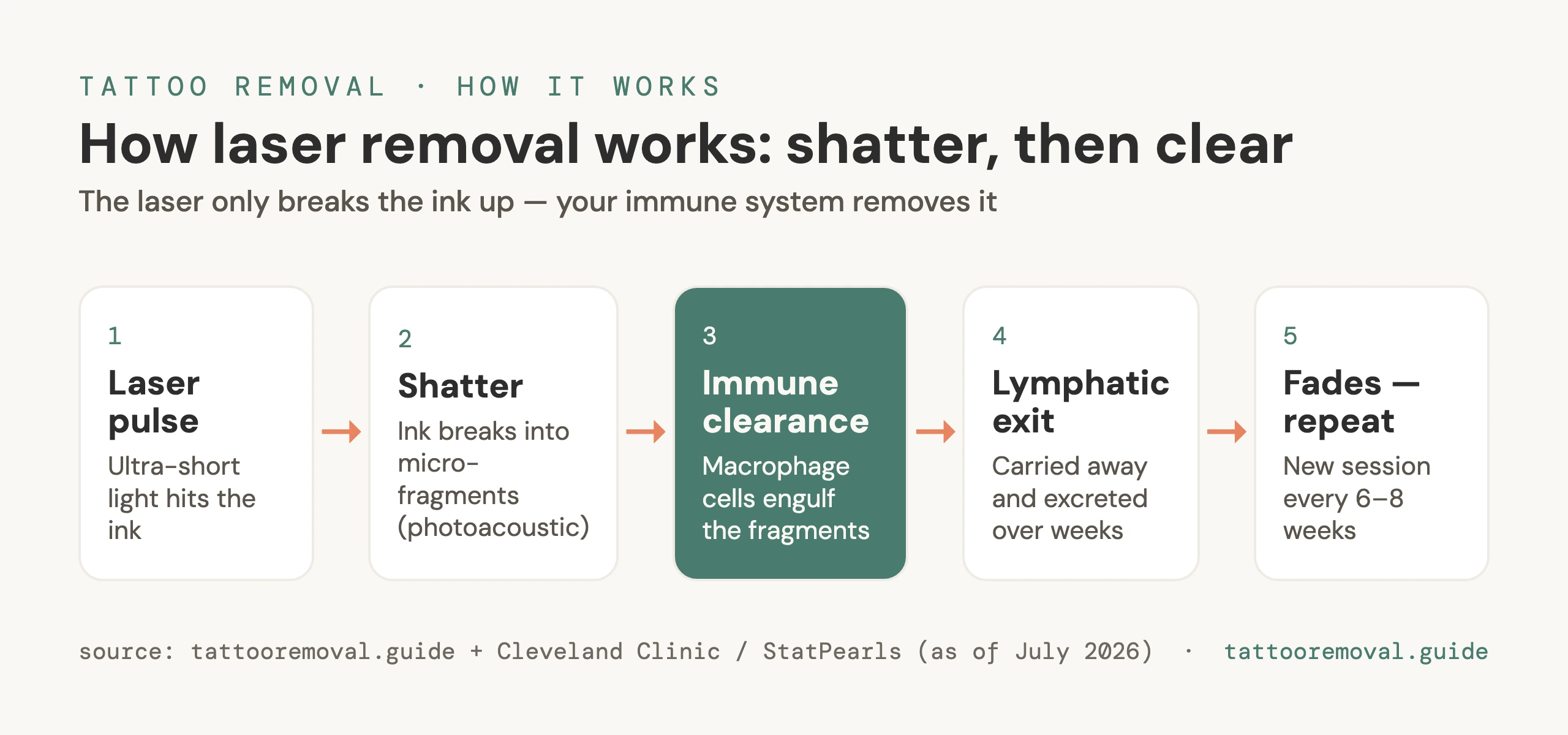 The laser breaks the ink up — your body removes it over months.
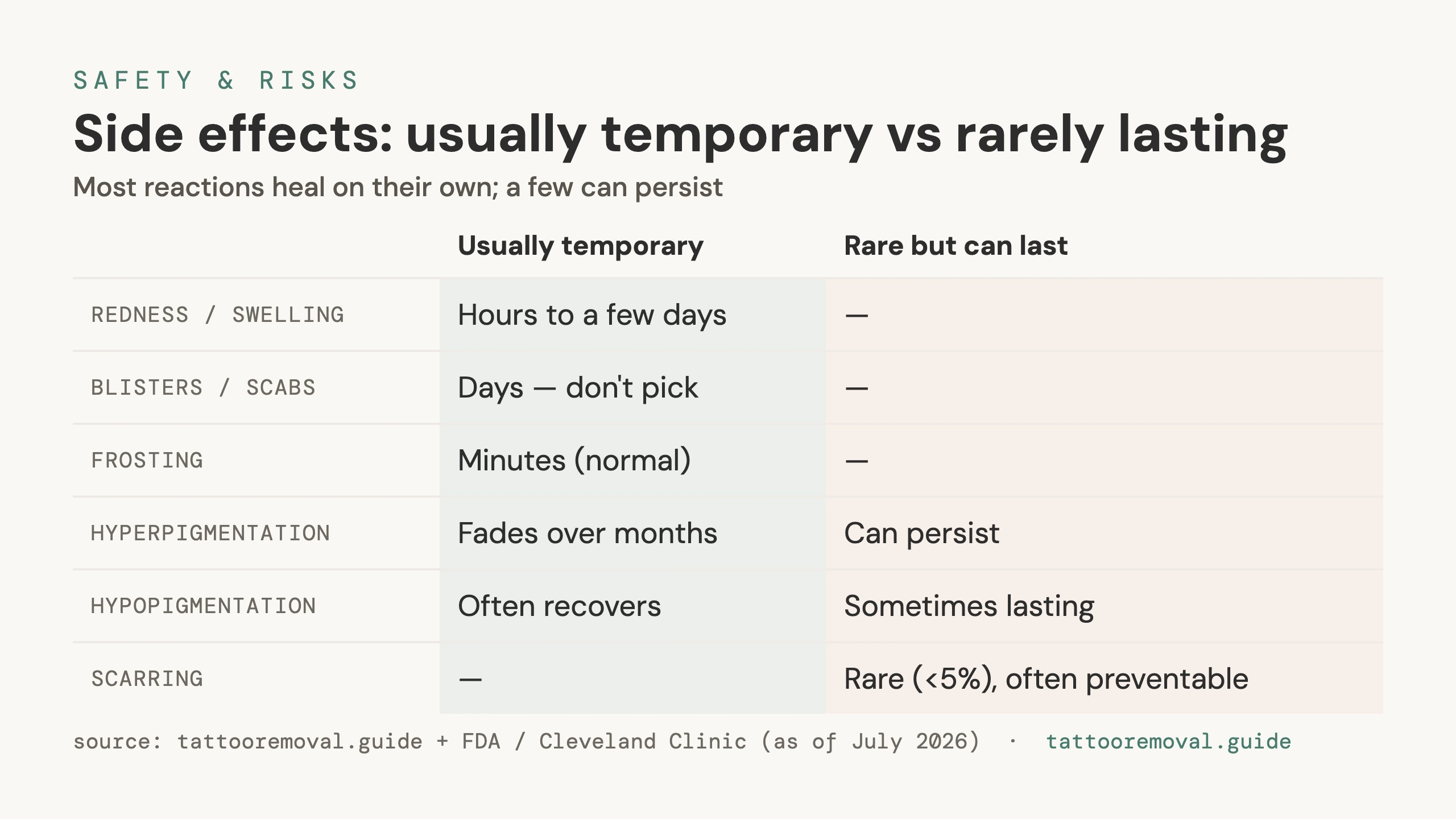 Frosting is a normal, temporary reaction — not a burn or a scar.
What is frosting, exactly?
Frosting is the temporary white or grey discolouration that appears on a tattoo within seconds of the laser pulse. It's one of the most immediate, visible reactions in laser tattoo removal — and one of the most alarming if no one has warned you it's coming.
Here's the mechanism. To break up ink, the laser delivers ultra-short, high-energy pulses that the pigment absorbs almost instantly. As the Cleveland Clinic describes, that energy shatters the ink into smaller particles. The energy is absorbed and released so rapidly that it produces tiny bubbles of carbon dioxide gas in the upper layers of the skin. Those microscopic gas bubbles scatter light, and the treated area briefly turns a frosty white or grey. It's the same visual principle as why crushed ice or sea foam looks white — countless tiny bubbles bouncing light back at you.
So the white you see isn't your skin being bleached or scorched. It's a short-lived optical effect of gas forming exactly where the laser is doing its job. That's why clinicians treat frosting as a positive endpoint — a confirmation the laser settings are actually interacting with the ink.
How long does frosting last?
Frosting is fleeting. It appears within seconds of each pass and typically fades within about 15 to 30 minutes as the carbon dioxide gas disperses and reabsorbs. In many cases it's already softening by the time your session ends.
As the frost clears, the treated area usually looks red, swollen and slightly raised, sometimes with a wheal-like puffiness around the lines of the tattoo. That's normal, too — it's the skin's inflammatory response to the treatment, and it's what you'll leave the clinic with rather than the white frost itself.
 A back-piece tattoo.
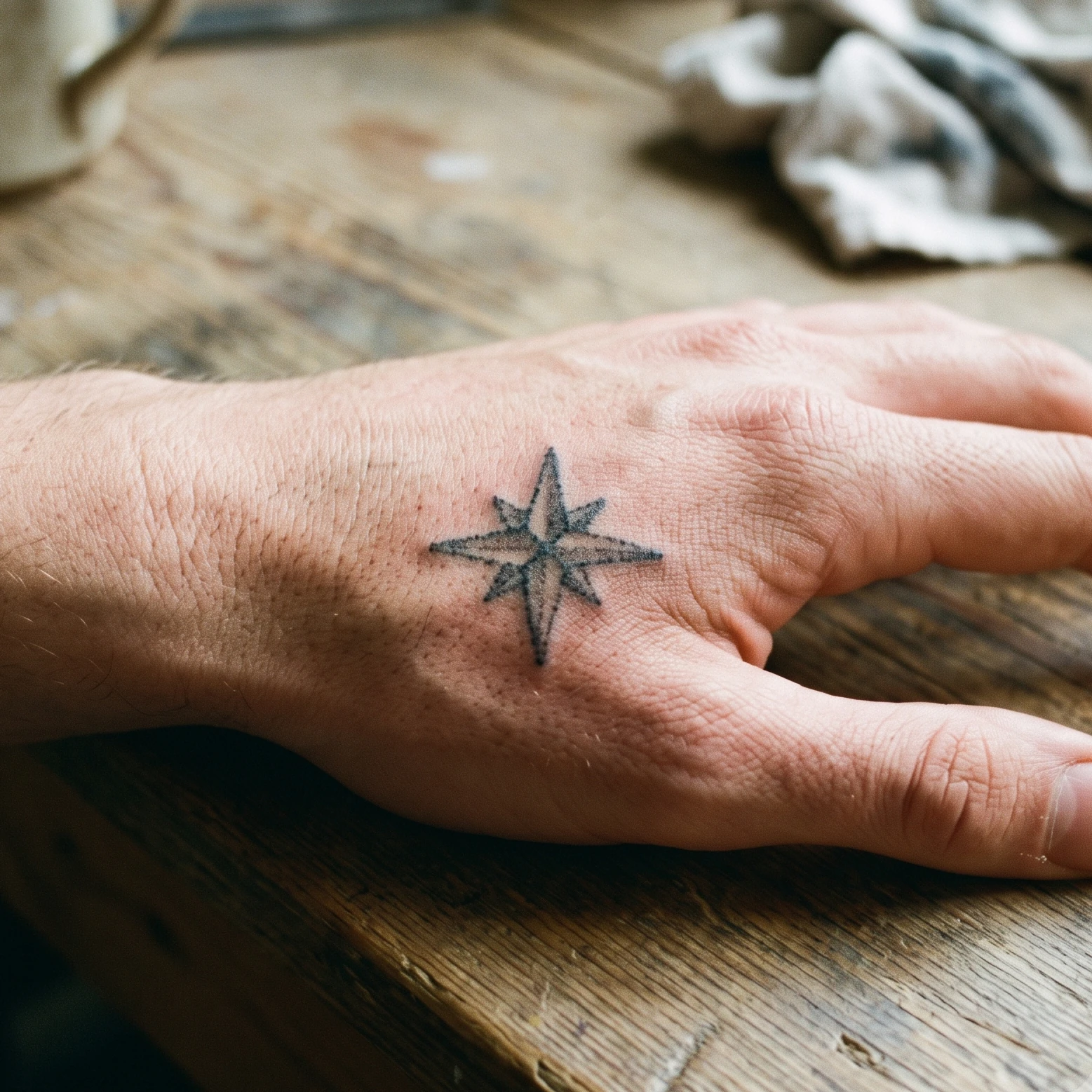 An amateur stick-and-poke tattoo.
The first 24 hours: what happens after the frost fades
The frost is just the opening act. Here's the rough sequence over the first day:
| Timeframe | What you'll typically see | Is it expected? |
|---|---|---|
| Seconds after each pulse | Frosting — white/grey layer over the ink | Yes — normal, expected |
| ~15–30 minutes | Frost fades; area turns red and swollen | Yes — normal |
| First few hours | Redness, swelling, tenderness; possible pinpoint bleeding | Usually normal |
| Hours to ~24 hours | Possible blisters, scabbing beginning | Common — don't pop them |
| Days 1–7 | Swelling settles, scabs form and heal | Yes — normal healing |
Pinpoint bleeding and blistering can both appear in the hours after treatment as part of the same process — the StatPearls clinical reference on laser tattoo removal lists blistering, swelling and scabbing among the expected, generally self-limiting side effects. Blisters in particular look dramatic but are usually just healing; the golden rule is don't pop them — the intact roof is a sterile barrier. For the full picture on what's normal versus a warning sign, see our guide on blisters after tattoo removal.
Frosting is not a burn — and not a scar
This is the misconception worth dismantling directly. Because frosting appears the instant the laser touches the skin and turns everything white, it looks like a burn. It isn't.
- A burn is thermal damage to the skin's structure. Frosting is a transient gas-and-light effect that vanishes in minutes, leaving the ordinary redness and swelling of treatment behind — not a wound in the shape of the frost.
- Scarring is a longer-term change in skin texture — a raised or depressed mark that can follow poor healing. The American Academy of Dermatology notes that the biggest avoidable driver of scarring after removal is picking at scabs, not the laser flash itself.
Seeing frosting during your session tells you the laser is engaging the ink. It does not tell you that you've been burned or that you'll scar. Those are different events on a different timeline.
Does more frosting mean better results?
It's tempting to read heavy frosting as "the laser really worked today." Resist it. Frosting confirms the laser is interacting with pigment, but the degree of frosting does not reliably predict how well or how fast a tattoo will clear.
How much a given pass frosts depends on the ink, its colour and density, its depth in the skin, your skin type and the specific settings — not on some simple "more white = more removal" rule. Two people can frost very differently and clear at similar rates; the same tattoo can frost less in later sessions as pigment thins, without meaning treatment is failing. Real progress shows up over the weeks between sessions, as your immune system carries away the shattered ink — not in how white the skin turned on the table. No honest clinician grades your results by frosting intensity, and neither should you.
When frosting is worth flagging
Frosting on the tattoo is expected and harmless. The variation worth watching is different: prolonged or spreading whitening of the surrounding, untreated skin.
Normal frosting sits over the pigment and fades in minutes. If the whitening extends well beyond the tattoo into healthy skin, or lingers long after the usual 15–30 minute window, that can be a sign of over-treatment — too much energy delivered to the area. It's not a reason to panic, but it is a reason to speak up: mention it to your clinician during or after the session so they can adjust settings for next time. A good operator would rather you flag it than sit on it.
Separately, keep an eye out over the following days for signs of infection — spreading redness, pus, red streaks, fever, or pain that worsens around day three to seven instead of easing. Those aren't about frosting itself, but they're the healing-phase flags that warrant a call to your provider. The FDA's tattoo and permanent-makeup fact sheet is a reminder that any procedure breaking the skin's surface carries some risk, so knowing your warning signs matters.
Frosting vs blistering vs scarring vs hypopigmentation
These four get muddled constantly. Here's how they differ:
| What it is | Timing | Concern level | |
|---|---|---|---|
| Frosting | Temporary white/grey layer from CO₂ gas as ink shatters | Seconds after the pulse; fades in ~15–30 min | Normal & expected — no concern |
| Blistering | Fluid-filled bump as skin reacts to rapid heating | Hours after treatment; resolves in ~3–7 days | Common; don't pop — watch for infection |
| Scarring | Lasting change in skin texture (raised/depressed) | Develops over weeks; often from picking scabs | Uncommon but lasting — largely avoidable |
| Hypopigmentation | Loss of skin pigment, leaving a lighter patch | Emerges over weeks/months; may be temporary or lasting | Possible side effect — discuss risk with your clinic |
The quick way to hold it: frosting happens during the session and disappears; blistering happens after and heals in a week; scarring and pigment changes are longer-term outcomes. Frosting is the only one of the four you should actually expect to see every session.
Aftercare for the first day
Frosting itself needs nothing from you — the clinic manages it on the table, letting it fade before cooling the area and applying a dressing. Your job begins with aftercare at home, and it's gentle and low-effort:
- Keep it clean and dry — wash gently with mild soap and water; pat, don't rub.
- Moisturise as directed — usually a thin layer of the ointment your clinic recommends.
- Protect it from the sun and avoid soaking it (pools, hot tubs, long baths) for a few days.
- Don't pick at scabs or blisters — this is the single biggest avoidable cause of scarring.
- Expect some redness, swelling, tenderness and possibly pinpoint bleeding or blistering — that's healing, not failure.
Your clinic should tell you which symptoms are expected and which warrant a call back. For the full step-by-step of a visit from consultation to aftercare, see what to expect at your first tattoo removal session.
This is general information, not medical advice. Laser tattoo removal is a medical procedure with real risks including blistering, scarring and pigment change. Frosting is normal, but how your skin reacts and heals varies by person and tattoo — consult a licensed provider about your specific situation, and raise anything that looks unusual with the clinic that treated you.
Compare clinics before you book
How your skin is treated — the settings, the operator's experience, the aftercare guidance — depends heavily on the clinic. Frosting is universal, but good technique isn't, and the right clinic for your ink and skin makes a real difference to your comfort, your session count and your total cost.
Compare tattoo-removal clinics in your city to weigh lasers, experience and reviews side by side, or start with a dense market like tattoo removal in Melbourne to see how listings stack up. For the bigger picture on risks and how to treat safely, read our pillar guide, is laser tattoo removal safe?.
Frequently asked questions
What is frosting in laser tattoo removal?
Frosting is the temporary white or grey layer that appears on a tattoo within seconds of the laser pulse. It is caused by the rapid formation of carbon dioxide gas as the laser hits and shatters the ink. Frosting is a normal, expected sign the laser is interacting with the pigment, and it typically fades within about 15 to 30 minutes.
Why does my tattoo turn white after laser removal?
Your tattoo turns white because the laser's energy is absorbed by the ink and released so fast it produces tiny bubbles of carbon dioxide gas in the upper skin. That gas scatters light and makes the treated area look frosty white or grey for a few minutes. It is a surface, gas-driven effect — not bleaching, not a burn, and not permanent.
How long does frosting last after tattoo removal?
Frosting usually fades within about 15 to 30 minutes of the laser pulse as the carbon dioxide gas disperses. Once the white fades, the area typically looks red, swollen or slightly raised. If whitening of the surrounding, untreated skin persists well beyond that window, mention it to your clinic.
Is frosting a burn or a sign of scarring?
No. Frosting is not a burn and not scarring. It is a temporary, gas-driven optical effect from the laser interacting with ink, and it resolves in minutes. Scarring is a longer-term change in skin texture that can follow poor healing — most often from picking scabs. Seeing frosting during your session does not mean you will scar.
Does more frosting mean better tattoo removal results?
Not reliably. Frosting confirms the laser is interacting with pigment, but the amount of frosting does not predict how well or how fast a tattoo will clear. Ink type, colour, depth, your skin and your immune response all matter more. Judge results over the weeks between sessions, not by how white the skin turned on the table.
What happens in the first 24 hours after frosting?
The white frost fades within roughly 15 to 30 minutes, then the area usually becomes red, swollen and tender. Over the first several hours to a day, pinpoint bleeding or blisters can appear as part of normal healing. Keep the area clean, follow your clinic's aftercare, and do not pick at any scabs or blisters that form.
When should I be worried about frosting?
Frosting itself is expected and harmless. Be cautious if whitening spreads well into the surrounding untreated skin or lingers long after treatment, which can signal over-treatment — raise it with your clinic. Also seek advice for signs of infection in the days after: spreading redness, pus, red streaks, fever, or pain that worsens instead of easing.
Should I put anything on frosting during the session?
No — frosting is managed by the clinic, not by you. The clinician lets it fade, then cools the area and applies a dressing. Your job starts with aftercare at home: keep it clean, moisturise as directed, protect it from the sun, avoid soaking it, and leave scabs and blisters alone so the skin heals cleanly.
Related guides
Related Guides
- Safety & Risks
Why a Patch Test Matters Before Tattoo Removal (2026)
Why does a patch test matter before laser tattoo removal? It reveals how your skin and ink react — blistering, pigment change, rare reactions — before a full…
- Safety & Risks
Who Should Not Get Laser Tattoo Removal? The Contraindications
Who should not get laser tattoo removal? Most adults are candidates. The full contraindications checklist — when to wait and when to discuss carefully.
- Safety & Risks
Tattoo Removal While Pregnant or Breastfeeding
Can you get tattoo removal while pregnant? Most providers say wait — not from proven harm, but because the safety isn't studied.