Why a Patch Test Matters Before Tattoo Removal (2026)

A patch test matters before tattoo removal because it reveals how your specific skin and ink react to the laser — blistering, pigment change, or a rare ink reaction — before you commit to treating the whole tattoo. It also lets the provider fine-tune the wavelength and energy for your skin type and colours. It is a core safety and planning step, most important for darker skin, coloured or cosmetic ink, and sensitive skin — not an upsell.
A patch test is a small test treatment: the provider lasers a small area of the tattoo first and watches how the skin and ink respond over the following days to weeks before booking a full session. Think of it as a low-stakes rehearsal — cheap insurance against reactions that are much harder to manage once they cover a whole treated area. This guide explains what a patch test can reveal, who benefits most, and how it fits alongside a consultation, using medical sources and figures from the Tattoo Removal Guide directory, stamped (as of July 2026).
Key Takeaways
- A patch test lasers a small area first and watches the reaction before a full session — it de-risks the treatment, it doesn't guarantee an outcome.
- It can reveal excessive blistering, pigment change (hypo- or hyperpigmentation), rare ink reactions, and paradoxical darkening of coloured or cosmetic inks.
- It also lets the provider dial in the wavelength and fluence for your skin type and ink colours — settings that vary from person to person.
- It matters most for darker skin (Fitzpatrick IV–VI), coloured or cosmetic (PMU) tattoos, and sensitive or reactive skin — and for anyone simply unsure.
- A clinic that skips it without a good reason is a caution sign. Of the 5,700 clinics we track, about 27% (1,525) advertise a free consultation (as of July 2026) — a natural moment to ask about testing.
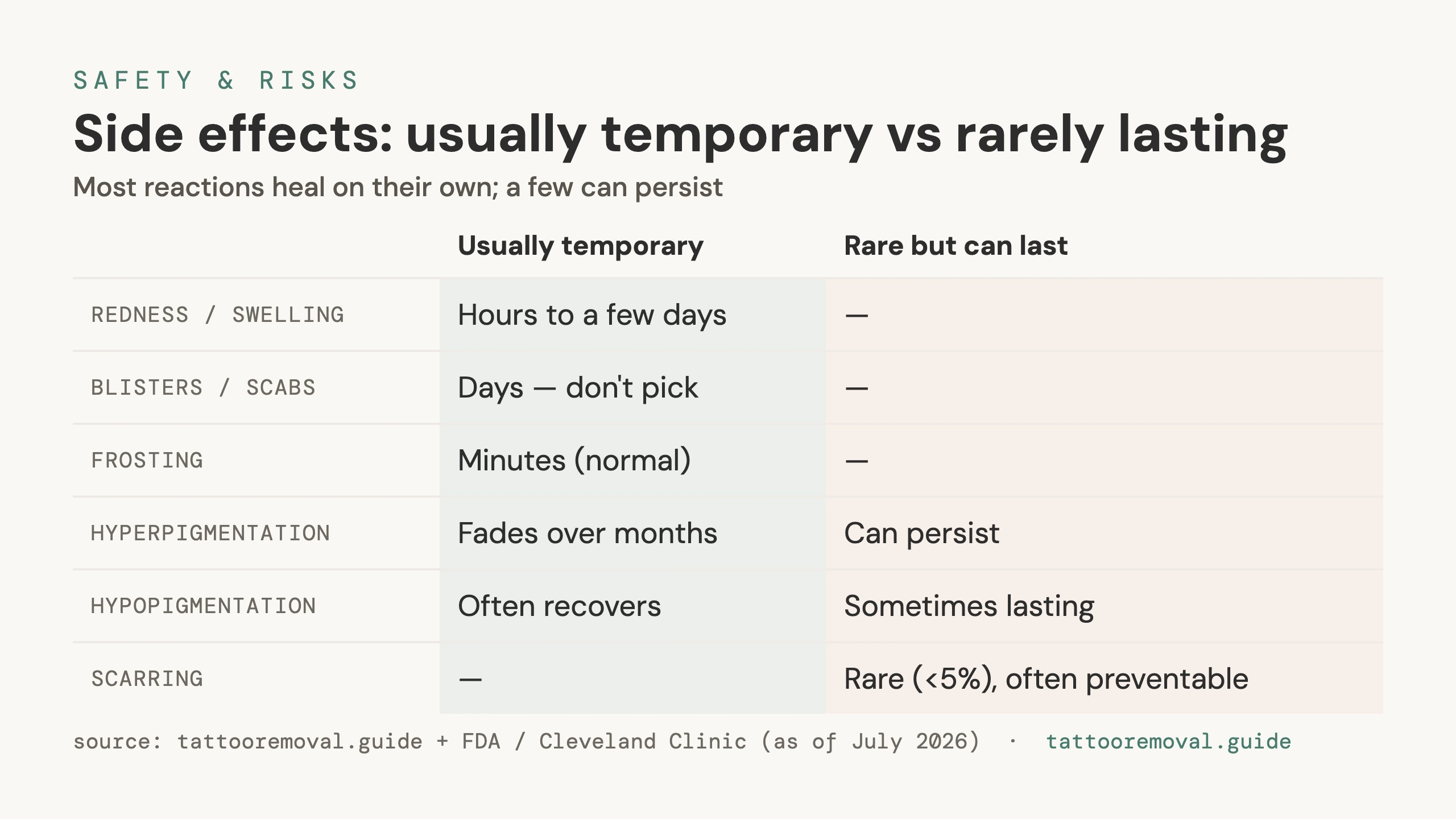 A patch test surfaces reactions before a full session commits you.
What is a patch test — and what does it actually do?
A patch test — also called a test spot or test patch — is a deliberately small laser treatment on part of your tattoo, done before the full session. The provider fires the laser over a small area at the settings they're considering, then waits, watching how your skin heals and how the ink responds over the following days to weeks.
It's doing two jobs at once. First, safety: it surfaces reactions — blistering beyond the expected, pigment change, or a rare ink reaction — on a small, low-consequence area rather than across the whole tattoo. Second, planning: it gives the provider real feedback from your skin and your ink so they can choose the right wavelength and energy, as the clinical literature on laser tattoo removal describes. Two people with the same tattoo can need different settings; a test spot replaces guesswork with observation.
What it is not: a guarantee. A good test result means the settings look safe and the ink is responding — not that removal is risk-free or that a specific number of sessions will fully clear the tattoo. Fading happens over many spaced sessions and can't be guaranteed to reach 100%.
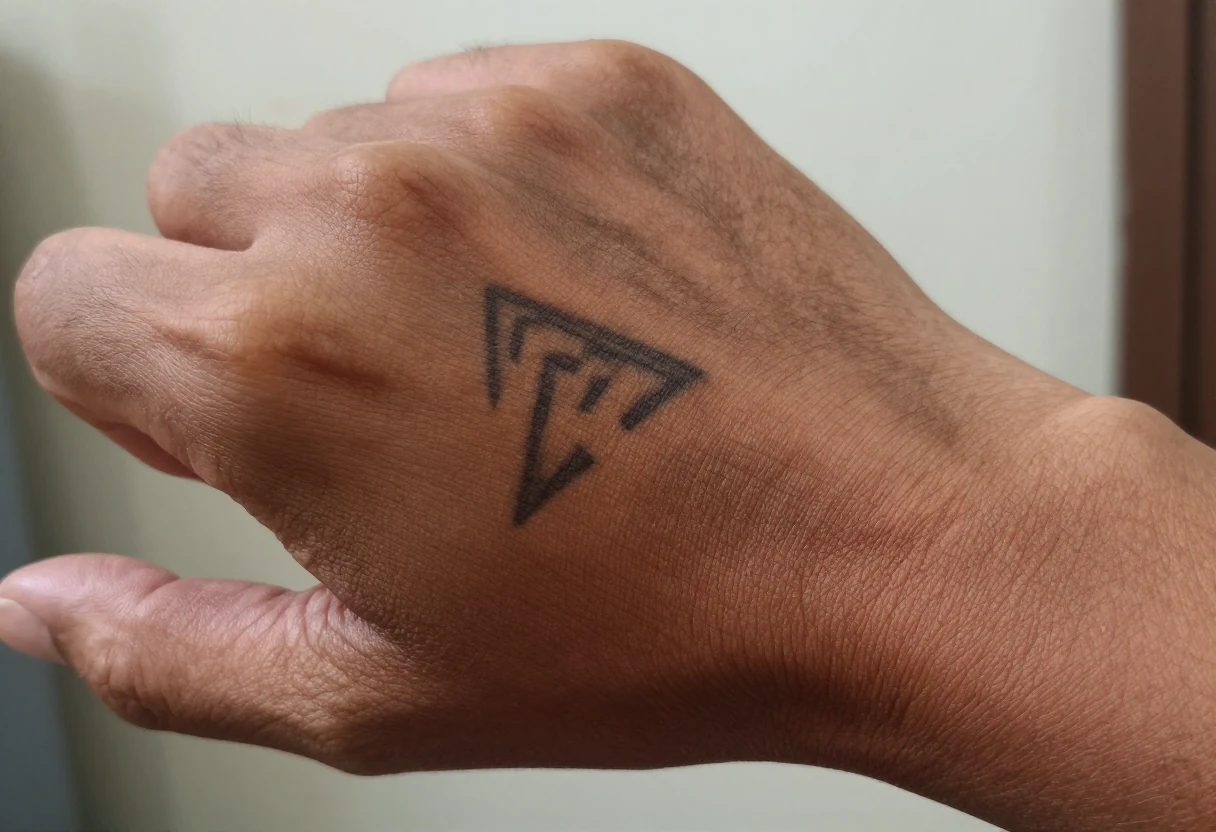 Darker skin is treated at 1064nm to protect its pigment.
What a patch test can reveal — and why it matters
The value of a test spot is that it turns unknowns into observations before they can affect the whole tattoo. Here's what it's watching for.
| What a patch test can reveal | Why it matters | Who it matters most for |
|---|---|---|
| Excessive blistering or wound reaction | Some skin reacts more strongly than expected; seeing it on a small area lets the provider lower settings before a full session | Sensitive or reactive skin; anyone with a strong first reaction |
| Pigment change (hypo- or hyperpigmentation) | The laser can lighten or darken the surrounding skin; testing shows this tendency early so settings can be adjusted | Darker skin (Fitzpatrick IV–VI); tanned or sun-reactive skin |
| Paradoxical darkening of ink | Coloured, white, flesh-toned and cosmetic inks can turn darker or grey instead of fading — a hard-to-predict reaction | Coloured tattoos; cosmetic / permanent makeup (PMU) |
| Rare ink or allergic-type reaction | A small number of people react to pigment released by the laser; a small test limits the exposure | Anyone with known skin allergies or prior ink reactions |
| How the ink actually responds | Confirms the chosen wavelength and energy are fading your ink before committing to a course | Unusual ink colours; older or layered/cover-up tattoos |
| Right wavelength and fluence for you | Lets the provider fine-tune settings to your skin type and colours rather than starting a full session blind | Everyone — most valuable where skin type and ink are less predictable |
The reactions worth understanding
Blistering and wound reaction. Some blistering can be a normal part of healing, but an unusually strong reaction is a signal to treat more conservatively. Catching that on a test spot is far better than across a whole session.
Pigment change. Laser energy meant for the ink can also affect melanin in the surrounding skin, causing lightening (hypopigmentation) or darkening (hyperpigmentation). The FDA notes that removal itself can cause lasting pigment changes; a test spot helps a provider gauge that risk on your skin before scaling up.
Paradoxical darkening. This is the counter-intuitive one. Certain inks — especially reds, whites, flesh tones and cosmetic (permanent makeup) pigments — can react to the laser by turning darker or grey rather than fading. It's difficult to predict from looking at a tattoo, which is exactly why a small test is so valuable for coloured and cosmetic work. The Cleveland Clinic and the American Academy of Dermatology both flag that coloured and cosmetic inks behave less predictably under the laser.
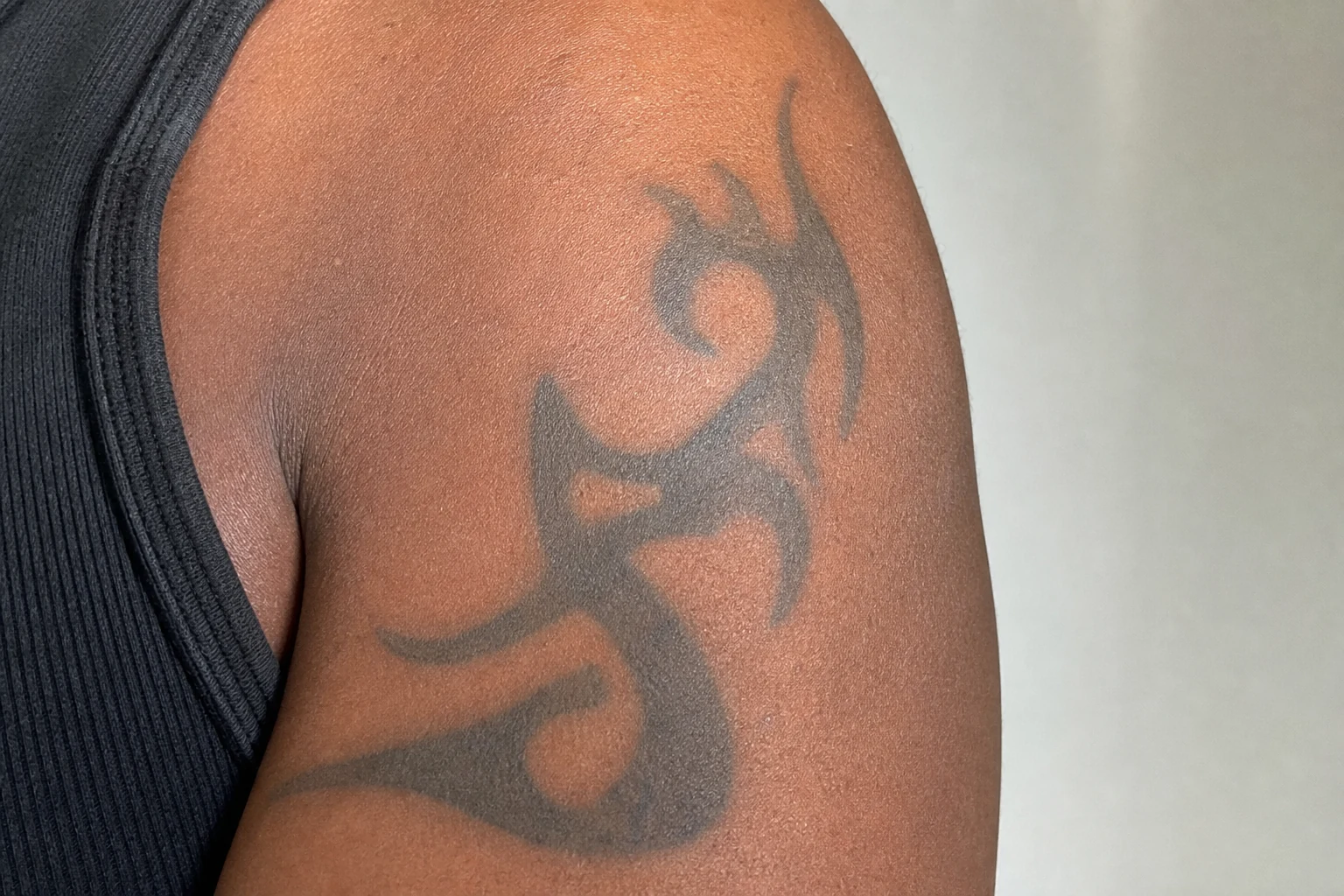 Darker skin is treated at 1064nm to protect its pigment.
Who benefits most from a patch test
Every case can benefit, but for some it's close to essential:
- Darker skin (Fitzpatrick types IV–VI). More melanin means a higher risk of pigment change. A test spot lets the provider confirm a conservative, melanin-sparing approach — usually a 1064nm Nd:YAG wavelength — is behaving well before treating the whole tattoo.
- Coloured and cosmetic (PMU) tattoos. Because of the paradoxical-darkening risk, testing a small area of coloured ink or permanent makeup first is one of the clearest reasons to insist on a patch test.
- Sensitive, reactive, or allergy-prone skin. If your skin flares easily or you've reacted to products or ink before, a test limits your exposure while the provider learns how you respond.
- Anyone unsure. If you're anxious about how you'll react, or a provider is being cautious about your history, a test spot is a low-stakes way to build confidence before committing.
How it's done, and the wait before a full session
The mechanics are simple. The provider cleans a small section of the tattoo, applies laser at the settings they're assessing, and gives you the same aftercare you'd get for a full session. Then comes the important part: the wait.
Skin reactions like blistering or pigment change don't all show up immediately — they can take days to weeks to appear and settle. So clinics leave a gap between the patch test and the first full session, typically anywhere from a few days to several weeks, depending on their protocol and how your skin responds. There's no single "correct" interval, and a clinic should be able to tell you what wait it uses and why. If a place tests and immediately treats the whole tattoo the same day, ask how that squares with watching for delayed reactions.
A skipped patch test can be a caution sign
Because a test spot is inexpensive and low-effort, a clinic's approach to it can tell you something. For a straightforward black tattoo on lighter skin, some experienced clinics test on the day and proceed — that can be reasonable. But skipping a test for coloured or cosmetic ink, darker skin, or clearly reactive skin, with no explanation, is a red flag.
A good clinic can articulate why it does or doesn't test in your specific case. A vague answer, pressure to book a full course immediately, or dismissiveness about pigment or darkening risk are all reasons to slow down and compare other providers. How clinics handle testing sits alongside the other questions worth asking when you choose where to go — see our guide on how to choose a tattoo removal clinic.
This is general information, not medical advice. Whether and how a patch test is used depends on your individual skin, ink and health. Reactions vary from person to person — consult a licensed provider before starting or ruling out treatment, and follow their specific guidance.
Compare clinics — and ask how they test
Because testing practice varies from clinic to clinic — whether they patch-test, which wavelengths they offer, their experience with coloured ink and darker skin — the most useful next step is to compare your options and ask directly.
Compare tattoo-removal clinics in your city to see who offers a free consultation near you, or start with a dense market like tattoo removal in Melbourne to see how listings and consultation offers stack up. For the bigger safety picture, read our pillar guide, is laser tattoo removal safe?
Frequently asked questions
Do you need a patch test for laser tattoo removal?
A patch test is not legally mandatory everywhere, but it is widely recommended good practice, especially for darker skin, coloured or cosmetic tattoos, and sensitive or reactive skin. It treats a small area first to observe how your skin and ink react before committing to a full session. A clinic that skips it without a clear reason is worth questioning.
What is a patch test for tattoo removal?
A patch test — sometimes called a test spot — is when a provider treats a small section of the tattoo with the laser before doing the whole thing. Over the following days to weeks they watch how the skin heals and how the ink responds, so they can confirm the settings are safe and effective for your specific skin type and ink before a full session.
How long do you wait after a patch test before a full session?
Most clinics wait somewhere from a few days to several weeks between a patch test and the first full session, so skin reactions like blistering or pigment change have time to appear and settle. There is no single fixed interval — it depends on the clinic's protocol, your skin type, and how the test area responds. Ask your provider what wait they use and why.
Why does a patch test matter more for darker skin?
Darker skin (Fitzpatrick types IV–VI) has more melanin, which can absorb laser energy meant for the ink and raise the risk of pigment change — either lightening (hypopigmentation) or darkening (hyperpigmentation). A patch test lets the provider check how your skin responds at conservative settings, usually with a 1064nm Nd:YAG wavelength, before treating the whole tattoo.
Can a patch test cause a tattoo to darken?
Rarely, yes — and that is partly the point of doing one. Some inks, particularly coloured, white, flesh-toned and cosmetic (permanent makeup) inks, can react to the laser by turning darker or grey instead of fading. This paradoxical darkening is hard to predict, so testing a small spot first is far safer than discovering it across a whole treated area.
Is a patch test the same as a consultation?
No. A consultation is a conversation where a provider reviews your health, skin type and tattoo and flags anything of concern. A patch test is a small physical laser treatment used to observe how your skin and ink actually react. Ideally you get both — the consultation to assess candidacy, the patch test to confirm the plan on your skin.
Should I worry if a clinic skips the patch test?
It depends on the reason. For a straightforward black tattoo on lighter skin, some clinics test on the day and proceed. But skipping a test for coloured or cosmetic ink, darker skin, or reactive skin — with no explanation — is a caution sign. A good clinic can tell you why it does or doesn't test in your case. If the answer is vague, compare other clinics.
Related guides
Related Guides
- Safety & Risks
Who Should Not Get Laser Tattoo Removal? The Contraindications
Who should not get laser tattoo removal? Most adults are candidates. The full contraindications checklist — when to wait and when to discuss carefully.
- Safety & Risks
Tattoo Removal While Pregnant or Breastfeeding
Can you get tattoo removal while pregnant? Most providers say wait — not from proven harm, but because the safety isn't studied.
- Safety & Risks
Tattoo Removal Recovery Timeline
A week-by-week tattoo removal recovery timeline: the first 24 hours, scabbing, itching, the 6–8 week gap, and what's normal versus when to call your clinic.