Signs of Infection After Tattoo Removal (Normal vs Infected)

Infection after laser tattoo removal is uncommon when you follow standard aftercare, and most of the redness and swelling you see in the first few days is normal inflammation, not infection. The real warning signs of an infection tend to appear around day 3 to 7 and get worse rather than better: spreading redness, warmth, pus or yellow discharge, red streaks, increasing pain, and fever. If you see those, contact a doctor.
The tricky part is that a freshly treated tattoo looks alarming even when it is healing perfectly. This guide sorts normal healing from a genuine infection, using medical sources and the honest framing you would want from an independent directory — stamped (as of July 2026).
Key Takeaways
- Most early redness, swelling and tenderness is normal inflammation and peaks in the first 1–3 days.
- Infection signs appear later — around day 3–7 — and escalate: spreading redness, warmth, pus, red streaks, rising pain, fever.
- The single most avoidable cause of infection is broken skin — so don't pick scabs or pop blisters.
- Cellulitis is the infection to know about: a spreading bacterial skin infection that needs prompt treatment.
- Most infections are treatable when caught early — see a doctor rather than wait. Of the 5,700 clinics we track, about 27% offer a free consultation (as of July 2026), a low-friction way to have a healing concern looked at.
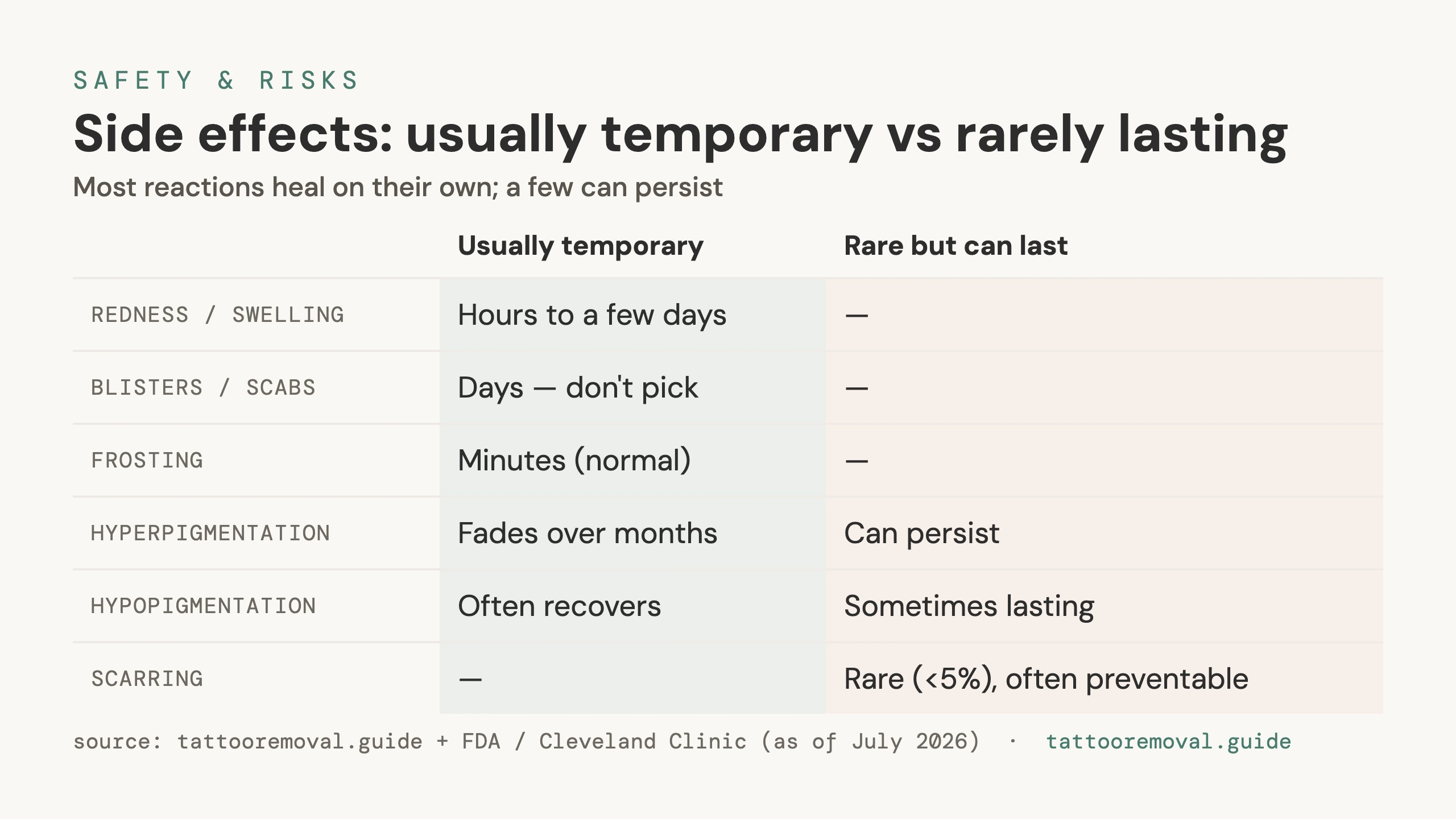 Most side effects heal; a few are rare but can last.
Why infection is uncommon after laser removal
Laser tattoo removal does not cut or open the skin. As the Cleveland Clinic explains, the laser passes light through the surface to shatter the ink beneath, and your immune system then clears the fragments. Because the outer skin barrier usually stays intact, the entry point that bacteria need is missing — which is why infection is uncommon when aftercare is followed. The StatPearls clinical reference on laser tattoo removal lists infection as a possible but relatively infrequent complication, most often tied to disrupted or broken skin during healing.
That single fact reframes the whole topic: the danger is not the laser, it's what happens to the skin afterwards if the barrier is broken.
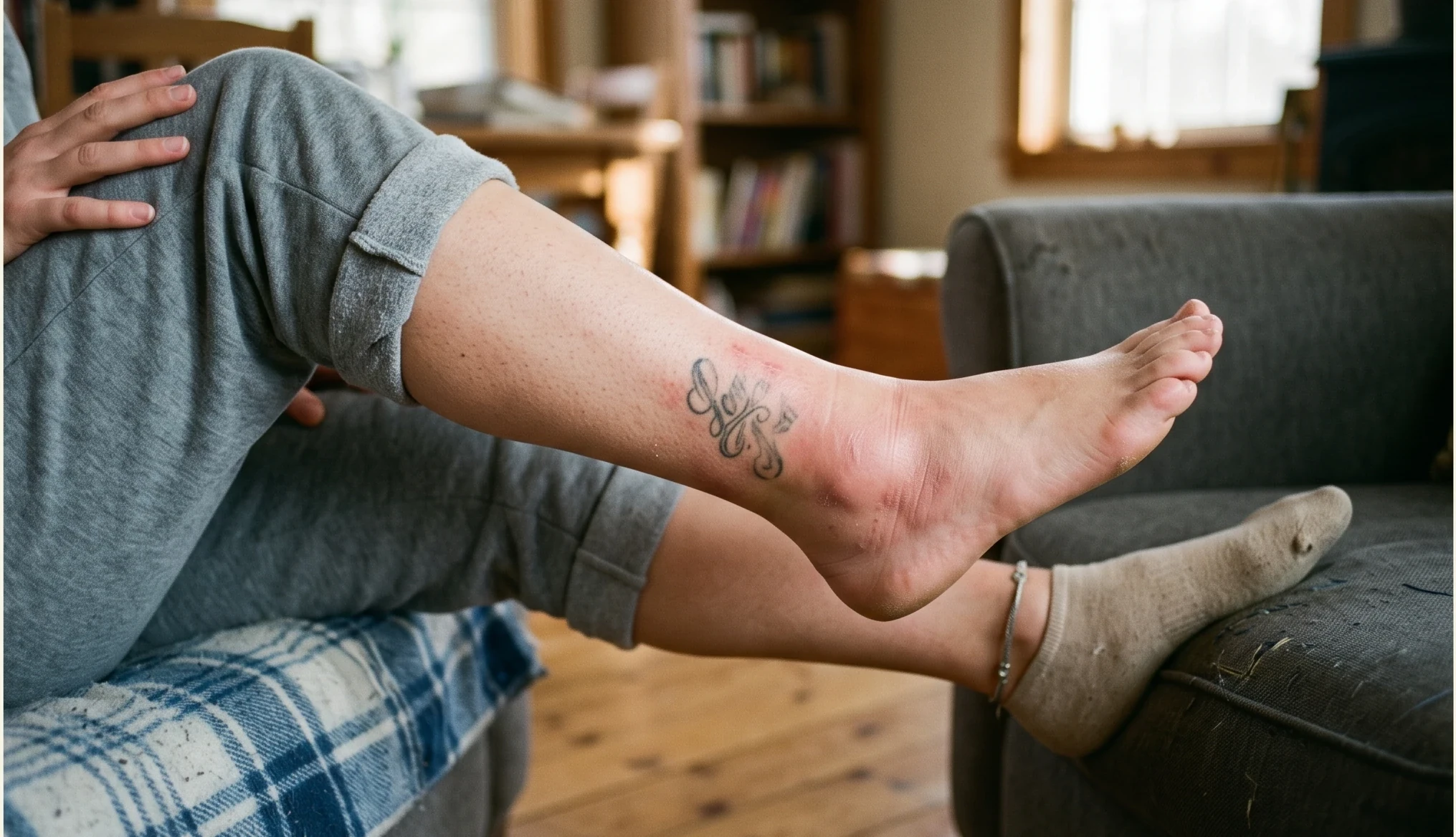 A tattoo undergoing laser removal.
Normal healing vs infection: how to tell the difference
Normal healing and early infection start in the same place — a red, tender, swollen patch — so timing and direction matter more than any single symptom. Normal inflammation is worst early and steadily improves; infection appears or worsens after the first couple of days.
| Sign | Normal healing | Possible infection |
|---|---|---|
| Timing | Worst in first 1–3 days, then eases | Appears or worsens after day 3–7 |
| Redness | Localised to the treated area, fading | Spreading outward, expanding daily |
| Warmth | Mild, settling | Area feels hot to the touch |
| Swelling | Mild–moderate, reducing | Increasing, firm, tender |
| Discharge | Clear or slightly bloody weeping | Pus / yellow-green discharge |
| Pain | Sore, then decreasing | Increasing after day three |
| Streaks | None | Red streaks running from the site |
| Whole-body | None | Fever, chills, feeling unwell |
| Frosting / blister / scab | Expected; resolves | Fine — unless picked or popped open |
A useful rule of thumb: normal healing gets better day by day; infection gets worse day by day. A treated tattoo that is a little uglier this morning than last night, but on a downward trend overall, is usually just healing. One that is redder, hotter and more painful than it was two days ago deserves attention.
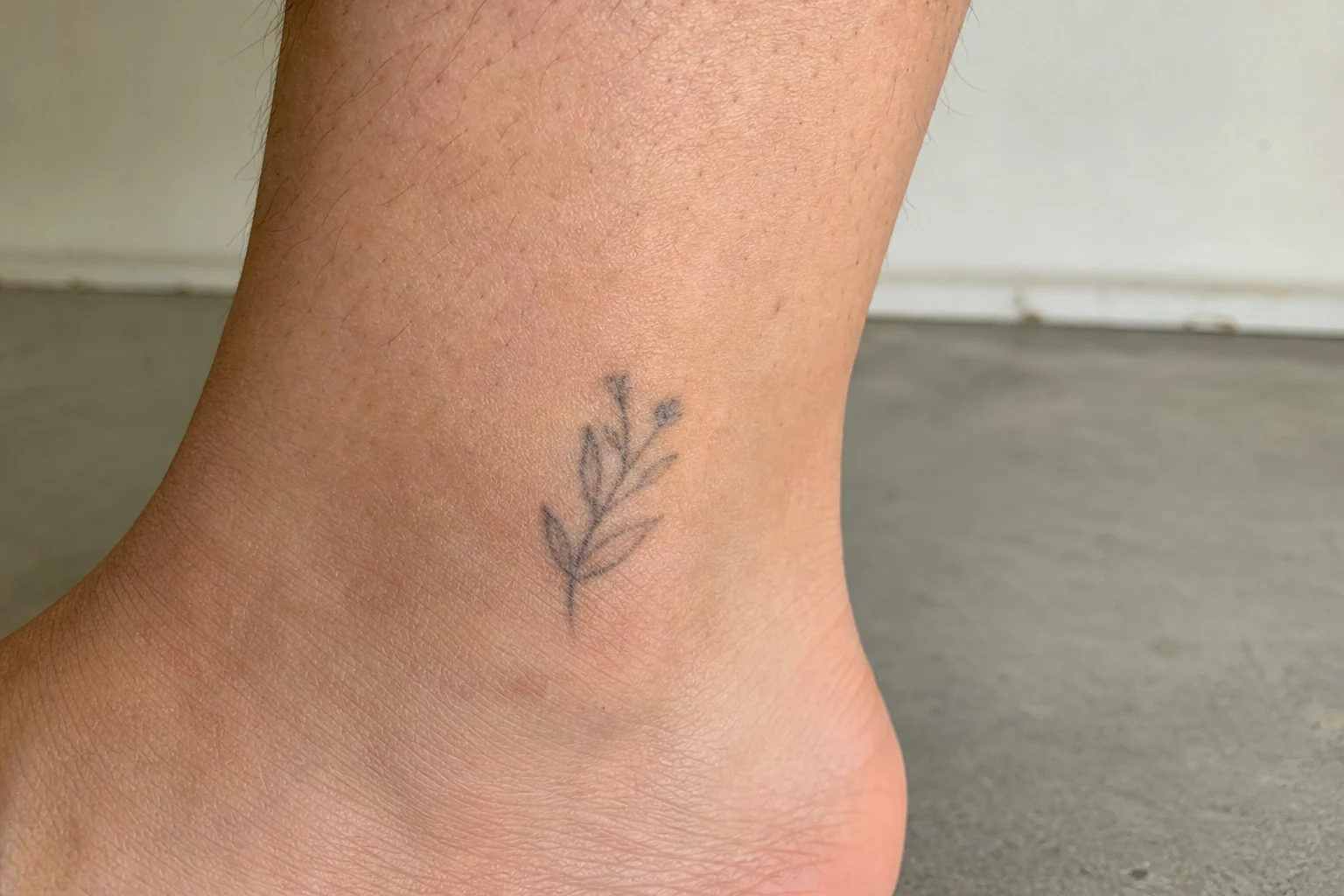 A small tattoo on a slow-healing area.
Why you must not pick scabs or pop blisters
Blistering and scabbing after laser removal are normal, and both are part of how the skin repairs itself. The mistake is interfering with them. Picking a scab or popping a blister breaks the skin barrier and creates the exact entry point bacteria need — turning a low infection risk into a real one. It also raises the risk of scarring and pigment change, as the American Academy of Dermatology notes for tattoo procedures generally.
Let scabs fall away on their own timeline. Let blisters drain naturally if they open, and cover them loosely and cleanly if they do. The urge to "help" the tattoo along is the most common way people import an infection into an otherwise clean healing process.
Cellulitis: the infection to recognise
The specific infection worth knowing by name is cellulitis. Cellulitis is a bacterial infection of the skin and the tissue just beneath it, and per the Cleveland Clinic it shows up as spreading redness, warmth, swelling and tenderness, sometimes with fever. It develops when bacteria get through broken skin — which is why a picked scab or popped blister is the classic trigger. The StatPearls reference on cellulitis describes the same picture of erythema, warmth, swelling and tenderness spreading through the tissue.
Cellulitis is not something to manage at home. It can progress if untreated, but it responds well to antibiotics when caught early — so the right move is to see a doctor promptly rather than wait and watch.
What to do: caring for a treated area
Good aftercare is mostly about protecting the barrier and keeping things clean while your body does the work.
- Keep it clean and dry. Gently wash with mild soap and water, pat dry, and follow your clinic's specific aftercare instructions.
- Leave scabs and blisters alone. No picking, no popping, no scrubbing.
- Protect from friction and sun. Loose clothing over the area; sun protection once healed helps pigment recover.
- Watch the trend, not a single moment. Improving day by day is the goal.
- Know your escalation line. If the signs in the "possible infection" column appear, contact a clinician.
Because the number of sessions, the aftercare guidance and the equipment vary by clinic, it's worth knowing what your provider offers before and during a course of treatment — a consultation is also a natural moment to have a healing concern looked at.
See a doctor if
Contact a doctor or seek medical care if, after laser tattoo removal, you notice any of the following:
- Redness that spreads outward or worsens after day three
- The area feels hot to the touch
- Pus or yellow-green discharge
- Red streaks running from the treated area
- Pain that increases rather than settles
- Fever, chills or feeling generally unwell
Most infections after tattoo removal are treatable when caught early, so it is always better to have a concern checked than to wait it out.
This is general information, not medical advice. Laser tattoo removal is a medical procedure with real risks, including infection, blistering, scarring and pigment change. Signs and healing vary by person — if you suspect an infection, consult a licensed provider promptly.
Compare clinics and check your aftercare plan
The best defence against complications is a clinic that gives you clear, written aftercare and is reachable if something looks off. Before or during a course of removal, it's worth comparing providers on exactly those points.
Compare tattoo-removal clinics in your city to see who offers consultations and aftercare support near you, or start with a dense market like tattoo removal in Melbourne to see how listings compare side by side. For the full healing routine, read our tattoo removal aftercare guide, and for the wider risk picture see is laser tattoo removal safe?.
Frequently asked questions
What are the signs of infection after tattoo removal?
The warning signs of an infection usually appear around day 3 to 7 and get worse rather than better: spreading redness, warmth around the site, pus or yellow-green discharge, red streaks running from the area, increasing pain, and fever or chills. Normal healing peaks in the first 72 hours and then steadily improves. If symptoms escalate after day three, contact a doctor.
Is redness and swelling after laser tattoo removal normal?
Yes. Redness, swelling, tenderness, a whitish "frosting" immediately after treatment, and sometimes blistering or scabbing are normal inflammation and part of healing. This normal reaction is worst in the first one to three days and then eases. Infection is different: it appears or worsens after day three and is accompanied by pus, spreading redness, warmth or fever.
How common is infection after laser tattoo removal?
Infection after laser tattoo removal is uncommon when you follow standard aftercare, because the laser does not cut the skin — it shatters ink beneath an intact surface. The main risk comes from broken skin, so picking scabs or popping blisters is the most avoidable cause. Most infections that do occur are treatable when caught early.
What is cellulitis after tattoo removal?
Cellulitis is a bacterial infection of the skin and the tissue just beneath it, causing spreading redness, warmth, swelling and tenderness, sometimes with fever. It can develop if bacteria enter through broken skin, such as a picked scab or popped blister. Cellulitis needs prompt medical treatment, usually antibiotics, so see a doctor if you suspect it.
Why shouldn't I pick scabs or pop blisters after tattoo removal?
Picking scabs or popping blisters breaks the protective skin barrier and creates an entry point for bacteria, which is the main way an infection starts after laser tattoo removal. It also raises the risk of scarring and pigment change. Let scabs fall off on their own and let blisters drain naturally while keeping the area clean and dry.
When should I see a doctor after tattoo removal?
See a doctor if redness spreads outward, the area feels hot, you see pus or yellow-green discharge, red streaks appear, pain increases after day three, or you develop a fever or chills. These suggest infection rather than normal healing. Most infections are treatable when caught early, so it is better to get it checked than to wait.
How long does redness last after laser tattoo removal?
Normal redness and swelling are usually most intense in the first one to three days and then fade over roughly one to two weeks as the skin heals and any scabs resolve. Redness that spreads, intensifies or turns hot after day three is not typical healing and should be assessed by a clinician for possible infection.
Related guides
Related Guides
- Safety & Risks
Why a Patch Test Matters Before Tattoo Removal (2026)
Why does a patch test matter before laser tattoo removal? It reveals how your skin and ink react — blistering, pigment change, rare reactions — before a full…
- Safety & Risks
Who Should Not Get Laser Tattoo Removal? The Contraindications
Who should not get laser tattoo removal? Most adults are candidates. The full contraindications checklist — when to wait and when to discuss carefully.
- Safety & Risks
Tattoo Removal While Pregnant or Breastfeeding
Can you get tattoo removal while pregnant? Most providers say wait — not from proven harm, but because the safety isn't studied.