Tattoo Removal Aftercare: The Day-by-Day Healing Guide (2026)

Tattoo removal aftercare is best understood as risk control: each rule prevents one specific complication — picking scabs causes scarring, dirty or wet broken skin invites infection, and sun exposure drives pigment change. Do it well and the skin surface typically heals over about 2 to 8 weeks between sessions, with far lower odds of a lasting mark. This guide gives you the day-by-day timeline and the do's and don'ts, with figures from the Tattoo Removal Guide directory stamped (as of July 2026).
The good news is that aftercare is simple, and almost every important rule maps to a complication you are trying to avoid. You do not need expensive products — you need consistency and patience while your immune system does the slow work of clearing the shattered ink beneath the surface.
Key Takeaways
- Aftercare is risk control. Every instruction prevents a named complication: scarring (from picking), infection (from moisture and bacteria on broken skin), or pigment change (from sun).
- Typical surface healing runs about 2 to 8 weeks: redness and swelling for 1 to 2 days, blistering and scabbing over 2 to 14 days, then skin regeneration over the following weeks.
- The non-negotiables: keep it clean and dry, apply only what your clinic recommends, never pick scabs or pop blisters, protect from sun with SPF 30+, and avoid pools, saunas and heavy gym sessions while the skin is broken.
- Know normal from not-normal. Redness, swelling, blistering, scabbing and mild itching are expected; spreading redness, pus, red streaks or fever are not — call your clinic.
- Because aftercare guidance should come from the clinic treating you, it is worth choosing one carefully. Of the 5,700 clinics we track, 1,525 (27%) advertise a free consultation (as of July 2026) — a low-cost way to get your specific instructions before you commit.
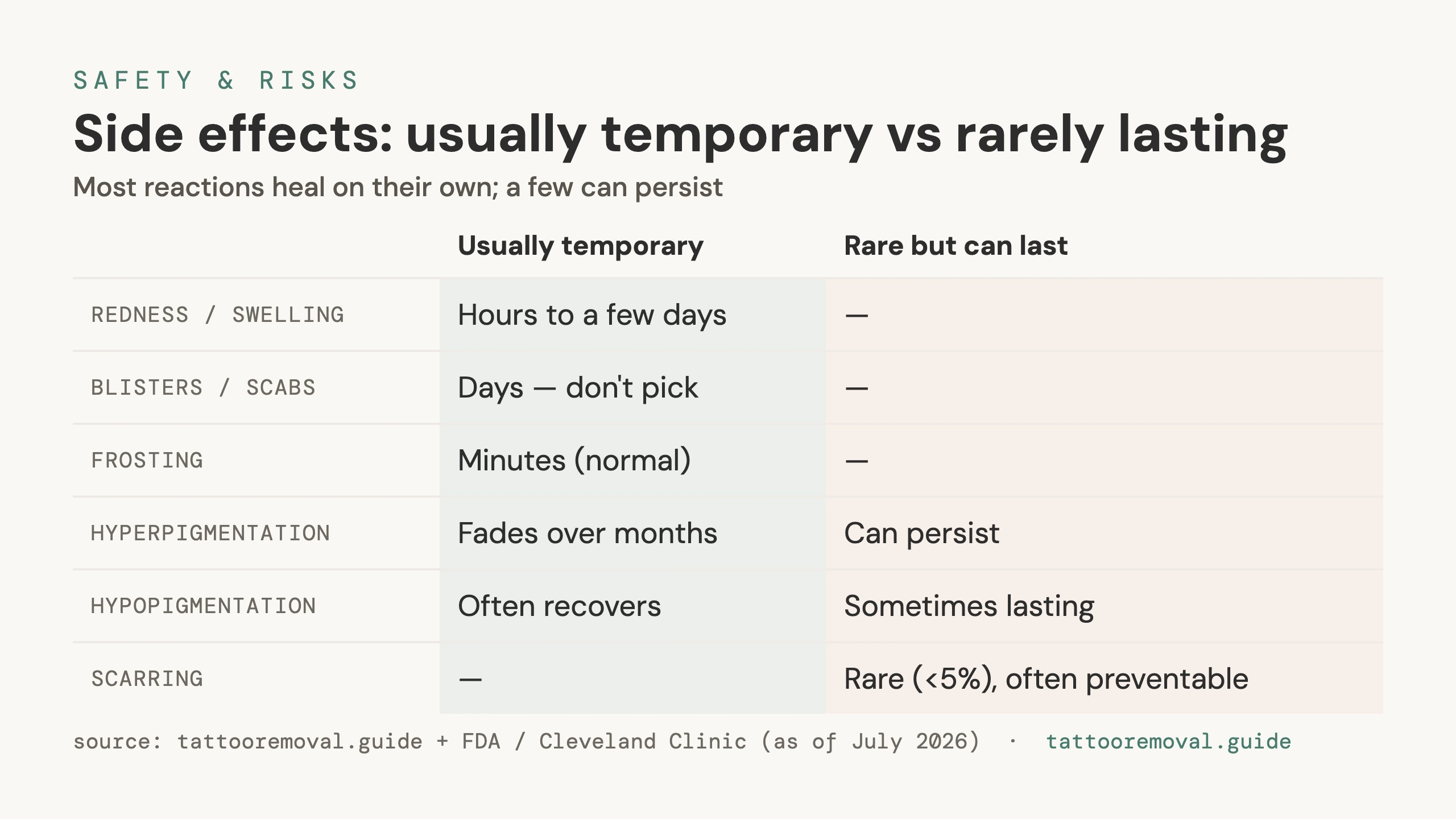 Most side effects heal; a few are rare but can last.
Why aftercare matters: the three complications you are preventing
Laser removal deliberately injures the skin. As the Cleveland Clinic explains, the laser shatters tattoo ink into fragments that your immune system then carries away over the following weeks. That controlled injury is how removal works — but it leaves the skin temporarily vulnerable, and aftercare is simply how you protect it while it recovers.
There are three complications worth naming, because every aftercare rule exists to prevent one of them:
- Scarring. The most avoidable cause is picking or scratching scabs before the skin underneath has regenerated. Disturb the wound early and you risk trading a tattoo for a scar.
- Infection. Broken skin — blisters, scabs, weeping areas — is an open door for bacteria. Moisture, sweat, shared water (pools, spas) and dirty hands all raise the odds.
- Pigment change. Fresh, regenerating skin is highly sensitive to UV light. Sun exposure over a healing site can cause lasting lightening (hypopigmentation) or darkening (hyperpigmentation), especially on richer skin tones.
Frame it this way and the instructions stop feeling arbitrary. You are not "being careful" in the abstract — you are actively steering around three specific, known outcomes.
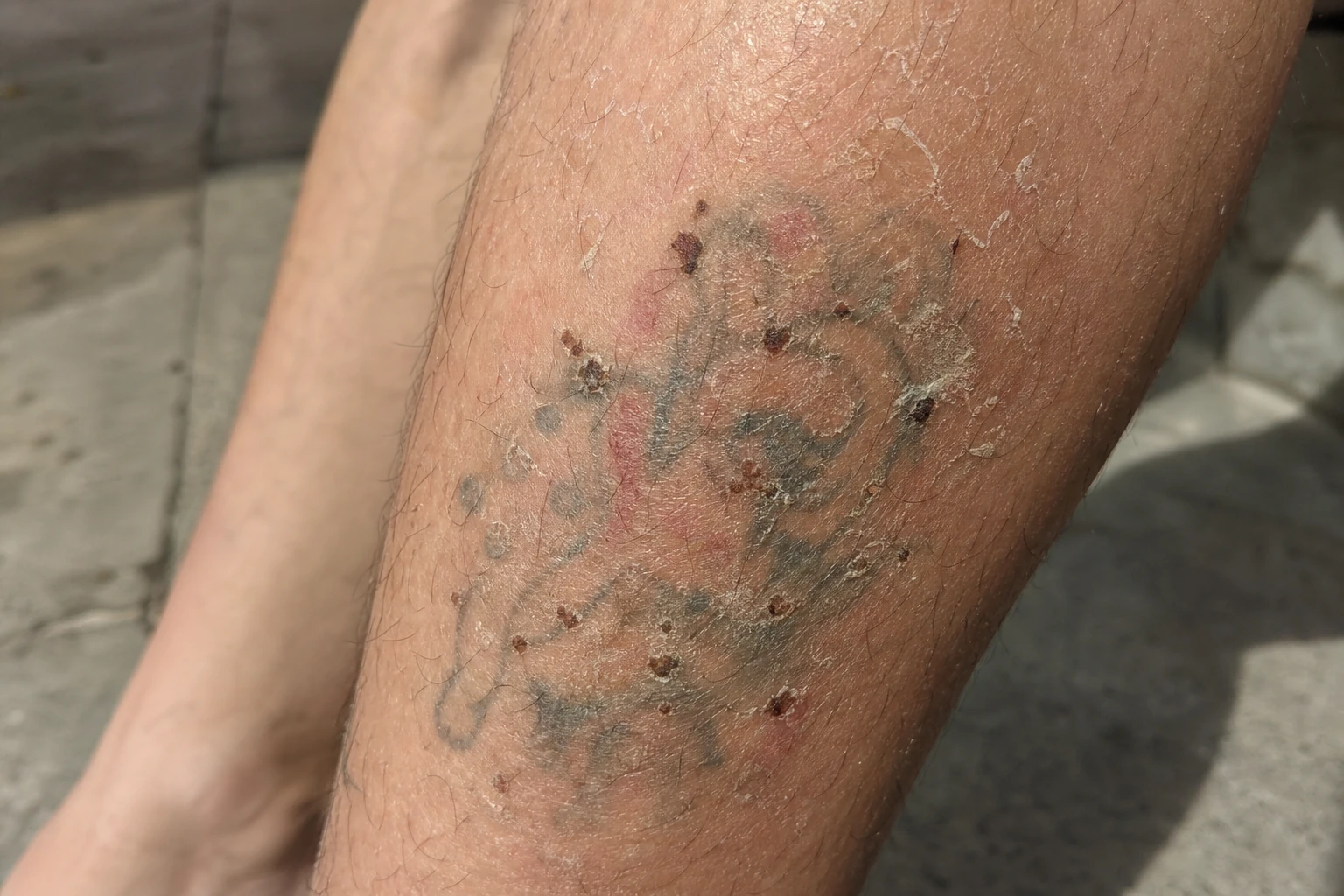 Scabbing and flaking as the treated skin heals.
The day-by-day healing timeline
Everyone heals at their own pace, and the reaction varies with your skin, the tattoo, and the laser settings used. But most people move through a recognisable sequence after each session. Use this as a map, not a guarantee.
| Phase | Rough timeframe | What you'll typically see | What to do |
|---|---|---|---|
| Immediate reaction | Day 0 (first hours) | The area frosts white briefly, then turns red, raised and warm; mild swelling | Apply a cold pack over the dressing if advised; keep it covered and dry |
| Redness & swelling | Day 0–2 | Redness, puffiness, tenderness, a mild sunburn-like feel | Rest the area; follow your clinic's dressing and ointment instructions |
| Blistering & scabbing | Day 2–7 | Blisters (sometimes large), then scabs begin to form and dry | Do not pop blisters or pick scabs; keep clean and dry |
| Crusting & itching | Day 7–14 | Scabs harden and crust; itching is common as skin knits together | Do not scratch; moisturise only as your clinic directs |
| Regeneration | Weeks 2–8 | Scabs fall away on their own; new pink skin appears; the tattoo looks faded | Protect from sun; wait out the healing window before the next session |
Two points matter here. First, blistering is normal, not a sign something went wrong — it can appear within hours and look dramatic, but it is part of the process (StatPearls lists blistering and crusting among the expected transient effects of laser removal). Second, the outer skin closing in a couple of weeks is not the same as being ready for the next session. The deeper heal-and-clear window is usually 6 to 8 weeks, which is why sessions are spaced that far apart.
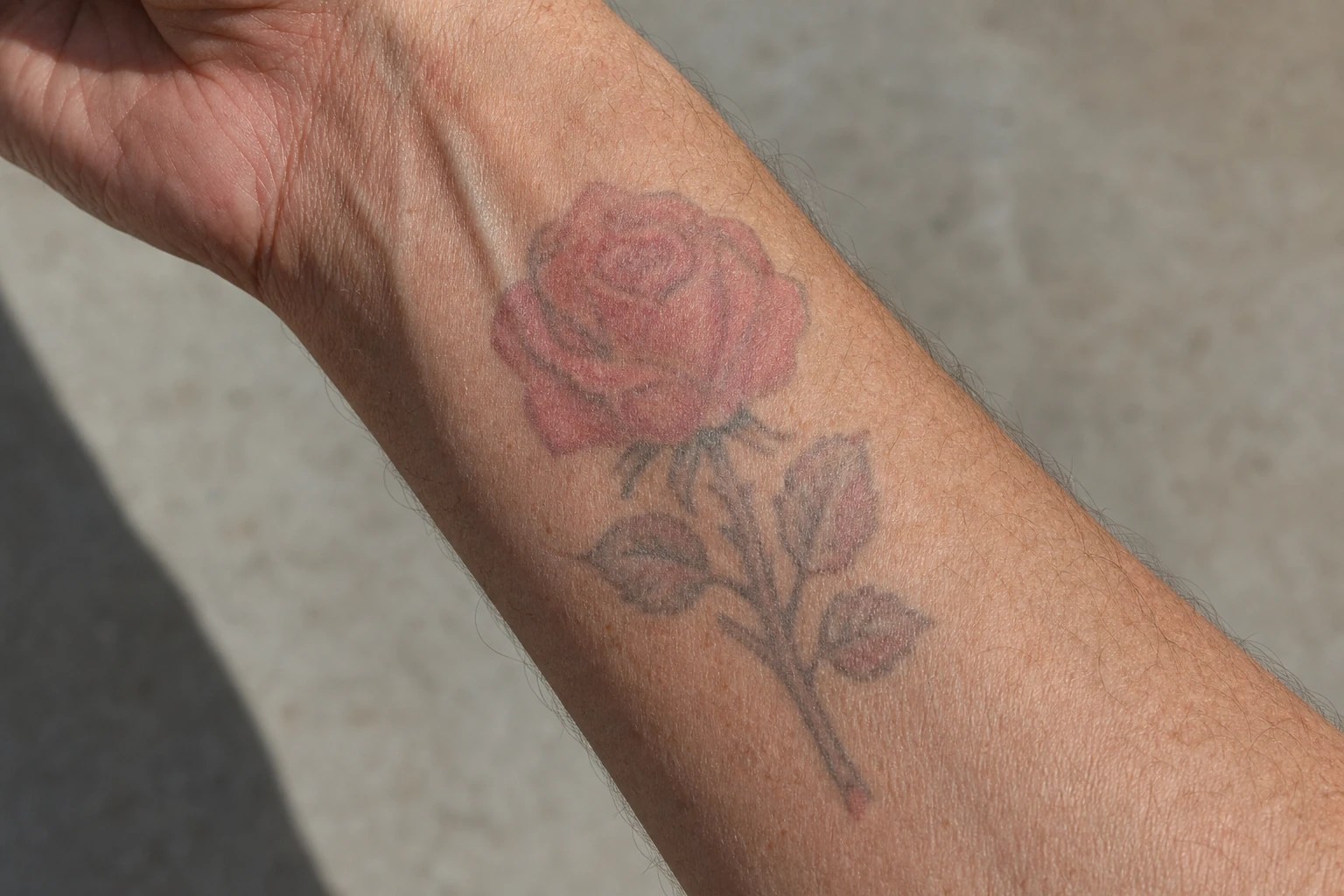 An aged red-ink tattoo — red responds best to a 532nm laser.
The do's and don'ts
Do
- Keep it clean and dry. Gently wash with lukewarm water and mild fragrance-free soap, pat (don't rub) dry. Cleanliness is your main defence against infection.
- Apply only what your clinic recommends. That may be a thin layer of a specific ointment, an antibiotic cream, or a particular dressing. Clinics differ — follow yours, not a stranger's routine online.
- Protect from the sun. Once the skin has closed, cover the site or use a broad-spectrum SPF 30+ for the entire treatment course. This is your defence against pigment change.
- Let it breathe and rest. Loose clothing over the area reduces friction and irritation.
Don't
- Don't pick, scratch or peel scabs, and don't pop blisters. This is the number-one avoidable cause of scarring. Let everything fall away naturally.
- Don't soak the wound. Avoid pools, spas, saunas, hot tubs and long baths while the skin is blistered, weeping or scabbed — shared and standing water carries infection risk, and heat aggravates swelling.
- Don't do heavy, sweaty workouts while the skin is broken. Sweat irritates the wound and salt stings; gentle movement is usually fine, but ask your clinic when to resume intense training.
- Don't shave over the area until it has fully healed — a razor can tear scabs and reopen the skin.
- Don't apply random products — no perfumed lotions, exfoliants, makeup or self-tanner over a healing site.
The American Academy of Dermatology stresses that following your provider's specific aftercare instructions is central to healing well and lowering the risk of side effects — the general rules above are a floor, not a replacement for what your clinic tells you.
What's normal vs when to call the clinic
Most reactions in the table above are expected. The skill is telling ordinary healing apart from a problem that needs attention.
| Usually normal | Call the clinic or a doctor |
|---|---|
| Redness, swelling and warmth in the first 1–2 days | Redness that spreads or worsens after day 2 |
| Blisters forming in the first few days | A blister larger than a coin, or one that is intensely painful |
| Scabs and crusting that dry and flake off | Yellow or green pus, a bad smell, or red streaks spreading out |
| Mild itching as skin knits | Fever, chills, or feeling generally unwell |
| A faded, "frosted" or pink look to the skin | Bleeding that won't stop, or pain that keeps increasing |
When in doubt, ask. A quick message to your clinic is always better than guessing — signs of infection (spreading redness, pus, red streaks, fever) warrant same-day medical advice.
This is general information, not medical advice. Laser tattoo removal is a medical procedure with real risks, including blistering, infection, scarring and pigment change. Healing times and reactions vary by person — always follow the aftercare instructions from the clinic that treated you, and consult a licensed provider about your specific situation.
Aftercare quality is a reason to choose your clinic carefully
Because your exact instructions come from the clinic performing the treatment — the ointment, the dressing, the follow-up — the quality of that guidance is part of what you're paying for. A clinic that walks you through aftercare, gives you written instructions, and answers questions between sessions is protecting your result, not just your comfort.
That makes aftercare a genuine reason to compare your options rather than book the first place you find. Compare tattoo-removal clinics in your city to see who's near you, or start with a dense market like tattoo removal in Melbourne to see how listings and consultations stack up side by side. For the science behind the healing window, see how laser tattoo removal actually works; for the fuller risk picture, read is laser tattoo removal safe?.
Frequently asked questions
What is the aftercare for laser tattoo removal?
Keep the area clean and dry, apply only the ointment or dressing your clinic recommends, and cover healing skin from the sun with clothing or SPF 30+. Do not pick or scratch scabs and blisters, and avoid pools, saunas and heavy sweating while the skin is broken. Each rule prevents a specific complication.
How long does skin take to heal after laser tattoo removal?
The surface usually heals over about 2 to 8 weeks. Redness and swelling settle within 1 to 2 days, any blistering and scabbing forms and dries over roughly 2 to 14 days, and the outer skin regenerates over the following weeks. Full deeper healing before the next session typically takes 6 to 8 weeks.
Is blistering normal after laser tattoo removal?
Yes, blisters are a common and normal reaction in the first few days after treatment, sometimes appearing within hours. They can look alarming but are part of healing. Do not pop or drain them, as broken skin invites infection and raises scarring risk. If a blister is very large, spreading or intensely painful, contact your clinic.
Can I pick the scabs after tattoo removal?
No. Picking, peeling or scratching scabs is the single most avoidable cause of scarring after tattoo removal. Scabs are a protective layer over regenerating skin; removing them early exposes raw tissue to infection and can pull away healing skin. Let every scab dry and fall off on its own, however tempting it is.
When can I exercise or swim after laser tattoo removal?
Avoid pools, spas, saunas and heavy, sweaty workouts while the skin is blistered, weeping or broken, usually the first 1 to 2 weeks. Sweat, chlorine and shared water can irritate the wound and introduce bacteria. Gentle movement is generally fine; ask your clinic when to resume intense training and swimming for your situation.
When should I call the clinic after tattoo removal?
Contact your clinic or a doctor if you see signs of infection: spreading redness, warmth, increasing pain after day two, yellow or green pus, red streaks, or a fever. Also call for a burn-like wound, a blister larger than a coin, or bleeding that will not stop. When unsure, it is always safer to ask.
Should I use SPF after tattoo removal?
Yes. Once the skin has closed, protect the treated area from sun with clothing or a broad-spectrum SPF 30+ for the whole treatment course. Fresh, regenerating skin burns and pigments easily, and a suntan or burn over the site can force your clinic to delay your next session. Sun protection also lowers the risk of lasting pigment change.
Related guides
Related Guides
- How It Works
What Is a Q-Switched Laser for Tattoo Removal? (2026)
A Q-switched laser fires nanosecond pulses to shatter tattoo ink. Here's how Q-switched Nd:YAG, ruby and alexandrite lasers work, and why they're still a gold…
- How It Works
What Is a Picosecond Laser for Tattoo Removal? (2026)
What is a picosecond laser? It fires in trillionths of a second to shatter tattoo ink. How it works, the colours it helps, and why it's not always better.
- How It Works
What Affects How Fast a Tattoo Fades? 8 Factors in Removal Speed
What affects tattoo removal speed? Ink colour, depth, age, body location, skin type, your health, smoking, and cover-ups all matter.