Does Laser Tattoo Removal Hurt? What It Actually Feels Like
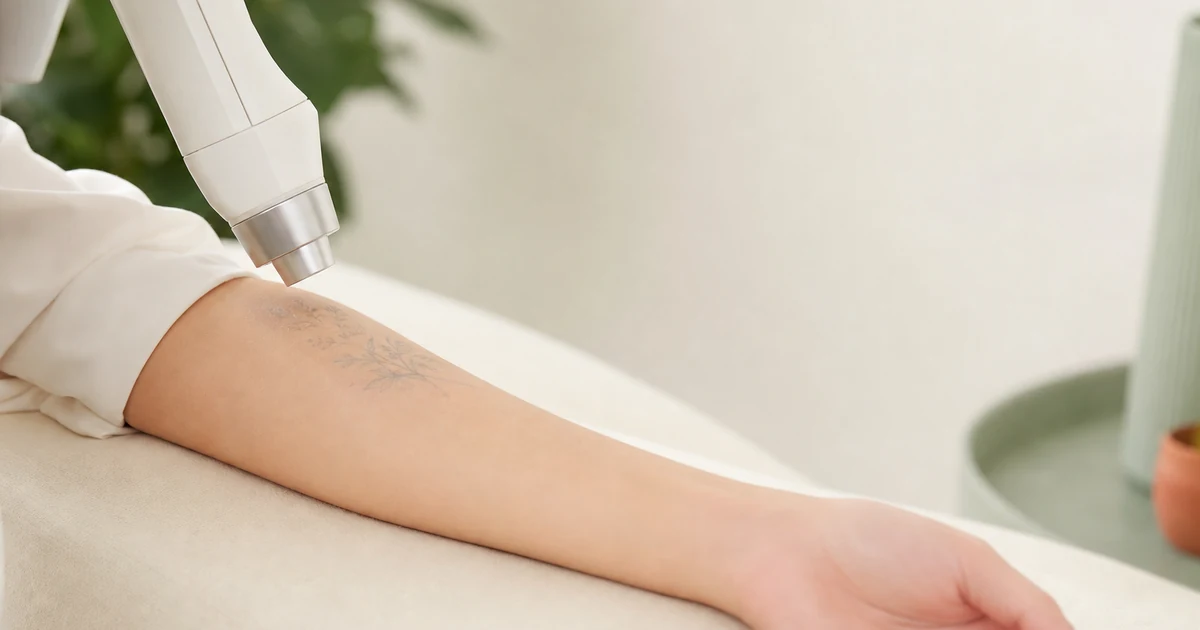
Yes — laser tattoo removal hurts, but the pain is brief and manageable. Most people describe each laser pulse as a hot rubber-band snapped against the skin, or a fleck of hot bacon grease. The sting is intense for the fraction of a second the laser fires, yet a small tattoo is often treated in under 5 minutes, and numbing or cooling makes it very tolerable.
That short-but-sharp profile is the honest headline. Below is what removal actually feels like, which body areas hurt most, how it compares to getting the tattoo in the first place, and the real options for taking the edge off — using medical sources and figures from the Tattoo Removal Guide directory, stamped (as of July 2026).
Key Takeaways
- Removal hurts, but each zap lasts a fraction of a second; a small tattoo is often done in under 5 minutes.
- Common descriptions: a hot rubber-band snap, hot bacon grease, or a bad sunburn being flicked.
- Bony, thin-skinned areas (ribs, ankles, feet, wrists) hurt most; fleshy areas (outer arm, thigh) are mildest.
- Pain relief options: topical numbing cream (with an important FDA caution), injected local anaesthetic, cold-air (cryo) cooling, and ice.
- Of the 5,700 specialist clinics we track, 1,525 (27%) note a free consultation (as of July 2026) — the visit where you can ask which numbing or cooling a clinic actually offers. That figure is a floor; it counts only clinics that publicly list it.
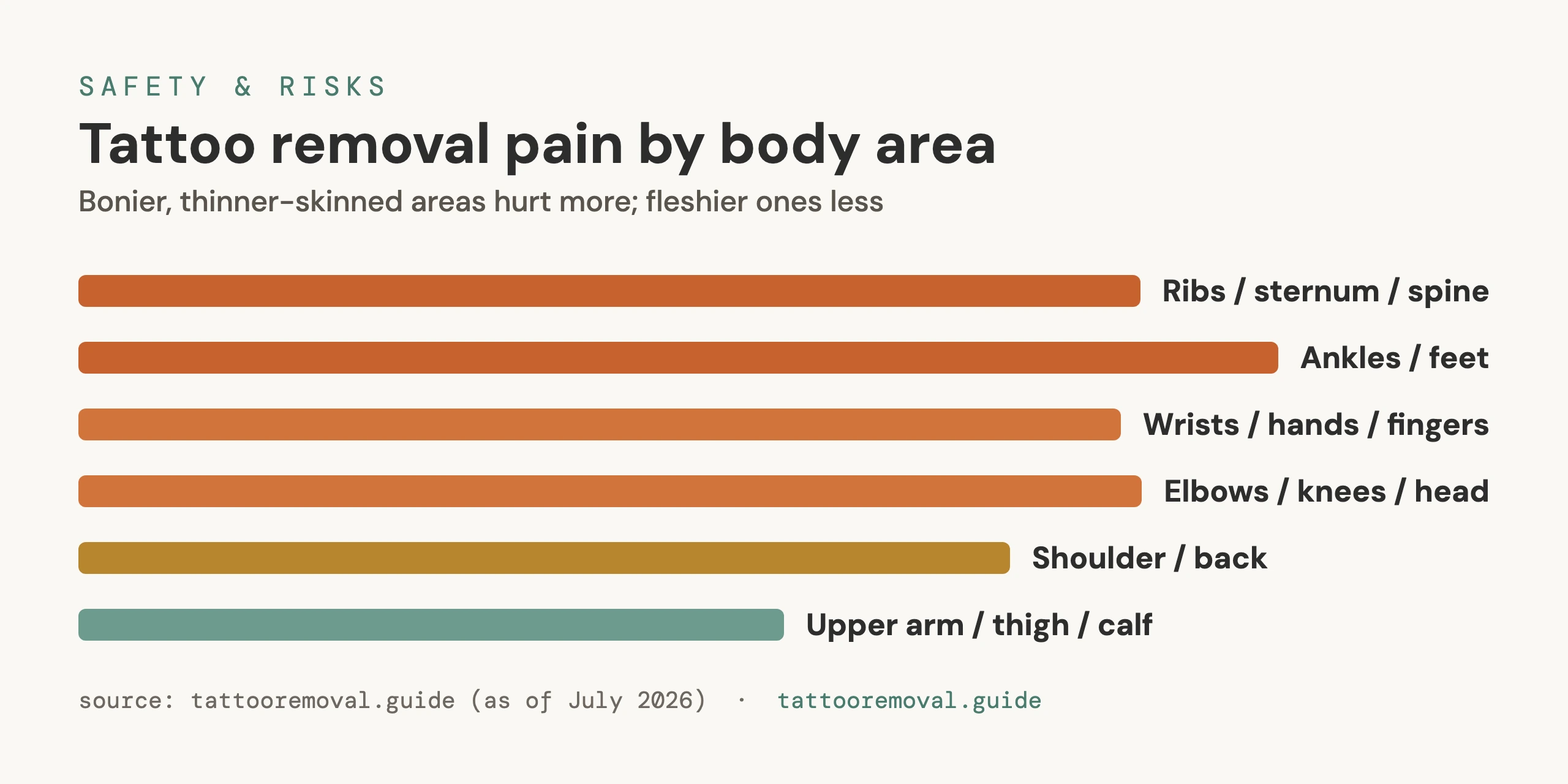 Bonier, thinner-skinned areas hurt more; fleshier ones less.
What does laser tattoo removal feel like?
There is no single "right" description, but three come up again and again: a rubber-band snapped hard against the skin, tiny splatters of hot bacon grease, and a bad sunburn being flicked repeatedly. The Cleveland Clinic and the American Academy of Dermatology both note that laser removal is uncomfortable and that clinics routinely offer measures to reduce the pain.
The key word is brief. The laser fires ultra-short pulses, so the sharp sensation lasts only for the split-second each pulse lands. The clinician moves across the tattoo zone by zone, and for a small-to-medium piece the whole thing is usually over in a few minutes. The StatPearls clinical reference describes the same short, high-intensity treatment profile. Afterward the area typically feels hot, raw and sunburned for a few hours before settling.
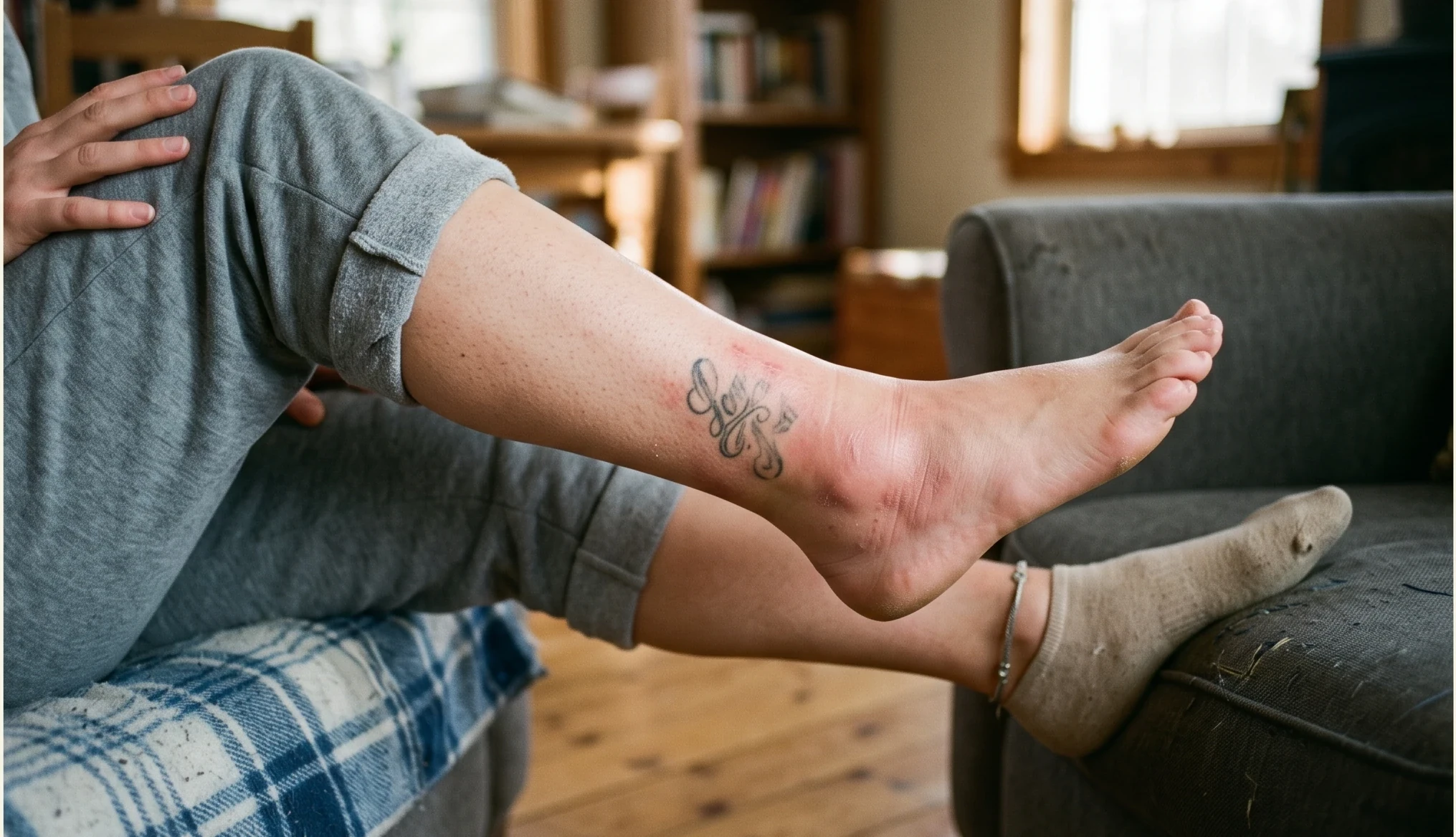 A tattoo undergoing laser removal.
Which body areas hurt the most?
Pain isn't uniform across the body. Thin skin, little underlying fat and bone close to the surface all amplify the sting; well-cushioned, fleshy areas dull it. The rough map below matches what most clinics and patients report.
| Body area | Typical pain level | Why |
|---|---|---|
| Ribs, sternum, spine | Highest | Thin skin directly over bone, little cushioning |
| Ankles, feet, hands, wrists, fingers | High | Thin skin, many nerve endings, bone near the surface |
| Elbows, inner arm, neck | High–moderate | Sensitive, thin-skinned zones |
| Upper back, shoulder | Moderate | Some cushioning, moderate nerve density |
| Outer upper arm, thigh, calf | Mildest | Fleshy, well-padded, fewer bony landmarks |
Two things also raise pain independent of location: darker and denser ink (which absorbs more laser energy) and larger treatment areas (more total exposure). A small black tattoo on the outer arm is near the gentle end; a dense, colourful piece over the ribs is near the harsh end.
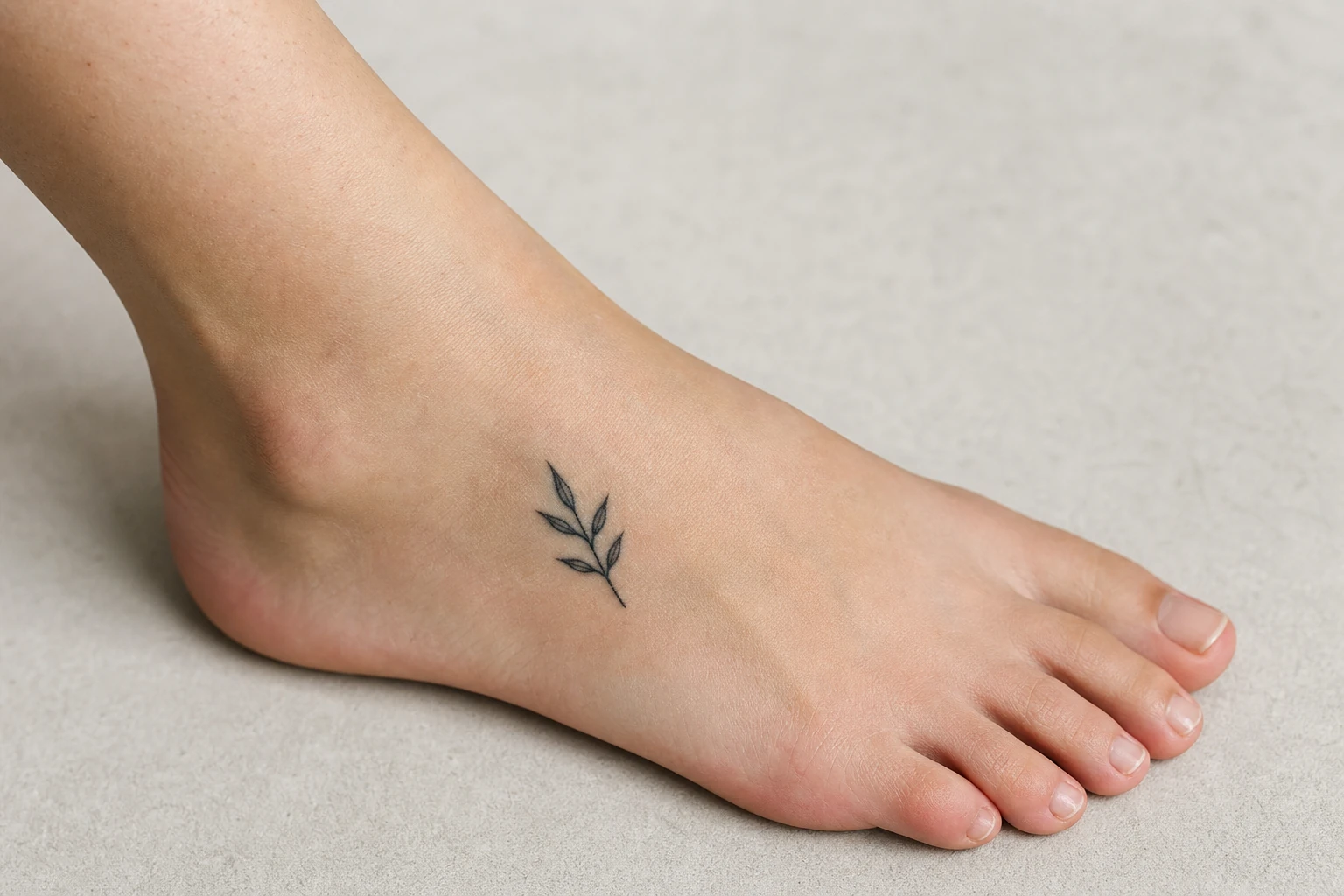 A tattoo being assessed before laser removal.
What is frosting, and is it a bad sign?
Frosting is the temporary white or grey layer that appears over the ink within seconds of the laser pass. It is caused by carbon dioxide gas released as the laser shatters the ink particles, briefly trapped in the upper skin. Frosting is expected and normal — clinicians often treat until the area frosts — and it usually fades within about 20 to 30 minutes. It looks dramatic but is not a burn or a sign that something has gone wrong.
How can you reduce the pain?
You are not stuck just gritting your teeth. Clinics use several methods, often in combination. Here is what each one actually is and its trade-off.
| Method | What it is | Best for | Caveat |
|---|---|---|---|
| Cold-air (cryo) cooling | A machine (e.g. a Zimmer) blasts chilled air (around −30°C) onto the skin before, during and after | Most sessions; numbs and protects the skin in real time | Needs the equipment; ask if the clinic has it |
| Ice / cold packs | Skin is chilled before and after each pass | Widely available, cheap, no drugs | Wears off quickly; less precise than cold-air |
| Topical numbing cream | Lidocaine-based cream applied and left to absorb before treatment | Smaller areas, needle-shy patients | See the FDA caution below — not for large areas |
| Injected local anaesthetic | A clinician injects lidocaine to numb the area | Very sensitive spots or low pain tolerance | Requires a qualified provider; the injection itself stings |
The numbing-cream caution matters. The U.S. FDA has warned that topical pain-relief products can be dangerous when too much is applied over large areas of skin, or when treated skin is wrapped or covered — this can push unsafe levels of lidocaine into the bloodstream. Topical numbing cream is a lidocaine-based anaesthetic that numbs the skin surface, and it is safe only in modest amounts on a limited area, used exactly as your clinic directs. Never coat a large tattoo in numbing cream at home before a session.
Does it hurt more than getting the tattoo?
Second for second, most people rate laser removal as more intense than being tattooed — but it's a different kind of pain, and it's over far faster. The comparison people find most useful:
| Getting the tattoo | Laser removal (same piece) | |
|---|---|---|
| Sensation | Continuous scratching/cutting | Sharp, hot snapping pulses |
| Intensity | Moderate, sustained | Higher, but momentary |
| Duration | 1 to several hours in one sitting | Minutes per session (often under 5 for small–medium) |
| Sessions | Usually one | Several, spaced weeks apart |
So while a single removal zap may sting more than the tattoo needle did, you're exposed to it for a tiny fraction of the time. Many people who dreaded removal are surprised that each session is done before the discomfort really builds.
What changes how much it hurts?
The same tattoo can feel different session to session. The main factors:
- Location — bony, thin-skinned areas hurt more (see the table above).
- Ink colour and density — darker, denser ink absorbs more energy, so it stings more.
- Your pain tolerance and state — tiredness, stress and being cold or hungry all lower tolerance.
- Cooling and numbing used — good real-time cooling dramatically changes the experience.
- The device and settings — pulse energy and coverage vary; this is a clinician's judgement call.
Compare clinics that offer cooling and numbing
Because the equipment a clinic has — a cold-air machine, on-site numbing, an experienced operator who works quickly — changes the experience more than almost anything else, the most useful thing you can do before booking is compare your local options and ask each one directly about pain management. A free consultation is the natural place to ask; remember that the 27% of clinics that note one (as of July 2026) is a floor, so it's worth calling clinics that don't advertise it too.
Compare tattoo-removal clinics in your city to see what's available near you, or start with a dense market like tattoo removal in Melbourne to see how listings stack up side by side. When you compare, ask: Do you use cold-air cooling? Is numbing available? How long does a session on a tattoo my size take?
This is general information, not medical advice. Laser tattoo removal is a medical procedure with real risks, and topical anaesthetics carry their own dangers if misused. Pain, healing and outcomes vary by person, tattoo and body area — consult a licensed provider about your specific situation, and follow their guidance on any numbing product.
Frequently asked questions
Does laser tattoo removal hurt?
Yes, laser tattoo removal hurts, but the pain is brief. Most people describe each pulse as a hot rubber-band snap or a spatter of hot bacon grease against the skin. The sting is intense for the fraction of a second the laser fires, and a small tattoo is often treated in under 5 minutes. Numbing and cooling reduce the discomfort.
What does laser tattoo removal feel like?
The most common descriptions are a hot rubber-band snap, hot droplets of bacon grease, or a bad sunburn being flicked. It is sharper than most people expect but far shorter than getting tattooed. Each zap lasts a fraction of a second, and the treated area may feel hot and raw for a few hours afterward.
Does tattoo removal hurt more than getting the tattoo?
Per second, most people rate laser removal as more intense than getting tattooed, but it is over far faster. A tattoo can take one to several hours of continuous needling, whereas laser removal of the same piece is usually minutes. Total discomfort is often lower for removal simply because the exposure is so much shorter.
Where does tattoo removal hurt the most?
Areas with thin skin, less fat and bone close to the surface hurt most — the ribs, ankles, feet, hands, wrists, elbows and inner arm. Fleshier, better-cushioned areas like the outer upper arm, thigh, back and shoulder are generally the mildest. Pain also rises with darker or denser ink because more laser energy is absorbed.
What is frosting in tattoo removal?
Frosting is the temporary white or grey discolouration that appears over a tattoo within seconds of the laser pass. It is caused by carbon dioxide gas released as the laser shatters the ink, briefly trapped in the upper skin. Frosting is expected and normal, and it typically fades within about 20 to 30 minutes.
Can you use numbing cream for laser tattoo removal?
Yes, topical numbing creams containing lidocaine are commonly used before laser tattoo removal. The U.S. FDA warns that applying large amounts over big areas, or covering treated skin, can push dangerous levels of the drug into the bloodstream. Use numbing cream only as directed by your clinic, never over a large area unsupervised.
How long does the pain from tattoo removal last?
The sharp pain lasts only while the laser is firing — seconds per zone, with most small-to-medium tattoos treated in under 5 minutes. Afterward the area typically feels hot, tender and sunburned for a few hours, easing over one to three days. Cooling the skin immediately after treatment noticeably reduces the lingering sting.
Related guides
Related Guides
- Safety & Risks
Why a Patch Test Matters Before Tattoo Removal (2026)
Why does a patch test matter before laser tattoo removal? It reveals how your skin and ink react — blistering, pigment change, rare reactions — before a full…
- Safety & Risks
Who Should Not Get Laser Tattoo Removal? The Contraindications
Who should not get laser tattoo removal? Most adults are candidates. The full contraindications checklist — when to wait and when to discuss carefully.
- Safety & Risks
Tattoo Removal While Pregnant or Breastfeeding
Can you get tattoo removal while pregnant? Most providers say wait — not from proven harm, but because the safety isn't studied.