Can You Remove a Tattoo at Home? What the Evidence Says
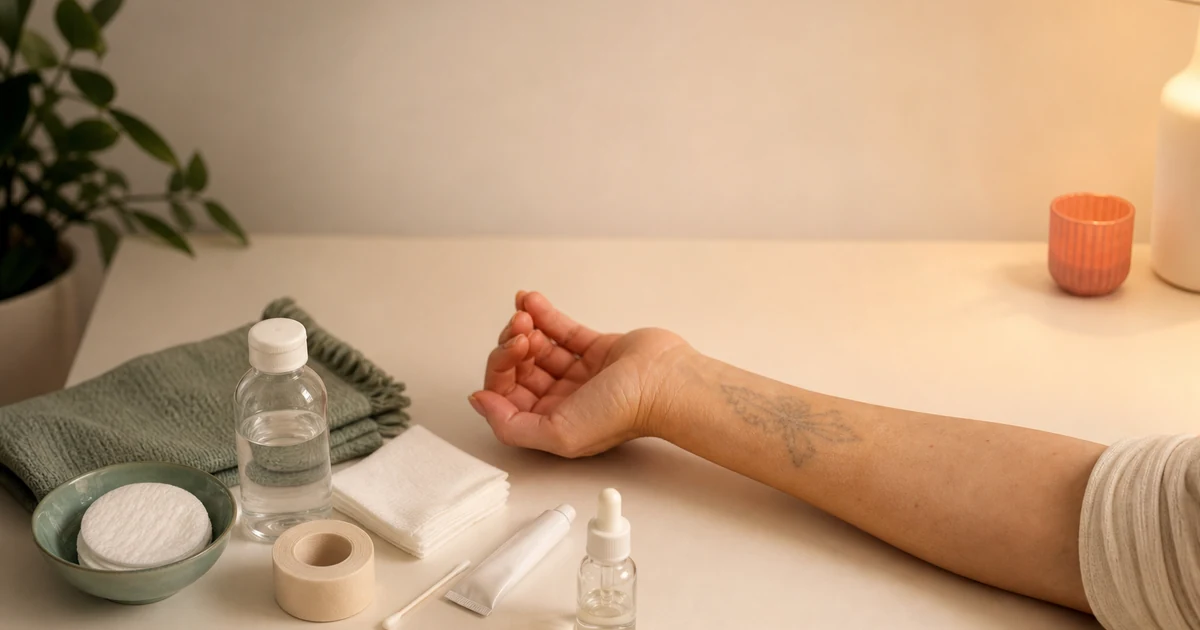
Search "remove tattoo at home" and you'll find creams, peeling acids, salt scrubs, and handheld "laser pens" promising to fade ink for a fraction of clinic prices. The short, evidence-based answer: none of them remove a tattoo, and several can damage the skin around it. Here's what actually happens to ink under your skin, why home methods can't reach it, and what the safe alternatives cost.
Why home methods can't reach the ink
A tattoo is permanent because the pigment sits in the dermis — the layer below the surface skin (the epidermis). Your body treats those pigment particles as foreign, but they're too large for the immune system to clear on its own, which is exactly why the tattoo stays put for decades.
Anything you rub on the surface only acts on the epidermis. To fade a tattoo you have to break the pigment in the dermis into fragments small enough for your immune system to carry away. That's the mechanism real laser removal uses: short pulses of light shatter the ink, and the body clears the fragments over roughly a 6–8 week clearing window between sessions. A cream sitting on top of intact skin never reaches that layer.
What the popular home methods actually do
Tattoo-removal creams. Most are hydroquinone or acid-based skin lighteners. They can't penetrate to the dermis, so they don't touch the pigment. What they can do is irritate, lighten, or inflame the surface skin — sometimes leaving the tattoo looking patchy while still fully present.
Chemical peels and TCA (trichloroacetic acid). These deliberately burn off layers of skin. Applied at home without medical control of depth, they carry a real risk of chemical burns, scarring, and changes in skin colour. Any fading comes from skin damage, not from clearing ink cleanly.
Salt abrasion ("salabrasion") and dermabrasion. Scrubbing salt into broken skin is one of the oldest folk methods and one of the most damaging. It works by wounding the skin until it scars over the tattoo. The likely result is an open wound, infection risk, and a scar — not removal.
Handheld "laser pens" sold online. Consumer pens are not the medical Q-switched or picosecond lasers clinics use. They lack the power and pulse precision to fragment ink at a safe depth, and pointing an uncalibrated laser at your own skin risks burns and eye injury.
The pattern is consistent: home methods either do nothing to the ink, or they fade it by injuring the skin — trading a tattoo for a scar.
The real safety risks
Beyond disappointment, home removal carries documented harms: chemical and thermal burns, bacterial infection of broken skin, permanent scarring, and hyperpigmentation or hypopigmentation (the skin going darker or lighter than the surrounding area). These changes are often harder to fix than the original tattoo, and some are permanent. If you're fading a tattoo to prepare for a cover-up, a home-made scar can make a clean new piece harder for an artist to work over.
Anything involving cutting, surgical excision, prescription medication, or injecting a substance to "dissolve" ink should be discussed with a doctor or dermatologist, not attempted at home.
What the safe path actually costs
The usual reason people try DIY is cost. Professional removal is a real investment — most tattoos take 8–12 sessions, spaced 6–8 weeks apart, at 10–30 minutes a session. But the per-session price is often lower than people assume, and it varies more by clinic than by city.
In Melbourne, for example, the typical price runs about $50–$200 a session (as of July 2026) for comparable work — meaning the same tattoo can cost two to three times more at one clinic than another nearby. That spread, not the headline price, is where the real money is. Across the directory, about 62% of clinics don't publish a price at all (as of July 2026), so comparing a few in your area before booking is the single highest-value step.
See how session pricing differs near you on our Melbourne tattoo removal page, or read up on how the professional process actually works in our guide to the removal process.
Frequently asked questions
Do tattoo removal creams actually work?
No. Creams act only on the surface layer of skin and can't reach the pigment in the dermis where a tattoo sits. At best they do nothing to the ink; at worst they irritate or discolour the skin. No topical cream has been shown to remove a tattoo.
Is at-home tattoo removal dangerous?
It can be. Methods that fade a tattoo — acid peels, salt abrasion, consumer laser pens — generally do so by damaging the skin, which risks burns, infection, scarring, and permanent changes in skin colour. These outcomes are often harder to correct than the original tattoo.
Why does professional removal take so many sessions?
Lasers break ink into small fragments, and your immune system needs time to clear each round before the next pass. Most tattoos take 8-12 sessions spaced about 6-8 weeks apart. The spacing is what makes the clearing work, so the timeline can't safely be rushed.
Is there any laser strong enough to remove a tattoo at home?
No consumer device matches the power and pulse precision of the medical Q-switched and picosecond lasers clinics use, and both of those are effective for tattoo ink. Choosing the right laser for your tattoo's colours and your skin is part of why removal is done under trained supervision.
Will a home method ruin a future cover-up?
It can. Scarring or uneven fading from a DIY attempt gives a tattoo artist a damaged canvas to work over, which can limit cover-up options. Professional fading for a cover-up is more controlled and predictable.
Before you trust a cream or a $30 laser pen, it's worth seeing what real removal costs near you — the gap between clinics in your own city is often bigger than the gap between DIY and professional. Compare tattoo removal clinics in your city and check session prices side by side.
Related Guides
- Safety & Side Effects
Tattoo Removal Side Effects, Explained (Frosting, Blistering, Pigment
Frosting, blistering, pigment changes — what's normal after a laser session, how common each is, and the signs that mean you should call your clinic.
- Safety & Side Effects
Will Tattoo Removal Scar? Real Risks and How Good Clinics Minimise
Scarring from laser tattoo removal is uncommon but not zero. Here's exactly what causes it — skin type, aftercare, laser settings — and how to lower it.
- Safety & Side Effects
Is Tattoo Removal Safe? Side Effects, Scarring Risk, What to Expect
Laser tattoo removal risks explained: common side effects, scarring risk, how to choose a qualified practitioner, and what 1,235 Australian clinics reveal.