How Long Between Tattoo Removal Sessions? The 6–8 Week Clearing Window
How long between tattoo removal sessions? Most clinics space laser tattoo removal sessions about 6–8 weeks apart, and many prefer 8–12 weeks on darker skin or delicate areas. This gap — often called the clearing window — exists because after each session your immune system needs weeks to carry away the shattered ink, and your skin needs time to fully heal. Going sooner does not speed up removal; it raises the risk of blistering, scarring, and pigment change.
That last point is the one people most want to argue with. When you're keen to see a tattoo gone, waiting two months between sessions feels like wasted time. It isn't. This guide explains what's actually happening in your skin during the gap, why the interval is a biological limit rather than a scheduling preference, when a longer wait is the better call, and what those "same-day" multi-pass protocols really are. Figures from the Tattoo Removal Guide directory are stamped (as of July 2026).
Key Takeaways
- The clearing window is roughly 6–8 weeks between laser sessions — the interval clinics leave so your body can remove the last round of shattered ink and your skin can heal.
- Going sooner doesn't work faster. The laser shatters ink; your immune system does the removal, and that takes weeks. Treating too soon just treats un-healed skin and raises risk.
- Longer is safe — shorter is risky. Waiting 10–12 weeks is fine, and sometimes better for darker skin; crowding sessions closer together is where blistering and scarring climb.
- "Same-day multi-pass" protocols (R0/R20, perfluorodecalin) exist but are clinic-run clinical decisions — never a DIY reason to book sessions back-to-back.
- No one can promise a session count or timeline. Colour, density, age, and skin type all change the maths — the 5,700 specialist clinics we track across 1,043 cities (as of July 2026) each assess this per tattoo.
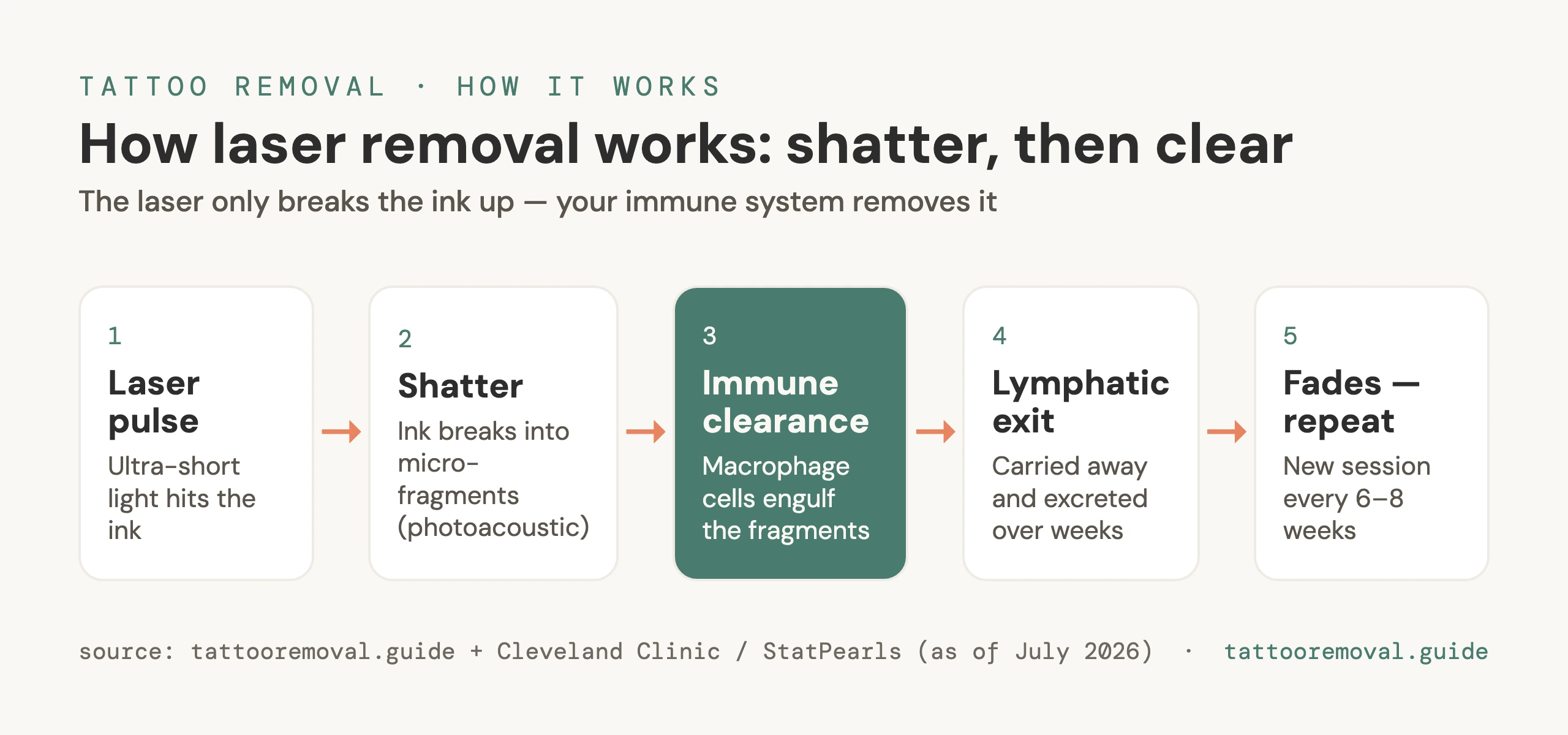 The gap isn't waiting time — it's when your body does the clearing.
What is the clearing window?
The clearing window is the roughly 6–8 week interval a clinic leaves between laser tattoo removal sessions to let the body clear the ink fragments broken up by the previous treatment and to let the skin heal fully. It isn't an arbitrary booking rule — it's timed to two biological processes that simply take weeks to run.
Here's the sequence. A Q-switched or picosecond laser fires ultra-short pulses of light that are absorbed by the tattoo pigment, shattering large ink particles into fragments small enough for your body to deal with. As the StatPearls clinical reference on laser tattoo removal describes, that fragmentation is only half the job — the fragments then have to be removed by your immune system. Specialised immune cells called macrophages engulf the ink particles, and the lymphatic system gradually transports them away from the site. That clean-up plays out over the following weeks, which is exactly why the next session is scheduled well after, not during, it.
 A tattoo undergoing laser removal.
Why can't I do sessions closer together?
Because you can't rush biology, and trying to only adds risk. Two separate clocks have to finish before the skin is ready for another pass:
- Immune clearance. The macrophage-and-lymphatic process above needs weeks to carry away the shattered ink. Fire the laser again before it's done and you're re-treating pigment your body is already clearing — you don't remove more, you just add another injury on top of an unfinished one.
- Skin healing. Each session is a controlled thermal injury. The surface reddens, sometimes blisters or scabs, and the barrier needs to fully repair. The Cleveland Clinic notes that laser removal can cause blistering, swelling, and temporary changes in skin colour — treating over skin that hasn't finished healing is precisely when those effects are more likely to become lasting.
So the honest framing is this: shortening the gap does not shorten the journey. It leaves the removed-ink count roughly the same while pushing up the odds of blistering, scarring, and hyperpigmentation or hypopigmentation (skin turning darker or lighter than surrounding tissue). The American Academy of Dermatology's guidance on tattoo skin reactions underlines that removal is a medical procedure with real skin risks — which is why the interval is a floor set for safety, not a suggestion.
Good aftercare between sessions is the other half of respecting the window: protecting the area, keeping it out of the sun, and letting it heal completely is what makes the next session safe and effective.
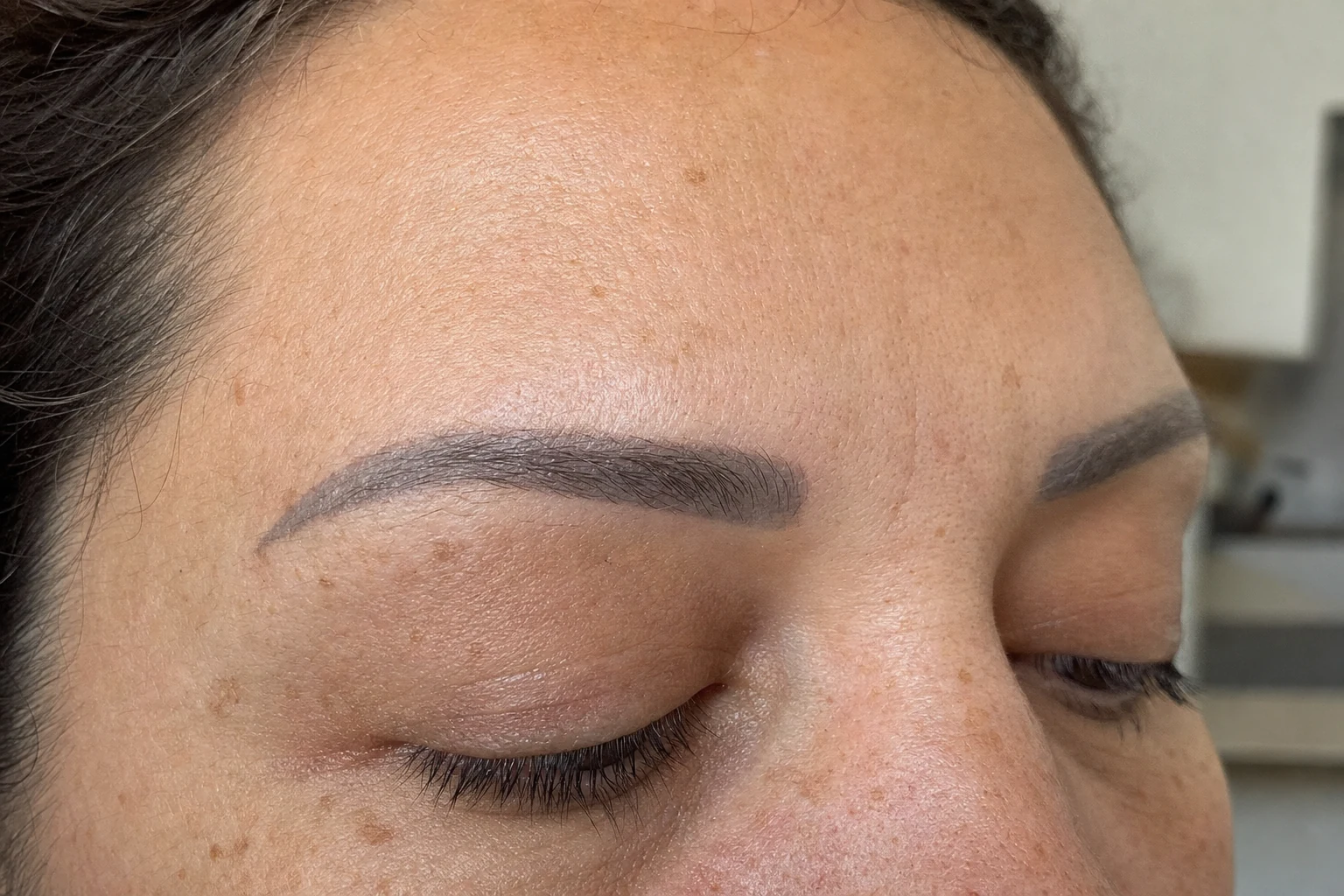 A tattoo undergoing laser removal.
Interval vs. effect: how the timing changes things
The table below shows how different gaps between sessions typically play out. Treat every row as a general range — your provider sets your actual interval based on your skin and how you heal.
| Interval between sessions | Effect on clearance | Effect on risk |
|---|---|---|
| Under ~4 weeks | No faster overall — the immune system hasn't finished clearing the last round, so little is gained | Higher — treating un-healed skin raises blistering, scarring, and pigment-change risk |
| ~6–8 weeks (typical) | The standard clearing window — ink largely cleared and skin healed before the next pass | Balanced — the usual clinic default for most people and tattoos |
| ~8–12 weeks | Full clearance of the previous round; tattoo often looks noticeably lighter by the next visit | Lower — extra healing margin; often preferred for darker skin or delicate areas |
| 12+ weeks / long gaps | Fine — cleared ink stays cleared; extra time doesn't remove more on its own | Low — the only real cost is a longer total timeline |
The pattern is deliberately lopsided: there's a real penalty for going too soon and essentially none for going later. If life gets in the way and you stretch a gap to three or four months, you haven't undone anything — you just resume the course when you're ready.
When a longer gap is the better choice
For some people, 8–12 weeks (or longer) is not just acceptable but preferable:
- Darker skin tones. Melanin-rich skin is more prone to pigment changes after laser treatment, so many clinicians deliberately widen the interval and treat more conservatively to protect against hyper- or hypopigmentation.
- Delicate or slow-healing areas. Ankles, feet, hands, and thin skin heal more slowly and scar more readily; extra weeks lower the stakes.
- Any lingering redness, tenderness, or scabbing. If the last session isn't fully healed, the next one waits. Full skin recovery before re-treating is non-negotiable.
- Sun exposure. Freshly treated and healing skin should stay out of the sun; if you can't protect it, delaying is safer than pushing ahead.
The takeaway: the clearing window is a minimum, not a target. When in doubt, longer is the safer side to err on.
What about "same-day" multi-pass protocols?
You may have read about ways to do more in a single visit — and it's worth being clear-eyed about them. A few clinics use multi-pass protocols that deliver more than one laser pass in the same appointment. The best known are the R20 method (roughly four passes about 20 minutes apart in one session, letting the treatment-induced skin whitening fade between passes) and perfluorodecalin (PFD)-assisted techniques, where a patch clears that whitening almost instantly so passes can be stacked in one sitting.
These are legitimate, studied approaches in the right hands — but two caveats matter. First, they change what happens within a single session; they don't erase the clearing window between sessions, because your immune system still needs its weeks to remove the fragmented ink afterward. Second, and more importantly, whether a multi-pass protocol suits your skin and tattoo is a clinical judgement your provider makes in the room — it depends on skin type, tattoo, and equipment. It is emphatically not a DIY licence to book ordinary sessions closer together. Bring it up at your consultation as a question, not a plan.
This is general information, not medical advice. Laser tattoo removal is a medical procedure with real risks including blistering, scarring, and pigment change. Session spacing, session counts, and results vary by person, ink, and skin — follow your provider's schedule and consult a licensed professional about your specific situation.
How the spacing shapes your overall timeline
Because sessions sit 6–8 weeks apart, the calendar maths adds up quickly: a course of, say, six to ten sessions realistically spans many months to well over a year, even though the laser time itself is minutes per visit. As the FDA's fact sheet on tattoos and permanent makeup notes, complete removal can be difficult and takes multiple treatments — and how many you'll need depends on ink colour, density, age, body location, and your skin type.
That's why no responsible clinic guarantees a session count or a finish date before assessing your tattoo, usually with a consultation and a small test patch. If a provider promises "gone in three sessions," treat it as a red flag rather than a selling point. The realistic plan is a schedule of well-spaced sessions with clear healing in between — and the patience to let the clearing window do its work.
Compare clinics and ask the right spacing questions
The best way to get a schedule that fits your skin is to compare providers and ask each one directly how they space sessions — the answer tells you a lot about how conservative and safety-minded they are.
Compare tattoo-removal clinics in your city to see who's near you, or start with a dense market like tattoo removal in Melbourne to see how services stack up side by side. To understand the full journey these sessions add up to, read our pillar on how long tattoo removal takes, and get the between-sessions part right with our guide to tattoo removal aftercare.
Frequently asked questions
How long should you wait between tattoo removal sessions?
Most clinics space laser tattoo removal sessions about 6–8 weeks apart. That gap lets the skin fully heal and gives your immune system time to clear the shattered ink flushed out by the previous session. Some clinics prefer 8–12 weeks, especially on darker skin or delicate areas — the exact interval is set by your provider based on your skin and how you're healing.
Can I do tattoo removal sessions closer together?
Shortening the gap does not speed up removal and raises the risk of blistering, scarring, and pigment change, because the skin hasn't finished healing and the immune system hasn't finished clearing the last round of ink. You can't rush the biology. A few clinics offer specialised same-day multi-pass protocols, but that is a clinical decision made in the room — never something to attempt by booking back-to-back sessions yourself.
What is the clearing window in tattoo removal?
The clearing window is the roughly 6–8 week interval clinics leave between laser sessions so the body can clear the ink fragments broken up by the last treatment. After each session the laser shatters ink into tiny particles, and immune cells called macrophages plus the lymphatic system carry those particles away over the following weeks. The skin also needs that time to heal fully before the next pass.
Why do you have to wait 6 weeks between laser tattoo removal?
Two things need time: your skin has to heal from a controlled injury, and your immune system has to physically remove the shattered ink. Both take weeks, not days. Treating again before either finishes doesn't remove more ink faster — it just treats skin that's still recovering, which is when blistering and scarring risk climbs.
Is it OK to wait longer than 8 weeks between sessions?
Yes. Longer gaps of 10–12 weeks (or more) are completely fine and are sometimes recommended — particularly for darker skin tones, sensitive areas, or if the skin is still recovering. Waiting longer never harms the result; the ink already cleared stays cleared. The main downside is simply that the full course takes more calendar time.
Does waiting longer between sessions remove more ink?
Up to a point, more time lets the immune system clear more of the previous round's fragments, so the tattoo can look lighter by your next visit. Beyond roughly 8–12 weeks the extra clearance tapers off. Longer gaps don't remove additional ink on their own — each session still does the shattering — but they do ensure you're not treating over ink your body is still clearing.
How many sessions will I need, and how long does the whole thing take?
It varies widely by ink colour, density, age, location, and skin type, so no clinic can promise a number up front. Because sessions are spaced 6–8 weeks apart, a course of several sessions typically stretches over many months to more than a year. A consultation and a test patch give the most realistic estimate for your specific tattoo.
Related guides
Related Guides
- How It Works
What Is a Q-Switched Laser for Tattoo Removal? (2026)
A Q-switched laser fires nanosecond pulses to shatter tattoo ink. Here's how Q-switched Nd:YAG, ruby and alexandrite lasers work, and why they're still a gold…
- How It Works
What Is a Picosecond Laser for Tattoo Removal? (2026)
What is a picosecond laser? It fires in trillionths of a second to shatter tattoo ink. How it works, the colours it helps, and why it's not always better.
- How It Works
What Affects How Fast a Tattoo Fades? 8 Factors in Removal Speed
What affects tattoo removal speed? Ink colour, depth, age, body location, skin type, your health, smoking, and cover-ups all matter.