Why Permanent Makeup Fades (and Turns Orange or Grey) (2026)

Permanent makeup fades because its pigment is deliberately implanted shallower than a body tattoo, so skin cell turnover, sun exposure and the immune system clear it faster — and the iron-oxide pigments used in most brow work oxidise and break down over years, which both lightens and colour-shifts it. That's why "permanent" makeup is really semi-permanent, commonly looking its best for about 1–3 years before it needs a touch-up or a decision about removal.
That fade is expected by design, but the way it fades catches people off guard: a soft brown brow turns orange, a crisp black liner drifts grey or blue. Permanent makeup (PMU) is cosmetic tattooing — pigment implanted into the upper skin to shape brows, line eyes or tint lips — and unlike a body tattoo it is engineered to be semi-permanent, so it fades and changes colour rather than staying put. This guide explains why, written from the directory's seat: across the 5,700 clinics we track in 1,043 cities (as of July 2026), we don't perform PMU or removal — so we can lay out the chemistry plainly, without a service to sell you.
This is a spoke of our permanent makeup removal pillar, focused on why PMU fades and colour-shifts; for what to do once it has aged badly, see removing old or faded permanent makeup.
Key Takeaways
- PMU is semi-permanent by design. Pigment sits shallower than a body tattoo, so it fades faster — commonly looking its best for 1–3 years (an estimate, not a promise).
- Sun exposure is the biggest fade driver, followed by skin cell turnover, pigment chemistry, oily skin and exfoliant/retinoid use.
- It fades off-colour because of chemistry. Warm iron-oxide browns oxidise toward orange, pink or red; blacks and cool tones read grey or blue as they break down.
- Fading isn't bad work. It's the expected ageing of pigment in living, sun-exposed skin.
- Faded or discoloured PMU is a common removal reason — and old iron-oxide pigment carries a paradoxical-darkening trap under laser, which is why saline is often chosen. See the sibling guide.
- The choice at the end is touch-up vs remove-and-redo — and old pigment changes that math.
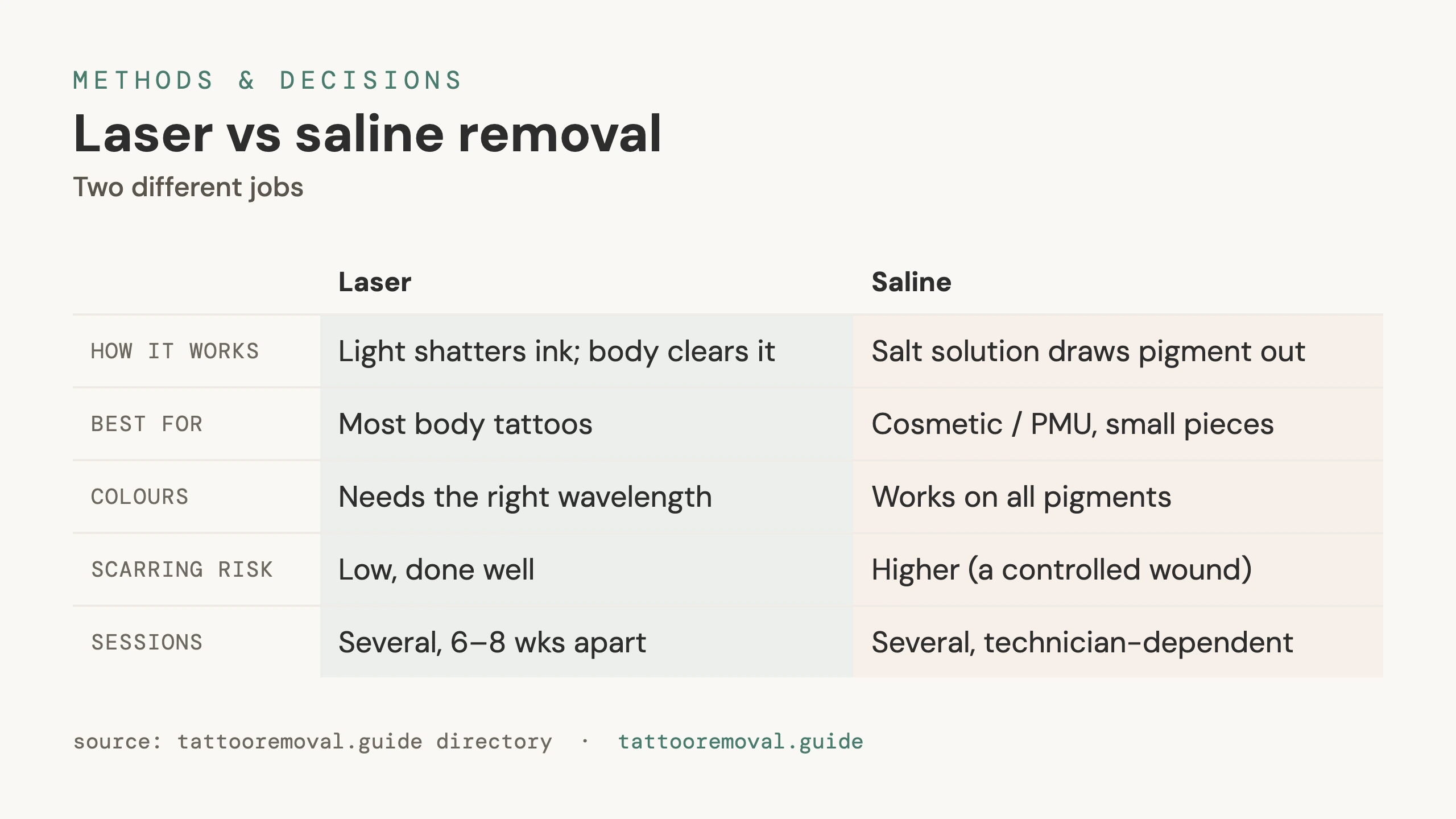 Saline is often preferred for PMU — it sidesteps the paradoxical-darkening risk.
Why is permanent makeup "semi-permanent," not permanent?
The word "permanent" oversells it. Semi-permanent makeup is cosmetic tattooing designed to fade over time, because the pigment is placed shallower in the skin and often uses pigments that break down faster than traditional body-tattoo ink. Two things drive that.
First, placement. A body tattoo is implanted deep into the dermis, where pigment is relatively stable for decades. PMU is deposited higher — closer to the surface, in skin that constantly renews itself. The shallower the pigment, the more of it the body reaches and clears.
Second, pigment chemistry. Most brow and lip PMU relies on iron oxides, chosen because they look natural and are considered gentler in cosmetic use — but iron oxides oxidise over years the way metal rusts, and they photodegrade under sunlight. So even before the immune system finishes its work, the pigment itself is chemically changing in place. The FDA notes that permanent-makeup pigments can change over time and behave unpredictably, and the American Academy of Dermatology documents the colour changes and delayed reactions tattoos and PMU can develop.
Put together: PMU is meant to fade, which is a feature (styles change, faces change) as much as a limitation.
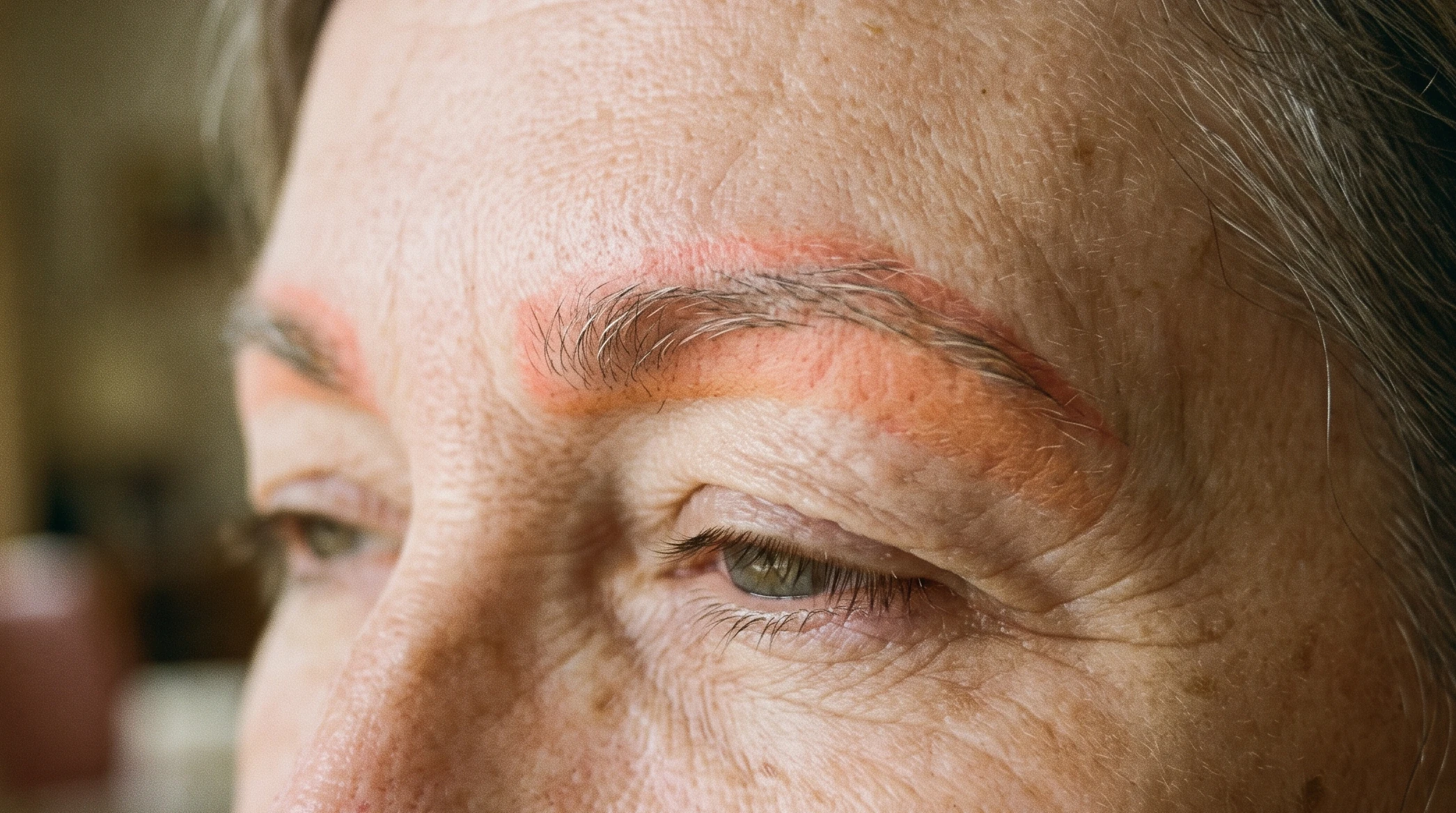 Cosmetic (permanent-makeup) tattooing on the face.
What actually makes it fade?
Fading isn't one process — it's several stacking on top of each other. Roughly in order of impact:
- Sun exposure (the biggest driver). UV light breaks pigment down directly. Daily sun protection is widely regarded as the most effective way to slow fading, which is why unprotected outdoor lifestyles fade PMU fastest.
- Skin cell turnover. The upper skin sheds and renews continuously, carrying shallow pigment out with it over months and years.
- Pigment chemistry. Iron oxides oxidise and photodegrade; the colour lightens and its tone drifts as different components break down at different rates.
- Oily skin. Oilier skin tends to fade and blur PMU faster — a common reason microblading strokes soften sooner on some people than others.
- Exfoliants and retinoids. Regular acids, retinol/retinoids and strong exfoliation accelerate surface turnover, lightening PMU over time.
- Immune clearance. As with any tattoo, immune cells gradually engulf and remove pigment particles the body treats as foreign.
None of these are failures. They're the normal life of colour placed in living skin.
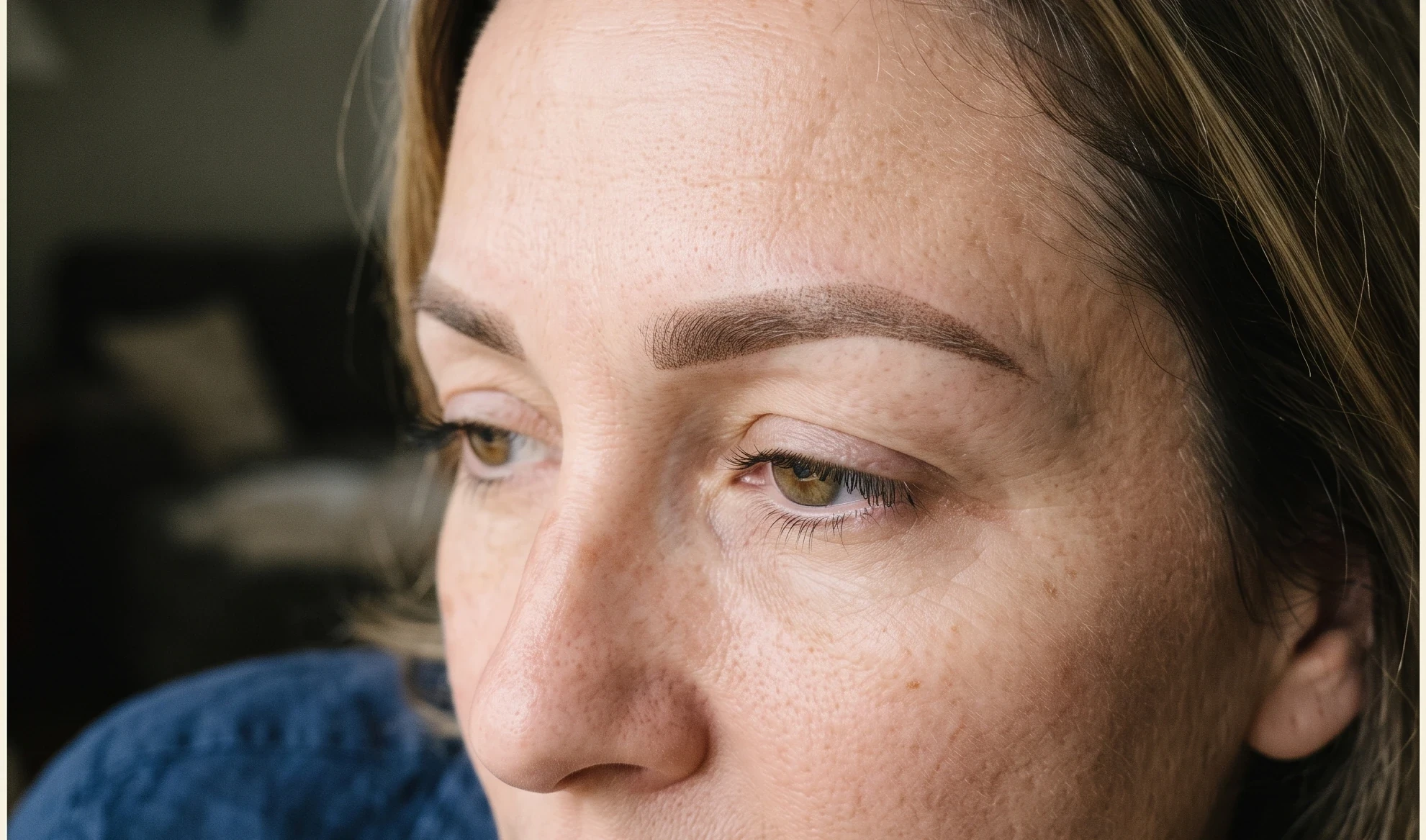 Cosmetic (permanent-makeup) tattooing on the face.
Why does it fade to a weird colour?
This is the part people don't expect. PMU rarely fades evenly to a paler version of itself — it fades off-colour, and the direction is predictable from the pigment. Colour shift happens because a pigment is a blend of components that break down at different rates, so the last tones standing aren't the ones you started with.
Warm brown brows are built largely from iron oxides; as the cooler, darker components oxidise and break down first, what remains skews orange, pink or red. Black and cool-toned pigments (common in eyeliner) do the opposite — as dense dark particles break down and scatter light through the skin, they read grey, ashy or blue-ish, much like an aged body tattoo. Pigment can also migrate slightly, softening a once-crisp brow or line.
| PMU type / pigment | Typical fade behaviour | Colour it tends to shift toward |
|---|---|---|
| Warm-brown powder / ombré brows | Fades unevenly; warm tones outlast cool ones | Orange, pink or red |
| Microblading (hair strokes) | Fades faster; strokes soften and blur | Warm/orange as it lightens |
| Cool-brown or "ash" brows | Cool components break down; warmth surfaces | Reddish or ashy |
| Black / dark eyeliner | Dense dark pigment scatters through skin | Grey, blue or ashy |
| Lip blush / lip tint | Fades toward the pigment's undertone | Cool, dusty or uneven pink |
Behaviours are general tendencies as of July 2026 — individual pigments, skin and sun exposure change the outcome. A shift toward orange or grey usually means normal ageing, not bad work.
How long does it actually last?
Only as an estimate, because the drivers above vary enormously between people. As a rough guide: powder brows and microblading commonly look their best for about 1–3 years before a touch-up, eyeliner often lasts longer (it's denser and better shaded from sun), and lips vary widely. Microblading tends to fade at the shorter end because its fine, shallow strokes hold less pigment. Oily skin, heavy sun and regular exfoliants all pull these numbers down; someone diligent with sun protection may hold colour well beyond the range. Treat any single number as a midpoint on a wide curve, not a countdown.
When fading becomes a removal question
At some point the choice stops being "top it up" and becomes "start over." That's usually driven by colour, not just lightness — an orange or grey brow doesn't look better with more of the same pigment layered on, and an outdated shape can't be un-drawn by a touch-up. This is why faded or discoloured PMU is one of the most common cosmetic-tattoo removal reasons we see across the directory.
Here's the critical catch, and the reason removal isn't a casual afterthought: old iron-oxide pigment can paradoxically darken under a laser — turning grey, brown or black after a pulse instead of fading — because the heat chemically reduces the iron oxide. It's often reversible with further careful passes, but it's exactly why saline removal is frequently chosen for old, oxidised PMU (it lifts pigment without the photothermal reaction), and why any responsible provider does a test patch first. We cover the whole trap, saline-vs-laser, and session ranges in removing old or faded permanent makeup. The clinical mechanics of how laser clears pigment between sessions are set out in the StatPearls overview of laser tattoo removal and Cleveland Clinic's patient guidance.
This is general information, not medical advice. Fading, colour shift and removal outcomes depend on your skin, pigment and health — consult a licensed, experienced provider before making any decision.
Touch-up or remove-and-redo?
For freshly-ageing PMU that's still the right shape and roughly the right colour, a touch-up is the simple answer — re-saturating the existing work every year or few. But once the pigment has shifted colour, migrated, or the shape no longer suits you, layering fresh pigment over old, oxidised colour rarely reads clean. That's when people remove enough to go bare or to give a corrective artist a cleaner base to work on. Old pigment changes that math because of the darkening risk above — which is why the decision is worth making with eyes open rather than defaulting to "just book another top-up."
Compare clinics for a touch-up or removal
Whether you want to refresh, correct or remove, the right provider depends on your specific pigment. Compare clinics offering PMU and cosmetic-tattoo removal near you — filter by saline, laser or picosecond and look for someone experienced with aged, discoloured brow and liner pigment. If you're in a major metro, a dense market like Melbourne lets you compare a wide range of providers before you commit. Ask for a test patch before any removal, and get an honest read on whether a touch-up or a fresh start makes more sense for pigment that's already changed colour.
Frequently asked questions
Why does permanent makeup fade?
Permanent makeup fades because its pigment is implanted shallower than a body tattoo, so skin cell turnover, sun exposure and the immune system clear it faster. The iron-oxide pigments used in most brow and lip work also oxidise and break down chemically over years, which both lightens the colour and shifts its tone. Fading is expected, not a fault.
How long does permanent makeup last?
As an estimate, powder brows and microblading commonly look their best for about 1–3 years before a touch-up, eyeliner often lasts longer, and lips vary widely. These are ranges, not guarantees — sun exposure, oily skin, exfoliant use, pigment colour and how your body clears it all change how fast it fades. Some people fade in under a year; others hold colour much longer.
Why do eyebrow tattoos turn orange?
Warm brown brow pigments are built largely from iron oxides. As the darker, cooler components break down and oxidise faster than the warm ones, the remaining tone drifts toward orange, pink or red. It usually means the pigment is ageing normally, not that it was applied badly.
Does microblading fade faster than other permanent makeup?
Often, yes. Microblading deposits pigment in fine, shallow hair-stroke lines, so there is less pigment sitting higher in the skin — which tends to fade faster than denser powder or machine work, commonly needing a touch-up around the 1–2 year mark. Oily skin can shorten that further. Individual results vary widely.
Why has my permanent makeup turned grey or blue?
Cooler outcomes usually come from darker or black-leaning pigments. As the pigment breaks down and sits in the skin, dense black particles can read as grey, blue or ashy through the skin, much like an old body tattoo. It is a normal ageing shift in the pigment, not necessarily a sign of a problem.
Can faded permanent makeup be removed?
Yes — faded or discoloured PMU is one of the most common cosmetic-removal reasons. It is done with saline or laser over several sessions. One important caution: old iron-oxide pigment can paradoxically darken under a laser, so a test patch comes first. See our guide to removing old or faded permanent makeup for how that works.
Does sunscreen slow permanent makeup fading?
Daily sun protection is widely considered the single biggest thing you can do to slow fading, because UV light breaks pigment down. Many artists suggest shielding healed PMU from strong sun and using sunscreen once healing is complete. This is general information, not medical advice — follow your provider's specific aftercare.
Related guides
Related Guides
- Cosmetic & PMU
How to Remove Permanent Makeup to Redo It: Lighten vs Remove (2026)
How to remove permanent makeup to redo it: partial lightening vs full removal, why saline is often preferred pre-redo, and how much fading is enough.
- Cosmetic & PMU
Removing Old or Faded Permanent Makeup
How to remove old or faded permanent makeup, explained neutrally: why aged PMU turns orange, grey or dark, the paradoxical-darkening trap, saline vs laser, sessions…
- Cosmetic & PMU
Powder & Ombré Brow Removal: What to Expect (2026)
Powder and ombré brow removal, explained neutrally: why shaded brows are harder to remove than microblading, the paradoxical-darkening warning, saline vs laser…