Powder & Ombré Brow Removal: What to Expect (2026)

Powder and ombré brows can be removed. A soft, shaded cosmetic brow tattoo is usually lightened or removed with saline or careful laser over several sessions spaced roughly 6–8 weeks apart (as of July 2026) — often more sessions than microblading because there is more pigment to clear. The single most important warning: brow pigments can darken under a laser instead of fading, so a PMU-experienced clinician and a test patch come first.
That opener is deliberately plain, because shaded brows are where cosmetic-tattoo marketing gets furthest from the chemistry. Studios that rank for "powder brow removal" usually sell one method — saline or laser — and frame it as the answer. It isn't. Powder brow (and its gradient cousin, the ombré brow) is a cosmetic tattoo that shades soft, saturated pigment into the brow to mimic a filled-in, made-up look — denser and more solid than microblading's fine hair strokes. That density is exactly why removal is trickier. This guide is written from the directory's seat: across the 5,700 specialist clinics we track in 1,043 cities (as of July 2026), we don't perform removal or sell either method — so we can tell you when each one is the wrong choice.
This is a spoke of our permanent makeup removal pillar, focused on shaded brows; for the hair-stroke version, see microblading removal.
Key Takeaways
- Powder brows are not hair strokes. Powder and ombré brows lay down a solid, saturated field of pigment; microblading lays down fine lines. More pigment usually means more removal sessions.
- The density and the pigment type are the whole problem. Brow shades — browns, tans, blacks — often contain iron oxide and titanium dioxide, which can darken under a laser instead of fading.
- A test patch before treating the whole brow is non-negotiable, and it should be read by a PMU-experienced clinician — it's how you catch paradoxical darkening before it spreads across the brow.
- Saline is often preferred for PMU precisely because it sidesteps the laser darkening risk; laser can be efficient on older, darker pigment. The table below breaks it down.
- Decide your goal first: removing to redo vs removing for good. Lightening for a corrective redo is often fewer sessions than full removal.
- The eye area demands extra caution — proper laser eye protection is essential when working near the eye.
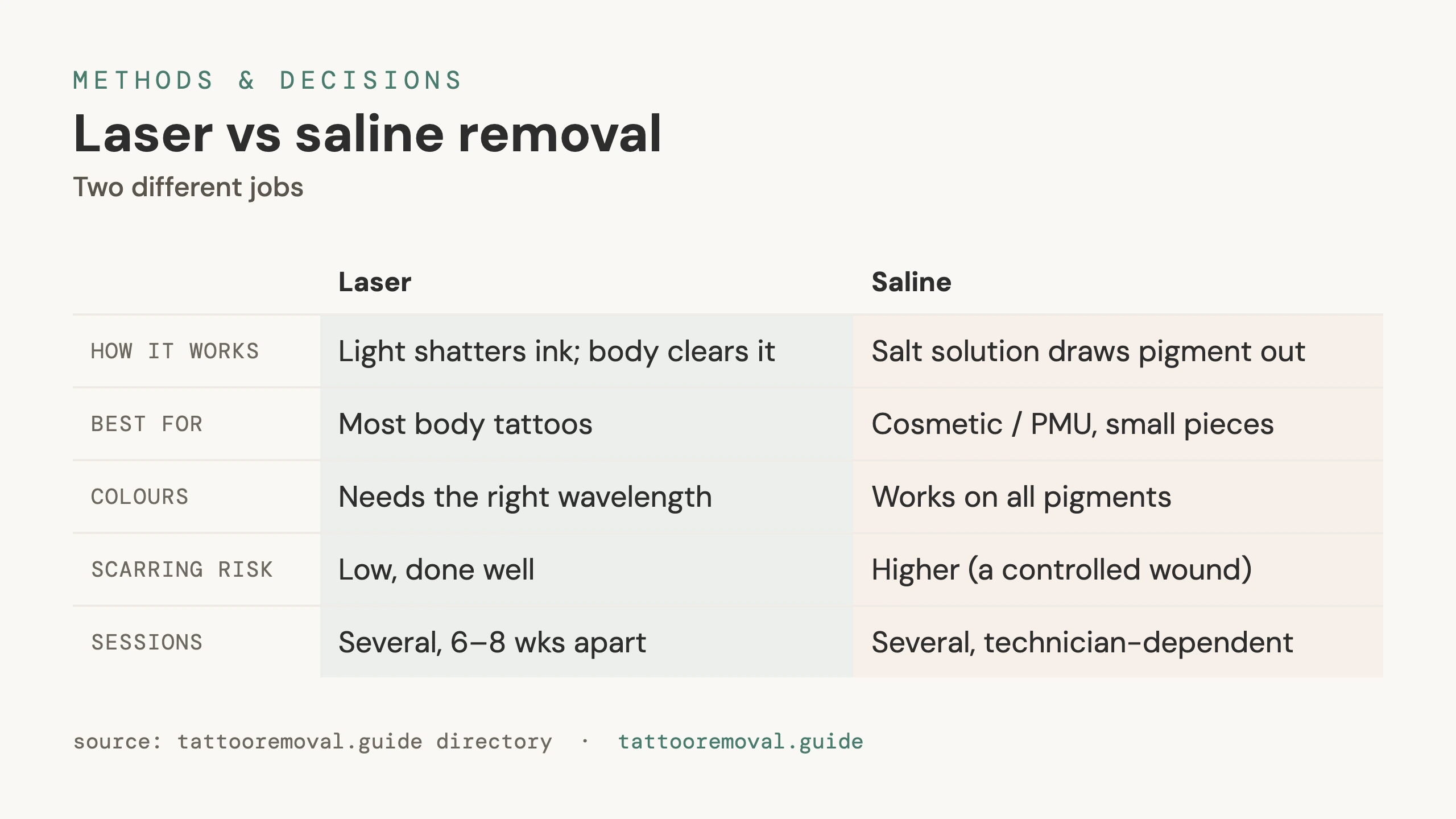 Saline is often preferred for PMU because it sidesteps the paradoxical-darkening risk.
Can powder and ombré brows actually be removed?
Yes — but "removed" honestly means faded, usually substantially, over a course of sessions, not erased in one visit. Cosmetic brow pigment is designed to soften over one to three years, so removal is a controlled acceleration of that fading. Two variables set the difficulty: density (powder and ombré work packs far more pigment into the skin than a hair-stroke brow, so there is simply more to clear) and pigment colour (brow shades lean brown, tan and black — the pigments most prone to reacting badly under a laser). A light, recent powder brow lifts more predictably than an old, dark, heavily saturated one.
Powder brow removal is the process of fading or clearing a shaded cosmetic brow tattoo — using saline lifting or laser light — so the pigment lightens over multiple sessions. Because the brow sits beside the eye, the choice of method and the operator's experience matter more here than on a forearm.
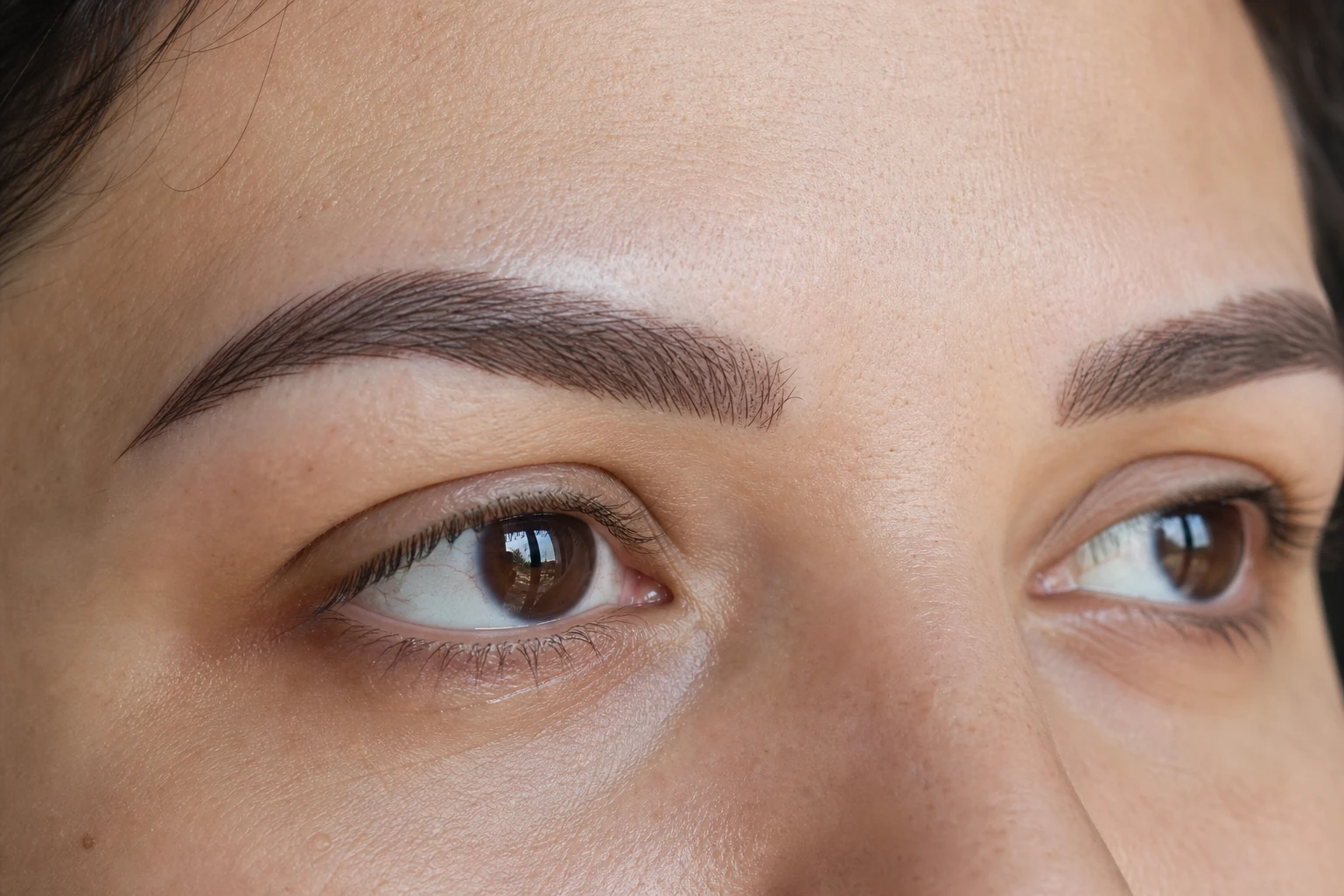 Cosmetic (permanent-makeup) tattooing on the face.
Why shaded brows are trickier than microblading
Microblading etches thin, hair-like lines of pigment. Powder and ombré brows shade a soft, solid gradient — think of the difference between a few pencil strokes and a full wash of colour. The removal implication is direct: the more pigment sitting in the skin, the more sessions it usually takes to clear. A hair-stroke brow presents relatively little ink; a saturated powder brow presents a dense field. That's the density half of the problem.
The pigment half is the same one that haunts all cosmetic-tattoo removal. Cosmetic brow pigments frequently contain titanium dioxide (a white opacifier) and iron oxides (browns and reds). When a Q-switched or picosecond laser heats those compounds, they can undergo a chemical reduction and turn grey, black or an unexpected colour — the exact opposite of what you want. So a shaded brow is a double challenge: more pigment and pigment that can misbehave under a laser.
Here is how the three sit side by side:
| Factor | Powder / ombré brow | Microblading | Body tattoo |
|---|---|---|---|
| Pigment density | High — a soft, solid shaded field | Low — fine hair-stroke lines | Variable, often high and deep |
| Pigment type | Cosmetic PMU — iron oxide / titanium dioxide (can darken under laser) | Cosmetic PMU — same darkening risk | Mostly carbon and organic pigments (predictable under laser) |
| Removal approach | Saline often preferred; laser with a mandatory test patch | Saline or laser; test patch for the same reason | Laser is the standard workhorse |
| Relative difficulty | More pigment to clear than microblading; near the eye | Least pigment, but pigment can still darken | Density and depth vary; no PMU darkening quirk |
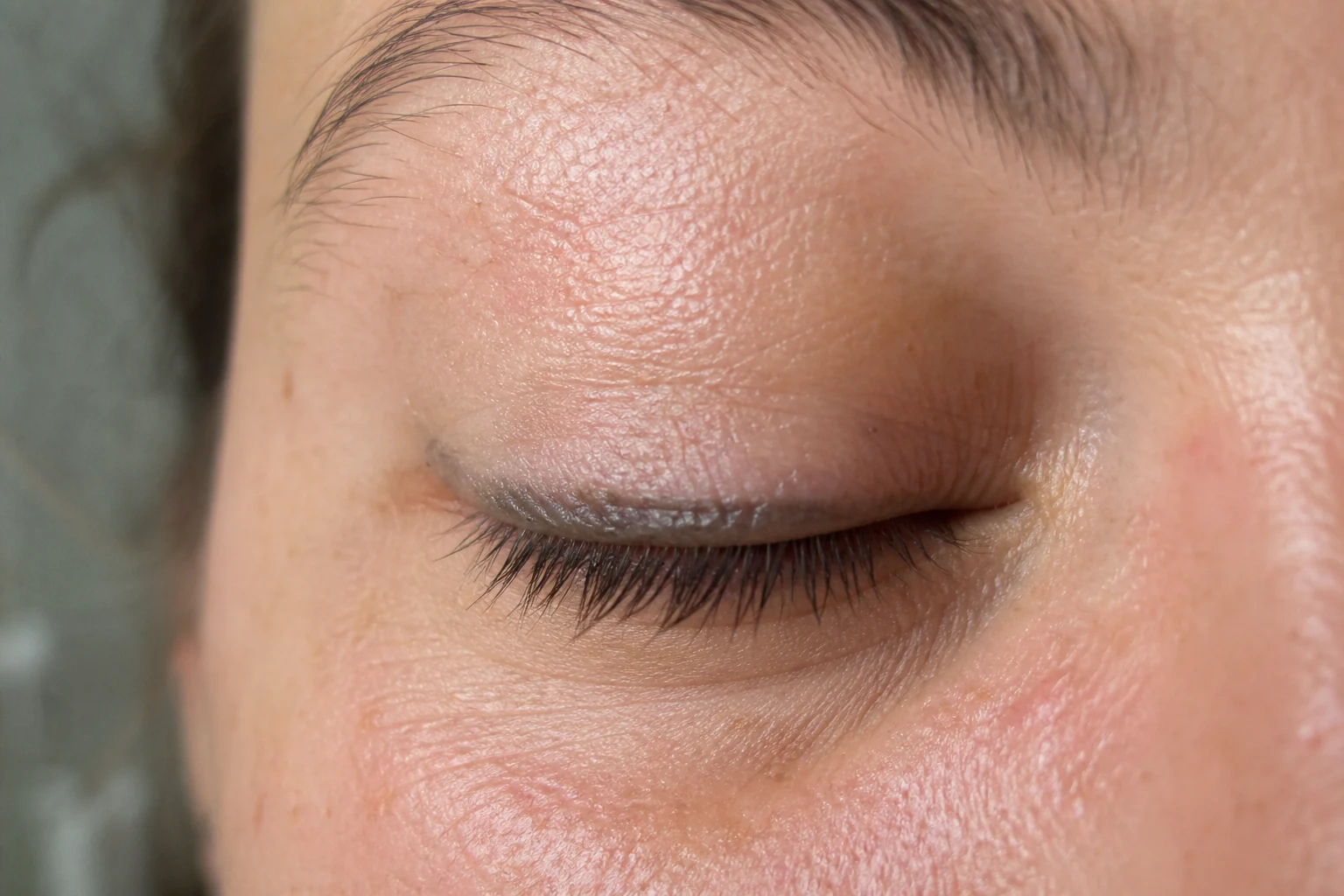 A permanent-eyeliner cosmetic tattoo.
The paradoxical-darkening warning — read this before you book
This is the warning that belongs at the top of every cosmetic-brow-removal conversation. Paradoxical darkening is when a cosmetic pigment turns darker — grey, black or brown — after a laser pulse instead of fading, because heat chemically reduces the titanium dioxide and iron oxides in the pigment. It isn't fringe. It's documented in the peer-reviewed literature for decades: a foundational report described cosmetic tattoo ink darkening as a complication of Q-switched and pulsed-laser treatment, and later work specifically implicated titanium dioxide in tattoo darkening and laser non-response. General guidance from the American Academy of Dermatology, Cleveland Clinic and the U.S. FDA fact sheet on tattoos and permanent makeup all flag that cosmetic pigments can react unpredictably.
Three rules follow, and none is optional. Demand a test patch — a small, discreet spot treated a few weeks ahead reveals whether your specific pigment fades, resists or darkens before the reaction is spread across your whole brow. Insist on a PMU-experienced clinician, because removing cosmetic brow pigment is not the same job as removing a body tattoo, and not every laser or clinic should treat PMU. And protect the eye: the brow sits close to the eye, so proper laser eye protection (internal or external eye shields) is essential. The clinical mechanics of how the light fragments pigment are covered well in StatPearls' laser tattoo removal overview — but no laser removes the darkening risk on iron-oxide brow colours. The test patch does the protecting, not the machine.
Saline vs laser for PMU: the core decision
This is the choice that actually determines your outcome. Saline removal is a non-laser method in which a saline or lifting solution is tattooed into the brow to draw pigment up and out through the natural scabbing process as it heals. Laser removal uses short, high-intensity light pulses to fragment the pigment particles so the body's immune system can clear them. For cosmetic brows, saline is often the preferred starting point precisely because it avoids the paradoxical-darkening risk — there's no photothermal reaction to reduce the iron oxides. Laser can still be the right tool for older, deeper or darker pigment. We present both neutrally; the decider is your pigment and your test patch.
| Factor | Saline removal | Laser removal |
|---|---|---|
| How it works | A saline/lifting solution is implanted like a tattoo; pigment scabs and lifts as it heals | A laser pulse fragments pigment particles; the immune system clears them |
| Darkening risk | No photothermal reaction — avoids the iron-oxide darkening risk | Real darkening risk on iron-oxide / titanium-dioxide brow shades — test patch first |
| Best for | Fresh or warm-toned PMU; clients wary of laser colour shift | Older, deeper, darker or heavily saturated pigment |
| Sessions (shaded brows) | Several, spaced to let the brow heal fully between visits | Several; can be efficient on suitable pigment, ~6–8 weeks apart |
| Near the eye | No light energy near the eye | Requires proper laser eye protection |
| Healing | Scabs form and must be left to fall naturally; swelling | Swelling, redness and scabbing; heals between sessions |
The practical read: fresh, warm or lightly saturated powder brows often point toward saline; older, dark or dense work may point toward laser. But those are tendencies, not rules — the only reliable decider is a test patch on your actual pigment, ideally reviewed by a provider who offers both methods (or will refer you) rather than one who only sells the one they own.
How many sessions, and removing to redo vs for good
The honest answer on sessions is a range you can't know exactly upfront, driven by saturation, depth, colour and age — and, critically, your goal. There are two very different motivations, and they change the whole plan:
| Motivation | What "done" means | Typical effort |
|---|---|---|
| Removing to redo | Lighten a too-dark, too-warm or outdated brow enough for a corrective artist to work over it | Often fewer sessions — you're softening, not erasing |
| Removing for good | Clear the pigment as fully as realistically possible | More sessions — full fade of a saturated field takes longer |
Tell the provider which one you want at the consult, because a plan built to erase is different from a plan built to lighten-and-redo. Either way, sessions are spaced roughly 6–8 weeks apart (as of July 2026) to let the skin recover, and denser, darker, older work runs longer. No honest provider guarantees a session count — they estimate a range after seeing the work and, ideally, the test patch.
Find a clinic experienced in PMU removal
The method is pigment-specific, so the clinic is too — and few clinics specialise in cosmetic-pigment removal, which is a real consideration when you're choosing. Not every tattoo-removal studio should treat a brow: PMU removal near the eye, with pigments that can darken, is its own skill. Compare clinics offering PMU and brow removal near you — filter by saline, laser, or picosecond and see who actually offers the approach your pigment needs. If you're in a major metro, start with a dense market like Melbourne, where you can compare a wide range of providers before you book.
Before you commit anywhere, ask three things: does the clinician have PMU-specific removal experience, will they do a test patch before treating the whole brow, and how do they protect the eye during treatment? Those questions separate a safe, honest provider from a good ad.
This is general information, not medical advice. Removal outcomes and risks depend on your skin, pigment and health — consult a licensed, experienced provider, and never assume a guaranteed result.
Frequently asked questions
Can powder or ombré brows be removed?
Yes. Powder and ombré brows can usually be lightened substantially or removed with saline or careful laser, but no honest provider guarantees a clean slate. Because they lay down denser, more saturated pigment than microblading, they often take more sessions. Expect gradual fading over a course, not an instant erase.
Are powder brows harder to remove than microblading?
Generally yes. Powder and ombré brows deposit a solid, saturated field of pigment, while microblading deposits fine hair-stroke lines. More pigment in the skin usually means more removal sessions. The pigment type matters too — many brow shades contain iron oxides that can darken under a laser, which shapes the method choice.
Why can a laser turn my powder brows darker?
This is called paradoxical darkening. Cosmetic brow pigments — browns, tans and blacks — often contain iron oxide and titanium dioxide, which can chemically reduce when heated by a laser and turn grey, black or an odd colour. It is documented in the dermatology literature, which is exactly why a test patch before treating the whole brow is essential.
Is saline or laser better for powder brow removal?
Neither is universally better. Saline is often preferred for PMU because it avoids the laser darkening risk and suits fresher or warmer-toned work. Laser can be efficient on older, deeper or darker pigment. Because brow shades often contain iron oxides that can darken under heat, a test patch read by a PMU-experienced clinician is what decides it.
How many sessions to remove powder or ombré brows?
Powder and ombré brows commonly take several sessions — often more than microblading because there is more pigment to clear — spaced roughly 6–8 weeks apart (as of July 2026). Saturation, depth, colour and age drive the count. A provider can only estimate a range after seeing the work and, ideally, a test patch.
Should I remove my powder brows to redo them, or for good?
Both are common. Many people only want a too-dark, too-warm or outdated shape lightened so a corrective artist can redo the brow on a cleaner canvas — that is often fewer sessions than full removal. Others want the pigment gone entirely. Tell the provider your goal up front, because it changes how far they need to fade.
How do I find a clinic that removes powder brows safely?
Look specifically for PMU-removal experience, not just tattoo removal. Ask whether they offer saline, laser, or both, and whether they do a test patch before treating the whole brow. Confirm they use proper laser eye protection near the eye. Few clinics specialise in cosmetic-pigment removal, so it is worth comparing several.
Related guides
Related Guides
- Cosmetic & PMU
Why Permanent Makeup Fades (and Turns Orange or Grey) (2026)
Why permanent makeup fades and shifts colour, explained neutrally: shallow pigment placement, iron-oxide oxidation, sun exposure and skin turnover, why warm browns…
- Cosmetic & PMU
How to Remove Permanent Makeup to Redo It: Lighten vs Remove (2026)
How to remove permanent makeup to redo it: partial lightening vs full removal, why saline is often preferred pre-redo, and how much fading is enough.
- Cosmetic & PMU
Removing Old or Faded Permanent Makeup
How to remove old or faded permanent makeup, explained neutrally: why aged PMU turns orange, grey or dark, the paradoxical-darkening trap, saline vs laser, sessions…