Removing Old or Faded Permanent Makeup
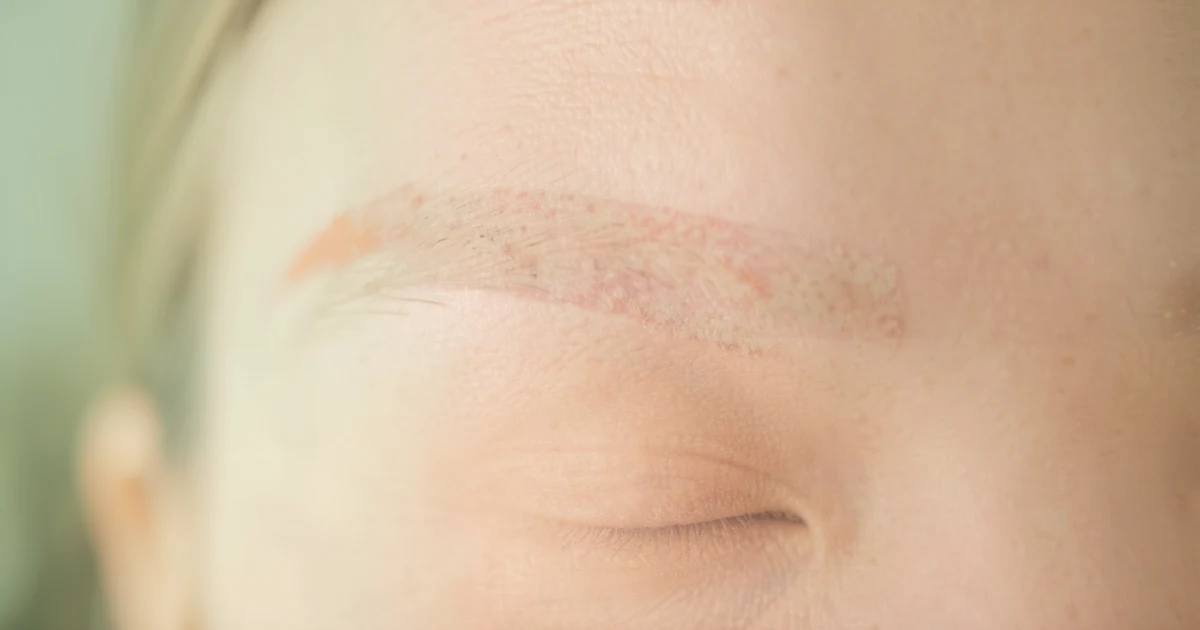
Old permanent makeup can be removed, but it is one of the trickier cosmetic-tattoo jobs. Faded brow or liner PMU is usually lightened with saline or laser over roughly 4–8 sessions (as of July 2026) — and because aged, oxidised pigment can darken under a laser before it fades, a test patch read by a PMU-experienced clinician comes first. Expect a major improvement, sometimes with a faint residual shadow, rather than a guaranteed clean slate.
That opener is cautious on purpose, because old PMU is where cosmetic-tattoo removal is least predictable. The pigment you're removing is not the pigment that went in. It has aged, migrated and chemically changed — which is exactly why the confident "we'll erase it in three sessions" pitch should make you pause. Old or faded permanent makeup is cosmetic tattoo pigment (brows, eyeliner or lip) that has broken down and shifted colour over years — commonly fading to orange, pink, red or ashy grey — and it behaves differently under a laser than fresh work. This guide is written from the directory's seat: across the 5,700 specialist clinics we track in 1,043 cities (as of July 2026), we don't perform removal or sell any method — so we can tell you where the real risk sits.
This is a spoke of our permanent makeup removal pillar, focused on aged and discoloured pigment; for the brow-specific walkthrough, see eyebrow tattoo removal.
Key Takeaways
- Old PMU has changed colour and chemistry. Warm brow pigments oxidise and fade to orange, pink, red or grey — normal ageing, not bad work, but it drives everything about removal.
- The paradoxical-darkening risk is higher with old iron-oxide pigment. A laser can turn it grey, brown or black before it lightens, sometimes needing extra passes to recover.
- A test patch is non-negotiable, read by a PMU-experienced clinician — it's the only reliable way to see how your aged pigment reacts before it's spread across a brow or lid.
- Saline is often preferred for stubborn or discoloured old PMU because it avoids the photothermal darkening reaction. Laser suits denser, darker deposits. See the table.
- Old PMU commonly needs 4–8 sessions, spaced ~6–8 weeks apart (as of July 2026) — often more than fresh work, because oxidised pigment resists.
- Manage expectations for the finish. A faint residual shadow can remain; aim for "enough to go bare or re-do cleanly," not a guaranteed blank canvas.
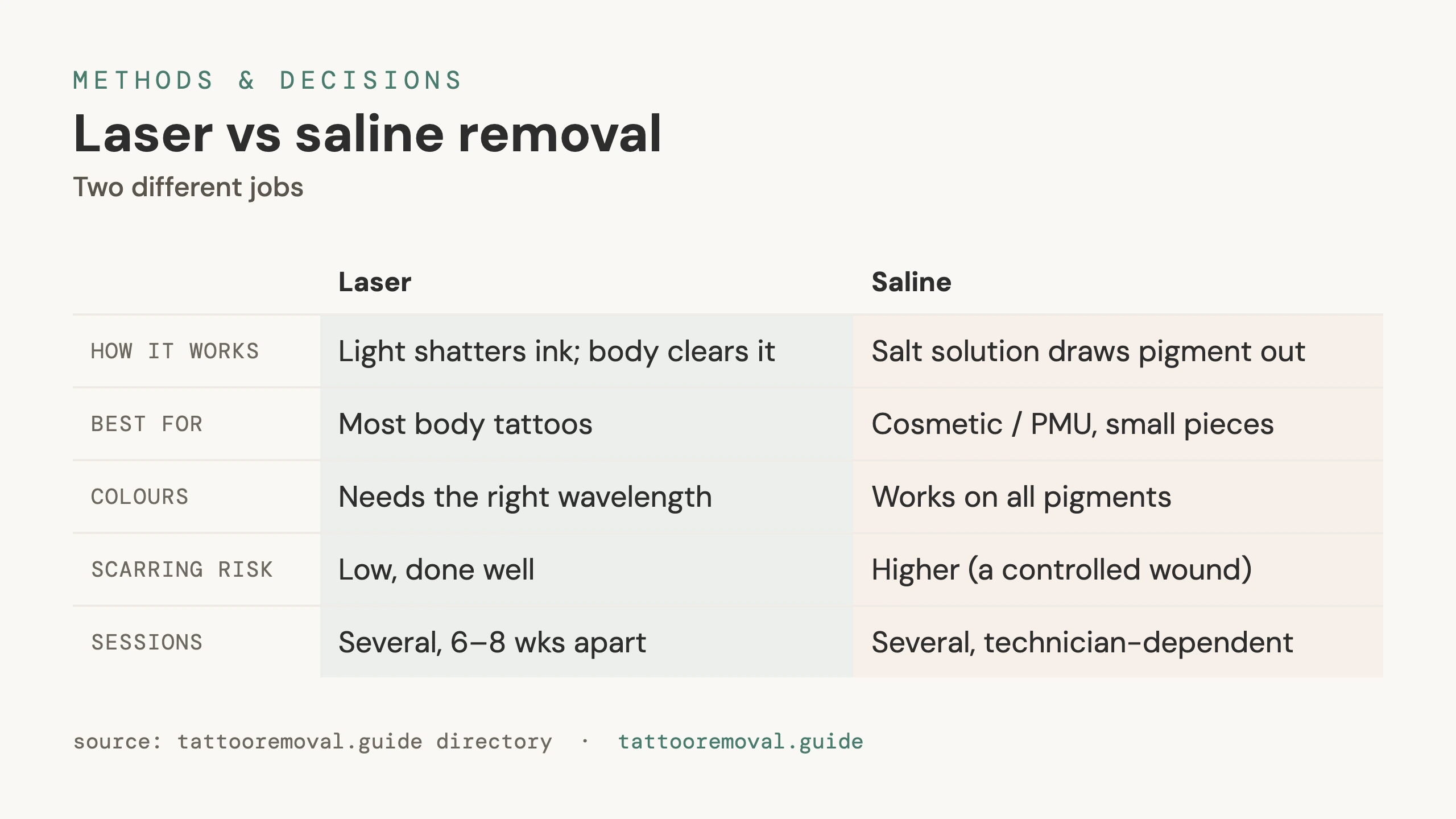 Discoloured old PMU is where saline removal often earns its place.
Why does old permanent makeup look the way it does?
Permanent makeup rarely fades away neatly. It fades off-colour. The reason is chemistry: warm-toned brow shades are built largely from iron oxides, which oxidise over years the way a nail left outside rusts. As the outer, more visible pigment particles break down first, the remaining tone drifts — brows that were once soft brown resolve to orange, pink, red or an ashy cool grey, and crisp eyeliner blurs and greys. Pigment also migrates slightly, so an old brow can look fuzzy or wider than the day it was done. None of this means your original artist did a bad job; it's the expected ageing of cosmetic pigment placed in living, sun-exposed skin. The FDA notes that permanent-makeup pigments can change over time and react unpredictably, and the American Academy of Dermatology documents the range of delayed reactions and colour changes tattoos and PMU can develop.
The practical point: the pigment sitting in your skin today is oxidised and altered — and that altered chemistry is precisely what makes it behave unexpectedly under a laser.
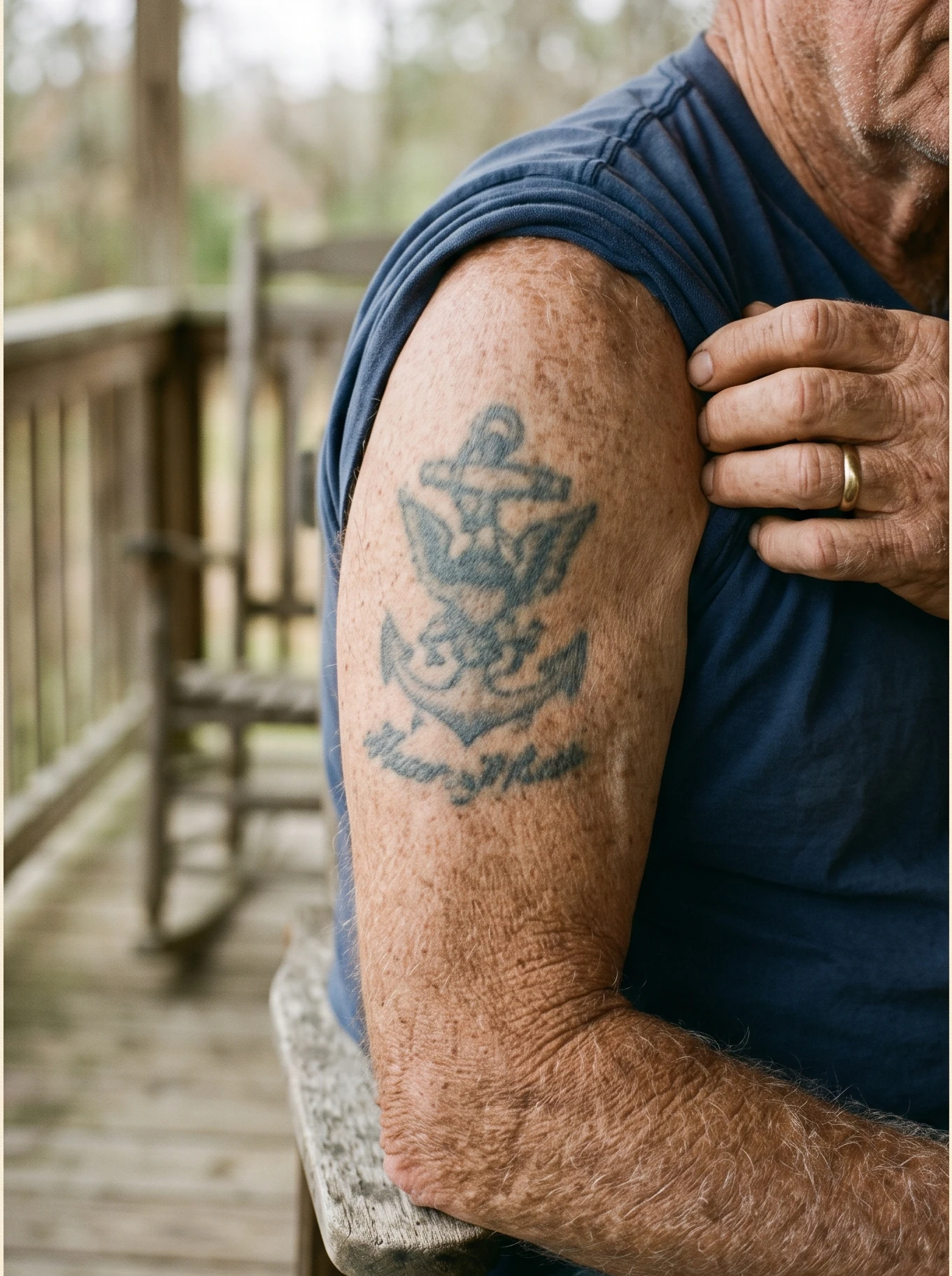 A decades-old, faded tattoo.
The paradoxical-darkening trap with old PMU
This is the single most important thing to understand before anyone points a laser at aged permanent makeup. Paradoxical darkening is when a cosmetic pigment turns darker — grey, brown or black — after a laser pulse instead of fading, because heat chemically reduces the iron oxides and titanium dioxide in the pigment. With old, oxidised iron-oxide PMU the risk is higher, not lower, because so much of what remains is exactly the compound that reacts.
Here's the trap in practice: a faded orange brow gets a laser pass and instantly turns slate grey or near-black. It's alarming, and a studio that didn't warn you will scramble to explain it. It is often reversible — further careful passes can eventually break down the darkened pigment — but that can mean more sessions than you were quoted, and in the meantime you're wearing a darker brow than you started with. On rare occasions the darkening is stubborn enough that a clinician switches approach entirely.
Two rules follow, and neither is optional. First, demand a test patch — a small, discreet area treated a few weeks ahead of any full treatment, so you can see whether your specific aged pigment fades, resists or darkens before the reaction is spread across your whole brow or lid. Second, insist on a PMU-experienced clinician. Removing old cosmetic pigment near the eye is not the same job as clearing a forearm tattoo. Modern picosecond lasers — noted by about 18% of the 5,700 clinics we track, versus 15% that note Q-switched (as of July 2026) — can help with stubborn pigment, but no laser removes the darkening risk on iron-oxide colours. The test patch does the protecting, not the machine.
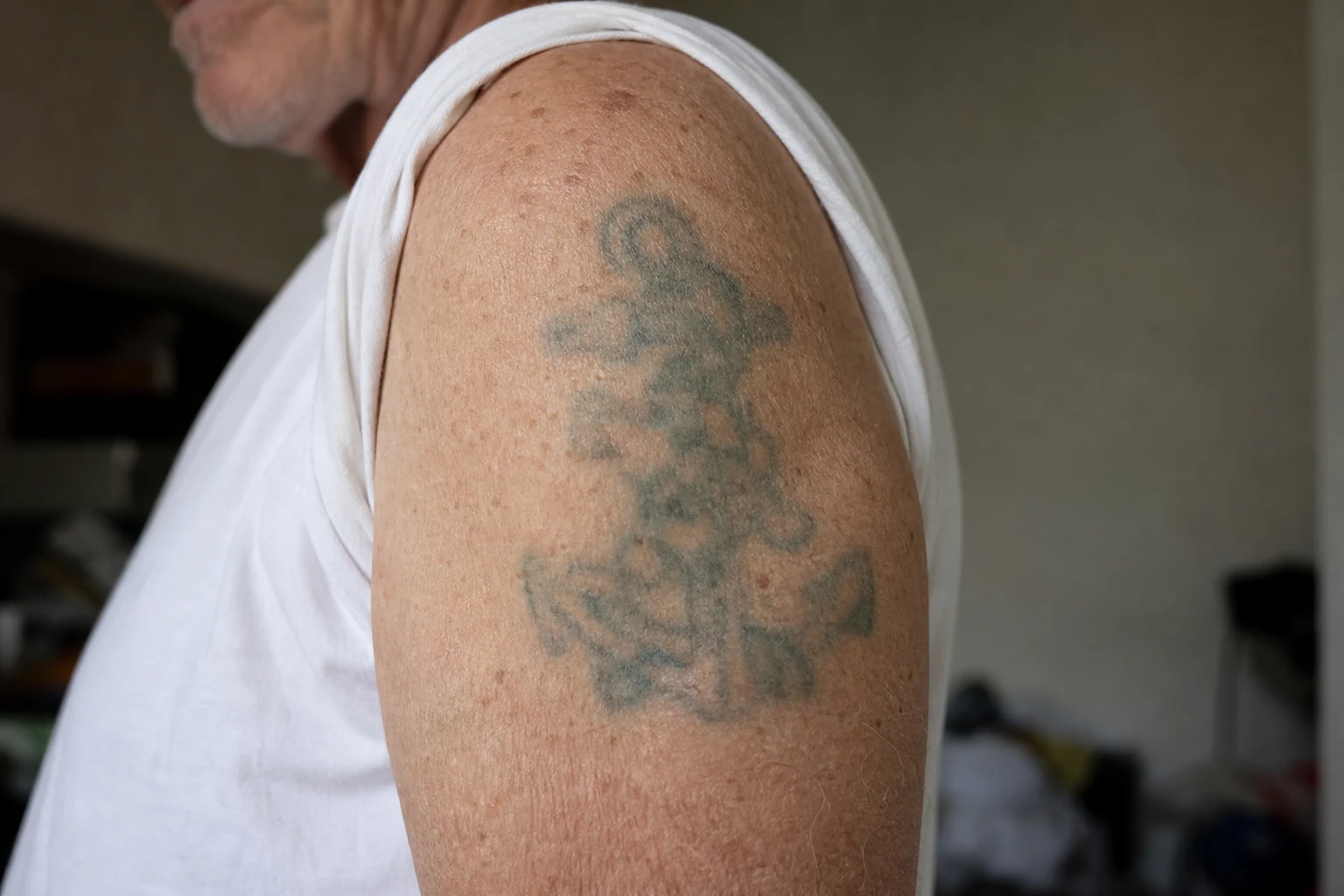 A decades-old, faded tattoo.
Saline vs laser for old, discoloured PMU
Because old PMU is unpredictable, the method choice matters more than it does for fresh work — and it's the decision single-method studios are structurally unable to give you straight. Saline removal is a non-laser method in which a saline or lifting solution is tattooed into the skin to draw pigment up and out through the natural scabbing process as it heals. Laser removal uses short, high-intensity light pulses to fragment the pigment so the body's immune system can clear it. For discoloured old pigment, the trade-off centres on the darkening reaction.
| Factor | Fresh PMU | Old / oxidised PMU |
|---|---|---|
| Typical colour behaviour | Sits close to the applied shade | Faded to orange, pink, red or ashy grey; migrated/blurred |
| Pigment chemistry | Intact iron oxides / titanium dioxide | Oxidised, broken-down iron oxides — chemically altered |
| Darkening risk under laser | Present, but pigment reacts more predictably | Higher — oxidised iron oxide is prone to paradoxical darkening |
| Common method lean | Either, guided by a test patch | Saline often preferred for stubborn/discoloured pigment; laser for dense deposits |
| Test patch | Essential | Essential and higher-stakes — reactions are less predictable |
| Typical sessions | Often fewer | Often more; darkened pigment can need extra passes |
| Realistic finish | Substantial fade | Substantial fade, sometimes a faint residual shadow |
The practical read: many clinicians lean toward saline for stubborn or discoloured old PMU, because it avoids the photothermal reaction that causes darkening altogether — it lifts pigment mechanically rather than heating it. Laser still earns its place on denser, darker deposits. But these are tendencies, not rules. The only reliable decider is a test patch on your actual pigment, ideally reviewed by a provider who offers both methods (or will refer you) rather than one who only sells the one they own. For the full method-by-method breakdown, see laser vs saline removal.
How many sessions, and how long will it take?
Old PMU generally takes more sessions than fresh work — commonly about 4–8, spaced roughly 6–8 weeks apart (as of July 2026) — and if the pigment darkens under a laser first, add passes to break that down again. The 6–8 week gap isn't padding: it lets the skin recover and the immune system clear fragmented pigment between visits, which is how the StatPearls clinical overview of laser tattoo removal and Cleveland Clinic's patient guidance both describe the process working.
| Old PMU scenario | Typical method lean | Typical sessions | Notes |
|---|---|---|---|
| Lightly faded brow, cool-toned | Saline or laser (test first) | 4–6 | Lower saturation; watch for darkening on any warm residue |
| Deep, dark or heavily built-up pigment | Laser (test first) | 6–8+ | Densest deposits; longest courses |
| Discoloured / previously darkened pigment | Saline often preferred | Varies | Photothermal reaction avoided; assessed case by case |
| Just softening before a corrective re-do | Saline or laser | 1–3 | Partial lightening, not full removal |
Sessions are typical ranges as of July 2026, spaced roughly 6–8 weeks apart. Oxidised, darkened or deeply placed pigment runs longer, and a provider can only estimate after a test patch. Pricing transparency is patchy across the field — only about 38% of the clinics in our directory publish any price at all (as of July 2026) — so you'll usually have to ask for the likely full-course total rather than reading it off an ad.
Managing expectations: the residual shadow
Honesty about the finish matters more here than almost anywhere in removal. Very old or deeply placed pigment can leave a faint residual shadow or a subtle change in skin tone even after a full course — a ghost of the original shape rather than a visible brow or line. That's not a failure of the clinician; it's the reality of pigment that has been in the skin for years. The right frame is "remove enough to go bare comfortably, or to let a corrective artist re-do the colour on a cleaner base," not "guarantee a blank canvas." A provider who promises the latter is selling certainty that the chemistry doesn't support.
This is general information, not medical advice. Removal outcomes and risks depend on your skin, pigment and health — consult a licensed, experienced provider, and never assume a guaranteed result.
Safety near the eyes
Most old PMU sits on the brows or eyeliner, which puts removal close to the eye — so a few risks deserve specific attention. Certified laser eye protection is essential: for treatment near the lids, that means opaque metal eye shields, not just goggles, and eyeliner removal in particular should be handled by an experienced clinician. Beyond that, temporary swelling, redness and scabbing are expected healing, while blistering, infection (if aftercare slips), scarring and lasting pigment change are possible rather than expected. Keep the area clean, avoid picking scabs (the main avoidable cause of scarring), and follow the provider's aftercare exactly. On thin, mobile eye-area skin, an experienced hand matters more than it would on a forearm.
The part nobody sells you: living with brows you no longer like
There's an emotional layer to old PMU that the clinical framing misses. Waking up every day to brows a shade you'd never choose now — too orange, too grey, too heavy for the face you have years later — wears on people in a quiet way. It's on your face; you can't take it off. So the honest goal of removal isn't perfection, it's getting your options back: enough fade to go bare, to soften an outdated shape, or to hand a corrective artist a cleaner canvas. That's a realistic, worthwhile outcome — and it's a better target than chasing a guaranteed erase that old, oxidised pigment may not allow.
Compare clinics that handle old, discoloured PMU
The method is pigment-specific, so the clinic is too. Compare clinics offering PMU and cosmetic-tattoo removal near you — filter by saline, laser, or picosecond and find providers who work with aged brow and eyeliner pigment specifically. If you're in a major metro, start with a dense market like Melbourne, where you can compare a wide range of providers before you book.
Before you commit anywhere, ask for a test patch, confirm the clinician has PMU-specific experience with old and discoloured pigment, and get the likely full-course total with what happens if darkening adds sessions. Those questions separate a safe, honest provider from a good ad.
Frequently asked questions
How do you remove old permanent makeup?
Old PMU is removed with either saline (non-laser) or laser, chosen by how the pigment behaves. Because aged brow and liner pigment often contains oxidised iron oxide that can darken under a laser, a test patch comes first. Removal is gradual over several sessions, and no honest provider guarantees a completely clean result.
Why has my permanent makeup turned orange or grey?
Warm-toned brow pigments fade unevenly as their iron oxides oxidise and the outer pigment breaks down, leaving orange, pink, red or ashy-grey tones. It doesn't mean it was done badly — it's normal ageing of cosmetic pigment. That same oxidised iron oxide is what raises the paradoxical-darkening risk during laser removal.
Can laser make old permanent makeup worse?
It can, temporarily. Old iron-oxide PMU can undergo paradoxical darkening — turning grey, black or unexpectedly dark after a laser pulse instead of fading. It is often reversible with further careful passes, but it is exactly why a test patch on your actual pigment, read by a PMU-experienced clinician, is essential before treating the whole area.
Is saline or laser better for old, discoloured PMU?
Neither is universally better. Saline avoids the photothermal darkening reaction, so some clinicians prefer it for stubborn or discoloured old pigment. Laser suits denser, darker deposits. The deciding factor is how your specific pigment reacts to a test patch — old PMU is unpredictable enough that the patch, not the brochure, makes the call.
How many sessions to remove old permanent makeup?
Old PMU commonly takes about 4–8 sessions, spaced roughly 6–8 weeks apart (as of July 2026), and oxidised or darkened pigment can need more passes than fresh work. Depth, colour, age and how the pigment reacts all drive the count. A provider can only estimate a range after seeing the work and a test patch.
Will removal get rid of the colour completely?
Often it fades substantially, but a faint residual shadow or a slight tone change in the skin can remain, especially with very old or deeply placed pigment. Set expectations for a major improvement rather than a guaranteed blank canvas. Many people remove enough to go bare or to allow a corrective re-do on a cleaner base.
Is it safe to laser eyebrow or eyeliner tattoos near the eye?
It can be done, but the eye area demands specific care — certified laser eye protection (opaque eye shields) is essential, and eyeliner especially should be treated by an experienced clinician. This is general information, not medical advice; risks depend on your skin, pigment and health, so consult a licensed provider.
Related guides
Related Guides
- Cosmetic & PMU
Why Permanent Makeup Fades (and Turns Orange or Grey) (2026)
Why permanent makeup fades and shifts colour, explained neutrally: shallow pigment placement, iron-oxide oxidation, sun exposure and skin turnover, why warm browns…
- Cosmetic & PMU
How to Remove Permanent Makeup to Redo It: Lighten vs Remove (2026)
How to remove permanent makeup to redo it: partial lightening vs full removal, why saline is often preferred pre-redo, and how much fading is enough.
- Cosmetic & PMU
Powder & Ombré Brow Removal: What to Expect (2026)
Powder and ombré brow removal, explained neutrally: why shaded brows are harder to remove than microblading, the paradoxical-darkening warning, saline vs laser…