How to Remove Permanent Makeup to Redo It: Lighten vs Remove (2026)
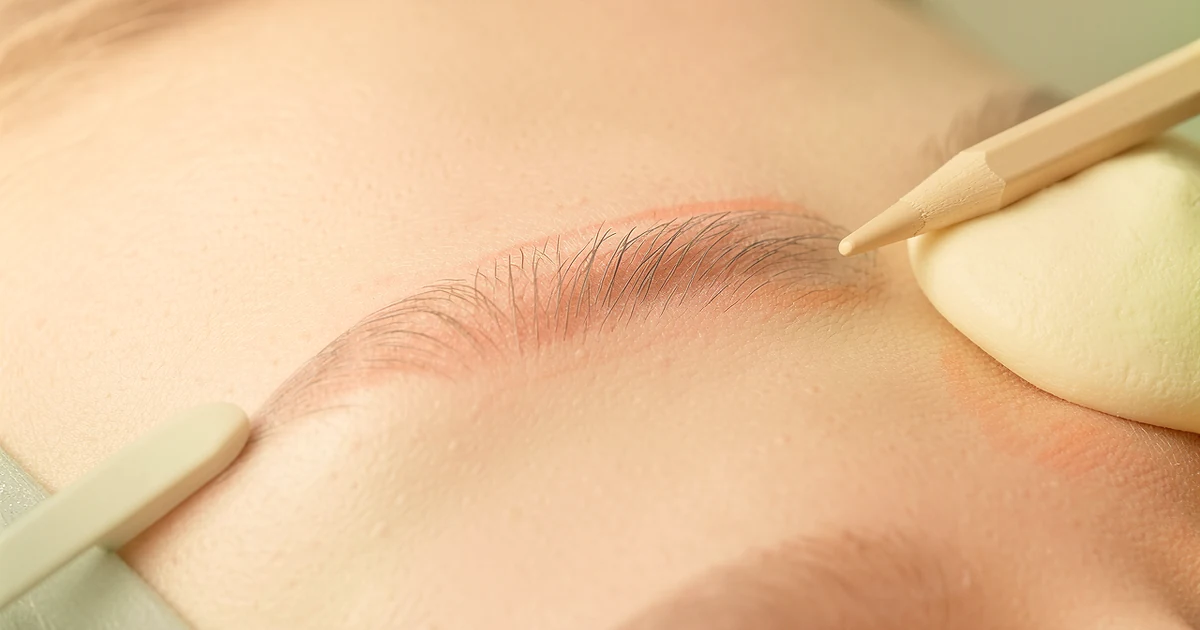
You usually don't need to fully remove old permanent makeup to redo it — you need to lighten it enough that a new artist can work over it cleanly. Many PMU artists require faded pigment first because new colour laid over dark or shifted old work can look muddy. Saline is often preferred for controlled pre-redo lightening; laser is faster but carries a darkening risk on cosmetic pigment. Heal fully between removal and the new work — plan in weeks to months.
If you're here, you probably don't hate your brows enough to erase them — you want them better. A cleaner shape, a fresher colour, a newer technique over work that's faded or drifted with age. That's a redo, not a removal, and the two goals need different amounts of fading. A PMU redo is applying new permanent makeup or microblading over existing cosmetic tattoo work — which usually first requires lightening the old pigment enough for the new work to sit cleanly. This guide walks that honest path from the directory's seat: across the 5,700 clinics we track in 1,043 cities (as of July 2026), we don't perform removal or PMU and we don't sell either, so we can tell you where the trade-offs actually are.
This is a spoke of our permanent makeup removal pillar; for the brow-stroke-specific version, see microblading removal.
Key Takeaways
- A redo usually needs lightening, not full removal — you fade the old pigment enough for a new artist to work over it, not erase it completely.
- Many artists require fading first because they can't cleanly cover dark, old or migrated pigment; new colour over it can look muddy.
- Saline is often preferred for pre-redo lightening — controlled, gradual fading that avoids the laser darkening risk; laser is faster but needs a test patch.
- "How much fading is enough" is artist-dependent. Ask your intended new artist what base they need before booking removal.
- Heal fully between removal and the redo — multiple lightening sessions ~6–8 weeks apart, then new PMU only once the skin has settled.
- Residual shadow can affect the new result. Set expectations honestly; a test patch and an in-person assessment come first.
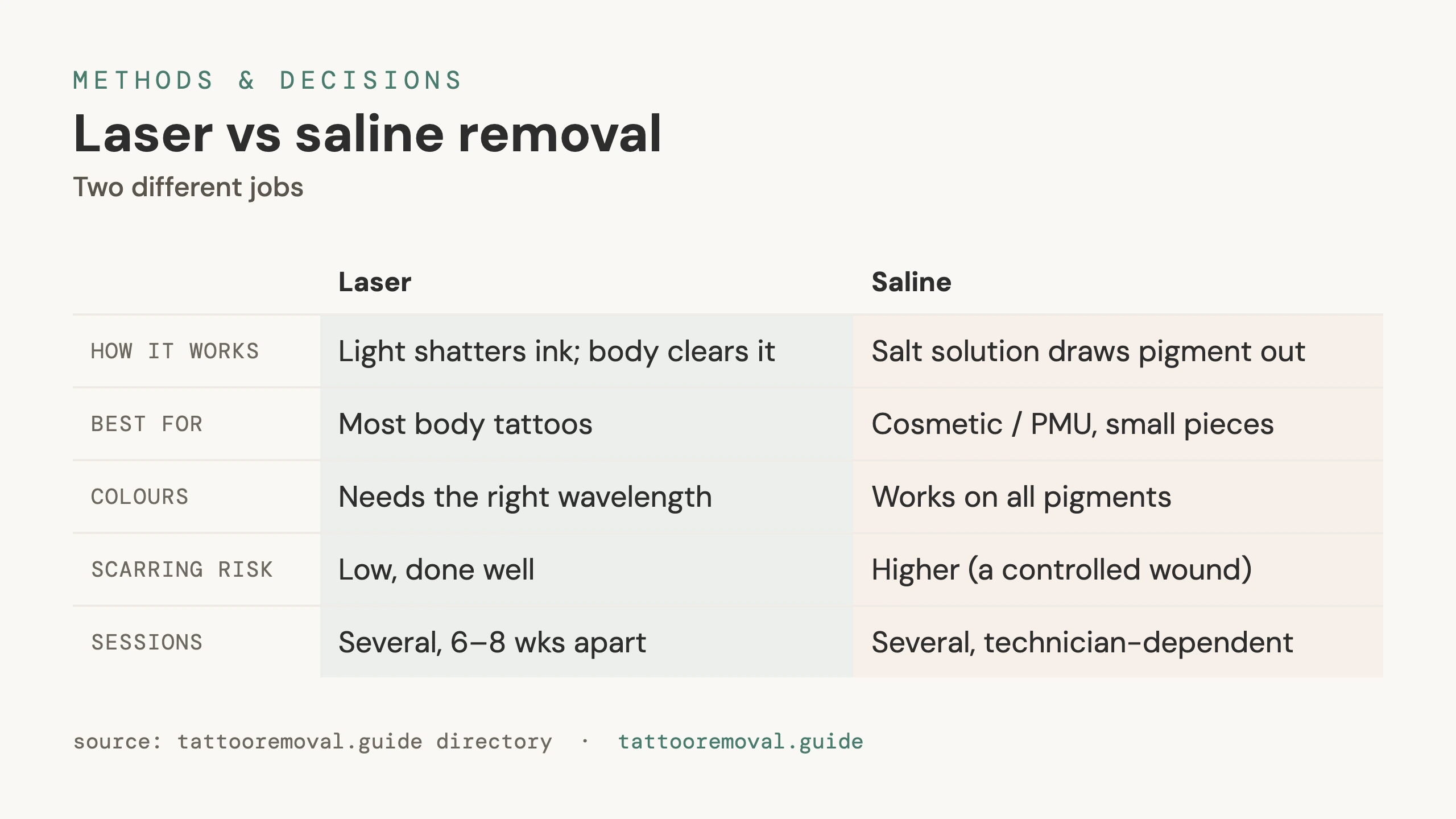 Saline is often preferred for controlled pre-redo lightening.
Removing permanent makeup to redo it: why you rarely need full removal
Full removal and a redo solve different problems. Full removal clears the pigment completely so the skin is bare; lightening fades the pigment enough that a new artist can build over it. If your plan is new brows, new PMU or microblading over the top, lightening is almost always the goal — clearing every trace is more sessions, more cost and more healing than the redo actually needs.
The reason artists care about this at all is coverage. A PMU artist works with translucent pigment, not paint — new colour doesn't fully hide what's underneath, it layers over it. Lay a fresh brow over dark, old or drifted pigment and you often see both at once: a muddy, greyish or double-outlined result that satisfies nobody. So the ask isn't cosmetic fussiness. Many PMU artists require the old work to be faded first because they cannot cleanly cover dark, aged or migrated pigment — and building over it risks a muddy result. Lightening gives them a base pale enough that the new design reads as intended.
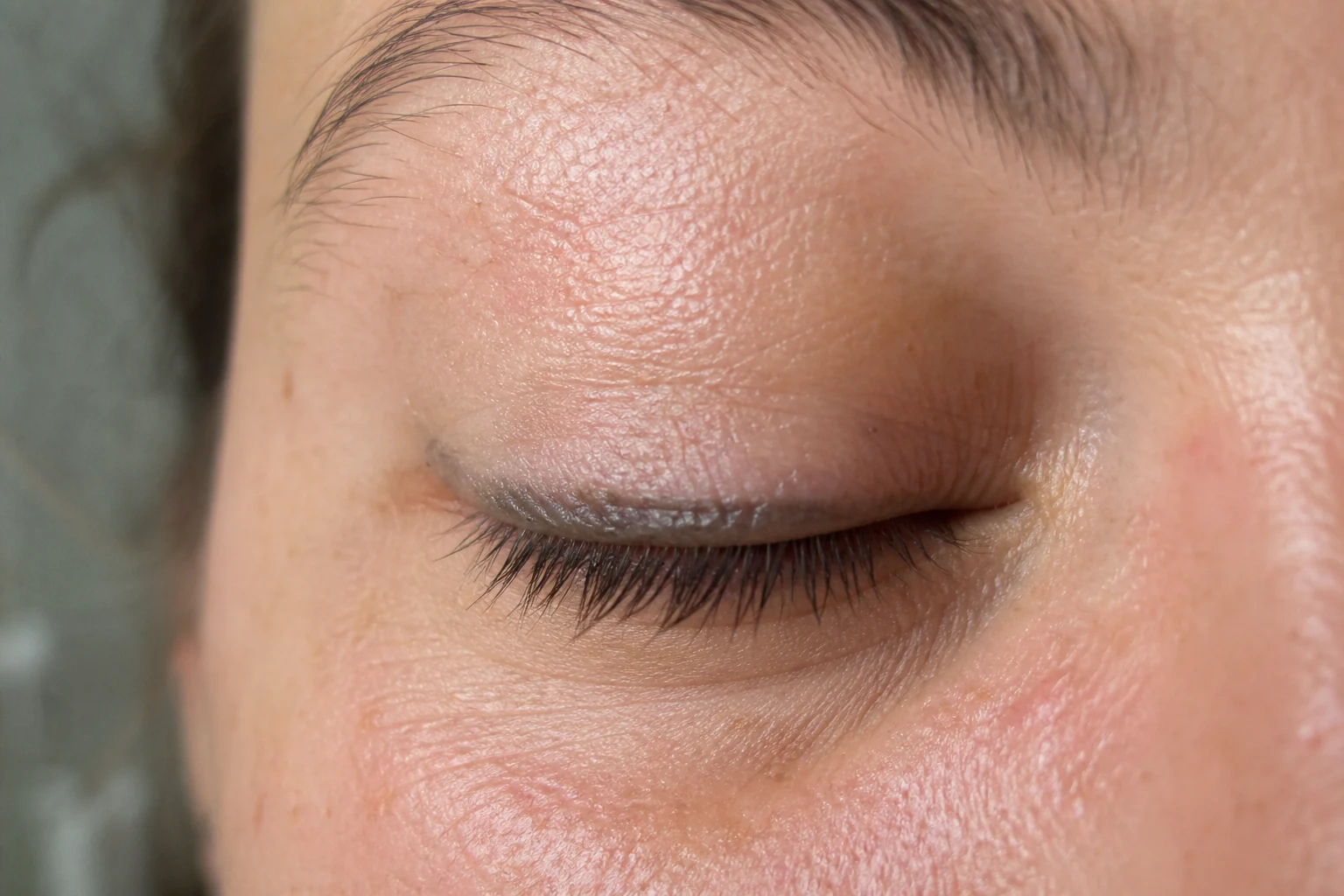 A permanent-eyeliner cosmetic tattoo.
Partial lightening vs full removal: the comparison
Here's the trade-off single-service studios rarely lay out, because most sell one answer. The right route depends on whether you want new PMU afterwards or not.
| Partial lightening (for a redo) | Full removal (start bare) | |
|---|---|---|
| Goal | Fade old pigment enough for a new artist to work over it cleanly | Clear the pigment entirely — no new PMU, or old work too dark/misplaced to build on |
| Method | Saline often preferred (controlled, avoids darkening); laser possible with a test patch | Laser is the mainstay; saline an option, especially on fresh work |
| Sessions | Fewer — you stop once the base is pale enough for the redo (artist-dependent) | More — you continue until pigment is cleared as far as it will go |
| Timing | Lighten over ~6–8-week gaps, heal, then new PMU | Full course, then optional fresh PMU only after full healing |
| Main risk | Residual shadow can still tint the new work; over/under-fading | Longer, costlier; darkening risk on laser; no guarantee of 100% clearance |
Two honest flags on this table. First, you generally can't fix or redo overnight — both routes run across multiple sessions with weeks of healing between them. Second, how much to lighten is not a fixed target: it's decided by the artist doing your redo, and getting it wrong in either direction (too little and the base shows through; too much and you've spent sessions you didn't need) is the most common misstep. That's why the sequence below starts with a conversation, not a laser.
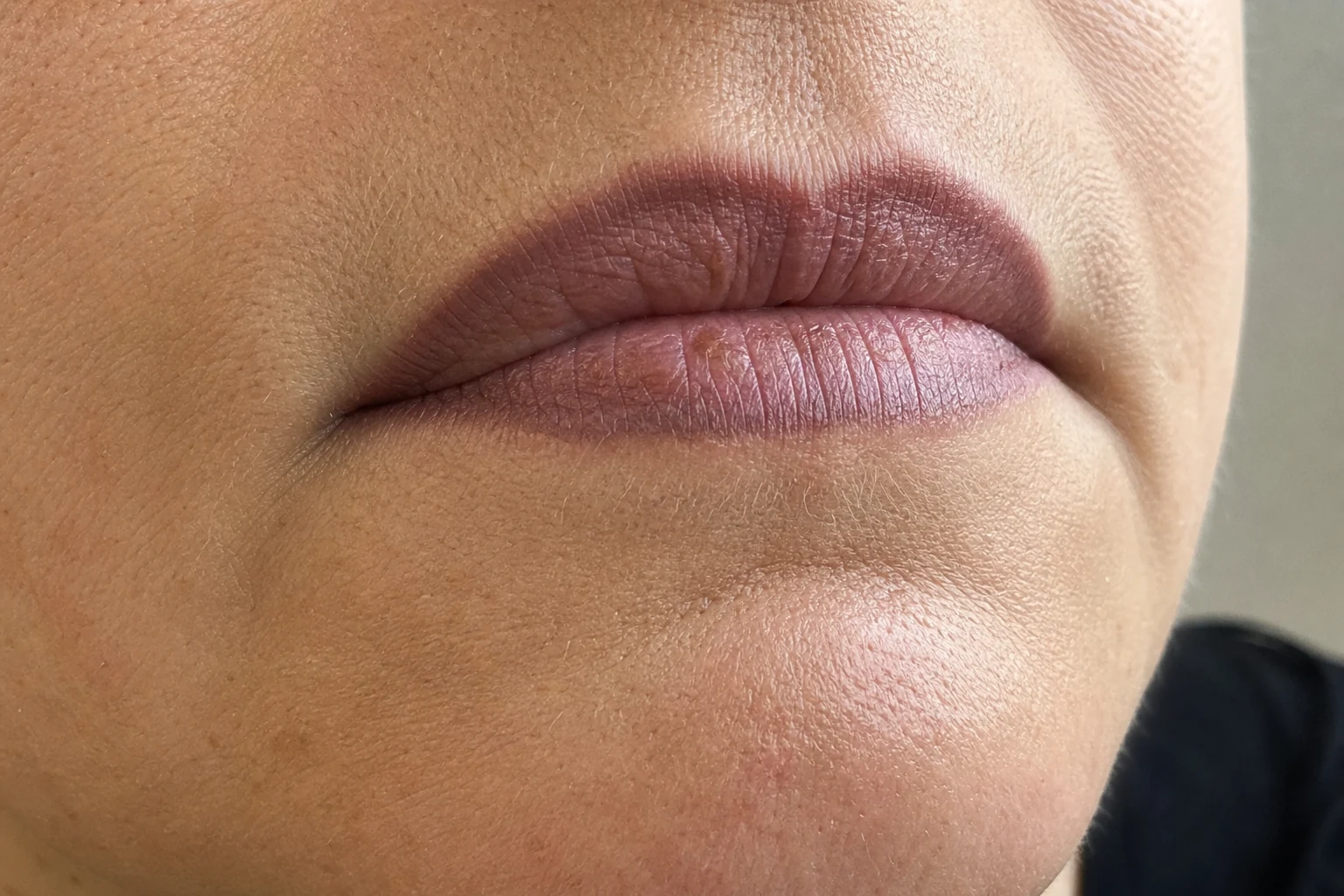 A lip-blush cosmetic tattoo.
Saline vs laser for pre-redo lightening
For clearing unwanted cosmetic pigment generally, laser is the primary method. Laser tattoo removal uses short, high-intensity light pulses to fragment pigment particles so the body's immune system can gradually clear them. It's well-documented, and dermatology bodies including the American Academy of Dermatology and Cleveland Clinic describe it as the standard approach; the mechanism is covered in depth in StatPearls' laser tattoo removal reference.
For a pre-redo lightening specifically, though, saline removal is frequently preferred. Saline removal is a non-laser method in which a saline or lifting solution is tattooed into the skin to draw pigment up and out through the natural scabbing process. It fades gradually and controllably — useful when your target is "pale enough to work over," not "gone" — and it sidesteps the biggest risk of lasering cosmetic pigment.
That risk has a name and it's the reason this article carries a warning. Paradoxical darkening is when a cosmetic pigment turns grey, brown or black after a laser pulse instead of fading, because heat chemically reduces the iron oxides and titanium dioxide in it. The U.S. FDA's guidance on tattoos and permanent makeup flags that permanent-makeup pigments can react unpredictably to removal. If you or your provider choose laser, two rules are non-negotiable: demand a test patch on your actual pigment a few weeks ahead to see how it reacts, and use a clinician with cosmetic-pigment experience. Darkened pigment can often be lightened again — but you never want that surprise across a whole brow.
This is general information, not medical advice. Lightening and removal outcomes and risks depend on your skin, your pigment and your health — consult a licensed, experienced provider, and never assume a guaranteed result.
How much fading is "enough" — and why you ask the new artist first
This is the step people skip, and it costs them sessions. There is no universal amount of fading required before new PMU — the base a redo needs is set by the artist who'll do it. Some artists are comfortable working over lightly faded pigment; others want it nearly invisible. If you fade to your idea of "enough" and then find an artist who needs it paler, you're back for more removal.
So the sequence is: choose (or at least consult) your redo artist first, ask what base they need to achieve a clean result, and then plan the lightening to that target. It also sets honest expectations about the finish. New PMU laid over incompletely-removed old pigment can look muddy, because you're seeing the residual shadow and the new colour together. A little leftover pigment can tint the new brow warmer, greyer or darker than the swatch suggests. A good artist will judge the healed, lightened skin in person before committing — and may ask for one more fading session rather than build over a base that isn't ready.
Timing: heal fully between removal and the redo
Rushing is how a good plan goes wrong. Lightening runs across multiple sessions spaced roughly 6–8 weeks apart (as of July 2026) so the skin recovers between treatments, and the new PMU only goes in after the lightening is done and the area has fully healed — typically weeks to months later, not days. Tattooing fresh pigment into skin that's still inflamed or repairing risks patchy retention and a poorer result, undoing the point of the redo.
The upside of the slow path is control. Fading gradually lets you and both providers judge, session by session, when the base is pale enough — and lets the redo artist work on settled, predictable skin. Your removal provider and your PMU artist should ideally agree on the timeline together, so nobody tattoos too soon.
Compare specialists near you — calmly
The right route is problem-specific, so the clinic is too. Compare clinics offering PMU lightening and removal near you — filter by laser, saline, or picosecond and find providers who actually do the pre-redo work, not just original artistry. Many list a free consultation: 1,525 of the clinics in our directory (27%) advertise one (as of July 2026), which makes it cheaper to get a neutral second opinion — and to ask a prospective redo artist what base they need — before you commit to any sessions. In a dense market like Melbourne, you can compare a wide range of lightening and PMU providers side by side.
You don't have to erase your brows to improve them. Get the fading target from your redo artist, choose the gentler method where it fits, give the skin time to heal, and let a specialist judge when the canvas is ready. Most redos land in a better place than the old work — when the base is right first.
Frequently asked questions
Do I need to remove old permanent makeup before getting new PMU?
Often you only need to lighten it, not fully remove it. Many PMU artists require existing work to be faded first because they can't cleanly cover dark, old or shifted pigment — new colour laid over it can look muddy. How much fading is "enough" is artist-dependent, so ask your intended new artist what they need before you book any removal sessions.
What's the difference between partial lightening and full removal for a PMU redo?
Partial lightening is fading existing pigment enough that a new artist can work over it cleanly — you keep some old pigment, it takes fewer sessions. Full removal clears the pigment completely so the redo starts on a blank canvas. For a redo you usually want lightening; full removal is for when you don't want any new PMU, or the old work is too dark or badly placed to build on.
Is saline or laser better for lightening PMU before a redo?
Saline (non-laser lifting) is often preferred for pre-redo lightening because it fades gradually in a controlled way and avoids the paradoxical-darkening risk that laser carries on iron-oxide cosmetic pigments. Laser is faster and clears more pigment but needs a test patch first. The right choice depends on your pigment, its colour and depth — a specialist should assess it in person.
Can lasering my eyebrow tattoo turn it darker?
Yes — this is paradoxical darkening. Cosmetic pigments in brows, eyeliner and lips often contain iron oxide and titanium dioxide, which can chemically change under laser heat and turn grey, brown or black instead of fading. It's documented, and it's exactly why a test patch on your actual pigment is essential before treating the whole brow.
How much do I need to fade my brows before new PMU?
There's no universal number — it's set by the artist doing your redo. Some can work over lightly faded pigment; others want it almost gone. Residual shadow left in the skin can still tint or muddy the new colour, so the honest answer is: ask your new artist how faded they need it, and let them judge the skin before committing to the new work.
How long should I wait between removal and new permanent makeup?
Let the skin heal fully first — typically weeks to months, not days. Lightening runs across multiple sessions spaced roughly 6–8 weeks apart, and the new PMU only goes in once the area has settled. Rushing new pigment into skin that hasn't recovered risks a poorer, patchier result. Your removal and PMU providers should agree on the timing.
Will new PMU cover the old work completely?
Not always cleanly. New pigment laid over incompletely-removed old pigment can look muddy or read as a shadow, because you're seeing two layers at once. That's the whole reason artists ask you to lighten first. Set the expectation that residual old pigment can affect the new colour and shape, and let the artist decide when the canvas is ready.
Is it normal to want to redo PMU rather than fully remove it?
Very. Most people who search this don't hate their brows — they want a better shape, a fresher colour, or a modern technique over faded old work. Wanting to lighten and rebuild rather than erase entirely is a common, reasonable goal. The key is getting the fading right first so the redo has a clean-enough base to work on.
Related guides
Related Guides
- Cosmetic & PMU
Why Permanent Makeup Fades (and Turns Orange or Grey) (2026)
Why permanent makeup fades and shifts colour, explained neutrally: shallow pigment placement, iron-oxide oxidation, sun exposure and skin turnover, why warm browns…
- Cosmetic & PMU
Removing Old or Faded Permanent Makeup
How to remove old or faded permanent makeup, explained neutrally: why aged PMU turns orange, grey or dark, the paradoxical-darkening trap, saline vs laser, sessions…
- Cosmetic & PMU
Powder & Ombré Brow Removal: What to Expect (2026)
Powder and ombré brow removal, explained neutrally: why shaded brows are harder to remove than microblading, the paradoxical-darkening warning, saline vs laser…