The R20 Method & Accelerated Tattoo Removal
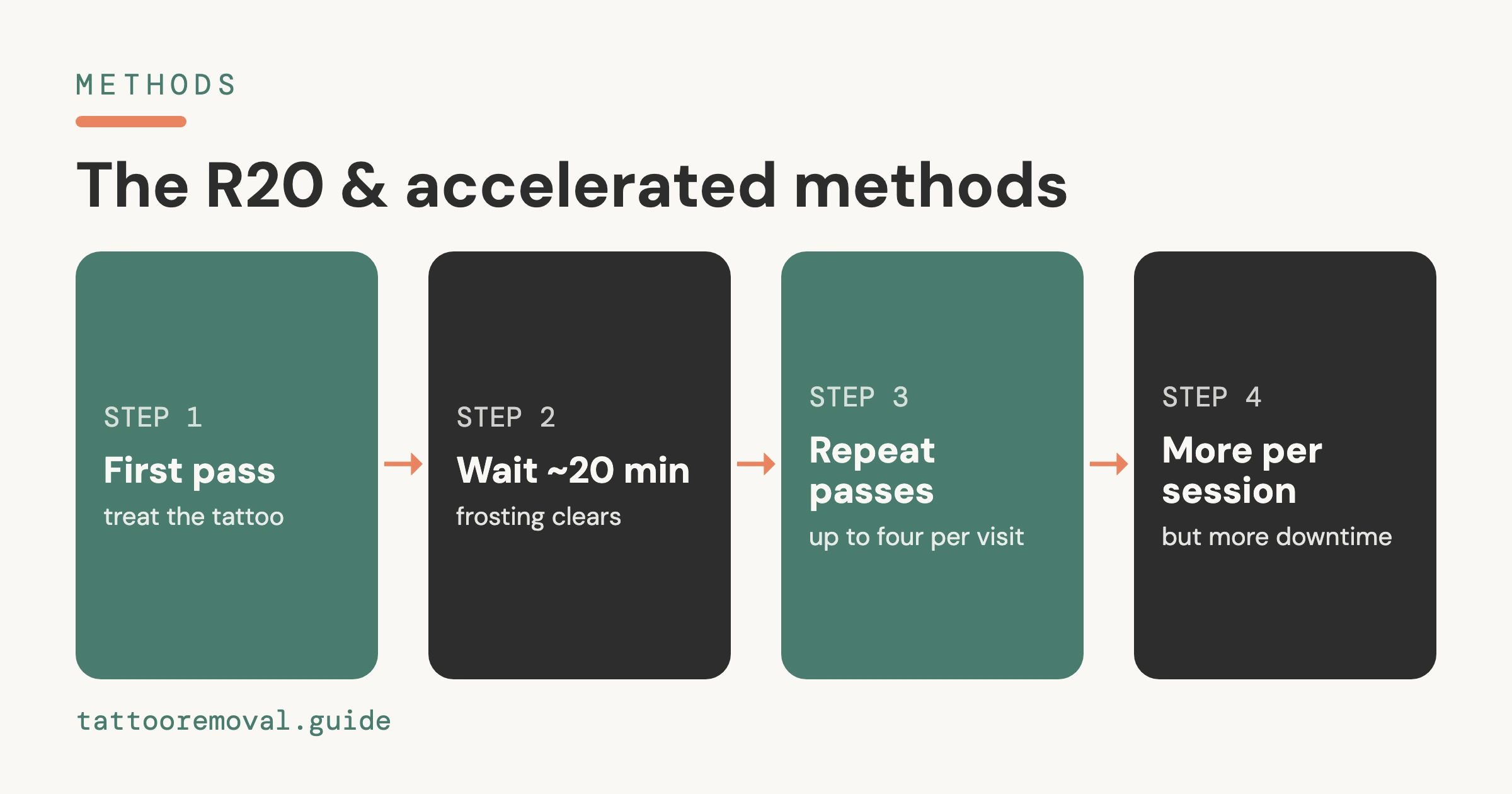
The R20 method is a tattoo-removal protocol that delivers about four laser passes in a single visit, roughly 20 minutes apart, waiting for the laser-induced skin whitening to fade between passes so the next pass can reach the ink beneath. The theory is that clearing more ink per visit could mean fewer total visits. The honest reality: the evidence is small and mixed, it isn't offered everywhere, and it doesn't remove the weeks-long wait between full sessions.
If you're impatient to see a tattoo gone — and most people are — "get more done in one appointment" is an appealing pitch. This guide explains what the R20 method and the related perfluorodecalin (PFD) patch technique actually are, the theory behind stacking passes, what the research does and doesn't show, and why the standard single-pass session spaced 6–8 weeks apart is still the norm. Figures from the Tattoo Removal Guide directory are stamped (as of July 2026).
Key Takeaways
- The R20 method stacks ~4 laser passes in one visit, ~20 minutes apart, waiting for the whitening (frosting) to clear between each pass.
- PFD/perfluorodecalin patches clear that frosting fast, so passes can be stacked with little or no waiting — sometimes called the R0 method.
- The theory is more ink per visit, potentially fewer visits — but the evidence is limited and mixed, and more passes can mean more swelling and downtime.
- It does not erase the 6–8 week clearing window between full sessions; your immune system still needs weeks to remove the shattered ink.
- It's a clinician's call, never DIY. Availability is patchy across the 5,700 clinics we track across 1,043 cities (as of July 2026) — ask at a consultation.
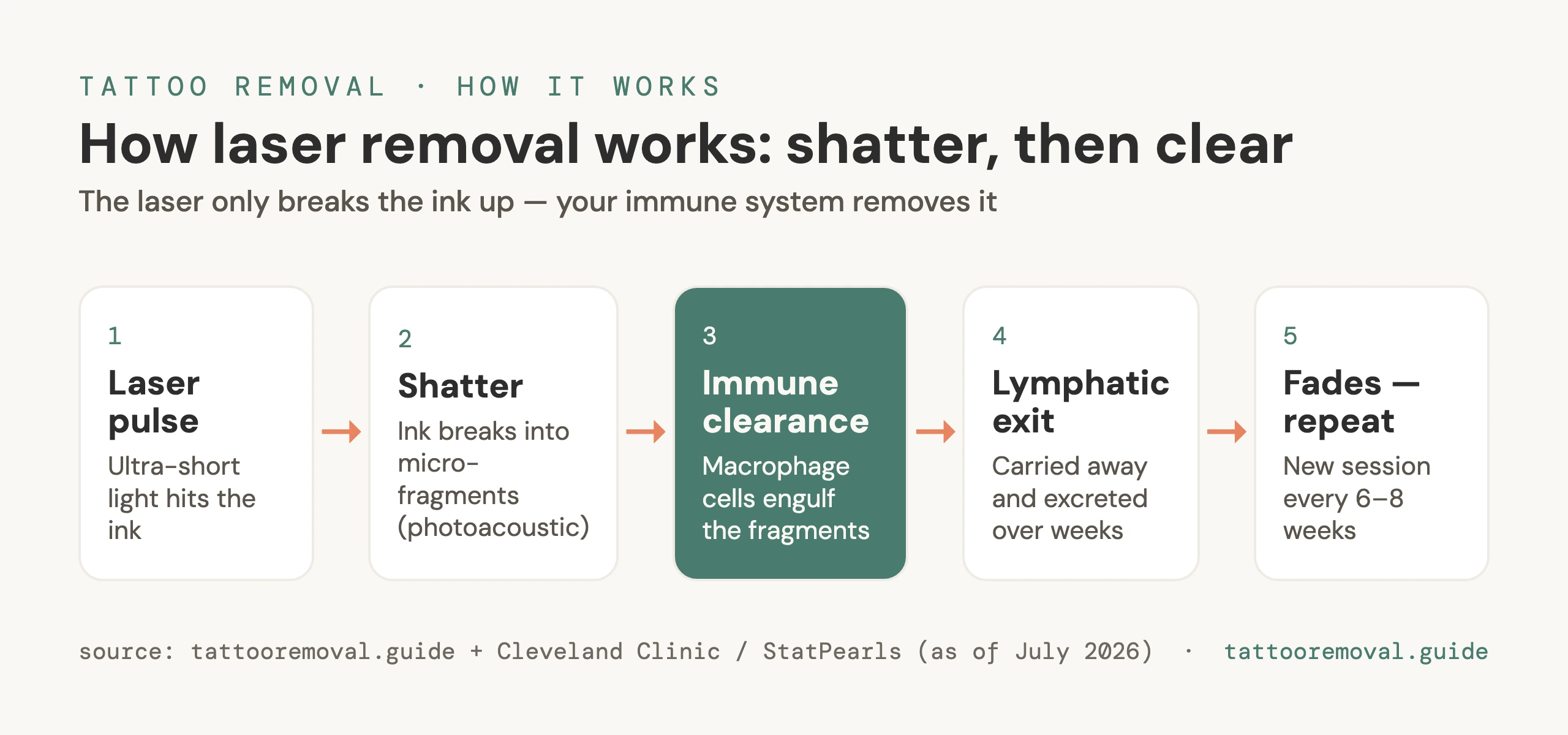 R20 stacks passes once the frosting clears — evidence is limited.
What is the R20 method?
The R20 method is a laser tattoo-removal protocol in which a clinician performs roughly four passes over the same tattoo within a single appointment, spaced about 20 minutes apart, allowing the treatment-induced skin whitening to fade before each subsequent pass. The "R20" name comes from that ~20-minute rest interval.
Here's why the waiting matters. When a Q-switched or picosecond laser fires, it doesn't just shatter ink — it also produces tiny gas bubbles in the upper skin, which show up as an immediate whitish "frosting." As the StatPearls clinical reference on laser tattoo removal explains, that whitening scatters and blocks the laser light, so firing a second pass straight away wastes energy on the froth rather than the pigment underneath. The R20 method waits for those bubbles to reabsorb — about 20 minutes — before the next pass, so each pass can actually reach the ink.
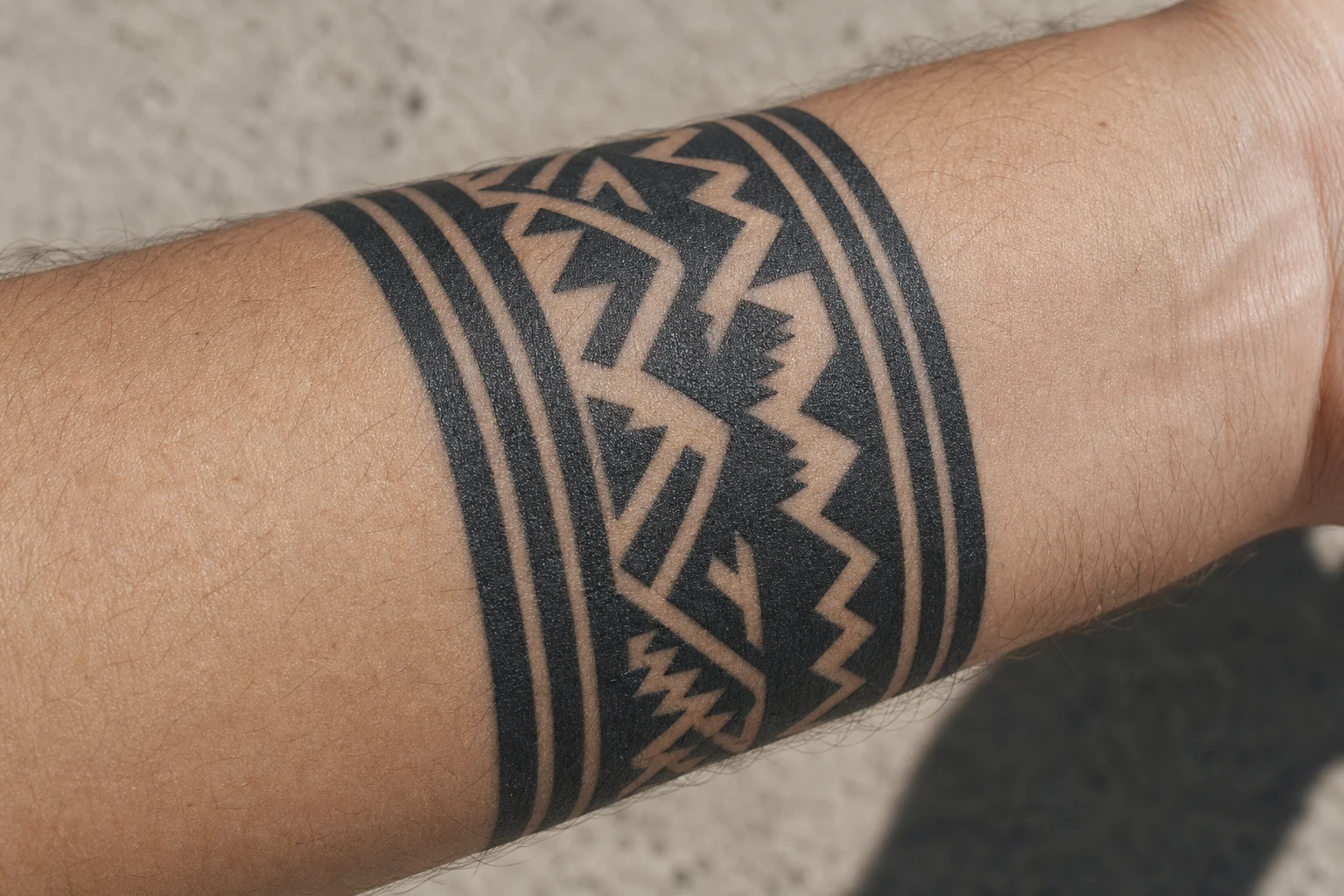 Dense black ink — the easiest colour to clear.
The PFD (perfluorodecalin) patch and the "R0" idea
The obvious drawback of R20 is time: four passes with 20-minute gaps stretches one appointment across an hour or more. That's the problem perfluorodecalin (PFD) was introduced to solve.
Perfluorodecalin is a clear, inert topical compound — usually applied as a patch or film to the skin — that clears the laser-induced whitening almost instantly rather than over ~20 minutes. With the frosting gone in seconds, a clinician can deliver several passes back-to-back in one sitting. Because the delay between passes drops close to zero, this rapid-stacking approach is sometimes called the R0 method (versus the ~20 minutes in R20). PFD also has the practical benefit of reducing that immediate whitening, letting the operator see the tattoo more clearly between passes.
The important framing: PFD and R0 change what happens within a single visit. They're an equipment-and-technique choice a clinic makes — not a product you apply yourself, and not a guarantee of a faster overall result.
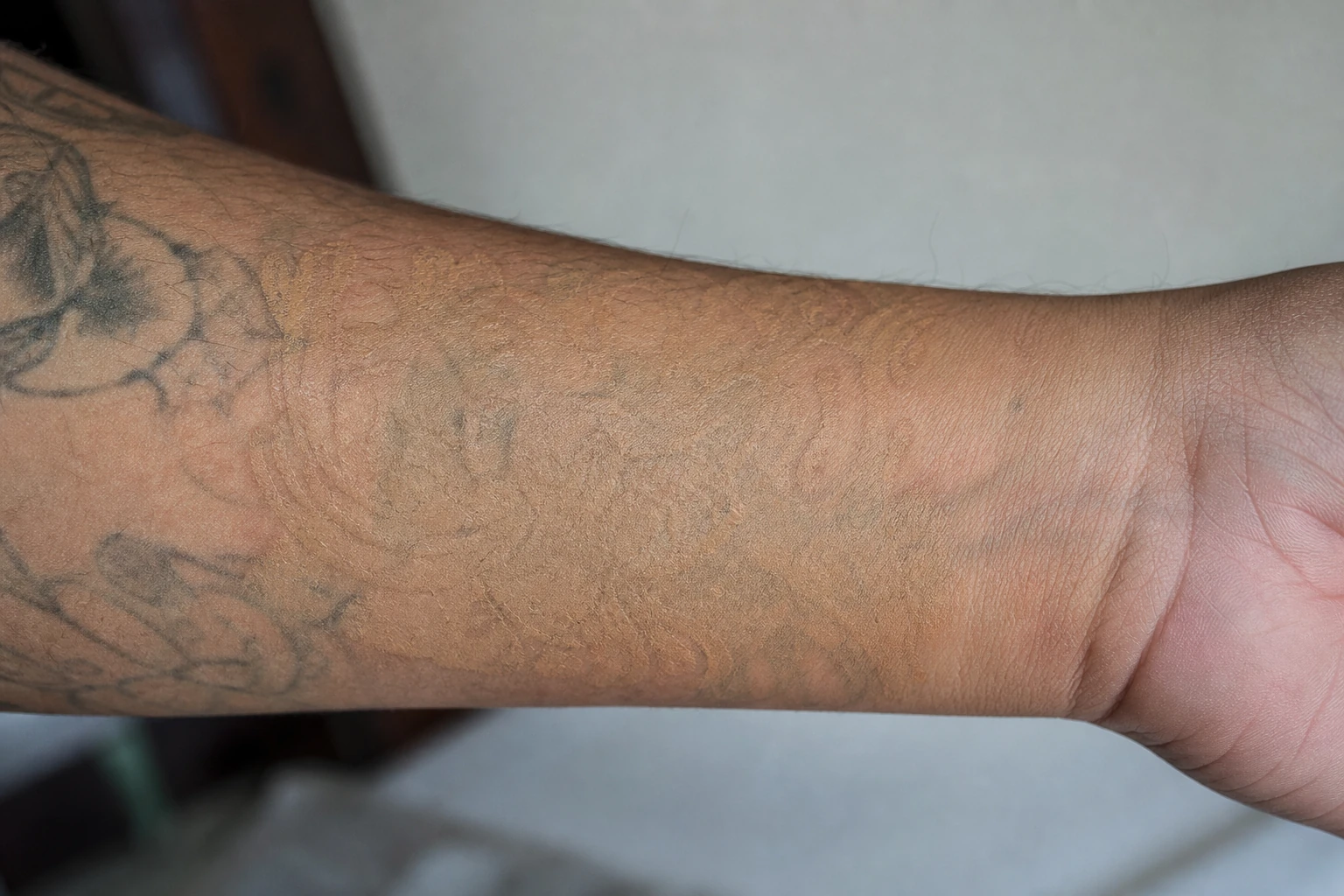 Flesh-toned cover ink can be unpredictable to remove.
The theory vs. the honest evidence
The appeal is straightforward: if each visit clears more ink, you might need fewer visits overall. Some small studies of multi-pass protocols have reported greater ink clearance per session than a single pass. But it's worth being clear-eyed about what that does and doesn't mean:
- The research is limited and mixed. These are generally small studies, and results vary; multi-pass removal is not a settled, universally adopted standard.
- More passes can mean more reaction. Delivering more laser energy in one sitting can increase swelling, redness, blistering, and downtime. The Cleveland Clinic notes that laser removal can cause blistering, swelling, and temporary changes in skin colour — and stacking passes can amplify those effects, so the trade-off is real.
- It doesn't remove a tattoo in one visit. No protocol does. Even an accelerated visit is one visit in a multi-session course.
- It doesn't shrink the between-session wait. After any session — single-pass or multi-pass — your immune system still needs weeks to carry the shattered ink away, which is why the 6–8 week clearing window still applies.
The American Academy of Dermatology's guidance on tattoos and skin care underlines that removal is a medical procedure with genuine skin risks — which is why "more aggressive in one visit" is a clinical decision weighed against your skin's tolerance, not a consumer speed setting.
Standard vs. R20 vs. PFD-assisted: how they compare
The table below compares the three approaches. Treat every cell as a general estimate — your provider decides what suits your skin, tattoo, and their equipment, and none of this guarantees an outcome or a session count.
| Standard single-pass | R20 method | PFD-assisted (R0) | |
|---|---|---|---|
| Passes per visit | One | ~4, ~20 min apart | Several, back-to-back |
| Visit length | Minutes | Often an hour or more | Shorter than R20 |
| Evidence base | Well established, the norm | Small, mixed studies | Small, mixed studies |
| Downtime / reaction | Baseline | Can be higher (more energy per visit) | Can be higher (more energy per visit) |
| Between-session wait | ~6–8 weeks | Still ~6–8 weeks | Still ~6–8 weeks |
| Availability | Nearly universal | Uncommon; clinic-dependent | Uncommon; clinic-dependent |
The pattern to notice: accelerated protocols may change the within-visit work, but they sit inside the same multi-month course as standard treatment. They're a possible optimisation for the right person and skin — not a different, faster category of removal.
This is general information, not medical advice. Laser tattoo removal is a medical procedure with real risks including blistering, scarring, and pigment change. Whether a multi-pass protocol suits you, how many sessions you'll need, and your results all vary by person, ink, and skin — consult a licensed provider about your specific situation and follow their schedule.
Who might consider an accelerated protocol?
Because the evidence is limited and the extra reaction is real, multi-pass removal isn't a default — it's a conversation to have with a clinic that offers it. It may come up for people who want to compress the number of visits and whose skin can tolerate more energy per session, as judged by a qualified provider. It's more likely to be considered cautiously — or avoided — for:
- Darker skin tones, which are more prone to pigment change after laser treatment and often treated more conservatively.
- Delicate or slow-healing areas like ankles, feet, and hands.
- Anyone still healing from a previous session, or with a history of scarring.
Whatever your situation, the safe move is the same: ask about it as a question, not a plan. If a clinic offers R20 or PFD-assisted removal, ask how many passes they use, what downtime to expect, and why they think it suits your tattoo and skin. And never try to imitate it by booking ordinary sessions closer together — that's the session-spacing mistake that raises blistering and scarring risk without speeding anything up.
Why standard spacing is still the norm
For most people at most clinics, the standard remains a single pass per session, spaced 6–8 weeks apart, over a course of several sessions. As the FDA's fact sheet on tattoos and permanent makeup notes, complete removal can be difficult and takes multiple treatments — and how many depends on ink colour, density, age, body location, and skin type.
That's the honest bottom line on accelerated removal. It's a legitimate area of technique, potentially useful in the right hands, but it isn't a guaranteed shortcut, it isn't offered everywhere, and it doesn't rewrite the biology of the clearing window. No responsible clinic guarantees a session count or a finish date — with or without multi-pass protocols. If a provider promises "done in two visits with R20," treat it as a red flag rather than a selling point.
Compare clinics and ask the right questions
The best way to find out whether an accelerated protocol is even on the table near you — and whether it's right for your tattoo — is to compare providers and ask each one directly.
Compare tattoo-removal clinics in your city to see who's near you, or start with a dense market like tattoo removal in Melbourne to see how services stack up side by side. To understand the full course these sessions add up to, read our pillar on how long tattoo removal takes, and get the between-sessions logic straight with our guide to the 6–8 week clearing window.
Frequently asked questions
What is the R20 method for tattoo removal?
The R20 method is a protocol that delivers roughly four laser passes over the same tattoo in a single visit, with about 20 minutes between each pass. The wait lets the whitish "frosting" the laser causes fade, so the next pass can reach the ink underneath. The theory is that clearing more ink per visit could reduce the total number of visits, but the evidence is limited and it is not offered at most clinics.
Does the R20 method actually work faster?
Some small studies suggest multi-pass sessions can clear more ink per visit than a single pass, but the research is limited and mixed, and no method removes a tattoo in one sitting. Stacking passes doesn't change the 6–8 week clearing window between sessions — your immune system still needs weeks to carry the shattered ink away. Whether it's suitable is a clinical judgement your provider makes, not a guaranteed shortcut.
What is perfluorodecalin (PFD) in tattoo removal?
Perfluorodecalin (PFD) is a clear topical compound applied to the skin, often as a patch, that clears the laser-induced whitening almost immediately. Because the frosting fades in seconds rather than ~20 minutes, a clinician can deliver several passes in one appointment without the long waits the R20 method requires. It's an equipment-and-technique choice made by the clinic, not something you can request as a fixed outcome.
Is accelerated tattoo removal safe?
More passes in one visit can mean more heat delivered to the skin, which may increase swelling, redness, blistering, and downtime compared with a standard single-pass session. Laser tattoo removal is a medical procedure with real risks including scarring and pigment change. Any multi-pass protocol should be assessed and run by a qualified provider on your specific skin and tattoo — it is never a DIY approach.
What is the R0 method?
The R0 method refers to using a rapid frosting-clearing agent — typically a PFD patch — so laser passes can be stacked back-to-back with little or no waiting between them (the "0" meaning essentially zero delay, versus the ~20 minutes in R20). Like R20, it aims to fit more passes into one visit; it does not remove the need for weeks of healing and immune clearance between full sessions.
Does the R20 method mean fewer total sessions?
Possibly, but there's no guarantee. The idea is that clearing more ink per visit could shorten the overall course, and some studies point that way, but results depend on ink colour, density, depth, age, location, and skin type. No responsible clinic will promise a specific session count or finish date, with or without a multi-pass protocol — a consultation and test patch give the most realistic estimate.
Can I do multiple laser passes on myself at home?
No. Multi-pass protocols like R20 and PFD-assisted removal are clinical procedures that require professional-grade lasers, eye protection, and a trained operator judging how much energy your skin can safely take. Attempting extra passes yourself, or booking standard sessions closer together to imitate it, raises the risk of burns, scarring, and lasting pigment change. Always work with a licensed provider.
Related guides
Related Guides
- How It Works
What Is a Q-Switched Laser for Tattoo Removal? (2026)
A Q-switched laser fires nanosecond pulses to shatter tattoo ink. Here's how Q-switched Nd:YAG, ruby and alexandrite lasers work, and why they're still a gold…
- How It Works
What Is a Picosecond Laser for Tattoo Removal? (2026)
What is a picosecond laser? It fires in trillionths of a second to shatter tattoo ink. How it works, the colours it helps, and why it's not always better.
- How It Works
What Affects How Fast a Tattoo Fades? 8 Factors in Removal Speed
What affects tattoo removal speed? Ink colour, depth, age, body location, skin type, your health, smoking, and cover-ups all matter.