Planning a Tattoo Removal Course
22 guides · updated 26 Aug 2026Laser tattoo removal is a course, not an appointment, and most of the disappointment people report comes from planning it like the latter. A typical course runs eight to twelve sessions spaced six to eight weeks apart, which is twelve to eighteen months of calendar time before you are looking at bare skin. That spacing is not a scheduling convenience the clinic invented — it is the clearing window your immune system needs to carry away the ink the last session shattered. Going back sooner does not speed the result; it just treats skin that has not finished the previous round.
Two planning decisions genuinely change your experience. The first is when you start. Treated skin is sun-sensitive for weeks, so beginning in your hemisphere’s cooler months puts the most vulnerable early sessions well away from peak UV — which means opposite months in Australia and New Zealand versus the UK, US and Canada, a distinction most timing advice on the internet quietly gets wrong for half its readers. The second is the consultation. A good one sends you home with two numbers, an estimated session count and a per-session price, plus a patch test. If you leave with neither, you have had a sales conversation rather than a clinical one.
If you are working out whether to book now or wait, “Book the Consult Now or Wait?” does the arithmetic: delaying does not slow removal down, it moves your finish date by exactly the amount you waited. “What to Expect at Your Tattoo Removal Consultation” lists the questions that get you a real quote. And if you are mid-course and progress has plateaued around session four or five, “Pushing Through the Stubborn Middle vs Pausing Your Removal Course” covers when a pause is clinically sensible and when a plateau simply means keep going.

Best Time of Year for Tattoo Removal: It Depends on Your Hemisphere
Full removal takes 8–12 sessions over nearly a year, and treated skin is sun-sensitive. Why starting in your hemisphere's cooler months makes the course easier.
By TRG Editorial Team · Reviewed by Alex Pizarro · Updated 26 Aug 2026
Book the Consult Now or Wait? What the Clearing Window Does to Your
Delaying your tattoo removal consult pushes your finish date further than you'd think. The clearing-window math, real city pricing, and what to ask now.
By TRG Editorial Team · Reviewed by Alex Pizarro · Updated 3 Jul 2026
Colour tattoos vs black and grey — does it matter for removal?
The colour and composition of your tattoo significantly affects how many sessions you might need and which clinics are best equipped to treat it. Here's what you need to know before comparing clinics.
By TRG Editorial Team · Reviewed by Alex Pizarro · Updated 7 May 2026
Consistent 6–8 Week Spacing vs Rushing Your Tattoo Removal Sessions
Rushing tattoo removal sessions or leaving long gaps both cost you money and time. What the 6–8 week clearing window protects — and when a gap is fine.
By TRG Editorial Team · Reviewed by Alex Pizarro · Updated 4 Jul 2026
Fading a Tattoo Before a Cover-Up: A Timing Guide
Cover-ups often need only 3–5 fading sessions, not the 8–12 for full removal. Here's how to plan the timeline and keep your artist and clinic aligned.
By TRG Editorial Team · Reviewed by Alex Pizarro · Updated 4 Jul 2026
How Cleared Will I Really Be by Summer If I Start Now?
Starting tattoo removal now won't mean clear skin by summer. Here's the real session math, what 2–4 sessions looks like, and when you'll actually be done.
By TRG Editorial Team · Reviewed by Alex Pizarro · Updated 3 Jul 2026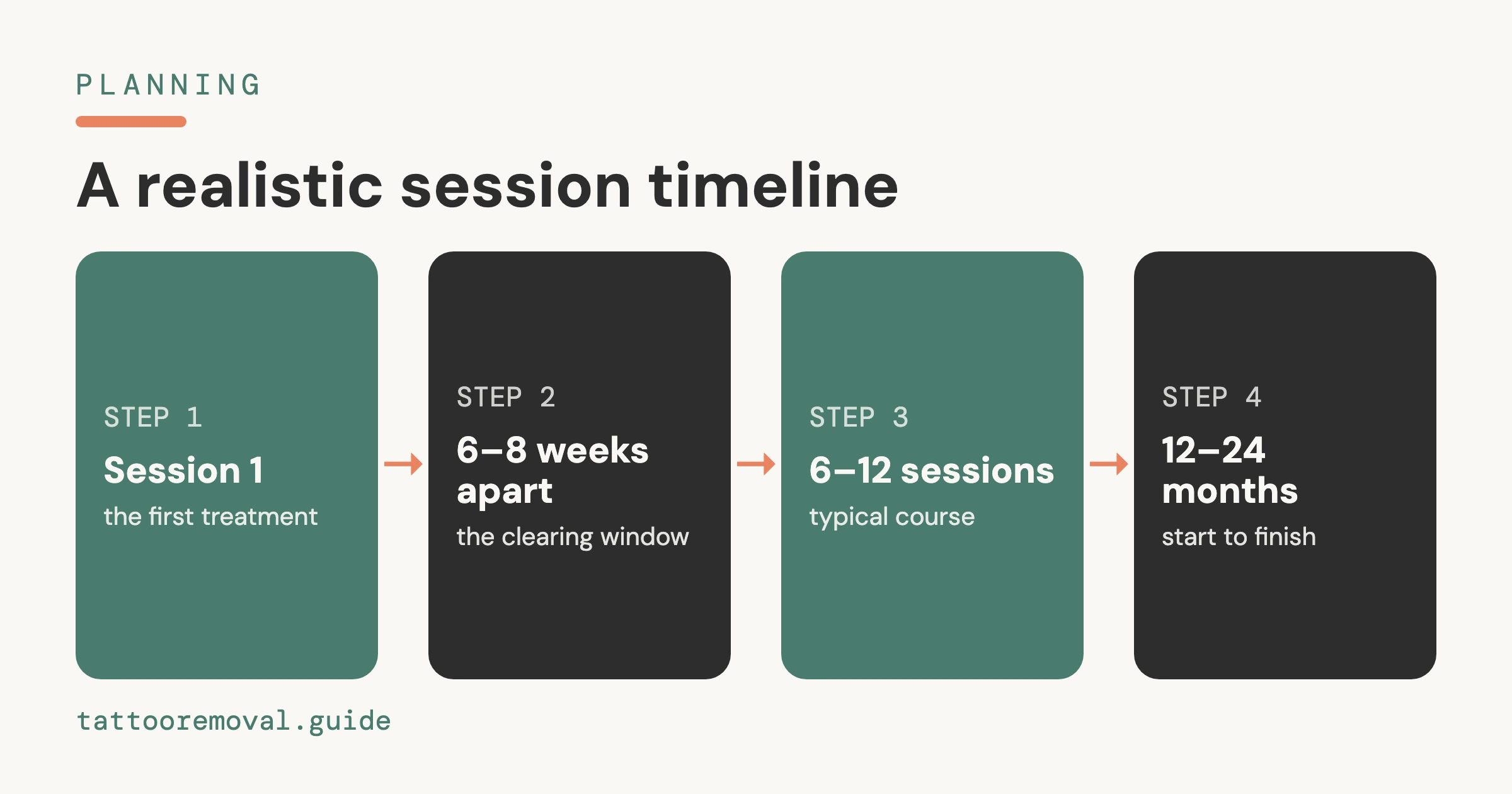
How Long Does Tattoo Removal Actually Take? A Directory-Wide Timeline
A typical tattoo removal course runs 8–12 sessions over 12–18 months. What drives that number, where it compresses, and what it costs by city.
By TRG Editorial Team · Reviewed by Alex Pizarro · Updated 3 Jul 2026
Is It Too Late to Start Tattoo Removal This Year?
Starting tattoo removal in spring or summer isn't too late — but full clearance takes years, not months. The real math on what's achievable from here.
By TRG Editorial Team · Reviewed by Alex Pizarro · Updated 3 Jul 2026
Is laser tattoo removal right for me?
Laser tattoo removal works well for most people — but it's worth understanding who benefits most, when to be cautious, and how to set realistic expectations before committing.
By TRG Editorial Team · Reviewed by Alex Pizarro · Updated 7 May 2026
New Year, Real Plan: What Tattoo Removal Actually Takes (and the
A realistic tattoo removal timeline: why 8–12 sessions means 12–18 months, what drives your specific count, and the true cost across a full course.
By TRG Editorial Team · Reviewed by Alex Pizarro · Updated 3 Jul 2026
Pushing Through the Stubborn Middle vs Pausing Your Removal Course
Fading plateaus around session 4–5 for a reason. When pausing your removal course is medically sound, and when a plateau just means keep going.
By TRG Editorial Team · Reviewed by Alex Pizarro · Updated 4 Jul 2026
Removal Season Is Winter in the South and a Sun-Care Test in the North
Tattoo removal season looks opposite by hemisphere: winter is the easy start in Australia and NZ; summer in the UK, US and Canada means active sun care.
By TRG Editorial Team · Reviewed by Alex Pizarro · Updated 4 Jul 2026
Removing Old and Already-Faded Tattoos: Is It Easier?
Old tattoos often need fewer sessions to clear, but the ink that's left behind can be the most stubborn part. Here's what really determines your timeline.
By TRG Editorial Team · Reviewed by Alex Pizarro · Updated 4 Jul 2026
Staying Consistent: Why the 6–8 Week Gap Between Sessions Matters
The 6–8 week gap between tattoo removal sessions isn't a scheduling suggestion — it's the biology. What going too soon or too late actually costs you.
By TRG Editorial Team · Reviewed by Alex Pizarro · Updated 4 Jul 2026
The 7 Questions to Ask Before You Pay for a Single Tattoo Removal
Seven questions to ask before booking tattoo removal — the right laser, real total cost, and the red flags that mean you should walk away.
By TRG Editorial Team · Reviewed by Alex Pizarro · Updated 3 Jul 2026
The Seasonal Start Clock: How Cleared You'll Be by Summer
When to start tattoo removal by hemisphere: how the seasons set your ideal start month north and south, so treated skin heals away from peak summer sun.
By TRG Editorial Team · Reviewed by Alex Pizarro · Updated 4 Jul 2026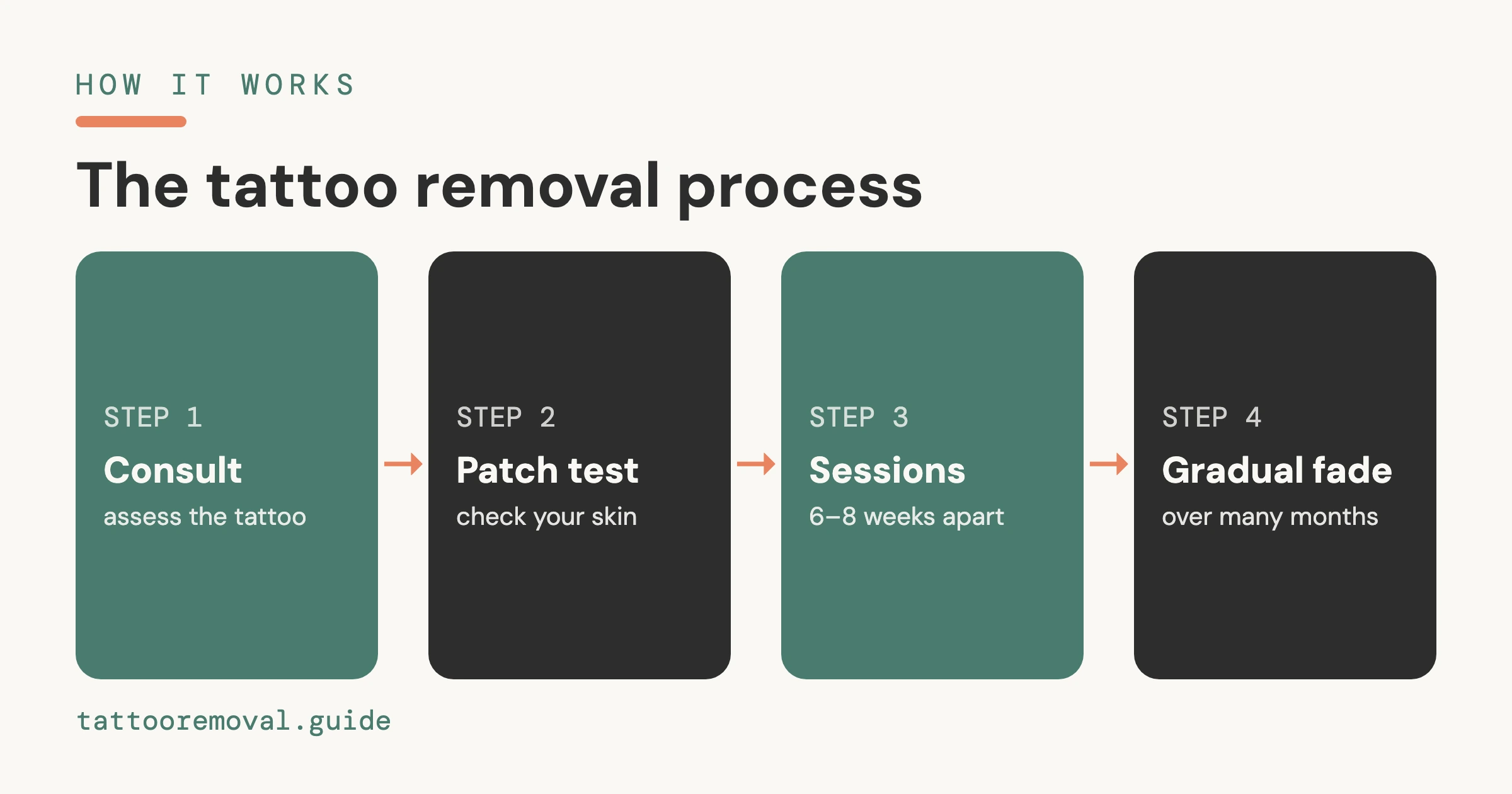
Understanding the laser tattoo removal process
How laser tattoo removal actually works: why it takes several sessions, what your body does between visits, and what influences your final results.
By TRG Editorial Team · Reviewed by Alex Pizarro · Updated 14 Apr 2026
What to ask before booking a consultation
Go into your consultation prepared: the questions that reveal whether a clinic is the right fit for your tattoo, your goal, and your budget.
By TRG Editorial Team · Reviewed by Alex Pizarro · Updated 14 Apr 2026
What to Expect at Your Tattoo Removal Consultation
A good consultation gives you two numbers: how many sessions, and a per-session price. Here's the walkthrough, and the questions that get you a real quote.
By TRG Editorial Team · Reviewed by Alex Pizarro · Updated 4 Jul 2026
What to Realistically Expect from Tattoo Removal (A First-Timer's
The honest first-timer's guide to tattoo removal: what the pain actually feels like, real scarring risk, how fading progresses, and the true timeline.
By TRG Editorial Team · Reviewed by Alex Pizarro · Updated 3 Jul 2026
When to Start Tattoo Removal for YOUR Summer (North or South)
Why April is a hard deadline in the north and an ideal start in the south — the session math behind planning tattoo removal around your summer.
By TRG Editorial Team · Reviewed by Alex Pizarro · Updated 4 Jul 2026
Why You Can't Rush Tattoo Removal (and Why Every Extra Session in
Why rushing tattoo removal sessions backfires: the 6–8 week clearing window explained, the real cost of shortened gaps, and when starting in January helps.
By TRG Editorial Team · Reviewed by Alex Pizarro · Updated 3 Jul 2026