Removing Old and Already-Faded Tattoos: Is It Easier?
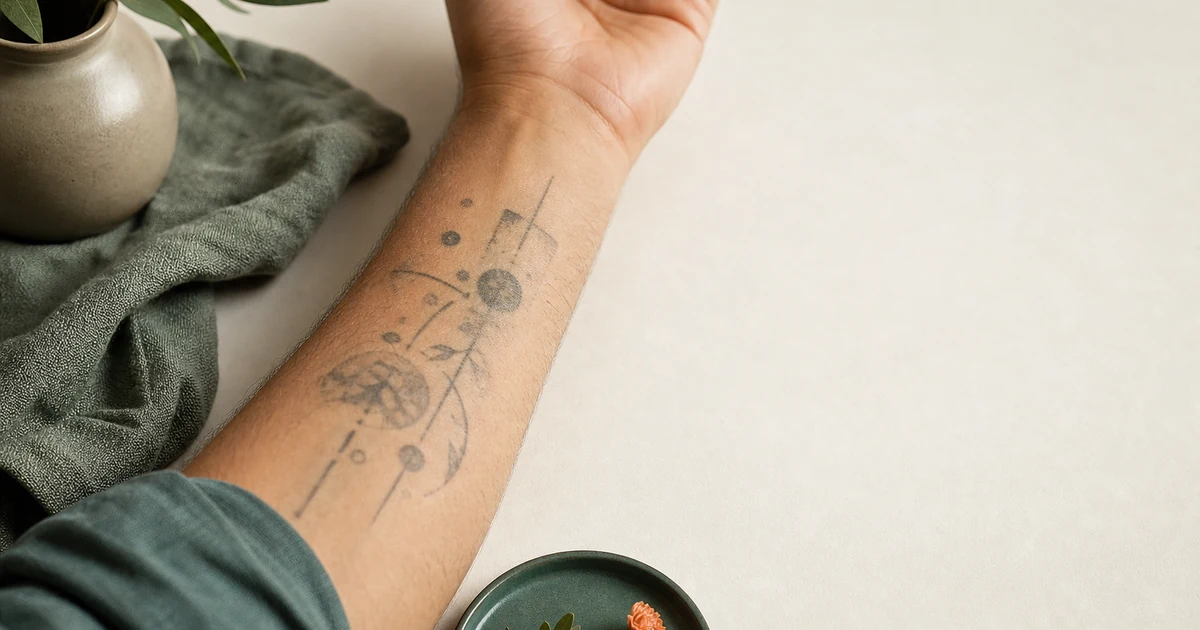
You've had the tattoo for fifteen years. It's gone soft, the black has turned blue-grey, and you assume that means it's halfway out the door already. That's a fair guess — and it's only half right. Age helps in some ways and gets in your way in others, so the honest answer is "sometimes, and not for the reason most people think."
Why an old tattoo is often easier to remove
Your immune system has been working on that ink since the day it went in. White blood cells slowly carry away the smallest pigment particles, which is why old tattoos look faded and blurry compared to a crisp new one. Less ink in the skin means fewer particles the laser has to shatter, and that can mean fewer sessions.
Old amateur tattoos — the ones done with a single needle and shallow ink — tend to respond especially well. The ink sits closer to the surface and there's less of it. A faded stick-and-poke can clear faster than a dense, professional piece that's only two years old.
So the headline is true in one direction: an old, lightly-faded tattoo usually has a head start on a fresh, saturated one.
Where age stops helping
The catch is what's left behind. The pigment your immune system couldn't clear over a decade is, almost by definition, the stubborn stuff — deeper particles, denser clusters, and colours the body struggles to break down. The easy ink is already gone. What remains can be the hardest part of the job.
A few things slow an old tattoo down regardless of its age:
- Colour. Black and dark blue absorb laser light well and clear most predictably. Greens, light blues, and some yellows are harder, and they don't get easier just because the tattoo is old.
- Scarring. Older work, especially amateur or heavily reworked pieces, can sit on scar tissue that changes how the skin responds.
- Layering and cover-ups. A tattoo that's been worked over twice holds far more ink than it looks like it does on the surface.
Fading you can see is not the same as fading at the depth the laser has to reach. The surface can look ghostly while a stubborn layer waits underneath.
So how many sessions will it actually take?
Most tattoos take 8 to 12 sessions to clear, spaced about 6 to 8 weeks apart — the gap matters because that's the window your immune system needs to flush the shattered pigment between treatments. An old, faded amateur tattoo might land at the lower end of that range. An old cover-up loaded with green and layered ink might sit at the higher end, or beyond.
The practical takeaway: ink age shifts where you land in the range, but it doesn't change the range itself. Anyone promising an old tattoo will be "gone in two or three sessions" is selling certainty that the skin doesn't offer. A consultation with a practitioner who can actually look at your tattoo — its colours, its depth, your skin type — will give you a far more honest estimate than a rule of thumb.
What this means for cost
Sessions are usually priced individually, and the per-session price varies enormously even for similar tattoos in the same city. In Sydney, the typical spread runs about $50 to $200 a session (as of July 2026), and Melbourne sits around $50 to $200 (as of July 2026). Multiply that by 8–12 sessions and the gap between two clinics for the same tattoo can be thousands of dollars.
That's the real reason ink age matters financially: a faded tattoo that needs fewer sessions saves you money at every clinic — but it saves you a lot more if you started at a fairly-priced one. The session count and the per-session price compound.
Compare per-session pricing in your city before you commit to a course, and read up on how laser removal actually works so you can ask the right questions at a consultation.
Frequently asked questions
Does a faded tattoo always take fewer sessions to remove?
Usually fewer than a fresh, saturated tattoo of the same size and colour — but not always. The ink your immune system already cleared is the easy part; what's left can be the most stubborn pigment, so a faded tattoo can still need the full 8–12 sessions if it's heavily coloured or layered.
Can old colour tattoos be fully removed?
Often, yes, but colours behave differently. Black and dark blue clear most predictably; greens and light blues are harder and don't get easier with age. The right laser for your tattoo's specific colours matters more than the tattoo's age — a practitioner will assess this at consultation.
Is it true that very old tattoos are gone in a couple of sessions?
That's a myth worth ignoring. Most tattoos, old or new, take 8–12 sessions spaced 6–8 weeks apart. Age can move you toward the lower end of that range, but no reputable practitioner can clear a real tattoo in two or three.
Should I wait for my tattoo to fade more before starting removal?
There's usually no benefit. Natural fading slows dramatically after the first few years, so waiting longer rarely changes the session count. If you're ready to start, a consultation will tell you where your tattoo realistically sits.
Does scarring from an old tattoo affect removal?
It can. Older or reworked tattoos sometimes sit on scar tissue, which changes how the skin responds and may affect the final result. This is one of the things a practitioner checks in person — and a reason to choose a clinic experienced with older work.
Old ink gives you a head start, not a shortcut. The smartest move is to get a real estimate from a clinic that can see your tattoo, then check whether their per-session price is fair for where you live. See the price range for tattoo removal clinics in your city and compare before you book a course.
Related Guides
- Treatment Planning
When to Start Tattoo Removal for YOUR Summer (North or South)
Why April is a hard deadline in the north and an ideal start in the south — the session math behind planning tattoo removal around your summer.
- Treatment Planning
What to Expect at Your Tattoo Removal Consultation
A good consultation gives you two numbers: how many sessions, and a per-session price. Here's the walkthrough, and the questions that get you a real quote.
- Treatment Planning
Fading a Tattoo Before a Cover-Up: A Timing Guide
Cover-ups often need only 3–5 fading sessions, not the 8–12 for full removal. Here's how to plan the timeline and keep your artist and clinic aligned.