Watercolor Tattoo Removal: Why the Soft Washes Are the Easy Part
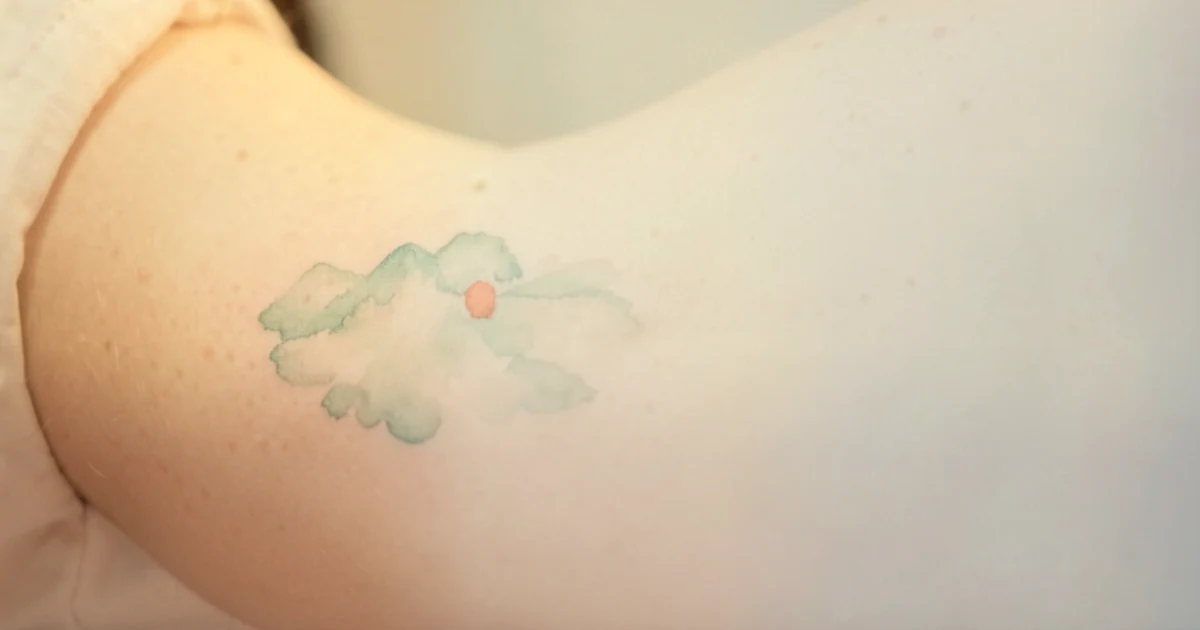
Watercolour tattoo removal is usually easier than the intricate style suggests: the soft pastel washes that define the look carry relatively little ink and often fade fastest, while any hidden black underpainting, saturated outlines and stubborn colours like green and blue are the real work. So watercolour tattoos vary enormously — no two clear on the same schedule.
That reframing matters because "watercolour" describes an aesthetic, not an ink formula. This guide explains — using medical sources and figures from the Tattoo Removal Guide directory stamped (as of July 2026) — why the washes are the easy part, why the colours involved decide everything, and why the laser a clinic actually owns is the make-or-break factor for a multi-colour piece.
Key Takeaways
- The pale washes in a watercolour tattoo are often the easiest part to remove — low ink density, so less pigment to shatter and clear.
- The hard parts are any hidden black underpainting/outlines and saturated colours (especially green and blue) that anchor the design.
- Watercolour pieces usually mix several colours, and each colour needs its own laser wavelength — so a multi-wavelength clinic matters.
- Expect the normal 5–12 session range, spaced 6–8 weeks apart — but a watercolour tattoo can land anywhere in it depending on its hidden ink.
- Of the 5,700 clinics we track, about 18% publicly note picosecond lasers and 15% note Q-switched (as of July 2026) — a floor, not a ceiling, but a sign that multi-wavelength capability is far from universal.
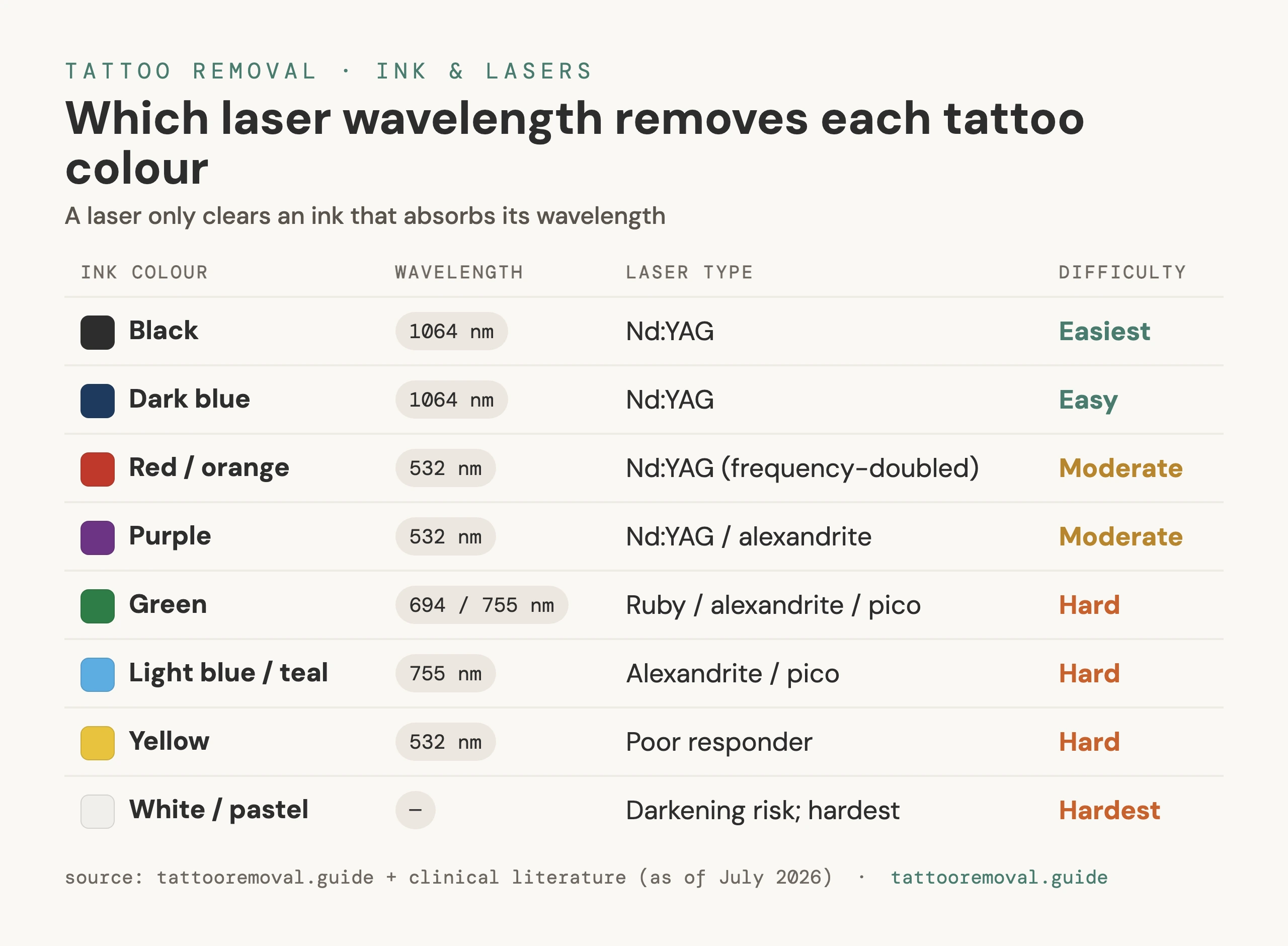 A laser only clears an ink that absorbs its wavelength.
Why the washes are the easy part
The whole watercolour style is built on the illusion of paint bleeding across wet paper: thin, translucent gradients with soft edges and no heavy black outline. To get that look, artists dilute pigment and lay it lightly. That is exactly the property that makes removal easier — there is simply less ink per square centimetre for the laser to break down.
Removal difficulty tracks two things above all: how much ink is present, and what colour it is. A pale, airy wash scores low on the first count. As the Cleveland Clinic explains, the laser shatters ink into fragments small enough for your body to absorb and clear over the following weeks — and a thin wash gives it far less to shatter than a solid block of colour. This is why a delicate watercolour piece can, counter-intuitively, be less work than a dense black traditional tattoo of the same size.
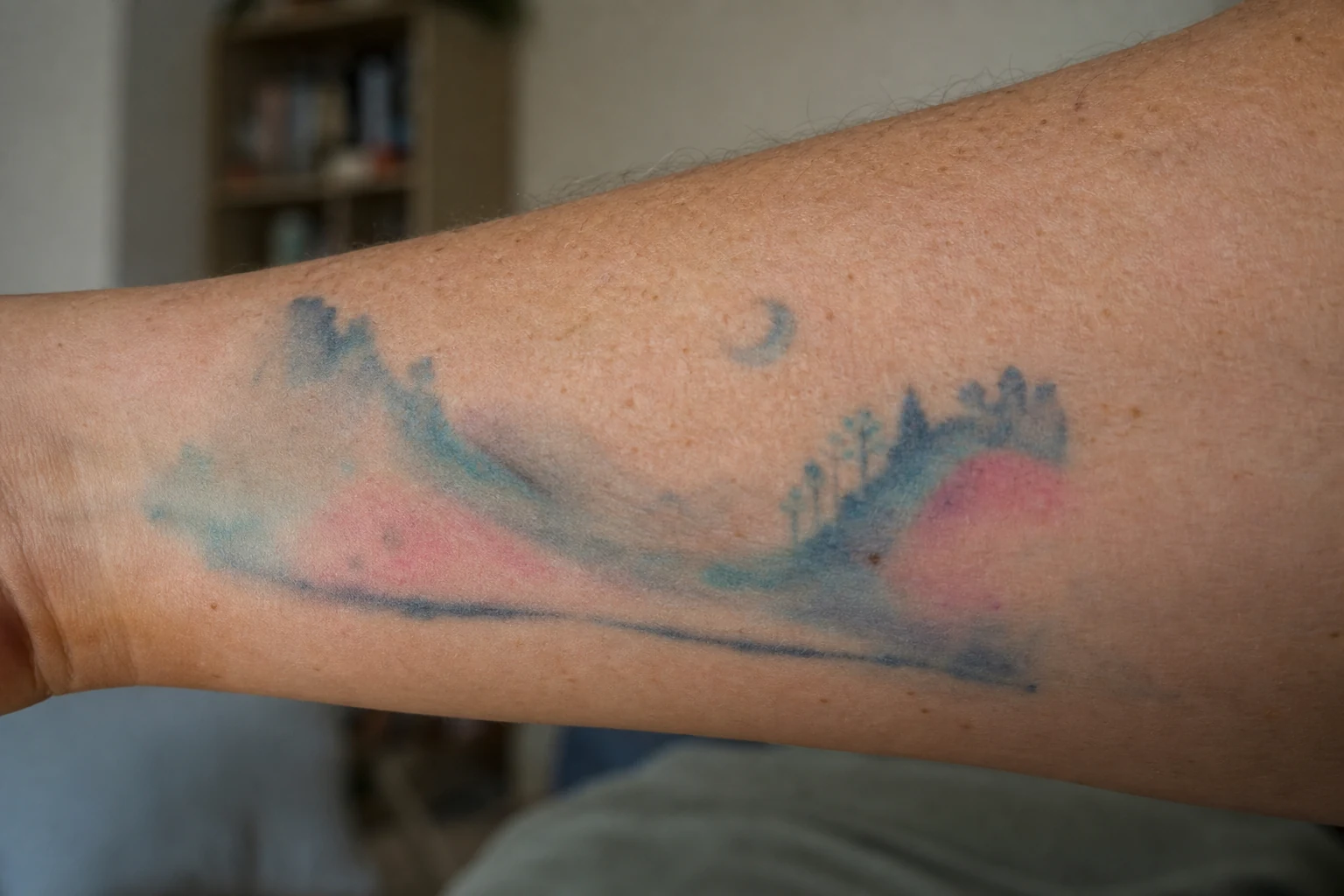 Multicolour work fades unevenly, colour by colour.
The catch: the hidden black and the saturated colours
Here is where watercolour tattoos earn their "it depends" reputation. Many artists — especially for pieces that need to hold their shape over years — lay a black or grey base, outline or shadow underneath the washes to anchor them and stop the design looking flat. You may not consciously see it, but it is often the most concentrated pigment in the whole tattoo, and black is the deepest-set, most stubborn ink to fully clear.
On top of that base sit the colours, and colour is the other half of the difficulty. Selective photothermolysis is the principle behind laser tattoo removal: a laser fires a very short pulse of a single wavelength (colour) of light, the ink absorbs that pulse faster than the surrounding skin can shed the heat, and the pigment shatters — while nearby tissue is spared. The StatPearls clinical reference describes the same sequence: selective absorption by the pigment, fragmentation, then immune-mediated clearance between sessions.
The catch is in the word absorbs: a pigment only shatters if it absorbs the laser's wavelength, and a colour by definition reflects its own light. So a green wash and a red wash and a black outline in the same tattoo each demand a different wavelength. That is why a saturated, multi-colour watercolour piece can be more work than its delicate appearance implies — not because of the washes, but because of everything anchoring them.
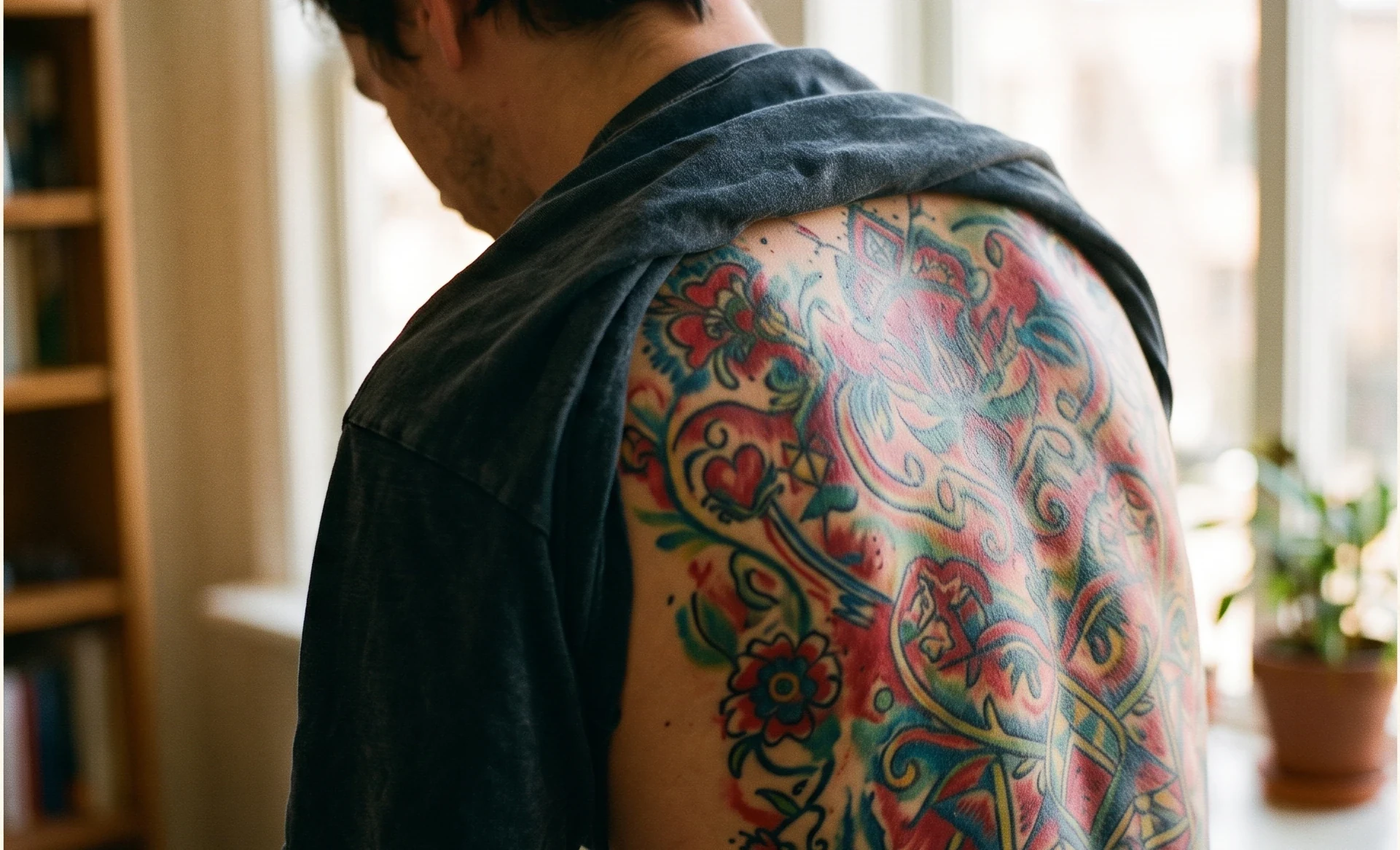 Multicolour work fades unevenly, colour by colour.
What fades fast vs slow in a watercolour piece
Not every element of a watercolour tattoo behaves the same way. As a rough guide to what tends to clear quickly versus slowly:
| Element | Typical removal speed | Why |
|---|---|---|
| Pale, translucent washes (pink, peach, light blue) | Faster | Low ink density — little pigment to shatter |
| Warm colours: red, orange, yellow | Moderate | Respond to 532nm; yellow can be stubborn |
| Black outline / grey shadow / hidden base | Slower | Deepest, most concentrated pigment; clears last |
| Saturated green | Slowest | Needs 694nm/755nm many clinics don't offer |
| Saturated blue (esp. light/sky blue) | Slow | Light blues reflect common wavelengths — see our blue-ink guide |
The pattern to notice: the decorative colours often go first, and the structural ink — the black or grey the artist used to hold the composition together — is what lingers. A watercolour tattoo can look 80% gone while the hardest 20% still needs several more sessions. For a full ranking of stubborn colours, see our pillar guide on the hardest tattoo colours to remove.
Why a multi-wavelength clinic matters more here
For most single-colour tattoos, one laser wavelength does the job. A watercolour piece is different precisely because it combines colours, and no single wavelength clears them all. The rough map clinics work from:
| Wavelength | Best for these colours |
|---|---|
| 1064nm (Nd:YAG) | Black, grey and the hidden base layer |
| 532nm | Red, orange and warm tones |
| 694nm (ruby) / 755nm (alexandrite) | Blue and green — the stubborn colours |
A clinic with only a 1064nm machine can clear your black base and darken-then-fade some colours, but it will struggle with the greens and light blues in the washes. A clinic with a multi-wavelength or well-equipped picosecond platform can address each colour with the light it actually absorbs. This is the single biggest reason two clinics can quote very different session counts for the same watercolour tattoo — one has the wavelengths your ink needs, the other doesn't. (Blue is a special case worth reading on its own: see blue ink tattoo removal.)
Honest framing on our own data: across the directory, about 18% of the 5,700 clinics we track publicly note a picosecond laser and 15% note Q-switched (as of July 2026). That's a floor, not true adoption — most listings simply don't specify their wavelengths, so don't read it as "only 18% have good equipment." It does mean the right equipment for a multi-colour piece is worth confirming rather than assuming.
Realistic sessions and timeline
There is no watercolour-specific number, because the style spans everything from a single pale wash to a dense, multi-colour piece with a black base. As a frame, most tattoos need roughly 5–12 laser sessions, spaced at least 6–8 weeks apart — the clearing window your skin and immune system need between passes, described by the American Academy of Dermatology. A light watercolour piece may sit at the lower end; one hiding a saturated black base and green washes can run higher.
The honest rule holds for every colour and style: no responsible clinic guarantees an exact session count, a timeline, or complete removal before assessing your specific tattoo. Faint residual shadowing — "ghosting" — can remain, particularly from stubborn colours. Ranges are your realistic frame; a consultation with a clinician who has looked at your ink narrows them.
This is general information, not medical advice. Laser tattoo removal is a medical procedure with real risks (blistering, scarring, pigment change). Session counts, timelines and outcomes vary by person and tattoo — consult a licensed provider about your specific situation. The US FDA notes that removal results and reactions vary between individuals.
Compare clinics before you commit
Because a watercolour tattoo usually needs more than one wavelength, the most useful thing you can do before booking is find a clinic that can actually treat every colour in your piece — not just the black. Ask which lasers and wavelengths a clinic delivers, and match that to the colours in your tattoo.
Compare tattoo-removal clinics in your city to see what equipment is listed near you, or start with a dense market like tattoo removal in Melbourne to see how listings, lasers and pricing stack up side by side. The right lasers for your colours can genuinely change your session count — and your total cost.
Frequently asked questions
Can watercolor tattoos be removed?
Yes, watercolour tattoos can be removed with laser treatment, and the pale, pastel washes that define the style often clear faster than expected because they hold relatively little ink. The harder parts are any black underpainting, saturated outlines and stubborn colours like green and blue, which usually need more sessions.
Are watercolor tattoos harder to remove than normal tattoos?
Not necessarily. A light, airy watercolour piece with thin washes can be easier than a dense black traditional tattoo because there is less pigment to shatter and clear. But watercolour work that hides a black base layer or uses many saturated colours can be harder, since each colour needs its own laser wavelength.
Why do watercolor tattoos vary so much in how they remove?
Watercolour is a style, not a single ink recipe. Two pieces can look similar but differ hugely in ink density, number of colours and whether the artist laid a black or grey base to anchor the washes. Because removal difficulty tracks ink volume and colour, that hidden variation makes each watercolour tattoo its own case.
How many sessions does it take to remove a watercolor tattoo?
Most tattoos take roughly 5–12 laser sessions spaced 6–8 weeks apart, and a watercolour piece can land anywhere in or beyond that range. Thin, pale washes may clear in fewer; hidden black outlines and saturated colours add sessions. No clinic can promise an exact count before assessing your specific tattoo.
What is selective photothermolysis?
Selective photothermolysis is the principle behind laser tattoo removal: a laser fires a very short pulse of a single wavelength that the ink absorbs faster than surrounding skin can shed the heat, so the pigment shatters while nearby tissue is spared. Each ink colour absorbs a different wavelength, which is why multi-colour tattoos need more than one laser.
Do watercolor tattoos have black ink underneath?
Many do. Artists frequently lay a black or grey base, outline or shadow to give the soft washes structure and stop them looking flat. That underpainting is often the most stubborn part to remove because it holds the most concentrated pigment — even when the colourful washes on top fade quickly.
What laser removes a watercolor tattoo?
Because watercolour pieces usually combine several colours, they need a clinic with multiple wavelengths: 1064nm for black, 532nm for red and warm tones, and 694nm ruby or 755nm alexandrite for blue and green. A single-wavelength machine will clear some colours and leave others, so multi-wavelength capability matters.
Related guides
Related Guides
- Ink & Colours
Selective Tattoo Removal: Erasing Part of a Tattoo (2026)
Selective tattoo removal targets one part of a tattoo — a name, a figure, one colour — while leaving the rest.
- Ink & Colours
Removing an Ex-Partner's Name Tattoo: Your Options in 2026
Removing an ex's name tattoo? A partner's name is one of the most-removed tattoos — and small black lettering is among the quickest and cheapest to clear.
- Ink & Colours
Name & Lettering Tattoo Removal
Name and lettering tattoos are usually small and black, so per-unit they're among the easier tattoos to remove — but dense, deep script needs patience.