Selective Tattoo Removal: Erasing Part of a Tattoo (2026)
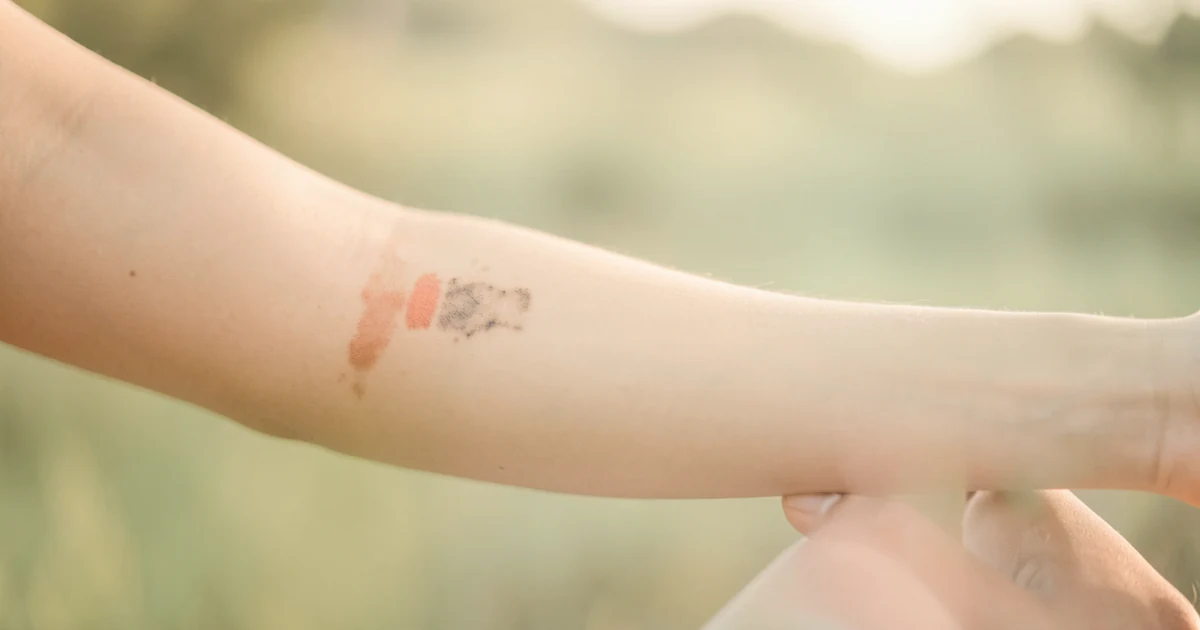
Selective tattoo removal targets only part of a tattoo — a word, a figure, or one colour — while leaving the rest in place. It's genuinely possible, because a laser is aimed by hand, but it's precise and fiddly work: the beam has to stop where the ink you're keeping begins. Like any removal, it runs across several sessions, and a faint shadow can remain at the edge.
That last point is the honest one most guides skip. Partial removal isn't a clean cut-out; it's careful, staged lightening of one region of skin that sits right next to ink you want untouched. This guide explains what selective removal actually is, why it's possible but tricky, what's realistic to expect, the common reasons people ask for it, and how it fits alongside a cover-up — using medical sources and figures from the Tattoo Removal Guide directory, stamped (as of July 2026).
Key Takeaways
- Selective (partial) removal targets one portion — a name, a figure, one colour — and leaves the rest of the tattoo intact.
- It's possible because the laser is aimed by the operator, but that's also why precision, a steady hand and experience matter so much.
- Expect it to take several sessions, spaced 6–8 weeks apart, like any removal — no honest clinician guarantees a session count.
- A faint shadow can remain at the border of the treated area; a tattoo artist can blend it or work over it.
- It pairs naturally with a cover-up — partial removal cleans up one element so a new design sits better.
 The operator aims the laser — precision and experience matter.
What selective tattoo removal is
Selective tattoo removal is treating only a chosen portion of a tattoo with a laser — a word, an image, or a single colour — while deliberately leaving the surrounding ink in place. Instead of clearing the whole piece, the clinician confines treatment to the area you want gone.
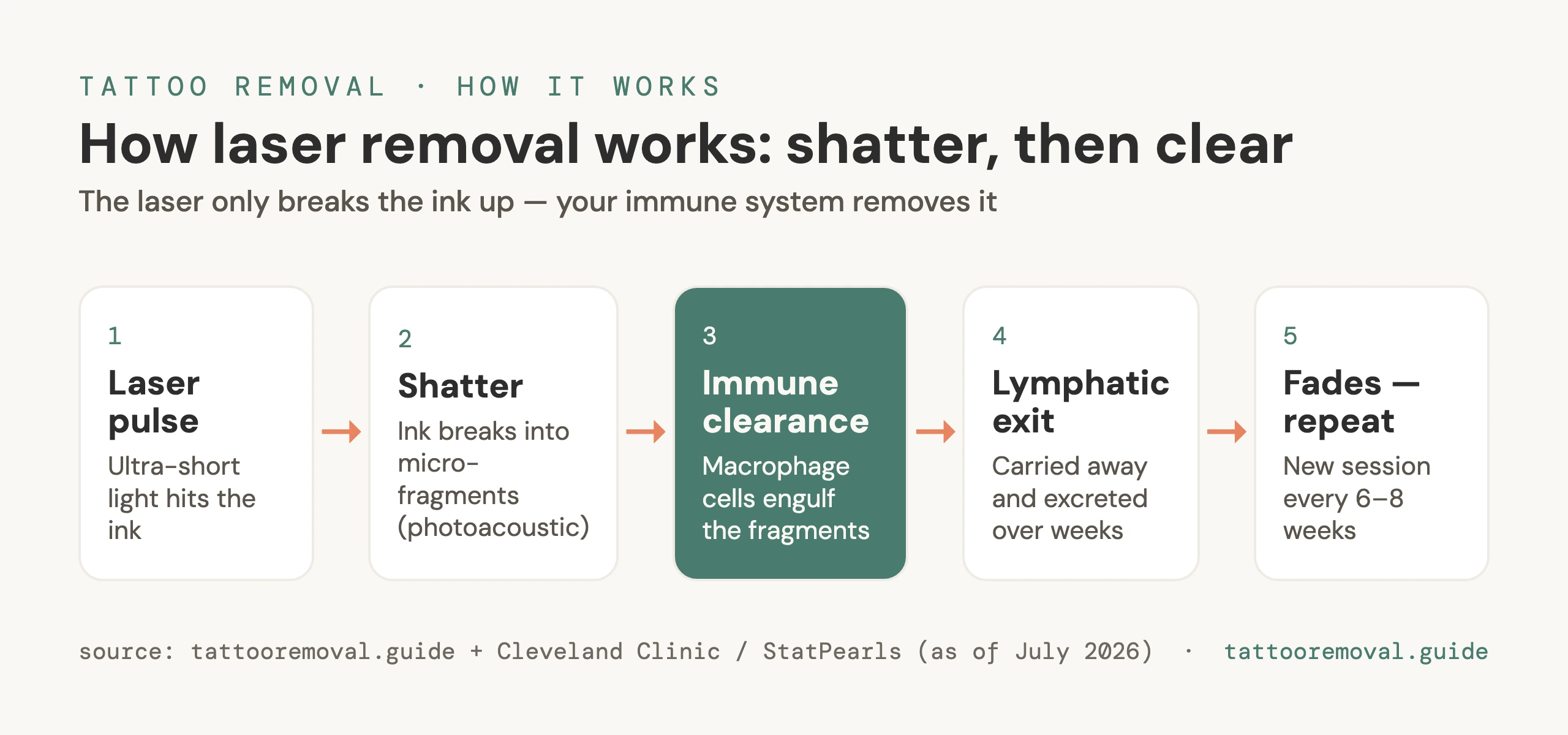
The mechanism is the same as full removal. As the Cleveland Clinic explains, the laser delivers rapid pulses of light that shatter ink into fragments small enough for your immune system to carry away over the following weeks. The difference with selective removal isn't the physics — it's the aim. The operator directs the beam across only the region you're removing, session after session, and steers clear of the ink you're keeping.
That's the whole trick, and the whole difficulty: nothing about the laser automatically confines it to the old element. Precision comes entirely from the person holding the handpiece.
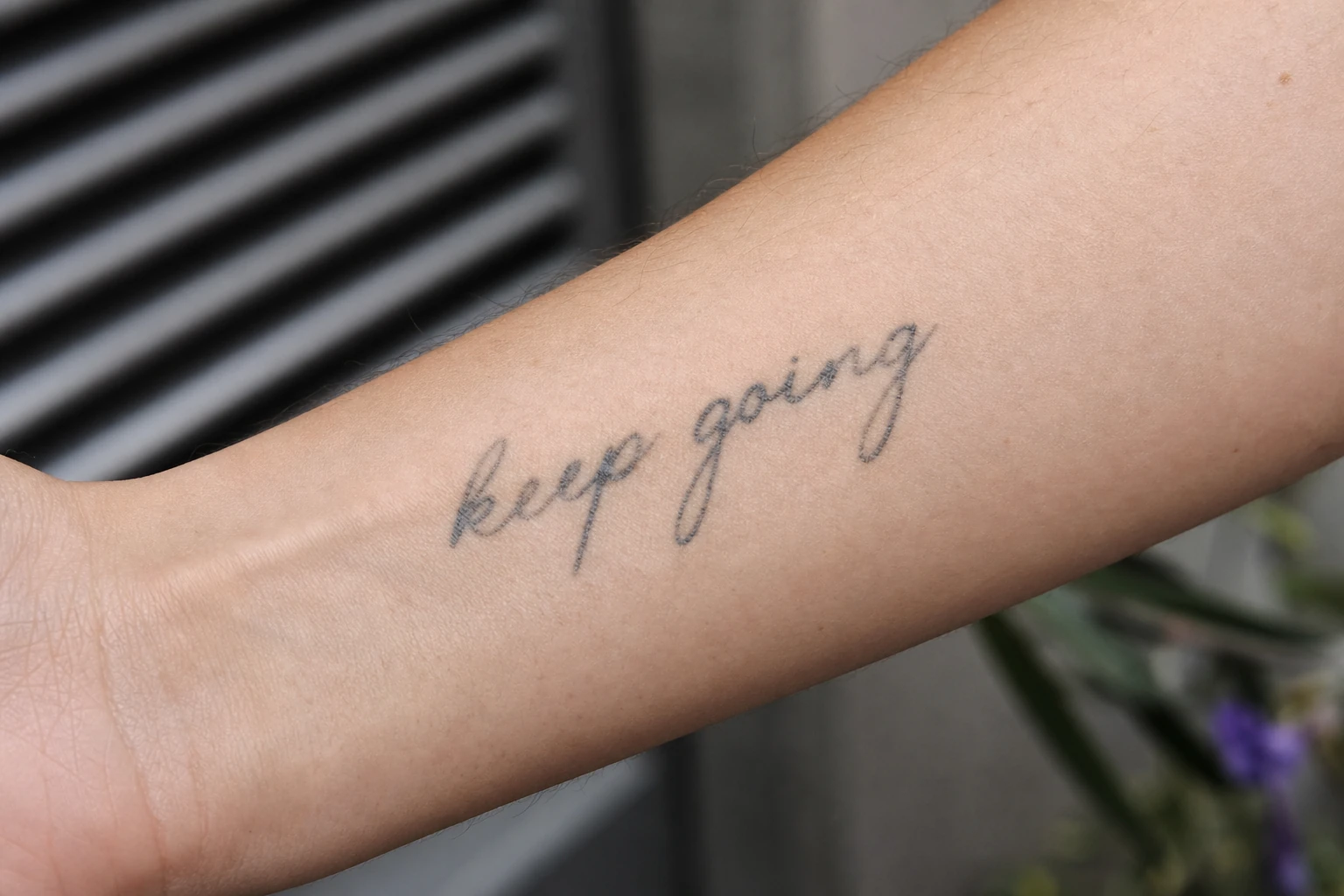 A tattoo being assessed before laser removal.
Why it's possible — but genuinely tricky
Because the laser is hand-aimed, an experienced operator can absolutely isolate one element. But two things make partial removal harder than clearing a whole tattoo.
The border is unforgiving. When you remove an entire tattoo, overspray onto nearby skin doesn't matter — there's no ink there to protect. In selective removal, the ink you want to keep sits right beside the area being treated. The operator has to work up to a line without crossing it, protecting adjacent ink and the edge of the design. That takes a steady hand and judgement about spot size and overlap.
Adjacent ink needs care. Fine detail — lettering woven into a larger image, or a figure touching the piece you're keeping — leaves little margin. The tighter the gap between "remove" and "keep", the more skill the job demands. A clear band of blank skin between the two makes it far easier; ink pressed directly against ink is the hard case.
This is why the operator matters more here than almost anywhere in removal. The laser doesn't know where your unwanted ink ends — the person aiming it does. The American Academy of Dermatology stresses seeing a physician or properly trained provider for removal precisely because technique, device settings and skin response all have to be judged case by case — and selective work concentrates all of that into a few careful millimetres.
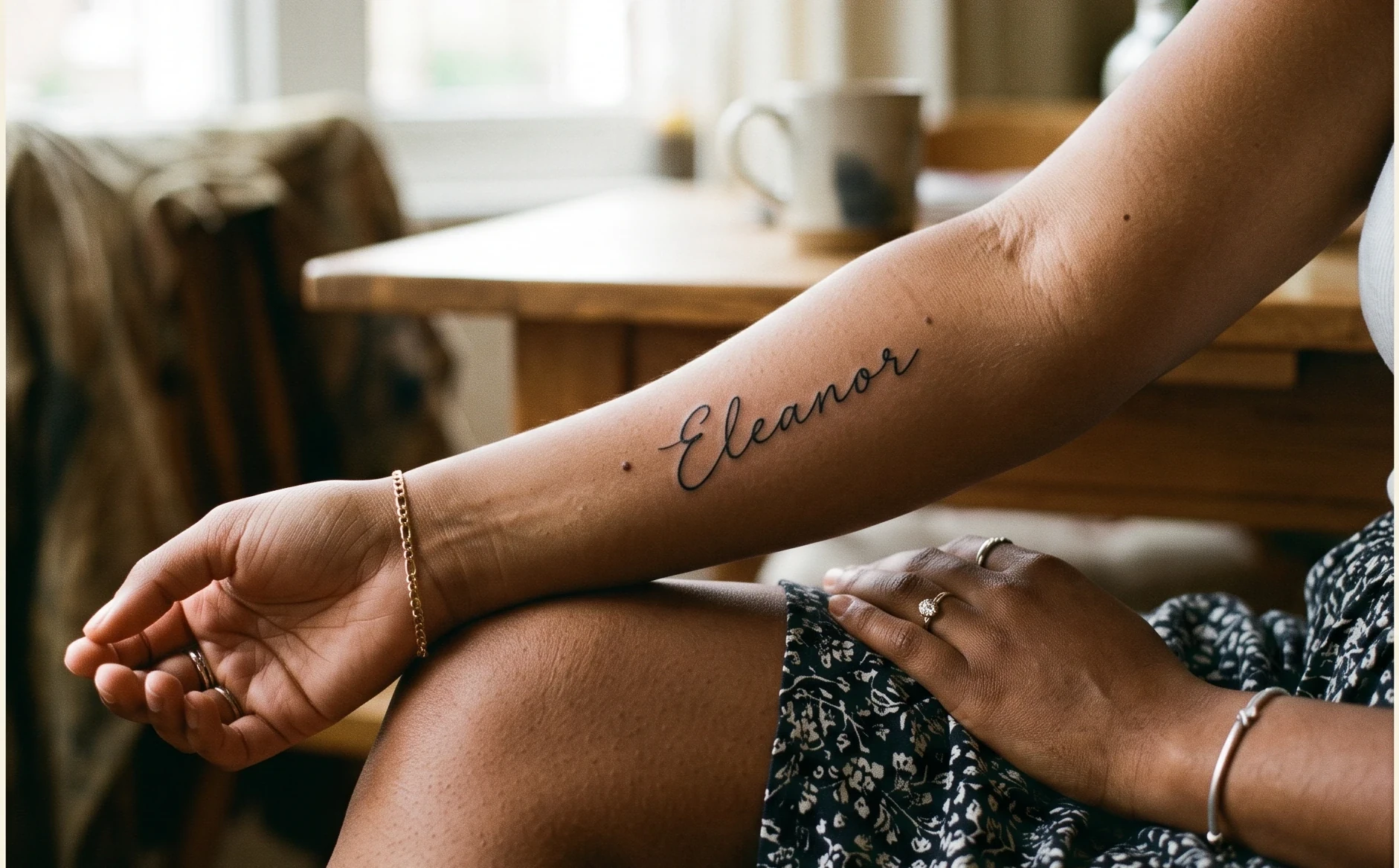 A fine-line name/script tattoo.
What's realistic to expect
Selective removal works, but set expectations honestly before you book:
- A faint shadow may remain. Removal rarely leaves skin identical to never-tattooed skin. A light "ghost" or slight texture change can persist at the edge of the removed area. For a full removal that's a minor cosmetic note; for selective removal it sits next to the ink you kept, so plan for it.
- Blending is often part of the plan. Once the element is gone or faded, a tattoo artist can blend the cleared patch into the surrounding work — a shaded transition, a small addition — so it reads as one intentional piece rather than a gap.
- It takes several sessions. Partial removal follows the same rhythm as any removal. The StatPearls clinical reference describes the staged sequence — absorb, fragment, clear, repeat — with sessions spaced weeks apart so skin heals between passes. Removing one element is faster than a whole sleeve, but it's still measured in months, not one appointment.
- No guarantees on the count. How many sessions depends on ink colour, density, depth, age and your skin. The FDA notes that complete removal isn't guaranteed and can take many treatments — that applies to a single element too. Be wary of any clinic that promises a fixed number sight unseen.
Common reasons people want partial removal
Selective removal usually comes down to one of three situations:
- Removing a name or a specific element. The classic case — erasing an ex's name from a sleeve, or lifting out one figure that no longer fits — while keeping the artwork you still love.
- Erasing a bad or dated element. One botched line, a misspelling, or an out-of-place symbol inside an otherwise good piece. You don't want the whole tattoo gone; you want that one thing fixed.
- Prepping a section for new work. Fading or removing a specific area so a tattoo artist can rework just that part — cleaner than tattooing over dark ink, more surgical than fading the whole piece.
Full removal vs selective removal vs cover-up
These three routes solve different problems. This comparison shows what each is actually for:
| Full removal | Selective removal | Cover-up | |
|---|---|---|---|
| Goal | Clear the whole tattoo | Remove one part, keep the rest | Hide old ink under a new design |
| Method | Laser, entire piece | Laser, targeted area only | New tattoo over the old |
| Precision needed | Standard | High — hand-aimed at a border | Depends on the design |
| Typical use | You want the tattoo gone | Erase a name/element, keep the art | You want a new tattoo, not blank skin |
| Sessions | Many, over months–years | Several, over months | One or a few tattoo sittings |
| Outcome | Faded to clear; ghosting can remain | Element gone; edge may need blending | Old design concealed, not removed |
Session counts and outcomes are estimates that vary by tattoo and person — not guarantees.
How selective removal and cover-ups work together
Selective removal and cover-ups aren't rivals — they're frequently used together. A cover-up artist's biggest enemy is dark ink showing through new work, and one stubborn element (a name, a heavy black shape) can force a much larger, darker design to bury it. Partially removing or fading just that element first gives the artist a cleaner canvas and far more freedom.
So the sequence for many people is: use selective removal to lift out or lighten the problem element, then have a tattoo artist cover or blend the rest. If a cover-up is where you're heading, our companion guide on removing a tattoo for a cover-up covers how much fading a new design actually needs — often less than people assume.
Colours change the plan, too. Some inks lift far more easily than others, and if the element you want gone is a stubborn colour, the session count and approach shift. Our guide to the hardest tattoo colours to remove explains which pigments resist the laser and why that matters for a targeted job.
This is general information, not medical advice. Laser tattoo removal is a medical procedure with real risks (blistering, scarring, pigment change). Session counts, outcomes and how cleanly an element can be isolated vary by person, ink and tattoo — consult a licensed provider for advice about your specific situation.
Find a clinic experienced in precise removal
Selective removal lives or dies on the operator. This is not the job for the cheapest walk-in laser — you want someone who does targeted work regularly, will assess your tattoo in person, and can talk you through how they'll protect the border and the ink you're keeping. Ask directly: have they removed a single element from a larger piece before, and how would they handle the edge?
Compare tattoo-removal clinics in your city to find providers near you, or start with a dense market like tattoo removal in Melbourne — where we track 215 listed clinics, with typical pricing of $50–$200 per session (as of July 2026) — to see how listings, lasers and experience stack up. Across the full directory that's part of 5,700 specialist clinics in 1,043 cities, averaging 4.79★ (as of July 2026), so wherever you are, you can shortlist a few and ask the precision questions before you book.
Frequently asked questions
What is selective tattoo removal?
Selective tattoo removal is targeting only a portion of a tattoo — a word, a figure, or one colour — while leaving the surrounding ink untouched. The clinician aims the laser at just the area you want gone, treating it over several sessions like any removal. It relies on the operator's precision and a steady hand, because the beam must stop where the ink you're keeping begins.
Can you remove just part of a tattoo?
Yes. Because the laser is aimed by hand, an experienced operator can treat one element — a name, a date, a single figure — and leave the rest. It works best when there's a clear gap of skin between the part you want removed and the part you're keeping. Fine detail sitting right against the ink you're keeping is harder and needs extra care at the border.
Can I erase a name from a tattoo but keep the rest?
Often, yes — removing an ex's name from a larger piece is one of the most common selective-removal requests. The clinician treats only the lettering across several sessions. Expect it to take time like any removal, and know that a faint shadow can remain at the edge of the treated area, which a tattoo artist can later blend or work over.
How many sessions does selective tattoo removal take?
There's no fixed number — it depends on the ink's colour, density, depth and age, and on your skin. A small dark element may clear in fewer sessions than a large or multi-coloured one, but every removal runs on the same 6–8 week spacing between sessions, so partial removal still typically spans several months. A clinician should estimate your case in person; avoid anyone who guarantees a set count.
Will a shadow be left where part of the tattoo was removed?
Sometimes. Laser removal breaks ink into fragments your immune system clears, but a faint shadow or 'ghost' can remain at the edge of the treated area, and skin texture there may differ slightly. For selective removal this matters because the cleared patch sits next to ink you're keeping — an experienced operator plans the border to minimise it, and a tattoo artist can blend the result.
Is selective removal the same as a cover-up?
No. Selective removal takes an element away with a laser; a cover-up hides old ink under a new tattoo. They're often combined: a clinician partially fades or removes a specific element so a cover-up artist has a cleaner canvas to work over. Deciding which route — or combination — fits your tattoo is a conversation for both the clinic and the artist.
Why does the operator matter so much for partial removal?
Because the laser is aimed by the operator, not automatically confined to the old ink. Removing one element while sparing the ink beside it demands precise targeting, a steady hand and experience reading how different inks and skin respond. A skilled operator protects the border and the surrounding tattoo; an inexperienced one risks lightening ink you wanted to keep.
Related guides
Related Guides
- Ink & Colours
Removing an Ex-Partner's Name Tattoo: Your Options in 2026
Removing an ex's name tattoo? A partner's name is one of the most-removed tattoos — and small black lettering is among the quickest and cheapest to clear.
- Ink & Colours
Name & Lettering Tattoo Removal
Name and lettering tattoos are usually small and black, so per-unit they're among the easier tattoos to remove — but dense, deep script needs patience.
- Ink & Colours
Multicolour Tattoo Removal: Why Mixed-Colour Ink Takes More Sessions
Multicolour tattoos take more sessions because each colour absorbs a different laser wavelength and fades at its own rate. Why mixed ink clears unevenly, explained.