Name & Lettering Tattoo Removal

Name and lettering tattoos are usually small, fine-lined and black — and because black ink absorbs the 1064nm laser wavelength better than any colour, a simple script or word is often among the more responsive tattoos to remove. Per unit of area, a thin black name is one of the easier tattoos to clear; the complications are density (script that's been lined over and over sits deep) and the emotional weight of what the words meant. This guide sets honest expectations for removing a name, word or piece of script — the physics, the session ranges, and whether removal, cover-up or a re-work is right for you.
Why lettering is usually an easier removal
Two things make most name and lettering tattoos comparatively responsive. First, colour: script and text are overwhelmingly black, and black is the easiest ink to remove. Laser tattoo removal is a procedure that uses short pulses of laser light, absorbed by tattoo ink, to shatter the pigment into fragments small enough for the body's immune system to clear away — and black absorbs across the widest range of wavelengths, so a laser has an easy target. As the Cleveland Clinic explains, the laser breaks the ink into smaller pieces that the body then absorbs and eliminates over the following weeks.
Second, size. Lettering is usually small — a wrist name, a forearm word, a line of script along the collarbone — so there is simply less total ink to clear than a full-colour sleeve or a heavy blackwork band. Less area plus the most cooperative colour is why many people find a name responds well.
But "usually easier" is not "always easy." Script that has been lined and re-lined — bold gothic lettering, heavily shaded old-school text, or a name touched up several times — packs a lot of pigment into narrow lines, and that density can sit deep in the skin. A dense, deep name resists more than a light, single-pass one. The StatPearls clinical reference describes how ink depth and density, along with colour and location, all influence how a tattoo responds to treatment. So a thin cursive name is genuinely one of the friendlier removals; a solid black tribal-style word is closer to removing heavy blackwork.
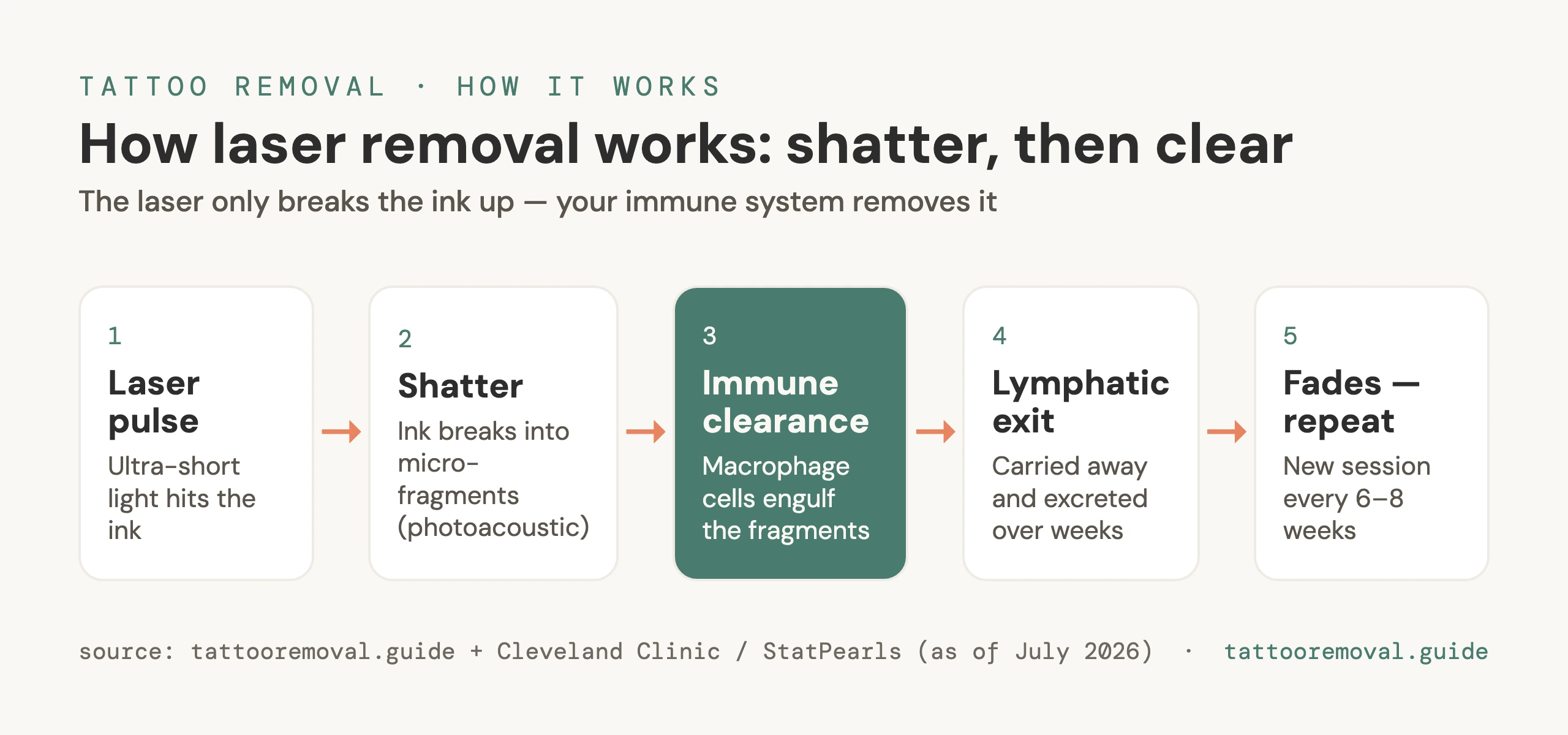 Thin black script absorbs 1064nm well — but density and depth still set the pace.
A thin black name is not a heavy blackwork band
It's worth separating two things that both read as "black" but behave differently under a laser:
| Tattoo type | Ink profile | Typical removal difficulty |
|---|---|---|
| Fine-lined name / script | Thin black lines, low total volume | Lower — small area, responsive colour; often fewer sessions |
| Bold / re-lined lettering | Dense black packed into narrow strokes | Moderate — density and depth slow the fade |
| Heavy blackwork band or solid text | Large saturated black area | Higher — lots of pigment to clear over more sessions |
The lesson: the word "black" tells you the colour is cooperative, but the amount and depth of that black is what drives how many sessions you'll need. A clinic can only judge that in person, which is why estimates are given after a consultation, never before.
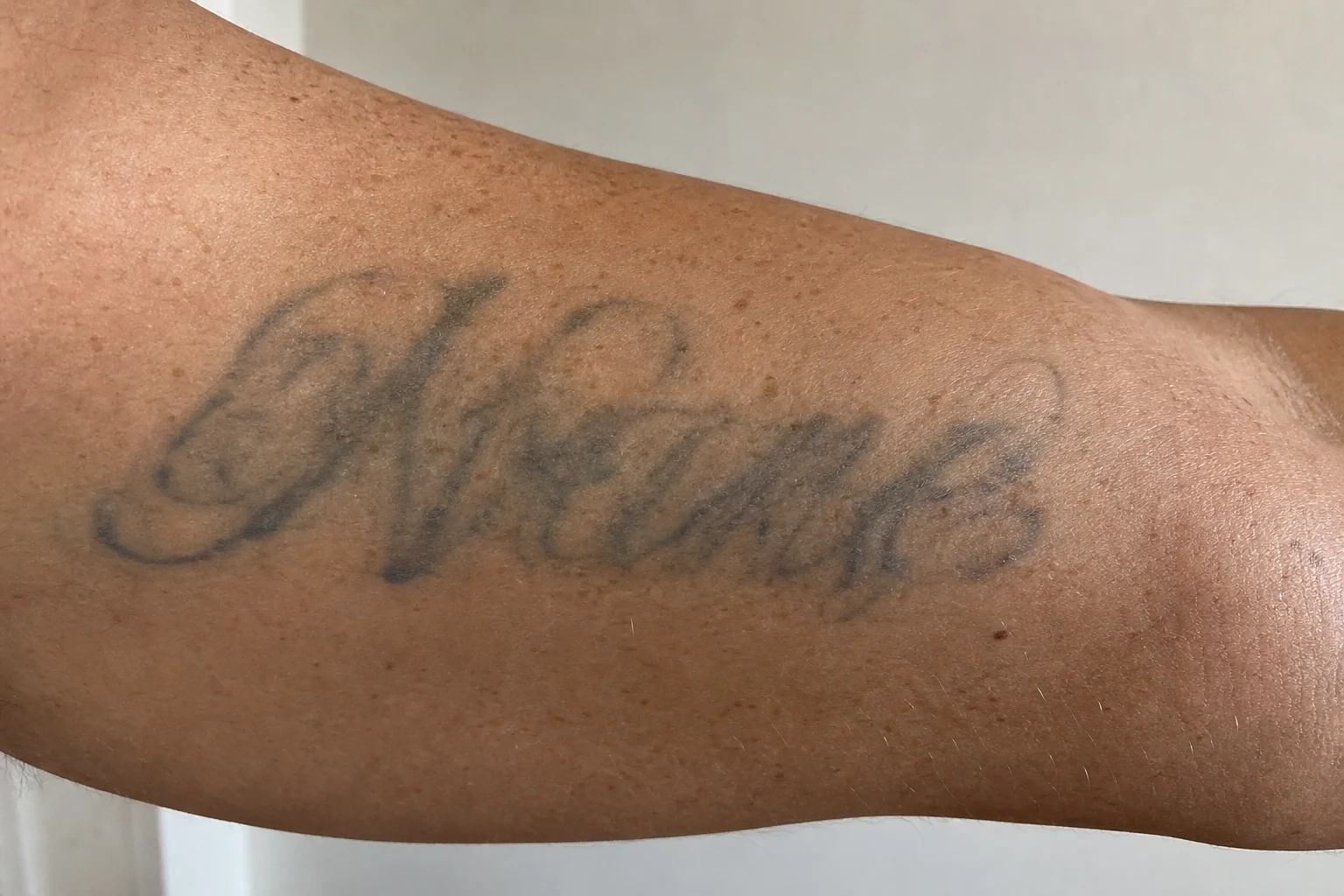 Fine black lettering is often among the easier work to remove.
Realistic session ranges (they're estimates, not promises)
Because a name is small and black, many people clear it in fewer sessions than a large colour piece would need — but no clinic can guarantee a session count or a final result. The number depends on the ink's density and depth, how old the tattoo is, where it sits on your body (areas with better circulation, like the wrist or ankle versus the fingers, can clear at different rates), your skin type and immune response, and the laser wavelengths the clinic actually offers. Structured tools like the Kirby-Desai scale exist precisely because so many factors feed into the estimate.
A responsible provider will look at your specific tattoo and give you a range, then reassess as it fades. If someone promises "your ex's name gone in three sessions" without examining it, treat that as a warning sign, not a selling point.
This is general information, not medical advice. Laser tattoo removal is a medical procedure with real risks — blistering, scarring and pigment change among them. Session counts and outcomes vary by person and ink. Consult a licensed provider about your specific tattoo. The FDA's fact sheet on tattoos and removal is a useful primer on the risks before you start.
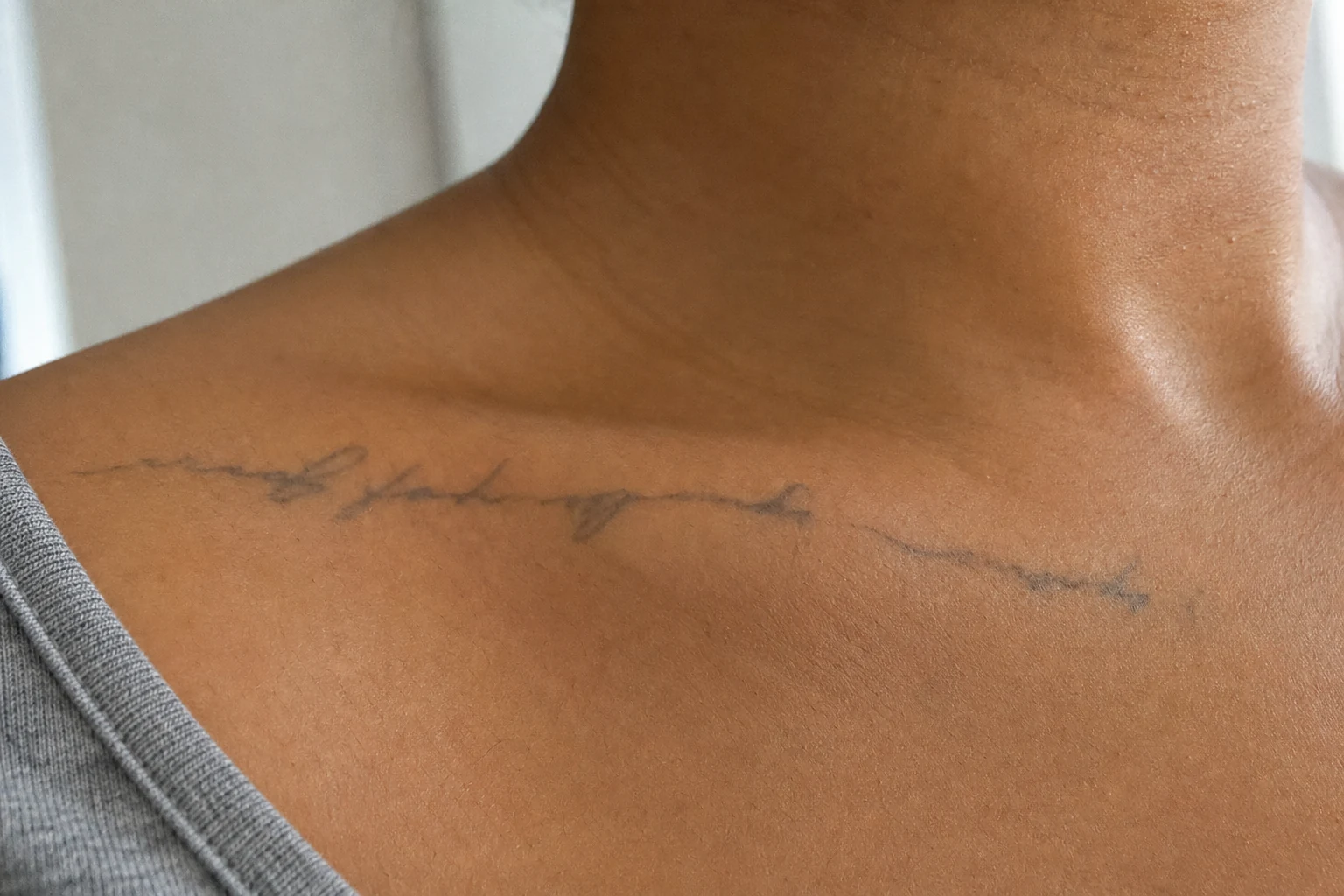 Placement and skin tone shape the plan as much as the letters do.
Fresh ink versus old ink
Timing matters more than people expect. If the name is fresh, clinics generally wait at least 6–8 weeks after the tattoo was applied before beginning removal, so the skin can heal and settle. Fresh ink is also denser, so being newly done doesn't make it faster to clear.
Older, faded names can sometimes need fewer sessions because there's less remaining pigment for the laser to break up — though very old or amateur ink can also sit unevenly or deeper, which complicates the picture. Either way, the tattoo's age is one of the first things a clinician assesses when planning your treatment. The American Academy of Dermatology notes that a tattoo's age, colours and ink type all influence how removal goes.
The reason behind the removal — and your three options
Most people don't remove a name for technical reasons. They remove it because the meaning changed — an ex-partner's name, a relationship that ended, a phrase that no longer fits who they are. That's the hard part, and it's completely normal. If the words are from a past relationship, our guide on removing an ex-partner's name tattoo goes deeper into the emotional side and the practical steps.
You have three broad paths, and they overlap more than people realise:
- Full removal — clear the skin entirely, nothing over it. Best if you want the name simply gone. This is where a small black script's responsiveness works in your favour.
- Cover-up — a new tattoo over the old one. A cover-up needs to be larger and darker than the lettering underneath, which limits the design. A few fading sessions first give the artist a cleaner canvas and far more freedom.
- Re-work into new lettering — fade the old name, then have new words or a new design placed. Popular when you want something there, just not that.
Fading-then-covering is the underrated middle path: even partial laser removal dramatically expands what a cover-up artist can do.
Compare clinics before you commit
Because how a name responds depends partly on the laser wavelengths a clinic offers, comparing your options before booking is the single most useful step. Across the 5,700 clinics we track in 1,043 cities (as of July 2026), about 18% publicly list a picosecond laser and 15% list a Q-switched laser — and those are floors, not full adoption, since most listings simply don't specify the device. Both laser types are effective for black ink; neither is categorically superior, and the wavelengths a clinic actually offers matter more than the label on the machine.
For the wider picture of why some inks resist and others clear easily, read our pillar guide to the hardest tattoo colours to remove. When you're ready, compare tattoo-removal clinics in your city to check which lasers they list, or start with a dense market like tattoo removal in Melbourne to see how equipment and pricing stack up side by side.
Frequently asked questions
How many sessions does it take to remove a name tattoo?
There is no fixed number. A small, black, fine-lined name is among the more responsive tattoos because black ink absorbs the 1064nm laser wavelength well, so many people need fewer sessions than a large colour piece would take. But density, ink depth, age of the tattoo, its location and your skin all change the count. A clinician who sees your specific tattoo is the only reliable source of an estimate — treat any promised session count made sight-unseen as a red flag.
Are name and lettering tattoos easier to remove than pictures?
Often, yes — for two reasons. Most script and text is black, and black absorbs laser light better than any colour, so it tends to respond well. And lettering is usually small, which means less total ink to clear. The catch is that heavily worked or repeatedly lined script can be dense and deep, and that resists more than a light single-pass name. Small and black is a good starting point, not a guarantee.
Can I remove just one name from a larger tattoo?
Sometimes. A laser can be aimed precisely, so an isolated word or name set apart from other work can often be targeted on its own. If the lettering overlaps or sits inside surrounding artwork, selective removal is harder and your clinician may treat a wider area. Bring a clear photo to your consultation so the clinic can tell you what's realistic before you book.
Should I remove an ex-partner's name or cover it up?
Both are valid, and they aren't mutually exclusive. A cover-up needs a design large and dark enough to hide the old lettering, which limits your options. Fading the name first with a few laser sessions gives a tattoo artist a cleaner canvas and more creative freedom for a cover-up or a re-work into new lettering. If you want the skin clear with nothing over it, full removal is the path. Our guide to removing an ex-partner's name walks through the emotional and practical trade-offs.
Does a fresh name tattoo remove faster than an old one?
Not necessarily faster, and timing matters. Fresh ink is denser and the skin is still healing, so clinics generally wait at least 6–8 weeks after a new tattoo before starting removal. Older, faded tattoos have less remaining pigment and can sometimes clear in fewer sessions, though very old ink can also sit deeper. Your clinician will assess the tattoo's age and condition as part of the plan.
Will removing a name tattoo leave a scar?
Laser removal is designed to break up ink while sparing surrounding skin, and scarring is uncommon when the procedure is done correctly and aftercare is followed — but no outcome can be guaranteed. Risks include blistering, temporary or lasting pigment change, and scarring, especially if you pick at blisters or the tattoo was already scarred from application. Choose an experienced provider and follow aftercare closely. This is general information, not medical advice.
Related guides
Related Guides
- Ink & Colours
Selective Tattoo Removal: Erasing Part of a Tattoo (2026)
Selective tattoo removal targets one part of a tattoo — a name, a figure, one colour — while leaving the rest.
- Ink & Colours
Removing an Ex-Partner's Name Tattoo: Your Options in 2026
Removing an ex's name tattoo? A partner's name is one of the most-removed tattoos — and small black lettering is among the quickest and cheapest to clear.
- Ink & Colours
Multicolour Tattoo Removal: Why Mixed-Colour Ink Takes More Sessions
Multicolour tattoos take more sessions because each colour absorbs a different laser wavelength and fades at its own rate. Why mixed ink clears unevenly, explained.