Red Ink Tattoo Removal: Wavelengths, Allergies and What to Expect
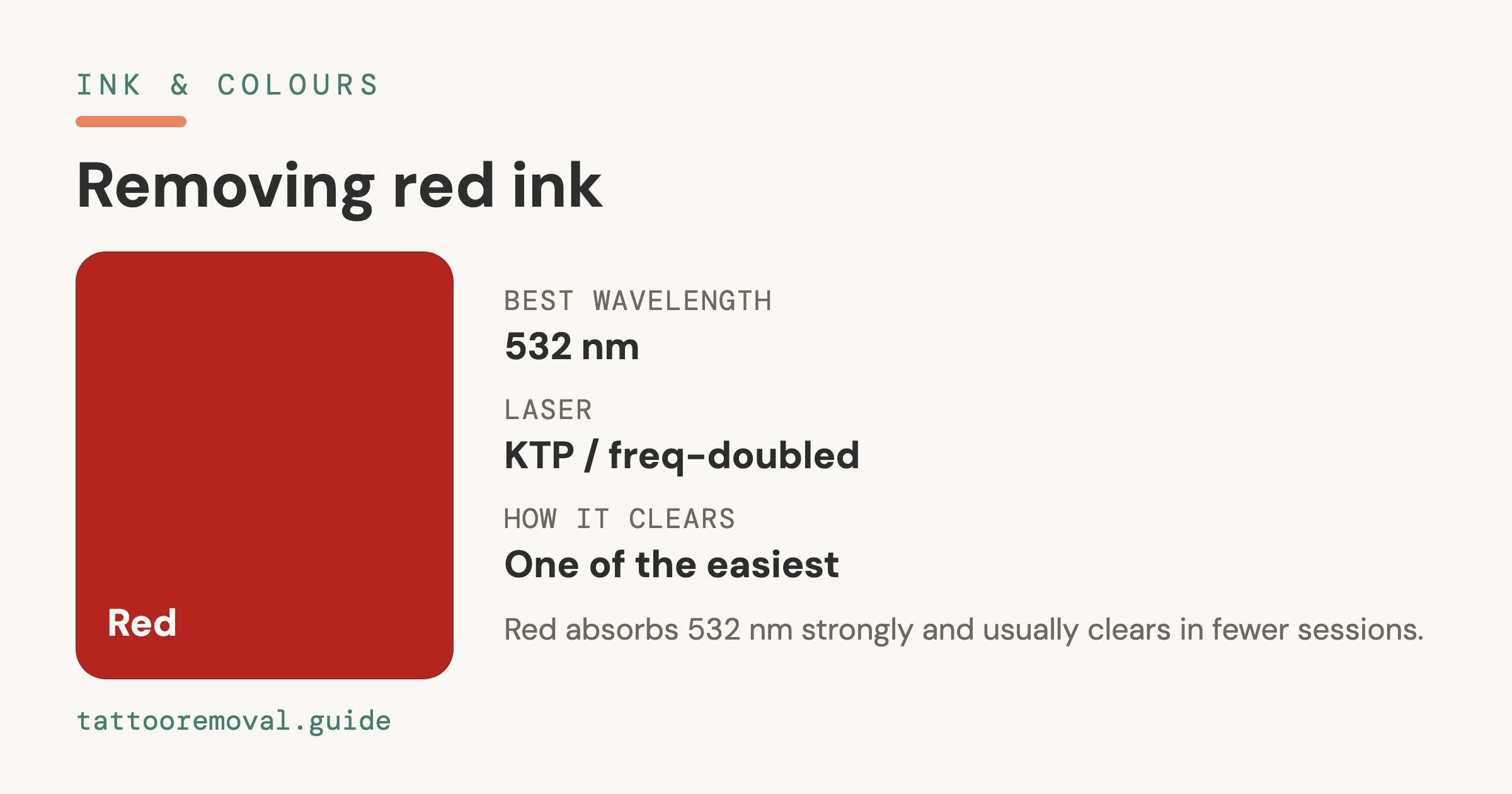
Yes, red ink can be removed with laser — and it usually clears well, because red pigment strongly absorbs the 532nm wavelength that a frequency-doubled Nd:YAG laser produces. The catch is medical, not technical: red is the tattoo ink most associated with allergic and inflammatory skin reactions, so the priority before removing a red tattoo is telling your clinician about any past reaction, not worrying about stubbornness.
This guide covers both sides — the wavelength that clears red efficiently, and the allergy risk that makes red a special case. Figures from the Tattoo Removal Guide directory are stamped (as of July 2026).
Key Takeaways
- Red ink removes well. It absorbs the 532nm wavelength strongly, making it one of the more responsive colours, alongside black.
- Red is the allergy colour. Of all tattoo inks, red causes the most documented allergic and inflammatory skin reactions — historically from cinnabar (mercury sulfide), now often from azo/organic pigments.
- Tell your clinician about any reaction. Laser can occasionally flare a dormant red-ink allergy; a test patch is a reasonable precaution for reactive ink.
- 532nm is a separate setting. It is not the 1064nm wavelength used for black — fewer clinics list it. Confirm your clinic can treat red before you book.
- Across the 5,700 clinics we track, about 18% publicly note picosecond lasers and 15% note Q-switched (as of July 2026) — most don't specify their wavelengths at all, so ask.
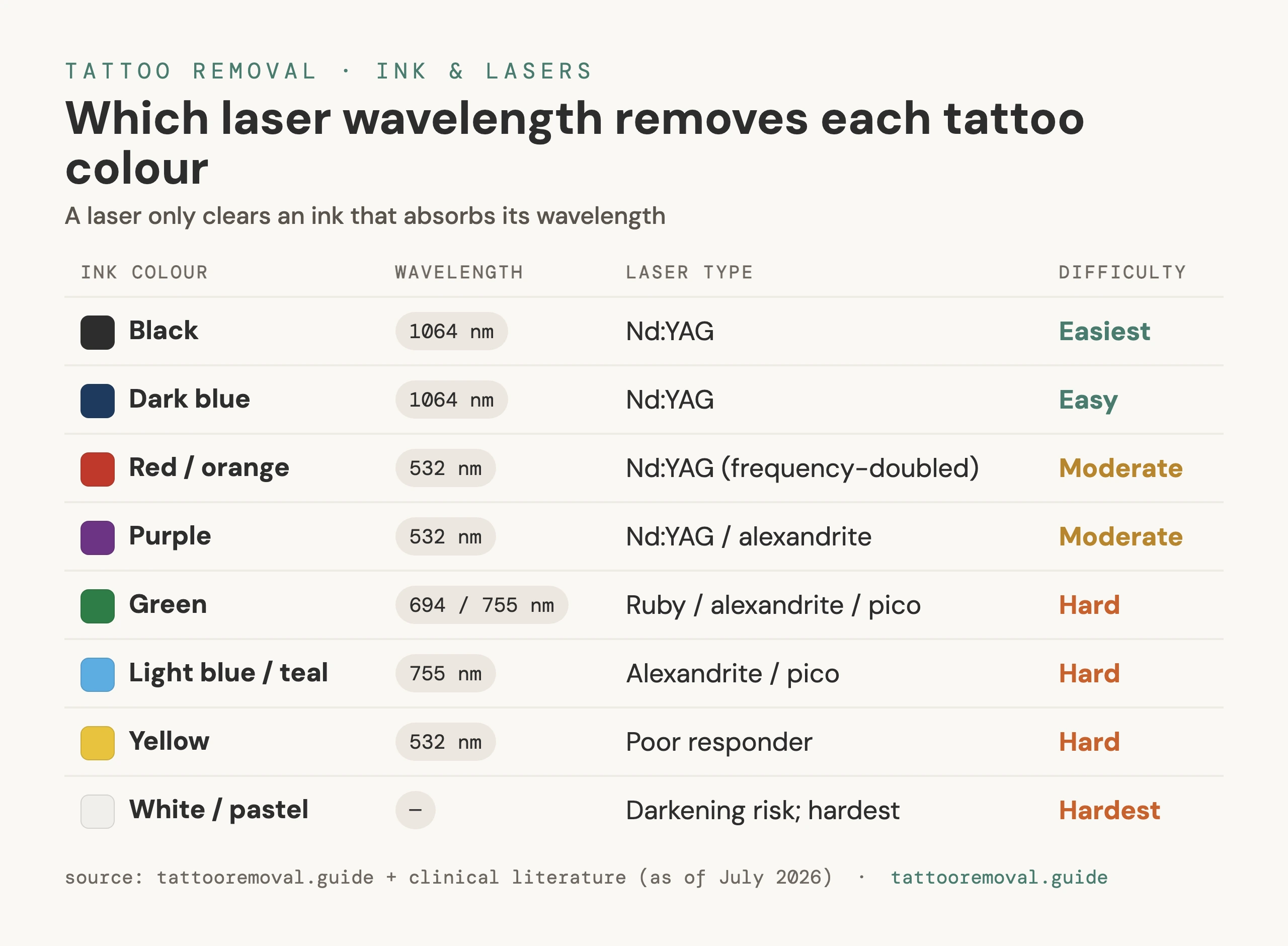 A laser only clears an ink that absorbs its wavelength.
Can red ink actually be removed?
Yes — and often more easily than people expect. Laser removal works by matching the laser's wavelength to the colour of the ink: the pigment absorbs that specific light, heats instantly, and shatters into fragments your immune system then carries away. As the Cleveland Clinic explains, the laser only breaks the ink apart; your body does the clearing over the following weeks.
Red pigment happens to absorb green light (532nm) very efficiently. That strong absorption is exactly what makes a colour respond well, which is why red — like black — tends to sit at the easier end of the removal spectrum. The colours with a difficult reputation are green and blue, not red. So the honest headline for red is reassuring on the technical side.
The complication with red lives elsewhere: in how your skin reacts to the pigment itself.
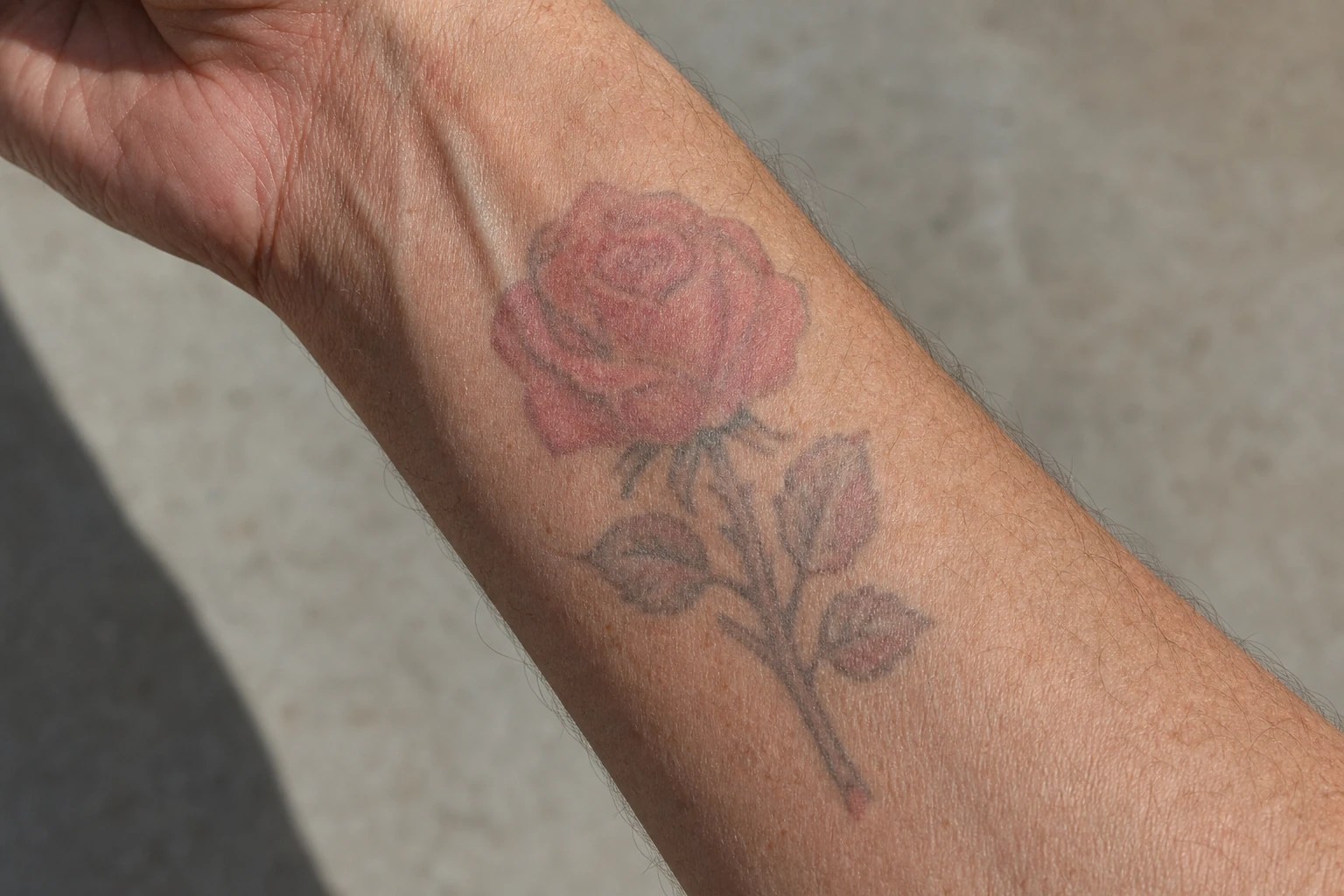 An aged red-ink tattoo — red responds best to a 532nm laser.
Wavelengths and colour: why red needs 532nm
A laser only shatters ink that absorbs its specific wavelength, which is why one laser setting cannot remove every colour. The 532nm wavelength is a frequency-doubled Nd:YAG — the same 1064nm Nd:YAG laser used for black ink, passed through a crystal that halves the wavelength and turns the beam green. That green light is what red, orange and warm-toned inks absorb.
| Ink colour | Best wavelength | Notes |
|---|---|---|
| Black, dark inks | 1064nm (Nd:YAG) | The most common; easiest to clear |
| Red, orange, warm tones | 532nm (frequency-doubled Nd:YAG) | Absorbs green light well; responsive |
| Green | 694nm (ruby) / 755nm (alexandrite) | Stubborn; needs longer wavelengths |
| Blue | 694nm / 755nm | Stubborn; often the last to clear |
The practical point for anyone with red in their tattoo: 532nm is a distinct setting or device, and fewer clinics carry it than the standard 1064nm. A clinic set up mainly to remove black ink may not have — or may not routinely use — the 532nm output that red needs. The StatPearls clinical reference on laser tattoo removal describes this wavelength-to-pigment matching as the core of how removal is planned.
That is why it is worth asking directly. In our directory, most clinics don't publish their exact wavelengths at all — as a floor, about 18% of the 5,700 clinics we track publicly note picosecond lasers and 15% note Q-switched (as of July 2026), and even fewer specify 532nm capability. The absence of a listing doesn't mean a clinic can't treat red; it means you should confirm during the consultation.
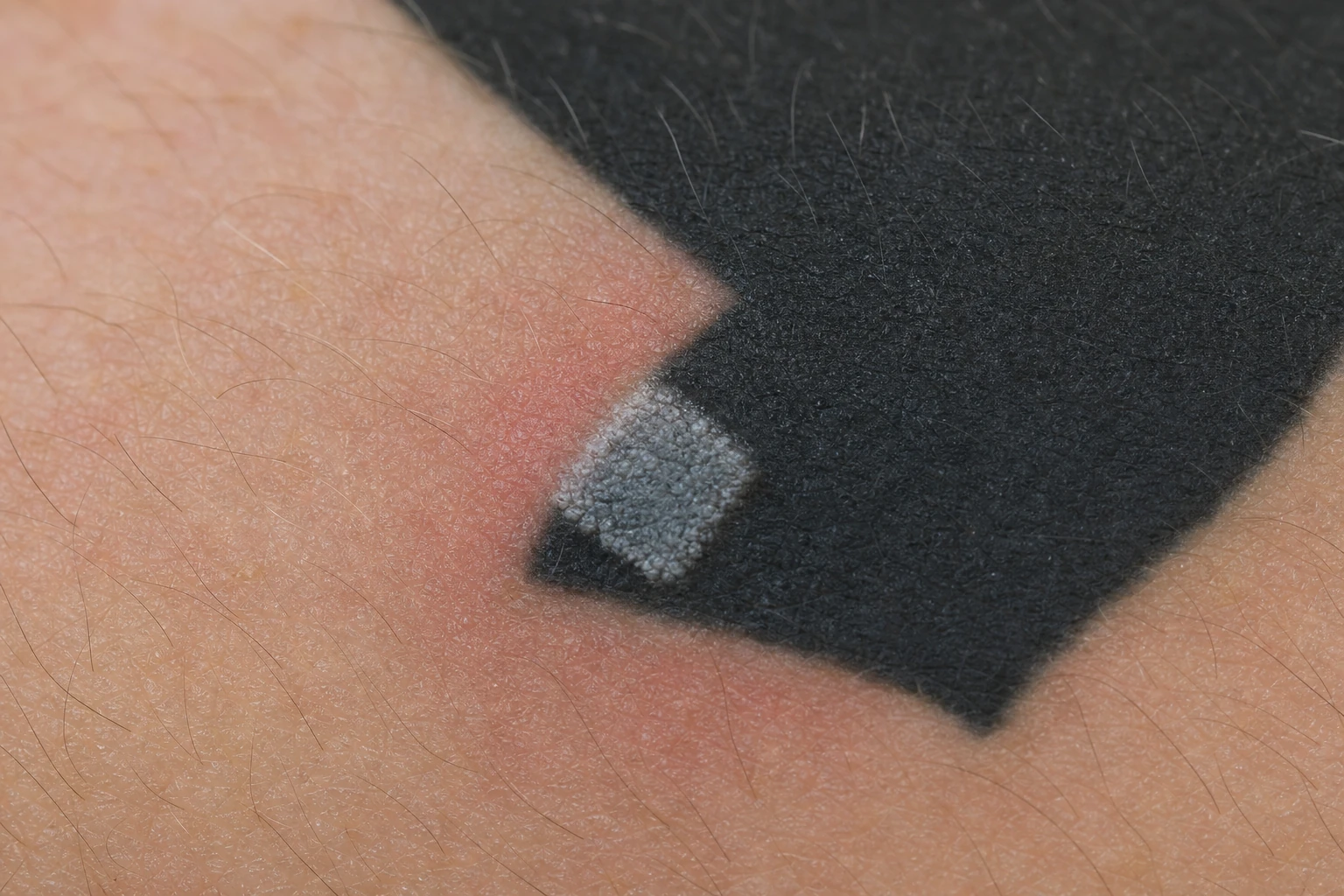 A forearm tattoo during removal.
The real red-ink issue: allergic reactions
Here is what sets red apart from every other colour. A red-ink allergy is a delayed immune reaction to the pigment in red tattoo ink — most commonly a form of allergic contact dermatitis or a lichenoid (scaly, purplish) reaction confined to the red areas of the design. The American Academy of Dermatology notes that red ink causes more allergic reactions than other tattoo colours.
The cause has shifted over time. Historically, red was made with cinnabar — mercury sulfide — a well-known skin sensitiser. Modern inks have largely moved away from mercury, but the replacements aren't reaction-free: today's reds more often use azo or other organic pigments, which can also provoke delayed hypersensitivity. A 2016 systematic review, Patterns of Reactions to Red Pigment Tattoo and Treatment Methods in Dermatology and Therapy, found that both cinnabar and modern azo/quinacridone pigments were linked to dermatitis and lichenoid reactions, sometimes appearing years after the tattoo was applied.
Signs of a red-ink reaction include persistent itching, raised or bumpy skin, redness or swelling, or a scaly rash that tracks the red parts of the tattoo specifically. These can surface long after the tattoo has healed.
Can laser removal flare a red-ink allergy?
Occasionally, yes — and this is the part to take seriously. Removing a tattoo shatters the pigment into fragments and disperses them through the lymphatic system. If your immune system is primed to react to that red pigment, breaking it up can expose more of it and flare a reaction that had been dormant — showing as localised swelling, itching, or a wider inflammatory response.
This is not common, and the 2016 review above actually documents Q-switched lasers being used to improve stubborn red-ink reactions in some patients. But the risk is real enough that it changes the safe approach:
- Tell your clinician about any reaction the tattoo has ever had — itching, swelling, scaling, or a rash — even if it settled.
- Consider a test patch. Treating a small area first lets the clinician watch how your skin responds before committing to the whole tattoo. It is a reasonable precaution for reactive red ink.
- Expect a more cautious plan. A provider may space sessions differently, treat conservatively, or in some cases refer you to a dermatologist if a reaction is active.
None of this means red tattoos shouldn't be removed. It means red is the one colour where the pre-treatment conversation about your skin's history matters as much as the laser itself.
This is general information, not medical advice. Laser tattoo removal is a medical procedure with real risks, and red-ink reactions can be unpredictable. If your red tattoo has ever reacted, or reacts during treatment, consult a licensed provider or dermatologist before continuing.
Compare clinics that can treat red ink
Because red needs the 532nm wavelength — and because red is the colour most likely to involve an allergy question — the most useful thing you can do before booking is compare clinics and ask two specific things: do you have a 532nm laser, and how do you handle a history of red-ink reaction?
Compare tattoo-removal clinics in your city to see what's available near you, or start with a dense market like tattoo removal in Melbourne to see how listings and lasers stack up side by side. For the fuller picture on which colours resist, read our pillar guide to the hardest tattoo colours to remove, and to weigh the general risks first, see is laser tattoo removal safe?.
Frequently asked questions
Can red ink be removed with laser?
Yes. Red ink responds well to laser removal because it absorbs the 532nm (green) wavelength strongly. Red is often one of the easier colours to clear, along with black. The main complication with red is not stubbornness but that it is the ink most associated with allergic and inflammatory skin reactions, which a clinician should assess first.
Why is red tattoo ink linked to allergic reactions?
Red pigment causes more documented skin reactions than any other tattoo colour. Historically the culprit was cinnabar (mercury sulfide); modern red inks more often use azo or organic pigments, which can also trigger delayed reactions. Reactions can appear months or years after the tattoo, showing as itching, raised skin, or a scaly rash confined to the red areas.
What wavelength removes red ink?
Red ink is treated with a 532nm laser — a frequency-doubled Nd:YAG that produces green light, which red pigment absorbs strongly. This is different from the 1064nm wavelength used for black ink. Because 532nm is a separate setting or device, not every clinic offers it, so it is worth confirming before you book if your tattoo contains red.
Can laser tattoo removal trigger a red ink allergy?
Occasionally. Shattering pigment can expose the immune system to ink it previously tolerated, and reports describe removal flaring a dormant reaction or causing localised swelling and itching. It is uncommon, but you should tell your clinician about any past reaction to the tattoo so they can consider a test patch and adjust their approach.
Should I get a patch test before removing a red tattoo?
If your red tattoo has ever itched, swelled or flared, discuss a test patch with your clinician. Treating a small area first lets them watch how your skin responds before committing to the full tattoo. A patch test is a reasonable precaution for reactive red ink, though the decision belongs to the licensed provider assessing your skin.
Is red ink harder to remove than black?
No — red is generally one of the more responsive colours, similar to black, because it absorbs the 532nm wavelength well. The genuinely stubborn colours are green and blue, which need longer wavelengths. Red's challenge is medical rather than technical: its higher rate of allergic reaction means a careful assessment matters more than raw session count.
Related guides
Related Guides
- Ink & Colours
Selective Tattoo Removal: Erasing Part of a Tattoo (2026)
Selective tattoo removal targets one part of a tattoo — a name, a figure, one colour — while leaving the rest.
- Ink & Colours
Removing an Ex-Partner's Name Tattoo: Your Options in 2026
Removing an ex's name tattoo? A partner's name is one of the most-removed tattoos — and small black lettering is among the quickest and cheapest to clear.
- Ink & Colours
Name & Lettering Tattoo Removal
Name and lettering tattoos are usually small and black, so per-unit they're among the easier tattoos to remove — but dense, deep script needs patience.