Tattoo Removal Methods Compared: What Works in 2026
Tattoo removal works, and for almost everyone the first-line method is laser — Q-switched or picosecond — because it clears ink without cutting the skin. Saline suits cosmetic and permanent-makeup work; surgical excision fits only tiny tattoos. Creams, dermabrasion and acid peels are largely obsolete or unsafe. Here is every method, honestly compared.
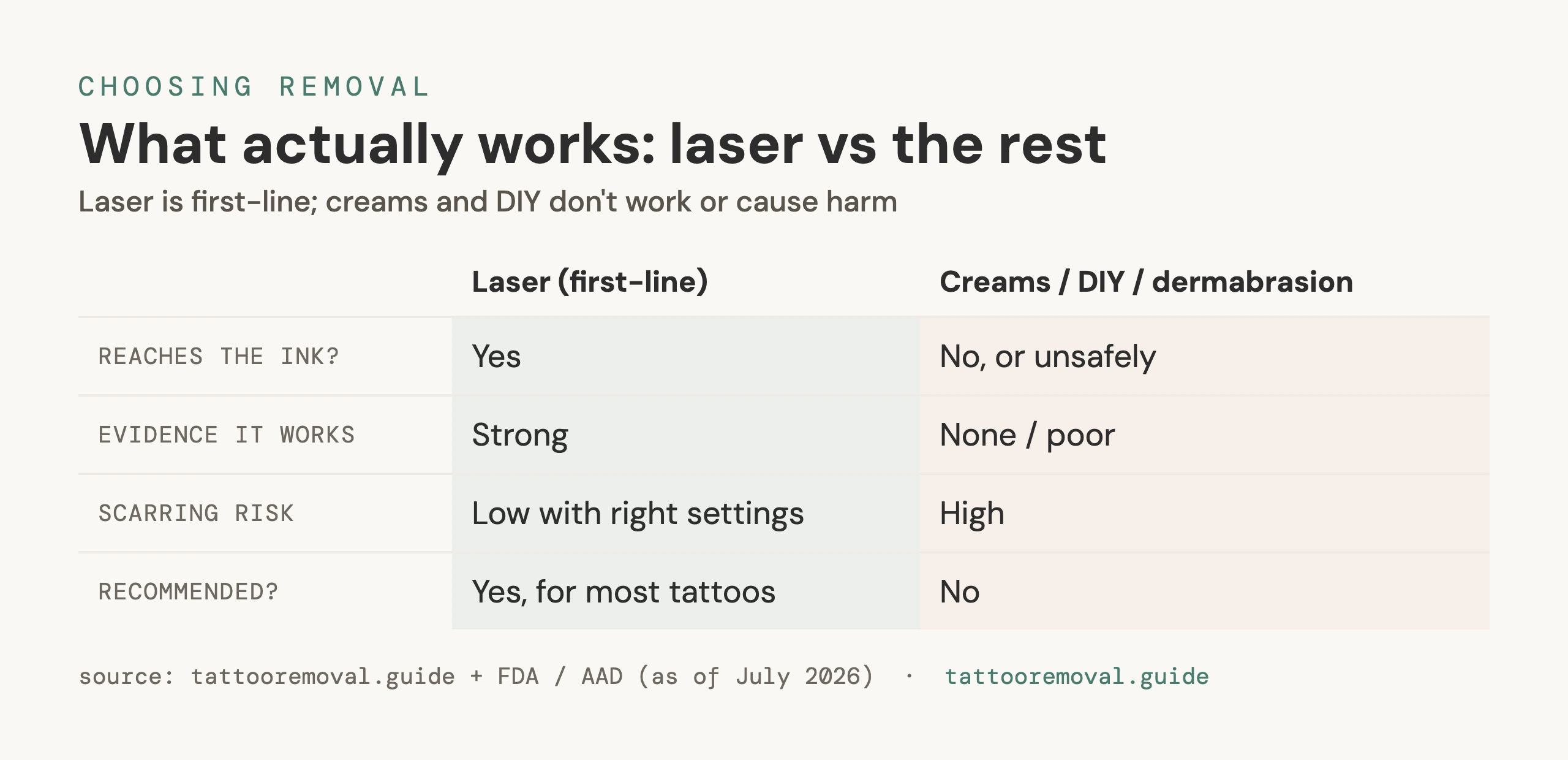 Laser is the evidence-based first-line method; creams and DIY either don't reach the ink or cause harm.
Key Takeaways
- Laser is first-line for most people. Q-switched and picosecond lasers both work; the difference is pulse speed, not one being "better."
- Creams cannot remove a tattoo. Ink sits in the dermis; creams only touch the surface. Acid-based "removal" kits risk chemical burns.
- Saline has a real niche — cosmetic tattoos and permanent makeup — where it can outperform laser.
- Surgical excision is for tiny tattoos only. It trades ink for an unavoidable scar.
- Dermabrasion, salabrasion and TCA peels are largely obsolete — high scarring risk for uncertain results.
- Of the 5,700 specialist clinics in our directory, ~18% note picosecond and ~15% note Q-switched (as of July 2026) — so "which method" is usually really "which machine is near you."
First, the honest debunk: what doesn't remove a tattoo
Every year people spend money on things that were never going to work. Two are worth naming before the comparison, because they cause real harm.
Removal creams don't reach the ink. A tattoo is permanent because the ink is deposited in the dermis — the deeper skin layer your body can't shed. Topical creams act on the epidermis, the surface that renews itself every few weeks. A cream physically cannot reach the pigment it claims to fade. The U.S. Food & Drug Administration is blunt about this: it warns that removal is a medical procedure and that over-the-counter products are not proven to work and can cause skin reactions (FDA).
DIY and "acid" removal is dangerous. Some kits and clinics use trichloroacetic acid (TCA) or salt-and-abrasion methods sold for home use. Applied to a tattoo, these are uncontrolled chemical or mechanical burns. The likely outcome isn't a clean result — it's scarring, infection, or pigment change, with the tattoo still partly visible underneath. If a method works by wounding your skin, it belongs with a trained provider or not at all.
With that cleared up, here is how the legitimate methods actually stack up.
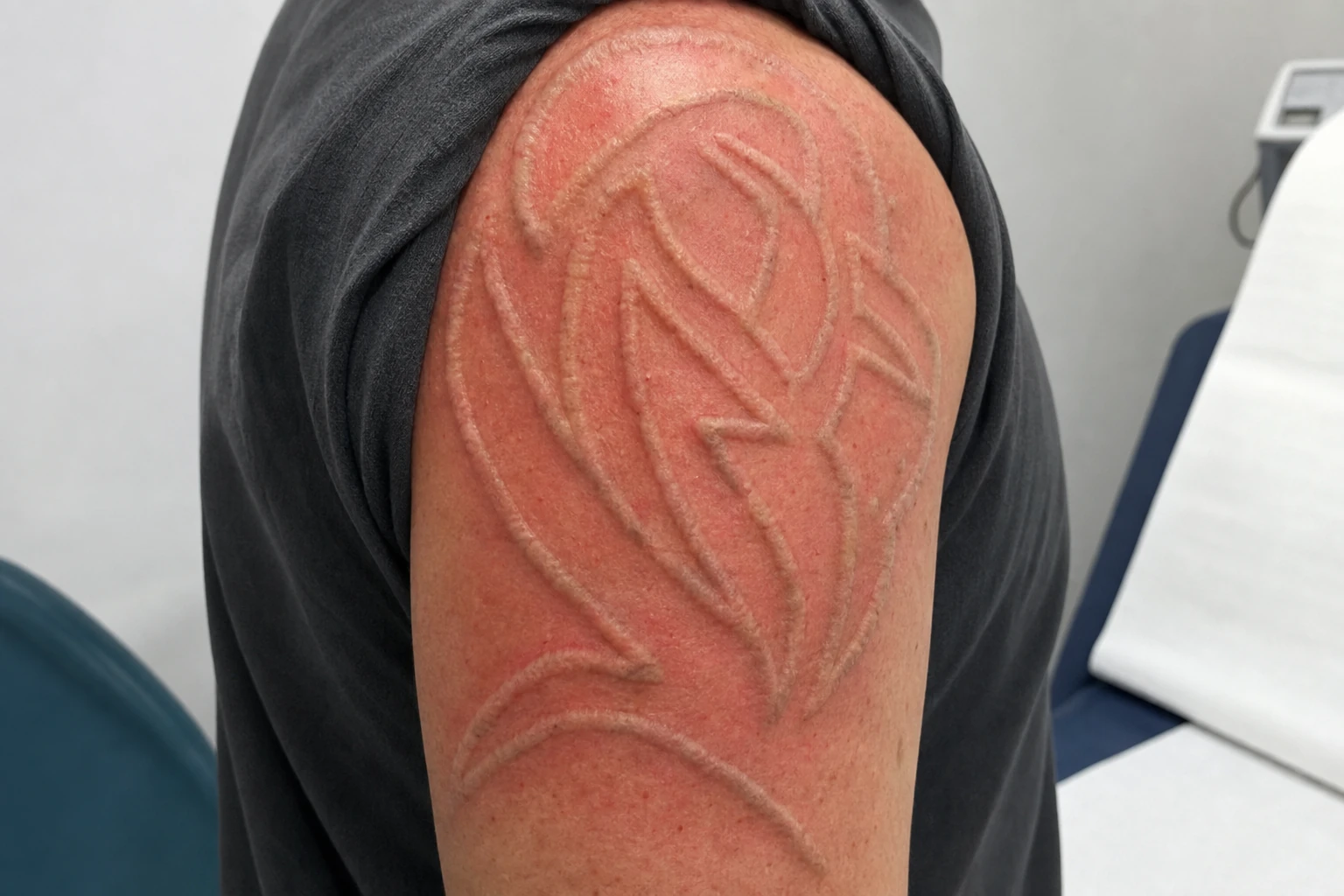 A dense, dark tattoo — density and depth set the removal pace.
Every tattoo removal method, compared
| Method | How it works | Typical sessions | Cost (per session) | Scarring risk | Works on colour? | TRG verdict |
|---|---|---|---|---|---|---|
| Laser — Q-switched | Nanosecond light pulses shatter ink into fragments the immune system clears | ~6–15+ | Directory range $50–$2,030, median ~$200 (as of July 2026) | Low when done properly | Yes; some colours harder | First-line for most tattoos |
| Laser — picosecond | Faster (trillionth-of-a-second) pulses shatter ink more finely | ~4–10+ | Same directory range as above | Low when done properly | Yes; can help stubborn colours | First-line; equal partner to Q-switched, not "better" |
| Saline | Salt solution opens a controlled wound that draws ink toward the surface | Varies; several | General market pricing (not in our directory data) | Moderate (open-wound method) | Yes — colour-independent | Real niche: cosmetic tattoos & permanent makeup |
| Surgical excision | Surgeon cuts out the tattooed skin and stitches the edges | 1 (sometimes staged) | General surgical pricing | High — a scar or line is unavoidable | Any colour (skin is removed) | Only for very small tattoos |
| Dermabrasion / salabrasion | Skin is sanded or abraded away layer by layer | Varies | General market pricing | High and unpredictable | Partial, uneven | Largely obsolete — avoid |
| Chemical / TCA peel | Acid burns off skin layers to lift pigment | Varies | General market pricing | High (chemical burn) | Partial, uneven | Not recommended |
| Removal creams | Marketed as fading the ink topically | N/A | Low retail | Skin irritation / burns | No | Do not work — skip entirely |
Laser cost figures are advertised "from" per-session prices across our directory, in each market's local currency, as of July 2026 (TRG directory). Costs for non-laser methods are general market context, not directory data — get a quote at consultation. This is descriptive information, not a price guarantee.
The honest hierarchy
Strip away the marketing and the ranking is simple:
Laser first, for almost everyone. It's the only method that removes ink without deliberately wounding healthy skin, and it's what dermatology bodies describe as the standard of care. The American Academy of Dermatology notes that Q-switched lasers are the established tool and that results depend on the tattoo and the person, not on any single "miracle" device (AAD). Q-switched vs picosecond is not a good-vs-better story — they use different pulse durations, both are effective, and the right one depends on your ink colours and skin. Any clinic claiming one is universally superior is selling a machine, not an outcome.
Saline for the niche it actually owns. Because saline lifts pigment by osmosis rather than light absorption, it doesn't care what colour the ink is — which makes it a genuine option for permanent makeup (brows, lip blush) and small cosmetic tattoos, where laser wavelengths and delicate areas get awkward. It's slow over large body tattoos, so it's a scalpel, not a hammer.
Surgical excision only when the tattoo is tiny. Cutting the ink out and stitching the gap removes any colour in one go — but you trade the tattoo for a permanent scar or line. That maths only works on a small design. Cleveland Clinic lists excision and dermabrasion as older options that lasers have largely replaced for exactly this reason (Cleveland Clinic).
Dermabrasion, salabrasion and acid peels: mostly history. These predate modern lasers. They remove tattoos by removing skin, which means unpredictable results and a real scarring risk. They survive mostly where lasers aren't available or affordable — not because they're better.
Creams: not a method. See the debunk above.
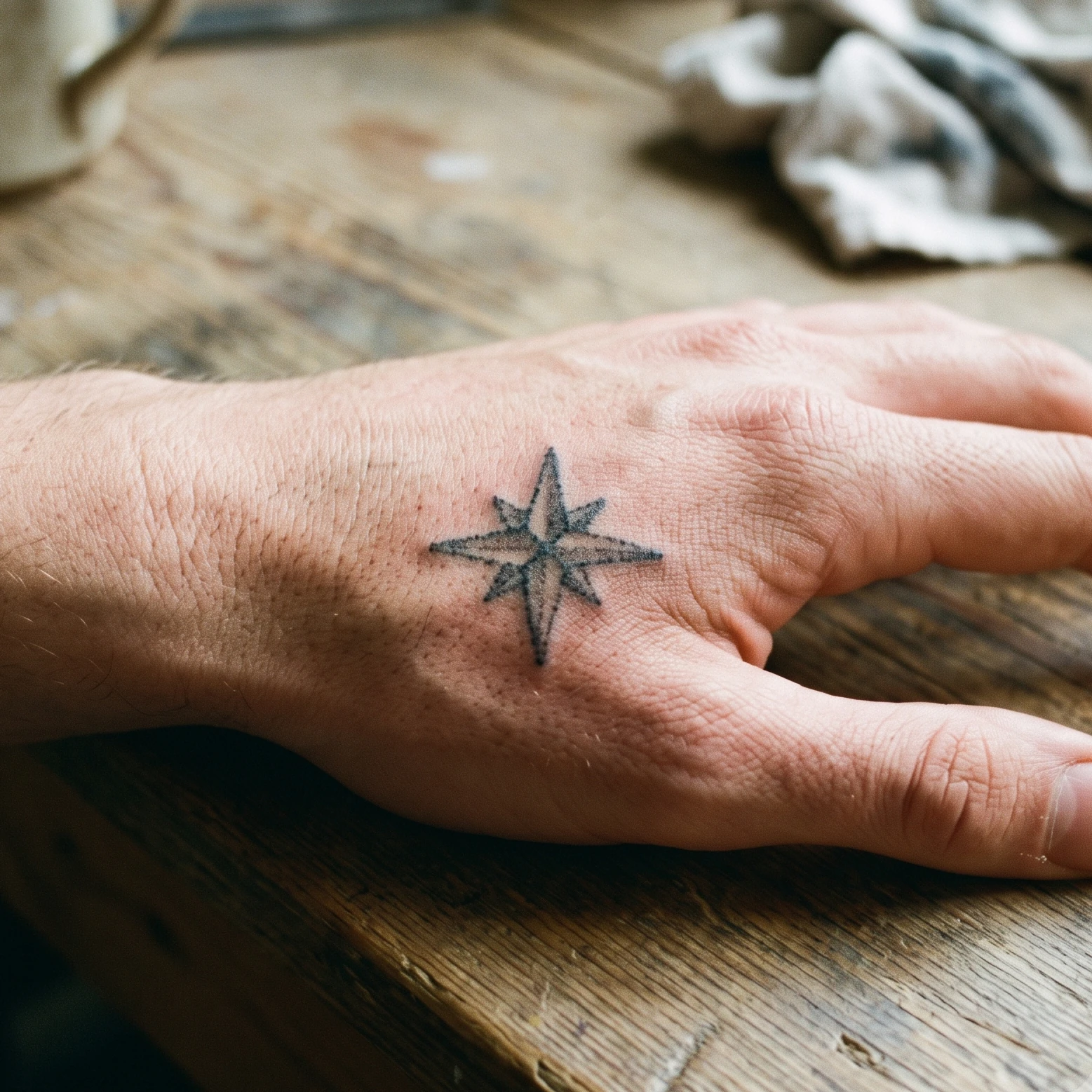 An amateur stick-and-poke — often one of the easier tattoos to remove.
Does removal even work? Setting realistic expectations
Yes — but "works" means faded and cleared over a course of treatment, not gone in one visit. Managing that expectation is the difference between a satisfied result and disappointment.
- It takes a course, not a session. Most tattoos need roughly 4 to 15 or more laser sessions. Amateur tattoos and small black designs sit at the low end; large, dense, multicolour professional work sits at the high end (StatPearls).
- The 6–8 week clearing window. Sessions are spaced about six to eight weeks apart on purpose. The laser only fragments the ink; your immune system does the actual clearing, and rushing it raises the risk of skin damage without speeding results. Removal is paced by your biology, not your calendar.
- The colour-difficulty ladder. Black and dark inks absorb laser light best and clear most reliably. Reds and warm tones usually respond well. Greens and bright blues are the stubborn ones and often need specific wavelengths a clinic may or may not own. Yellows and some pastels can be the hardest of all.
- "Ghosting" is possible. Occasionally a faint shadow or slight skin-tone change remains after the ink itself has cleared, especially with heavily saturated tattoos. A good clinic raises this before you start.
No credible provider can promise complete removal, an exact session count, or zero marking in advance — the honest answer is always a range plus "we'll know more as your skin responds."
Which method for which situation
A quick decision guide — then confirm it with a licensed provider who has seen your tattoo:
- A normal body tattoo you want gone → Laser. Either Q-switched or picosecond; pick the clinic, not the buzzword.
- Permanent makeup or a small cosmetic tattoo → Saline is worth asking about, especially for brows and lips.
- A tiny tattoo you'd accept a small scar to be rid of quickly → Surgical excision may be discussed.
- Mostly green or bright-blue ink → Laser at a clinic with the right wavelengths — ask specifically what their laser covers.
- Tempted by a cream, kit, or "acid" method → Don't. Book a consultation instead; you'll save money and skin.
What the directory shows — and why "method" is really "which machine is near you"
Here's the part most method guides miss. Once you've decided laser is right — and for most people it is — the real variable isn't the category of method. It's which laser is available at the clinics near you, and what they charge.
Across the 5,700 specialist clinics we track in 1,043 cities, about 18% note picosecond technology and about 15% note Q-switched (as of July 2026) — and most listings don't specify the laser type at all. That's not a knock on any clinic; it's the reality that capability is unevenly distributed. The "best method" is only as available as the nearest clinic that offers it, at a price you can see. And because most tattoos need a full course, the per-session price gap between two clinics in the same city compounds into a very different total bill.
This is where an independent directory earns its place. Every competitor writing about "the best method" sells one method — the laser clinic recommends laser, the saline studio recommends saline, the surgeon recommends excision. We sell none of them. We list them, with their stated technology and pricing side by side, so you can compare on the facts.
Compare tattoo removal clinics in your city to see which lasers are offered near you and what they charge — or start with a dense market like Melbourne, where 215 clinics list and per-session pricing spans a wide band. For how those per-session numbers add up across a full course, see our guide to what drives tattoo removal cost.
This article is general information, not medical advice. Tattoo removal is a medical procedure with individual risks and results — consult a licensed provider before starting any method. Directory figures are a point-in-time snapshot (as of July 2026) and drift as clinics update their listings.
Frequently asked questions
What are the different methods of tattoo removal?
The main methods are laser (Q-switched and picosecond), saline, surgical excision, dermabrasion or salabrasion, and chemical or acid removal. Removal creams are also marketed but do not reach the ink. Laser is the first-line option for most people; the others are niche, dated, or unsafe.
What is the best way to remove a tattoo?
For most people, laser removal is the first-line method because it clears ink without cutting the skin, and both Q-switched and picosecond lasers are effective. Saline has a real niche for cosmetic and permanent-makeup work, and surgical excision suits only very small tattoos. The right choice depends on your tattoo and skin.
Do tattoo removal creams work?
No. Tattoo ink sits in the dermis, the deeper skin layer, while creams only act on the surface epidermis, so they cannot reach or break down the ink. At best a cream fades the top layer slightly; at worst, acid-based products cause chemical burns and scarring. No cream is proven to remove a tattoo.
How many sessions does laser tattoo removal take?
Most tattoos need roughly 4 to 15 or more laser sessions, spaced about 6 to 8 weeks apart to let the skin heal and the immune system clear shattered ink. The exact number depends on ink colours, depth, age, your skin, and the tattoo's size. A clinic can only estimate after seeing it.
Can all tattoo colours be removed?
Most can, but colours respond differently. Black and dark inks clear most reliably; reds and warmer tones usually respond well; greens and bright blues are the hardest and need specific laser wavelengths. Some colours may leave faint "ghosting". Realistic, complete clearance depends on the ink and the clinic's laser range.
Is surgical tattoo removal better than laser?
Only for very small tattoos. Surgical excision cuts the tattooed skin out and stitches the edges, so it removes ink in one or a few visits regardless of colour — but it always leaves a scar or line. For anything larger than a small design, laser is usually preferred because it avoids that unavoidable scar.
Is saline tattoo removal safe?
Saline removal uses a salt solution to draw ink toward the surface through a controlled wound, and it is a recognised option for cosmetic tattoos and permanent makeup such as brows. It can work regardless of ink colour, but it is slower over large areas and carries the scarring and infection risks of any open-wound method.
Related guides
Related Guides
- Choosing Removal
Tattoo Regret: You Have More Options Than You Think
Regret a tattoo? You're not alone — about 24% of tattooed people do. Your real options: accept, rework, cover up or remove — and why not to decide too fast.
- Choosing Removal
Surgical Tattoo Removal: When Cutting It Out Beats Laser
Surgical tattoo removal cuts out the inked skin in one or a few visits, regardless of colour — but always leaves a scar. When it beats laser, explained.
- Choosing Removal
Saline Tattoo Removal: Does It Work, and Is It Better Than Laser?
Does saline tattoo removal work? It lifts pigment out through a scab — great for PMU and small tattoos, but slower and not automatically gentler than laser.