Surgical Tattoo Removal: When Cutting It Out Beats Laser

Surgical tattoo removal — known clinically as excision — is a procedure in which a surgeon cuts out the tattooed skin with a scalpel and stitches the edges back together. Because it physically removes the ink rather than shattering it with light, it clears a tattoo in one or a few visits regardless of colour — but it always leaves a scar or a line, which is why it is only sensible for very small tattoos.
That single trade-off — a fast, colour-blind result in exchange for a permanent scar — is the whole story of surgical removal, and the reason it is a niche option rather than the default. This guide explains what excision actually involves, sets it honestly against laser in a side-by-side table, covers the older sanding methods (dermabrasion and salabrasion) and why laser replaced them, and spells out the narrow cases where a surgeon genuinely beats a laser. Figures from the Tattoo Removal Guide directory are stamped (as of July 2026).
Key Takeaways
- Surgical excision cuts the tattoo out and stitches the skin closed — it removes ink in one or a few visits, regardless of colour, but always leaves a scar.
- It is realistic only for small tattoos; larger ones would need a long scar, skin grafts or staged surgery.
- Laser is the default for most tattoos: far less scarring, works on most designs, but needs many sessions over months and can struggle with some colours.
- Dermabrasion and salabrasion — sanding the ink away — are older methods largely replaced by laser because of higher scarring and texture-change risk.
- Of the 5,700 specialist clinics across 1,043 cities we track, essentially all list laser, not surgery, as their method (as of July 2026) — excision is a surgeon's procedure, done outside the laser-clinic world.
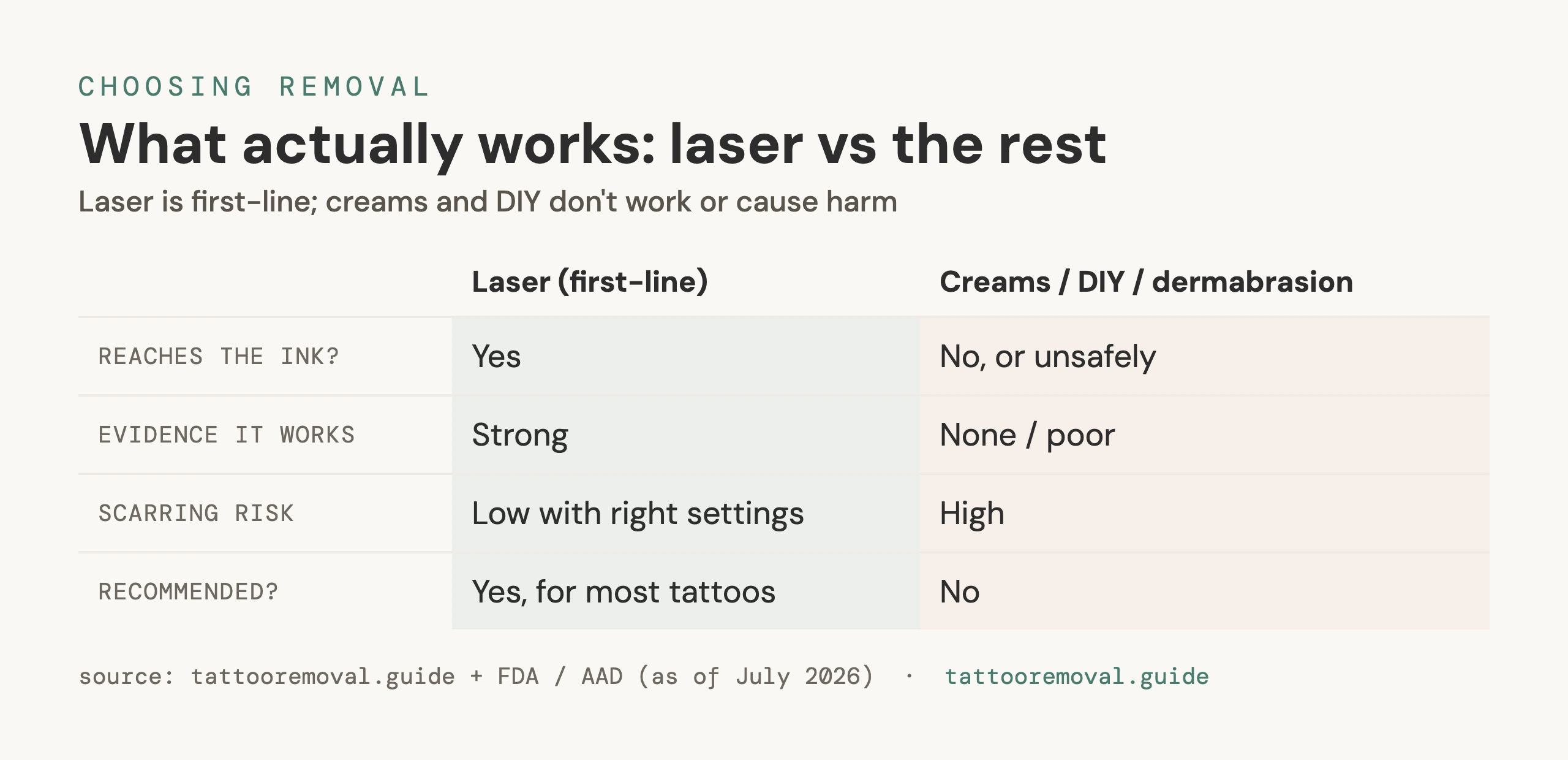 Laser is first-line; other methods are niche or risky.
What is surgical tattoo removal (excision)?
Excision is the surgical removal of a tattoo, in which a surgeon numbs the area, cuts out the tattooed skin with a scalpel, and closes the wound with stitches. For a small tattoo this can often be done in a single procedure under local anaesthetic; the surgeon removes an ellipse of skin containing the ink and draws the edges together into a line.
The appeal is obvious: the ink is physically gone the moment the skin is removed. There is no waiting for your immune system to clear shattered pigment (the mechanism laser relies on), and colour is irrelevant — a scalpel does not care whether the ink is black, green or yellow. As the Cleveland Clinic notes in its tattoo-removal overview, surgical excision is effective but leaves a scar, which is why it is generally reserved for smaller tattoos.
The catch is equally obvious and non-negotiable: you are trading the tattoo for a surgical scar. How visible that scar is depends on the tattoo's size and location, the surgeon's technique and how your skin heals — but a scar of some kind is guaranteed. For a large tattoo, closing the wound may require a skin graft (taking skin from elsewhere on your body) or staged excisions over multiple operations, which is why size, not colour, is the real limit on surgery.
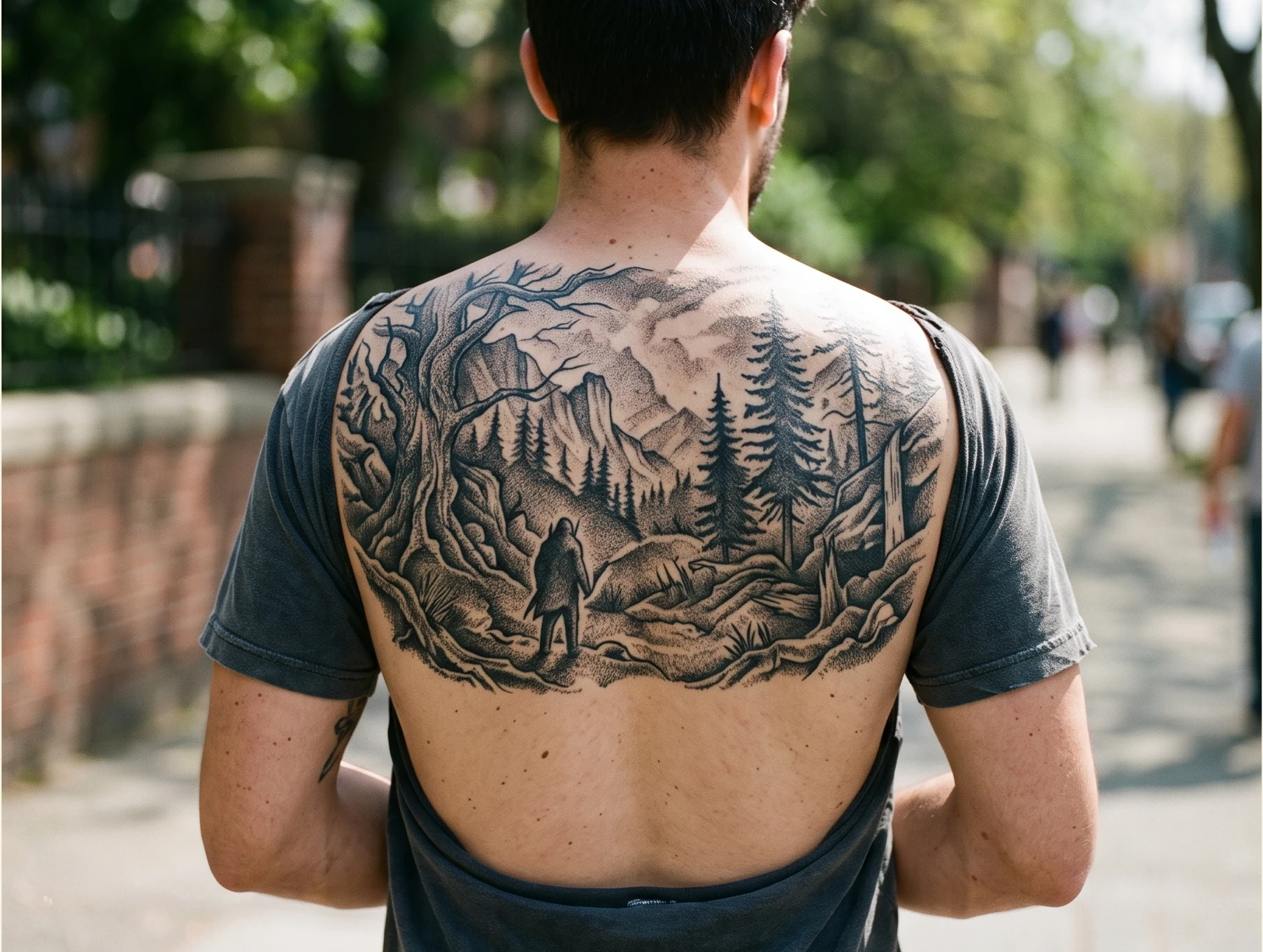 Surgical excision only suits small tattoos — a large back piece like this is a laser job.
Surgery vs laser: the honest comparison
Most people weighing surgery are really asking one question: is cutting it out better than lasering it off? Neither wins outright — they trade different things. Here is the side-by-side.
| Surgical excision | Laser removal | |
|---|---|---|
| Visits / sessions | One or a few | Typically many, often ~5–12+ |
| Total timeline | Weeks (mostly wound healing) | Months to a couple of years |
| Works on all colours? | Yes — colour is irrelevant | No — some colours (green, blue) resist |
| Scarring | Always leaves a scar or line | Usually minimal; scarring is uncommon |
| Cost basis | One-off surgical fee | Per session (~$50–$2,030 each; median ~$200, as of July 2026) |
| Best for | Very small tattoos; want it gone fast | Most tattoos, especially larger or visible ones |
| Who performs it | A surgeon (plastic surgeon / dermatologist) | A laser clinic or dermatologist |
The pattern is clear. Laser trades time and colour limits for low scarring: it needs many sessions spaced weeks apart because it works by shattering ink and letting your immune system clear it — a staged biological process described in the StatPearls clinical reference on laser tattoo removal, and the reason session counts are predicted rather than promised (the validated Kirby-Desai scale scores six factors, including colour and density). Surgery trades a guaranteed scar for speed and colour-blindness. Which trade is right depends almost entirely on how big your tattoo is and how you feel about a scar.
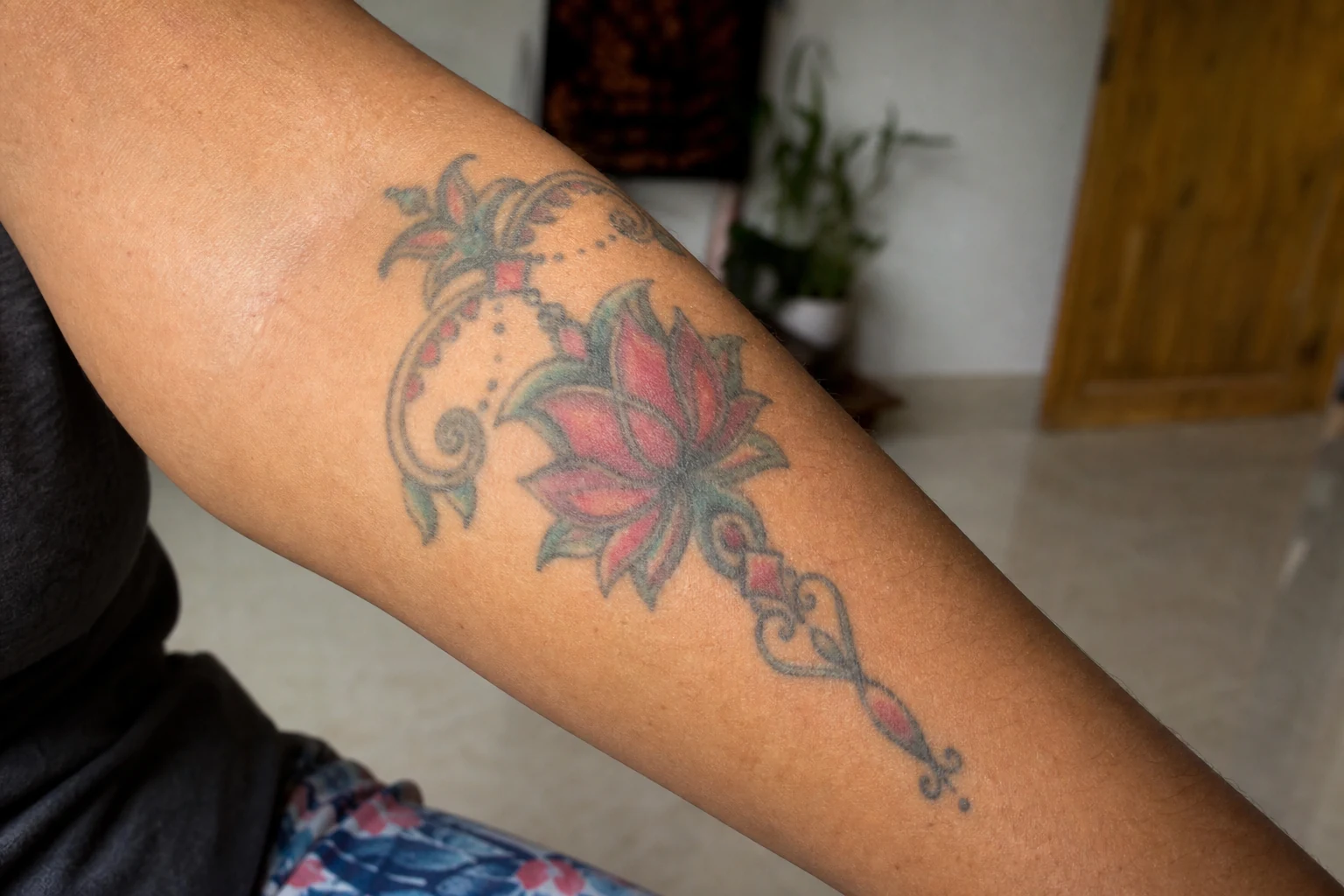 A forearm tattoo during removal.
Dermabrasion and salabrasion: the methods laser replaced
Two older physical methods sometimes come up alongside surgery, and it is worth knowing why they have faded.
Dermabrasion is a procedure in which the upper layers of tattooed skin are sanded away with a rotating abrasive tool, so that ink is shed as the raw area heals over. Salabrasion is a related, even older technique that uses salt and friction to abrade the skin. Both aim to physically wear the ink out of the skin rather than break it up with light.
The American Academy of Dermatology lists dermabrasion among tattoo-removal options, but in modern practice it and salabrasion have been largely replaced by laser. The reason is risk: abrading skin down far enough to reach and release dermal ink tends to carry a higher chance of scarring, permanent texture change and uneven pigmentation than laser, whose targeted pulses can shatter ink while leaving surrounding skin comparatively intact. Results from abrasion are also less predictable. For most people, laser now offers a better balance of effectiveness and skin safety — which is why it, not sanding, became the standard.
When a surgeon genuinely beats a laser
Surgery is niche, but for the right tattoo it is the smarter choice. A surgeon can genuinely beat a laser when:
- The tattoo is very small. A tiny tattoo — a small word, symbol or a stray dot — can be excised into a short, neat line in one procedure. Lasering the same small tattoo could still mean several visits over months.
- You want it gone in one go. If waiting many months for staged laser sessions is a dealbreaker, one surgical procedure removes the ink immediately.
- The ink is a colour laser struggles with. Stubborn colours like green and some blues can resist laser and stretch out the session count. A scalpel is colour-blind — excision removes them as readily as black.
- You accept the scar. This is the deciding factor. If you would rather have a small scar than the tattoo, and the tattoo is small enough to keep that scar short, surgery is reasonable.
For essentially everything else — larger tattoos, visible areas where a scar matters, or anyone who prizes minimal scarring over speed — laser remains the default, and it is what the overwhelming majority of removal clinics offer.
This is general information, not medical advice. Surgical excision, dermabrasion and laser removal are all medical procedures with real risks, including scarring, infection and pigment or texture change. Suitability, results and costs vary by person and tattoo — consult a licensed provider (a surgeon for excision, a qualified clinic for laser) about your specific situation.
Which method fits your tattoo?
The honest way to choose is to match the method to your specific tattoo — its size, colours and location — and to what you are willing to trade. A very small tattoo you want gone fast may point to a surgeon; almost anything larger, or any case where scarring matters, points to laser. Because most people are candidates for laser, the practical next step is to see what is actually available near you.
Compare tattoo-removal clinics in your city to weigh lasers, pricing and reviews side by side, or start with a dense market like tattoo removal in Melbourne to see how listings stack up. For the full menu of options and how they line up, read our pillar on every tattoo-removal method compared, and if you are leaning toward laser, is laser tattoo removal safe? covers the risks and side effects in plain terms.
Frequently asked questions
What is surgical tattoo removal?
Surgical tattoo removal, also called excision, is a procedure in which a surgeon cuts out the tattooed skin with a scalpel and stitches the surrounding edges back together. It removes the ink physically rather than shattering it with light, so it clears a tattoo in one or a few visits regardless of ink colour — but it always leaves a scar or line.
Does surgical tattoo removal leave a scar?
Yes. Because a surgeon physically cuts out and stitches the skin, surgical excision always leaves a scar or a line where the tattoo was. That is the fundamental trade-off: you exchange the ink for a permanent surgical scar. It is why excision is generally reserved for small tattoos, where the resulting line can be kept short and neat.
Is surgical excision better than laser tattoo removal?
Neither is universally better — they suit different situations. Excision removes ink in one or a few visits regardless of colour but always leaves a scar, so it fits very small tattoos. Laser needs many sessions over months and can struggle with some colours, but usually leaves far less scarring, so it suits most tattoos, especially larger ones.
How much does surgical tattoo removal cost compared to laser?
The two are priced differently: surgery is typically a one-off surgical fee, while laser is charged per session across many visits. Across the 5,700 laser clinics we track, per-session prices run roughly $50–$2,030 with a median near $200 (as of July 2026). A surgeon prices excision case by case, so get a written quote at consultation.
What is dermabrasion for tattoo removal?
Dermabrasion is a procedure that sands away the upper layers of tattooed skin with a rotating abrasive tool so the ink can be shed as the area heals. A related method, salabrasion, uses salt and friction. Both are older techniques largely replaced by laser because they carry a higher risk of scarring and permanent texture or pigment change.
Can any tattoo be removed with surgery?
In principle a surgeon can excise any tattoo, but in practice size is the limit. Large tattoos would leave a long scar or need skin grafts and staged surgery, which most people and surgeons avoid. Surgical excision is realistically an option for small tattoos, where the trade of ink for a short scar is acceptable.
When is surgery better than laser for tattoo removal?
Surgery can beat laser when a tattoo is very small, when you want it gone in one or a few visits rather than over months, when the ink is a colour lasers struggle with, or when you are willing to accept a scar. For most tattoos, especially larger or visible ones, laser's lower scarring makes it the default choice.
Related guides
Related Guides
- Choosing Removal
Tattoo Regret: You Have More Options Than You Think
Regret a tattoo? You're not alone — about 24% of tattooed people do. Your real options: accept, rework, cover up or remove — and why not to decide too fast.
- Choosing Removal
Tattoo Removal Methods Compared: What Works in 2026
Laser, saline, excision, dermabrasion, acid, creams — every tattoo removal method compared on sessions, cost, scarring and colour, by an independent directory.
- Choosing Removal
Saline Tattoo Removal: Does It Work, and Is It Better Than Laser?
Does saline tattoo removal work? It lifts pigment out through a scab — great for PMU and small tattoos, but slower and not automatically gentler than laser.