Tattoo Regret: You Have More Options Than You Think

Tattoo regret is common and it is fixable — about 24% of tattooed Americans say they regret at least one tattoo (Pew Research Center, 2023), and a 2023 academic study of 1,072 US adults put lifetime regret at 18.2%. If you feel it, you're in normal company — and you have four real options: accept it, adjust it, cover it, or remove it.
This guide walks through all four honestly, plus the one thing worth doing before you choose any of them. No judgement here — changing your mind about a tattoo is one of the most human things there is.
Key Takeaways
- You are not alone. Roughly one in six to one in four tattooed people report regret — about 24% (Pew, 2023) and 18.2% in a peer-reviewed US study.
- Don't decide in the first two weeks. Regret often spikes early and settles. Give the feeling time before you spend money or make an irreversible choice.
- Four options, not one: accept/reframe, adjust/rework, cover up, or laser removal. Which one fits depends entirely on whether you want bare skin or just a different tattoo there.
- Cover-up vs removal turns on how dark the existing ink is — and many people fade with a few laser sessions first, then cover.
- Removal is a process, not an erase button. It fades most tattoos over multiple sessions but can't be guaranteed to reach 100%.
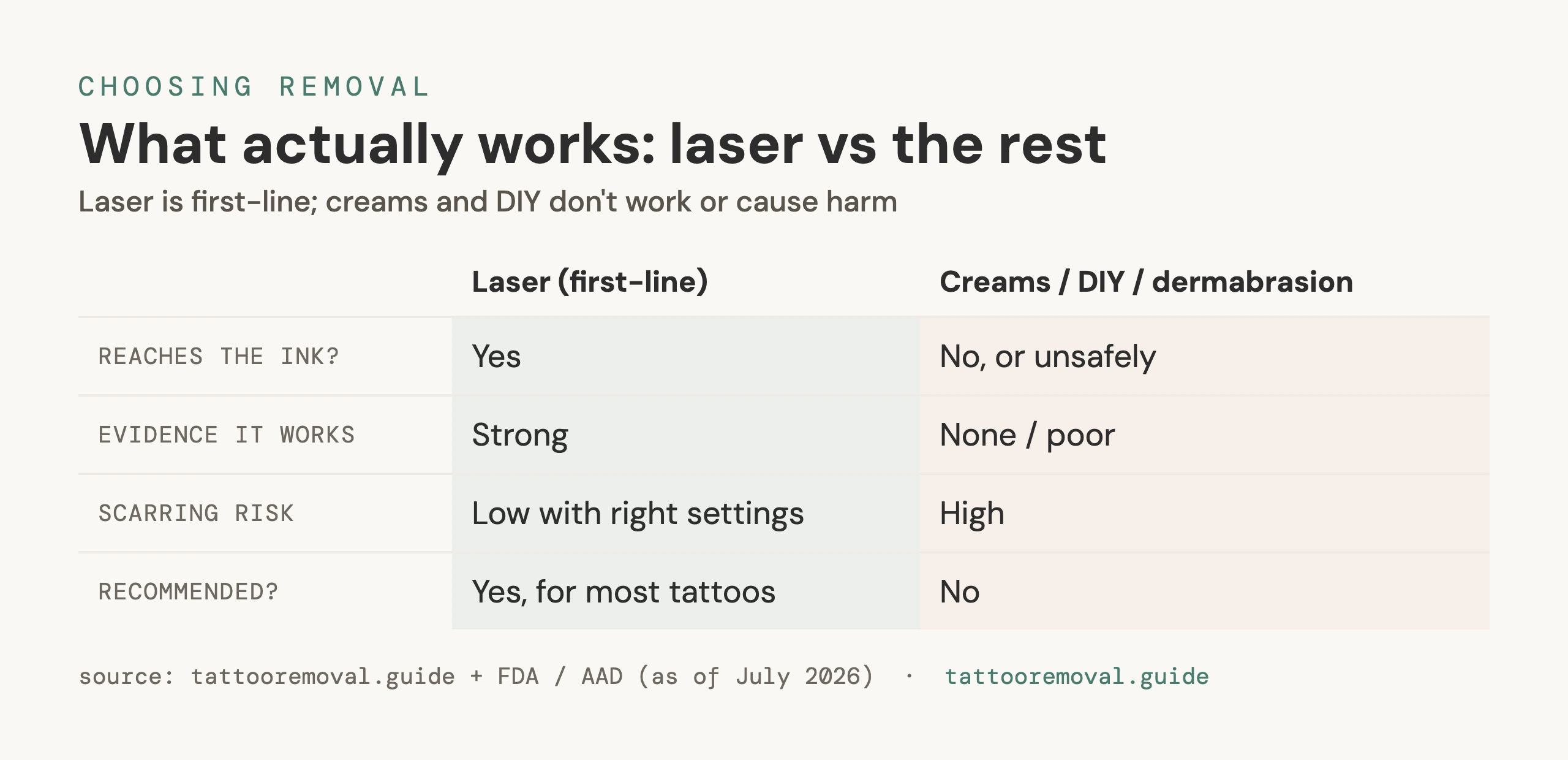 Laser is first-line; other methods are niche or risky.
Is tattoo regret normal?
Tattoo regret is the experience of wishing you hadn't got a tattoo, or wishing you'd got a different one — and it is far more common than the confident-looking people around you might suggest. The Pew Research Center found about 24% of tattooed US adults regret at least one piece; the peer-reviewed Think Before You Ink study found 18.2% of 1,072 tattooed adults regretted one or more.
The same research points to why regret shows up. The strongest predictors were getting tattooed under peer pressure (about 3× the odds), getting inked while impaired (about 3×), and tattoos in highly visible spots like the face, neck or hands (about 2×). If any of that rings true, the feeling makes sense — and it's fixable.
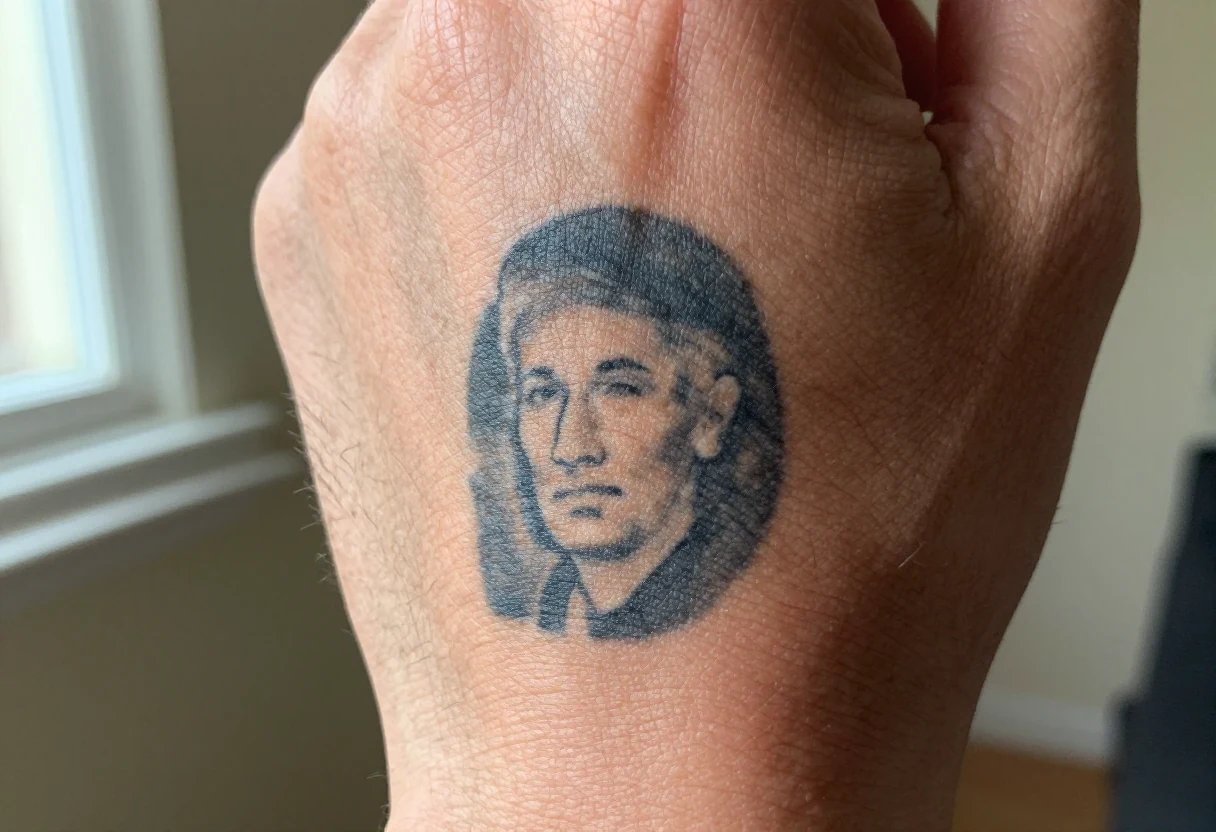 A forearm tattoo during removal.
Why you shouldn't decide in the first two weeks
Here's the most useful thing on this page: when the regret first hits, wait. Regret tends to be loudest in the first days and weeks — right when a fresh tattoo is healing, swollen and unfamiliar, or right after a life change reframes what it means to you. That early feeling is real, but it isn't always the settled one.
A simple rule protects you from both mistakes people make: give it at least two weeks after the feeling hits before you commit money or an irreversible step. Two weeks is long enough for the acute reaction to soften and for you to tell the difference between "I hate this today" and "I know I want this gone." Plenty of people find the regret quietly fades and they keep the tattoo comfortably. Others stay just as certain — and now they're choosing from a calm place instead of a panicked one. Either way, you win by waiting.
 Warm yellow/orange ink — among the stubborn colours.
Your four options for a tattoo you regret
Once you've sat with it, the decision gets simpler. Every path fits into one of four options — and the right one is mostly decided by a single question: do you want bare skin, or just a different tattoo there?
| Option | Best when… | What it asks of you | Realistic expectation |
|---|---|---|---|
| Accept & reframe | The regret is mild or fading; the piece is meaningful under the surface | Nothing but time | The feeling often settles; many people grow back into a tattoo they briefly disliked |
| Adjust / rework | The core idea is fine but the execution, size or detail isn't | One or more artist sessions; priced like new work | A skilled artist can refine linework, add shading or extend a design — but can't lighten existing ink |
| Cover-up | You want a new tattoo in that spot and the old ink isn't too dark | A new (usually larger, darker) tattoo; sometimes laser fading first | A good cover-up hides the old design well — but it constrains the new one's colour and size |
| Remove (laser) | You want the skin bare, or the tattoo is too dark to cover | Multiple sessions over 6 months to 2 years; a per-session budget | Fades most tattoos to clear or near-clear; faint "ghosting" can remain; not guaranteed |
Notice that "accept it" is a legitimate option, not a cop-out. Regret that's still in its first weeks often belongs in that top row for a while.
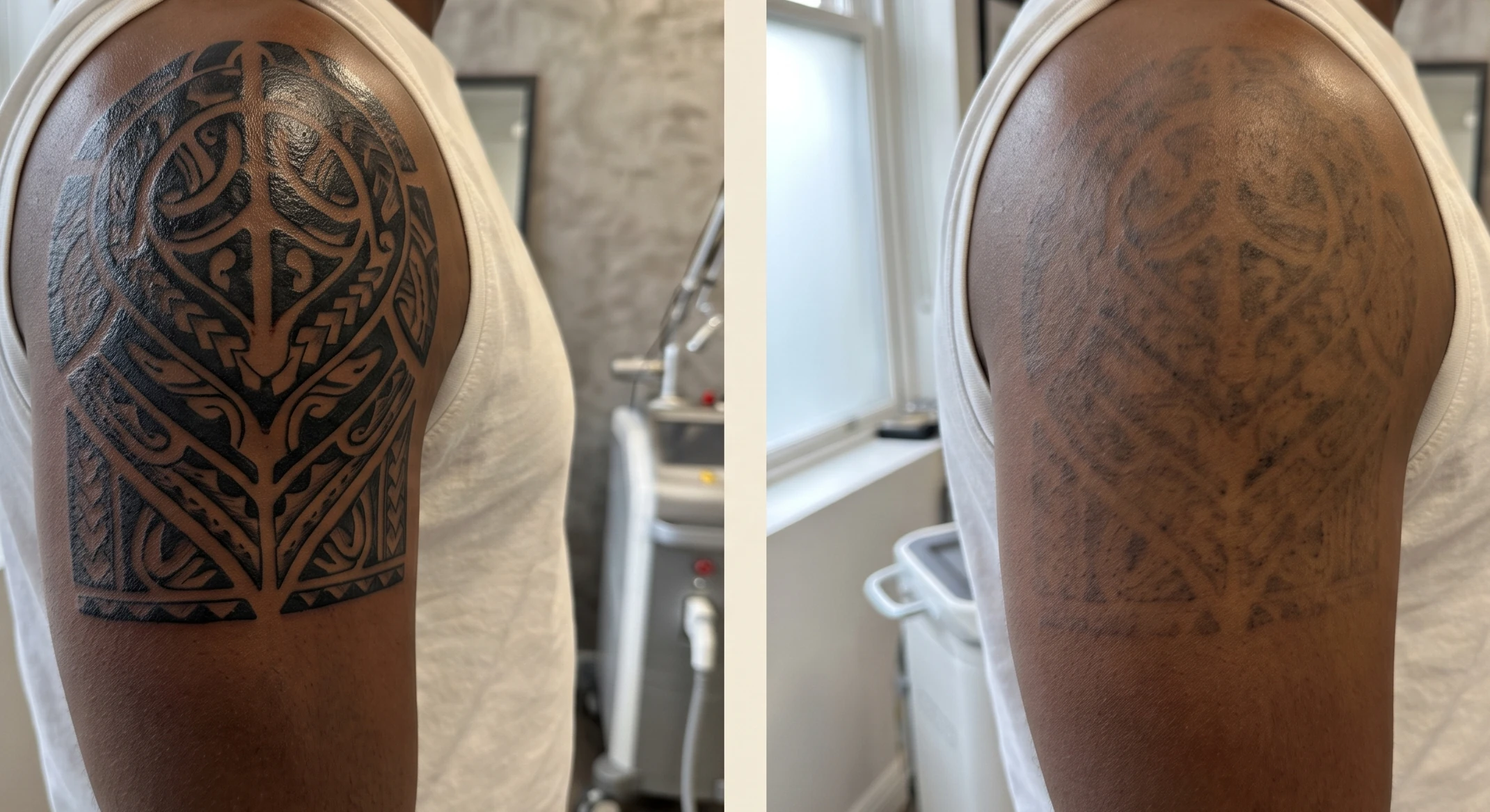 Before and after a full course. Illustrative; results vary.
Cover-up or removal: how to choose
For most people the real decision is between a cover-up and laser removal, so it's worth being precise about how to pick.
Go with a cover-up if you want another tattoo in that spot and the existing ink is relatively light or small. The catch: an artist can only work over old ink, not erase it, so a cover-up almost always has to be bigger and darker than the original to hide it. Dark, dense or black tattoos are the hardest to cover cleanly.
Go with laser removal if you want bare skin at the end, or if the tattoo is too dark for an artist to cover convincingly. As the Cleveland Clinic explains, laser removal works by shattering the ink into fragments your immune system then clears — a staged process that takes several sessions spaced weeks apart, not a single visit.
And here's the option people miss: you don't have to choose one. A common, sensible route is a few laser sessions to fade the old tattoo — not remove it entirely — so a cover-up artist has a lighter canvas and far more freedom with the new design. Fading for a cover-up is quicker and cheaper than full removal because you're not chasing the last faint traces of ink.
If bare skin is the goal, removal is the honest choice — just go in with realistic expectations. The American Academy of Dermatology is clear that while laser removal works well for many tattoos, results vary and some ink resists. No responsible clinic guarantees a session count or a perfect result before assessing your specific tattoo — colour, density, age, location and your skin all move the number.
It's OK to change your mind
A tattoo is a decision you made with the information and feelings you had at the time. Wanting something different now doesn't erase that — it just means you've changed, which is the entire point of being a person. Regret can carry a surprising amount of shame, especially when a tattoo is visible and people ask about it. You don't owe anyone the story, and you don't owe your past self permanence.
The practical version of self-compassion here is simple: don't act from panic, and don't let embarrassment rush you into the most expensive option before you've compared the cheaper ones. A tattoo you regret is a solvable problem with a clear menu of fixes — and the fact that you're reading this means you're already doing the calm, deliberate part right.
This is general information, not medical advice. Laser tattoo removal is a medical procedure with real risks (blistering, scarring, pigment change), and outcomes vary by person and tattoo. Consult a licensed provider before starting removal.
Where to start
If you've landed on removal — full removal or just fading for a cover-up — the most useful next step is to compare the clinics near you, because the number of sessions, the lasers on offer, and the price per session all vary widely between clinics in the same city. Of the 5,700 specialist clinics we track across 1,043 cities (as of July 2026), about 18% publicly note picosecond lasers and 15% note Q-switched — a floor, not the full picture, since most listings don't specify their equipment at all. That's exactly why a local comparison and a proper consultation beat guessing from a headline number.
Compare tattoo-removal clinics in your city to see what's available near you, or start with a dense market like tattoo removal in Melbourne to see how listings, lasers and pricing stack up side by side. Weighing whether the time and money are worth it? Read our honest breakdown of whether tattoo removal is worth it, and see every removal method compared before you commit.
Frequently asked questions
Is tattoo regret common?
Yes. In a 2023 Pew Research Center survey, about 24% of tattooed Americans said they regret at least one of their tattoos. A separate 2023 academic study of 1,072 tattooed US adults put lifetime regret at 18.2%. So somewhere between roughly one in six and one in four tattooed people feel what you feel — you are firmly in normal company.
What should I do if I regret my tattoo?
You have four realistic paths: accept and reframe it, have an artist adjust or rework it, cover it with a new design, or fade and remove it with laser. Start by naming what you actually want — the skin bare, or just a different tattoo there — because that single answer points to the right option and rules out the others.
How do I cope with tattoo regret emotionally?
Give the feeling time before you act on it. Regret often spikes hardest in the first days and weeks and then settles as you adjust. A useful rule is to wait at least two weeks after the feeling hits before committing money or an irreversible decision. Changing your mind about a tattoo is common and completely valid — it doesn't mean you failed.
Should I cover up or remove my tattoo?
Choose a cover-up if you want a different tattoo in that spot and the old design is not too dark or dense. Choose removal if you want bare skin, or if the existing tattoo is too dark for an artist to work over. Many people do both: a few laser sessions fade the old ink enough for a cleaner cover-up.
Can a tattoo be removed completely?
Often, but not always. Laser removal fades many tattoos to clear or near-clear over multiple sessions, though some leave faint residual shadowing ("ghosting"), especially with green, blue or heavily layered ink. Complete removal cannot be guaranteed. A clinician who examines your specific tattoo is the only reliable way to get a realistic expectation.
How much does it cost to fix a tattoo I regret?
It depends on the path. A rework or cover-up is priced like a new tattoo. Laser removal is charged per session and typically needs several sessions over 6 months to 2 years, so the course matters more than the per-session price. Prices vary widely between clinics in the same city, which is why comparing locally pays off.
Does tattoo regret go away on its own?
Sometimes it does. Many people find the intense regret of the first weeks fades as they get used to the tattoo, and they end up keeping it comfortably. Others stay certain and act later. Neither outcome is wrong — which is exactly why it's worth waiting past the initial reaction before spending money on a permanent fix.
Related guides
Related Guides
- Choosing Removal
Tattoo Removal Methods Compared: What Works in 2026
Laser, saline, excision, dermabrasion, acid, creams — every tattoo removal method compared on sessions, cost, scarring and colour, by an independent directory.
- Choosing Removal
Surgical Tattoo Removal: When Cutting It Out Beats Laser
Surgical tattoo removal cuts out the inked skin in one or a few visits, regardless of colour — but always leaves a scar. When it beats laser, explained.
- Choosing Removal
Saline Tattoo Removal: Does It Work, and Is It Better Than Laser?
Does saline tattoo removal work? It lifts pigment out through a scab — great for PMU and small tattoos, but slower and not automatically gentler than laser.