Where Does Tattoo Ink Go? Ink, Your Lymph Nodes & Removal (2026)

Where does tattoo ink go during laser removal? When the laser shatters the ink into microscopic fragments, immune cells called macrophages engulf the pieces and carry them away through your lymphatic system — some are filtered by nearby lymph nodes, and the rest are gradually processed and excreted by the body. This is the body's normal clearance route for foreign particles; laser removal simply speeds up a process that fades every tattoo slowly anyway.
The lymphatic system is the body's drainage and immune-filtering network — a web of vessels and lymph nodes that carries fluid, waste and foreign particles away from tissues. It's the answer to the anxious question behind "where does the ink go?" This guide explains the pathway plainly, reports what's actually known about ink reaching lymph nodes, and is honest about what science hasn't settled — using medical sources and figures from the Tattoo Removal Guide directory, stamped (as of July 2026).
Key Takeaways
- Laser removal works by shattering ink into tiny fragments; your immune cells then carry those fragments away through the lymphatic system, not by "dissolving" the ink.
- Pigment reaching lymph nodes is real — and it happens with any tattoo, not just during removal. Research has detected tattoo pigment in regional lymph nodes in tattooed people.
- The long-term health significance is still being researched and is not fully established. It is neither proven harmful for most people nor proven completely inert — the honest middle ground.
- This is a reason to choose a qualified provider and sensible session spacing, not a reason to avoid removal. Rushing doesn't clear ink faster.
- If you're pregnant, breastfeeding, immunocompromised or have an autoimmune condition, raise it with a doctor first. This is general information, not medical advice.
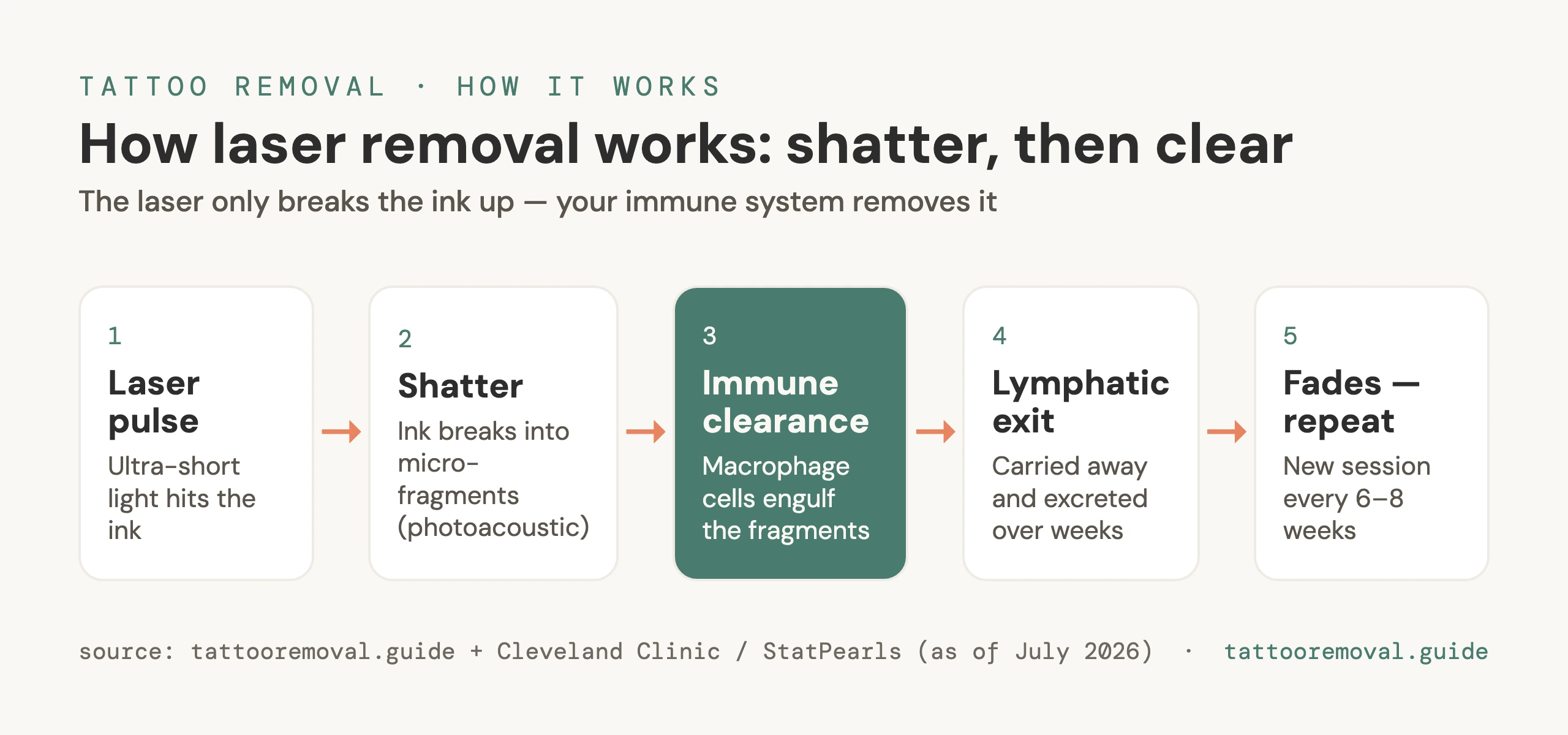 Macrophages carry ink fragments into the lymphatic system.
Where does tattoo ink go? The lymphatic pathway, step by step
A tattoo is permanent for a simple reason: the ink particles are too big for your immune cells to remove. Your body tries — it treats ink as a foreign invader — but the particles sit trapped in the deeper layer of skin (the dermis), which is why the design stays put for years.
Laser tattoo removal changes that by breaking the ink apart. Here's the sequence, in plain terms:
- The laser shatters the ink. A Q-switched or picosecond laser fires ultra-short pulses of light that the ink absorbs, fracturing large pigment particles into microscopic fragments — small enough for immune cells to handle.
- Macrophages engulf the fragments. A macrophage is an immune cell that surrounds and digests foreign material. These cells move into the treated area and swallow the ink pieces. (Some macrophages stay in the skin and re-capture pigment, which is part of why removal is gradual.)
- The lymphatic system carries them away. Loaded macrophages and loose fragments drain into the lymphatic vessels — the body's waste-clearance plumbing — moving away from the tattoo site.
- Lymph nodes filter some of it. Along the way, lymph passes through lymph nodes, which act as filters. Some pigment is retained here (more on that below).
- The body processes and excretes the rest. Fragments that move on are broken down and cleared over time, largely through the liver and normal excretion pathways.
This is why removal takes multiple sessions spaced weeks apart rather than one visit: your body can only carry away so much at a time, and it needs recovery time between passes. As StatPearls' clinical overview describes, clearance depends on this immune-and-lymphatic process — the laser only creates the fragments; your body does the removing.
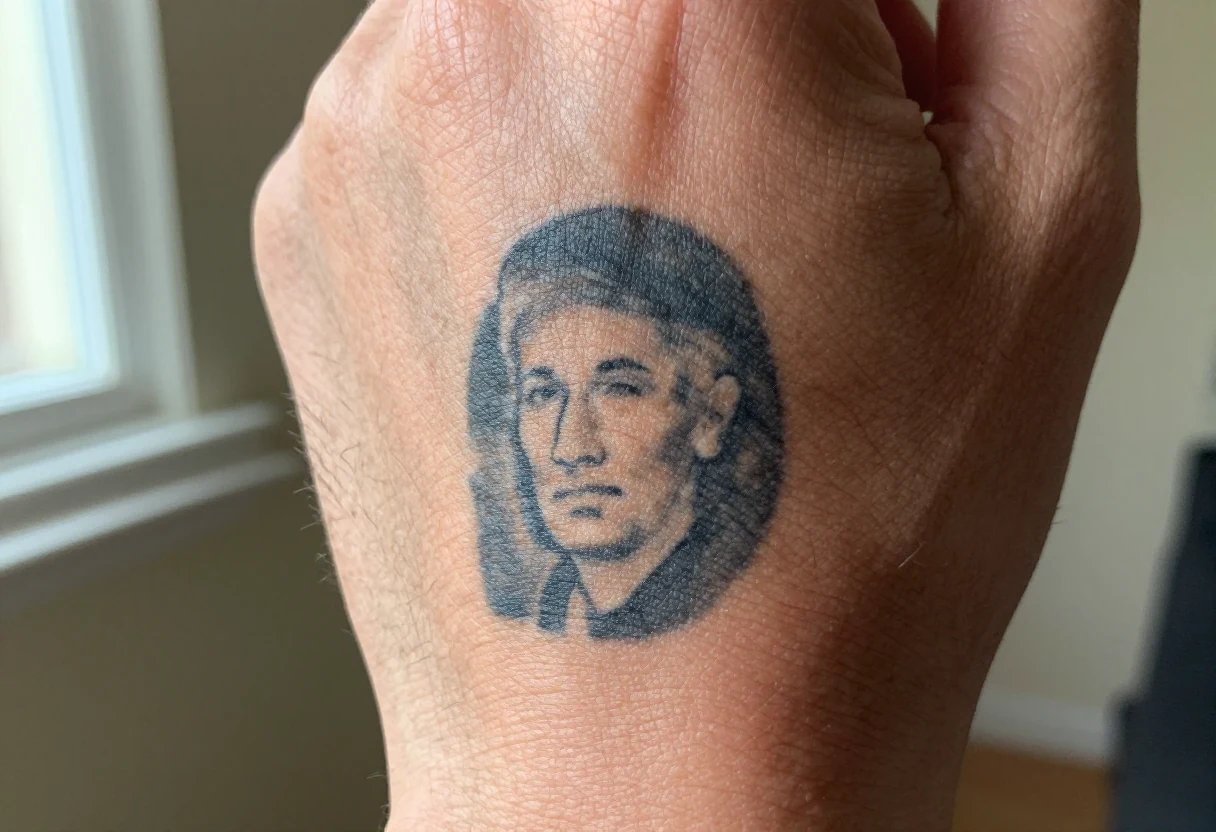 The laser shatters ink so the lymphatic system can carry it away.
Does tattoo ink really reach your lymph nodes?
Yes — and this is the part worth stating clearly, because it's often framed as a scary secret when it's actually well-documented biology.
Pigment migration to regional lymph nodes happens with tattoos generally, not only during removal. Because the body treats ink as foreign, a small amount of pigment slowly travels from a tattoo through the lymphatic system over the years you have it. Studies examining lymph nodes have found tattoo pigment particles in the nodes nearest tattooed skin. In other words, if you have a tattoo, some pigment has likely already made this journey — quietly, over time.
Laser removal accelerates the same pathway. By deliberately fragmenting the ink, it produces a larger volume of small particles that the lymphatic system moves in a shorter window. So removal doesn't open a new, alarming route into your body — it speeds up a route the ink was already using slowly.
Original tattoo vs laser removal: what happens to the ink
| Ink from the original tattoo | Ink during laser removal | |
|---|---|---|
| What triggers movement | Slow, natural immune "nibbling" at trapped particles over years | Laser deliberately shatters particles in seconds |
| Particle size | Mostly large particles; only a small fraction migrates | Deliberately fragmented into microscopic pieces |
| Amount that moves | A small trickle over the life of the tattoo | A larger volume, concentrated after each session |
| Speed | Very slow (why tattoos fade slightly over decades) | Fast (why a tattoo can noticeably fade in weeks) |
| Pathway | Lymphatic system → lymph nodes → processing | The same lymphatic system → lymph nodes → processing |
| End result | Tattoo persists; slight fading | Ink cleared over multiple sessions (not guaranteed 100%) |
The takeaway from the table: the destination is identical. Removal changes the pace and the quantity, not the biology.
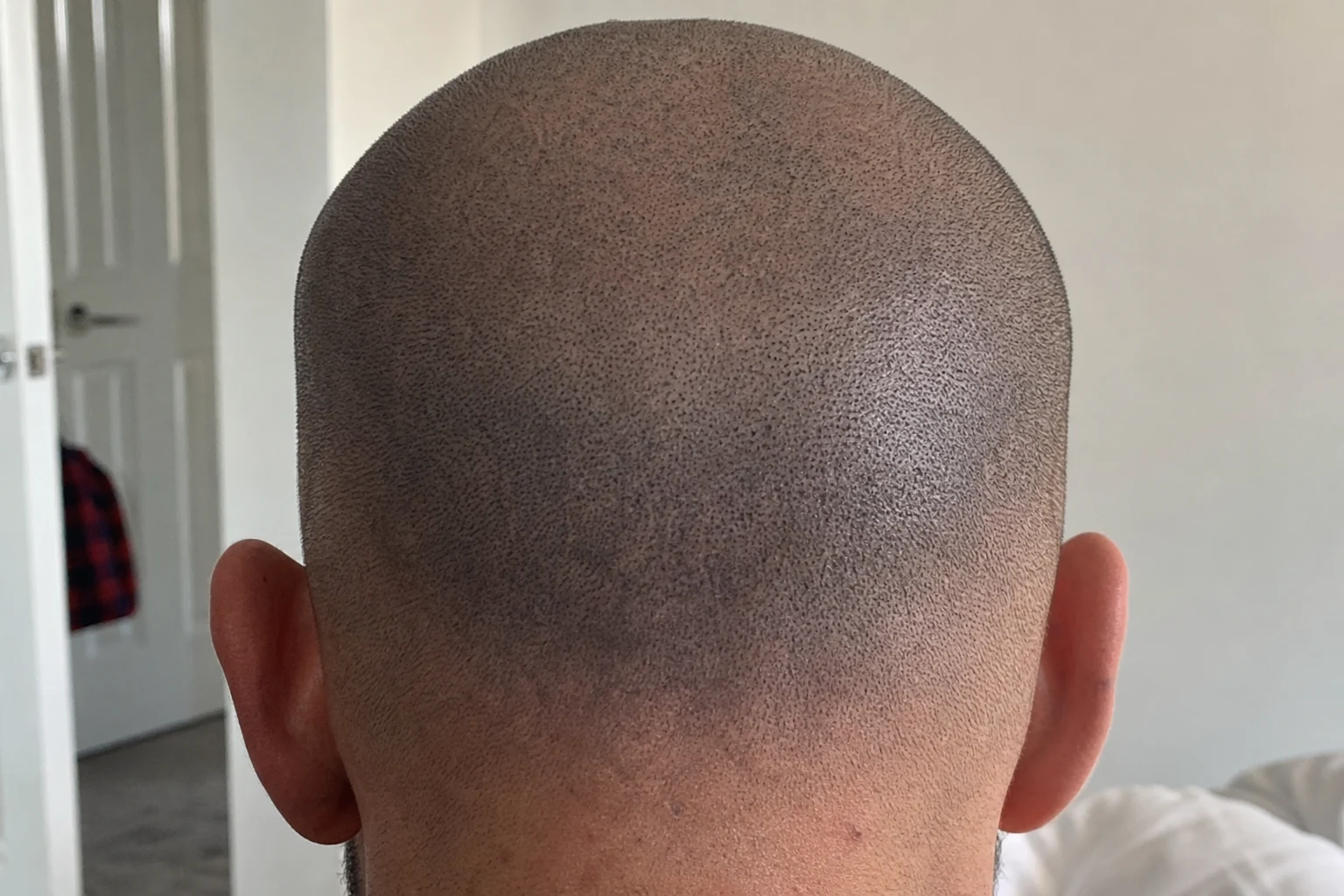 A tattoo undergoing laser removal.
Is laser tattoo removal toxic? The honest state of the evidence
This is where being straight with you matters more than reassurance.
What's reasonably well-established: Laser tattoo removal is a widely-used, decades-old procedure that leading medical bodies treat as a standard option. The American Academy of Dermatology and Cleveland Clinic both describe laser removal as the primary, established method, with the main documented risks being local — blistering, temporary or lasting pigment changes, and a small scarring risk — rather than proven systemic harm.
What's genuinely uncertain: The long-term health significance of ink fragments circulating through the lymphatic system and settling in lymph nodes is still an area of active research and is not fully established. Some tattoo inks contain compounds that regulators continue to study, and when ink is broken down — whether by sunlight over years or by a laser in seconds — the chemistry of the resulting fragments isn't completely characterised. The honest summary is: there is no strong evidence that laser removal causes serious internal harm in healthy people, and it has not been proven to be entirely without any effect. Both of those statements are true at once.
What regulators are doing: Bodies like the FDA monitor tattoo-ink safety and note that the inks themselves are an area of ongoing oversight — including reactions and the fact that removal can cause lasting skin changes. This ongoing attention is a normal feature of an evolving evidence base, not a red alert.
This is general information, not medical advice. The science on long-term ink clearance is still developing, and your individual health matters. If you have specific concerns, discuss them with a licensed provider or your own doctor before starting or ruling out removal.
What this means for you: a reason to choose well, not to avoid removal
The sensible response to "some ink reaches my lymph nodes and the long-term data is incomplete" is not to fear removal — it's to do it thoughtfully.
- Choose a qualified, experienced provider. Proper laser settings, correct wavelength for your skin and ink, and good technique reduce the local risks that are well-documented. Provider quality is the variable most within your control.
- Respect sensible session spacing. The standard six-to-eight-week gap between sessions exists precisely so your lymphatic system can carry away each round of fragments and your skin can recover. You can't rush your body's clearance rate — and trying to only raises the risk of side effects.
- Bring your health history. If you have an autoimmune or immune-compromising condition, are pregnant or breastfeeding, or have had unusual reactions to tattoos before, flag it up front. Because clearance leans on your immune and lymphatic systems, these situations deserve a doctor's input — see our guides on who should not get laser tattoo removal and whether tattoo removal causes cancer for the fuller picture.
- Have realistic expectations. Removal fades most tattoos over many spaced sessions and can't be guaranteed to clear 100% — because it's limited by the same clearance biology described above.
Across the 5,700 clinics we track in 1,043 cities (as of July 2026) — carrying an average rating of 4.79★ — about 27% (1,525) advertise a free consultation, which is the natural place to ask a provider exactly how they'll handle your skin, ink and health history.
Compare clinics and ask the right questions
Because technique, wavelength choice and session spacing vary from clinic to clinic — and those are the things that actually influence your risk — the most useful next step is to compare your options and ask directly.
Compare tattoo-removal clinics in your city to find providers who offer a free consultation, or start with a dense market like tattoo removal in Melbourne to see how listings and consultation offers stack up. For the bigger safety picture, read our pillar guide, is laser tattoo removal safe?
Frequently asked questions
Where does tattoo ink go when you get a tattoo removed?
When a laser shatters tattoo ink into tiny fragments, immune cells called macrophages engulf the pieces and carry them away through your lymphatic system. Some fragments are filtered by nearby lymph nodes; the rest are processed and gradually cleared by the body, largely via the liver and normal excretion. This is the same clearance system that slowly fades any tattoo over time — laser removal just speeds it up dramatically.
Does tattoo ink get into your lymph nodes?
Yes — and this happens with any tattoo, not just during removal. Research has detected tattoo pigment particles in regional lymph nodes in people who have tattoos, because the body treats the ink as a foreign material and moves some of it through the lymphatic system over time. Laser removal accelerates that same movement by breaking the ink into fragments small enough for immune cells to carry.
Is laser tattoo removal toxic or dangerous to your body?
For most healthy people, laser tattoo removal is considered a well-established, low-risk procedure, and there is no strong evidence that it causes serious internal harm. The honest position is that the long-term significance of ink fragments circulating and reaching lymph nodes is still being researched and is not fully settled. It is neither proven to be harmful for most people nor proven to be completely without any effect — which is exactly why choosing a qualified provider and sensible session spacing matters.
Can your body fully get rid of tattoo ink after removal?
Laser removal clears most of the visible ink in the skin for many people, but "complete" removal is never guaranteed, and some pigment may persist. The fragments the immune system carries away are processed over weeks to months between sessions. How completely a tattoo clears depends on ink type, colour, depth, location and your own immune response — which is why removal takes multiple, spaced sessions.
Should I worry about ink in my lymph nodes if I have an immune condition?
If you have an autoimmune condition, are immunocompromised, are pregnant or breastfeeding, or have a history of unusual reactions, this is worth raising with a doctor before starting removal. Ink clearance relies on your immune and lymphatic systems, so your individual health matters. This is general information, not medical advice — a licensed provider or your treating doctor should weigh your specific situation.
Why do practitioners space tattoo removal sessions weeks apart?
Sessions are typically spaced six to eight weeks apart to give your lymphatic system time to carry away the ink fragments the laser created and to let the skin recover. Rushing sessions doesn't clear ink faster — the clearance is limited by your body's own pace — and it raises the risk of skin side effects. Reasonable spacing works with your body's clearance system rather than against it.
Does the ink from getting the tattoo go to different places than removal ink?
The pathway is the same, but the amount and particle size differ. From the original tattoo, a small fraction of ink slowly migrates as larger particles, which is why tattoos fade slightly over years. During laser removal, the ink is deliberately shattered into much smaller fragments all at once, so a larger volume moves through the lymphatic system in a short window. Both routes end at the same clearance system.
Related guides
Related Guides
- Safety & Risks
Why a Patch Test Matters Before Tattoo Removal (2026)
Why does a patch test matter before laser tattoo removal? It reveals how your skin and ink react — blistering, pigment change, rare reactions — before a full…
- Safety & Risks
Who Should Not Get Laser Tattoo Removal? The Contraindications
Who should not get laser tattoo removal? Most adults are candidates. The full contraindications checklist — when to wait and when to discuss carefully.
- Safety & Risks
Tattoo Removal While Pregnant or Breastfeeding
Can you get tattoo removal while pregnant? Most providers say wait — not from proven harm, but because the safety isn't studied.