Numbing Options for Tattoo Removal: How to Reduce the Pain (2026)
Tattoo removal numbing options range from forced cold air and ice to topical numbing cream and, at some clinics, injected local anaesthetic. The most common is a Zimmer cooler that blows cold air on the skin during each pulse; it is used at most sessions and needs nothing applied to the skin. No method makes removal completely painless, but each session is quick — often only a few minutes of actual lasering — and most people find it very manageable.
Pain relief in this context is any method used to reduce the sting of the laser during and after treatment. A Zimmer cooler is a machine that streams very cold air onto the skin to numb it before, during and after each laser pulse. This guide compares the real options — how each works, what it costs you in time or money, and where the genuine safety limits are — using medical sources and figures from the Tattoo Removal Guide directory, stamped (as of July 2026).
Key Takeaways
- Forced cold air (a Zimmer cooler) is the most common in-clinic method — it chills the skin during each pulse and needs nothing applied.
- Ice packs before and after are simple, cheap and effective, and any clinic can use them.
- Topical numbing cream can help, but must be used carefully — spreading it over a large area under a wrap risks systemic lidocaine toxicity.
- Injected local anaesthetic gives the strongest relief but adds cost and time and can distort the skin during treatment; only some clinics offer it.
- The lasering itself is quick — often under a few minutes per session — and most people report it gets more tolerable as they go.
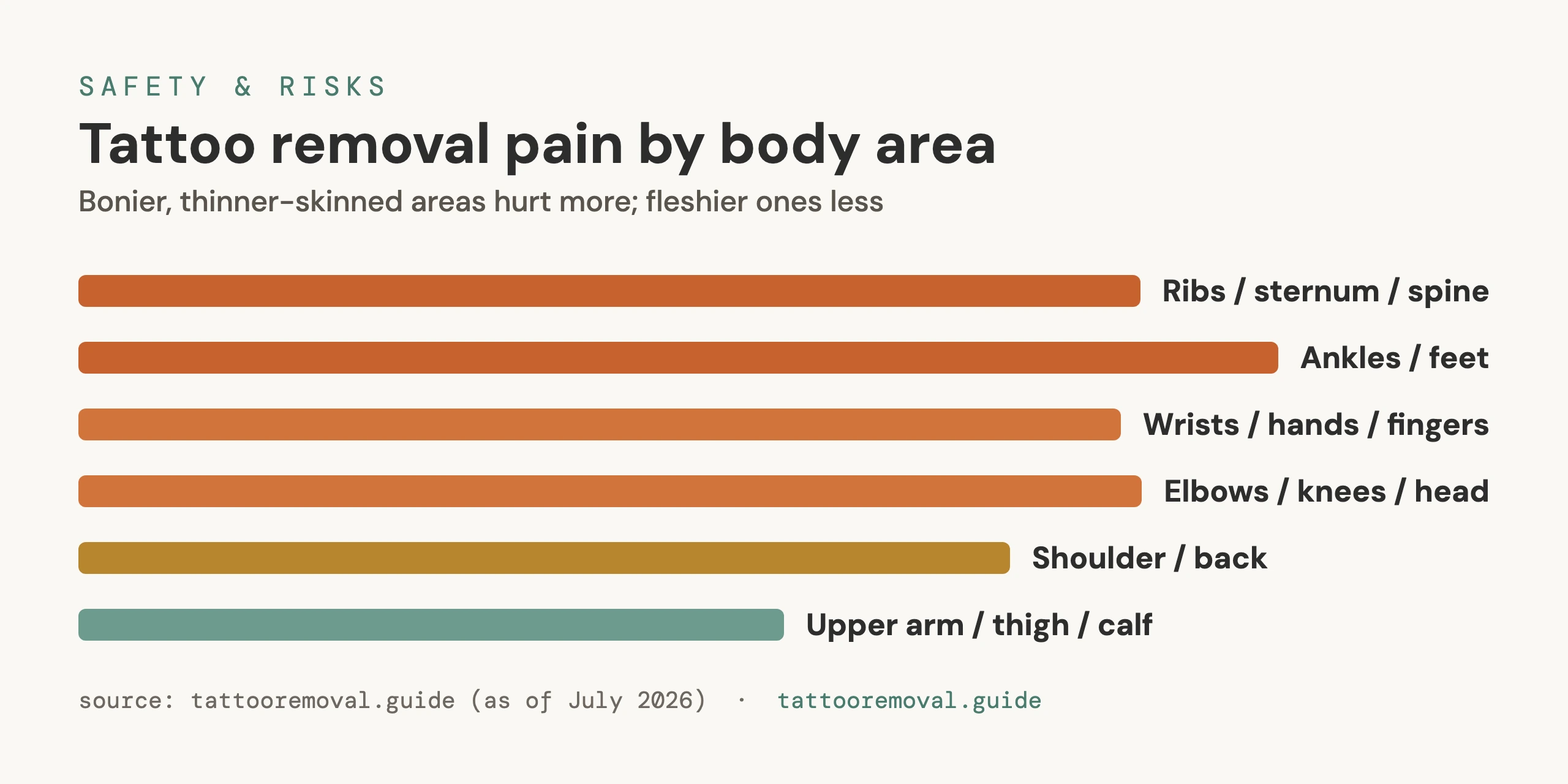 Pain varies by area — numbing options make it manageable.
What are the numbing options for tattoo removal?
There is no single "numbing method" — clinics mix and match a few, and what you're offered varies by clinic. The table below lays out the main options side by side. Treat it as a conversation starter for your consultation, not a self-prescription.
| Method | How it works | Pros | Cons / safety |
|---|---|---|---|
| Forced cold air (Zimmer cooler) | A machine blows very cold air on the skin before, during and after each pulse | Most common; nothing applied to skin; also protects skin from heat; no delay | Doesn't remove all sensation; not every clinic has one — ask |
| Ice packs (before/after) | Chilling the skin numbs surface nerves and eases post-session heat and swelling | Cheap, simple, any clinic can do it; soothes afterwards | Wears off quickly; never apply ice directly to bare skin (wrap it) |
| Topical lidocaine (numbing cream) | A local anaesthetic cream blocks nerve signals in the skin; applied and left to work before treatment | Can meaningfully reduce pain; clinic-grade versions are stronger | Large-area / occluded use risks systemic toxicity; can interfere with treatment; timing matters |
| Injected local anaesthetic | Lidocaine injected into the area (infiltration) or a nerve block numbs deeper | Strongest relief; good for very sensitive spots | Adds cost and time; the injection stings; fluid can distort skin; clinic-dependent |
| Paracetamol beforehand | Oral pain relief taken ~1 hour before takes the edge off | Simple, low-risk for most people; widely suggested | Modest effect; some clinics say avoid aspirin/ibuprofen (bruising) — ask |
Forced cold air (the Zimmer cooler)
This is the workhorse of pain relief in tattoo removal clinics. The device streams chilled air onto the skin continuously through the session, numbing the surface and drawing off heat. Because nothing is applied to the skin, there's no waiting and nothing to interfere with the laser. It doesn't erase all sensation, but for most people it takes a sharp pain down to a manageable one. If comfort is a priority, ask whether a clinic uses forced cold air — it's common but not universal.
Ice packs before and after
Simple and effective. A cold pack held on the area before treatment dulls the surface nerves, and one applied afterwards eases the heat, swelling and stinging that can follow. Any clinic can do this and many combine it with cold air. One rule: never put ice directly on bare skin — wrap it in a cloth to avoid an ice burn.
Topical numbing cream (and its real limit)
Topical lidocaine is a cream that blocks pain signals in the skin. Some clinics apply a medical-grade version and let it work before treating; others prefer cold air because a thick layer of cream can sit on the skin and interfere with the laser. Timing matters — it needs time to take effect and is wiped off before lasering.
Here is the part that matters most: do not take numbing cream into your own hands over a large tattoo. Spreading over-the-counter lidocaine across a big area — especially at high concentration or covered with cling film or a wrap (occlusion) — can push enough anaesthetic through the skin into your bloodstream to cause systemic lidocaine toxicity. That is a real medical emergency, not a theoretical one, and it has caused serious harm and deaths from at-home cosmetic numbing. On a small area, under a clinician's direction, topical anaesthetic is generally safe. The safe rule is simple: follow your clinic's and a medical professional's guidance on how much, where, and whether to cover it at all — never improvise over a large piece.
Injected local anaesthetic
For the strongest relief, some clinics offer injected lidocaine — either infiltrated into the tattoo area or delivered as a nerve block that numbs a whole region. This gives the deepest numbing and can make a sensitive area (ribs, feet, ankles) far more comfortable. The trade-offs: the injection itself stings, it adds cost and appointment time, the injected fluid can temporarily distort the skin the laser is trying to treat, and not every clinic provides it. It's most often reserved for larger or particularly painful cases and is a clinic-by-clinic decision.
Paracetamol beforehand
Many clinics suggest taking paracetamol (acetaminophen) around an hour before a session to take the edge off. Some also advise avoiding aspirin and ibuprofen beforehand, on the basis that they can increase bruising and bleeding — though this guidance varies between clinics and isn't universal. Frame it as a question, not a rule: ask your clinic what they recommend, and never stop or start a prescribed medication without your doctor's advice.
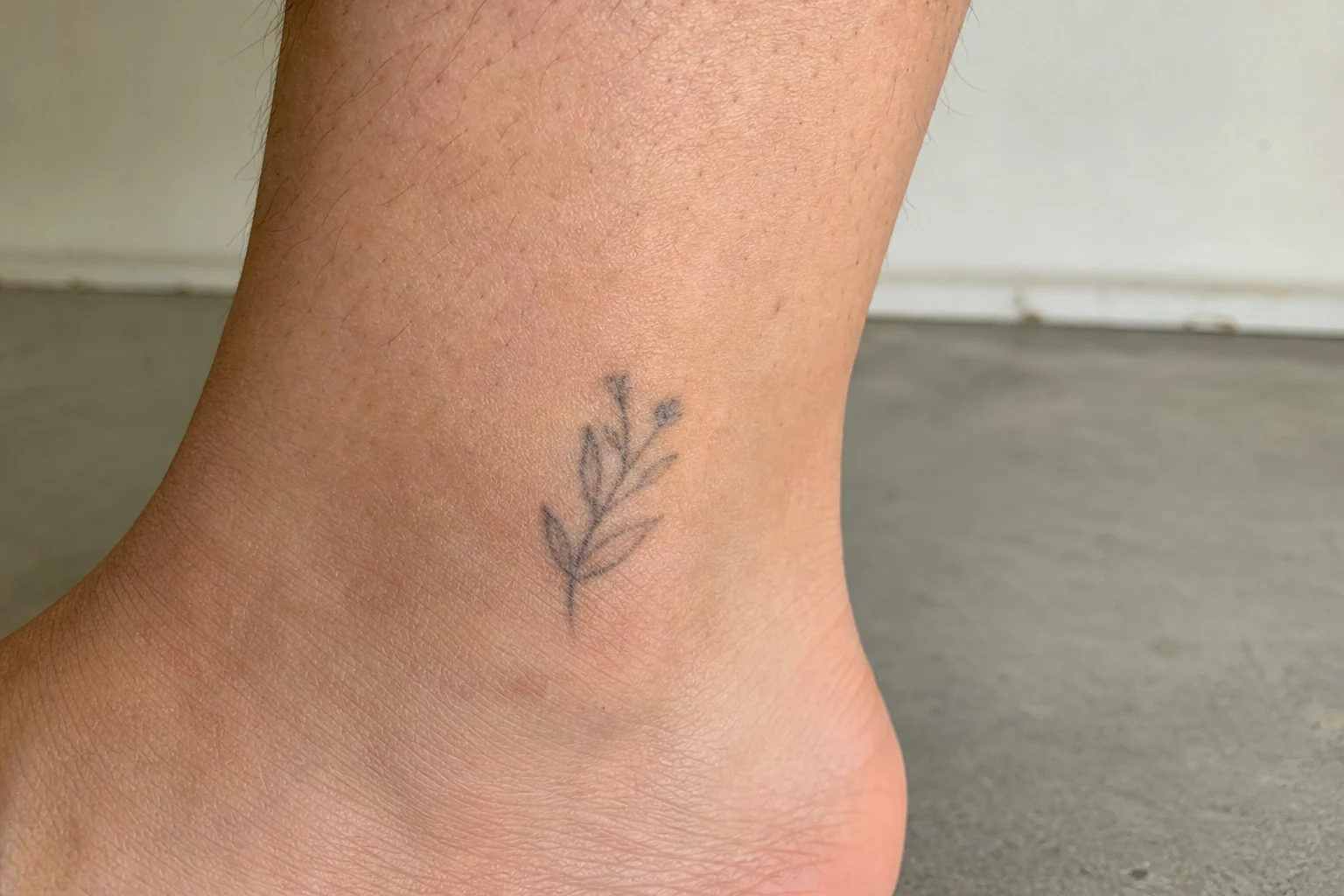 Bony, thin-skinned spots sting most — where numbing options help the most.
Does tattoo removal numbing actually work — and how much does it hurt?
Honestly: the numbing helps, but nothing makes laser removal completely painless. Most people describe the sensation as a hot elastic band snapping against the skin, or fine sparks. Cold air and ice genuinely dull it; topical and injected anaesthetics reduce it further. What surprises people most is how fast it's over — the lasering itself is quick, often under a few minutes for a small-to-medium tattoo, and the discomfort stops the moment the laser does.
A few realistic expectations worth setting:
- It's brief. You're not enduring a long ordeal — it's short bursts, then done.
- It often gets more tolerable. Knowing what to expect, and seeing the tattoo fade, makes later sessions easier for many people.
- Placement changes it. Areas with thin skin over bone (ankles, ribs, fingers) sting more than fleshy areas — worth flagging when you ask about numbing.
- Aftercare matters too. Cooling and gentle care afterward, as clinical guidance describes, help with the heat and swelling that follow a session.
For a fuller picture of the sensation and how to prepare, see our companion guide, does laser tattoo removal hurt?
This is general information, not medical advice. Pain relief options — and whether any anaesthetic is appropriate for you — depend on your health, skin and the tattoo. Topical and injected anaesthetics carry real risks if misused. Discuss numbing with a licensed provider before your session, and never apply anaesthetic over a large area or under a wrap on your own.
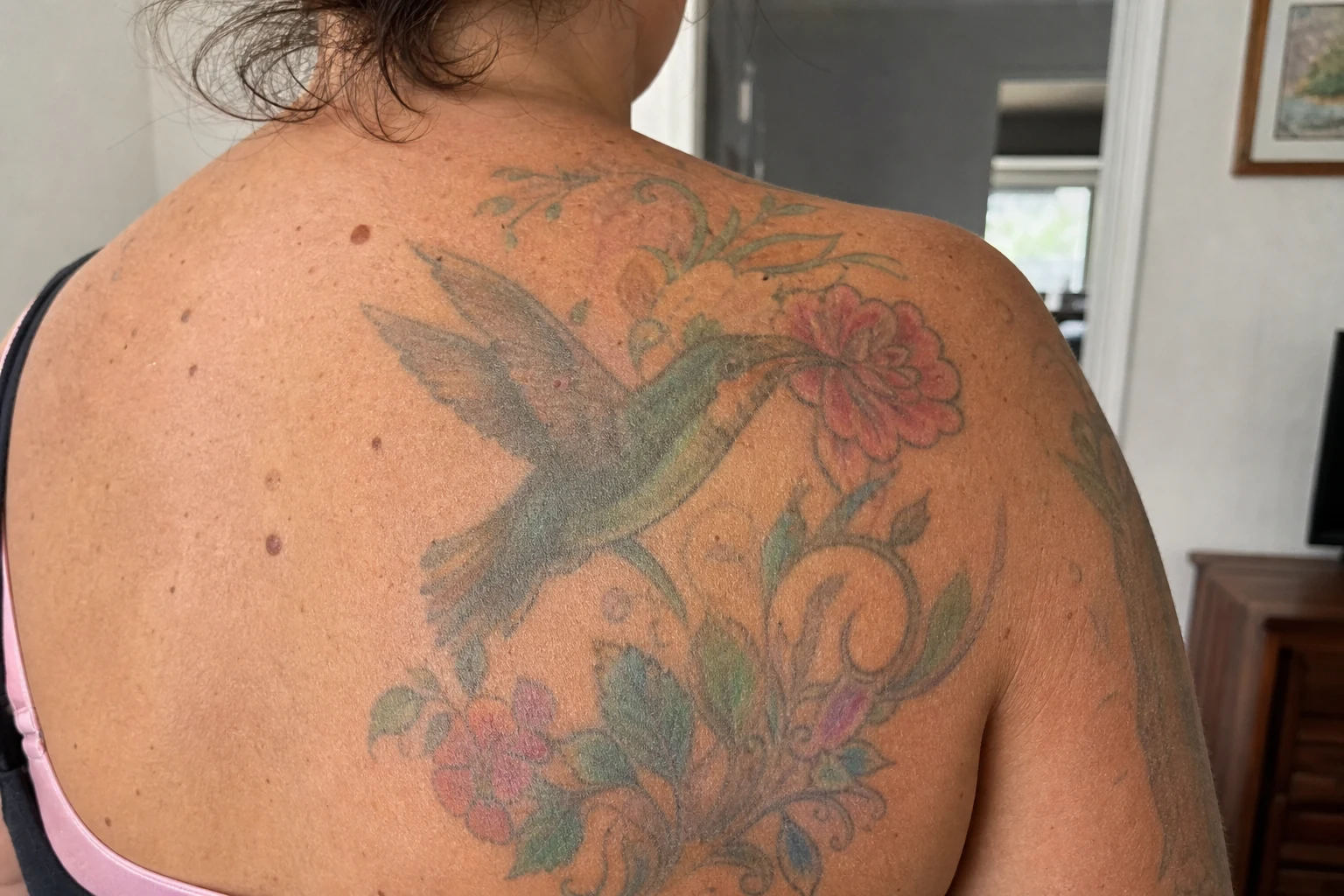 A back-piece tattoo.
How to ask your clinic about pain relief
Because what's offered varies so widely, the most useful thing you can do is ask directly before you book. Good questions:
- Do you use forced cold air (a Zimmer cooler) during treatment? — the most common in-clinic comfort measure.
- Do you apply numbing cream, and do I need to do anything beforehand? — so you're not tempted to self-apply.
- Do you offer injected anaesthetic for sensitive areas, and what does it add in cost and time?
- What do you recommend I take, or avoid, before a session? — for the paracetamol-vs-ibuprofen question.
The AAD's guidance on tattoos and their removal and the FDA's fact sheet both underline that removal should be done by a qualified provider — the same applies to any anaesthetic used alongside it.
Compare clinics — and their comfort options
Comfort measures differ from clinic to clinic: some have cold-air machines, some offer injected anaesthetic, some patch-test and coach you through it. The best way to find a clinic that suits you is to compare your local options and ask.
Compare tattoo-removal clinics in your city to see who's near you and what they offer, or start with a dense market like tattoo removal in Melbourne to see how listings stack up. Of the 5,700 clinics we track across 1,043 cities, about 27% (1,525) advertise a free consultation (as of July 2026) — a no-cost way to ask these questions in person. For the bigger safety picture, read our pillar guide, is laser tattoo removal safe?
Frequently asked questions
What are the numbing options for tattoo removal?
The main options are forced cold air (a Zimmer cooler that chills the skin during each pulse — the most common in-clinic method), ice packs before and after, topical lidocaine numbing cream, and, at some clinics, injected local anaesthetic. Many people also take paracetamol beforehand. Clinics vary in what they offer, so ask before booking.
Does numbing for tattoo removal actually work?
Yes, to a degree. Forced cold air and ice genuinely dull the sensation and are used at most sessions; topical and injected anaesthetics reduce pain further but have trade-offs. No method makes removal completely painless, but each session is quick — often only a few minutes of actual lasering — and most people find it very manageable.
Can I use numbing cream for laser tattoo removal?
Sometimes, but check with your clinic first. Some clinics apply a medical-grade topical anaesthetic; others prefer cold air because thick cream can interfere with the treatment. Do not slather over-the-counter numbing cream over a large tattoo or cover it with cling film — spreading lidocaine over a big area under occlusion can cause dangerous systemic absorption.
Is numbing cream dangerous for tattoo removal?
It can be if misused. Applying topical lidocaine over a large area, at high concentration, or under an occlusive wrap can push enough anaesthetic into the bloodstream to cause systemic lidocaine toxicity — a genuine medical emergency. Used on a small area under a clinician's direction it is generally safe. Always follow clinic and medical guidance on amount and area.
Should I take painkillers before tattoo removal?
Many clinics suggest paracetamol (acetaminophen) about an hour before a session. Some advise avoiding aspirin and ibuprofen because they can increase bruising and bleeding, though guidance varies. Never stop a prescribed medication without medical advice — ask your clinic and your doctor what is right for you.
What is the Zimmer cooler used in tattoo removal?
A Zimmer cooler (forced cold air) is a machine that blows a stream of very cold air onto the skin before, during and after each laser pulse. It numbs the surface, reduces discomfort and helps protect the skin from heat. It is the most common form of pain relief in laser tattoo removal clinics and needs nothing applied to the skin.
How long does the pain last during a tattoo removal session?
The actual lasering is quick — often under a few minutes for a small-to-medium tattoo, sometimes a little longer for larger pieces. The sensation is over as soon as the laser stops. Many people also report that sessions become more tolerable over a course as they know what to expect.
Related guides
Related Guides
- Safety & Risks
Why a Patch Test Matters Before Tattoo Removal (2026)
Why does a patch test matter before laser tattoo removal? It reveals how your skin and ink react — blistering, pigment change, rare reactions — before a full…
- Safety & Risks
Who Should Not Get Laser Tattoo Removal? The Contraindications
Who should not get laser tattoo removal? Most adults are candidates. The full contraindications checklist — when to wait and when to discuss carefully.
- Safety & Risks
Tattoo Removal While Pregnant or Breastfeeding
Can you get tattoo removal while pregnant? Most providers say wait — not from proven harm, but because the safety isn't studied.