Flesh-Tone & Skin-Colour Tattoo Removal

Flesh-tone and skin-colour tattoo inks are the single riskiest type of ink to laser, because they are usually loaded with titanium dioxide and iron oxide — pigments that can paradoxically darken to grey or black the instant a laser pulse hits them. In one pulse, an almost-invisible tattoo can turn into a visible dark mark that then needs many more sessions to clear.
That risk is why a test spot is non-negotiable for this ink, and why you should never let anyone laser flesh-tone or skin-colour work blind. This guide explains what paradoxical darkening is, why skin-matching inks are so prone to it, what to do if it happens, and why an experienced clinician matters more here than almost anywhere else in removal — using medical sources and figures from the Tattoo Removal Guide directory, stamped (as of July 2026).
Key Takeaways
- Flesh-tone, skin-colour and cosmetic inks are the riskiest to laser because they contain titanium dioxide and iron oxide, which can darken on contact with the beam.
- Paradoxical darkening turns a light tattoo grey or black in a single pulse — the opposite of fading — and the new dark mark can be stubborn to remove.
- A test spot is mandatory: laser a small hidden area first, wait, and only proceed if it doesn't darken. Never treat this ink blind.
- These inks are common in cover-ups and scar/skin camouflage, so the tattoo you can barely see may be the hardest to safely remove.
- Complete, predictable removal cannot be guaranteed — an experienced clinician who has handled darkening is the priority. Of the 5,700 clinics we track, about 18% note picosecond lasers and 15% note Q-switched (as of July 2026) — but the operator matters more than the label for this ink.
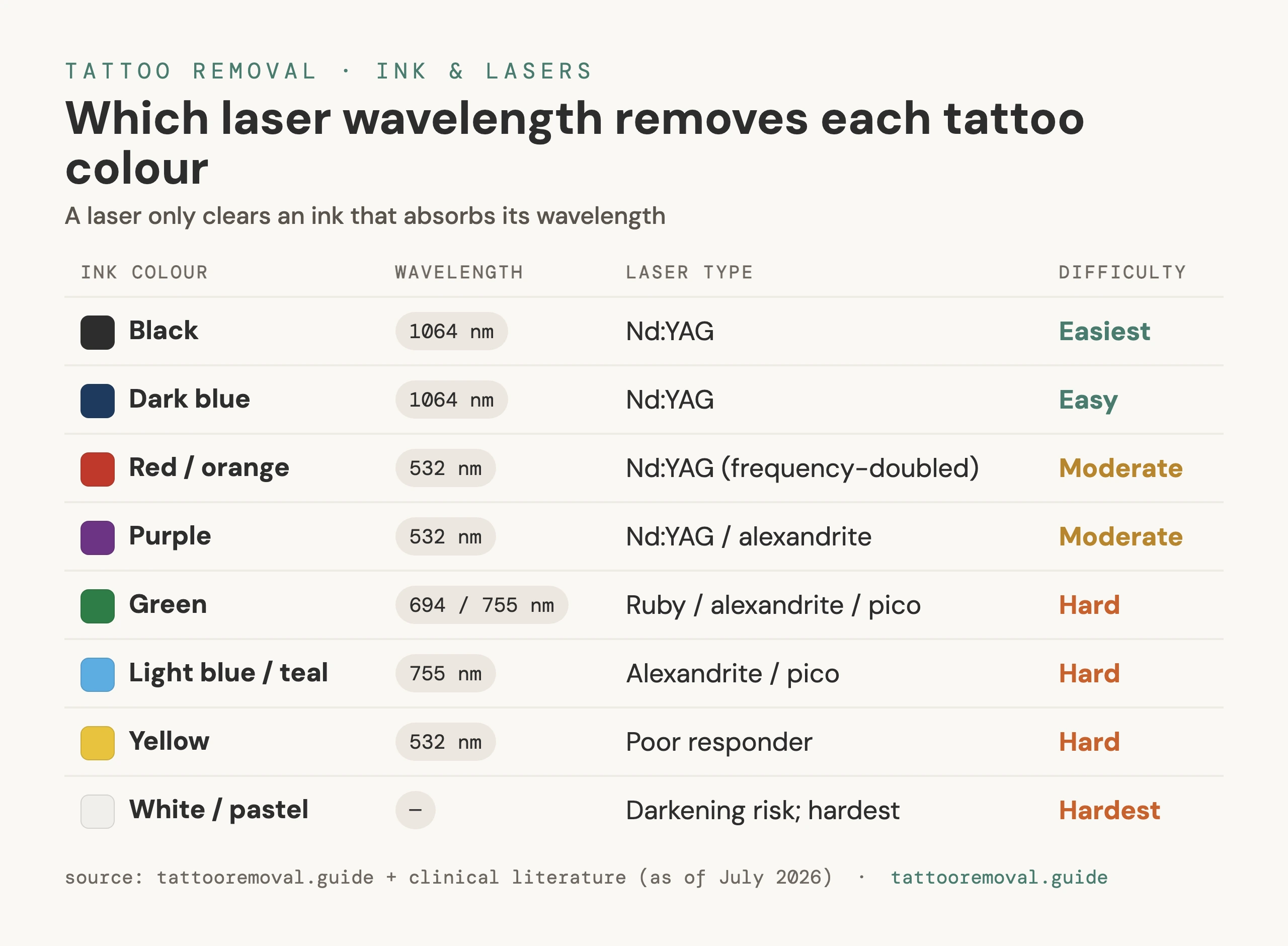 A laser only clears an ink that absorbs its wavelength.
What is paradoxical darkening?
Paradoxical darkening is when a laser pulse makes a tattoo darker instead of lighter — a light, flesh-toned or cosmetic tattoo shifts to grey, blue-black or jet black in the moment it is treated. It is "paradoxical" because the whole point of the laser is to fade ink, yet here the opposite happens instantly.
The cause is chemistry. Skin-matching inks are built from titanium dioxide (a bright white pigment) and iron oxide (tan, brown and rust tones) so they can blend into skin. When a laser delivers its burst of energy, these metal-oxide pigments don't shatter and clear the way carbon-black ink does — they chemically reduce to a darker oxidation state. Titanium dioxide and iron oxide can convert to darker compounds, so the treated ink turns dark. The StatPearls clinical reference on laser tattoo removal and the American Academy of Dermatology both flag this reaction with white, flesh-tone and cosmetic pigments specifically.
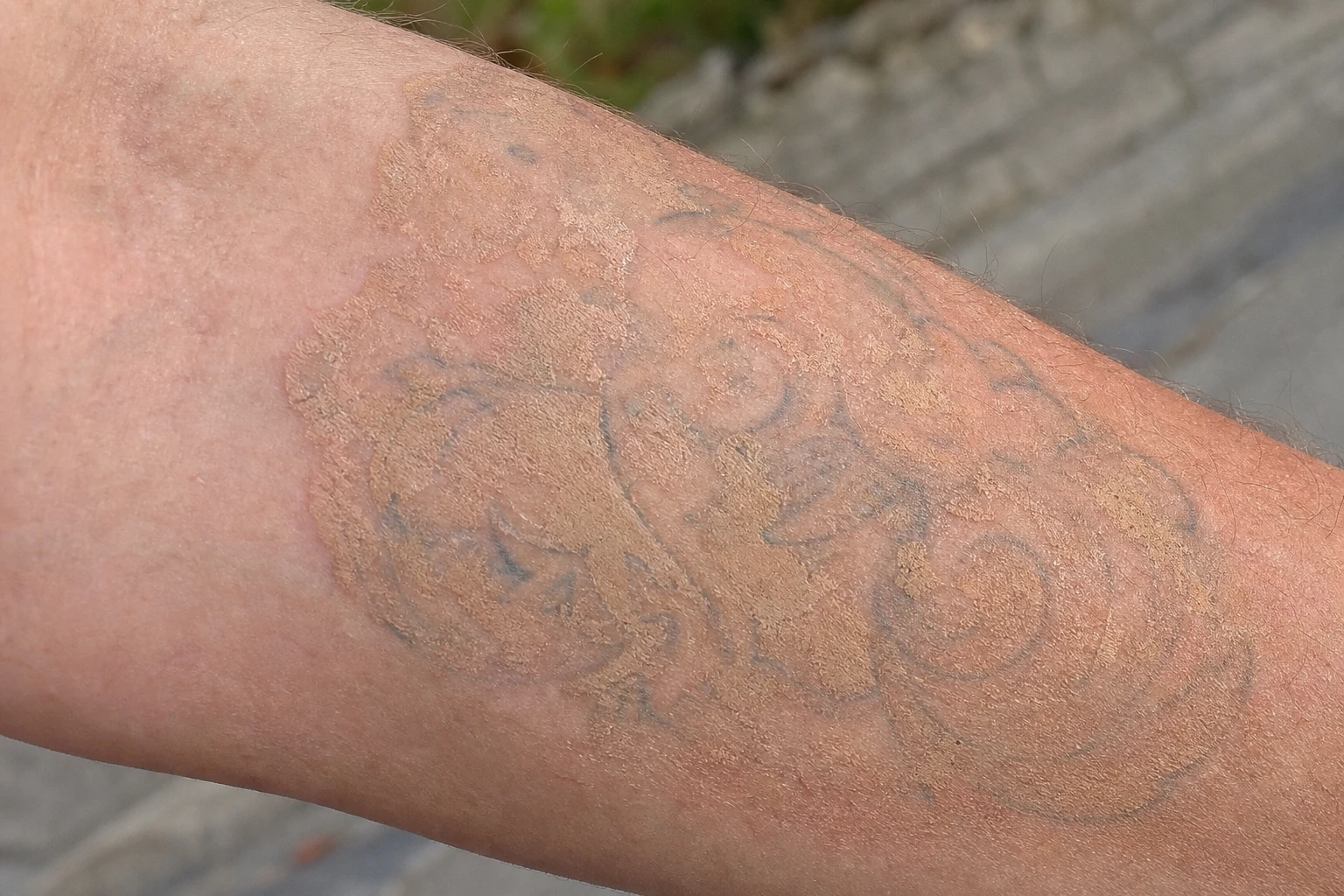 Flesh-toned ink is tattooed over old work to disguise it — patchy and hard to remove cleanly.
Why flesh-tone and skin-colour inks are the worst offenders
The very thing that makes these inks useful is what makes them dangerous to laser. To match a skin tone, the pigment blend leans heavily on titanium dioxide and iron oxide — the two ingredients most prone to darkening. So the more convincingly "invisible" a flesh-tone tattoo is, the more likely it is to be packed with exactly the compounds that misbehave under a laser.
| Ink type | Typical pigments | Laser behaviour |
|---|---|---|
| Flesh-tone / skin-colour | Titanium dioxide + iron oxide | High risk of paradoxical darkening |
| White | Titanium dioxide | High risk of darkening; hard to target |
| Cosmetic / PMU (brows, lips, liner) | Iron oxide, titanium dioxide | High risk of darkening — see our sibling guide |
| Black (carbon) | Carbon | Clears most readily; low darkening risk |
This is also why these tattoos are so common in cover-ups and camouflage. Flesh-tone ink is used to disguise an old tattoo, blend a scar, or camouflage a skin condition — the pigment is designed to disappear into surrounding skin. If you're removing a cover-up, there may be skin-tone ink layered over older colours, stacking the darkening risk on top of the usual challenge of layered ink. For the full colour hierarchy, see our pillar on the hardest tattoo colours to remove.
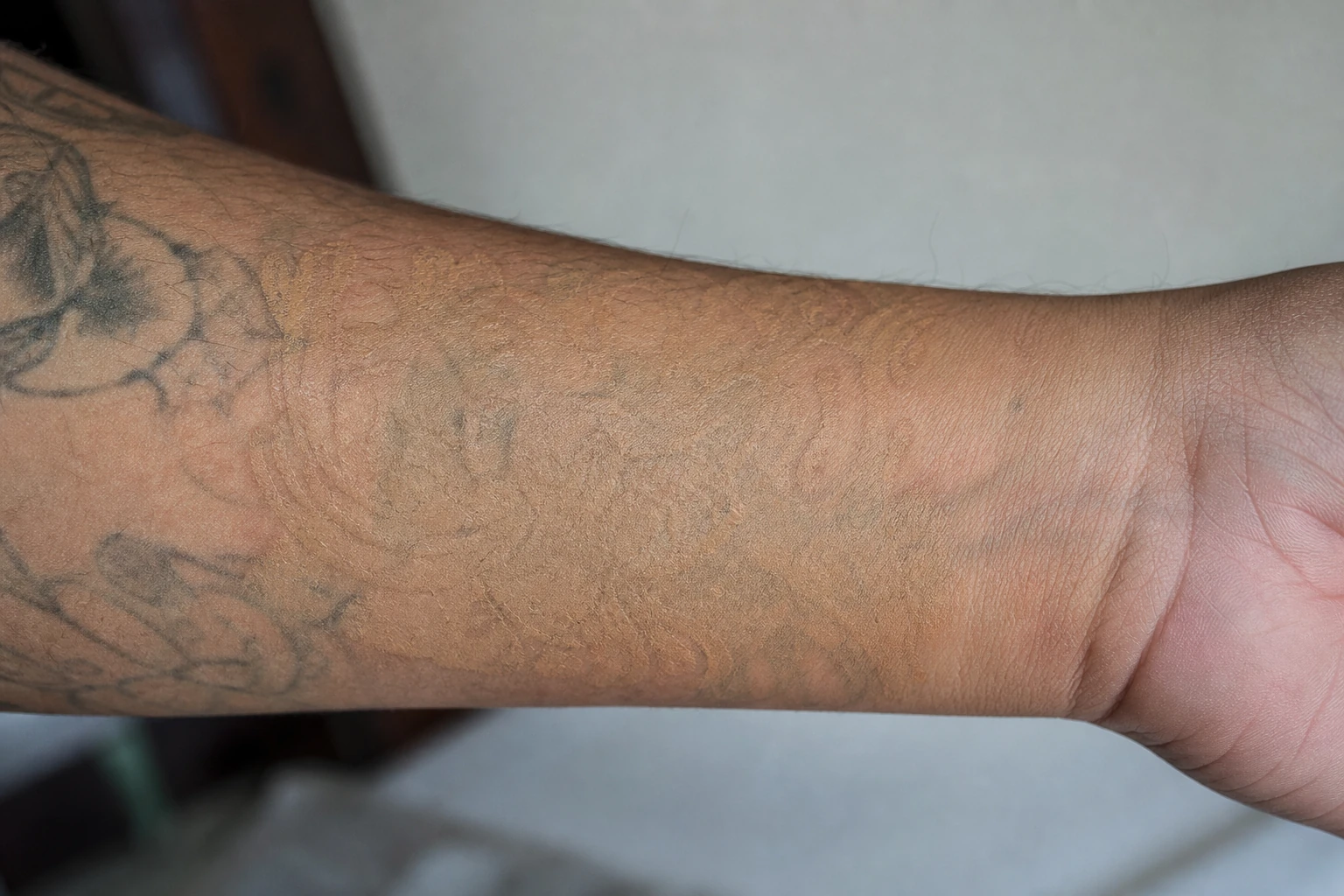 Skin-matched ink can be mistaken for a scar — and reacts unpredictably to the laser.
Why a test spot is absolutely mandatory
Because darkening is a chemical reaction, no one can be certain how a specific flesh-tone tattoo will behave until the laser actually touches it. That is what a test spot is for.
A test spot is when the clinician lasers a small, hidden patch of the tattoo, then waits — often a few weeks — to see whether that patch darkens before committing to the whole design. If it darkens, they've learned it on a spot the size of a pea instead of your entire tattoo. If it doesn't, they proceed with more confidence. Both the Cleveland Clinic and the U.S. FDA's guidance on tattoos and permanent makeup note that light and cosmetic inks can darken and that removal of these pigments is unpredictable.
The rule is simple and non-negotiable: never let anyone laser flesh-tone, white or cosmetic ink blind. A clinic that offers to treat your full skin-colour tattoo on the first visit, with no test spot and no discussion of darkening, is skipping the single most important safety step for this ink. That's a reason to walk out and compare other clinics in your city.
What to do if darkening occurs
If a treated area does go dark, don't panic — it is usually manageable, but it changes the plan.
- Stop and reassess. The immediate response is to pause, not to keep firing. Darkened ink is a different target now.
- Treat the darkened pigment as stubborn ink. Darkened iron-oxide and titanium-dioxide marks are often worked down over several additional sessions, sometimes with a different wavelength, similar to clearing a stubborn black. This is slower and less predictable than fading the original light ink would have been.
- Set realistic expectations. Some darkened areas clear well; others leave a residual shadow. As with all removal, complete clearance cannot be guaranteed — which is exactly why prevention via a test spot beats correction.
The honest takeaway: paradoxical darkening turns an easy-looking removal into a longer, more uncertain one. That's the cost of skipping the test spot — and the reason to insist on it.
Why an experienced clinician is the real safeguard
For most tattoos, the laser and its wavelength do most of the work. For flesh-tone and cosmetic ink, the operator matters more. An experienced clinician recognises skin-matching and cosmetic pigments on sight, insists on a test spot, chooses conservative settings, knows the salvage pathway if darkening appears, and — crucially — will tell you honestly when a tattoo carries high risk.
That judgement isn't captured by a laser's brand name. Across the 5,700 clinics in our directory, roughly 18% note picosecond and 15% note Q-switched lasers (as of July 2026) — both effective devices — but for this ink the deciding factor is the person holding the handpiece, not the machine. When you compare clinics, look for ones that explicitly mention test-spot protocols, cosmetic-tattoo and PMU experience, and paradoxical-darkening awareness. Dense markets like tattoo removal in Melbourne let you line up several clinics side by side to find that experience.
This is general information, not medical advice. Laser removal of flesh-tone, white and cosmetic ink carries a real risk of paradoxical darkening and other side effects. Outcomes vary by pigment, skin and clinician — consult a licensed provider, and insist on a test spot, before treating any skin-colour tattoo.
Related guides
Related Guides
- Ink & Colours
Selective Tattoo Removal: Erasing Part of a Tattoo (2026)
Selective tattoo removal targets one part of a tattoo — a name, a figure, one colour — while leaving the rest.
- Ink & Colours
Removing an Ex-Partner's Name Tattoo: Your Options in 2026
Removing an ex's name tattoo? A partner's name is one of the most-removed tattoos — and small black lettering is among the quickest and cheapest to clear.
- Ink & Colours
Name & Lettering Tattoo Removal
Name and lettering tattoos are usually small and black, so per-unit they're among the easier tattoos to remove — but dense, deep script needs patience.