White Ink Tattoo Removal: Why It Can Turn Black (2026)
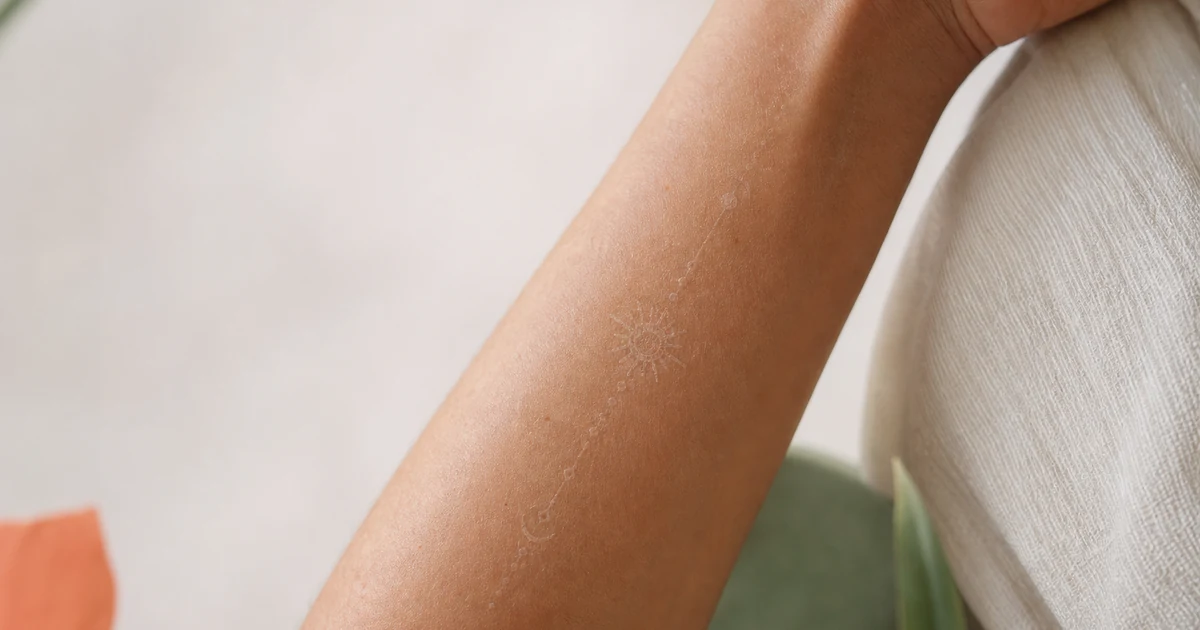
White ink is the hardest tattoo colour to remove, and it carries a risk most people never hear about: white, pastel and flesh-toned inks often contain titanium dioxide or iron oxide, which can paradoxically darken to grey or black the instant they are hit by a laser. It can usually still be removed afterward — but it takes more sessions, and a test spot first.
That single reaction is why removing white ink is a specialist job, not a routine one. This guide explains what paradoxical darkening is, why it happens, why a test spot is mandatory before you treat any light or flesh-toned ink, and what your options are if darkening does occur — using medical sources and figures from the Tattoo Removal Guide directory, stamped (as of July 2026).
Key Takeaways
- White is the hardest tattoo colour to remove: it reflects most laser wavelengths instead of absorbing them, so the light struggles to shatter it.
- White, pastel and flesh-tone inks often contain titanium dioxide or iron oxide, which can undergo paradoxical darkening — turning grey or black on the first laser pass.
- Darkened ink can usually still be removed, but it then behaves like dark ink and typically needs more sessions.
- A test spot is mandatory before treating any white, pastel or flesh-toned ink — it is the only way to see how your specific pigment reacts.
- Choose a clinician experienced with these pigments. Across the 5,700 clinics we track, about 18% note picosecond and 15% note Q-switched lasers (as of July 2026) — the right one for you is a consultation question, not a marketing label.
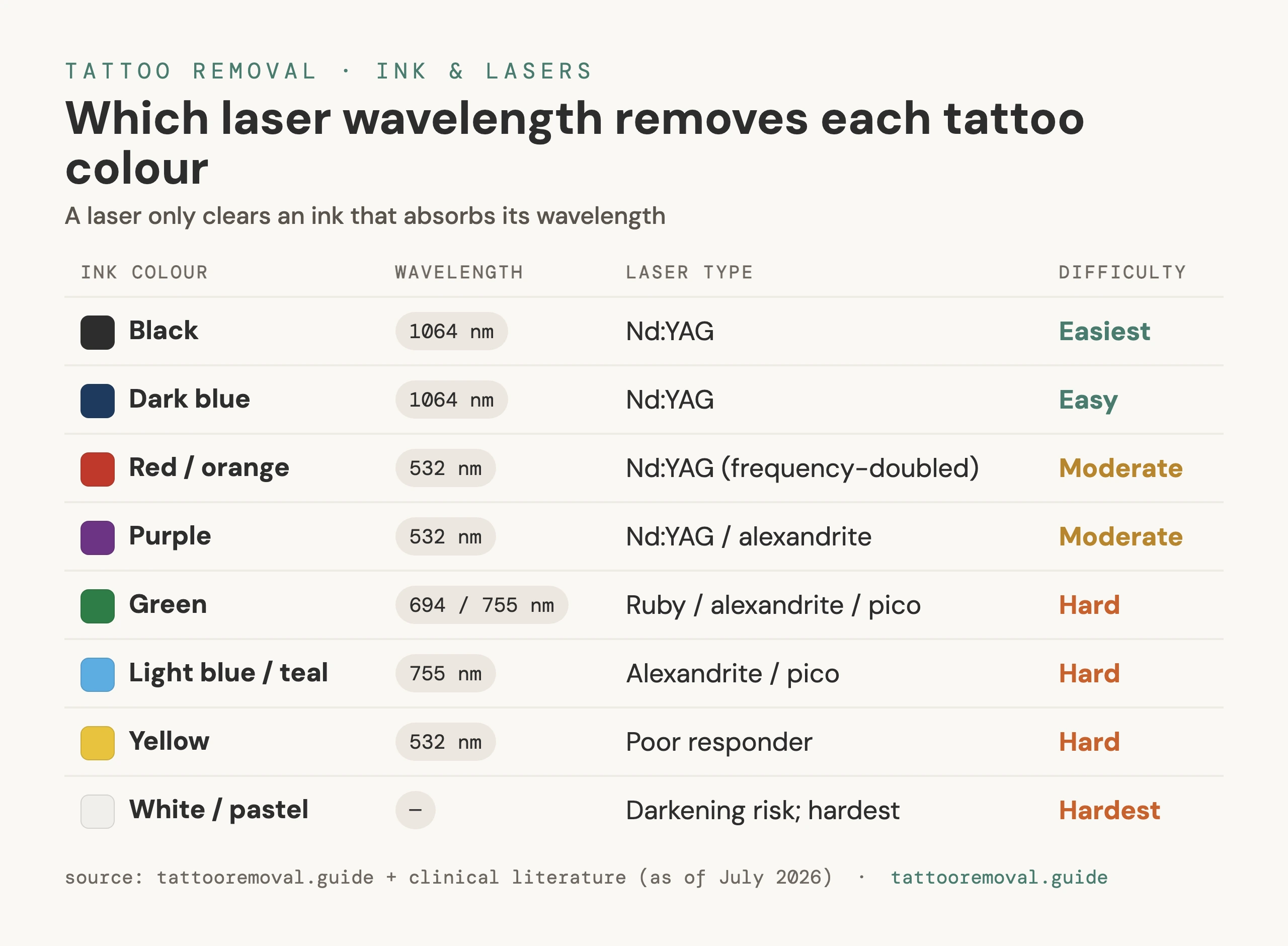 A laser only clears an ink that absorbs its wavelength.
What is paradoxical darkening?
Paradoxical darkening is when a laser pulse makes a tattoo look darker instead of lighter — the opposite of what removal is supposed to do. Instead of the ink fading, the treated patch shifts to grey, blue-grey or black, often on the very first pass. As the Cleveland Clinic notes, some colours — particularly white and flesh tones used in cosmetic tattoos — can darken with laser treatment and become harder to remove.
The effect is well documented in the clinical literature. The StatPearls reference on laser tattoo removal describes how white, tan and flesh-coloured cosmetic inks containing titanium dioxide or iron oxide can turn dark grey or black after Q-switched laser treatment. It is not a rare quirk — it is a predictable chemistry problem with a specific set of pigments.
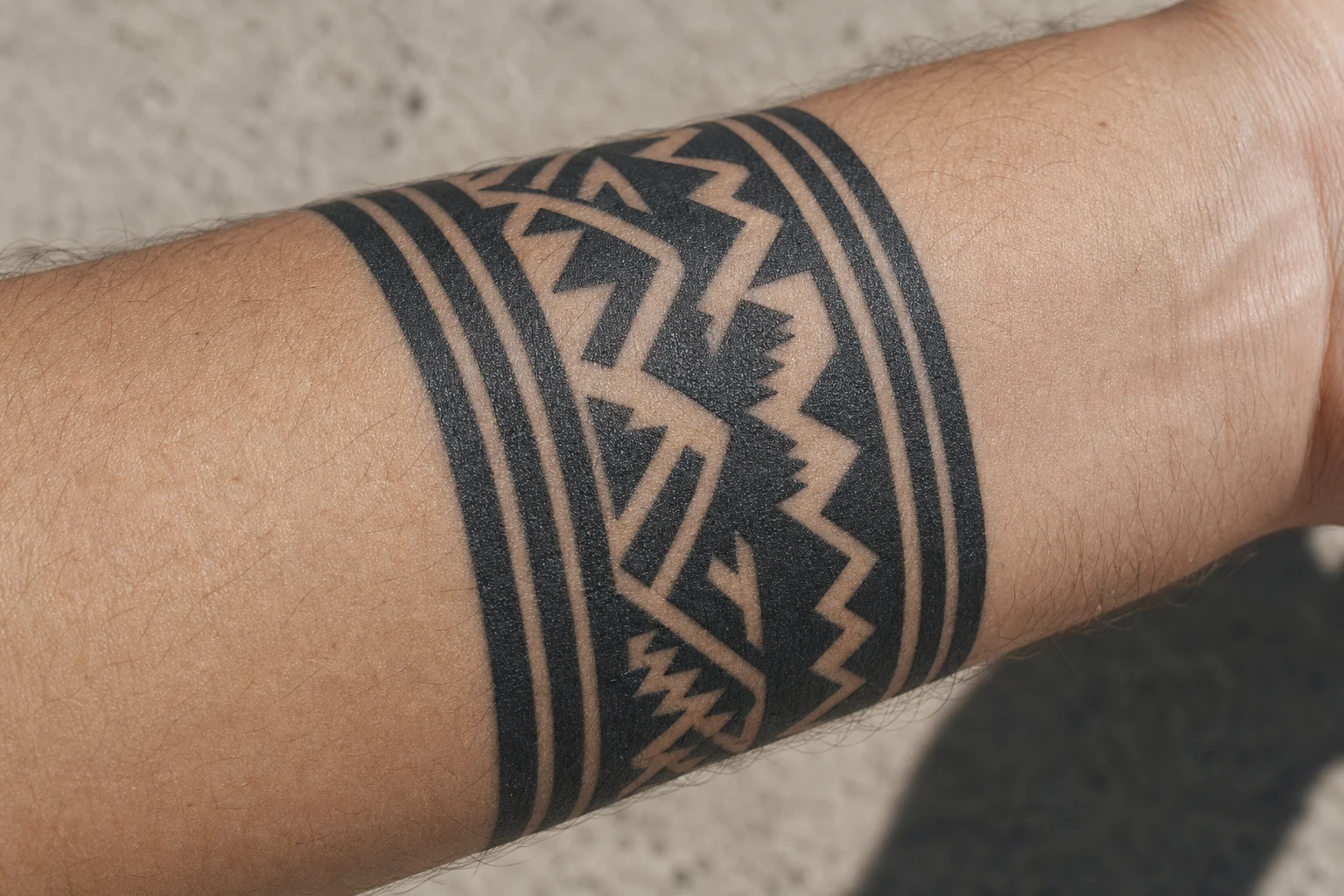 Dense black ink — the easiest colour to clear.
Why it happens: the chemistry
Two ingredients are behind almost every darkening case:
- Titanium dioxide (TiO₂) is the white pigment used to make ink white, and it is also mixed into pastels, pinks and flesh tones to lighten them. Under the intense, ultra-short energy of a Q-switched laser, TiO₂ undergoes a chemical reduction — it loses oxygen and shifts from bright white to a lower oxide that reads as grey or blue-black.
- Iron oxide (Fe₂O₃), common in reds, browns and skin-matched cosmetic inks, reduces the same way — from rust-red ferric oxide (Fe₂O₃) to black ferrous oxide (FeO).
In both cases the laser does not remove the pigment; it chemically changes it into a darker compound. That darker compound then has to be treated all over again, this time like dark ink. This is why a colour that looked faint and easy can become the most stubborn part of the whole tattoo.
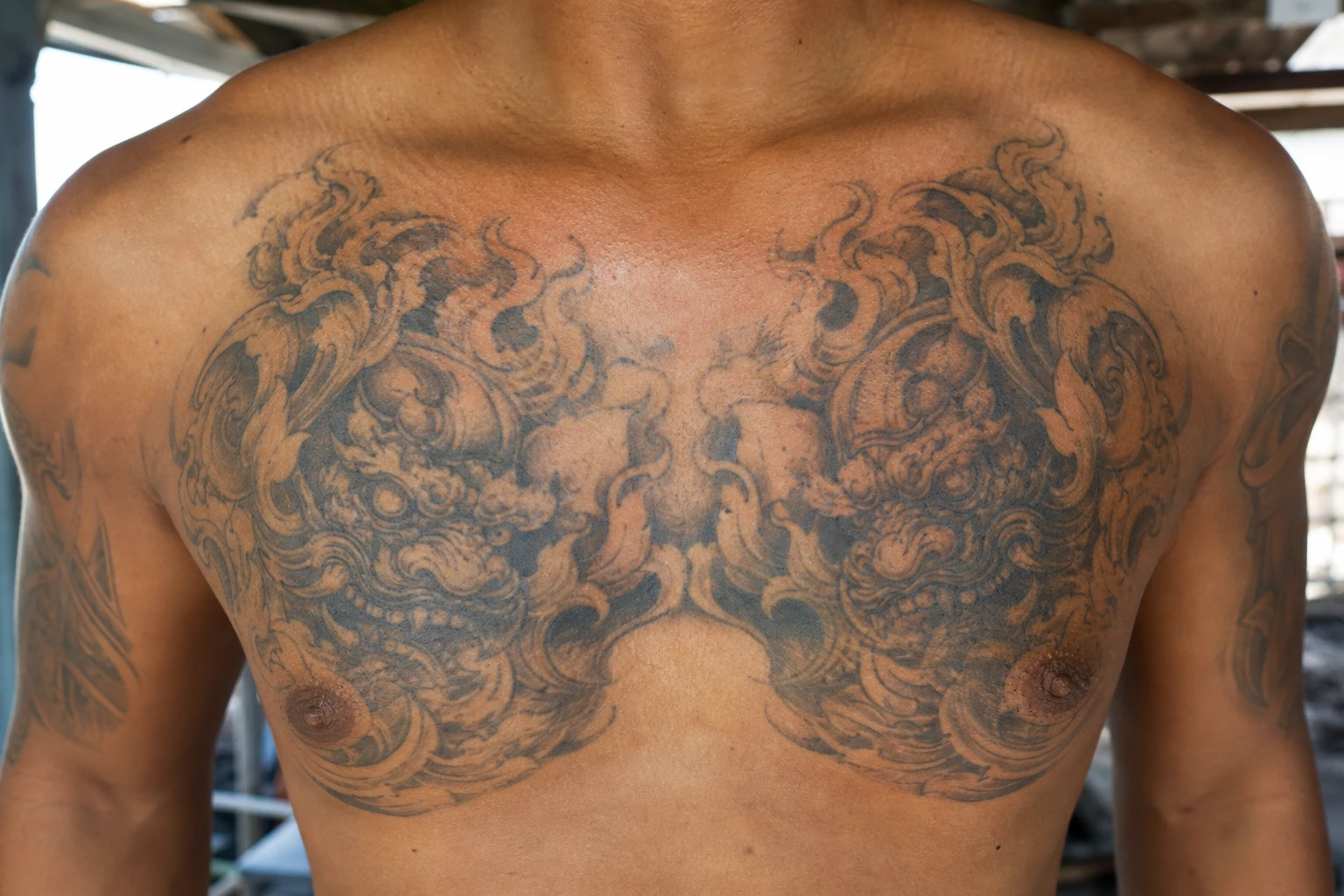 Dense black ink — the easiest colour to clear.
Colour and darkening-risk table
Because the exact pigment mix is rarely printed anywhere, this is a risk guide, not a guarantee — but it maps closely to which inks contain titanium dioxide and iron oxide.
| Ink colour | Paradoxical-darkening risk | Why |
|---|---|---|
| Flesh-tone / skin-matched (cosmetic) | Highest | Combines titanium dioxide and iron oxide — used in permanent makeup |
| White | Very high | Titanium dioxide base; also reflects most wavelengths, so hardest to clear |
| Pastels (pink, peach, light blue, lavender) | High | Lightened with titanium dioxide |
| Red / brown | Moderate | Iron oxide can reduce to black |
| Yellow | Low–moderate | Some formulations use titanium dioxide or iron-based pigments |
| Green / dark blue | None (for darkening) | No darkening, but genuinely hard to clear — see can green tattoos be removed |
| Black | None | Absorbs laser well; the easiest colour to remove |
Note the split: black and green do not darken, but for opposite reasons — black clears easily, green resists. White and flesh tones sit in the worst position: hard to clear and prone to darkening.
Flesh-tone and cosmetic inks: the highest risk
The single riskiest category is flesh-toned and skin-matched ink, because it deliberately blends titanium dioxide (to lighten) with iron oxide (to warm the tone). That is exactly the combination most likely to reduce to grey or black. These inks are most common in permanent makeup (PMU) — microbladed or tattooed eyebrows, lip liner, eyeliner and areola restoration — where a person often wants an old cosmetic tattoo lightened or removed.
It is also where darkening does the most damage: an unexpected grey smudge across an eyebrow or lip line is far harder to hide than one on an arm. Both the American Academy of Dermatology and the FDA's fact sheet on tattoos and permanent makeup flag cosmetic-ink darkening as a specific hazard of lasering permanent makeup. This is the one scenario where an experienced clinician and a cautious test spot matter most.
Why a test spot is mandatory
A test spot is a small, discreet trial treatment on a corner of the tattoo, followed by a wait to see how the pigment reacts before committing to the full design. For white, pastel and flesh-toned ink it is not optional, for one blunt reason: nobody knows the exact composition of the ink already in your skin. You cannot read the bottle after the fact, and manufacturers rarely disclose full formulations.
A test spot answers the only question that matters — does your ink fade, hold, or darken? — at the smallest possible cost. A clinician experienced with these pigments will treat a hidden patch, wait a few weeks, and only then plan the full course. Someone who offers to blast a whole cosmetic brow on the first visit, sight-unseen, is taking a risk with the most visible skin you have.
What to do if darkening happens
Darkening is a setback, not a dead end. The reassuring part is that darkened ink can usually still be removed — once white or flesh-tone pigment has reduced to grey or black, it behaves like dark ink and absorbs the same wavelengths (typically 1064nm) that clear black effectively. The catch is that it now needs to be cleared as dark ink, which usually means additional sessions on top of the original plan.
The right response is for the clinician to reassess and adjust — not to keep firing on the original settings and hope. If your ink darkens, that is a signal to slow down, re-plan, and treat the new dark pigment deliberately. This is precisely why experience with these inks matters: a clinician who has seen darkening before knows it is manageable and how to manage it.
This is general information, not medical advice. Laser removal of white, pastel and cosmetic inks carries real risks, including paradoxical darkening, blistering and pigment change. Reactions vary by person and by the exact ink in your skin — no outcome or session count can be guaranteed. Consult a licensed provider, and insist on a test spot before treating light or flesh-toned ink.
Compare clinics that do test spots
Removing white or flesh-tone ink safely comes down to one thing: finding a clinician who has treated these pigments before, offers a test spot, and has the right lasers. Those are questions you can screen for before you book.
Compare tattoo-removal clinics in your city to see who lists the lasers and consultation options that matter here, or start with a dense market like tattoo removal in Melbourne to see how clinics stack up side by side. For the full colour picture, see our pillar guide to the hardest tattoo colours to remove, and the sibling guide on whether green tattoos can be removed.
Frequently asked questions
Can white ink tattoos be removed?
Yes, but white ink is the hardest tattoo colour to remove, and it carries a specific risk: white pigment often contains titanium dioxide, which can instantly darken to grey or black when hit by a laser. It can usually still be removed after that, but it typically needs more sessions and an experienced clinician.
Will my white tattoo turn black when I laser it?
It can. White, pastel and flesh-toned inks frequently contain titanium dioxide or iron oxide, which chemically reduce under the laser and turn grey or black — a reaction called paradoxical darkening. This is why a test spot before treating any light-coloured ink is essential to see how your specific pigment reacts.
What is paradoxical darkening?
Paradoxical darkening is when a laser pulse makes a tattoo look darker instead of lighter, because pigments like titanium dioxide and iron oxide undergo a chemical reduction reaction that shifts their colour to grey or black. It most often affects white, flesh-tone, pink and pastel inks, and can happen on the very first pass.
Why is white ink the hardest tattoo colour to remove?
White ink reflects rather than absorbs most laser wavelengths, so the light struggles to shatter it, and the titanium dioxide it usually contains can darken on contact. That combination — poor absorption plus a darkening reaction — makes white the most difficult and least predictable colour, often needing more sessions than black.
Can darkened white ink still be removed?
Usually, yes. Once white or flesh-tone ink has darkened to grey or black, it behaves more like dark ink and can be treated with the wavelengths that clear black — but it typically takes additional sessions. An experienced clinician should reassess and adjust the plan rather than continuing blindly on the original settings.
Why do I need a test spot before removing white or flesh-tone ink?
A test spot treats a small, discreet area first and waits to see whether the pigment fades, stays the same, or darkens. Because white, pastel and cosmetic inks can paradoxically darken and their exact composition is rarely known, a test spot is the only way to gauge how your specific ink will react before committing to the full tattoo.
Which tattoo inks have the highest darkening risk?
Flesh-tone and skin-matched cosmetic inks carry the highest paradoxical-darkening risk because they combine titanium dioxide and iron oxide, followed by white, pink and pastel shades. These are common in permanent makeup — brows, lip liner and areola tattoos — which is exactly where an unexpected grey or black patch is hardest to hide.
Related guides
Related Guides
- Ink & Colours
Selective Tattoo Removal: Erasing Part of a Tattoo (2026)
Selective tattoo removal targets one part of a tattoo — a name, a figure, one colour — while leaving the rest.
- Ink & Colours
Removing an Ex-Partner's Name Tattoo: Your Options in 2026
Removing an ex's name tattoo? A partner's name is one of the most-removed tattoos — and small black lettering is among the quickest and cheapest to clear.
- Ink & Colours
Name & Lettering Tattoo Removal
Name and lettering tattoos are usually small and black, so per-unit they're among the easier tattoos to remove — but dense, deep script needs patience.