Fading a Tattoo for a Cover-Up
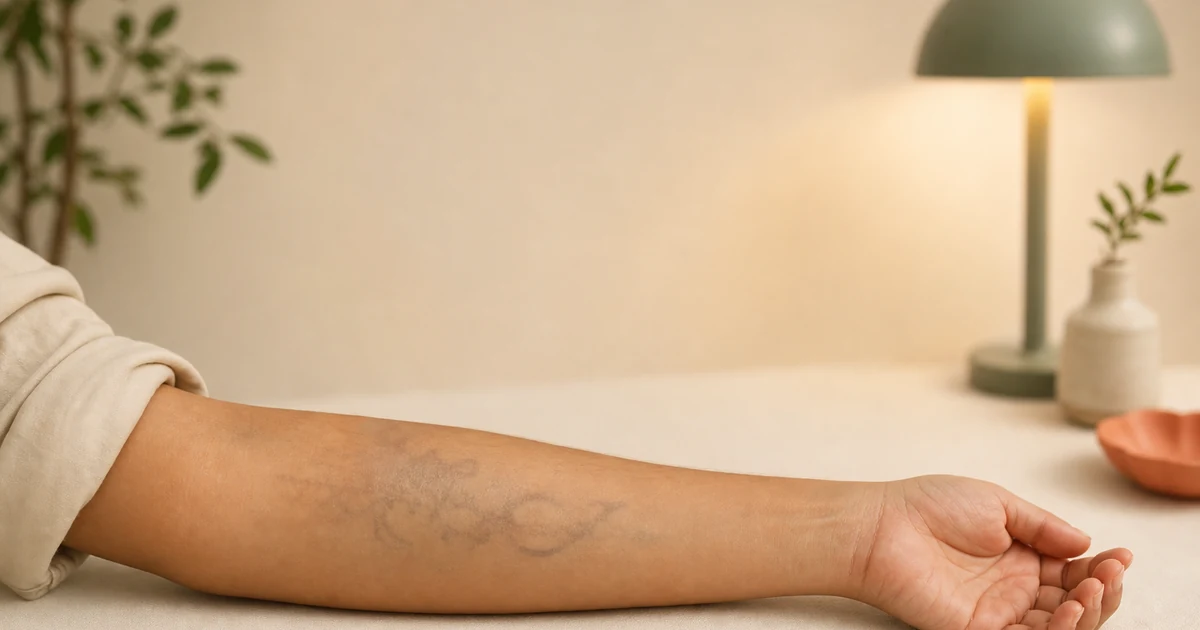
Fading a tattoo for a cover-up needs only partial removal — just enough to lighten the old ink so a new design covers it cleanly — not full clearance. Because you're stopping well short of erasing the tattoo, it's usually fewer laser sessions than complete removal, often just a few, though a dark or dense piece can still take several. How faded is "enough" is decided with your cover-up artist.
That single distinction — fade, don't clear — saves most people time and money. This guide explains what fading for a cover-up actually means, why tattoo artists ask for it, how much fading is enough, the right sequence to book it in, and how it compares to going for full removal. Figures come from the Tattoo Removal Guide directory, stamped (as of July 2026), alongside medical sources.
What "fading for a cover-up" actually means
Fading for a cover-up is partial laser tattoo removal — deliberately lightening an existing tattoo rather than erasing it. The laser breaks the ink into fragments small enough for your body to carry away; as the Cleveland Clinic explains, your immune system does the actual clearing over the weeks that follow each session. For a cover-up, you stop that process early — once the old design has faded to a workable shadow, the job is done.
Full removal is a different goal. It chases every last stubborn, deep-set particle, which is what pushes complete-clearance session counts high. Fading never gets to that fight. The American Academy of Dermatology notes that even a few laser treatments can visibly lighten a tattoo — and for a cover-up, visibly lighter is often all a new design needs.
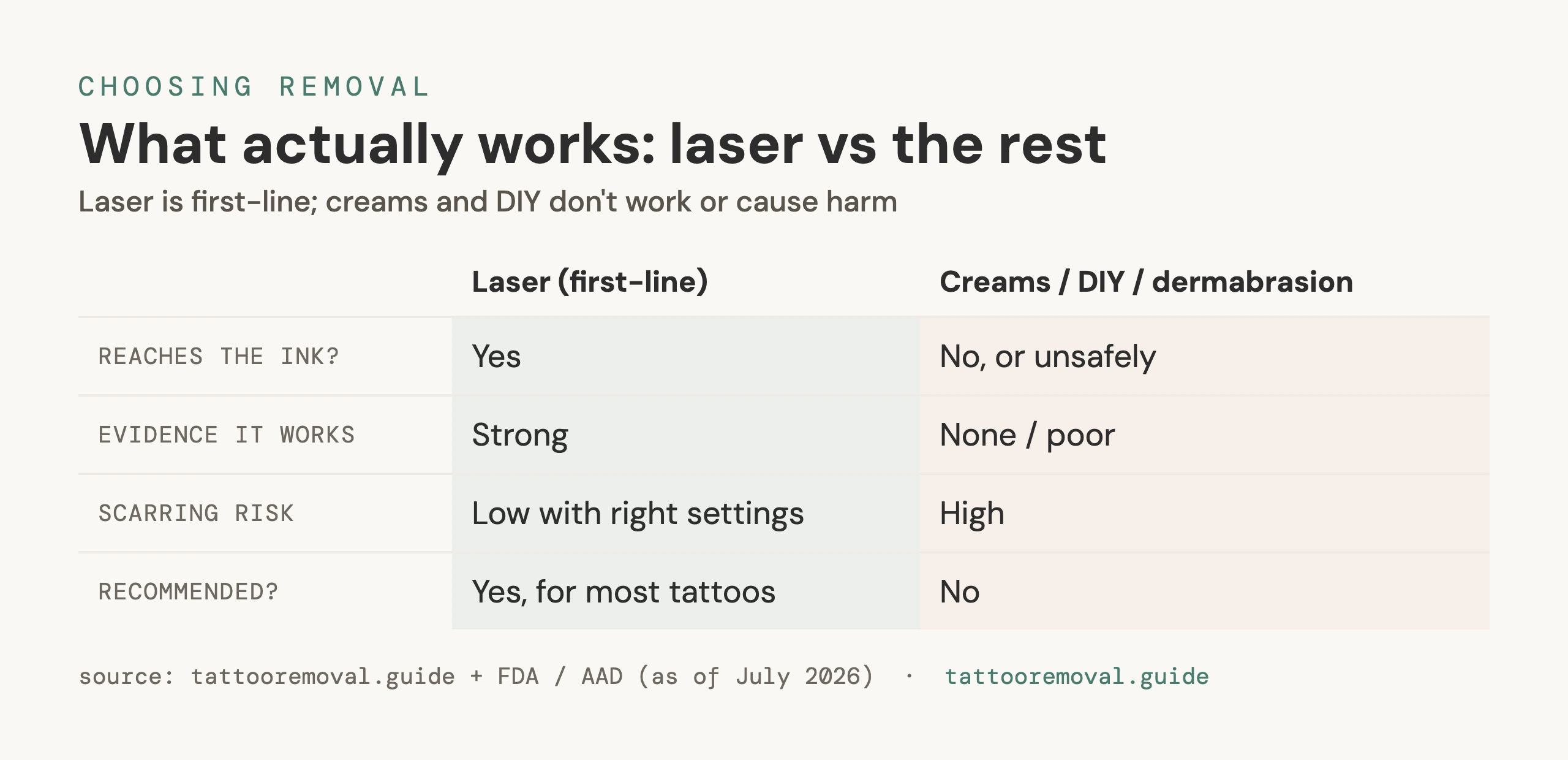 The main tattoo removal methods, side by side.
Why tattoo artists ask you to fade first
A cover-up artist has one core problem: fresh ink is translucent, not opaque. New tattoo ink layers over the old design rather than hiding it, so dark, dense existing work tends to "read" through the new piece — or forces the artist into a much bigger, darker, more limited design just to bury it.
Pre-fading removes that constraint. Lightening the old tattoo widens what's possible:
- More colour and detail. A faded base lets the artist use lighter tones, fine linework and negative space instead of a wall of black to mask what's underneath.
- A smaller, smarter design. Without the old ink dictating the shape, the cover-up can be the size and style you actually want, not the one the old tattoo forces.
- A cleaner final result. Less show-through means the finished piece looks like a fresh tattoo, not a patch.
This is why many artists now decline a difficult cover-up unless you fade first — dark or dense old ink genuinely limits their options, and a few fade sessions dramatically expands them.
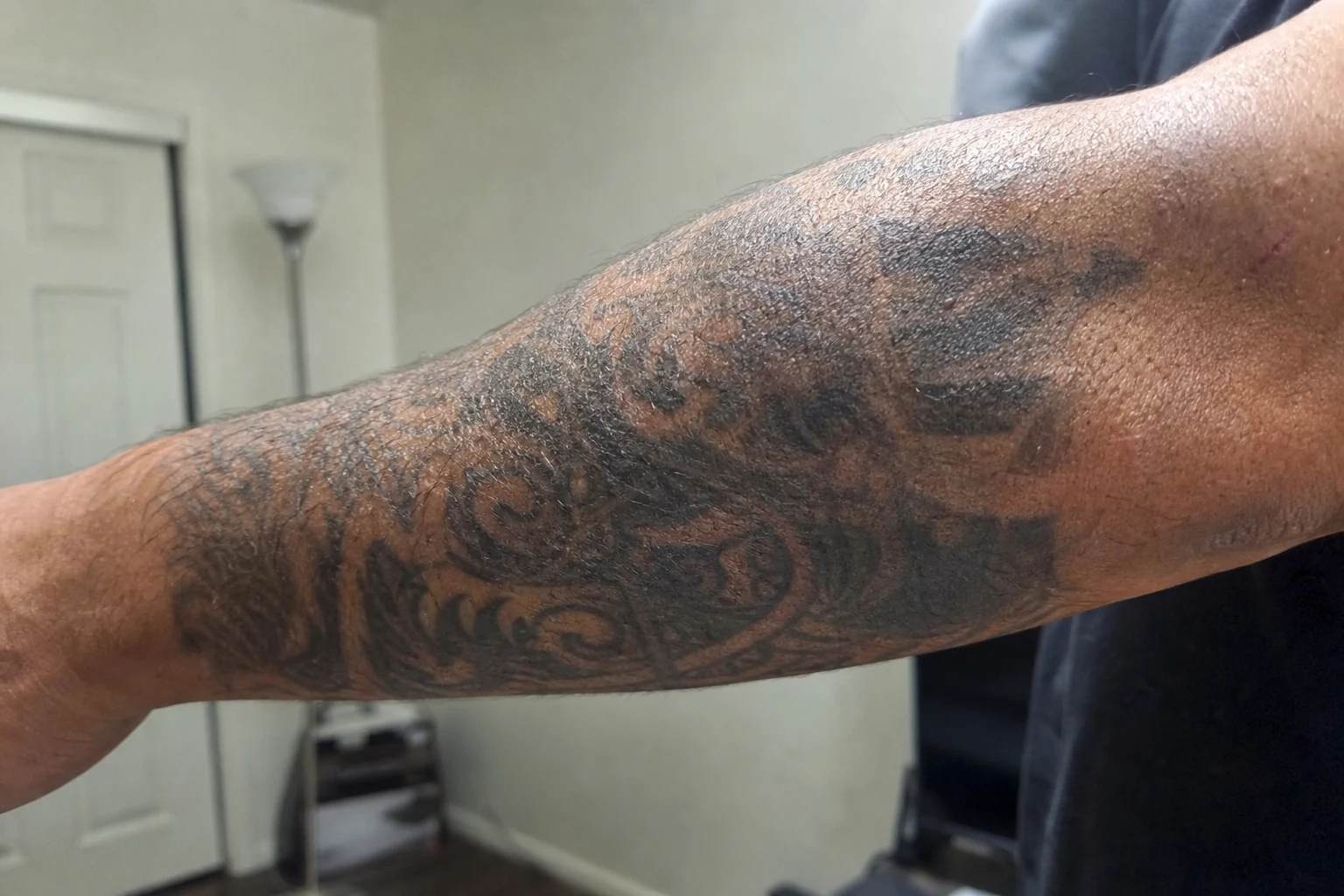 A large dark tattoo — fading widens cover-up options.
How much fading is "enough"?
There's no universal target. How faded the old tattoo needs to be is decided with your cover-up artist, based on the specific design you want. A dark, solid cover-up that leans on heavy shading may need only light fading. A lighter, more detailed or more colourful piece needs the old ink much fainter so it doesn't muddy the new work.
That's why the design has to come first. The artist looks at what you want, then tells the laser clinic how light the canvas must be — and the clinician plans the number of sessions to hit that mark rather than an arbitrary "fully gone". Fading to a real target is almost always fewer sessions than removal, because you're aiming for a shadow, not blank skin.
Be realistic about heavier work: a heavily saturated, dark or dense tattoo can still take several fade sessions to reach a usable canvas, and some ink colours resist the laser more than others (stubborn greens and blues fade slowest — see the hardest tattoo colours to remove). Nobody can promise an exact session count in advance; it depends on your ink and is assessed in person.
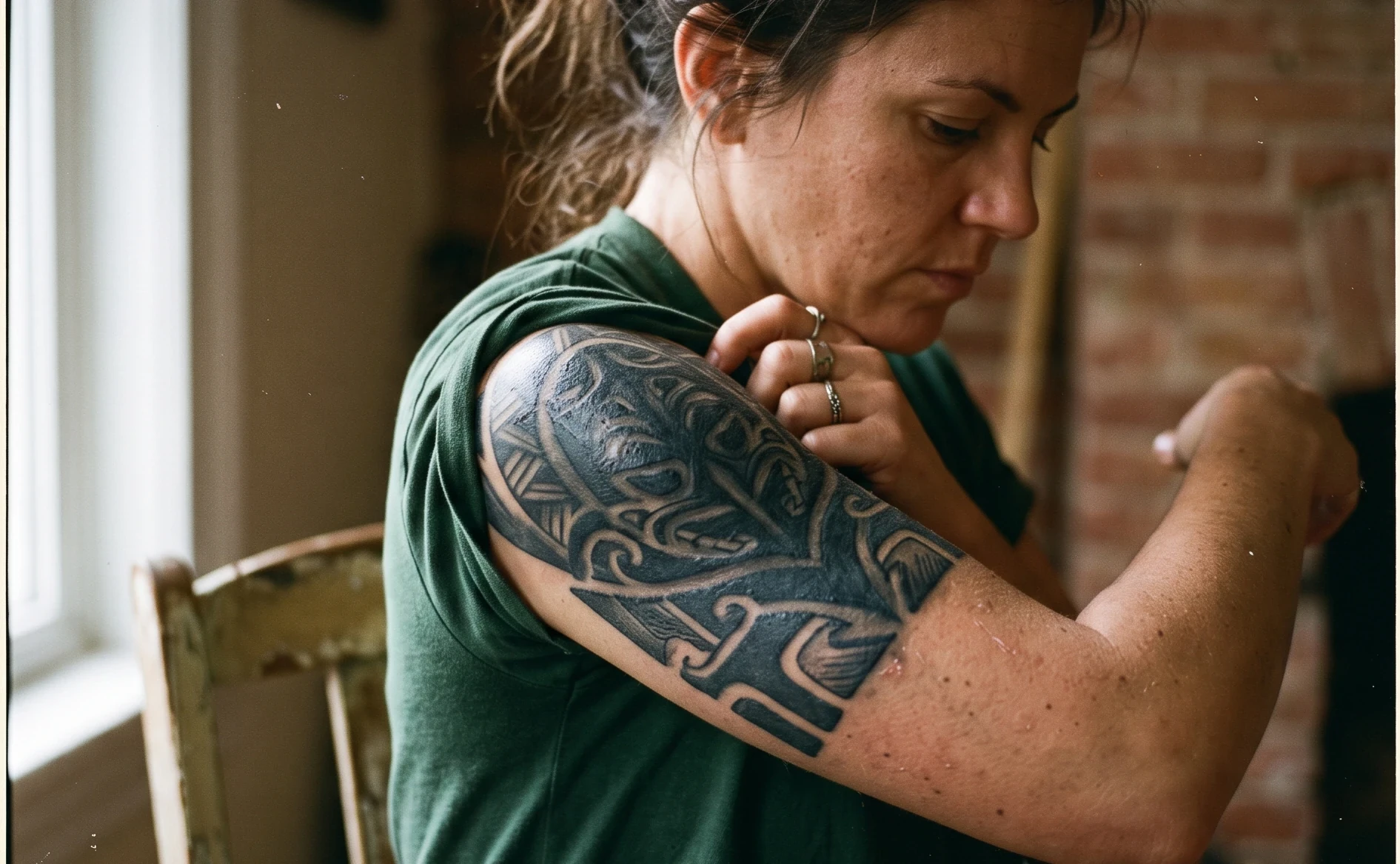 A large, dark tattoo — fading widens cover-up options.
The right sequence: consult, fade, heal, cover
The most common mistake is treating the laser clinic and the tattoo artist as two separate errands. They're one project with two professionals, and the order matters:
- Consult the cover-up artist first. Bring the design you want. The artist tells you how faded the old tattoo needs to be for that piece — the whole plan hangs on this target.
- Take that brief to a laser clinic. A good clinician plans sessions to reach the artist's target, not full clearance. Share the design and the requirement so everyone aims at the same finish line.
- Fade to target, with spacing. Laser sessions are spaced several weeks apart so skin heals and the immune system clears shattered ink between passes. Rushing the gap doesn't speed clearance and raises the risk of skin damage.
- Let it heal and settle, then cover. Ink keeps fading for weeks after the final session. Assess the faded result once it's stable and fully healed, then book the cover-up over skin that's ready for a needle.
Fading for a cover-up vs full removal
The two paths look similar in the treatment chair but are different jobs. Here's the honest comparison:
| Factor | Fading for a cover-up | Full removal |
|---|---|---|
| Goal | Lighten the old ink just enough for a new design to cover it cleanly | Clear the tattoo to skin (or near-clear) |
| Sessions | Fewer — often just a few (dense/dark ink: several) | More — every resistant particle adds passes |
| Relative cost | Lower, because fewer sessions | Higher — cost scales with session count |
| Healing / timeline | Sessions spaced weeks apart; fade then heal before covering | Spaced the same way, but many more sessions overall |
| End state | A faint shadow, ready to tattoo over | Faded toward clear; faint "ghosting" can remain |
The reason both are measured in months is the biology, not the laser. Each session takes minutes, but the StatPearls clinical reference describes the same staged sequence every time — absorb, fragment, clear, repeat — with weeks of spacing so skin recovers between passes. Fading simply needs fewer repeats. On cost: across the 5,700 clinics we track across 1,043 cities (as of July 2026), only about 38% publicly list a price, and quotes depend on your tattoo — so fewer sessions reliably means lower total cost, but confirm the number for your ink in person.
The colour and darkening caveats
Fading isn't a clean dimmer switch, and two things are worth knowing before you commit:
- Colour can shift as ink breaks down. A tattoo doesn't always fade evenly to grey — tones can change as pigment fragments, which matters when a cover-up artist is planning around what's left.
- Some inks darken paradoxically. Certain pigments — especially cosmetic, white or flesh-toned inks — can turn darker when lasered. The FDA notes that laser treatment of tattoos and permanent makeup can cause unexpected reactions, including colour change. A test patch and an in-person assessment help flag this risk before a full fade.
This is general information, not medical advice. Laser tattoo removal is a medical procedure with real risks (blistering, scarring, pigment change). Session counts, fade levels, timelines and outcomes vary by person and tattoo — consult a licensed provider about your specific situation.
Find a clinic that fades for cover-ups
Not every laser clinic approaches a fade the same way, and the right lasers for your ink colours can change both the session count and the cost. Before you book, compare providers where you live and ask specifically about fading for a cover-up — how many sessions they'd plan to reach your artist's target, and whether they'll coordinate with the cover-up brief.
Compare tattoo-removal clinics in your city to find providers near you, or start with a dense market like tattoo removal in Melbourne — where we track 215 listed clinics (as of July 2026) — to see how listings, lasers and pricing stack up. Still weighing the bigger picture? Our guide to every removal method compared covers how laser stacks up against the alternatives, and tattoo removal for a cover-up goes deeper on the fade-versus-full-removal decision.
Frequently asked questions
How many sessions to fade a tattoo for a cover-up?
Fading for a cover-up is usually fewer sessions than full removal — often just a few — because you only need to lighten the old ink, not clear it. The exact number depends on the ink's colour, density and age, and on how faded your cover-up artist needs the canvas. A dark, saturated piece can still take several fade sessions.
Do you need to fully remove a tattoo before a cover-up?
No. Fading for a cover-up needs only partial removal — enough to lighten the old ink so a new design covers it cleanly. Full clearance is rarely necessary and takes many more sessions. Your tattoo artist decides how faded the old piece must be for the specific cover-up design you want.
How much do you need to fade a tattoo for a cover-up?
How much fading is "enough" is decided with your cover-up artist, not by a fixed target. A dark, solid cover-up may need only light fading, while a lighter or more detailed design needs more. Bring the design to the artist first — they define the target, and the laser clinician plans sessions to reach it.
What is the right order — laser fading or the cover-up first?
Consult the cover-up artist first, then fade to their target, let the skin fully heal, then get the cover-up. Laser sessions are spaced several weeks apart and ink keeps clearing after the final session, so the faded result should settle and heal before any new tattoo goes over it.
Is fading a tattoo for a cover-up cheaper than full removal?
Generally yes, because fading needs fewer sessions than complete removal, and cost scales with session count. Across the 5,700 clinics we track (as of July 2026), most don't publish pricing and quotes vary by tattoo, so treat any estimate as a starting point and confirm with an in-person consultation.
Can any tattoo be faded enough for a cover-up?
Most tattoos can be lightened enough to widen cover-up options, but a heavily saturated, dark or dense piece may still need several fade sessions to reach a usable canvas. Some colours resist the laser more than others. A clinician assesses your specific tattoo in person before estimating how many sessions fading will take.
Does fading a tattoo change its colour?
It can. As ink breaks down it may look lighter or shift in tone, and certain pigments — especially cosmetic or flesh-toned inks — can darken paradoxically when lasered. This is why a test patch and an in-person assessment matter before committing to a fade for a cover-up. Discuss colour risks with your clinician.
Related guides
Related Guides
- Ink & Colours
Selective Tattoo Removal: Erasing Part of a Tattoo (2026)
Selective tattoo removal targets one part of a tattoo — a name, a figure, one colour — while leaving the rest.
- Ink & Colours
Removing an Ex-Partner's Name Tattoo: Your Options in 2026
Removing an ex's name tattoo? A partner's name is one of the most-removed tattoos — and small black lettering is among the quickest and cheapest to clear.
- Ink & Colours
Name & Lettering Tattoo Removal
Name and lettering tattoos are usually small and black, so per-unit they're among the easier tattoos to remove — but dense, deep script needs patience.