Stick-and-Poke & Amateur Tattoo Removal
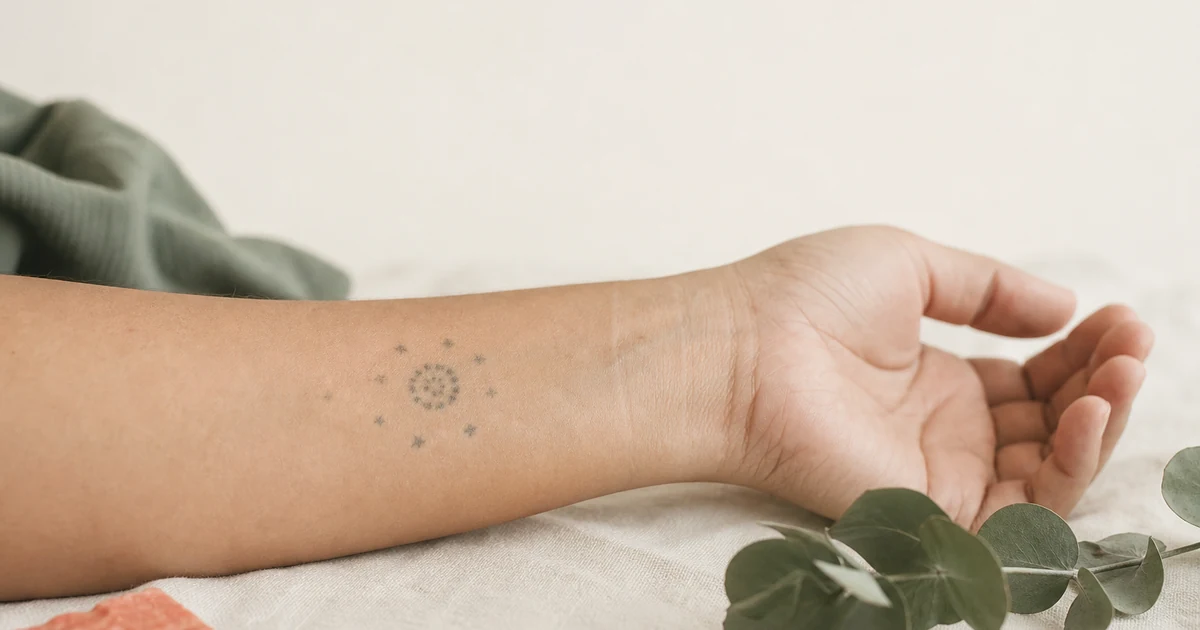
Amateur, stick-and-poke and prison tattoos usually clear faster than professional work — often in roughly 3–7 laser sessions rather than the 8–15 or more a dense professional piece can need. The ink tends to be shallower, less dense and a single dark colour, so there's simply less pigment for the laser to shatter and your immune system to carry away. The catch: hand-poked depth is uneven, so fading can be patchy.
A stick-and-poke tattoo is a hand-applied tattoo made by repeatedly pushing an ink-dipped needle into the skin by hand, rather than with a professional coil or rotary machine. Homemade and prison tattoos are made the same improvised way. That method — not the fact that it's "amateur" — is exactly what usually makes them easier to remove. This guide explains why, with the honest caveats, using medical sources and figures from the Tattoo Removal Guide directory, stamped (as of July 2026).
Key Takeaways
- Amateur, stick-and-poke and prison tattoos often clear in ~3–7 sessions versus ~8–15+ for dense professional work — because the ink is usually shallower and less dense.
- The trade-off is uneven depth: hand-poked ink varies across the design, so fading can look patchy before it evens out.
- Most amateur tattoos are single-colour black or blue-black, the easiest ink for a laser to target — colour matters more than the "amateur" label.
- It still needs a real laser clinic. Do not attempt cream, salt, sand or acid "home removal" — it doesn't work and risks scarring and infection.
- Of the 5,700 clinics we track, about 18% note picosecond lasers and 15% note Q-switched (as of July 2026) — both are effective for the black ink most amateur tattoos use.
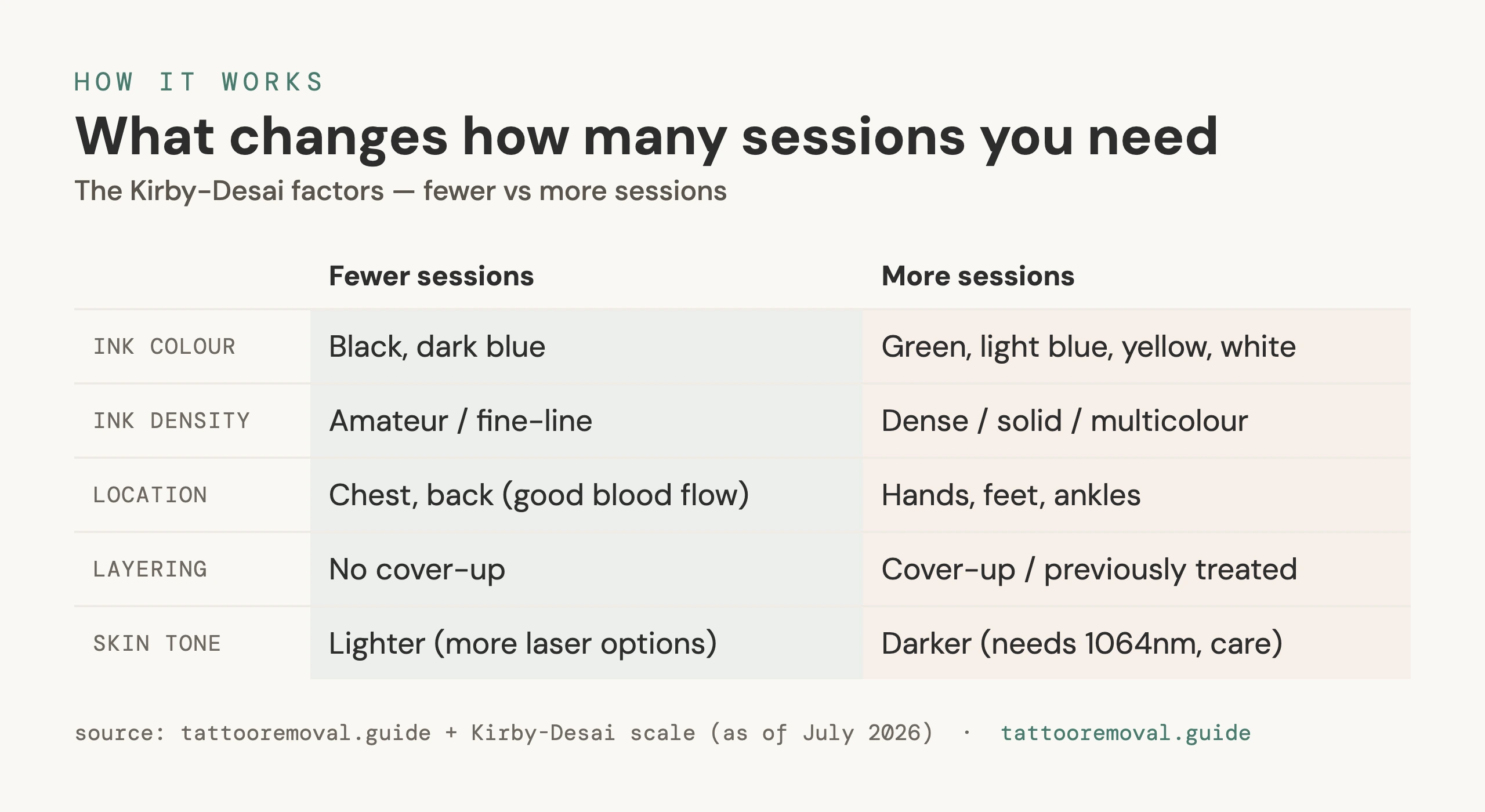 The factors that decide how many sessions you'll need.
Why amateur tattoos often clear faster
Laser removal works by shattering ink into fragments small enough for your immune system to carry away — the laser breaks the ink apart, and your body does the actual removing, as the Cleveland Clinic explains. Anything that means less ink, sitting shallower, means fewer passes to fragment it all and less for the body to clear. Amateur tattoos usually win on all three counts:
- Less ink (lower density). A professional machine drives dense, saturated colour into the skin. A hand-poked needle deposits far less pigment per area, so there's less to shatter.
- Shallower deposition. Hand-poked ink often sits higher in the skin, where the laser reaches it more easily. Deep, machine-packed ink is partly shielded until upper layers clear.
- Simpler colour. Most amateur, homemade and prison tattoos are a single black or blue-black, the ink lasers target most readily. Professional pieces layer greens, blues and other stubborn colours that need specific wavelengths and extra sessions.
The clinical literature reflects this. The StatPearls reference on laser tattoo removal notes that amateur tattoos generally require fewer treatment sessions than professional ones, and the validated Kirby-Desai scale — which predicts session count from six factors — scores amount of ink and colour directly. Amateur tattoos tend to score low on both, which maps to a lower predicted number of sessions.
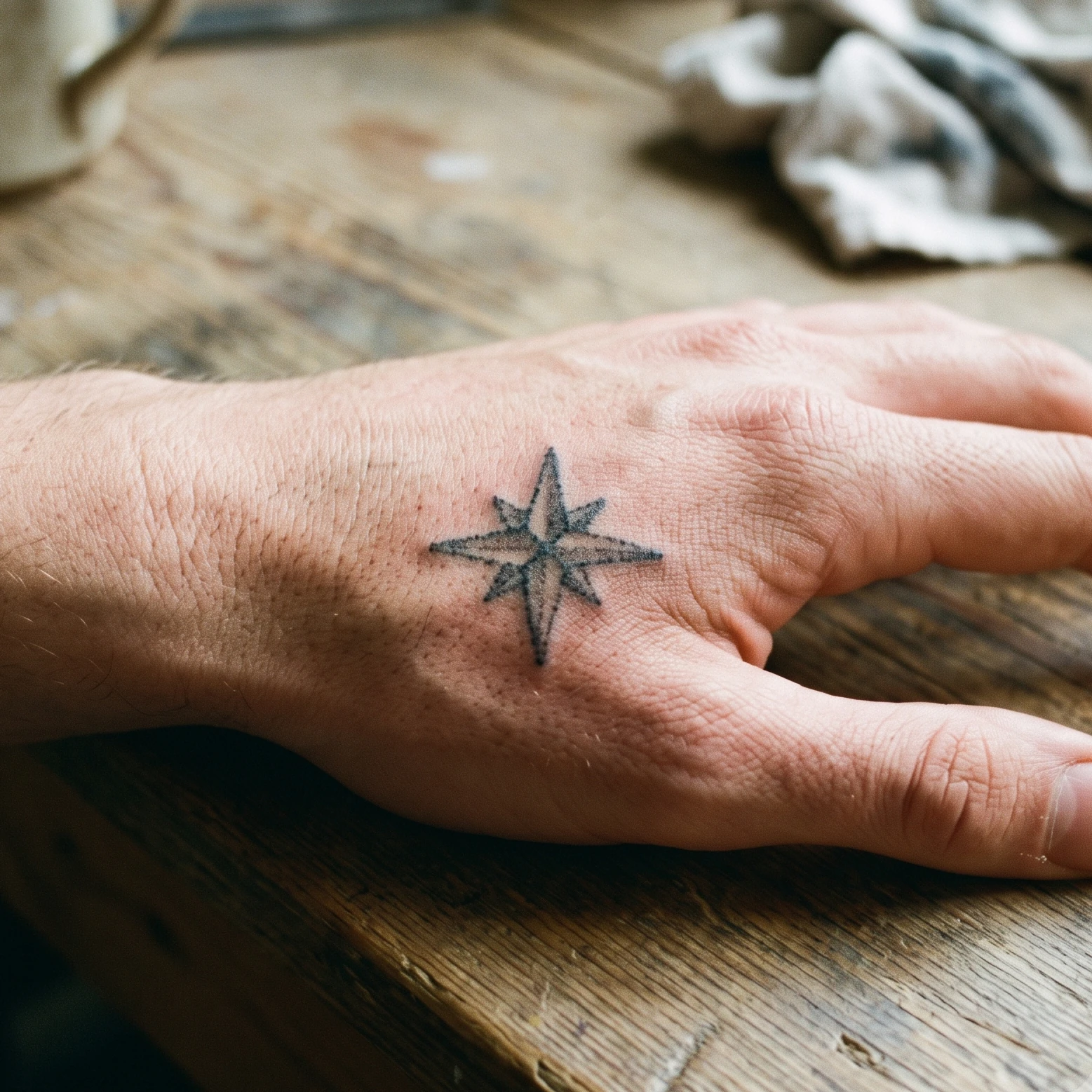 An amateur stick-and-poke tattoo.
Why depth and density drive session count
Ink density and depth are the two biggest levers on how many sessions you'll need. Removal is staged: each laser pass only shatters the pigment it can reach and be absorbed by, then your immune system needs weeks to clear those fragments before the next pass reaches the layer beneath. More ink means more fragments to clear across more passes. Deeper ink means the light is partly absorbed and scattered before it gets there, so it takes more sessions to work down through it.
That's the whole reason a small hand-poked line clears faster than a saturated professional sleeve: the sleeve is holding many times more pigment, packed deeper. Colour is the third lever — black absorbs almost every laser wavelength, while green and blue resist — and amateur tattoos are usually all black. Fewer of the hard variables stack up, so the course is shorter.
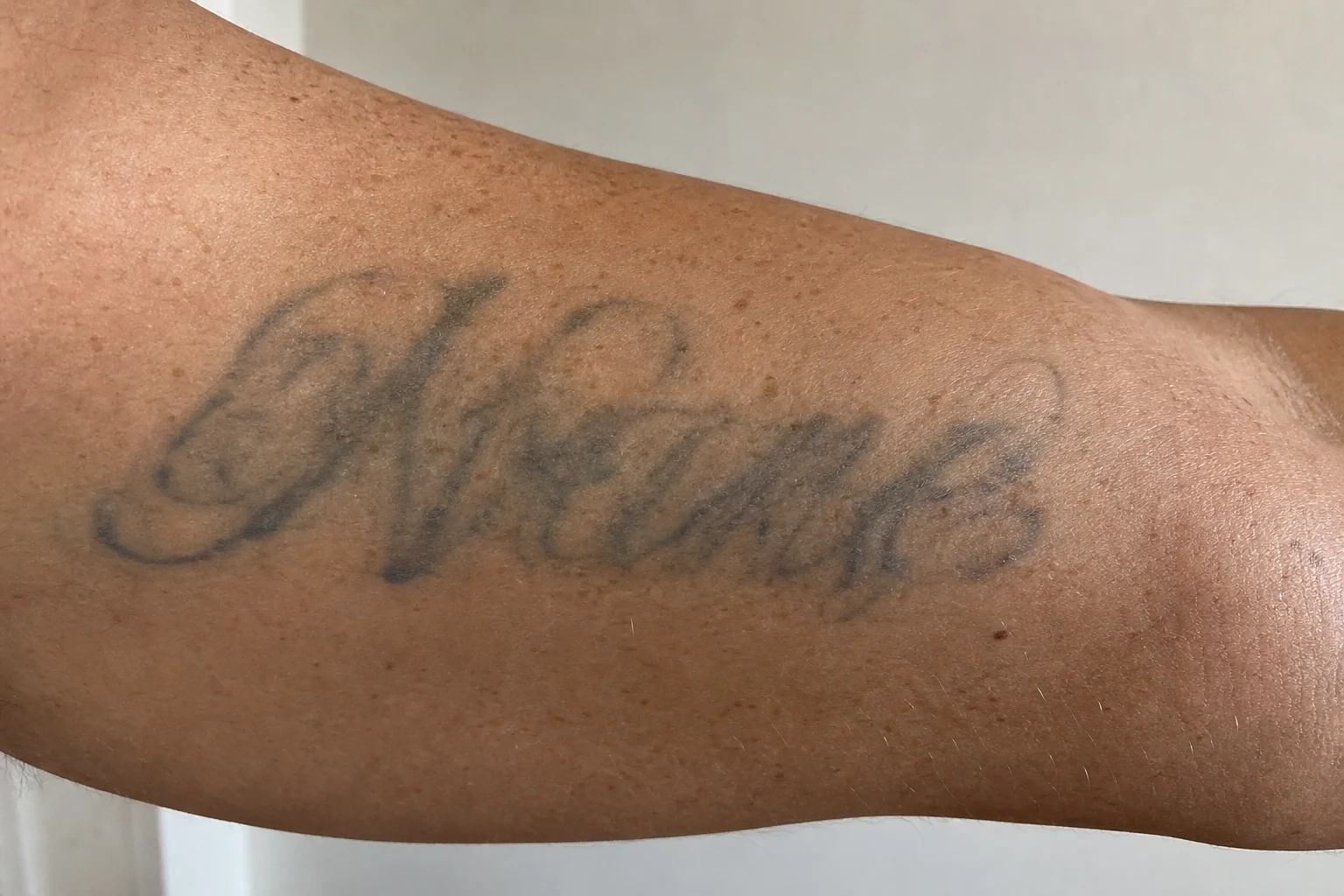 Small black lettering is among the quickest tattoos to clear.
The catch: patchy, uneven fading
The same hand-application that makes amateur tattoos easier also makes them less predictable. Because the ink was pushed in by hand, its depth and concentration vary from spot to spot — one line might be shallow and sparse, the next deeper and denser. During removal, the shallow, sparse areas fade quickly while the deeper, denser spots lag, so the tattoo can look blotchy or patchy partway through the course. This is normal and usually evens out as the remaining ink is treated over additional sessions; it's a reason not to judge progress by the halfway mark.
Amateur vs professional: how they compare
| Factor | Amateur / stick-and-poke / prison | Professional |
|---|---|---|
| Typical sessions | ~3–7 | ~8–15+ |
| Ink density | Lower — less pigment to clear | Higher — dense, saturated |
| Ink depth | Shallower, but uneven | Deeper, more consistent |
| Colour | Usually single black / blue-black | Often multi-colour (incl. stubborn greens/blues) |
| Predictability | Lower — patchy fading is common | Higher — more uniform fading |
| Typical total cost | Often lower (fewer, smaller sessions) | Higher (more sessions) |
Ranges are typical, not promises — actual sessions depend on your skin, the ink used, the tattoo's location and how it was applied. For a fuller breakdown of what sets the number, see how many sessions it takes to remove a tattoo.
Do not attempt DIY removal
It's tempting to treat a regretted homemade tattoo with a homemade fix — but home removal doesn't work and is dangerous. Removal creams, salt-and-abrasion ("salabrasion"), sanding and acid all try to attack ink through the skin's surface, yet tattoo pigment sits in the dermis, the deeper layer those methods can't safely reach. The American Academy of Dermatology warns that DIY approaches risk burns, infection, and permanent scarring — and typically leave the tattoo behind. There is no evidence-based at-home method. Laser removal at a licensed clinic remains the standard of care.
The good news is that the very tattoos people most want gone at home — small, single-colour, shallow amateur pieces — are often the quickest and least expensive to remove properly. The right move is a clinic, not a kitchen.
What it costs, and comparing clinics
Because amateur tattoos are often small and need fewer sessions, the total is frequently lower than for professional work — but per-session pricing still varies widely between clinics. Across the directory, per-session prices commonly run from about $50, with a median near $200 (as of July 2026), and only about 38% of listed clinics publish a price at all (as of July 2026) — so quotes for the same small tattoo can differ sharply from one clinic to the next.
That spread is exactly why comparing matters. In Melbourne, for example, listed clinics typically quote $50–$200 per session (as of July 2026) — a real range for what may be the same few-session job. Because green and blue are the colours that add sessions and cost, our guide to the hardest tattoo colours to remove is worth a read if your amateur piece isn't plain black.
Compare clinics before you book
A hand-poked or amateur tattoo is often one of the more straightforward removals — but session count, laser type and price still vary clinic to clinic, and only a clinician who has seen your tattoo can estimate your course. Compare your options before committing.
Compare tattoo-removal clinics in your city to see what's available near you, or start with a dense market like tattoo removal in Melbourne to see how listings, lasers and pricing stack up side by side.
This is general information, not medical advice. Laser tattoo removal is a medical procedure with real risks (blistering, scarring, pigment change), and outcomes vary by person and tattoo. Session counts and costs are typical ranges, not guarantees — consult a licensed provider for advice about your specific situation.
Frequently asked questions
How many sessions to remove a stick-and-poke tattoo?
Amateur and stick-and-poke tattoos often clear in roughly 3–7 laser sessions, versus about 8–15 or more for dense professional work. The ink is usually applied shallower and less densely, so there's less pigment to shatter and clear. No exact count can be promised in advance — a clinician needs to assess your specific tattoo.
Is amateur tattoo removal easier than professional tattoo removal?
Usually, yes. Amateur, homemade and prison tattoos tend to use less ink, applied at a shallower and more uneven depth, and are frequently a single black or dark colour. All three factors make them easier for a laser to fragment and for your immune system to clear, so they often need fewer sessions than a saturated professional piece.
Why do stick-and-poke tattoos fade unevenly during removal?
Hand-poked ink is deposited by hand, so its depth and density vary across the design — some spots are shallow, others deeper. A laser clears shallow, sparse ink faster than deep, concentrated ink, so patches fade at different rates. The tattoo can look blotchy mid-course; this usually evens out with additional sessions.
Can I remove a homemade tattoo at home?
No — do not attempt DIY removal. Creams, salt scrubs, sanding and acid ("tattoo removal at home") don't reach ink in the deeper skin layer and can cause burns, infection and permanent scarring. Laser removal at a licensed clinic is the only method with an evidence base. This is general information, not medical advice.
How much does it cost to remove an amateur or stick-and-poke tattoo?
Because amateur tattoos are often small and need fewer sessions, total cost is frequently lower than for professional work. Per-session pricing across listed clinics commonly runs from about $50, with a median near $200 per session (as of July 2026). Small single-colour pieces sit at the lower end; always confirm with a consultation.
Are prison tattoos harder to remove than professional tattoos?
Generally no. Prison and homemade tattoos are typically single-colour (often black or blue-black) and applied with improvised tools at inconsistent, frequently shallow depths, so they tend to need fewer laser sessions than dense, multi-colour professional tattoos. Uneven depth can cause patchy early fading, but the overall course is usually shorter.
Related guides
Related Guides
- Ink & Colours
Selective Tattoo Removal: Erasing Part of a Tattoo (2026)
Selective tattoo removal targets one part of a tattoo — a name, a figure, one colour — while leaving the rest.
- Ink & Colours
Removing an Ex-Partner's Name Tattoo: Your Options in 2026
Removing an ex's name tattoo? A partner's name is one of the most-removed tattoos — and small black lettering is among the quickest and cheapest to clear.
- Ink & Colours
Name & Lettering Tattoo Removal
Name and lettering tattoos are usually small and black, so per-unit they're among the easier tattoos to remove — but dense, deep script needs patience.