Swelling After Tattoo Removal
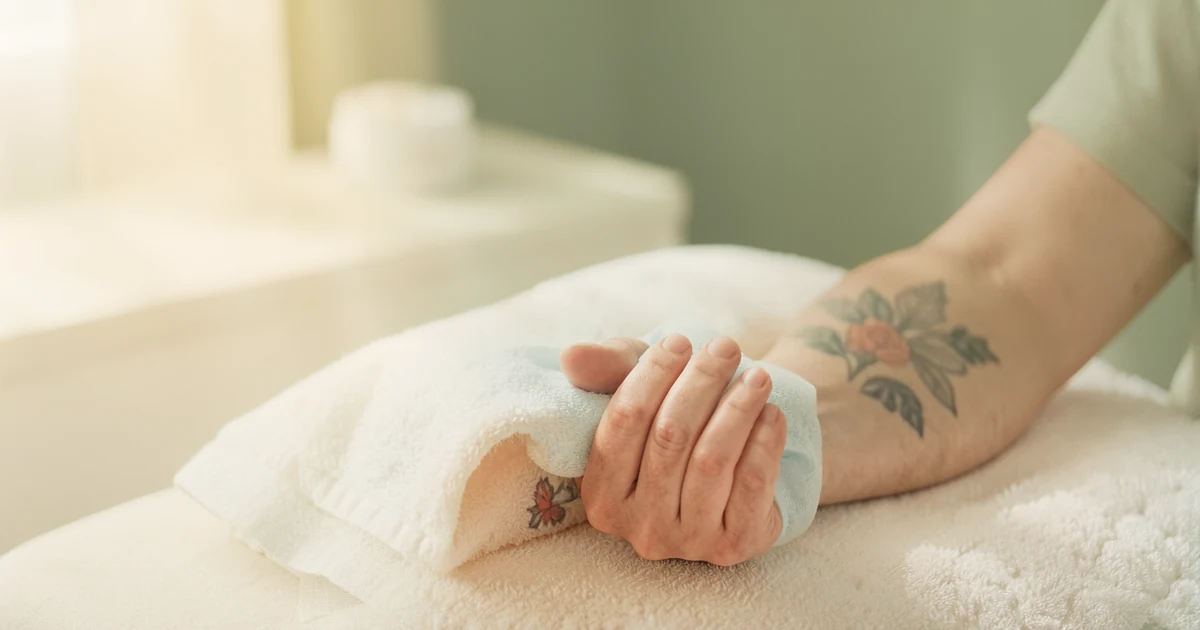
Swelling after laser tattoo removal is normal and expected — it is the body's inflammatory response as the skin reacts to the laser's heat and starts clearing the shattered ink. Swelling usually appears within hours, peaks in the first 24 to 72 hours, then subsides over the following days. It tends to be worse on loose-skinned, gravity-dependent areas like the eyes, ankles and feet, and it is generally managed with a cold compress and elevation.
If your treated area looks puffy or feels tight the day after a session, that is one of the most predictable side effects of removal — not a sign the treatment went wrong. This guide explains why swelling happens, how to bring it down, and the clear line between ordinary healing and the warning signs that mean you should call your provider.
Key Takeaways
- Swelling after laser tattoo removal is normal — an inflammatory healing response that appears within hours, peaks at 24–72 hours, and eases over the following days.
- It is worse in loose-skinned, gravity-dependent areas — around the eyes after cosmetic-PMU removal, and on ankles, feet and the face.
- Manage it with a cold compress (over a cloth, never ice directly on skin), elevation, and by avoiding heat, alcohol and strenuous exercise right after treatment.
- Concerning: severe or worsening swelling after day 3, spreading redness, heat, pus, red streaks or fever (possible infection), or hives and trouble breathing (possible allergic reaction) — contact a provider.
- Swelling is a general reaction to removal, not a fault of any device. Of the 5,700 clinics we track across 1,043 cities (as of July 2026, averaging 4.79★), most don't publicly specify their laser type — so device figures are a floor, not full adoption.
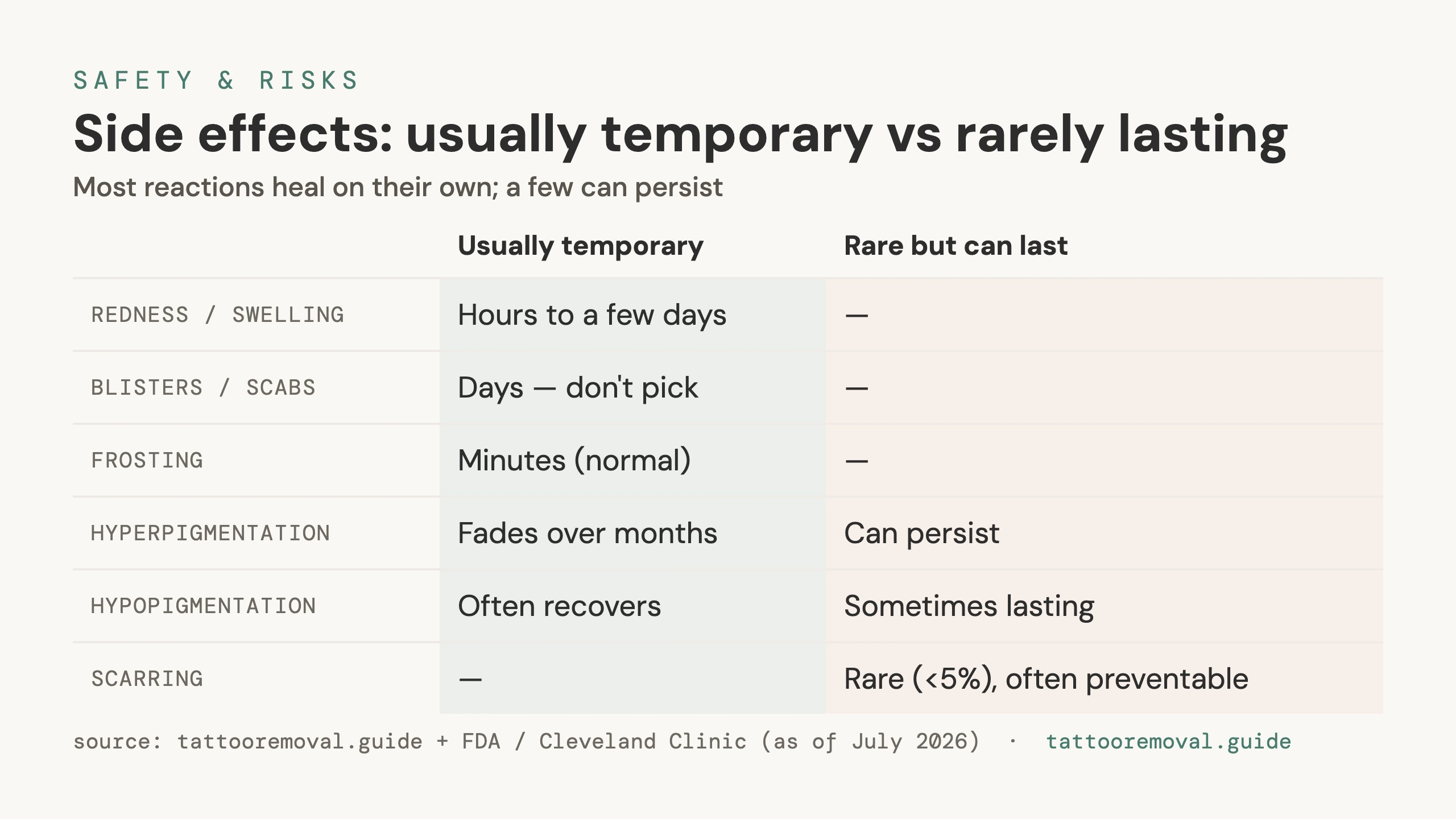 Swelling is a normal inflammatory response — know the danger signs too.
Why does laser tattoo removal cause swelling?
Swelling after tattoo removal is the build-up of fluid the body sends to the treated area as part of its normal inflammatory response. To break up ink, the laser delivers ultra-short pulses that are absorbed by the pigment and heat it almost instantly — the Cleveland Clinic describes this as the laser shattering the ink into smaller particles the body can clear. That rapid, localised heating also affects the surrounding tissue, and the body responds the way it does to any minor injury: it increases blood flow and draws fluid to the site, which shows up as puffiness, warmth and tightness.
Inflammation is the mechanism, not a malfunction. The immune system's response is exactly what carries the fragmented ink away over the weeks that follow. The StatPearls clinical reference on laser tattoo removal lists swelling (oedema) among the expected, generally self-limiting side effects, alongside redness, blistering and scabbing. The American Academy of Dermatology similarly notes that laser removal is a medical procedure with temporary skin reactions and a real-but-manageable risk profile when performed by a trained provider.
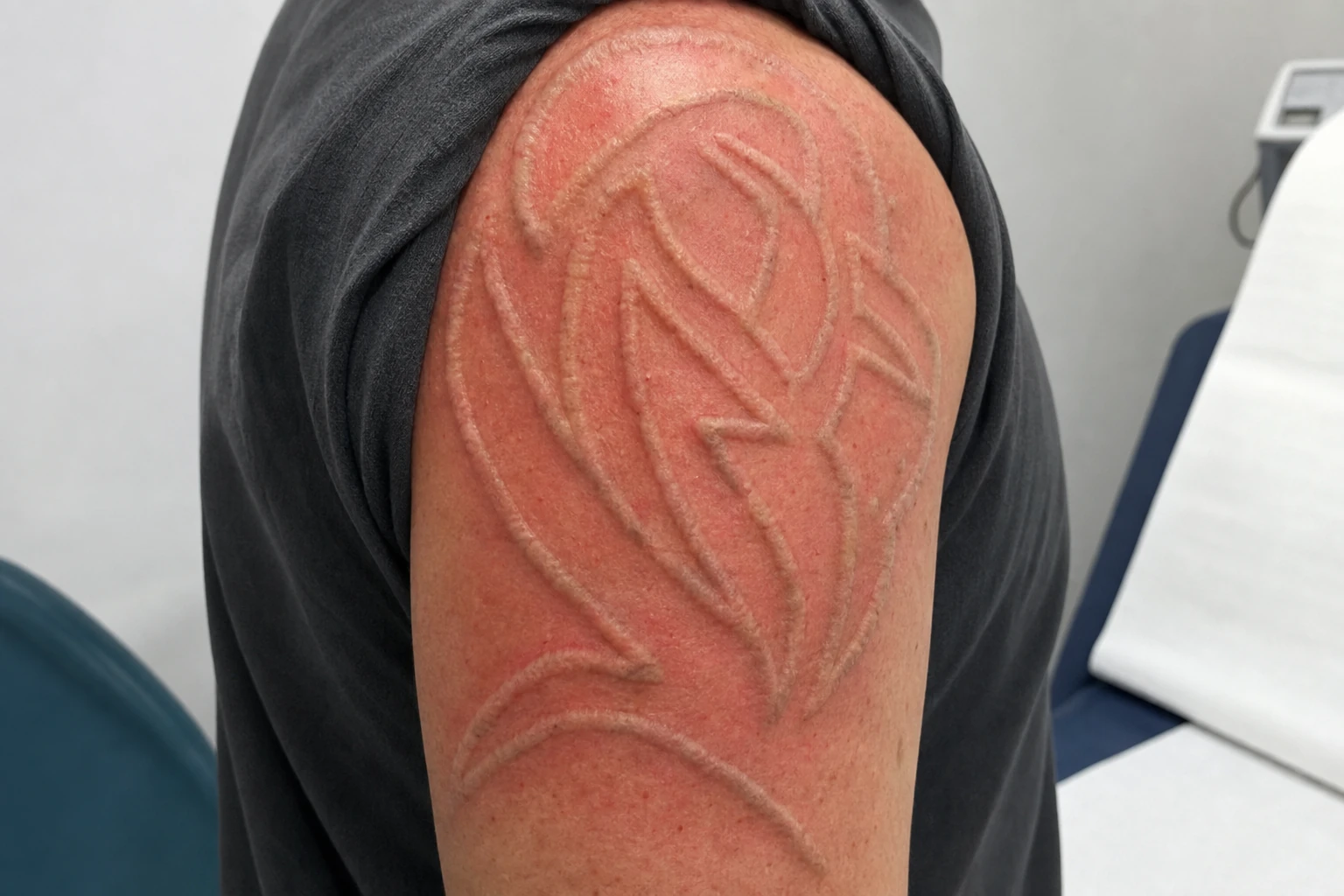 Swelling can raise the tattoo lines into puffy welts right after a session.
How long does swelling last after laser tattoo removal?
For most people, swelling appears within hours of a session, peaks somewhere in the first 24 to 72 hours, and then subsides over the next few days — often settling within about a week. These are typical estimates, not guarantees; the exact curve depends on the individual, the tattoo's size, the ink density and where it sits on the body.
A useful pattern to remember: normal swelling improves after it peaks. If puffiness is still increasing past day three, or the area is getting more painful rather than less, that is worth a call to your clinic.
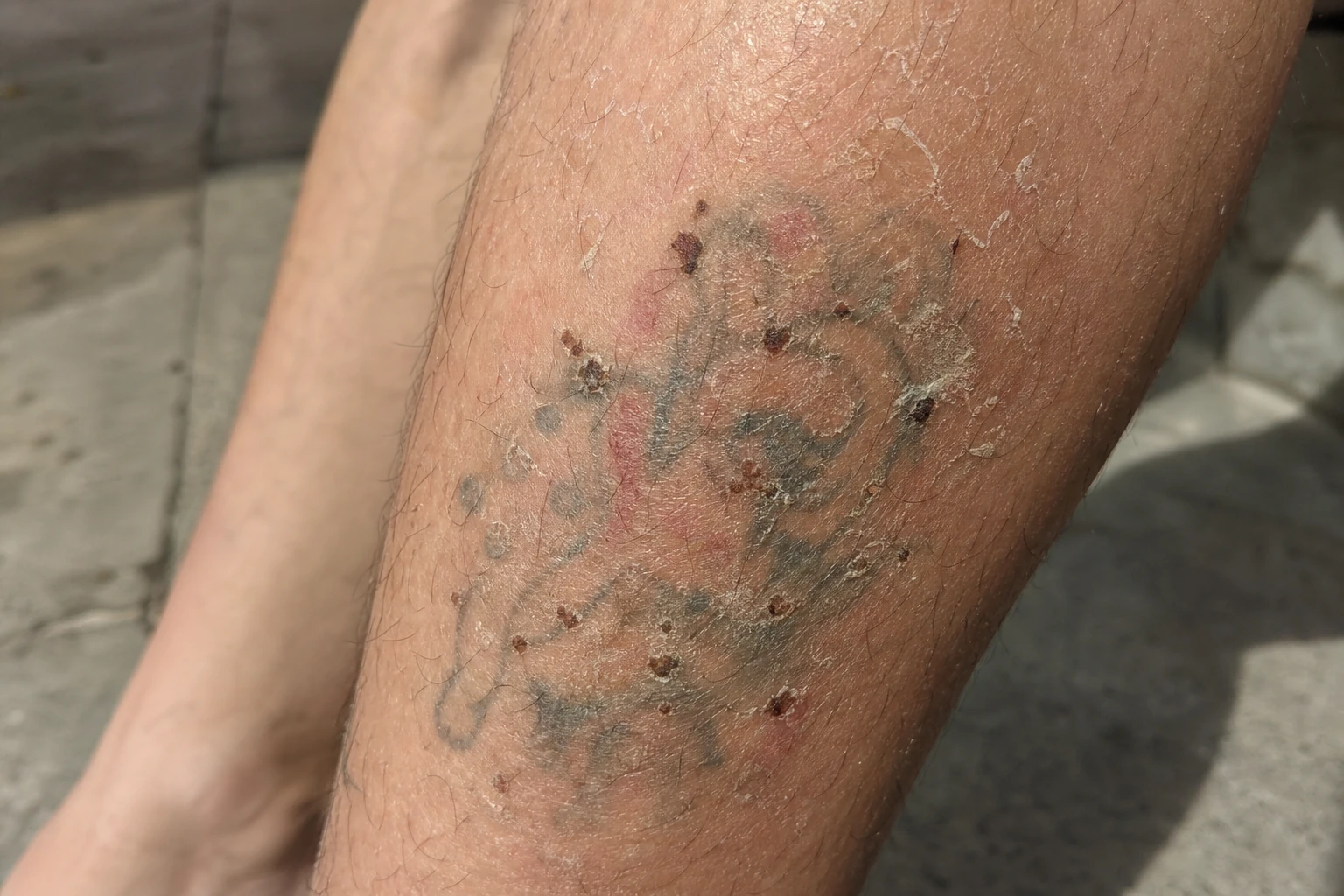 Scabbing and flaking as the treated skin heals.
Why some areas swell more: eyes, ankles and feet
Swelling is not uniform across the body. It tends to be more pronounced in two situations:
- Loose or thin skin. Areas where the skin is loose — most notably around the eyes after cosmetic (PMU) removal, such as eyeliner or brow tattoos — can look dramatically puffy even from a modest reaction, because there is little tension to hold fluid back. This can be alarming to see but is usually normal; still, eye-area work should only ever be done by a provider experienced in periocular treatment, with proper laser eye protection in place.
- Gravity-dependent areas. Fluid pools where gravity takes it, so tattoos on the ankles, feet and lower legs often swell more and take longer to settle, especially if you are on your feet a lot. Elevation helps most here. The face can also swell noticeably for the same loose-skin reason.
Denser, darker ink absorbs more laser energy, so heavily saturated tattoos may react more, particularly in early sessions. A good clinician factors in skin area and ink density when choosing settings — one reason an experienced provider matters.
How to manage and reduce swelling after tattoo removal
Aftercare for swelling is gentle and mostly about not adding fuel to the inflammatory fire. Always follow your own clinic's written instructions first — but the general principles are consistent:
- Cold compress. Apply a cold pack wrapped in a clean cloth for short intervals (roughly 10–15 minutes at a time) during the first day or two. Never put ice directly on the skin — it can cause a cold injury over freshly treated tissue.
- Elevate. Where you can, raise the treated area above heart level — especially for ankles, feet and hands — to help fluid drain rather than pool.
- Avoid heat. Skip hot showers, saunas, spas and direct sun on the area for the first couple of days; heat widens blood vessels and worsens swelling.
- Skip alcohol and strenuous exercise right after treatment. Both raise blood flow and can make swelling more pronounced.
- Follow clinic aftercare. Use only the ointments and dressings your clinic recommends, keep the area clean, and don't pick at any scabs or blisters that form.
Ask your clinic before taking any anti-inflammatory medication for swelling — preferences vary by provider. For the full routine across the whole healing window, see our tattoo removal aftercare guide.
Normal vs concerning swelling: the decision guide
Most swelling is uneventful and resolves on its own. The job is to tell ordinary healing apart from the early signs of infection or an allergic reaction, which are uncommon but real. Use this as a checklist — and when in doubt, contact your provider.
| Sign | Normal swelling | Concerning — contact a provider |
|---|---|---|
| Timing | Peaks at 24–72 hours, then eases | Worsening after day 3, or not improving within a week |
| Extent | Localised to and just around the treated area | Spreading well beyond the site, or severe and rapidly increasing |
| Look & feel | Mild puffiness, tightness, brief warmth | Spreading redness, heat, pus, or red streaks radiating outward |
| Pain | Tender at first, easing after a few days | Pain that increases around day 3–7 instead of settling |
| Whole-body signs | None | Fever or chills (possible infection); hives, itching or trouble breathing (possible allergic reaction — seek urgent care) |
The pattern to remember: normal swelling improves after it peaks, while infection tends to worsen, especially from around day 3 to 7. Spreading redness, heat, pus, red streaks and fever are the classic infection flags — any of them warrants a prompt call to your clinic or doctor. For the fuller picture on what infection looks like and when to act, read our guide to the signs of infection after tattoo removal.
This is general information, not medical advice. Laser tattoo removal is a medical procedure with real risks including swelling, blistering, infection, scarring and pigment change. If you're unsure whether your healing is normal, or you notice any warning sign above, consult a licensed provider about your specific situation.
When to call the clinic or seek care
Call your clinic if swelling is severe, keeps getting worse after the first few days, or is joined by any infection flag — spreading redness, heat, pus, red streaks or a fever. Seek urgent care if swelling comes with hives, widespread itching, or any difficulty breathing, as that can indicate an allergic reaction. It is always reasonable to check in with the provider who treated you; they know your skin, your ink and the settings they used, and would rather hear from you early than late.
Compare clinics before your next session
Swelling, healing time and the quality of aftercare guidance all depend partly on the clinic — its settings, its experience with your skin and ink, and the instructions it gives you afterward. Before your next session, it's worth seeing what your options are.
Compare tattoo-removal clinics in your city to weigh experience, lasers and reviews side by side, or start with a dense market like tattoo removal in Melbourne to see how listings stack up. For the full healing routine, read our pillar guide, the tattoo removal aftercare guide, and pair it with the signs of infection after tattoo removal.
Frequently asked questions
Is swelling after tattoo removal normal?
Yes. Swelling after laser tattoo removal is a normal, expected part of healing — it is the body's inflammatory response as the skin reacts to the laser and begins clearing the shattered ink. It usually appears within hours, peaks in the first 24 to 72 hours, and eases over the following days. Its presence does not mean anything has gone wrong.
How long does swelling last after laser tattoo removal?
For most people swelling peaks in the first 24 to 72 hours after a session, then subsides over the next few days, often clearing within about a week. Timelines vary by person, tattoo size and body area. Loose-skinned and gravity-dependent areas such as the eyes, ankles and feet tend to swell more and take a little longer to settle.
How do I reduce swelling after tattoo removal?
Apply a cold compress over a cloth for short intervals in the first day or two, elevate the treated area above heart level where you can, and follow your clinic's aftercare instructions. Avoid heat, alcohol, and strenuous exercise right after treatment, as all three increase blood flow and can worsen swelling. Never apply ice directly to the skin.
Why is the area puffy after tattoo removal?
Puffiness is fluid the body draws to the treated area as part of its inflammatory healing response to the laser's heat. It is more pronounced where skin is loose and where gravity pools fluid — around the eyes after cosmetic-PMU removal, and on ankles, feet and the face. This is normal and usually settles within a few days.
When should I worry about swelling after tattoo removal?
Contact your provider if swelling is severe, keeps worsening after day 3 instead of easing, or comes with spreading redness, heat, pus, red streaks, or fever — these can signal infection. Swelling with hives, itching or trouble breathing may indicate an allergic reaction and needs urgent care. Normal swelling improves within a week; infection tends to worsen.
Can I take anti-inflammatories for swelling after tattoo removal?
Ask your clinic first. Some providers suggest a cold compress and elevation rather than medication, and preferences vary. If your clinician clears it, follow their guidance and the product label. This is general information, not medical advice — check with the provider who treated you before taking anything for swelling.
Does swelling mean my tattoo removal is working?
Swelling is a sign your skin is reacting to the treatment, but it is not a measure of results. It reflects the normal inflammatory response, not how much ink has cleared. Fading happens gradually over multiple sessions as your body removes shattered pigment, and the amount of swelling does not predict how well or how fast a tattoo will fade.
Related guides
Related Guides
- Safety & Risks
Why a Patch Test Matters Before Tattoo Removal (2026)
Why does a patch test matter before laser tattoo removal? It reveals how your skin and ink react — blistering, pigment change, rare reactions — before a full…
- Safety & Risks
Who Should Not Get Laser Tattoo Removal? The Contraindications
Who should not get laser tattoo removal? Most adults are candidates. The full contraindications checklist — when to wait and when to discuss carefully.
- Safety & Risks
Tattoo Removal While Pregnant or Breastfeeding
Can you get tattoo removal while pregnant? Most providers say wait — not from proven harm, but because the safety isn't studied.