One Large Tattoo vs Several Small Ones
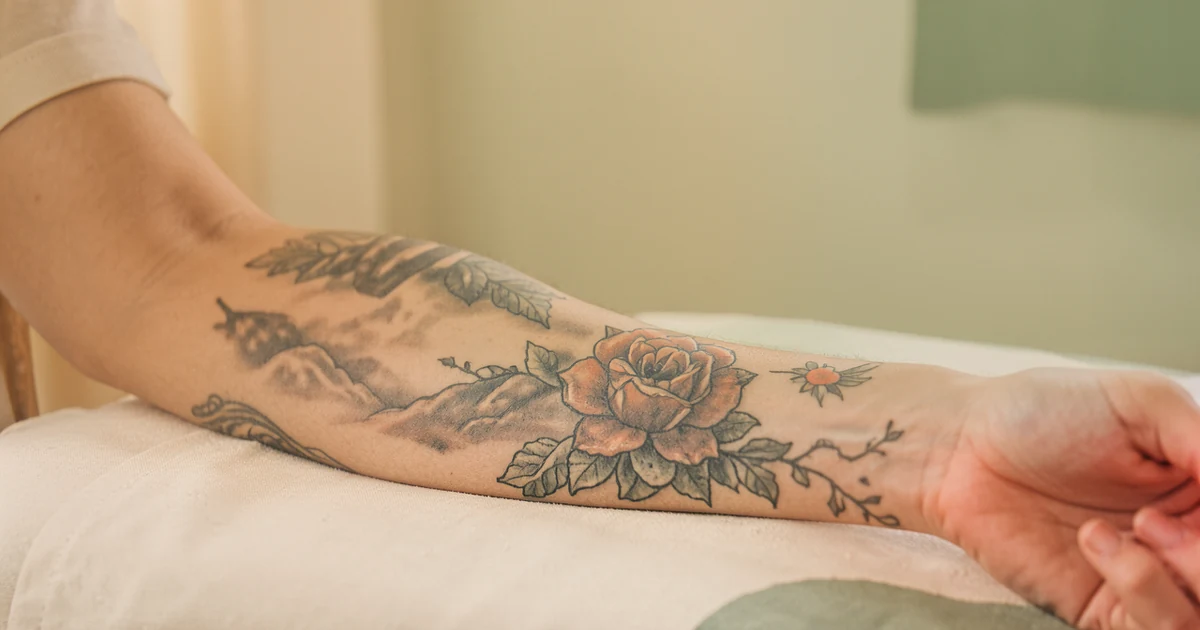
You've got a plan. Maybe it's clearing a half-sleeve before a wedding, or lifting five or six small pieces scattered across your wrists, ankle, and shoulder. Either way, the same question comes up: which job is actually bigger?
The honest answer surprises most people. A single large tattoo and a collection of small ones don't follow the same scaling rules — and the gap between what you expect and what you pay can run into the thousands.
The basic arithmetic of removal: area per session
Every session treats a surface area. Your clinician's time on the laser is measured in square centimetres, not in number of tattoos. That distinction matters more than almost anything else in your planning.
A typical session handles a moderate area in 15–30 minutes. Larger tattoos usually need more time per sitting, but a clinician can also limit how much they treat in one visit — working across a large tattoo in passes, or treating only a defined zone if the surrounding skin needs recovery time. Your body then does its clearing work over the 6–8 week window between sessions before you come back.
So: total area is what drives total sessions. Everything else — number of pieces, how they're arranged on your body — comes second.
One large tattoo: what actually changes
A large piece (back panel, half-sleeve, full thigh) carries a lot of ink. That means:
More sessions, not just more time per session. A large tattoo doesn't just take longer each visit — it typically needs more rounds overall. Ink density in a large professional piece is often higher than in a small flash design, and the immune system clears only so much pigment in a given 6–8 week window. Most tattoos take roughly 8–12 sessions to clear; a dense, large piece can sit at the higher end or beyond.
Timeline is mostly about the clearing window, not the area. Because your body needs 6–8 weeks between sessions regardless of tattoo size, a large piece that needs 12 sessions takes roughly the same calendar time as a small one that needs 12 sessions. The sessions don't compress just because there's one tattoo. Plan for one to two years if you're running the full course.
Colour complexity multiplies. A large piece is more likely to include multiple colours, and each colour responds differently to different laser wavelengths. A multi-colour sleeve may effectively need a different plan for the reds, the greens, and the blacks — sometimes run in sequence, sometimes on the same visit with different settings. This is normal, but it does add sessions.
Multiple small tattoos: why they don't "add up" the way you think
Here's where people get the estimate wrong. Five small tattoos feel like five simple problems. In practice, they behave differently.
You can treat multiple small pieces in the same session. If the tattoos are small and the total area across all of them fits within what the clinician can treat in one visit, you may clear several in one sitting. This is the best case — and it does happen for genuinely tiny pieces (a 2cm × 2cm symbol on each wrist, for instance).
But separate locations mean separate skin recovery. If your tattoos are scattered — wrist, ankle, shoulder blade, hip — the skin in each location heals independently. A clinician might treat two or three pieces in a single visit without issue, or they might recommend staging them if the total area is large or the locations are awkward. The 6–8 week clearing window applies to each treated area, not just once globally.
Stubborn individual pieces can hold up the whole project. A small tattoo that fades slowly — say, a piece with dense green or an unusual ink — needs its own rounds. It doesn't benefit from being next to an easier piece. Your fastest tattoo and your slowest one don't average out; they run in parallel, and your overall timeline is set by the slowest.
Session count per piece still depends on the piece, not the collection. A small tattoo typically takes 6–10 sessions. Five small tattoos could take anywhere from 6 sessions (if they're all treated together and all fade evenly) to 40+ (if each needs its own full course and they can't all be treated in one sitting). Know your pieces individually before estimating the total.
Where cost lands: the per-session spread matters most
Session count is the multiplier, but per-session price is the variable that most people underestimate.
Across the directory's priced listings (as of July 2026), the per-session starting price runs from $50 to over $2,000 — and within any given city, the same-city spread is substantial. In Melbourne, a typical session runs about $50–$200 (as of July 2026). In Sydney, it's around $50–$200 (as of July 2026). In London, the typical range is £80–£180 (as of July 2026). In New York, roughly $200–$450 (as of July 2026).
That city-level gap — 2× to 4× between the typical low and high — applies to every session. Run it across a 10-session course and the price difference for the same tattoo, treated by clinics in the same city, can exceed $1,000.
For a large tattoo needing 12 sessions in Melbourne, the total cost at the typical low end ($50/session) is $600. At the typical high end ($200/session) it's $2,400. Same city. Same tattoo.
For five small tattoos treated as a combined job, the maths is similar but harder to predict: each piece carries its own session count, and clinics price small pieces differently — some use flat-session pricing, others use area-based pricing, others price per tattoo. Ask for both a per-session rate and an estimated total course before you start.
About 62% of clinics in the directory (as of July 2026) don't list prices online. That's not unusual — large tattoos and multi-piece collections genuinely need a face-to-face assessment before anyone can quote accurately. Go in expecting to get a written estimate, not just a headline price.
Which is actually "easier": a planning guide
Neither is categorically cheaper or faster. But here's what the comparison actually tells you:
A single large tattoo has a more predictable total, once a clinician has assessed it. You know the area, you can estimate session count more reliably, and the per-session price is usually consistent throughout the course. The main risk is underestimating session count because of colour or density.
Multiple small tattoos have more moving parts. The best case (everything treatable in one visit, all fade evenly) is genuinely fast and cheap. The realistic case is that pieces run at different rates, scattered locations add logistical complexity, and any stubborn piece will extend the whole project's timeline regardless of how quickly the easy ones clear.
The question to ask your clinician isn't "which is cheaper?" It's: "Can you treat more than one of these per session, and what's your session estimate for each piece individually?"
What changes for fading versus full removal
If the goal is fading for a cover-up rather than full removal, the session count drops considerably — typically 3–5 sessions to lighten a piece enough for a new tattoo to sit over it. That makes multiple-small-tattoo projects much more tractable: you might fade all five pieces in 3–5 sessions each, rather than running each to full clearance. Talk to your tattooist and your removal clinician together if you're planning a fading-and-re-tattoo project.
Frequently Asked Questions
(rendered as FAQPage schema — see frontmatter faqItems)
Whether you're clearing one large piece or several small ones, the cost depends on session count per treatment area — and session count per area depends on the tattoo, not the tally. Compare clinics in your city to see per-session prices side by side, so you can run the numbers before your consultation.
Related Guides
- Comparisons
Tattoo Removal Numbing Options Compared
Numbing cream, cooling, or nothing at all — an even-handed comparison of what each option actually does, and the trade-offs clinics don't always mention.
- Comparisons
Are Amateur Tattoos Easier to Remove Than Professional Ones?
It's not about who did the tattoo — it's ink depth, density, colour and age. Here's what actually determines how many sessions yours will need.
- Comparisons
Laser Tattoo Removal vs Laser Hair Removal: What is the Difference?
They look similar but target completely different things in your skin. Here's why a hair-removal laser can't remove a tattoo, and can burn you trying.