Permanent Makeup vs Body Tattoo Removal
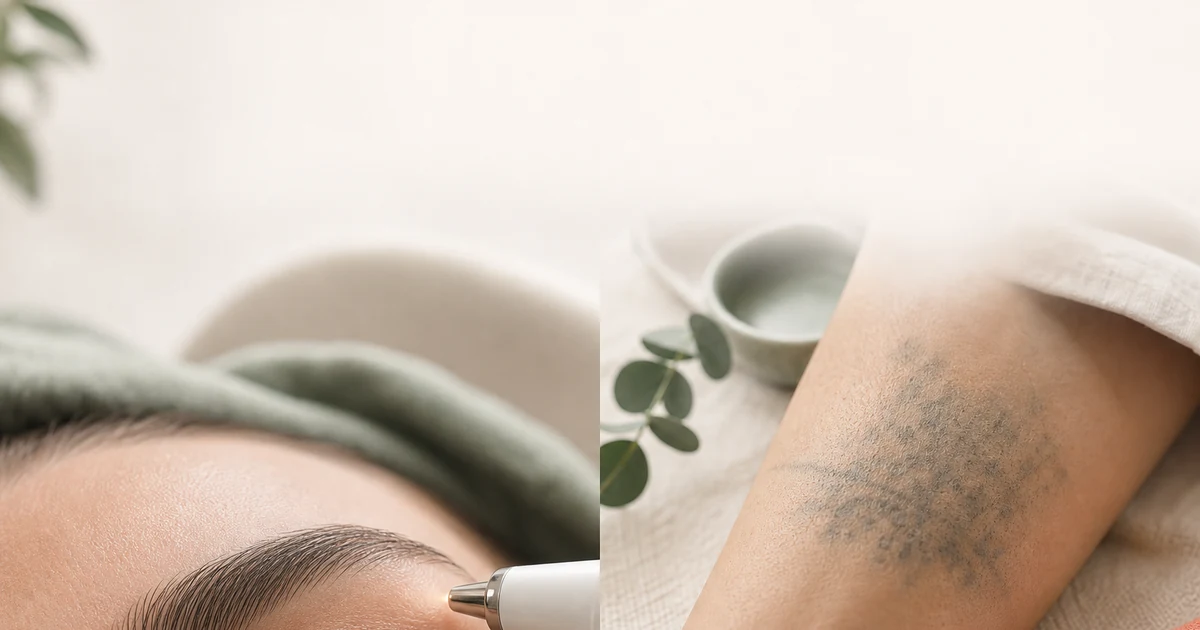
Permanent makeup removal and body tattoo removal use similar lasers, but they are not the same procedure. Cosmetic pigments — the flesh, brown and pink inks in brows, eyeliner and lips — often contain iron oxide and titanium dioxide, which can paradoxically darken under a laser instead of fading. Add delicate facial skin near the eyes, and PMU demands a specialist, a mandatory test patch, and often a non-laser saline method.
That difference is the whole point of this guide, because people frequently assume a clinic that removes body tattoos can remove their eyebrows the same way. Sometimes it can — but the pigment chemistry, the location and the safest method can all differ. This guide is written from the directory's seat: across the 5,700 specialist clinics we track in 1,043 cities (as of July 2026), we don't perform removal or sell any method, so we can be plain about where the two diverge.
This is a spoke of our permanent makeup removal pillar. For a broader look at every removal option, see tattoo removal methods compared.
Key Takeaways
- Pigment is the biggest difference. Most body ink is carbon-based and fragments predictably under a laser; PMU pigments often carry iron oxide and titanium dioxide, which can darken instead of fading.
- PMU is shallower but riskier in location. Cosmetic tattoos sit on thin facial skin near the eyes and lips — small in area, but high-stakes.
- Areas are small, so sessions are quick — but they need a PMU-experienced operator, not a general laser tech, and cosmetic pigment can be stubborn.
- Saline (non-laser) is chosen more often for PMU than for body tattoos, because it sidesteps the darkening risk and keeps lasers away from the eyes.
- Test-patching matters more. A discreet test spot weeks ahead catches paradoxical darkening before it spreads across a brow or lash line.
- Manage expectations: a faint shadow can remain. No honest provider guarantees a clean slate on the face — outcomes vary by pigment, depth, skin and method.
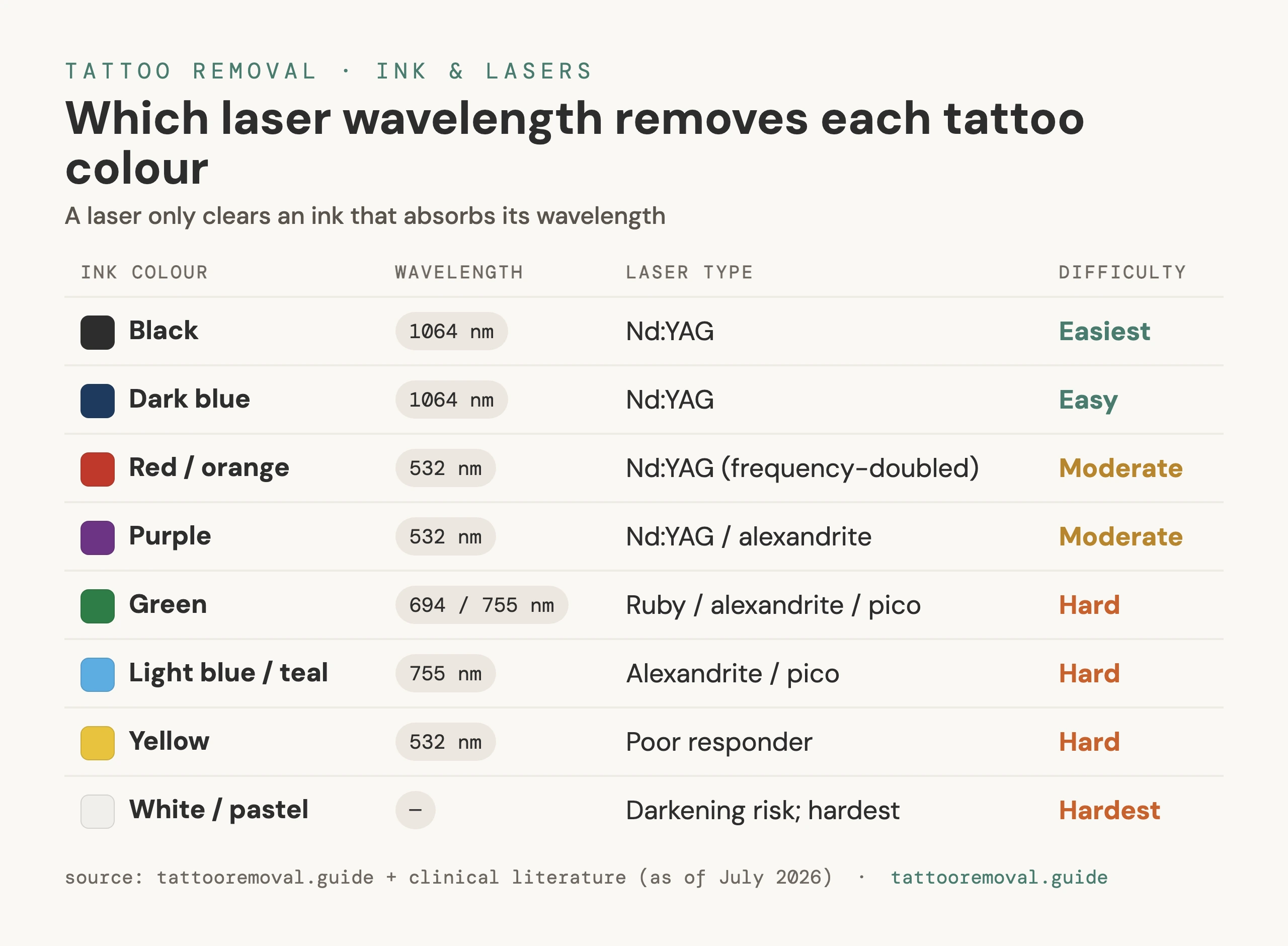 PMU pigments behave differently under the laser than body inks.
Is PMU removal different from tattoo removal?
Yes — meaningfully. Permanent makeup (PMU) removal is the fading or elimination of cosmetic tattoos — eyebrows, eyeliner and lip pigment — which differs from body tattoo removal because the pigments react unpredictably to lasers and the treated skin is delicate and close to the eyes. The underlying mechanism is the same: short, high-energy light pulses shatter pigment particles so the immune system can carry them away, a process the Cleveland Clinic and StatPearls both describe for laser tattoo removal generally.
Where they part ways is chemistry and location. Body tattoo ink is usually carbon-based black or vivid organic colours, applied deeper into the dermis on relatively thick skin. Cosmetic pigments are formulated to look like skin, hair or lips — which means they lean on iron oxide (browns, reds) and titanium dioxide (whites, opacity). Those two ingredients are exactly the ones that can misbehave under a laser. The FDA's guidance on tattoos and permanent makeup explicitly notes that removing permanent makeup can be more complicated than expected, and that cosmetic pigments may change colour. So the honest answer to "is it the same?" is: same laser, different problem.
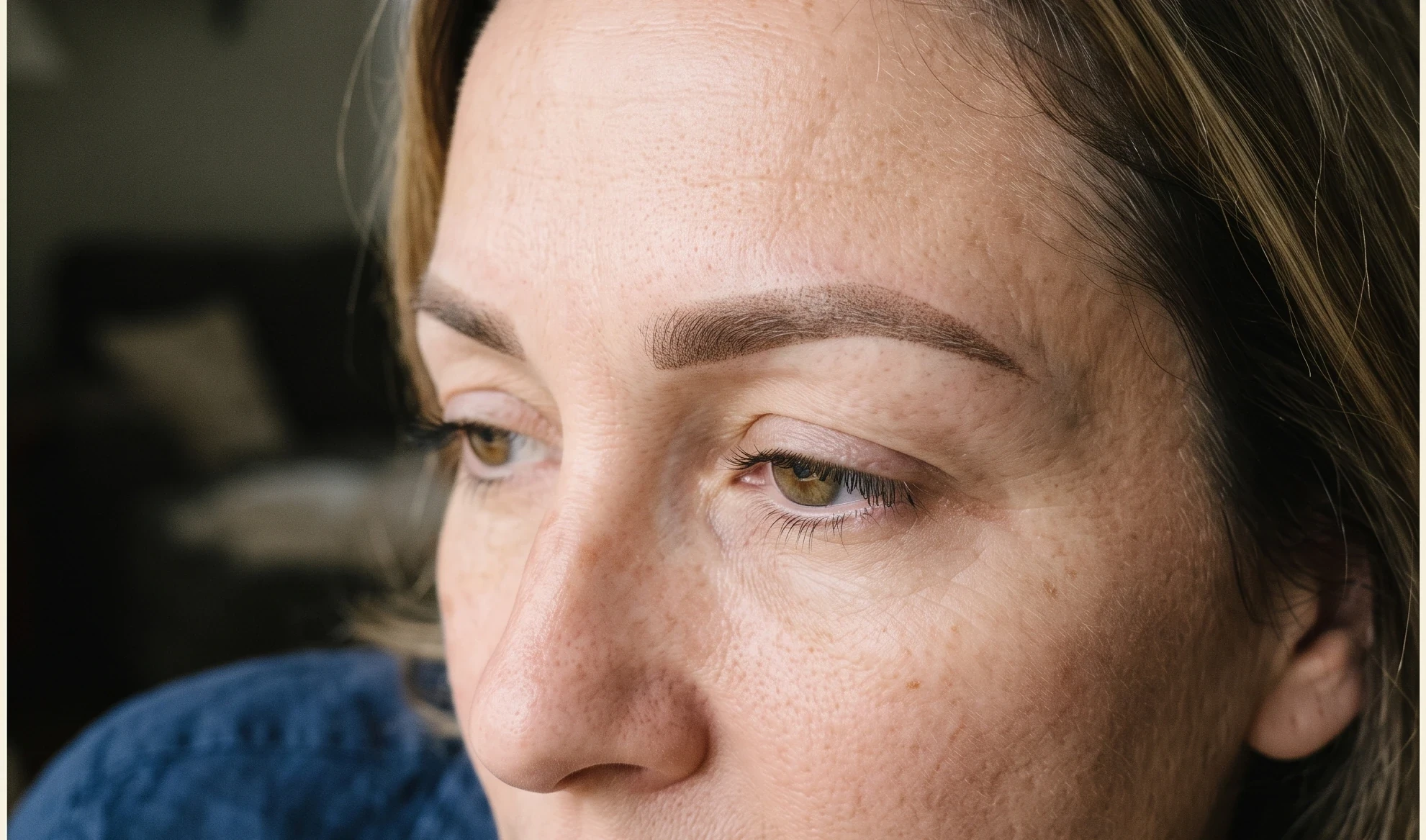 Cosmetic (permanent-makeup) tattooing on the face.
The pigment problem: paradoxical darkening
Paradoxical darkening is when a cosmetic pigment turns darker — grey or black — after a laser pulse instead of fading, because the heat chemically reduces the titanium dioxide and iron oxides used in flesh, brown, pink and white PMU inks. With typical black body ink this rarely happens; with cosmetic pigment it is a real and well-known risk, which is why the whole PMU approach is more cautious.
The practical consequence is that a laser can, in one pulse, turn a soft powder brow into a dark grey smudge that is harder to remove than the original. That's not a reason to avoid removal — it's the reason for the safeguards. A test patch on a small, discreet area a few weeks ahead, read by a PMU-experienced clinician, reveals how your specific pigment reacts before it's applied across the whole brow or lash line. This is also why many clinicians reach for saline on non-black cosmetic work: it doesn't cause paradoxical darkening at all.
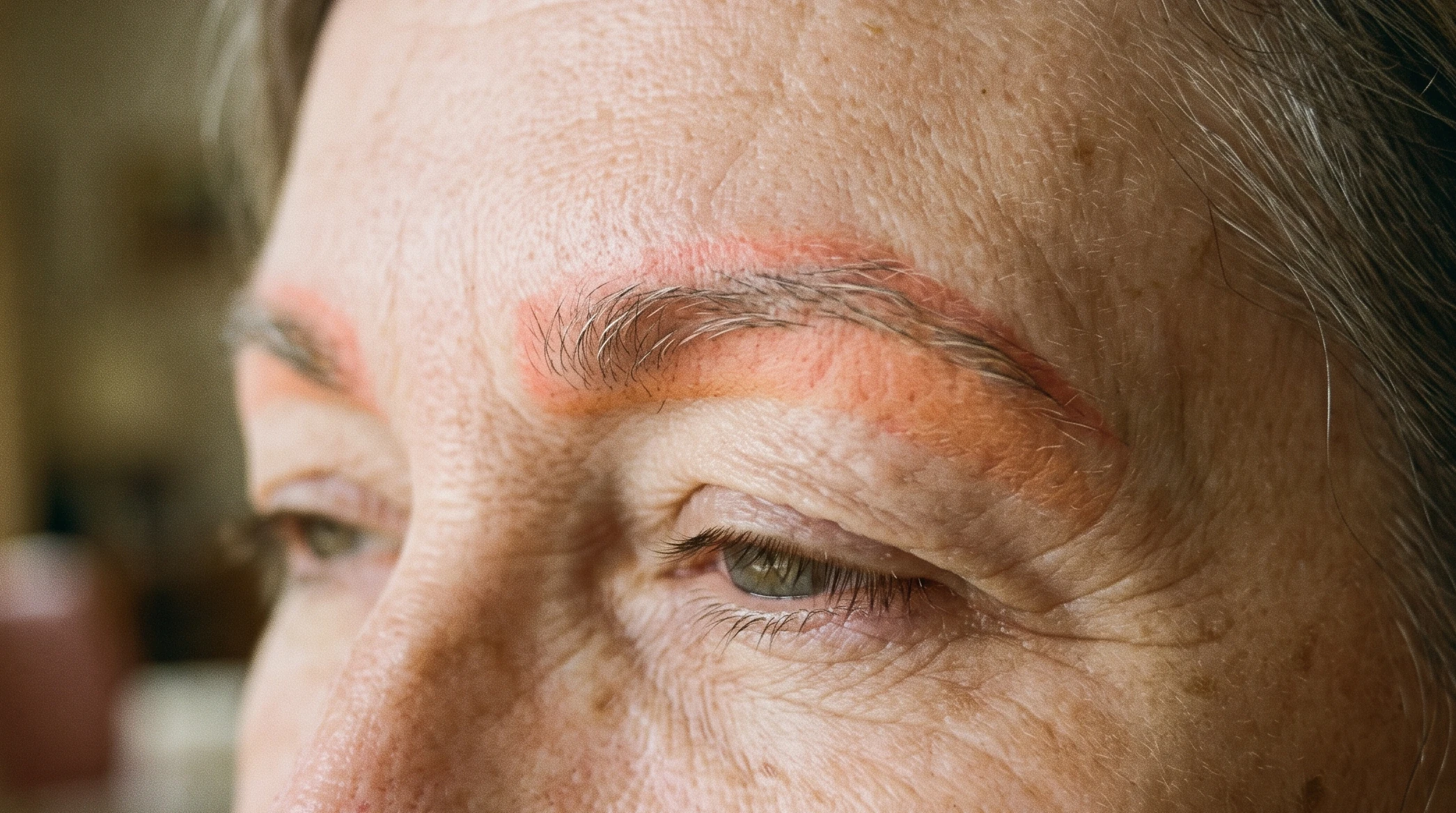 Cosmetic (permanent-makeup) tattooing on the face.
PMU vs body tattoo removal: the side-by-side
Here's the honest comparison across the factors that actually change the plan. Treat every figure as an estimate, not a promise.
| Factor | Permanent makeup (PMU) | Body tattoo |
|---|---|---|
| Typical pigment | Iron oxide, titanium dioxide (flesh, brown, pink, white) | Usually carbon-based black + organic colours |
| Pigment behaviour under laser | Can paradoxically darken (grey/black) — unpredictable | Generally fragments and fades predictably |
| Location & skin | Thin facial skin, near the eyes and lips | Thicker skin, away from delicate structures |
| Area size | Small — sessions are quick | Small to very large |
| Removal methods used | Laser or saline (non-laser); saline chosen more often | Laser is the mainstay |
| Operator expertise needed | PMU-experienced clinician; ophthalmic-aware for eyeliner | Experienced laser operator |
| Test patch | Strongly advised / often essential first | Sometimes, less critical |
| Realistic expectation | Substantial fading; a faint shadow can remain | Substantial fading to clearance over a course |
The read on that table: the differences aren't cosmetic. Pigment chemistry, the eye's proximity and the choice between laser and saline all mean PMU removal is its own discipline. As the American Academy of Dermatology notes for tattoos broadly, removal is more involved than the marketing suggests — and cosmetic tattoos add their own twist.
Why the operator matters more for PMU
Because the area is small, PMU sessions are fast — but "fast" is not "simple." The person holding the device needs to know cosmetic pigments, recognise when a colour is likely to darken, and — for eyeliner — protect the eye with intraocular shields placed under the lids, not just goggles. A clinic that clears sleeves and back pieces beautifully may have never removed a lip blush.
That's the gap the directory exists to close. Ask any prospective clinic three things: how much cosmetic-tattoo removal they actually do, whether they test-patch before treating the whole area, and whether they'd choose laser or saline for your pigment and why. The equipment matters less than that experience — across the 5,700 clinics we track, about 18% note a picosecond laser (as of July 2026) while Q-switched lasers remain effective and widely used; the machine is not the deciding factor for PMU.
Laser or saline for PMU — and why saline shows up more
For body tattoos, laser is the mainstay. For PMU, saline removal — a non-laser method where a saline/lifting solution is implanted like a tattoo so the pigment scabs and lifts as it heals — is chosen far more often. Two reasons: it can't cause paradoxical darkening, and it keeps a laser away from the eyes and lips. It suits fresh work and pigments a laser might darken.
That doesn't make saline automatically "better." Laser is genuinely effective on dense, dark cosmetic pigment, and each method has trade-offs in sessions, healing and precision at the lid margin. The deciding factor is a clinician who has examined your work in person and can explain their choice. If a clinic only offers one method and dismisses the other outright, that's worth noting.
What to expect — and what not to promise
Set expectations honestly. Because the area is small, individual sessions are quick, but the number of sessions varies and can't be pinned down before an exam — cosmetic pigment can be stubborn, and if darkening occurs the plan changes. Crucially, the goal is usually substantial fading, not a guaranteed clean slate: a faint shadow or slight texture change can remain, especially on older or layered brows and lips.
Pricing is worth asking about too, because transparency is patchy across the field — only about 38% of the clinics in our directory publish any price at all (as of July 2026) — so you will often have to ask for a range and a full-course estimate rather than a single number.
This is general information, not medical advice. Removing permanent makeup is a medical procedure with real risks, including pigment darkening and — for eyeliner — eye injury without proper shielding. Outcomes, session counts and risks vary by person, pigment and provider — consult a licensed, PMU-experienced clinician, and never assume a guaranteed result.
Find a clinic that actually does PMU removal
The difference between PMU and body tattoo removal is exactly why you shouldn't book cosmetic-tattoo removal on price or a general reputation alone. Compare cosmetic and PMU removal clinics near you and shortlist by who has genuine PMU experience, test-patches first, and can explain laser versus saline for your pigment. In a dense metro like Melbourne, you can compare several providers before committing.
Before you book, confirm the clinician does cosmetic-tattoo removal regularly, will test-patch any non-black pigment, and — for eyeliner — uses intraocular eye shields. On the face, those three things matter more than the machine or the quote.
Frequently asked questions
Is permanent makeup removal different from body tattoo removal?
Yes. The laser and the underlying physics are similar, but permanent makeup (PMU) pigments behave differently — flesh, brown and pink shades often contain iron oxide and titanium dioxide, which can paradoxically darken under a laser instead of fading. PMU also sits on delicate facial skin near the eyes and lips, so it demands a PMU-experienced operator, more frequent test patching, and often a non-laser saline method. Body tattoos are usually carbon-based and on thicker skin, which changes the whole approach.
Why is eyebrow tattoo removal different from removing a body tattoo?
Eyebrow tattoos (microblading, powder brows) use cosmetic pigments loaded with iron oxide and titanium dioxide, which can turn grey or black under a laser — a reaction called paradoxical darkening that is uncommon with typical black body ink. The brow is also thin facial skin close to the eye. That combination means a mandatory test patch, a PMU-aware clinician, and sometimes saline removal instead of laser.
What is paradoxical darkening?
Paradoxical darkening is when a cosmetic pigment turns darker — grey or black — after a laser pulse instead of fading, because the heat chemically reduces the titanium dioxide and iron oxides commonly used in flesh, brown, pink and white PMU inks. It is the single biggest reason permanent makeup removal is handled differently from body tattoo removal, and it's why a test patch a few weeks ahead is essential.
Can you use the same laser for PMU and body tattoos?
Often the same Q-switched or picosecond laser is used, but the settings, caution and technique differ. The machine matters less than the operator's experience with cosmetic pigments and delicate facial areas. A clinic that removes body tattoos well is not automatically equipped to remove eyeliner or brows safely — ask specifically about their PMU experience and their test-patch protocol.
Is saline removal better than laser for permanent makeup?
Neither is universally better. Saline (a non-laser lifting method) is chosen more often for PMU because it avoids the risk of paradoxical darkening and keeps a laser away from the eyes, and it suits fresh work. Laser is effective on dense, dark pigment. The right choice depends on the pigment colour, how fresh it is, the area, and a clinician's in-person assessment — not a blanket rule.
Does permanent makeup removal take fewer sessions than a body tattoo?
The treated area is small, so each PMU session is quick, but the number of sessions still varies widely and can't be promised in advance. Cosmetic pigments can be stubborn or unpredictable, and if darkening occurs the plan may change. Expect a range estimated after an in-person exam, and know that a faint shadow sometimes remains rather than a perfectly clean result.
Will permanent makeup removal leave my skin completely clear?
Not always. Honest providers describe substantial fading rather than a guaranteed clean slate. A faint shadow or slight texture change can remain, especially on brows and lips where pigment was layered or is older. Outcomes depend on the pigment, its depth, your skin and the method — no reputable clinic guarantees a specific result on the face.
What should I confirm before booking PMU removal?
Confirm the clinician has specific experience removing cosmetic tattoos (not just body ink), that they will do a test patch before treating the whole area, and — for eyeliner — that they use intraocular eye shields. Ask whether they'd use laser or saline for your pigment and why, and get a realistic range and full-course estimate. This is general information, not medical advice.
Related guides
Related Guides
- Cosmetic & PMU
Why Permanent Makeup Fades (and Turns Orange or Grey) (2026)
Why permanent makeup fades and shifts colour, explained neutrally: shallow pigment placement, iron-oxide oxidation, sun exposure and skin turnover, why warm browns…
- Cosmetic & PMU
How to Remove Permanent Makeup to Redo It: Lighten vs Remove (2026)
How to remove permanent makeup to redo it: partial lightening vs full removal, why saline is often preferred pre-redo, and how much fading is enough.
- Cosmetic & PMU
Removing Old or Faded Permanent Makeup
How to remove old or faded permanent makeup, explained neutrally: why aged PMU turns orange, grey or dark, the paradoxical-darkening trap, saline vs laser, sessions…