Permanent Makeup Removal Aftercare: Healing Brows, Liner & Lips (2026)

Permanent makeup removal aftercare is best understood as risk control on delicate facial skin: keep the area clean and dry, put nothing over it while it heals, never pick scabs or frost, and protect it from sun once closed. Each rule prevents one specific complication — infection, scarring, or pigment change. Surface healing typically runs about 1 to 2 weeks per session, with sessions spaced roughly 6 to 8 weeks apart, and figures here are stamped (as of July 2026).
Because permanent makeup sits on the face — brows, eyelids and lips — aftercare has to respect thinner, more sensitive skin than a forearm tattoo, plus the eyes and mouth nearby. The rules are simple, but the stakes for getting them right are higher when the healing area is a few millimetres from your eye or your lip line.
This is a spoke of our permanent makeup removal pillar, focused on healing; for spotting a problem early, see signs of infection after tattoo removal.
Key Takeaways
- Aftercare is risk control. Every instruction prevents a named complication: infection (moisture and bacteria on broken skin), scarring (from picking scabs or frost), or pigment change (from sun on fresh skin).
- Facial skin is delicate. Brows, lids and lips are thinner and more vascular than body skin, so they swell more, heal faster on the surface, and need a gentler hand.
- The non-negotiables: keep it clean and dry, no makeup over the area while healing, never pick scabs or frost, cold compress for swelling (especially eyes and lips), and SPF 30+ once the skin has closed.
- Saline vs laser aftercare differs in emphasis — saline is about keeping a dry scab undisturbed; laser is about not popping blisters and sun protection — but the core rules overlap.
- Healing time between sessions ties to the clearing window. Surfaces close in 1–2 weeks, but clinics space sessions ~6–8 weeks apart to let facial skin fully recover.
- Because your exact instructions come from the clinic treating you, choose carefully. Of the 5,700 clinics we track, 1,525 (27%) advertise a free consultation (as of July 2026) — a low-cost way to get your specific aftercare plan before you commit.
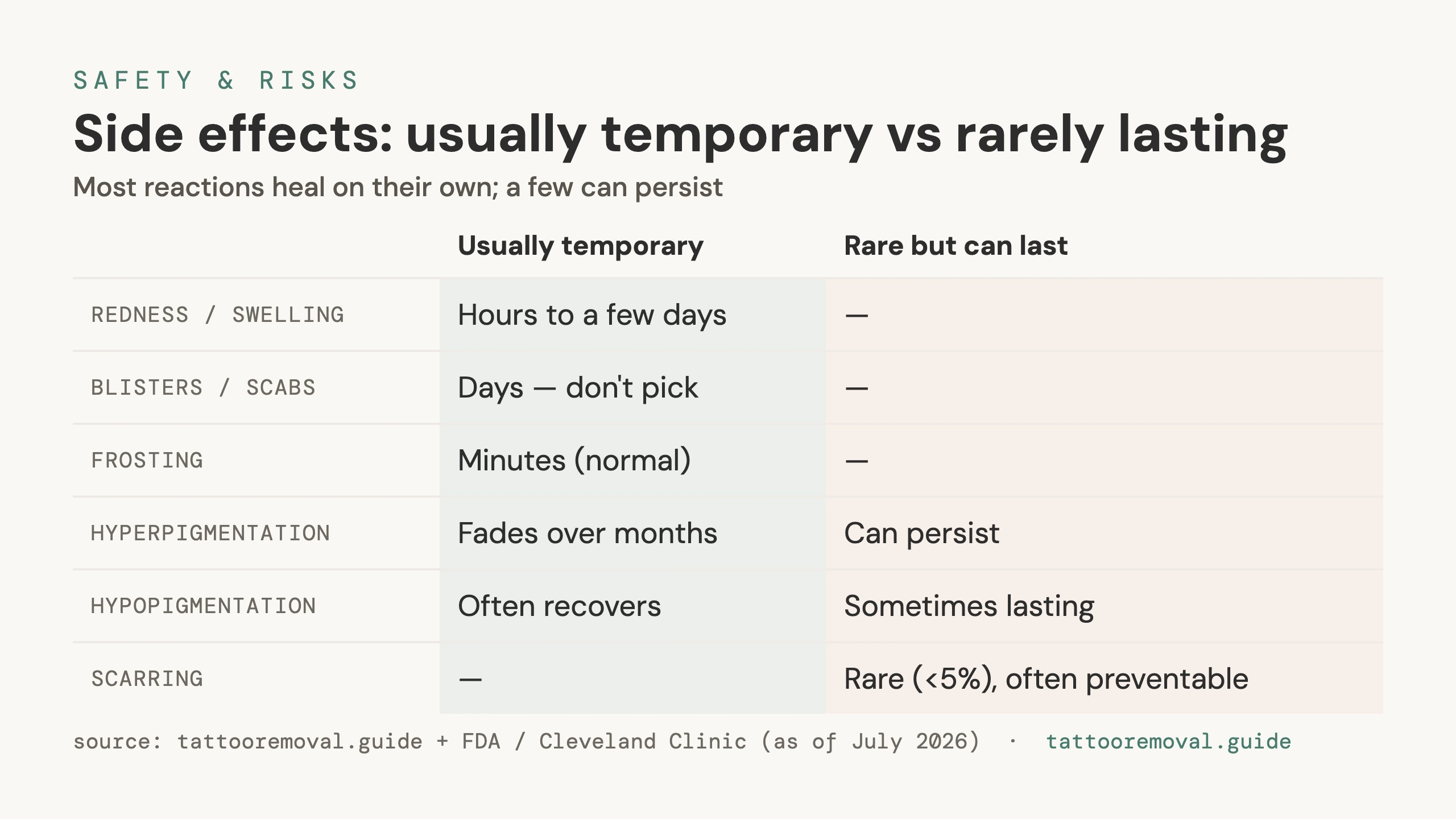 Know what's normal healing versus a reason to call the clinic.
Why aftercare matters: the three complications you are preventing
Removal deliberately disturbs the skin so pigment can lift or clear. With laser removal, the Cleveland Clinic explains that the laser shatters pigment into fragments the immune system carries away over the following weeks. With saline removal, a solution is tattooed in to draw pigment up through a controlled scab. Either way, the skin is temporarily vulnerable, and aftercare is how you protect it.
Three complications are worth naming, because every rule exists to prevent one of them:
- Infection. Broken skin — a scab, a frost, a weeping brow or lip — is an open door for bacteria. On the face, the eyes and mouth make cleanliness even more important.
- Scarring. The most avoidable cause is picking or scratching a scab (or the white "frost") before the skin underneath has regenerated. On thin facial skin, a scar shows.
- Pigment change. Fresh facial skin is highly sensitive to UV. Sun over a healing site can cause lasting lightening (hypopigmentation) or darkening (hyperpigmentation), especially on richer skin tones.
Paradoxical darkening is a separate reason a test patch precedes any laser PMU removal: cosmetic brow, liner and lip pigments often contain iron oxide and titanium dioxide, which can turn grey or brown when heated by a laser instead of fading. That risk is decided before treatment — but it's the reason your provider treats a small test spot first and why you follow their read on your specific pigment.
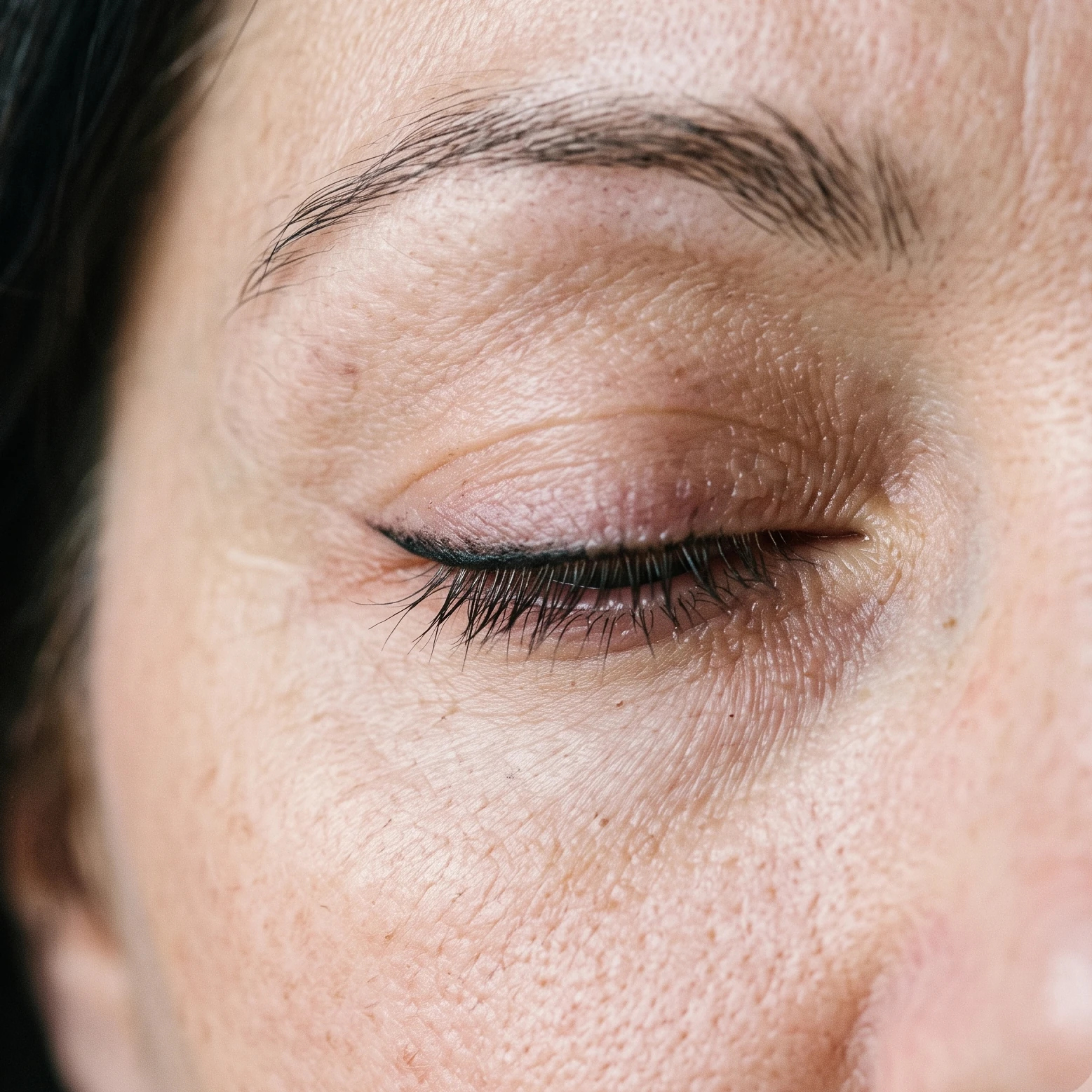 Cosmetic (permanent-makeup) tattooing on the face.
The healing timeline, session by session
Everyone heals at their own pace, and the reaction varies with your skin, the pigment, and whether you had saline or laser removal. But most people move through a recognisable sequence after each session. Use this as a map, not a guarantee.
| Phase | Rough timeframe | What you'll typically see | What to do |
|---|---|---|---|
| Immediate reaction | Day 0 (first hours) | The area may frost white briefly, then turns red, tender and swollen — more so on lips and lids | Cold compress over the dressing if advised; keep clean and dry |
| Swelling & redness | Day 0–3 | Puffiness and redness peak, especially eyeliner and lip areas | Gentle cold compress; rest; follow your clinic's ointment instructions |
| Scabbing | Day 2–7 | A scab (laser) or a deliberate dry scab (saline) forms over the site | Do not pick, and don't get it wet if saline; no makeup over it |
| Flaking | Day 5–14 | Scabs dry, crust and flake away; mild itching is common | Do not scratch; moisturise only as your clinic directs |
| Between sessions | Weeks 2–8 | New skin appears; the pigment looks lighter | Protect from sun with SPF 30+; wait out the window before the next session |
Two points matter. First, the surface closing in a week or two is not the same as being ready for the next session — StatPearls lists scabbing and transient swelling among the expected effects of laser removal, and the deeper heal-and-clear window is why clinics space sessions about 6 to 8 weeks apart. Second, lips and eyes swell more than brows because the tissue is thinner and more vascular; a day or two of noticeable puffiness after eyeliner or lip work is normal, not a sign something went wrong.
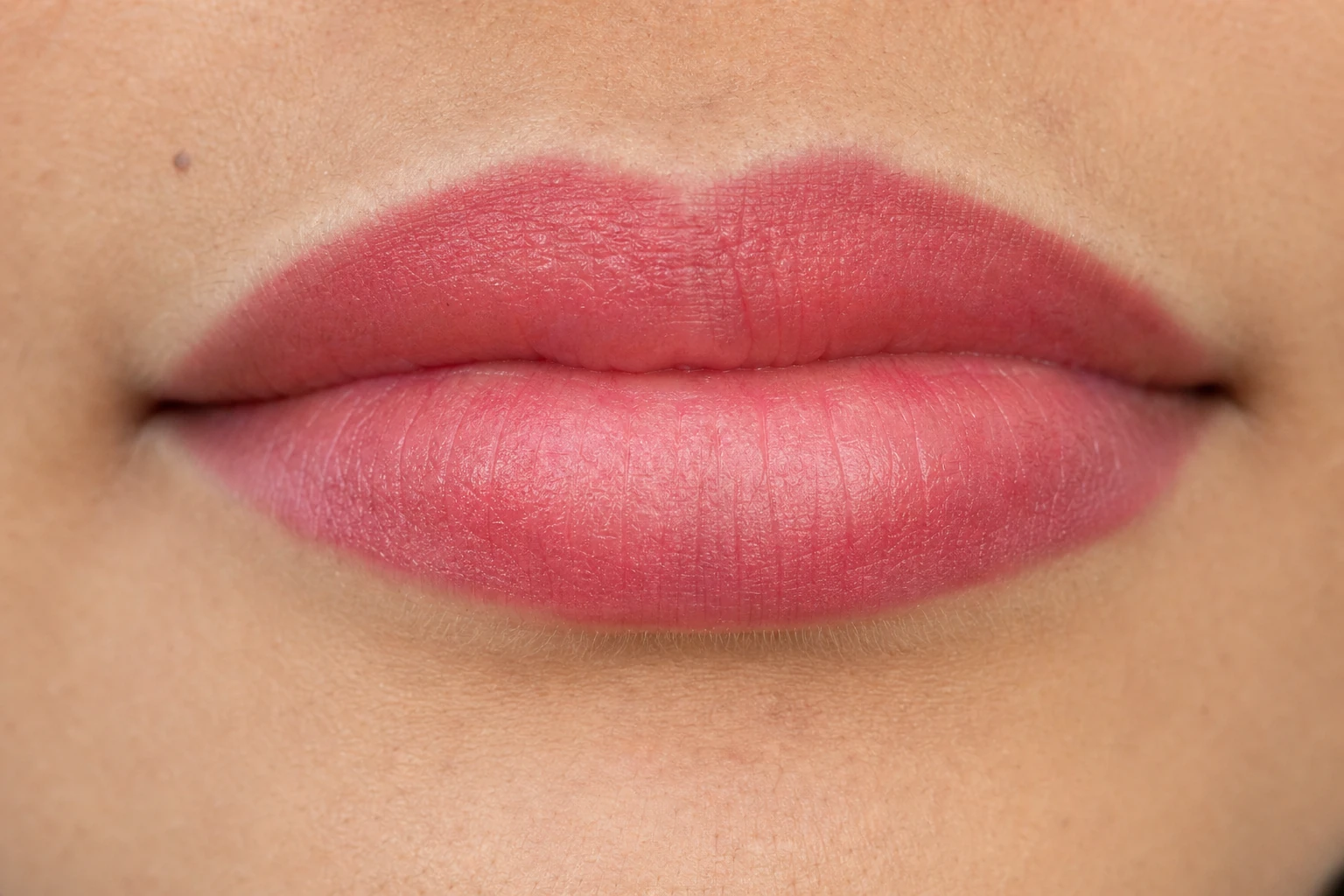 Cosmetic (permanent-makeup) tattooing on the face.
The do's and don'ts on the face
Do
- Keep it clean and dry. Gently clean as your clinic directs and pat (don't rub) dry. On the face, cleanliness is your main defence against infection.
- Use a cold compress for swelling. A clean, cool compress held gently over the dressing eases the puffiness that lips and eyelids get. Don't press hard.
- Apply only what your clinic recommends. A specific ointment, an antibiotic cream, or — for saline — keeping it dry. Clinics differ; follow yours.
- Protect from the sun once healed. After the skin closes, use a broad-spectrum SPF 30+, a hat and sunglasses for the whole course. This is your defence against pigment change.
Don't
- Don't put makeup over the area. No brow pencil, eyeliner, lipstick, foundation or concealer on the treated skin until it has fully closed and scabs have fallen naturally. Makeup on broken skin means bacteria and pigment in a wound.
- Don't pick, scratch or peel scabs or the white frost, and don't pop any blisters. This is the number-one avoidable cause of scarring — and it shows on facial skin.
- Don't get a saline scab wet. If you had saline removal, moisture is the enemy while the scab lifts pigment — keep it dry per your clinic's timeline.
- Don't soak or sweat over it. Avoid pools, spas, saunas and heavy, sweaty workouts while the skin is broken; sweat and shared water carry infection risk.
- Don't apply random products — no perfumed lotions, exfoliants, retinoids or self-tanner over a healing brow, lid or lip.
The American Academy of Dermatology stresses that following your provider's specific aftercare instructions is central to healing well and lowering the risk of side effects — the general rules above are a floor, not a replacement for what your clinic tells you.
Brows vs eyeliner vs lips: the aftercare nuances
The three PMU areas heal on the same principles but differ in the details, because each sits by a different sensitive structure.
| Area | Swelling | Key extra care | Watch for |
|---|---|---|---|
| Brows | Mild to moderate | Keep hair products and sweat off the brow; avoid brow makeup while healing | Scab picking on a visible, mobile area |
| Eyeliner | High — lids puff noticeably | Cold compress; keep product and water out of the eye; no eye makeup or lash serums | Swelling that affects vision, eye pain or discharge — call promptly |
| Lips | High — the lip swells and is vascular | Keep the mouth clean; expect tightness; if cold-sore prone, ask about antiviral cover | Cold-sore flare, and swelling that interferes with eating |
The eyeliner and lip areas deserve the most caution: they swell the most, and the eye and mouth are nearby. For eyeliner removal, anything affecting your vision or causing eye pain is a same-day call. For lips, a cold-sore flare (any lip trauma can trigger one) is worth asking your provider about before treatment.
Saline vs laser: how the aftercare differs
Both methods share the core rules — clean, dry, no picking, no makeup over the site, sun protection once healed — but the emphasis shifts.
- Saline removal aftercare centres on keeping a deliberate scab dry and completely undisturbed. The scab is doing the work of lifting pigment as it heals, so moisture or picking doesn't just risk infection — it can undo the session. Expect a longer "keep it dry" window.
- Laser removal aftercare centres on not popping blisters and protecting from sun. Laser may cause brief blistering that then scabs; the job is to leave it alone and shield fresh skin from UV.
Which method you had is decided with your provider based on pigment colour, age and your test-spot reaction — see permanent makeup removal for that decision. Whichever you had, the aftercare instructions from your clinic override any general guide.
What's normal vs when to call the clinic
Most reactions are expected. The skill is telling ordinary healing apart from a problem.
| Usually normal | Call the clinic or a doctor |
|---|---|
| Redness, swelling and tenderness in the first 1–3 days | Redness that spreads or worsens after day 2 |
| Noticeable puffiness on lids and lips | Swelling that affects vision, or eye pain (eyeliner) |
| A scab or dry frost that flakes off on its own | Yellow or green pus, a bad smell, or red streaks spreading out |
| Mild itching as skin knits | Fever, chills, or feeling generally unwell |
| A lighter, "frosted" look to the pigment | Bleeding that won't stop, or pain that keeps increasing |
When in doubt, ask. A quick message to your clinic beats guessing — and for the full picture of what an infected site looks like, read signs of infection after tattoo removal. Signs of infection (spreading redness, pus, red streaks, fever) warrant same-day medical advice.
This is general information, not medical advice. Permanent makeup removal is a procedure with real risks, including swelling, infection, scarring and pigment change, and it is performed on delicate facial skin near the eyes and mouth. Healing times and reactions vary by person — always follow the aftercare instructions from the clinic that treated you, and consult a licensed provider about your specific situation. The FDA notes that cosmetic pigments can react unpredictably, which is why professional guidance matters here.
Aftercare quality is a reason to choose your clinic carefully
Because your exact instructions come from the clinic performing the treatment — the ointment, the dressing, whether to keep a saline scab dry, the follow-up — the quality of that guidance is part of what you're paying for. On the face, a clinic that gives you written instructions and answers questions between sessions is protecting your result, not just your comfort.
That makes aftercare a genuine reason to compare your options. Compare clinics offering PMU and cosmetic tattoo removal near you to see who's close, or start with a dense market like tattoo removal in Melbourne to see how listings and consultations stack up side by side.
Frequently asked questions
What is the aftercare for permanent makeup removal?
Keep the treated area clean and dry, apply only the ointment or dressing your clinic recommends, and don't put makeup over healing skin. Never pick scabs or frost, use a cold compress for swelling on lips and lids, and protect the area from sun with SPF once it has closed. Each rule prevents a specific complication on delicate facial skin.
How long does permanent makeup removal take to heal?
The surface usually heals over about 1 to 2 weeks per session, with redness and swelling settling in the first 1 to 3 days and any scabbing drying and flaking over the following week or so. Because sessions target facial skin, clinics typically space them about 6 to 8 weeks apart to let the area fully recover before the next treatment.
Why do lips and eyes swell so much after PMU removal?
The lips and eyelids are thin, vascular and mobile, so they swell more than a brow or a forearm would. Noticeable puffiness for a day or two after treating eyeliner or lip blush is normal. A cold compress held gently over a clean dressing eases it. If swelling is severe, spreading or affects your vision, contact your clinic or a doctor promptly.
Can I wear makeup after cosmetic tattoo removal?
Not over the healing area. Avoid brow pencil, eyeliner, lipstick, foundation and concealer directly on the treated skin until it has fully closed and any scabs have fallen off on their own — usually one to two weeks. Makeup on broken skin introduces bacteria and pigment. You can wear makeup elsewhere on your face; just keep products off the treated site.
Is saline removal aftercare different from laser aftercare?
Yes, in emphasis. Saline removal creates a deliberate open scab that must be kept dry and left completely undisturbed so pigment lifts as it heals, so moisture control is central. Laser removal may blister then scab, and the focus is on not popping blisters and protecting from sun. Both share the core rules; always follow the specific instructions from the clinic that treated you.
When should I call the clinic after PMU removal?
Contact your clinic or a doctor if you see signs of infection: spreading redness, warmth, increasing pain after day two, yellow or green pus, red streaks, or a fever. For eyeliner removal, also call for swelling that affects vision or any eye pain. When unsure, it is always safer to ask than to wait.
Do I need SPF after permanent makeup removal?
Yes, once the skin has closed. Fresh facial skin pigments and burns easily, and sun over a healing brow, lid or lip area can drive lasting pigment change and force your clinic to delay the next session. Use a broad-spectrum SPF 30+ and a hat or sunglasses for the whole treatment course, and keep it off open or scabbed skin until healed.
Related guides
Related Guides
- Cosmetic & PMU
Why Permanent Makeup Fades (and Turns Orange or Grey) (2026)
Why permanent makeup fades and shifts colour, explained neutrally: shallow pigment placement, iron-oxide oxidation, sun exposure and skin turnover, why warm browns…
- Cosmetic & PMU
How to Remove Permanent Makeup to Redo It: Lighten vs Remove (2026)
How to remove permanent makeup to redo it: partial lightening vs full removal, why saline is often preferred pre-redo, and how much fading is enough.
- Cosmetic & PMU
Removing Old or Faded Permanent Makeup
How to remove old or faded permanent makeup, explained neutrally: why aged PMU turns orange, grey or dark, the paradoxical-darkening trap, saline vs laser, sessions…