Non-Laser Permanent Makeup Removal: Saline, Glycolic & More (2026)

Non-laser permanent makeup removal is any method that lifts cosmetic pigment without a laser — and saline removal is by far the most common. It's popular for a specific reason: the iron-oxide pigments used in brows, eyeliner and lips can paradoxically darken under a laser instead of fading, so a non-laser route sidesteps that risk. Saline, acid-based (glycolic) systems and — rarely — surgery are the main options, and none can guarantee a fully clear result.
That paradoxical-darkening risk is the whole reason this category exists, so it's worth understanding before you book. This guide is written from the directory's seat: across the 5,700 clinics we track in 1,043 cities (as of July 2026) — rated 4.79★ on average — we don't perform removal or sell any method, so we can be plain about what each non-laser option actually does and where it falls short.
This is a spoke of our permanent makeup removal pillar. For a deeper look at the leading method, see saline tattoo removal.
Key Takeaways
- Saline is the main non-laser method. A saltwater solution is implanted into the pigmented skin so pigment lifts out via osmosis and scabbing over several sessions.
- Non-laser is popular for PMU because laser can darken it. Iron-oxide brow, lip and flesh pigments can paradoxically darken under a laser; saline doesn't cause that reaction.
- Saline works on all pigment colours because it doesn't rely on a laser being absorbed by a specific colour — an advantage on stubborn or light shades.
- Acid/glycolic systems exist but carry more caution — they create a chemical wound and can scar; they're less common than saline.
- Surgery is rarely used on the face. Excision leaves a scar and is impractical for brows, eyeliner and lips.
- Never DIY. At-home PMU removal kits near the eyes and lips are dangerous — burns, scarring and eye injury are real risks.
- Expect fading, not a clean slate. Multiple sessions, a possible residual shadow, and a scarring risk — no guaranteed outcome, and a test patch is essential whichever method you choose.
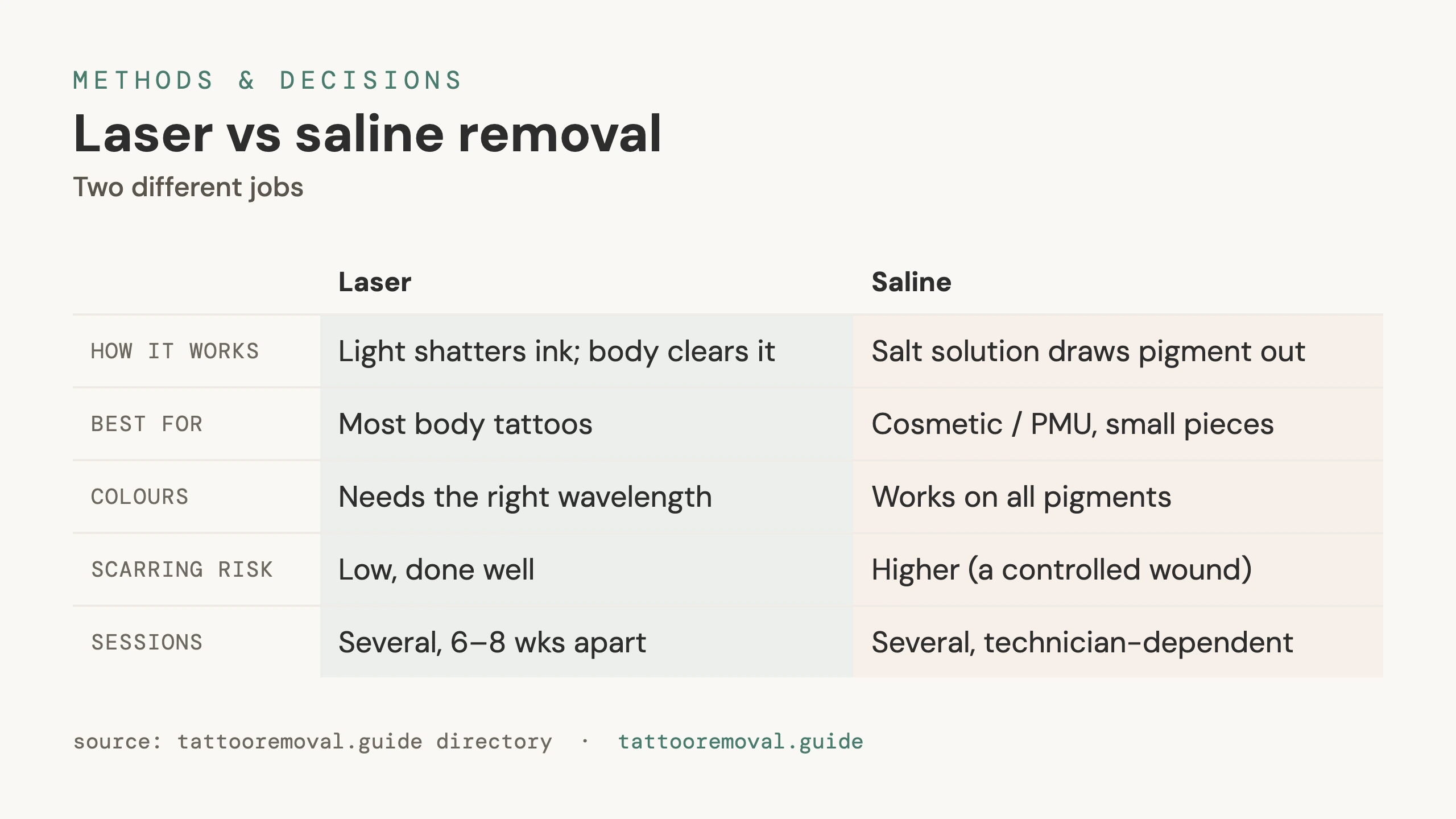 Saline sidesteps the paradoxical-darkening risk of laser on PMU pigment.
Why non-laser methods are common for permanent makeup
The short version: laser and PMU pigment are a risky match. Paradoxical darkening is when a cosmetic pigment turns darker — grey or black — after a laser pulse instead of fading, because the heat chemically reduces the titanium dioxide and iron oxides used in flesh, brown, pink and white PMU inks. With typical carbon-based body ink this rarely happens; with cosmetic pigment it's a well-known risk, and on a brow or lash line a single darkening reaction can leave pigment that is harder to remove than the original.
Non-laser methods avoid that mechanism entirely. Because saline and acid systems physically lift or draw pigment out rather than heating and shattering it with light, there's no colour-specific reaction to trigger — which is why so many PMU technicians reach for them first. It also keeps a laser away from the eyes and lips. The FDA's guidance on tattoos and permanent makeup explicitly notes that removing permanent makeup can be more complicated than expected and that cosmetic pigments may change colour, which is exactly the problem non-laser removal is trying to route around.
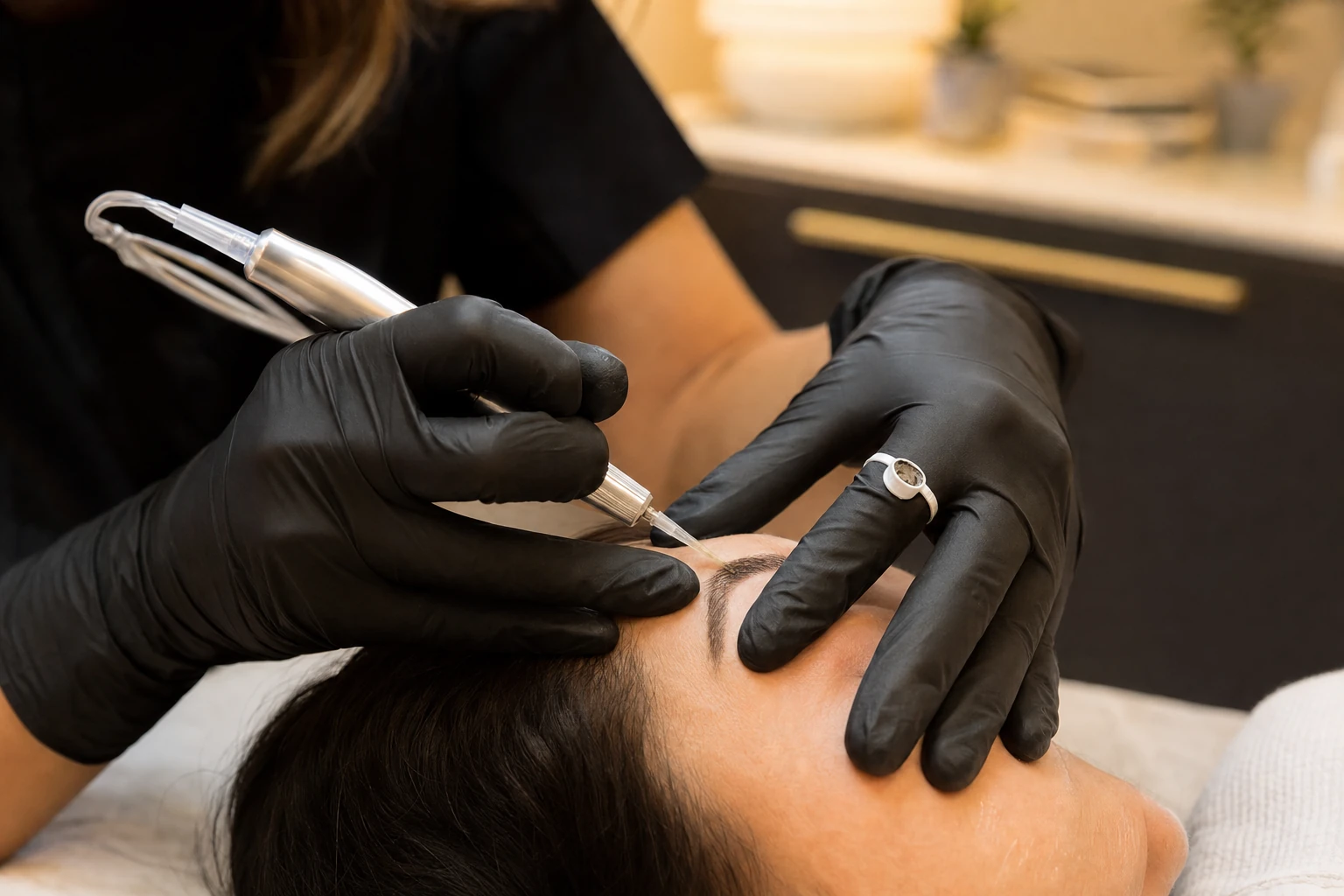 Cosmetic (permanent-makeup) tattooing on the face.
The main non-laser options
There are three you'll hear about. In practice, one dominates.
Saline removal is the workhorse. A technician uses a tattoo needle to implant a concentrated saline solution (sometimes with other lifting agents) into the same skin layer as the pigment; the salt draws pigment and fluid upward, the area scabs as it heals, and some pigment lifts away with the scab. It's gradual and controlled, works on all pigment colours, and is the most common non-laser choice for PMU. We cover the mechanism in depth in our saline tattoo removal guide.
Glycolic / acid-based systems are a second option. These use an acidic solution — often glycolic acid or a proprietary blend — implanted or applied to break down and lift pigment. They can work, but they warrant more caution: an acid creates a chemical wound, and on thin facial skin the scarring and texture-change risk is real if the concentration, depth or aftercare isn't right. They're used less often than saline, and the quality of the specific system and the technician's training matter a great deal.
Surgical removal (excision) is technically non-laser, but it is rarely used on the face. Cutting out pigmented skin and stitching the edges leaves a scar and is impractical for brows, eyeliner and lips. It's mentioned here for completeness, not as a realistic PMU route.
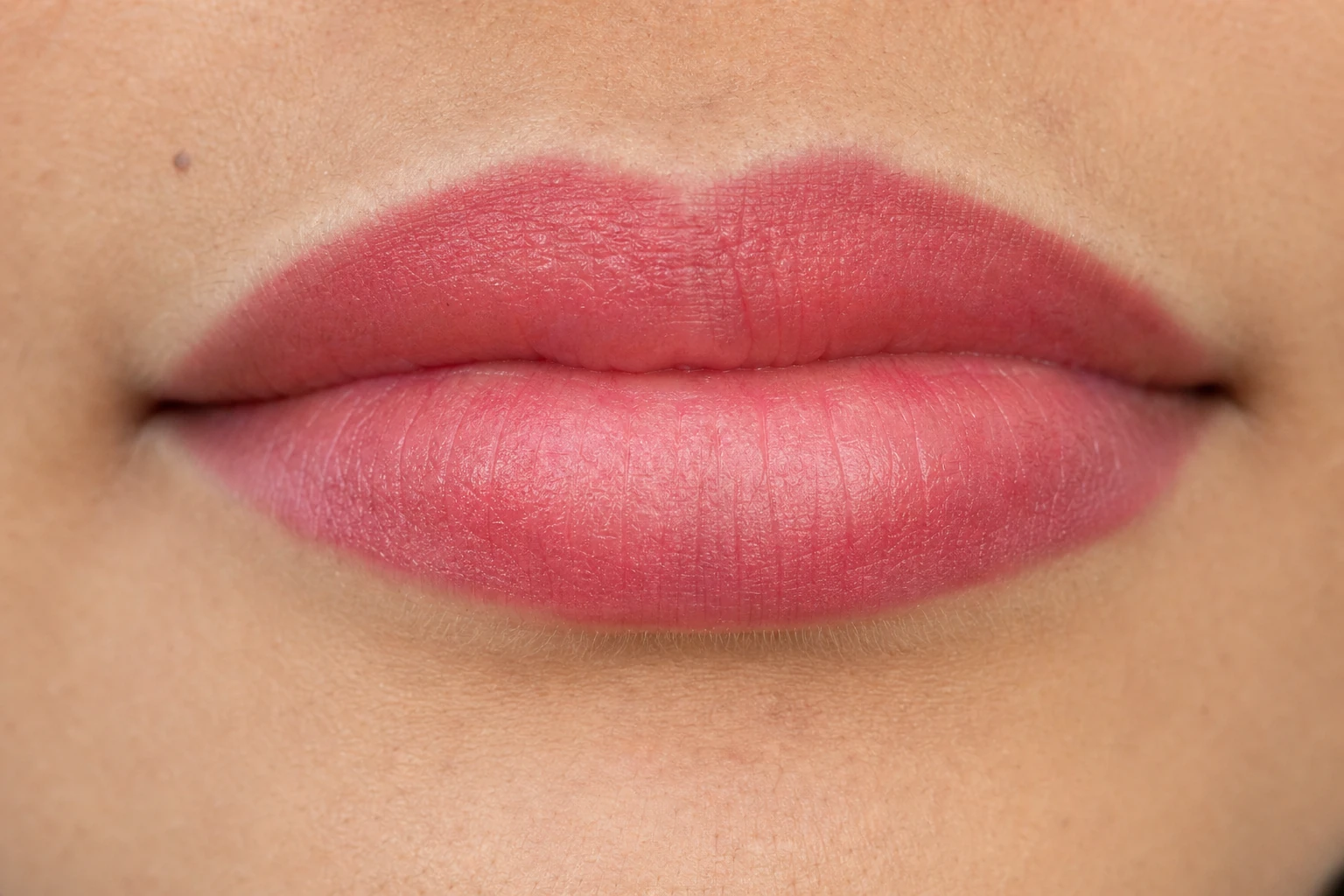 Cosmetic (permanent-makeup) tattooing on the face.
How saline removal works — and its realistic profile
Saline removal works by osmosis. Salt implanted alongside the pigment pulls pigment and fluid toward the surface; as the controlled wound heals and scabs, a portion of pigment leaves with the scab. Repeat over several sessions, spaced weeks apart to let the skin recover, and pigment gradually lightens.
The realistic profile is honest but modest. It's gradual and controlled, which suits delicate facial work. It works on all pigment colours, since nothing depends on a laser being absorbed by a particular colour — a genuine advantage over laser for pale or stubborn shades. But it needs multiple sessions, it carries a scarring risk because it deliberately creates a wound that scabs, and technician skill matters enormously — over-treating, going too deep, or poor aftercare (picking scabs, infection) is where problems come from. As the Cleveland Clinic and StatPearls both note for tattoo removal generally, complete clearance is never guaranteed — and that holds for saline too.
Saline vs laser vs glycolic for PMU
Here's the honest side-by-side across the factors that actually change the decision. Every entry is an estimate, not a promise.
| Factor | Saline (non-laser) | Laser | Glycolic / acid |
|---|---|---|---|
| Mechanism | Salt implanted; pigment drawn out by osmosis + scabbing | Light pulses shatter pigment for the body to clear | Acid implanted/applied to break down + lift pigment |
| Works on which colours | All colours (colour-independent) | Best on dark; light/flesh tones are hard | All colours (colour-independent) |
| Paradoxical darkening risk | None — no light reaction | Yes — iron-oxide/flesh pigment can darken | None from light; chemical reaction instead |
| Scarring / texture risk | Real if aggressive or poor aftercare | Lower with a skilled operator | Higher caution — chemical wound |
| Typical use for PMU | Most common; fresh work + shades a laser might darken | Dense, dark pigment; used more selectively | Less common; system-and-operator dependent |
| Sessions | Multiple, spaced weeks apart | Multiple, spaced weeks apart | Multiple; varies by system |
The read on that table: saline's big advantage is that it can't darken pigment and works on any colour, which is exactly why it's the default for cosmetic tattoos. Laser still earns its place on dense, dark pigment. Glycolic sits in between with an extra caution flag. As the American Academy of Dermatology notes for tattoos broadly, removal is more involved than the marketing suggests — and on the face, method choice is a clinical judgement, not a blanket rule.
When each method is chosen
For fresh PMU, non-black shades, and anything near the eyes, saline is often the first choice — it avoids darkening and keeps a laser away from delicate structures. For dense, dark, older pigment that saline struggles to shift, a PMU-experienced clinician may recommend laser despite the darkening risk, using a test patch to check the reaction first. Some plans even combine approaches over time.
What should not drive the choice is which single method a clinic happens to offer. If a provider dismisses the alternative outright, or promises a clean result up front, treat that as a flag. The right answer comes from someone who has examined your pigment in person and can explain their reasoning.
Why not DIY — at-home kits are dangerous
At-home PMU removal kits — acid or saline creams, "tattoo removal" pastes — are genuinely dangerous, and never more so than around the eyes and lips. Millimetres from the eye, an acid burn or an infection is not a cosmetic inconvenience; it's a medical emergency. These products can cause chemical burns, scarring, infection, permanent pigment changes and eye injury, and they aren't regulated for this use. Removal deliberately creates a wound in facial skin — that belongs with a trained technician who can protect the eye, control the depth, and manage healing, not a kit from the internet.
What to realistically expect
Set expectations honestly. Because the treated area is small, individual sessions are quick, but the number of sessions varies widely and can't be pinned down before an in-person exam. Cosmetic pigment can be stubborn, and older or layered brows and lips take more. Crucially, the goal is usually substantial fading, not a guaranteed clean slate — a faint residual shadow or slight texture change can remain, and that's the honest outcome to plan around.
This is general information, not medical advice. Removing permanent makeup — by saline, acid or laser — is a clinical procedure with real risks, including scarring, infection, pigment changes and, near the eyes, eye injury. Outcomes, session counts and risks vary by person, pigment, method and provider. A test patch is essential whichever method you choose. Consult a licensed, PMU-experienced clinician, and never assume a guaranteed result.
Find a technician who actually does PMU removal
Non-laser removal lives or dies on the technician's skill, so don't book on price or a general reputation alone. Compare cosmetic and PMU removal clinics near you and shortlist by who genuinely specialises in cosmetic-tattoo removal, uses a controlled saline or professional system, and test-patches before treating the whole area. In a dense metro like Melbourne, you can compare several providers before committing.
Before you book, confirm the technician does PMU removal regularly, will test-patch first, protects the eye for any eyeliner work, and gives you a realistic range rather than a promised result. On the face, that experience matters more than anything else.
Frequently asked questions
What is non-laser permanent makeup removal?
Non-laser permanent makeup removal is any method that lifts cosmetic pigment from the skin without a laser — most commonly saline removal, where a saltwater solution is implanted into the tattooed area so pigment is drawn out through osmosis and scabbing over several sessions. Acid-based (glycolic) systems are a second, less common option. These methods are popular for PMU because laser can paradoxically darken the iron-oxide pigments used in brows, eyeliner and lips. None can be guaranteed to fully clear pigment, and a test patch is essential whichever method you choose.
Why is non-laser removal used for permanent makeup instead of laser?
Because permanent makeup pigments — the flesh, brown and pink shades in brows, eyeliner and lips — often contain iron oxide and titanium dioxide, which can paradoxically darken to grey or black under a laser instead of fading. Non-laser methods like saline don't cause that reaction, so they sidestep the biggest risk of laser on cosmetic tattoos and keep a laser away from the eyes and lips. That said, laser is still chosen for some dark, dense pigment; the right method depends on an in-person assessment.
How does saline tattoo removal work?
Saline removal works by osmosis. A technician uses a tattoo needle to implant a concentrated saline (and sometimes other lifting agents) solution into the same layer of skin the pigment sits in. The salt draws pigment and fluid upward; as the area heals it forms a scab, and some pigment lifts away with that scab. It's a gradual, controlled process that typically needs multiple sessions spaced weeks apart. It works on all pigment colours because it doesn't rely on light being absorbed by a specific colour, unlike laser.
Is saline or laser better for removing permanent makeup?
Neither is universally better. Saline is chosen more often for PMU because it can't cause paradoxical darkening, works on all pigment colours, and keeps a laser away from the eyes — but it needs multiple sessions and carries a scarring risk if done aggressively or aftercare is poor. Laser can be effective on dense, dark pigment but risks darkening iron-oxide shades. The deciding factors are the pigment colour, how fresh it is, the area, and a trained clinician's judgement after examining your work in person.
Can I remove permanent makeup at home?
No. At-home PMU removal kits — often acid or saline creams and "tattoo removal" pastes — are dangerous, especially on brows and eyeliner millimetres from the eye. They can cause chemical burns, scarring, infection, permanent pigment changes and eye injury, and they are not regulated for this use. Permanent makeup removal is a clinical procedure that belongs with a trained, PMU-experienced technician who can protect the eye and manage the wound. This is general information, not medical advice.
Does saline removal leave scars?
It can, though the risk is lower when the work is done conservatively by a trained technician and you follow aftercare. Saline removal deliberately creates a controlled wound that scabs, so picking scabs, over-treating an area, or infection can all lead to scarring or texture change. On thin facial skin this matters, which is why technician skill and realistic session spacing are so important. No method is scar-free, and no reputable provider guarantees a scar-free result.
How many saline sessions will I need to remove PMU?
It varies widely and can't be promised in advance. Many people need several sessions spaced several weeks apart, and older, denser or heavily layered pigment takes more. The goal is usually substantial fading rather than a perfectly clean slate — a faint residual shadow can remain. A trained technician will estimate a range after seeing your pigment in person, but treat any single number offered up front with caution.
What should I check before booking non-laser PMU removal?
Confirm the technician is specifically experienced in cosmetic-tattoo (PMU) removal, uses a controlled saline or professional system rather than an unregulated product, and will do a test patch before treating the whole area. Ask how they protect the eye for eyeliner work, how many sessions they'd estimate and why, and what realistic outcome to expect. Get the plan and any full-course estimate in writing. This is general information, not medical advice — consult a licensed provider.
Related guides
Related Guides
- Cosmetic & PMU
Why Permanent Makeup Fades (and Turns Orange or Grey) (2026)
Why permanent makeup fades and shifts colour, explained neutrally: shallow pigment placement, iron-oxide oxidation, sun exposure and skin turnover, why warm browns…
- Cosmetic & PMU
How to Remove Permanent Makeup to Redo It: Lighten vs Remove (2026)
How to remove permanent makeup to redo it: partial lightening vs full removal, why saline is often preferred pre-redo, and how much fading is enough.
- Cosmetic & PMU
Removing Old or Faded Permanent Makeup
How to remove old or faded permanent makeup, explained neutrally: why aged PMU turns orange, grey or dark, the paradoxical-darkening trap, saline vs laser, sessions…