Itching After Tattoo Removal: Why It Happens and What Helps (2026)
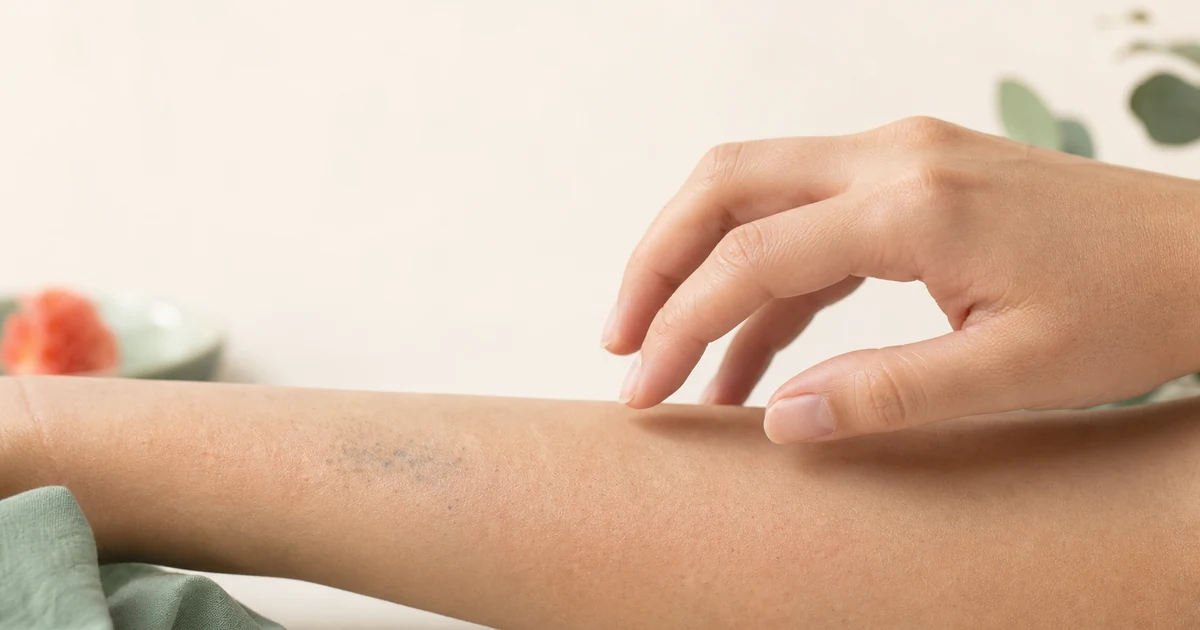
Itching after laser tattoo removal is usually a normal part of healing, not a sign something has gone wrong. The laser's heat triggers a histamine release, and as scabs form and new skin repairs between sessions, the area itches the way any healing wound does. It is common, it tends to settle as the skin heals, and the single most important rule is simple: do not scratch or pick.
If your treated tattoo has become maddeningly itchy in the days or weeks after a session, you are experiencing one of the most predictable parts of the removal process. This guide explains why it itches, what actually helps, and the clear difference between ordinary healing itch and the kind of itch that means you should call a doctor.
Key Takeaways
- Itching after tattoo removal is usually normal healing — histamine release from the laser's heat, plus scabbing and skin repair between sessions.
- Never scratch or pick. It raises the risk of infection and scarring and can cause lasting pigment change.
- What helps: a cool compress, keeping the skin moisturised per your clinic's aftercare, loose clothing, and sometimes an antihistamine — but only if your clinic or doctor okays it.
- Concerning: an intense, spreading, or hive-like itch, especially with spreading redness, pus, or increasing pain — possible infection or allergic reaction, so contact a provider.
- Itching can flare weeks later as deeper healing continues, even after the skin looks healed. A mild late itch is usually normal.
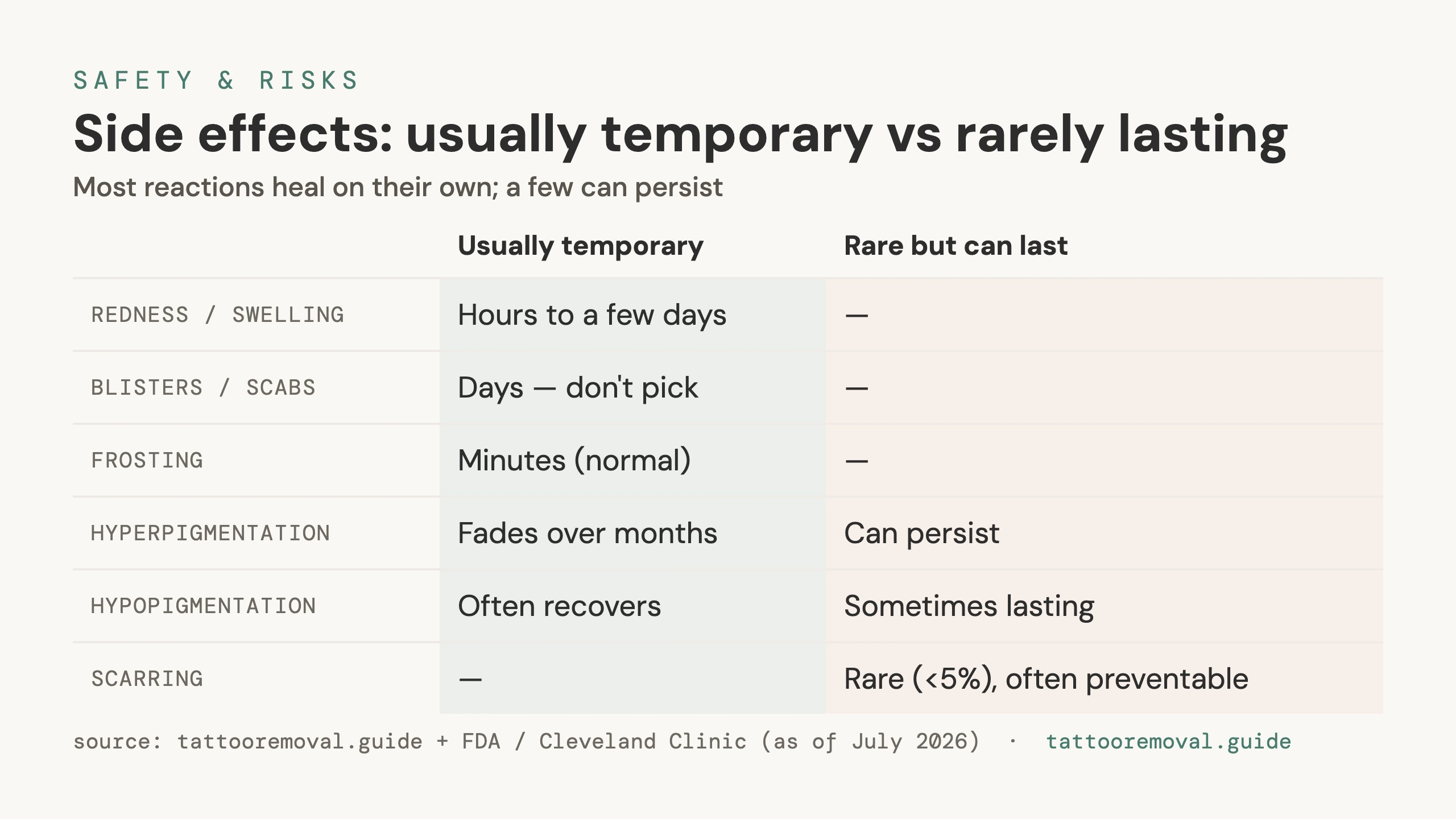 Itching is part of healing — scratching risks infection and scarring.
Why does tattoo removal make the skin itch?
Itching after tattoo removal is the sensation produced by your skin's normal healing response to the laser. To break up ink, the laser delivers ultra-short pulses that are absorbed by the pigment and heat it almost instantly — the Cleveland Clinic describes this as the laser shattering the ink into smaller particles the body can then clear. That rapid heating irritates the surrounding skin, and the body responds by releasing histamine — the same chemical that makes a mosquito bite or a healing graze feel itchy.
There is a second source of itch: scab formation and skin repair. As the treated area scabs over and new tissue knits together beneath it, the process is naturally itchy, exactly the way a healing cut or scrape is. Dryness amplifies all of this — tight, dry, healing skin itches far more than skin that is kept lightly moisturised. The StatPearls clinical reference on laser tattoo removal groups these transient reactions — redness, swelling, scabbing and the itching that comes with them — among the expected, generally self-limiting effects of treatment.
In short, an itchy removal site is usually a sign your skin is doing its job between sessions, not evidence of damage.
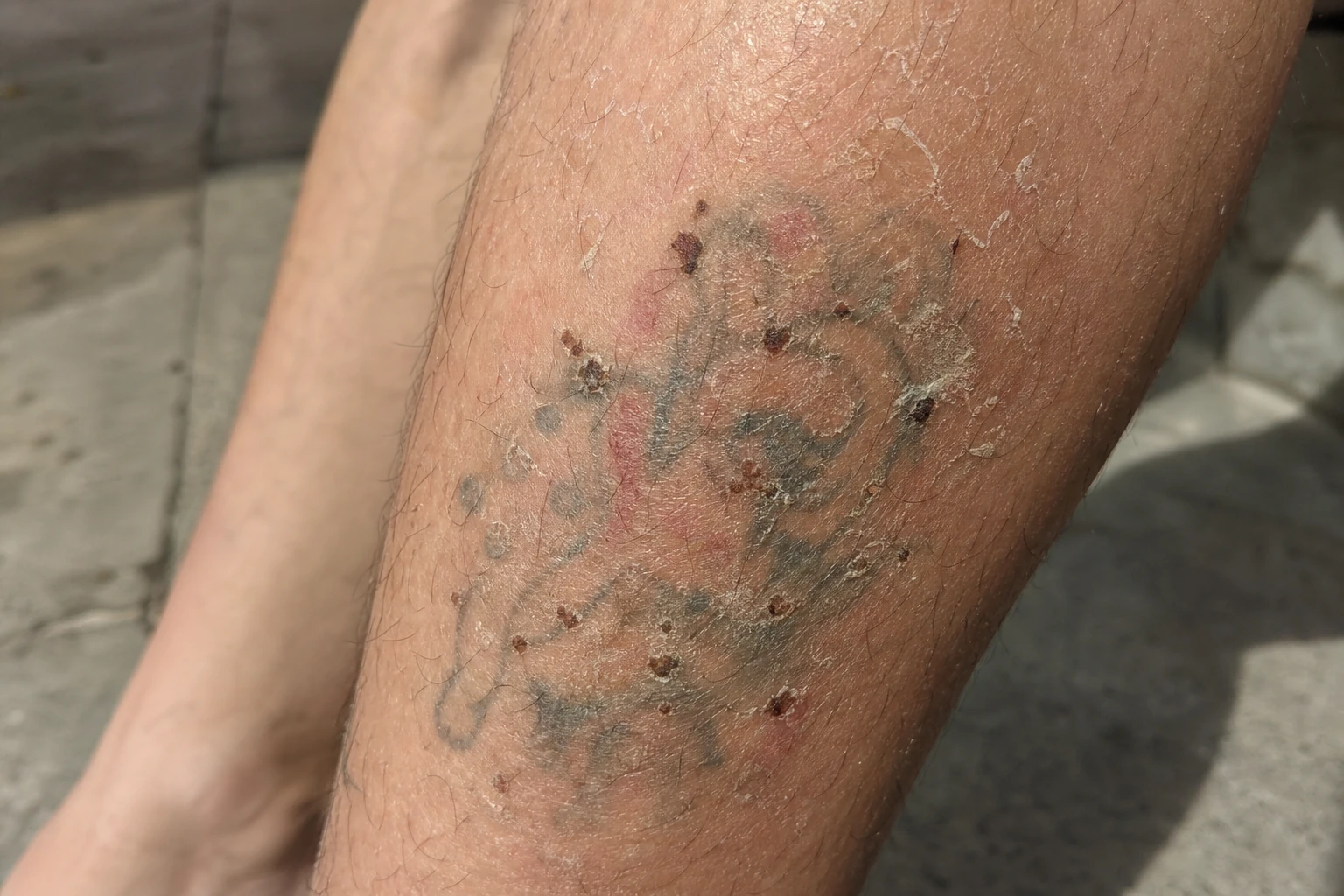 Itching usually comes as scabs dry and the skin heals.
The one rule: do not scratch or pick
No matter how much it itches, do not scratch, rub hard, or pick at scabs. This is the single most important thing to get right. Scratching and picking break the healing surface and are among the most common avoidable causes of problems after removal:
- Infection — broken skin lets bacteria in.
- Scarring — disrupting the healing tissue can leave a permanent mark where there would otherwise be none.
- Pigment change — trauma to healing skin can cause lasting lightening or darkening of the area.
The American Academy of Dermatology emphasises careful aftercare and letting treated skin heal undisturbed. If a scab is loose, let it fall off on its own; if a blister has formed, leave it intact. The itch is temporary — a scar is not.
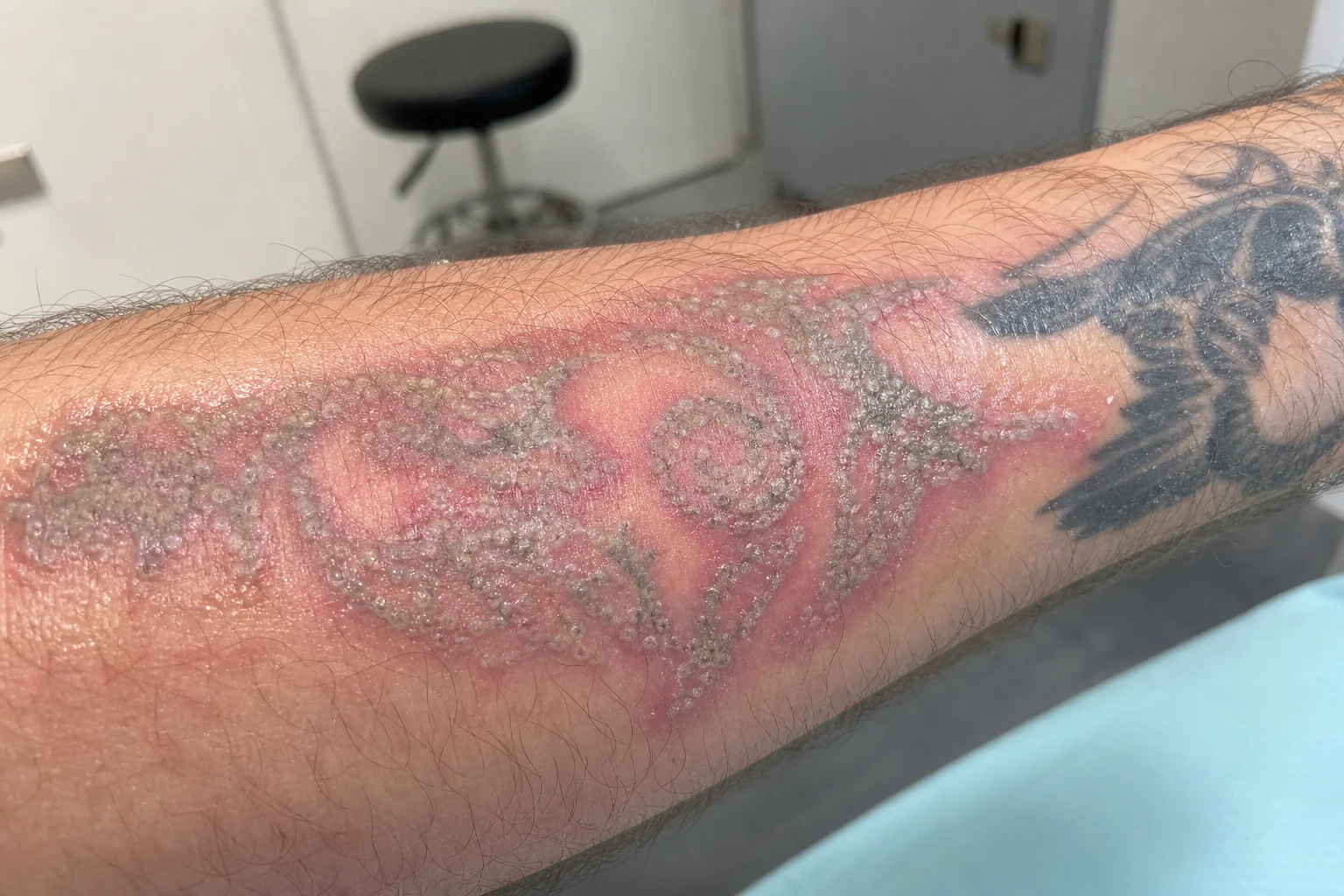 Keep the healing area moisturised — don't scratch it.
What actually helps the itch
Relief comes from gentle, mostly hands-off care. Always follow your own clinic's written aftercare first, but these general measures are consistent and effective:
- Cool it down. A cool (not ice-cold) compress laid gently over the area can calm the itch and the heat. Don't press hard or apply ice directly to broken skin.
- Keep it moisturised. Dry healing skin itches more. Apply a thin layer of whatever ointment or moisturiser your clinic recommends, gently — don't rub it in hard, and don't apply anything to an open blister or weeping area unless told to.
- Wear loose clothing. Friction from tight fabric makes itching worse and can disturb scabs. Loose, breathable clothing over the site helps.
- Ask about an antihistamine. An oral antihistamine can sometimes take the edge off histamine-driven itch — but treat this as an ask, not a default. Only take one if your clinic or doctor confirms it's appropriate for you.
- Protect from heat and sweat. Hot showers, saunas, heavy exercise and sun exposure all aggravate an itchy, healing site. Keep it cool and covered until healed.
For the full routine across the whole healing window, see our tattoo removal aftercare guide.
Normal healing itch vs a concerning itch
Most itching is ordinary healing. The job is to tell it apart from the far less common itch that points to an infection or an allergic reaction. Use this as a checklist — and when in doubt, contact your provider. The figures below are general estimates, not a diagnosis.
| Feature | Normal healing itch | Concerning itch — contact a provider |
|---|---|---|
| Intensity | Mild to moderate; comes and goes | Intense, relentless, or rapidly worsening |
| Timing | Peaks during scabbing; eases as skin settles; can mildly flare weeks later | Sudden, escalating, or paired with new symptoms days after |
| Spread | Confined to the treated tattoo | Spreading beyond the site, or raised hives appearing |
| Other signs | Mild redness and tenderness that fade | Spreading redness, pus, red streaks, fever, or increasing pain |
| Skin surface | Intact scabs healing over | Weeping, cracked, hot, or increasingly swollen skin |
| What it means | Expected part of healing | Possible infection or allergic reaction |
| Action | Cool compress, moisturise, don't scratch | Call your clinic or doctor promptly |
The pattern to remember: normal healing itch eases as the skin settles, while an itch tied to infection or a reaction tends to escalate and bring company — spreading redness, pus, hives, or fever. Any of those warrants a prompt call. For the wider warning signs, read our guide to the signs of infection after tattoo removal.
Why the itch can return weeks later
It's common for a removal site to itch again well after it looks fully healed. That's because healing continues below the surface for weeks: the deeper tissue keeps remodelling, and the body keeps clearing the shattered ink through the lymphatic system long after the visible scab is gone. A mild, settling itch during this phase is usually just deeper healing continuing its work.
What shouldn't be waved off as "just late healing" is an itch that is intense, spreading, or accompanied by new redness, swelling or hives — a delayed reaction is uncommon but possible, and worth a call. Between sessions, the same rules apply: don't scratch, keep the skin moisturised, and let it settle.
This is general information, not medical advice. Laser tattoo removal is a medical procedure with real risks including infection, scarring and pigment change. If you're unsure whether your itching is normal, if it's intense or spreading, or if you notice any warning sign above, consult a licensed provider about your specific situation before taking any medication.
Compare clinics before your next session
Healing comfort, itch and aftercare support all depend partly on the clinic — its settings, its experience with your skin and ink, and the guidance it gives you afterward. Across the 5,700 clinics we track in 1,043 cities (as of July 2026), listed clinics hold an average 4.79★ rating, but their aftercare guidance varies widely — and good instructions are exactly what get you through the itchy weeks without a scar.
Compare tattoo-removal clinics in your city to weigh experience, lasers and reviews side by side, or start with a dense market like tattoo removal in Melbourne to see how listings stack up. For the full healing routine, read our pillar guide on tattoo removal aftercare, and pair it with the signs of infection after tattoo removal so you know exactly when an itch has crossed the line.
Frequently asked questions
Is itching after tattoo removal normal?
Yes. Itching after laser tattoo removal is usually a normal part of healing — the skin releases histamine in response to the laser's heat, and scab formation and tissue repair as the area heals are naturally itchy. It is common between sessions and tends to ease as the skin settles. Itching alone rarely signals a problem, but an intense, spreading or hive-like itch can, and warrants a call to your provider.
How do I stop the itch after tattoo removal?
The most effective steps are gentle: a cool compress over (not pressed hard into) the area, keeping the skin moisturised with whatever your clinic recommends, and wearing loose clothing so nothing rubs. Do not scratch or pick. An oral antihistamine can sometimes help, but only take one if your clinic or doctor okays it for your situation. If the itch is severe or spreading, contact your provider rather than self-treating.
Why is my tattoo removal site so itchy?
Itching comes from the normal healing cascade: the laser heats the skin, which releases histamine (the same chemical behind an itchy mosquito bite), and as scabs form and new skin repairs underneath, the area itches the way any healing wound does. Dryness makes it worse, which is why keeping the skin moisturised per your clinic's aftercare helps.
Can I scratch my tattoo removal itch if it's really bad?
No. Scratching or picking is the one thing to avoid completely. It raises the risk of infection and scarring and can cause lasting pigment change in the treated skin. Instead, use a cool compress, moisturise, keep clothing loose, and ask your clinic about an antihistamine. If you cannot stop wanting to scratch because the itch is intense, that is a reason to call your provider.
When is itching after tattoo removal a warning sign?
Ordinary healing itch is mild to moderate and improves as the skin settles. Be concerned if the itch is intense and spreading, comes with raised hives, or is accompanied by spreading redness, pus, or increasing pain and warmth — these can signal an infection or an allergic reaction rather than healing, and warrant contacting a doctor promptly.
Why does the itch come back weeks after my session?
A later flare of itching is common because healing continues below the surface for weeks after the visible scab is gone. As deeper tissue remodels and the body keeps clearing shattered ink, the area can feel itchy again well after it looks healed. A mild, settling late itch is usually normal; an intense or spreading one is worth a call.
Does moisturiser help with tattoo removal itching?
Often, yes — dry, healing skin itches more, so keeping the area moisturised with the product your clinic recommends can take the edge off. Apply a thin layer gently rather than rubbing it in hard, and never apply anything to broken skin, an open blister, or a weeping area unless your clinic has told you to. Follow your own clinic's aftercare instructions first.
Related guides
Related Guides
- Safety & Risks
Why a Patch Test Matters Before Tattoo Removal (2026)
Why does a patch test matter before laser tattoo removal? It reveals how your skin and ink react — blistering, pigment change, rare reactions — before a full…
- Safety & Risks
Who Should Not Get Laser Tattoo Removal? The Contraindications
Who should not get laser tattoo removal? Most adults are candidates. The full contraindications checklist — when to wait and when to discuss carefully.
- Safety & Risks
Tattoo Removal While Pregnant or Breastfeeding
Can you get tattoo removal while pregnant? Most providers say wait — not from proven harm, but because the safety isn't studied.