How to Prepare for a Tattoo Removal Session
How to prepare for tattoo removal comes down to protecting the skin and updating your clinic: in the days before, keep the tattoo out of the sun and off self-tanner, stay hydrated, and shave the area if it is hairy. On the day, arrive with clean bare skin — no lotion, makeup or perfume over the tattoo — wear clothing that exposes it, and flag any new medication, illness or pregnancy. Good prep prevents complications and reschedules; it does not speed up how fast the ink clears.
None of this is complicated, but getting it wrong is the most common reason a session gets postponed at the door. This guide is a practical pre-session checklist — built from medical sources and figures from the Tattoo Removal Guide directory, stamped (as of July 2026) — so you turn up ready to be treated.
Key Takeaways
- Avoid sun, tanning beds and self-tanner on the tattoo for a few weeks before — tanned skin raises pigment-change risk and often means a reschedule.
- On the day, arrive with clean, bare skin: no lotion, makeup, deodorant or perfume over the tattoo, and shave the area first if it is hairy.
- Don't apply your own numbing cream unless the clinic approves it; ask about their pain-management options instead.
- Tell the clinic about anything new since your consultation — medications, illness, pregnancy — because it can change whether it is safe to treat that day.
- Of the 5,700 clinics we track across 1,043 cities, most run a consultation first — use it to get your personalised prep instructions (as of July 2026).
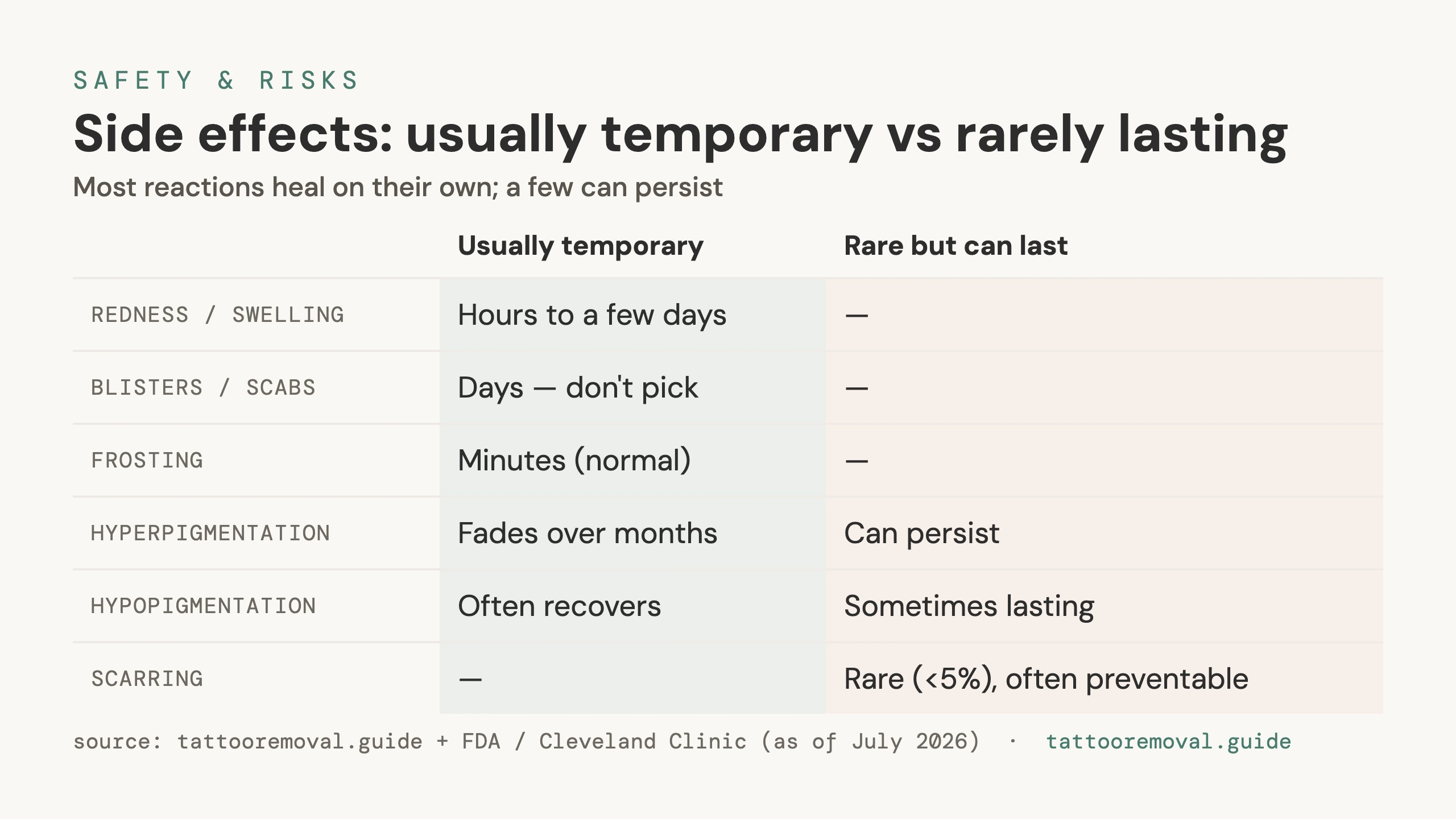 Good prep lowers the odds of side effects and reschedules.
Why prep matters before a session
Laser tattoo removal is a medical procedure, and how you arrive affects whether it can go ahead safely. Pre-session preparation is the set of steps you take in the days before and on the day of treatment to reduce complications and avoid a wasted appointment. The two biggest levers are your skin's condition and the accuracy of the health information you give the clinician.
Get them right and the clinician can treat at appropriate settings without surprises. Get them wrong — turning up with a fresh tan, a lotion-slicked tattoo, or an undisclosed change in medication — and the likely outcome is a rescheduled session or a higher risk of side effects like blistering and pigment change. As the FDA notes in its tattoo and permanent-makeup guidance, removal is a real medical intervention, not a cosmetic afterthought, so the prep deserves the same seriousness.
One thing prep does not do is make the ink clear faster. Fading is driven by your immune system carrying away shattered ink over the weeks between sessions — good preparation makes each session safer and more efficient, not quicker to a result.
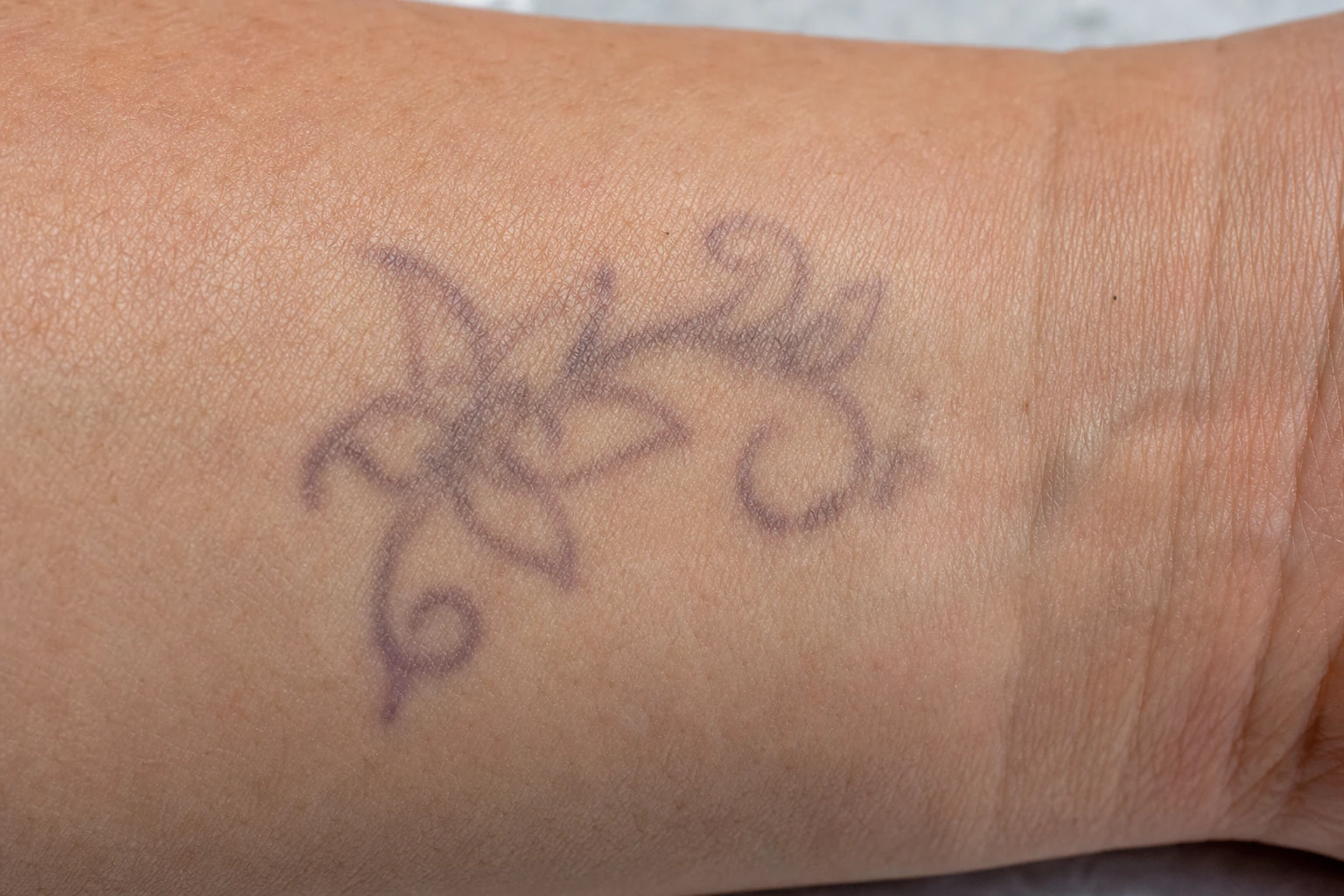 A purple tattoo.
In the days before your session
The days-before window is mostly about skin protection and general health.
Keep the area out of the sun. Avoid sun exposure, tanning beds and self-tanner on and around the tattoo for a few weeks beforehand. Tanned, sunburnt or self-tanned skin has more active pigment, which raises the risk of the laser causing pigment change or blistering — and many clinics will simply reschedule you if the area is recently tanned. The American Academy of Dermatology notes that the risk of pigment change is higher in more pigmented skin, so this matters more for some people than others. Cover the tattoo or use sunscreen on it once it has healed between sessions.
Stay hydrated and healthy. Removal relies on your immune system to clear the broken-down ink, so arriving well-rested, hydrated and not run-down supports that process. If you are unwell — a cold, an infection, a flare of a skin condition over the area — it is worth calling the clinic, as they may prefer to wait.
Follow clinic guidance on alcohol and blood thinners. Some clinicians advise avoiding alcohol and blood-thinning medication such as aspirin shortly before a session, because they can increase bruising or bleeding. Treat this as "follow your clinic's specific instructions," not a blanket rule — and never stop a prescribed medication on your own. If you take a blood thinner for a medical reason, tell your clinic and let them and your prescribing doctor guide you.
Shave the area if it is hairy. Shaving the tattoo the day before or the morning of lets the laser reach the ink cleanly. Do it gently to avoid nicks, and skip it if the skin is broken or irritated — your clinic can shave it for you if you would rather not.
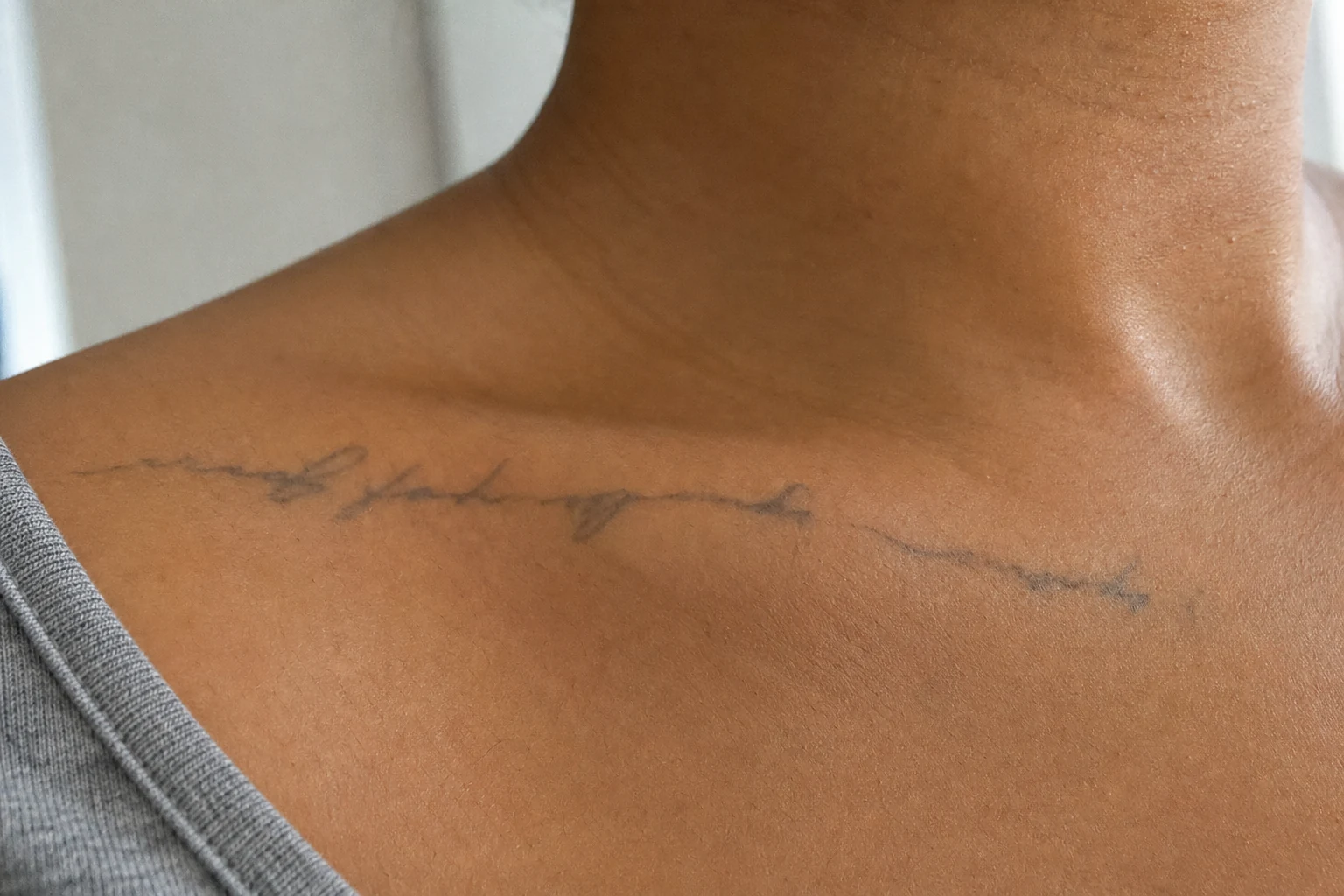 A tattoo undergoing laser removal.
How to prepare for tattoo removal on the day: the checklist
On treatment day the focus shifts to clean skin, comfort and communication.
- Eat beforehand. A light meal helps you avoid feeling faint or lightheaded during treatment.
- Arrive on time. First and follow-up sessions run to a schedule, and arriving flustered or late does you no favours.
- Clean, bare skin over the tattoo. Do not apply lotion, moisturiser, makeup, deodorant, perfume or sunscreen over the treatment area on the day — arrive with it clean and product-free so the laser and skin interact predictably.
- No unapproved numbing cream. Do not apply your own topical anaesthetic unless the clinic has specifically told you to. Ask about their numbing, cold-air or ice options instead.
- Wear clothing that exposes the tattoo. Loose, comfortable clothing that bares the area without a struggle — and that you do not mind getting a little aftercare ointment on.
- Bring your health update. Be ready to tell the clinic about any new or stopped medication, recent illness, a new or possible pregnancy, cold sores near the site, or recent sun exposure since your consultation.
Do vs. don't before a session
| Do | Don't |
|---|---|
| Keep the tattoo out of the sun and off tanning beds for a few weeks before | Turn up with a fresh tan, sunburn or self-tanner on the area |
| Shave the area if hairy (gently, day-before or morning-of) | Wax, or shave broken/irritated skin |
| Arrive with clean, product-free skin over the tattoo | Apply lotion, makeup, perfume or deodorant over the site on the day |
| Ask the clinic about numbing and pain-management options | Apply your own numbing cream unless the clinic approved it |
| Eat beforehand, hydrate, and arrive on time | Arrive unwell, run-down or lightheaded without telling the clinic |
| Tell the clinic about new meds, illness or pregnancy | Assume the plan from your consultation still applies if something changed |
| Wear loose clothing that exposes the tattoo | Wear tight clothing that will rub the treated skin afterwards |
What NOT to do before a session
- Don't self-medicate for pain. Skip your own numbing cream unless the clinic approved it, and don't reach for blood thinners or extra alcohol to "take the edge off" — both can increase bleeding and bruising.
- Don't tan or fake-tan the area. This is the single most common cause of a reschedule and a real safety issue, not just a preference.
- Don't hide a health change. A new pregnancy, a new medication like isotretinoin, an infection or a cold sore near the site can all change whether it is safe to treat — say so. A good clinic would rather adjust than proceed blind.
- Don't stop prescribed medication on your own initiative to prepare — always route that through your prescribing doctor and the clinic.
Tell your clinic what's changed since the consultation
Your original plan was set at consultation, but bodies change between visits. Before the laser comes on, make sure the clinician knows about anything new: medications started or stopped (especially isotretinoin/Accutane, where the old flat "wait six months" rule is now considered outdated and guidance is individualised), a recent illness or infection, a new or possible pregnancy, recent sun exposure, or cold sores near the treatment area. The StatPearls clinical reference on laser tattoo removal and the Cleveland Clinic both frame patient screening as central to safe treatment — and that screening only works if the information you give is current.
For the full picture of what happens once you are on the table, see our sibling guide on what to expect at your first tattoo removal session.
This is general information, not medical advice. Laser tattoo removal is a medical procedure with real risks, including blistering, scarring and pigment change. How to prepare, whether it is safe to treat on a given day, and your results all vary by person and tattoo — follow your own clinic's instructions and consult a licensed provider about your specific situation.
Compare clinics before you book
Good preparation starts with a good clinic — one that gives you clear pre-session instructions, screens your health properly, and takes safety steps like patch testing seriously. The right clinic for your ink and skin can change your comfort, your safety and your total cost.
Compare tattoo-removal clinics in your city to see what's available near you, or start with a dense market like tattoo removal in Melbourne to see how listings and pricing stack up side by side. And to understand the risks your prep is designed to reduce, read our pillar guide on whether laser tattoo removal is safe.
Related guides
Related Guides
- Safety & Risks
Why a Patch Test Matters Before Tattoo Removal (2026)
Why does a patch test matter before laser tattoo removal? It reveals how your skin and ink react — blistering, pigment change, rare reactions — before a full…
- Safety & Risks
Who Should Not Get Laser Tattoo Removal? The Contraindications
Who should not get laser tattoo removal? Most adults are candidates. The full contraindications checklist — when to wait and when to discuss carefully.
- Safety & Risks
Tattoo Removal While Pregnant or Breastfeeding
Can you get tattoo removal while pregnant? Most providers say wait — not from proven harm, but because the safety isn't studied.