Does Tattoo Removal Hurt More Than Getting the Tattoo? (2026)
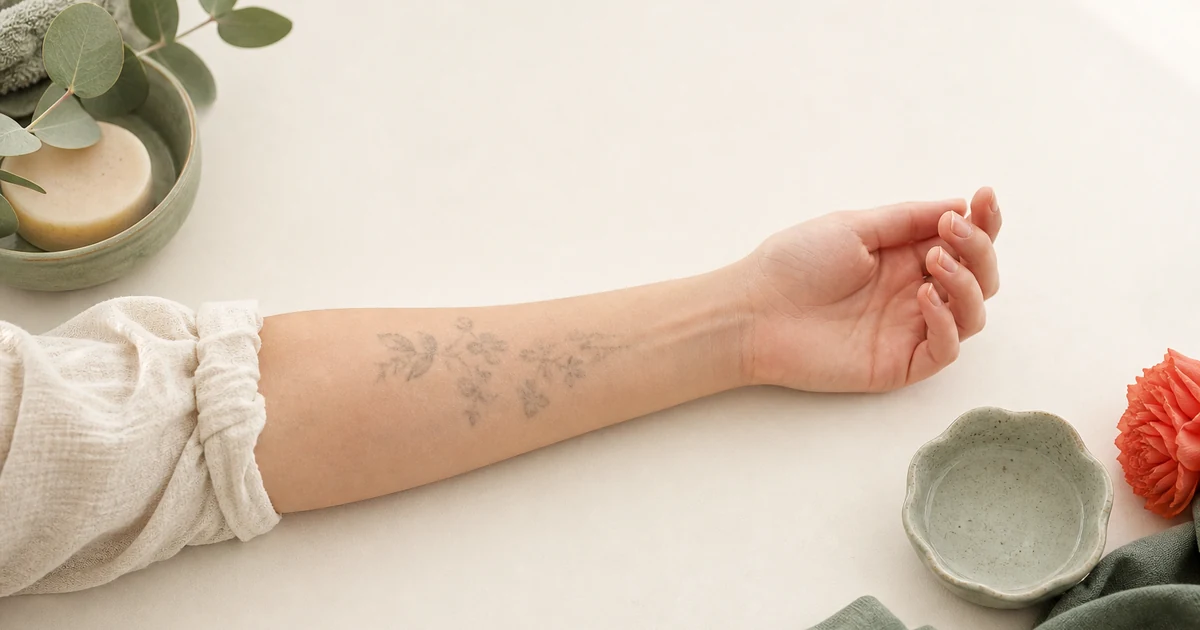
Per second, many people rate laser tattoo removal as similar to slightly more intense than getting tattooed — but it is over far faster. A tattoo can take one to several hours of continuous needling, while laser removal of the same piece is often just minutes per session. So while each removal zap can sting more than the needle did, the total exposure is much shorter, and numbing or cooling makes it very tolerable.
That trade-off — sharper but far quicker — is the honest headline, and pain is subjective, so treat any comparison as a general estimate. Below is what each one actually feels like, why the duration matters more than people expect, which factors change the answer for you, and the numbing options that are available for removal — using medical sources and figures from the Tattoo Removal Guide directory, stamped (as of July 2026).
Key Takeaways
- Per pulse, removal is often as sharp or slightly sharper than being tattooed — but a session is usually minutes, not hours.
- Tattoo pain is a long, dragging scratch that wears you down; removal pain is brief, hot pinpricks that end quickly.
- It's subjective — pain tolerance, body area, ink density and laser type all shift the answer.
- Numbing and cooling (cold air, topical cream, injected anaesthetic) are widely used for removal and can flip the comparison.
- Across the 5,700 clinics we track in 1,043 cities (as of July 2026) — average rating 4.79★ — the equipment and pain options a clinic offers vary widely, so it's worth comparing.
 Removal stings like the tattoo did — but it's over in minutes.
What does getting the tattoo actually feel like?
Tattoo pain is the sensation of a needle repeatedly puncturing the skin as ink is deposited, felt as a continuous scratching, dragging or cutting. It's rarely unbearable in any single moment, but it's sustained: the machine runs across your skin for the length of the session, and a detailed or large piece can mean one to several hours in a single sitting.
The defining feature is cumulative fatigue. As the minutes stack up, the area grows raw and your nervous system tires, so the last stretch of a long session often feels worse than the first. The American Academy of Dermatology notes that tattooing breaks the skin thousands of times to place pigment — an inherently prolonged, repetitive process. That endurance element is exactly what removal does not have.
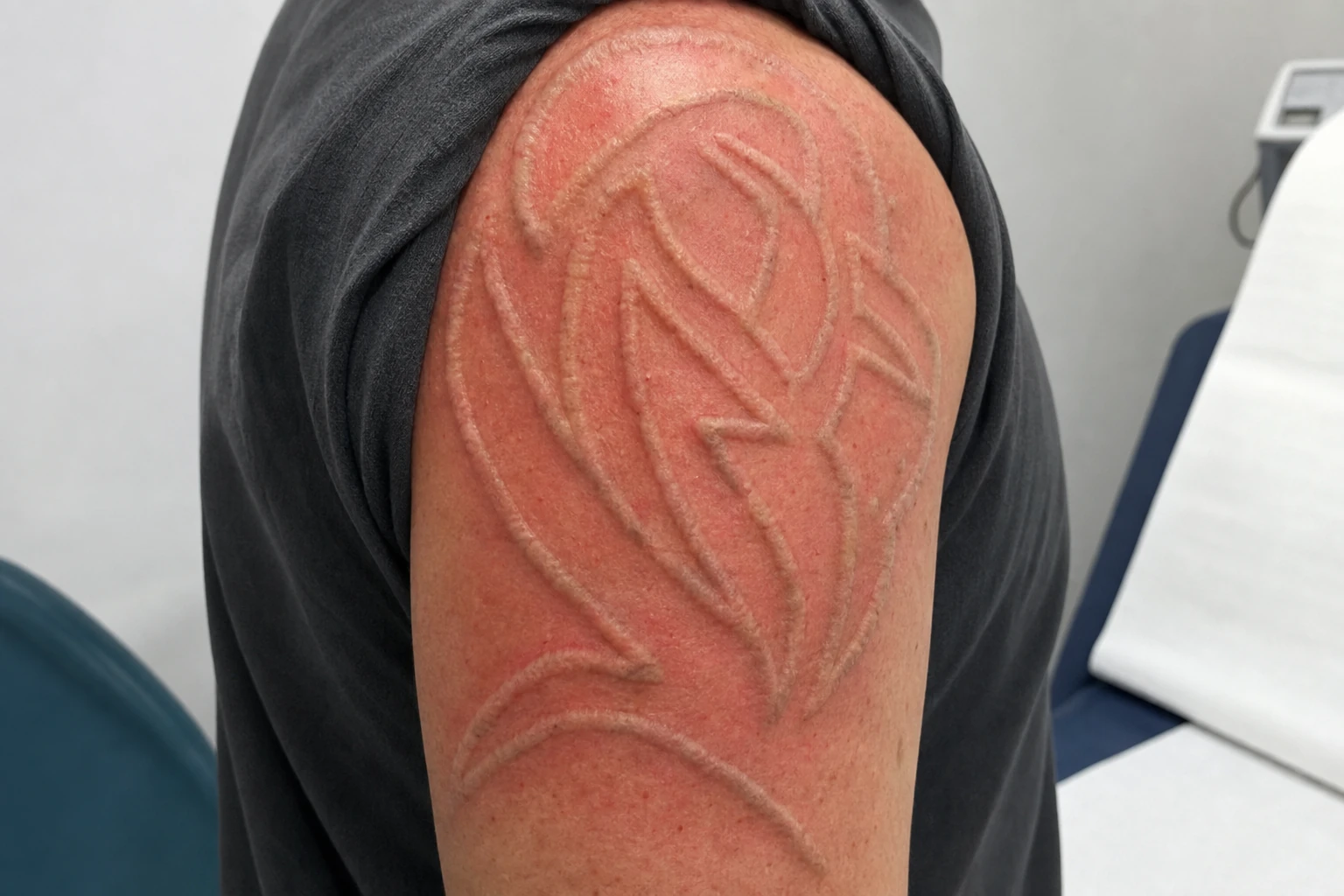 Any sting is brief — the reaction settles over the first days.
What does laser removal feel like by comparison?
Laser tattoo removal pain is the brief, high-heat sting produced as ultra-short laser pulses shatter ink particles under the skin. The descriptions that come up again and again: a rubber-band snapped hard against the skin, tiny splatters of hot bacon grease, or a bad sunburn being flicked. It's sharper and hotter than most people expect.
But the key word is brief. The laser fires ultra-short pulses, so the sharp sensation lasts only the split-second each pulse lands. The clinician moves across the tattoo zone by zone, and a small-to-medium piece is usually treated in a few minutes. The Cleveland Clinic and the StatPearls clinical reference both describe this short, high-intensity treatment profile. Afterward the area feels hot, raw and sunburned for a few hours before settling.
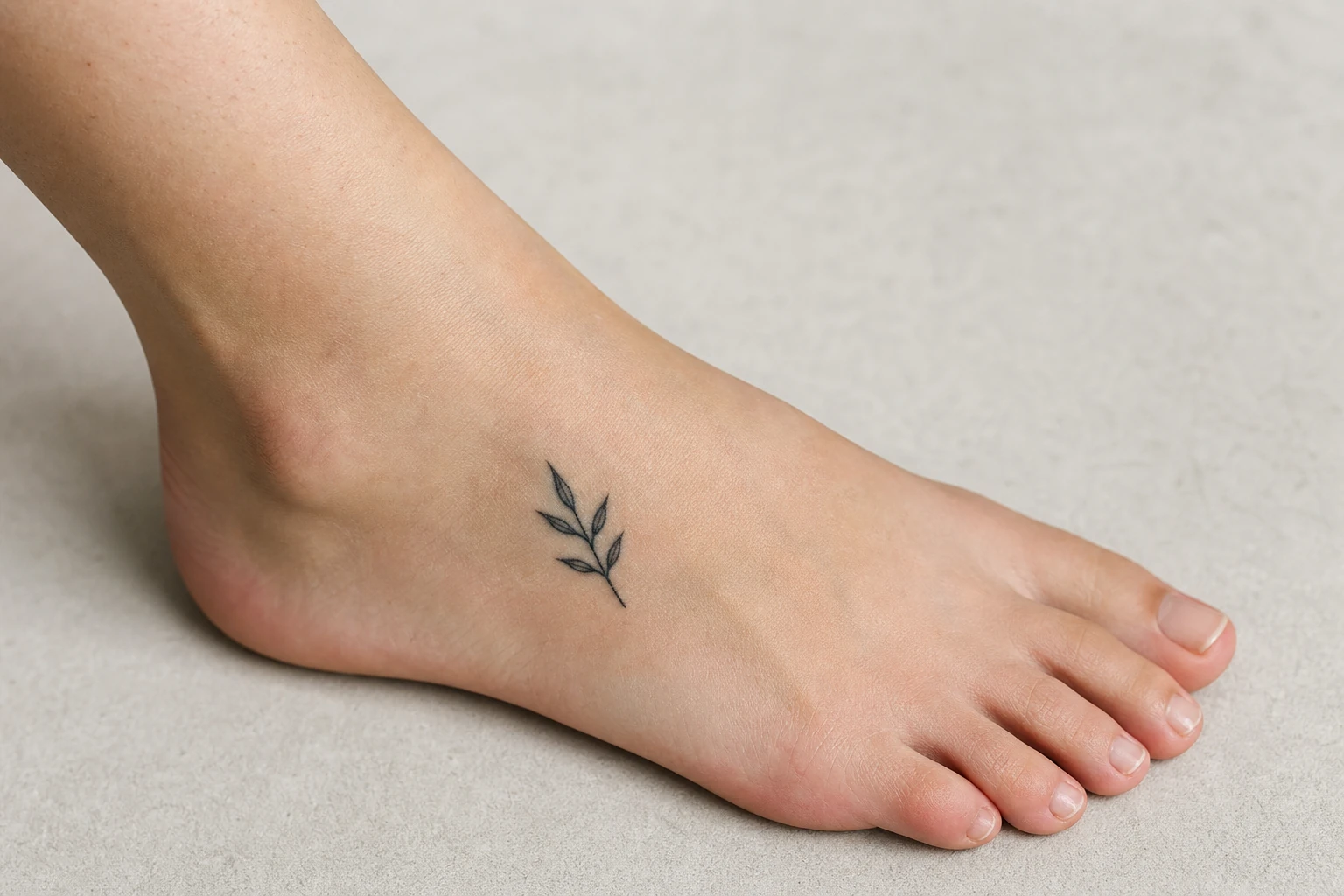 A tattoo being assessed before laser removal.
Getting the tattoo vs removing it: the honest comparison
This is the head-to-head most people are really asking for. Pain is subjective, so read these as typical patterns, not promises.
| Getting the tattoo | Laser removal (same piece) | |
|---|---|---|
| Sensation | Continuous scratching / dragging / cutting | Sharp, hot snapping pulses (rubber-band snap) |
| Intensity | Moderate, sustained | Higher per pulse, but momentary |
| Duration | 1 to several hours in one sitting | Minutes per session (often under 5 for small–medium) |
| Cumulative fatigue | High — the pain builds and wears you down | Low — it's over before it really builds |
| Numbing used | Rarely; often none | Commonly — cold air, topical cream, injected anaesthetic |
| Sessions | Usually one | Several, spaced weeks apart |
So while a single removal zap may sting more than the tattoo needle did, you're exposed to it for a tiny fraction of the time — and you can numb and cool for removal in ways most people never bother with for a tattoo. Many people who dreaded removal are surprised each session ends before the discomfort really sets in.
Why is the answer so subjective?
There is no universal verdict because too many variables move the needle. The main ones:
- Your pain tolerance and state — tiredness, stress, and being cold or hungry all lower tolerance for either procedure.
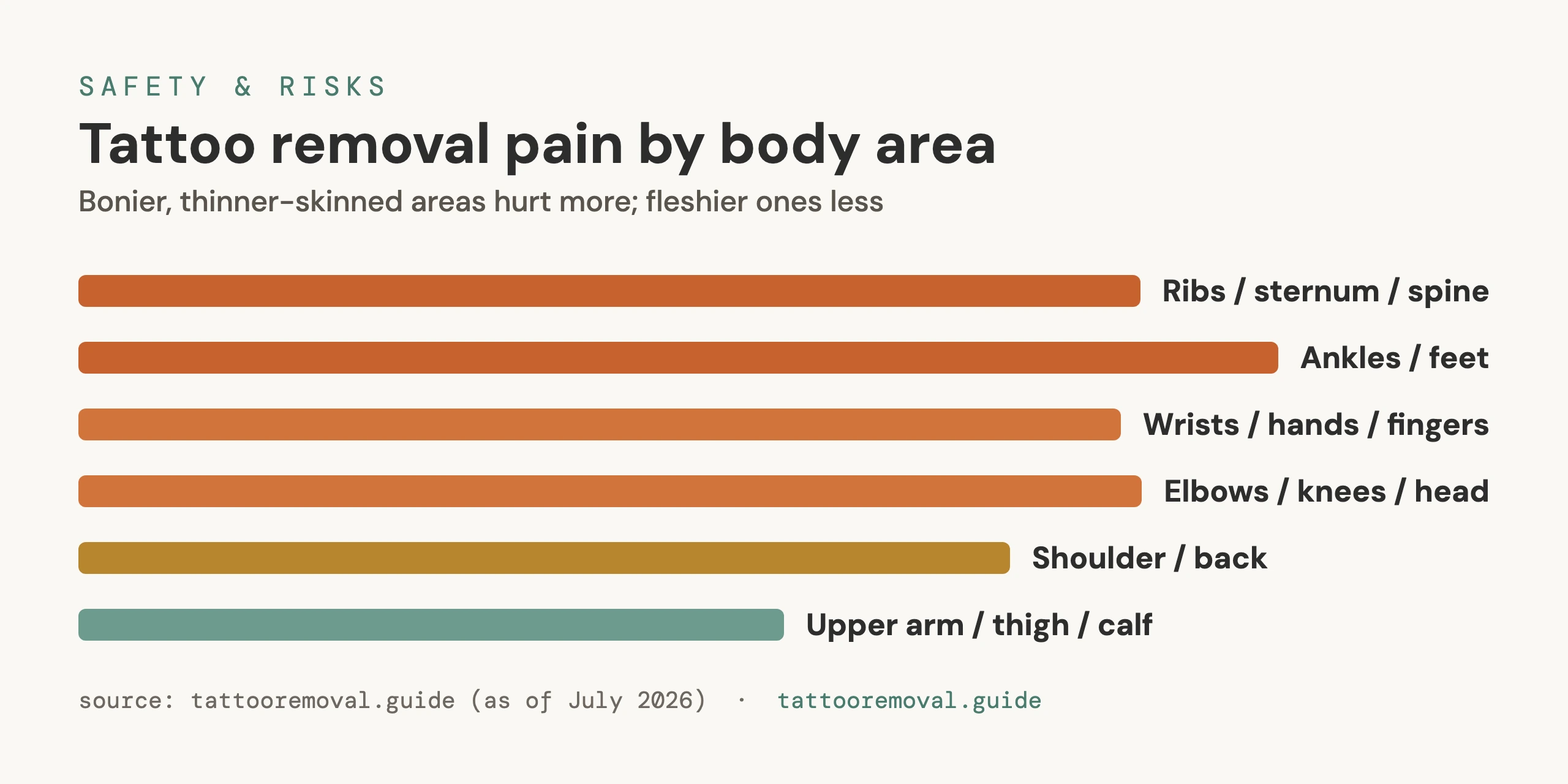
- Body area — bony, thin-skinned spots hurt more for tattooing and removal (see below).
- Ink colour and density — darker, denser ink absorbs more laser energy, so it stings more to remove; heavy shading also takes longer to tattoo.
- Laser type and settings — pulse energy and coverage vary; this is a clinician's judgement call.
- Numbing and cooling — good real-time cooling changes the removal experience more than almost anything else.
Which areas hurt most — for both?
Usefully, the pain map is roughly the same whether you're getting inked or removing it. Thin skin, little underlying fat and bone close to the surface amplify the sting; well-cushioned areas dull it.
| Body area | Typical pain (tattoo & removal) | Why |
|---|---|---|
| Ribs, sternum, spine | Highest | Thin skin directly over bone, little cushioning |
| Ankles, feet, hands, wrists, fingers | High | Thin skin, many nerve endings, bone near the surface |
| Elbows, inner arm, neck | High–moderate | Sensitive, thin-skinned zones |
| Upper back, shoulder | Moderate | Some cushioning, moderate nerve density |
| Outer upper arm, thigh, calf | Mildest | Fleshy, well-padded, fewer bony landmarks |
What can make removal hurt less than the tattoo did?
Two things tilt the comparison in removal's favour: it's fast, and you can numb it. Clinics commonly use cold-air (cryo) cooling that blasts chilled air on the skin in real time, topical lidocaine numbing cream applied before treatment, ice or cold packs, or an injected local anaesthetic for very sensitive spots or low pain tolerance. Used well, these can make a removal session feel milder than an unnumbed tattoo sitting.
One important caution: the U.S. FDA notes that tattoo removal is a medical procedure, and topical numbing carries its own risk. Too much lidocaine cream over a large area — or wrapping treated skin — can push unsafe levels into the bloodstream. Use numbing cream only as your clinic directs, and never coat a large tattoo in it at home. For the full run-down of what's available and how it's used, see our numbing options for tattoo removal guide.
It also tends to get more familiar over the course: later sessions often feel more manageable, partly because there's less ink left to absorb the laser and partly because the sensation stops being a surprise.
Compare clinics that offer cooling and numbing
Because the equipment a clinic has — a cold-air machine, on-site numbing, an experienced operator who works quickly — changes the experience more than almost anything else, the most useful thing you can do before booking is compare your local options and ask each one directly about pain management.
Compare tattoo-removal clinics in your city to see what's available near you, or start with a dense market like tattoo removal in Melbourne to see how listings stack up side by side. When you compare, ask: Do you use cold-air cooling? Is numbing available? How long does a session on a tattoo my size take? For the deeper dive on the sensation itself, see our pillar guide, does laser tattoo removal hurt?
This is general information, not medical advice. Laser tattoo removal is a medical procedure with real risks, and topical anaesthetics carry their own dangers if misused. Pain, healing and outcomes vary by person, tattoo and body area — consult a licensed provider about your specific situation, and follow their guidance on any numbing product.
Frequently asked questions
Does tattoo removal hurt more than getting a tattoo?
Per second, many people rate laser tattoo removal as similar to slightly more intense than being tattooed — but it is over far faster. A tattoo can take one to several hours of continuous needling in a single sitting, while laser removal of the same piece is often just minutes. Because the exposure is so much shorter, total discomfort is frequently lower for removal, even though each individual zap can sting more than the needle did. Pain is subjective, so this is a general comparison, not a guarantee.
Is laser tattoo removal more painful than a tattoo?
It depends on the person, the area and the ink. The removal sensation is usually described as sharper and hotter — a rubber-band snap or hot bacon grease — versus the scratching, dragging feeling of being tattooed. But a tattoo wears you down over hours, while removal is quick, so the fatigue is much lower. Numbing and cooling, which are commonly used for removal, also change the experience significantly.
What does tattoo removal feel like compared to a tattoo?
Getting tattooed feels like continuous scratching or cutting that builds over a long session. Laser removal feels like brief, hot pinpricks — a rubber-band snap or a fleck of hot grease — that last only the split-second the laser fires. Removal is more intense per pulse but far shorter overall, and the treated skin then feels hot and sunburned for a few hours.
Why is tattoo removal pain so subjective?
Pain depends on your individual tolerance, the body area (bony, thin-skinned spots hurt more), the ink density and colour, whether numbing or cooling is used, and the device and settings. Two people with the same tattoo can rate the pain very differently, which is why any comparison to tattoo pain is an estimate rather than a fixed rule.
Does tattoo removal get less painful over multiple sessions?
Many people find later sessions more manageable, partly because there is less ink left to absorb the laser and partly because the sensation becomes familiar and less startling. It does not become painless, and a fresh, dense area can still sting. Cooling and numbing continue to help throughout the course.
Can numbing make tattoo removal hurt less than a tattoo?
Numbing and cooling can meaningfully reduce removal pain — cold-air cooling, topical lidocaine cream or injected local anaesthetic are all used. Used well, they can make removal feel milder than an unnumbed tattoo session. Numbing cream must be used only as your clinic directs, never coated over a large area unsupervised, because too much lidocaine absorbed through the skin can be dangerous.
Which areas hurt most for both getting and removing a tattoo?
The same map applies to both: ribs, sternum, ankles, feet, hands, wrists, elbows and the inner arm are the most painful because the skin is thin and bone sits close to the surface. Fleshier, well-padded areas like the outer upper arm, thigh and calf are the mildest for tattooing and for removal alike.
Related guides
Related Guides
- Safety & Risks
Why a Patch Test Matters Before Tattoo Removal (2026)
Why does a patch test matter before laser tattoo removal? It reveals how your skin and ink react — blistering, pigment change, rare reactions — before a full…
- Safety & Risks
Who Should Not Get Laser Tattoo Removal? The Contraindications
Who should not get laser tattoo removal? Most adults are candidates. The full contraindications checklist — when to wait and when to discuss carefully.
- Safety & Risks
Tattoo Removal While Pregnant or Breastfeeding
Can you get tattoo removal while pregnant? Most providers say wait — not from proven harm, but because the safety isn't studied.