Does Permanent Makeup Removal Hurt? Brows, Eyeliner & Lips (2026)
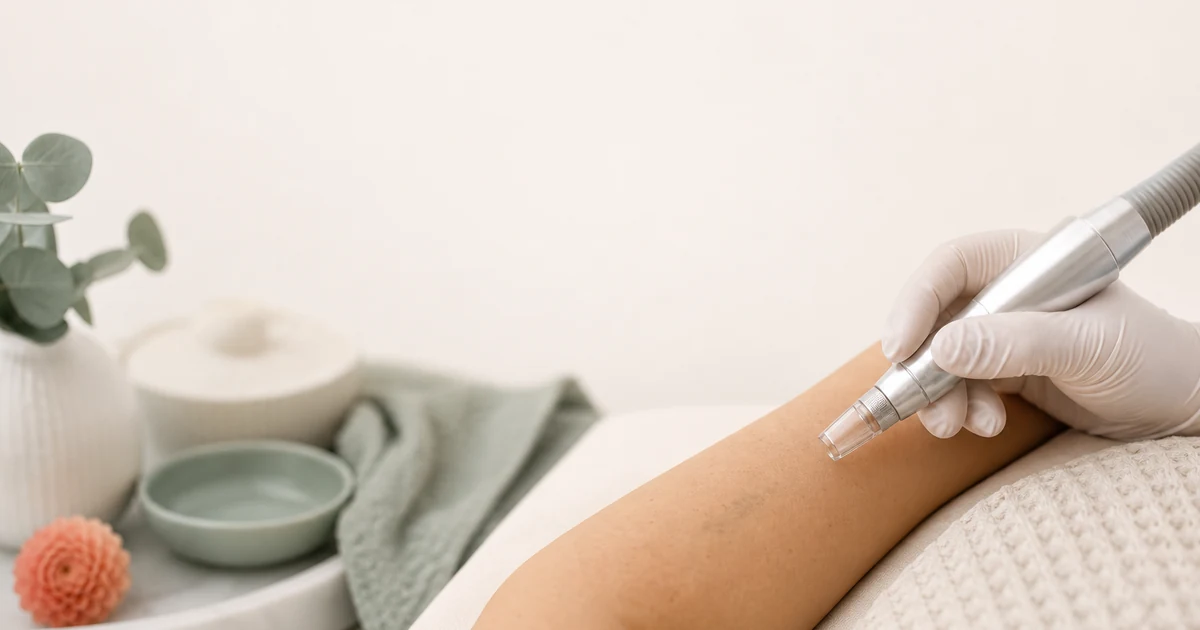
Yes — permanent makeup removal hurts, but it is brief and generally tolerable. Each laser pulse feels like a hot rubber-band snap or a spatter of hot pinpricks, and because PMU areas are small, the sting lasts only seconds per area. Many people find it hurts less than getting the permanent makeup tattooed in the first place, and clinic-applied numbing or cold air takes the edge off further.
That short-but-sharp profile is the honest headline. Below is what removal actually feels like across the three PMU areas — brows, eyeliner and lips — how laser and saline differ, and the real limits of numbing on the face, using medical sources and figures from the Tattoo Removal Guide directory, stamped (as of July 2026).
This is a spoke of our permanent makeup removal pillar; for the body-tattoo version of the pain question, see does laser tattoo removal hurt.
Key Takeaways
- It hurts, but briefly. Each pulse is a fraction of a second, and PMU areas are small — so the painful part of a session is measured in seconds, not minutes.
- Lips are most tender, eyeliner is sensitive, brows are most tolerable. See the area-by-area table below.
- Laser vs saline feel different, not clearly better or worse — laser is a fast hot snap; saline is a scratching sting with open-wound healing.
- Numbing on the face is limited and clinic-controlled. Never DIY numbing near the eyes — a clinician applies topical anaesthetic or cold air.
- A test patch comes first because cosmetic pigment can darken under a laser (paradoxical darkening) rather than fade.
- Many people find it hurts less than getting the PMU done — the exposure is shorter.
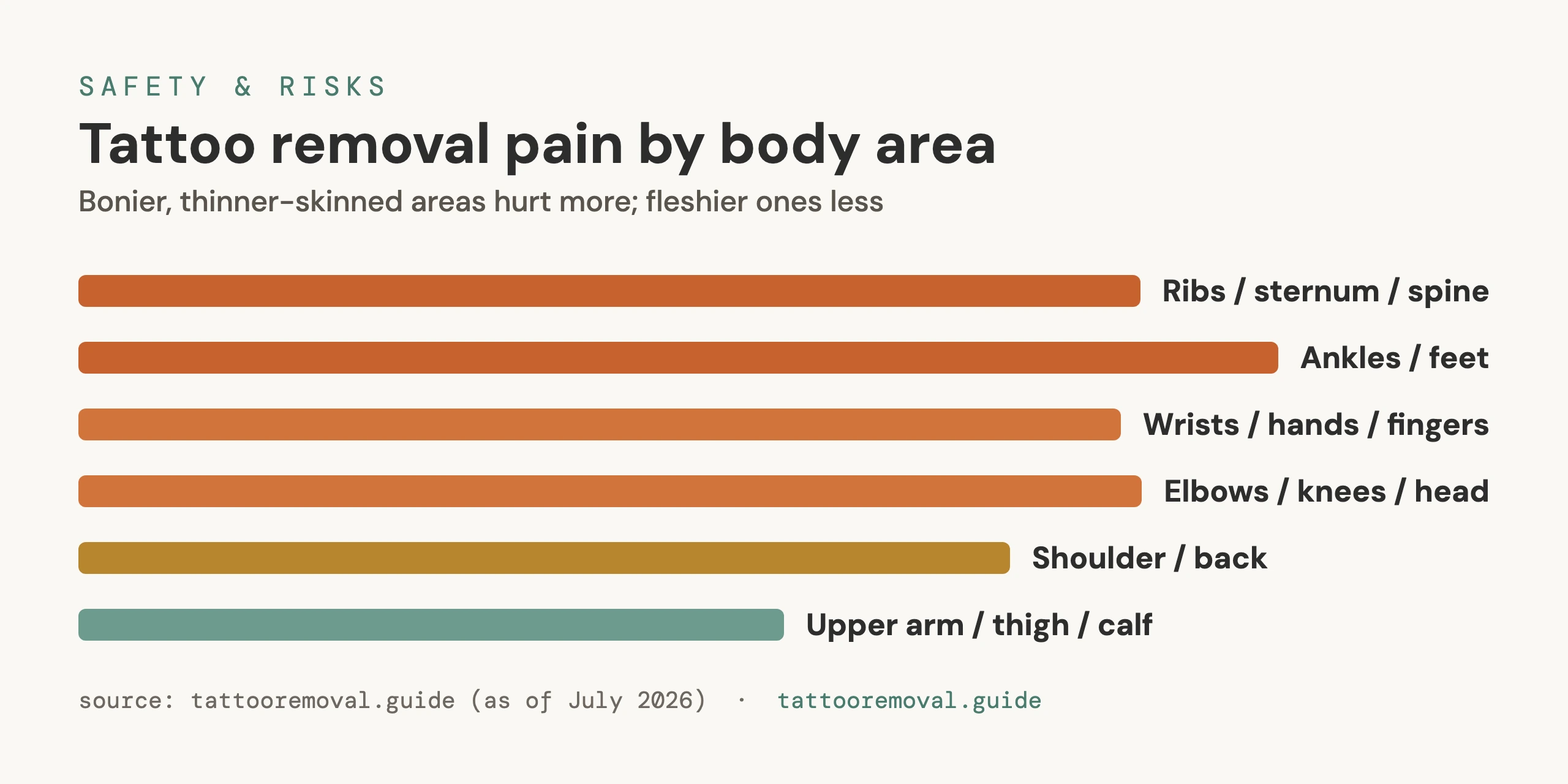 Pain varies by area — a general body-area guide.
What does permanent makeup removal actually feel like?
Permanent makeup removal is the fading or lifting of cosmetic tattoo pigment — in the brows, eyeliner or lips — using either a laser or a saline lifting solution over a course of sessions. The sensation depends on the method, but the laser version is the one most people ask about, so start there.
A laser pulse on PMU feels like a rubber-band snapped hard against the skin, or a quick spatter of hot pinpricks. The Cleveland Clinic and the American Academy of Dermatology both note that laser removal is uncomfortable and that clinics routinely offer measures to reduce the pain. The key word is brief: the laser fires ultra-short pulses, so the sharp feeling lasts only for the split-second each pulse lands. The StatPearls clinical reference describes the same short, high-intensity treatment profile.
What makes PMU different from a body tattoo is size. Brows, an eyeliner line, or a lip border are small areas, so the clinician covers them in a minute or two of actual firing. You feel the sting, but you are not sitting through a long session — the discomfort is over quickly. Afterward the area typically feels hot and tender for a few hours, and swelling is common on the more delicate spots.
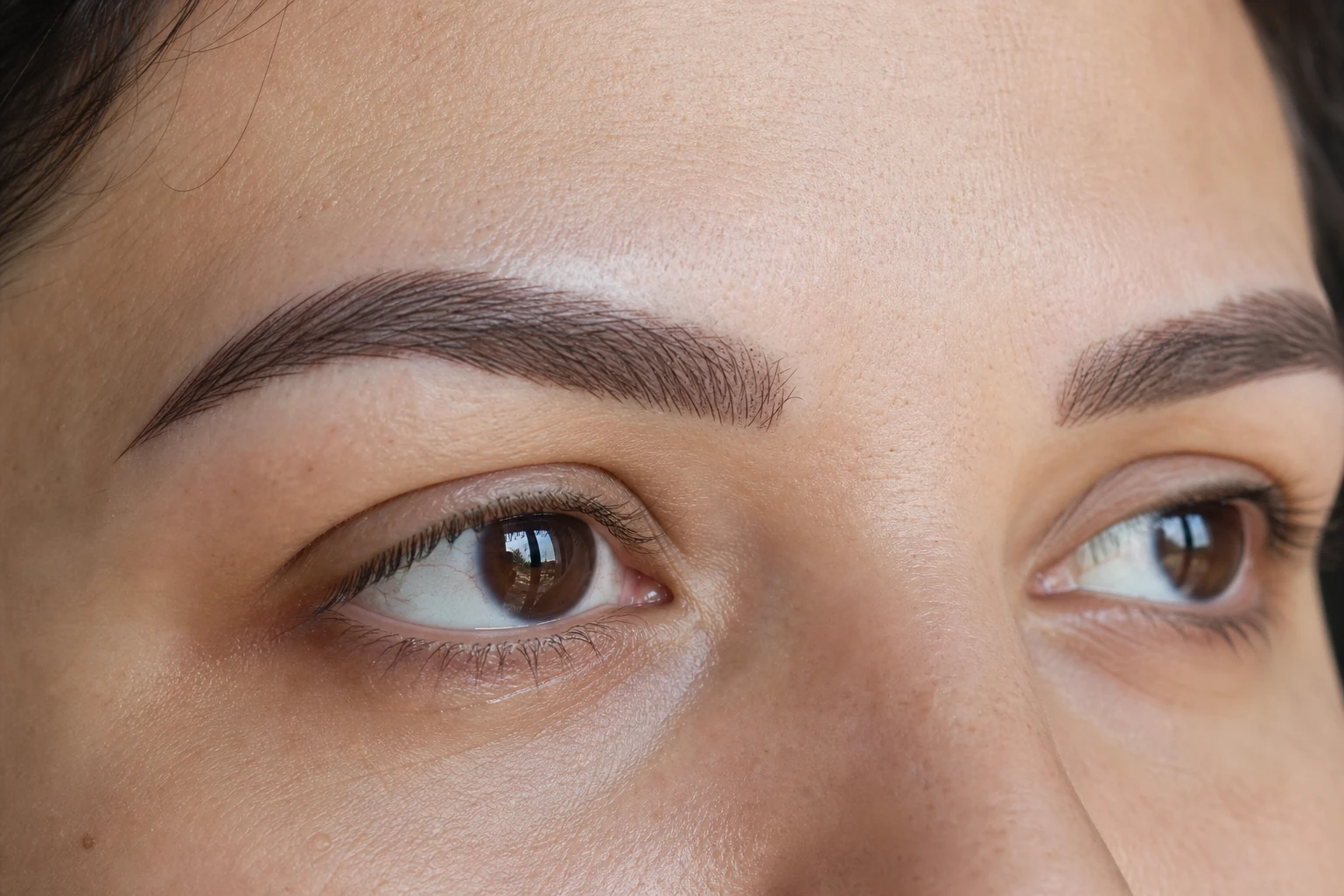 Cosmetic (permanent-makeup) tattooing on the face.
Which PMU area hurts most: brows vs eyeliner vs lips
Pain is not uniform across the face. Thin, vascular and nerve-dense tissue stings more; the eyes bring their own handling requirements. Here is the honest area-by-area picture.
| PMU area | Typical pain level | How long it takes | Numbing on this area |
|---|---|---|---|
| Brows | Most tolerable of the three | Very short — often ~1–2 min of firing | Clinic-applied topical and/or cold air; most straightforward |
| Eyeliner | Sensitive — thin skin, near the eye | Short, but set-up is longer | A protective eye-shield is placed under the lid; numbing is limited and clinic-controlled — never DIY near the eyes |
| Lips | Most tender — thin, vascular, swells | Short, but the lip reacts more | Clinic-applied topical/cold air; expect noticeable swelling for a day or two |
Brows are generally the mildest — the skin is a little more forgiving and the area is easy to cool. Eyeliner is where care ramps up: a metal or plastic corneal eye-shield is inserted under the eyelid to protect the eye from the laser, which the clinician places and removes; the pulses themselves are quick but the eye is a sensitive neighbourhood. Lips tend to be the most tender because the tissue is thin and vascular, and the lip usually swells noticeably for a day or two afterward. A dedicated chart review of laser removal of eyeliner and eyebrow PMU tattoos documents these areas being treated routinely — with the eye protected — which is why an experienced, PMU-specific clinician matters here more than on a forearm.
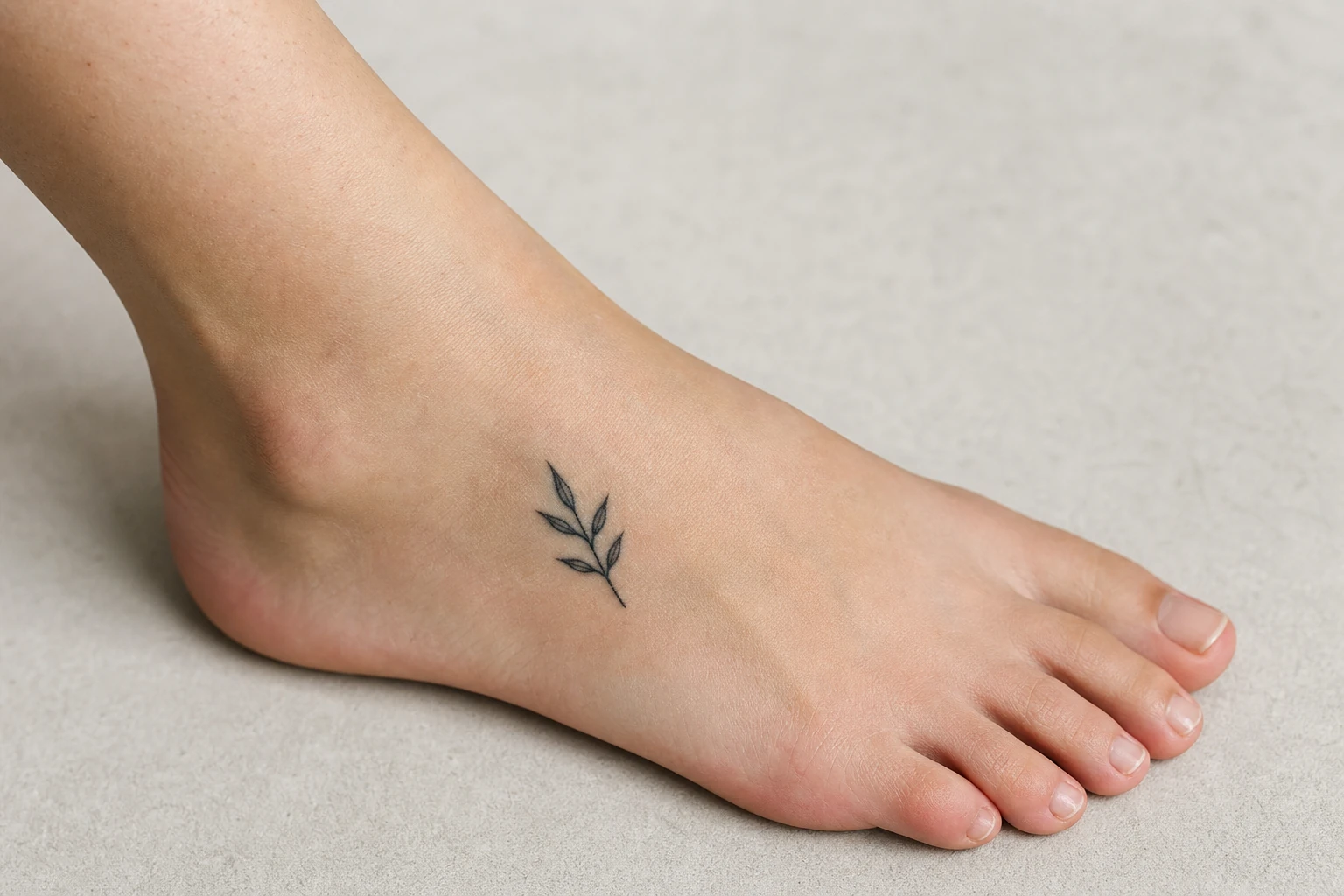 A tattoo being assessed before laser removal.
Laser vs saline: two different sensations
You may be offered saline removal instead of, or alongside, laser — especially for brow and lip pigment that a laser could darken. The pain profiles are genuinely different.
Saline removal is a non-laser method in which a saline or lifting solution is tattooed into the skin to draw pigment up and out through the natural scabbing process as it heals. Because it is worked into the skin like a tattoo, it feels like a scratching, stinging sensation rather than a snap, and it leaves an open wound that scabs — so the discomfort continues into the aftercare as the area heals, not just during the appointment. Laser, by contrast, is the fast hot snap described above: sharper in the instant, but over in a fraction of a second per pulse with less open-wound aftercare.
Neither is universally gentler. Saline avoids the laser's darkening risk on certain pigments, but the healing is more involved; laser is quick but sharp. The right choice is pigment-driven and decided by a clinician, ideally after a test patch — not by which one hurts less. For the method-by-method breakdown, see the permanent makeup removal pillar.
Numbing on the face — and its limits
You are not stuck just gritting your teeth, but face numbing is limited and clinic-controlled, and this is the safety point that matters most.
- Clinic-applied topical anaesthetic. A clinician applies a measured amount of a lidocaine-based cream to a small area, exactly as directed. On the face, amounts are kept modest.
- Cold air (cryo) cooling. A machine blasts chilled air onto the skin before, during and after each pass — it numbs and protects in real time, and is well suited to small facial areas.
- What you must never do: DIY numbing near the eyes. Do not apply your own numbing cream around eyeliner PMU. Product can migrate into the eye and cause serious injury, and unsupervised numbing over the face carries real risk. Numbing near the eyes is a clinician's job, always.
Because the equipment and approach a clinic uses changes the experience more than almost anything else, the most useful thing you can do before booking is ask each clinic directly what numbing and cooling it offers for your specific area. A consultation is the natural place to ask — of the 5,700 specialist clinics we track across 1,043 cities, 1,525 (27%) note a free consultation (as of July 2026). That figure is a floor: it counts only clinics that publicly list one, so it is worth asking clinics that don't advertise it too.
Why a test patch comes first
Before the whole area is treated, a good clinic treats a small test patch and waits a few weeks. This isn't upselling — it's the safeguard against the one PMU-specific complication.
Paradoxical darkening is when a cosmetic pigment turns darker — grey, brown or black — after a laser pulse instead of fading, because heat chemically reduces the titanium dioxide and iron oxides in the pigment. Brow and lip shades (browns, nudes, pinks, reds) are the ones most prone to it. The U.S. FDA's guidance on tattoos and permanent makeup flags that cosmetic pigments can react unpredictably. A test patch reveals whether your specific pigment fades, resists or darkens — before that reaction is spread across your whole brow or lip. On eyeliner, it also confirms the eye-protection workflow before committing to a full course.
This is general information, not medical advice. Removal sensations, outcomes and risks depend on your skin, pigment, the area treated and your health — consult a licensed, PMU-experienced provider, and never assume a guaranteed or pain-free result.
Does it hurt more than getting the permanent makeup done?
For many people, no. Getting PMU tattooed is sustained needling over several minutes to an hour as the artist builds the colour. Laser removal is a series of fast pulses, each lasting a fraction of a second, over the same small area — so your total exposure to discomfort is often shorter, even if a single pulse feels sharper in the instant. That surprises people who dreaded removal: the painful part is usually done before the discomfort really builds. Individual tolerance, the area treated, and how saturated the original work is still shift the experience session to session.
Compare clinics that handle PMU removal safely
PMU removal is area-specific and pigment-specific, so the clinic is too — you want one with genuine PMU experience, proper eye protection for eyeliner, clinic-controlled numbing, and a test-patch habit. Compare clinics offering PMU and cosmetic tattoo removal near you and see who actually offers the approach your area needs. If you're in a major metro, start with a dense market like Melbourne, where you can compare a wide range of providers before you book.
Before you commit anywhere, ask for a test patch, confirm the clinician has PMU-specific experience (and, for eyeliner, uses an eye-shield), and ask what numbing they apply for your area. Those questions separate a safe, honest provider from a good ad.
Frequently asked questions
Does permanent makeup removal hurt?
Yes, but the pain is brief and tolerable. Each laser pulse feels like a hot rubber-band snap or a spatter of hot pinpricks, and because PMU areas are small the sensation lasts only seconds per area. Many people find it hurts less than getting the permanent makeup tattooed in the first place. Numbing and cooling reduce it further.
Which permanent makeup area hurts the most to remove — brows, eyeliner or lips?
Lips are usually the most tender because the tissue is thin, vascular and quick to swell. Eyeliner is sensitive and requires a protective eye-shield placed under the lid, but the pulses are quick. Brows are generally the most tolerable of the three. All three are small areas, so any session is short.
Does saline PMU removal hurt more or less than laser?
They feel different rather than one being clearly worse. Laser is a fast, sharp, hot-snap sensation that is over in a fraction of a second per pulse. Saline is more of a scratching, stinging sensation because pigment is worked out through the skin, plus open-wound aftercare as it scabs. Both are generally tolerable over the small PMU areas.
Can I use numbing cream for permanent makeup removal on my face?
Numbing on the face is limited and clinic-controlled — a clinician applies a topical anaesthetic or uses cold air, not you at home. Never apply DIY numbing cream near the eyes: it can run into the eye and cause serious injury. Ask the clinic what numbing it offers for your specific area before booking.
Why does PMU removal need a test patch first?
Cosmetic pigments — especially brow and lip shades — can contain iron oxide and titanium dioxide, which sometimes darken to grey or brown under a laser instead of fading. This is called paradoxical darkening. A small test patch treated a few weeks ahead reveals how your specific pigment reacts before the whole area is treated.
How long does a permanent makeup removal session take?
Very short. Because brows, eyeliner and lips are small areas, the actual treatment is often just a minute or two per area once you are set up and numbed. The appointment overall is longer for numbing, eye-shield placement and aftercare, but the part where you feel the laser is brief.
Does PMU removal hurt more than getting the permanent makeup done?
For many people, no. Getting permanent makeup tattooed is sustained needling over several minutes to an hour. Laser removal is a series of fast pulses, each lasting a fraction of a second, over a small area — so total exposure to discomfort is often shorter. Individual tolerance and the area treated still vary.
Related guides
Related Guides
- Cosmetic & PMU
Why Permanent Makeup Fades (and Turns Orange or Grey) (2026)
Why permanent makeup fades and shifts colour, explained neutrally: shallow pigment placement, iron-oxide oxidation, sun exposure and skin turnover, why warm browns…
- Cosmetic & PMU
How to Remove Permanent Makeup to Redo It: Lighten vs Remove (2026)
How to remove permanent makeup to redo it: partial lightening vs full removal, why saline is often preferred pre-redo, and how much fading is enough.
- Cosmetic & PMU
Removing Old or Faded Permanent Makeup
How to remove old or faded permanent makeup, explained neutrally: why aged PMU turns orange, grey or dark, the paradoxical-darkening trap, saline vs laser, sessions…