What to Avoid After Tattoo Removal: Sun, Swimming & Exercise (2026)
What to avoid after tattoo removal comes down to a handful of things: sun and tanning, swimming and hot tubs, saunas and hot yoga, and heavy sweaty exercise on the treated skin — plus picking scabs, popping blisters, shaving the area, and alcohol right after your session. Most restrictions ease within a few days to about two weeks as the skin heals; sun protection continues for the whole course. Figures below are from the Tattoo Removal Guide directory, stamped (as of July 2026).
Each restriction maps to a specific risk you are steering around — infection, pigment change, or a wound that heals badly enough to leave a mark. None of them are forever. This guide walks through each activity, how long to wait, and why, so you can plan your week around a session without guessing.
Key takeaways
- The big four to pause: sun/tanning, swimming/hot tubs, saunas/hot yoga, and heavy sweaty exercise on the treated skin.
- Most restrictions ease in days to ~2 weeks as the surface heals — but sun protection continues for the whole treatment course.
- The reasons are specific: heat and sweat irritate a healing wound, shared water carries infection risk, and UV over fresh skin drives lasting pigment change.
- Light movement is usually fine; it is the sweaty, heat-based and submerged activities that matter most while the skin is broken.
- Your exact timeline comes from the clinic treating you. Of the 5,700 clinics we track across 1,043 cities (as of July 2026), averaging 4.79★, 1,525 (27%) advertise a free consultation — a low-cost way to get your specific restrictions before you book.
 Sun, swimming, heat and hard exercise all wait while the skin heals.
Why activity restrictions matter after tattoo removal
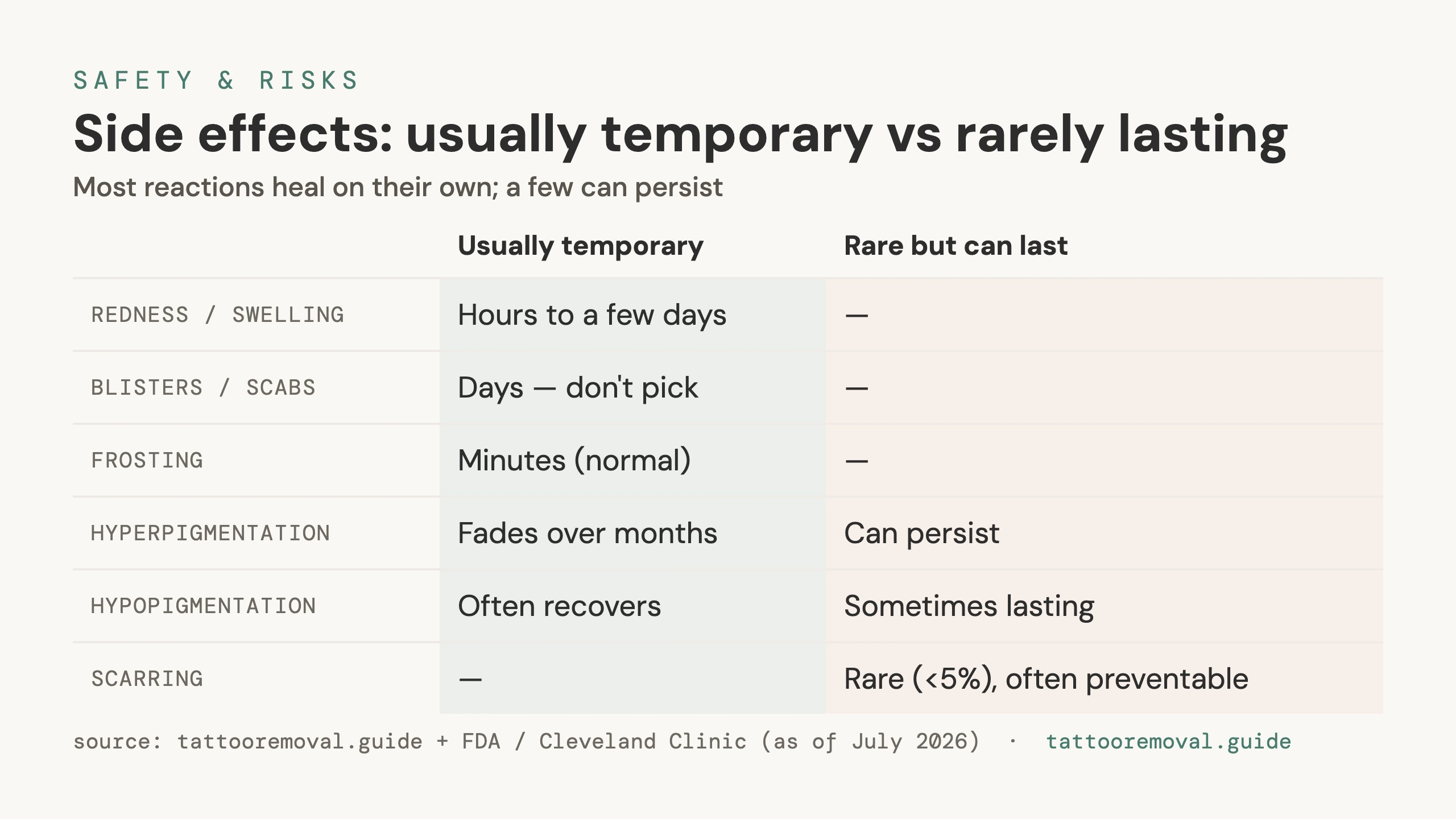
Laser removal works by deliberately injuring the skin. As the Cleveland Clinic explains, the laser shatters tattoo ink into fragments your immune system then clears over the following weeks. That controlled injury leaves the skin temporarily vulnerable — often with redness, blistering and scabbing — and the activities you avoid are simply how you protect it while it recovers.
Activity restriction after tattoo removal is the short list of things that stress a healing wound — heat, sweat, friction, shared water and UV — paused until the skin surface has closed. Skip them and you risk one of three complications: infection (bacteria on broken skin), pigment change (UV on fresh skin), or poor healing that can leave a scar. The FDA notes that laser removal is a medical procedure with real risks including infection and scarring, which is why aftercare is not optional.
 A tattoo being assessed before laser removal.
What to avoid after tattoo removal, and how long to wait
Everyone heals at their own pace, and your reaction depends on your skin, the tattoo and the laser settings used. Treat the timeframes below as typical estimates, not promises — and always defer to the specific instructions from your clinic.
| Activity | How long to wait (typical) | Why |
|---|---|---|
| Direct sun & tanning (incl. tanning beds, self-tanner) | Whole treatment course; SPF 30+ once skin closes | Fresh skin burns and changes pigment easily; a tan or burn can force a rescheduled session |
| Swimming (pools, ocean, lakes) | Until skin has fully closed — usually 1–2 weeks | Chlorine and shared/standing water introduce bacteria into broken skin |
| Hot tubs, spas & long baths | Until skin has fully closed — usually 1–2 weeks | Soaking softens scabs; shared warm water is a strong infection risk |
| Sauna, steam room & hot yoga | Until skin has fully closed — usually 1–2 weeks | Heat and heavy sweat irritate a healing wound and aggravate swelling |
| Strenuous / sweaty exercise | Ease off 24–48 hours; avoid while skin is broken | Sweat, friction and increased blood flow aggravate the site; salt stings |
| Shaving, scrubbing & exfoliating the area | Until fully healed | A razor or scrub tears scabs and reopens the skin |
| Picking scabs / popping blisters | Never | The top avoidable cause of scarring and infection |
| Alcohol | Skip right after your session (~24 hours) | Can thin the blood and worsen swelling and bruising while the skin settles |
Sun and tanning: the one that lasts the whole course
Of everything on the list, sun is the restriction that outlives the others. While pools and gyms come back within a week or two, UV protection stays for the entire treatment course. Fresh, regenerating skin is highly sensitive to sunlight, and exposure over a healing site can cause lasting lightening (hypopigmentation) or darkening (hyperpigmentation), especially on richer skin tones. A tan or burn over the area can also force your clinic to delay your next session, stretching out the whole timeline. Once the skin has closed, cover the site with clothing or a broad-spectrum SPF 30+ and keep it up between sessions.
Swimming, hot tubs and baths: keep it out of the water
Avoid submerging the treated area while the skin is blistered, weeping or scabbed — usually the first 1 to 2 weeks. Pools, the ocean, lakes, spas and long baths all carry infection risk: chlorine and shared or standing water can introduce bacteria into an open wound, and soaking softens scabs so they lift early. Showers are completely fine — you can and should keep the area clean; just do not soak or submerge it until it has fully closed.
Sauna, steam and hot yoga: heat is the problem
Saunas, steam rooms, hot tubs and hot yoga combine two things a healing wound does not want — high heat and heavy sweat. Both irritate the site and can aggravate swelling, and hot tubs add the shared-water infection risk on top. Wait until the skin has fully closed and your clinic clears you, again usually around 1 to 2 weeks, before returning to heat-based activities.
Exercise: ease off, don't necessarily stop
Strenuous exercise is more nuanced. Ease off hard, sweaty training for about 24 to 48 hours after each session, and avoid it entirely while the skin is blistered or broken. Sweat, friction from clothing, and the extra blood flow of a heavy workout all aggravate a fresh site — and salt in sweat stings an open wound. Light activity like walking is generally fine and does not need to stop. The right timeline for resuming intense training varies, so follow your clinic's advice, keep the area clean and dry, and wear loose clothing over it to reduce friction.
The American Academy of Dermatology stresses that following your provider's specific aftercare instructions is central to healing well and lowering the risk of side effects — the general timings above are a floor, not a substitute for what your clinic tells you.
 A forearm tattoo during removal.
How long do the restrictions last?
For most people, the day-to-day restrictions ease within a few days to about two weeks, as the skin surface knits back together. StatPearls lists blistering, crusting and scabbing among the expected transient effects of laser removal — while those are present, the activity limits apply; once they resolve and the skin has closed, most limits lift.
Roughly how it tends to sequence after each session:
- First 24–48 hours: the strictest window. No heavy exercise, no soaking, no heat, keep it clean, dry and covered.
- Days 2–14: blistering and scabbing form and dry. Keep swimming, hot tubs, saunas and hard workouts on hold until everything has closed and flaked off on its own.
- After the skin closes: normal activity resumes — with sun protection continuing.
- Across the whole course: SPF 30+ and sun avoidance on the treated area between every session.
Remember that the outer skin closing is not the same as the tattoo being ready for the next pass. The deeper heal-and-clear window is typically 6 to 8 weeks, which is why sessions are spaced that far apart — but that spacing is about the ink, not the activity restrictions, which lift much sooner.
This is general information, not medical advice. Laser tattoo removal is a medical procedure with real risks, including infection, scarring and pigment change. Healing times and reactions vary by person, and the timeframes here are estimates only — always follow the aftercare instructions from the clinic that treated you, and consult a licensed provider about your specific situation.
Your clinic sets your real timeline
Because your exact restrictions come from the clinic performing the treatment — how long to stay out of the pool, when to train again, what to put on the skin — the quality of that guidance is part of what you are paying for. A clinic that gives you written aftercare, sets clear activity limits, and answers questions between sessions is protecting your result, not just your comfort. That makes it a genuine reason to compare your options rather than book the first place you find.
Compare tattoo-removal clinics in your city to see who is near you, or start with a dense market like tattoo removal in Melbourne to see how listings and free consultations stack up side by side. For the full healing picture, read the tattoo removal aftercare guide; to set yourself up before you go in, see how to prepare for a tattoo removal session.
Frequently asked questions
What should I avoid after tattoo removal?
For the first few days to two weeks after each session, avoid sun and tanning on the treated skin, swimming and hot tubs, saunas and hot yoga, and heavy sweaty exercise. Also avoid picking scabs, popping blisters, shaving or exfoliating the area, and alcohol right after treatment. Each restriction eases as the skin heals; sun protection continues for the whole course.
Can I exercise after tattoo removal?
Ease off strenuous exercise for about 24 to 48 hours after each session, and avoid heavy, sweaty workouts while the skin is blistered, weeping or broken. Sweat, friction and increased blood flow can aggravate a healing site. Light activity like walking is usually fine. Follow your clinic's advice for your situation, and keep the area clean and dry.
Can I swim after laser tattoo removal?
Avoid swimming pools, the ocean, hot tubs, spas and long baths while the skin is healing — usually the first one to two weeks, or until any blistering and scabbing has fully closed. Pools, spas and shared water can introduce bacteria into broken skin and raise infection risk. Showers are fine; just do not soak or submerge the treated area.
How long should I stay out of the sun after tattoo removal?
Keep the treated area out of direct sun while it heals, and protect it with clothing or broad-spectrum SPF 30+ for the entire treatment course, not just a few days. Fresh skin burns and changes pigment easily, and a tan or burn over the site can force your clinic to delay your next session. Sun protection lowers the risk of lasting pigment change.
Can I use a sauna or hot tub after tattoo removal?
Avoid saunas, steam rooms, hot tubs and hot yoga while the skin is healing, typically the first one to two weeks. Heat and heavy sweating irritate a healing wound, and hot tubs add an infection risk from shared water. Wait until the skin has fully closed and your clinic clears you before returning to heat-based activities.
How long do the restrictions last after tattoo removal?
Most day-to-day restrictions ease within a few days to about two weeks as the skin surface heals, though everyone recovers at their own pace. Heavy exercise often resumes within a couple of days; swimming, saunas and hot tubs wait until the skin has closed. Sun protection is the exception — keep it up across the whole course. Always follow your clinic's instructions.
Why can't I pick the scabs after tattoo removal?
Picking, scratching or peeling scabs is the single most avoidable cause of scarring after tattoo removal. Scabs protect the regenerating skin beneath; removing them early exposes raw tissue to infection and can pull away healing skin. Let every scab and blister dry and fall off on its own, however tempting it is to interfere.
Related guides
Related Guides
- Safety & Risks
Why a Patch Test Matters Before Tattoo Removal (2026)
Why does a patch test matter before laser tattoo removal? It reveals how your skin and ink react — blistering, pigment change, rare reactions — before a full…
- Safety & Risks
Who Should Not Get Laser Tattoo Removal? The Contraindications
Who should not get laser tattoo removal? Most adults are candidates. The full contraindications checklist — when to wait and when to discuss carefully.
- Safety & Risks
Tattoo Removal While Pregnant or Breastfeeding
Can you get tattoo removal while pregnant? Most providers say wait — not from proven harm, but because the safety isn't studied.