Scalp Micropigmentation Removal: Can SMP Be Removed? (2026 Guide)
Scalp micropigmentation (SMP) can be removed — and because SMP pigment is deposited shallow in the skin to imitate hair follicles rather than driven deep like a body tattoo, it often clears in fewer sessions than ordinary ink, frequently around one to three, using either a laser or a saline removal technique. Complete removal still can't be guaranteed, but SMP is one of the more removable cosmetic tattoos.
That shallow-placement fact is the key to everything below: why SMP is easier to shift than a deep sleeve tattoo, why correction is often possible without clearing the whole scalp, and why the method a practitioner chooses matters. This guide walks through the honest options — using medical sources and figures from the Tattoo Removal Guide directory, stamped (as of July 2026).
What is scalp micropigmentation (SMP)?
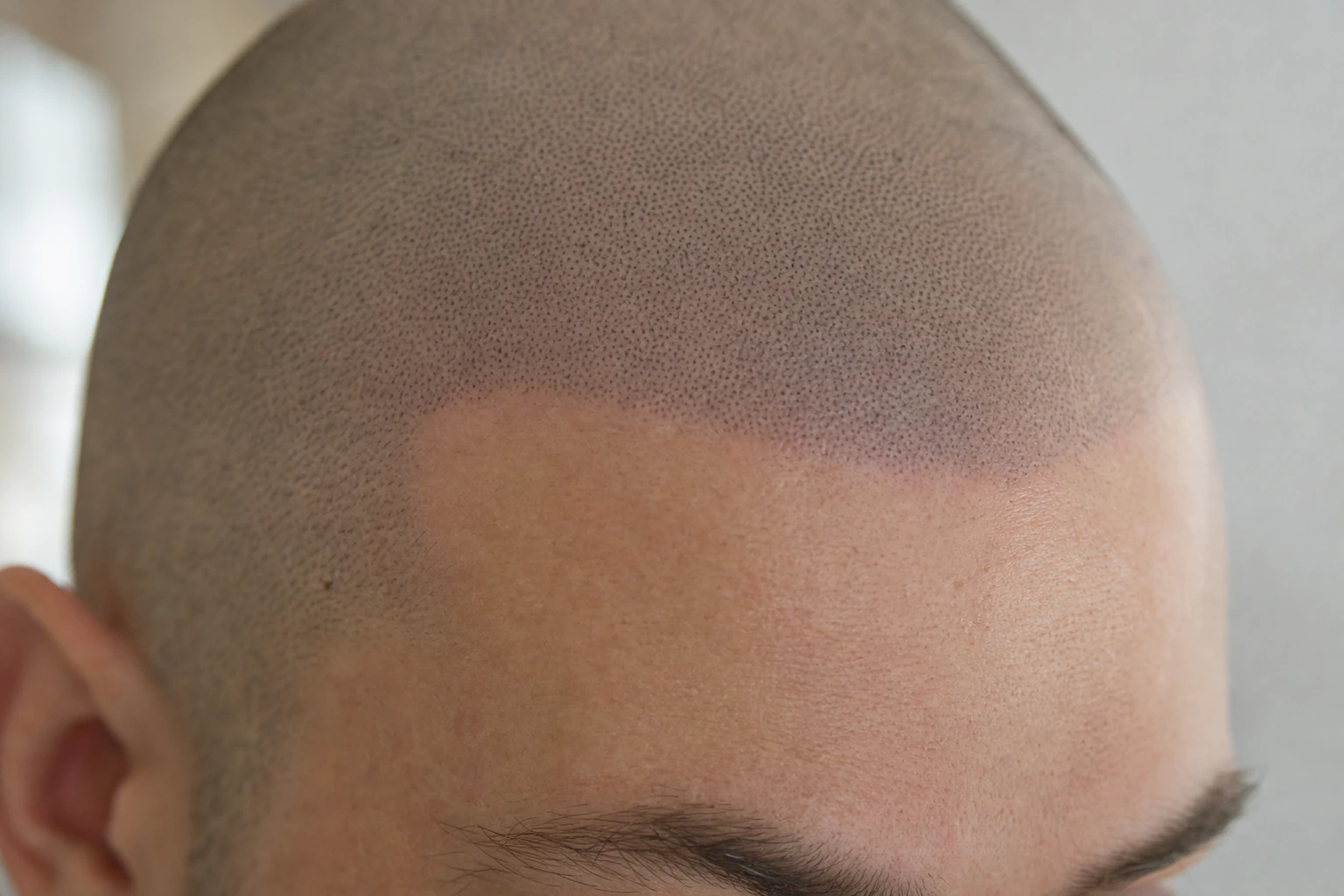
Scalp micropigmentation is a cosmetic tattooing technique that deposits tiny dots of pigment in the upper layers of the scalp to mimic the appearance of short, shaved hair follicles. It's used to create the illusion of density on thinning hair, disguise scars or bald patches, or rebuild a receding hairline. Done well, the stippled dots read as a close-cropped buzz cut.
The important detail for removal is depth. A traditional tattoo is placed deep in the dermis so it lasts a lifetime. SMP is deliberately applied shallower — the pigment needs to sit at a level that reads as a soft follicle, not a hard dot, and it's often expected to soften over years. That shallower deposit is exactly what makes SMP more removable than body ink.
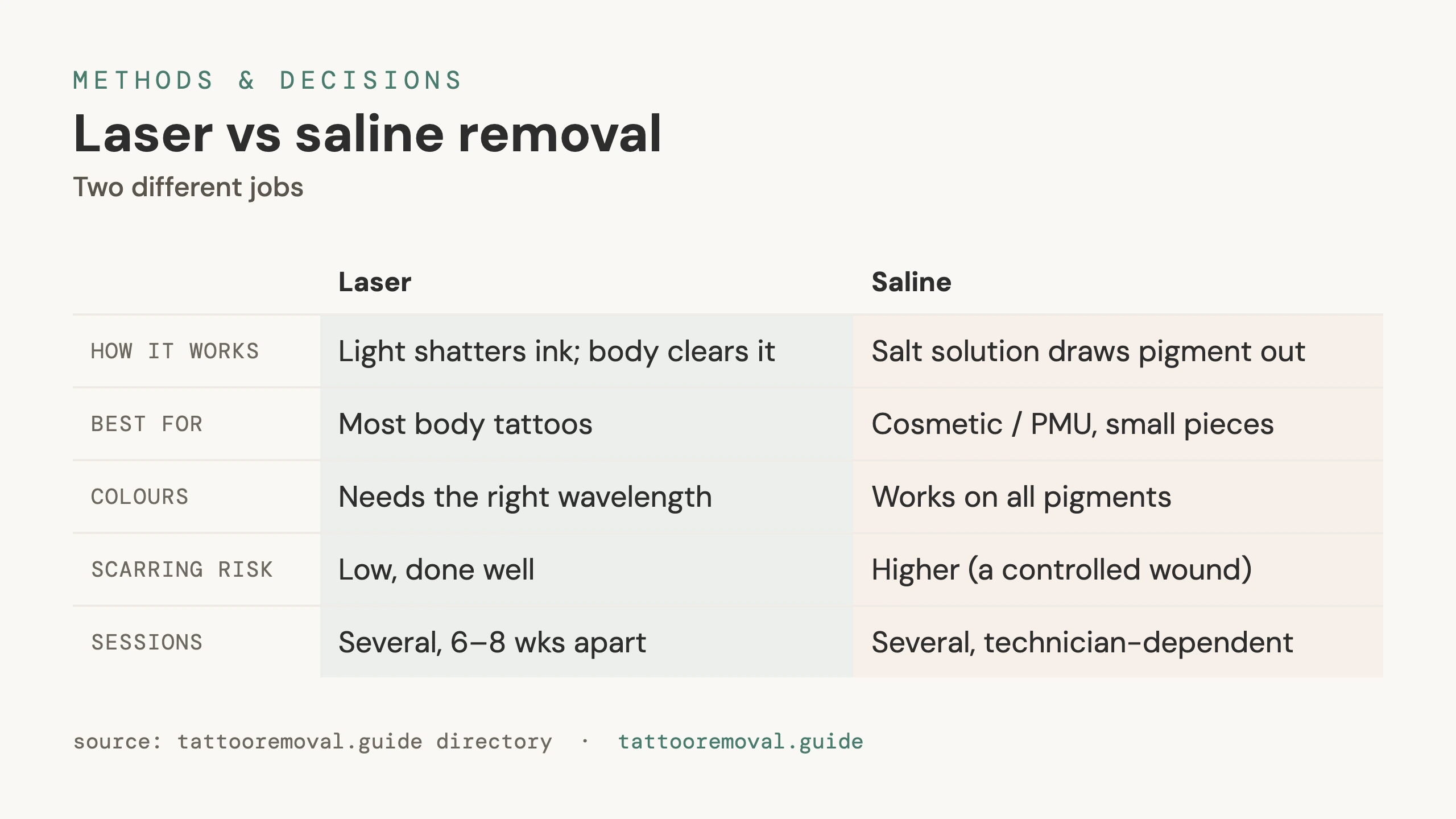 Laser suits body tattoos; saline suits cosmetic/PMU.
Why shallower placement means faster removal
Removal works by getting pigment out of the skin — a laser shatters it into fragments your immune system carries away, or a saline solution draws it back out through a controlled wound. Either way, pigment the practitioner can reach clears more readily than pigment buried deep.
A deep, dense professional tattoo can take many sessions because the laser has to work through layer after layer of ink. SMP's pigment sits high in the skin and is applied as fine, separated dots rather than a solid saturated block. There's simply less pigment, placed shallower — so it tends to respond in fewer sessions. The StatPearls clinical reference on laser tattoo removal describes the same principle for tattoos generally: shallower, less-saturated pigment is easier to fragment and clear.
That's the mechanism behind the "one to three sessions" figure you'll see quoted for SMP — a realistic range, not a promise. Dense, dark, or deeply applied SMP can take more.
 Cosmetic (permanent-makeup) tattooing on the face.
Laser vs saline for SMP removal
There are two established routes for removing SMP, and neither is universally "best" — they suit different pigments and goals.
| Laser removal | Saline removal | |
|---|---|---|
| How it works | Ultra-short light pulses shatter pigment; the immune system clears the fragments over weeks | A saline solution is tattooed into the skin, drawing pigment out through a scab as it heals |
| Best when | Larger areas, darker pigment, faster clearance wanted | Small areas, correcting a hairline, or pigments that risk darkening under laser |
| Main risk | Paradoxical darkening of some cosmetic pigments; redness, blistering | Slower, more wound-based healing; scarring if aftercare is poor |
| Healing between sessions | Several weeks | Several weeks (scab must heal fully) |
| Typical SMP sessions | Often ~1–3 (shallow pigment) | Often ~2–4, sometimes more |
The single most important safety point is paradoxical darkening. Some cosmetic pigments — particularly those containing iron oxide or titanium dioxide, common in scalp and permanent-makeup work — can instantly turn darker or grey when hit by a laser, because the light chemically reduces the pigment. The American Academy of Dermatology and the Cleveland Clinic both flag this risk for cosmetic tattoos. A cautious practitioner tests a small spot first, and may choose saline precisely to avoid it. This is why SMP removal belongs with someone experienced in cosmetic pigment, not just body-ink lasering.
 Cosmetic (permanent-makeup) tattooing on the face.
Why people remove or correct SMP
Most people looking into SMP removal aren't unhappy with the idea — they're unhappy with a specific flaw. The common reasons:
- Wrong colour or too dark. Pigment that healed cooler, bluer or darker than intended, or that no longer matches greying hair, reads as unnatural.
- Dot size. Dots applied too large or too solid look like a tattoo up close rather than follicles — a "helmet" or "solid" look.
- Migration or blurring. Pigment that has spread under the skin over time, softening crisp dots into a smudge.
- Hairline placement. A hairline set too low, too straight, or too sharp — the most-regretted single choice, because the eye goes straight to it.
- Colour shift with age. Older SMP can fade to an unwanted tone as pigment breaks down.
Correction vs full removal
You don't always have to erase everything. Because SMP flaws are often localised — a too-low hairline, one patch that healed dark — a practitioner can lighten or partially remove just that area and preserve the rest of a good result. Correcting a hairline or fading over-dark dots typically needs fewer sessions than clearing the whole scalp, and it's often the smarter fix.
Full removal makes sense when you want to abandon the SMP entirely — for example, to restart with a different practitioner, or because you're growing hair back and the dots now show. A consultation should cover both paths honestly rather than defaulting to the most sessions.
Realistic sessions, cost and safety
Sessions. SMP often clears in roughly one to three laser sessions, though saline can take a few more, and dense or deep SMP can need additional passes. Sessions are spaced several weeks apart so the scalp fully heals between them — rushing raises risk without speeding results.
Cost. Removal is usually priced per session and varies widely by area size, method and market. Across the directory, only about 38% of the 5,700 clinics we track publicly list any pricing (as of July 2026) — so the honest move is to compare a few local providers directly rather than trust a single quote. (That figure counts clinics that publicly list a price, a floor, not all that offer removal.)
Safety. Both methods are controlled skin injuries and carry real risks: redness, scabbing, temporary or lasting pigment change, and — rarely — scarring on the scalp. Paradoxical darkening is the SMP-specific one to raise before any laser touches your head. Good aftercare and not picking scabs are the main ways you lower scarring risk.
This is general information, not medical advice. SMP removal is a cosmetic medical procedure with real risks. Session counts, outcomes and pigment behaviour vary by person and by how the SMP was applied — consult a licensed, experienced provider before proceeding.
Compare removal options where you live
Because SMP removal depends so heavily on the practitioner's experience with cosmetic pigment — and on whether they offer saline as well as laser — the most useful thing you can do is compare the options near you rather than book the first result.
As an independent directory, Tattoo Removal Guide doesn't sell listings or push one clinic; it lets you see what's actually available side by side. Compare tattoo and SMP removal clinics in your city to filter for providers offering laser, saline or cosmetic-pigment removal, or start with a dense market like tattoo removal in Melbourne to see how listings and pricing stack up.
For the bigger picture on cosmetic-tattoo removal, see our pillar guide to permanent makeup removal, and if your question is about brows rather than scalp, microblading removal covers the same trade-offs for that pigment.
Frequently asked questions
Can scalp micropigmentation be removed?
Yes, scalp micropigmentation can be removed. Because SMP pigment is deposited shallow in the upper skin — mimicking hair follicles rather than a deep tattoo — it often clears in fewer sessions than body ink, frequently around one to three, using a laser or a saline removal technique. Complete removal cannot be guaranteed.
How many sessions does SMP removal take?
SMP removal frequently takes fewer sessions than a body tattoo because the pigment sits shallow — often roughly one to three sessions, spaced several weeks apart to let the scalp heal. The exact number depends on pigment depth, colour, density and how the SMP was applied. A practitioner assessing your scalp gives the only realistic estimate.
Is laser or saline better for removing scalp micropigmentation?
Neither is universally better — they suit different situations. Laser shatters pigment for the immune system to clear and is fast but carries a paradoxical-darkening risk with some cosmetic pigments. Saline removal draws pigment out through a controlled wound and avoids that colour-shift risk but needs healing time. A practitioner matches the method to your pigment.
Why is SMP easier to remove than a normal tattoo?
SMP is applied shallower than a traditional tattoo — the tiny dots are placed in the upper skin to imitate hair follicles, not driven deep into the dermis. Shallower pigment is easier for a laser to reach or for saline to lift, which is why SMP often clears in fewer sessions than dense, deep body ink.
Can scalp micropigmentation be corrected instead of fully removed?
Often, yes. If the issue is a wrong colour, dots that are too large, an unnatural hairline, or pigment that has migrated, a practitioner may lighten or partially remove the affected area rather than clear everything. Partial correction can preserve a good result while fixing a flaw, and usually needs fewer sessions than full removal.
Does removing SMP hurt or scar the scalp?
Most people describe laser or saline removal on the scalp as briefly uncomfortable rather than severe, and clinics often use cooling or numbing. Both methods carry real risks — redness, scabbing, pigment change and, rarely, scarring — because they are controlled skin injuries. Following aftercare and not picking scabs is the main way to lower scarring risk.
What is scalp micropigmentation?
Scalp micropigmentation (SMP) is a cosmetic tattooing technique that deposits tiny dots of pigment in the upper layers of the scalp to mimic the look of short, shaved hair follicles. It is used to create the appearance of density, disguise thinning or scars, or restore a hairline. Because it is a tattoo, it is long-lasting but removable.
Related guides
Related Guides
- Cosmetic & PMU
Why Permanent Makeup Fades (and Turns Orange or Grey) (2026)
Why permanent makeup fades and shifts colour, explained neutrally: shallow pigment placement, iron-oxide oxidation, sun exposure and skin turnover, why warm browns…
- Cosmetic & PMU
How to Remove Permanent Makeup to Redo It: Lighten vs Remove (2026)
How to remove permanent makeup to redo it: partial lightening vs full removal, why saline is often preferred pre-redo, and how much fading is enough.
- Cosmetic & PMU
Removing Old or Faded Permanent Makeup
How to remove old or faded permanent makeup, explained neutrally: why aged PMU turns orange, grey or dark, the paradoxical-darkening trap, saline vs laser, sessions…